
1. The Artistic Mastery of the 19th Dynasty
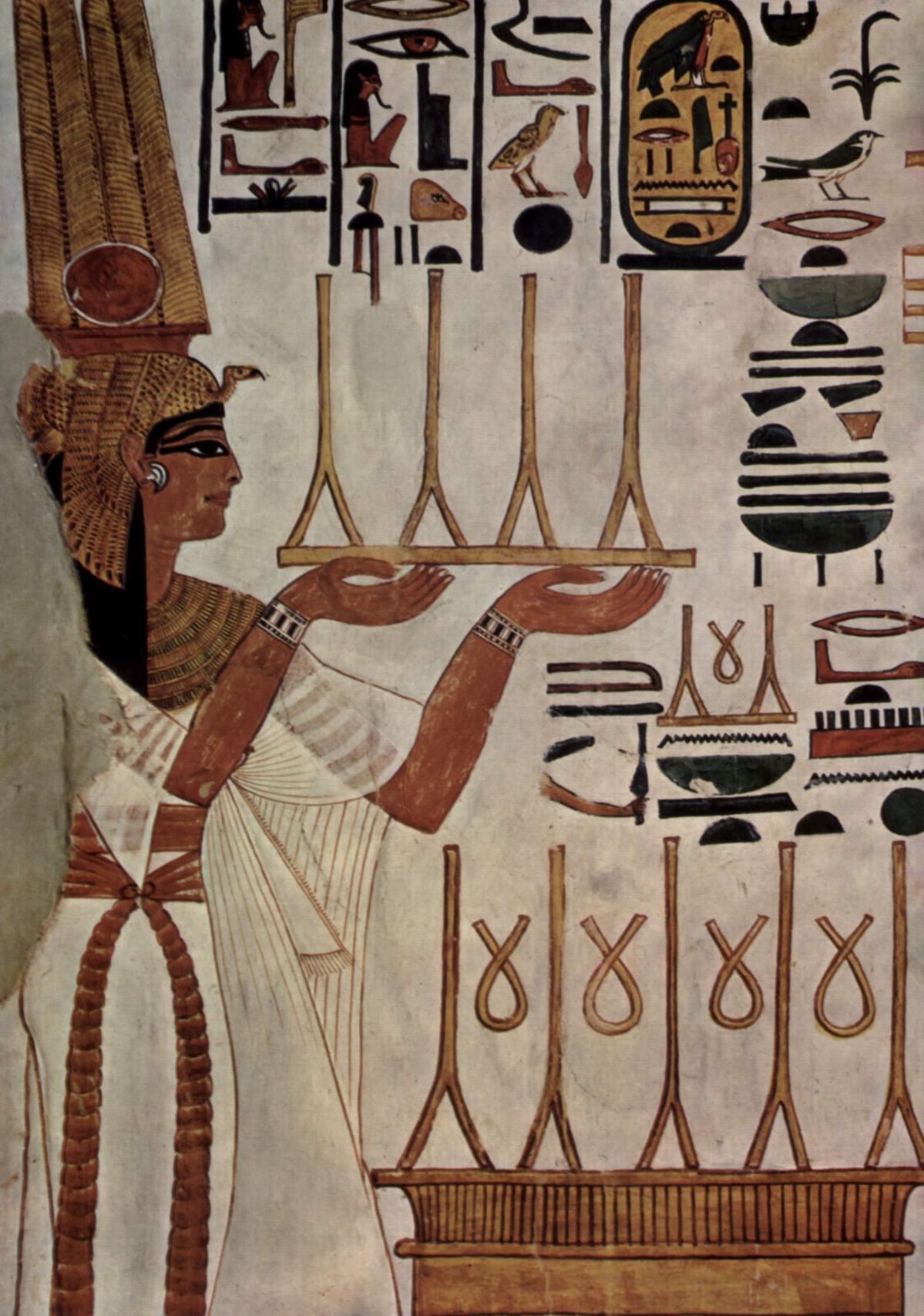
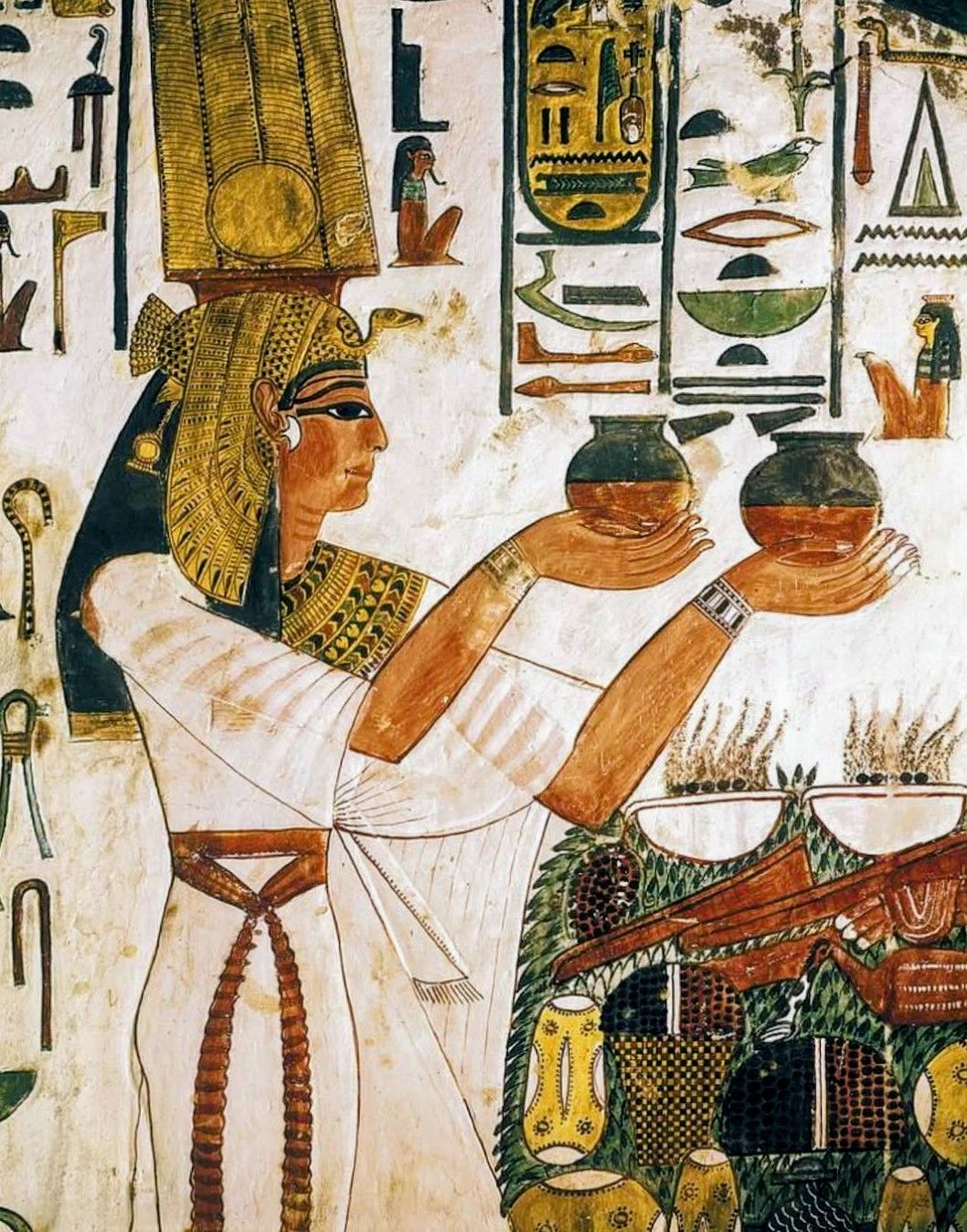
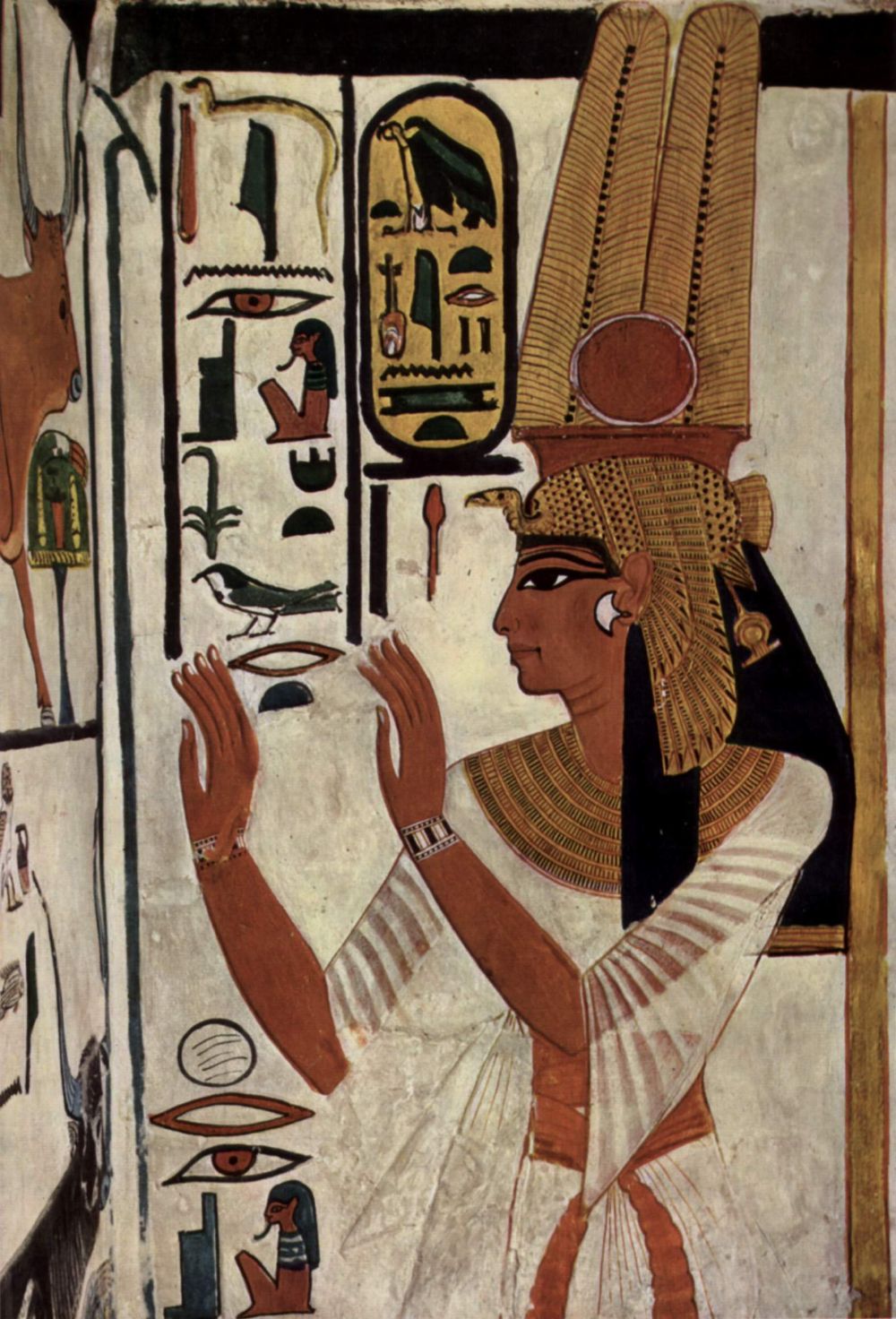
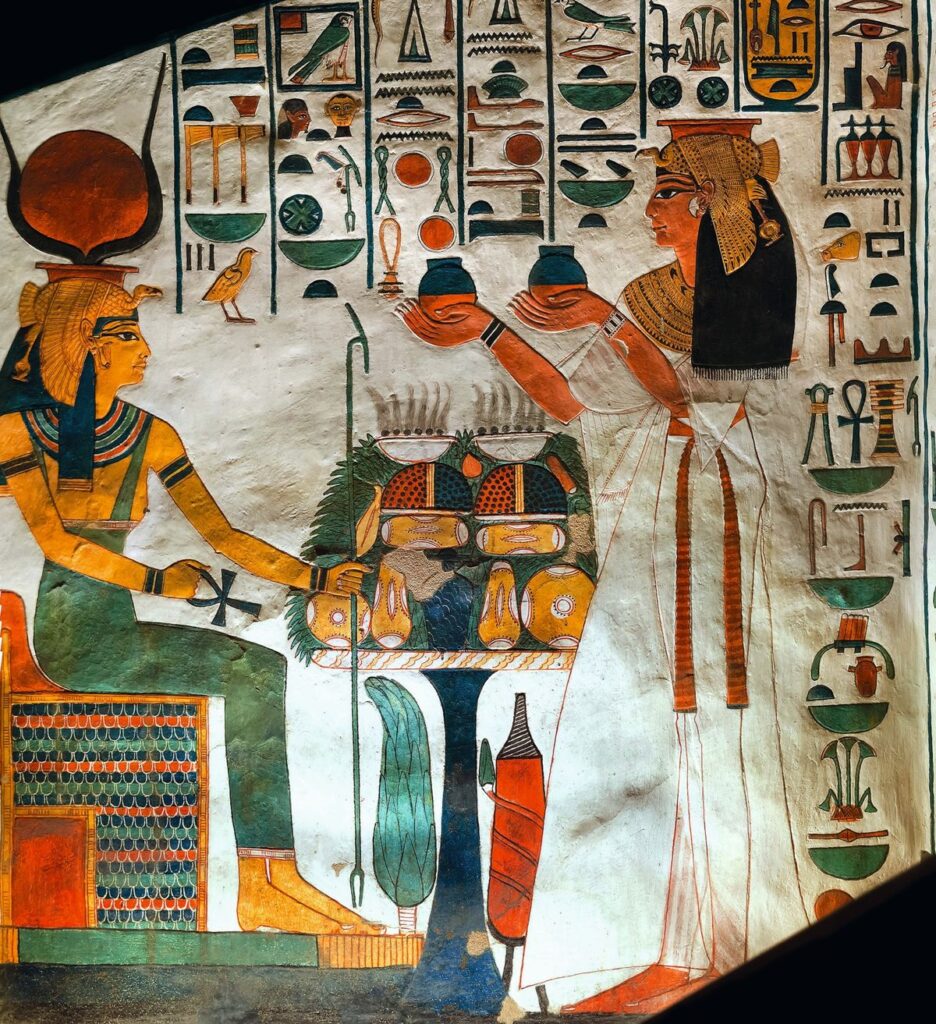
The artistry found within the Tomb of Nefertari represents the pinnacle of the 19th Dynasty’s creative output, showcasing a level of detail and emotional depth that is rarely seen in other royal tombs. The artists utilized a technique where the limestone walls were first smoothed with a fine layer of plaster, providing a luminous white canvas for the mineral-based pigments. What distinguishes these paintings is the sophisticated use of shading and depth, particularly in the rendering of the Queen’s features and her elegant, transparent linen robes. Her eyes are depicted with a striking clarity, and her skin tones possess a warmth that gives her a lifelike presence. The palette is rich with symbolic colors: deep lapis lazuli blues representing the night sky, vibrant yellows symbolizing the eternal flesh of the gods, and pure whites denoting ritual purity. Every figure is perfectly proportioned according to the Egyptian canon, yet there is a fluidity to the lines that suggests a personal touch from the master craftsmen of Deir el-Medina. For the cultural traveler, observing these details up close is an educational experience in ancient aesthetics, proving that the Egyptians were not only master builders but also pioneers in the use of color and perspective to create a sense of three-dimensional space within the rock-cut chambers.
2. A Map of the Underworld: The Book of the Dead
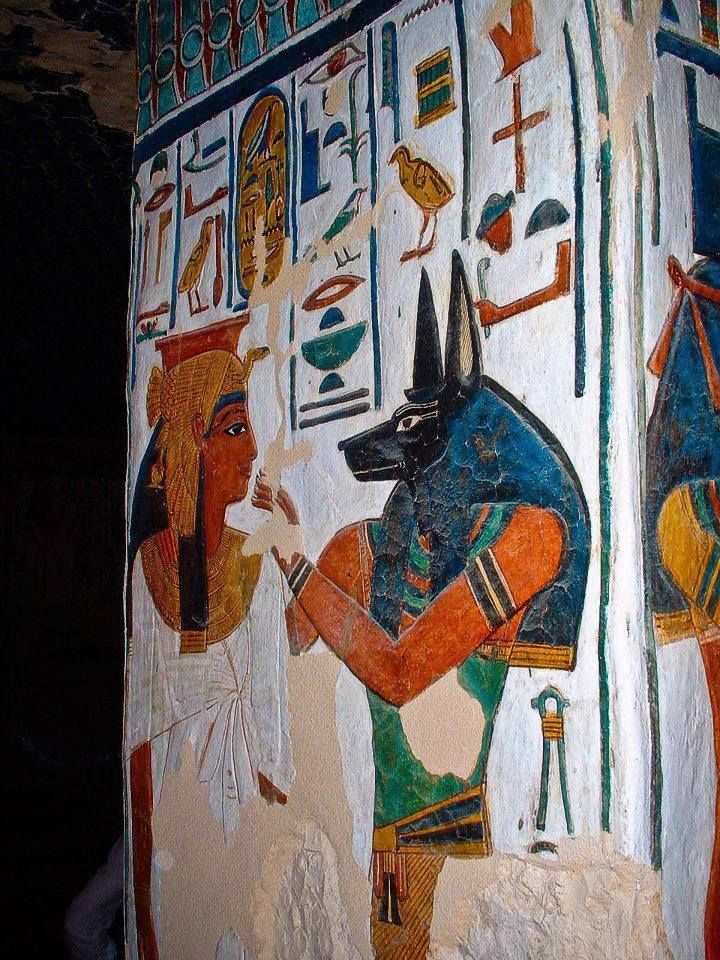
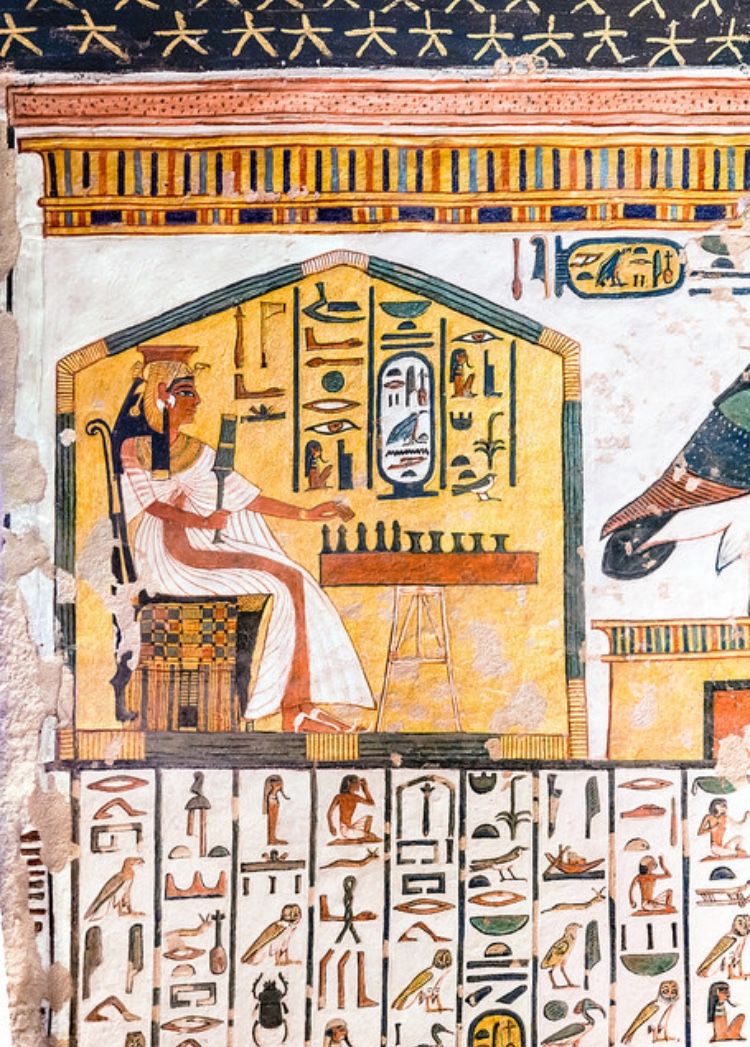
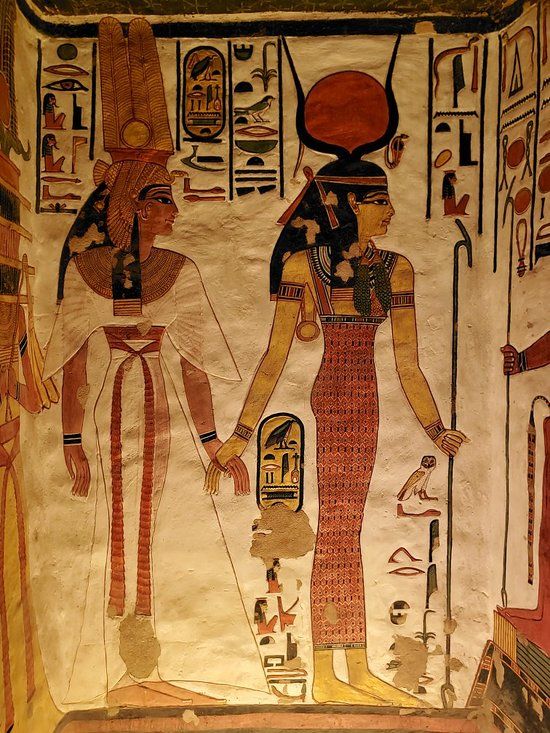
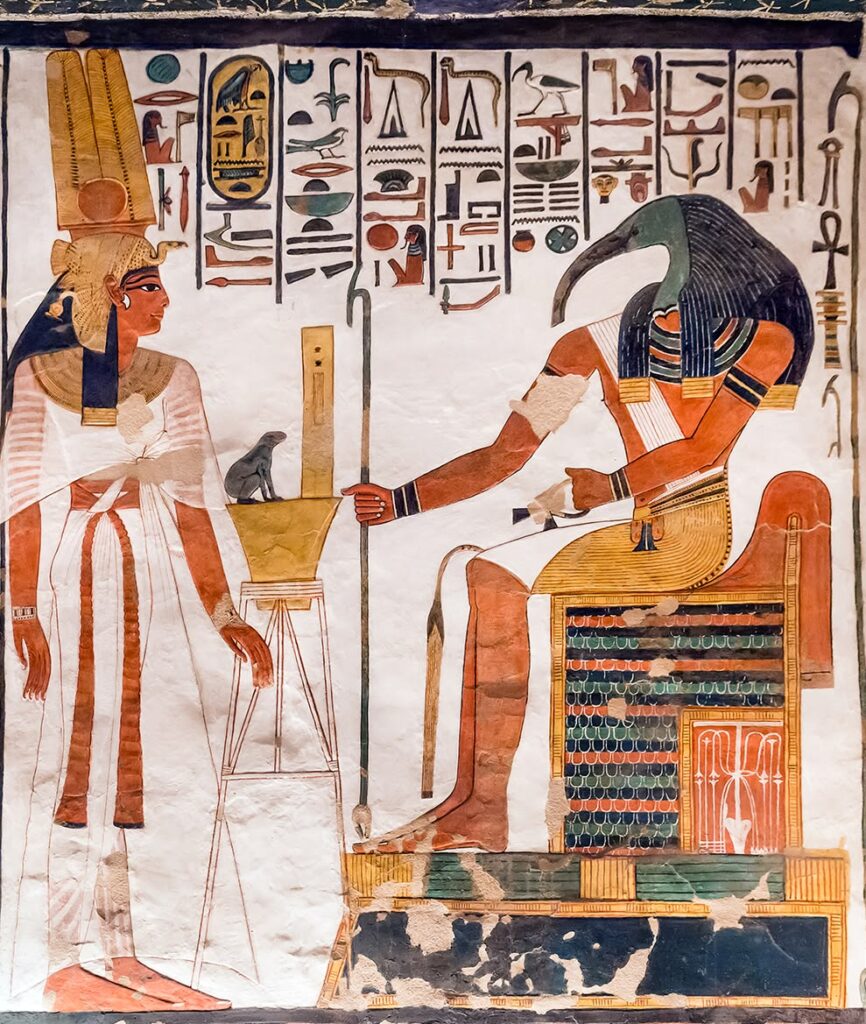
The decorative program of Nefertari’s tomb is not merely ornamental; it serves as a functional and spiritual guide through the perils of the afterlife, drawing heavily from the chapters of the Book of the Dead. As the Queen moves through the tomb’s chambers, she is depicted encountering various guardians and deities who protect the gates of the underworld. One of the most famous scenes shows Nefertari playing a game of Senet, a board game that served as a metaphor for the struggle of the soul to reach the Field of Reeds. This scene is particularly significant as it portrays the Queen’s intellectual and spiritual agency, demonstrating her ability to navigate the challenges of fate. Other walls show her being led by the hand by the goddess Isis or standing before the god Thoth, the divine scribe, to record her virtues. These inscriptions and spells were vital “passports” intended to give the Queen the knowledge and magic required to bypass the demons of the dark and gain entry into the presence of Osiris. For history enthusiasts, studying these walls is like reading an ancient manual on the soul’s journey, revealing a complex moral system where the ultimate goal was to achieve “Ma’at,” or cosmic balance, through a combination of righteous living and divine intercession.
3. The Divine Architecture of the Burial Chamber
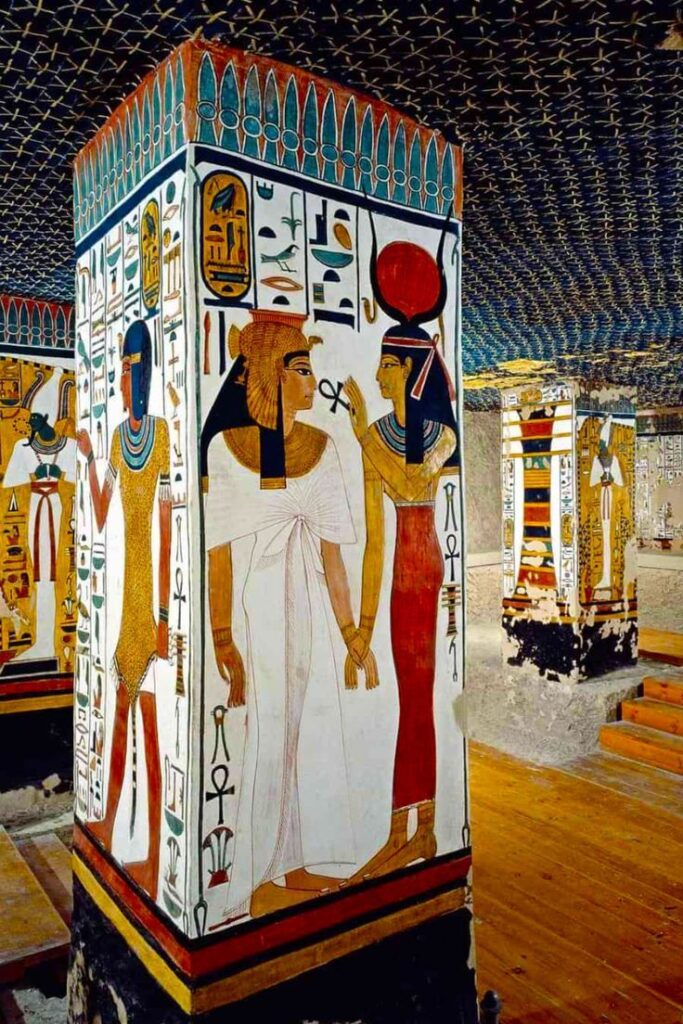
The architecture of the tomb is carefully designed to mirror the structure of the cosmos, leading the Queen from the physical world into the heart of the divine mystery. The tomb consists of an entrance staircase, an upper hall, and a lower burial chamber supported by four massive pillars. These pillars are decorated with scenes of the Queen being embraced by goddesses such as Hathor and Nut, symbolizing her return to the maternal embrace of the divine. The ceiling throughout the tomb is painted a deep, midnight blue and covered with a canopy of five-pointed golden stars, transforming the underground space into a celestial vault. This architectural layout creates a sense of rhythmic movement, guiding the visitor—and the soul of the Queen—deeper into the earth while simultaneously lifting the spirit toward the heavens. In the burial chamber, where the sarcophagus once rested, the atmosphere is one of profound silence and sacredness. The pillars act as the “legs of the sky,” supporting the weight of the mountain above while ensuring that the Queen remains protected within a sanctuary of light and color. For travelers, this transition from the bright desert sun into the cool, star-studded depths of the tomb is a transformative journey, offering a physical manifestation of the ancient Egyptian concept of the tomb as a portal to eternity.