
Welcome to

The Avenue of Sphinxes: The Road of the Gods

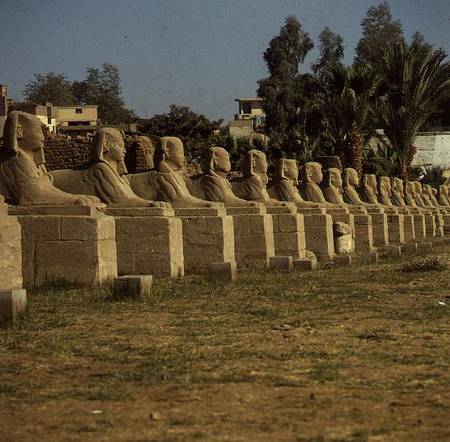
The Avenue of Sphinxes, known in ancient times as “Wat Neter” or the Path of the God, is perhaps the most magnificent processional route ever conceived in the ancient world. Stretching 2.7 kilometers and connecting the colossal Karnak Temple Complex with the elegant Luxor Temple, this sacred boulevard served as the spiritual umbilical cord of ancient Thebes. Lined with over a thousand sphinxes—some with human heads and others with the heads of rams—the avenue was the stage for the Opet Festival, a spectacular annual celebration where the statues of the gods were carried in grand processions amidst music, dancing, and royal fanfare. For centuries, much of this road lay buried beneath the streets and houses of the modern city, hidden from view until a massive, decades-long excavation project finally restored it to its former glory, creating the world’s largest open-air archaeological museum.

For today’s traveler, walking the Avenue of Sphinxes is an immersive journey through the heart of the New Kingdom. It offers a unique “cinematic” perspective on the scale of Egyptian urban planning, where art, religion, and architecture converged to create a landscape of pure wonder. As you walk between the silent stone sentinels, you are following in the footsteps of Pharaohs, high priests, and ancient pilgrims who once gathered here to witness the union of the divine and the earthly. The recent grand reopening of the avenue has transformed the city of Luxor into a unified heritage site, allowing visitors to experience the seamless transition between the “City of Gods” and the “Sanctuary of Royal Rebirth.” It is a testament to the endurance of Egypt’s legacy—a road that was lost to time but has returned to reclaim its place as one of the most iconic vistas in human history.

1. The Evolution of the Sacred Way: A Dynasty of Builders

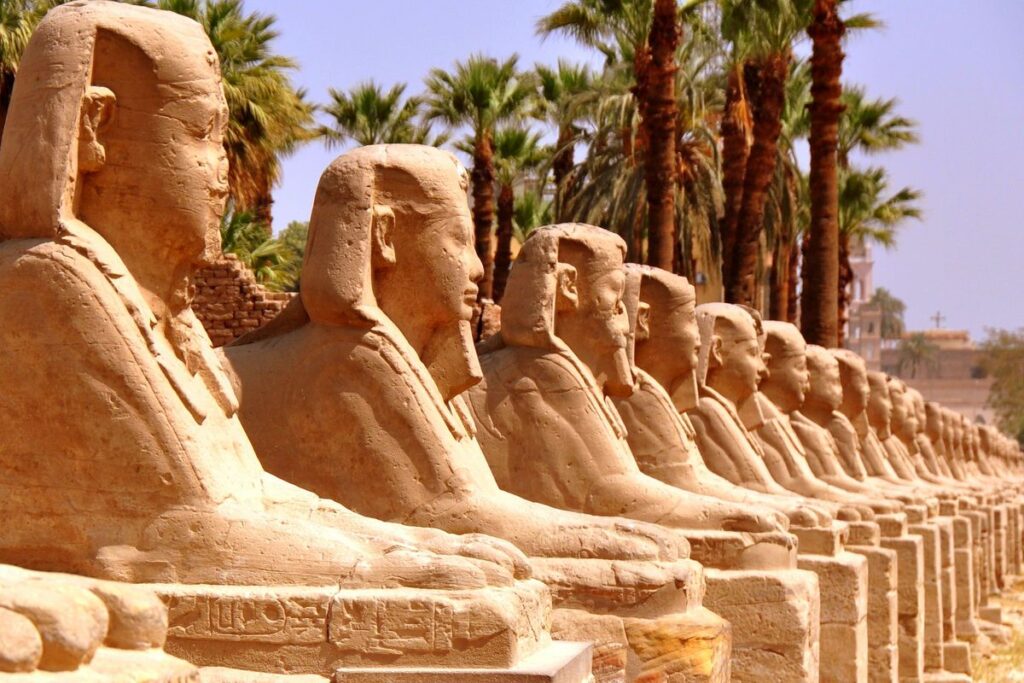
The Avenue of Sphinxes was not built in a single era but evolved over 1,500 years as a collaborative masterpiece of successive Pharaohs. While the concept of a processional path existed as early as the New Kingdom, it was Queen Hatshepsut who first established a series of bark shrines along this route to facilitate the journey of the gods. Later, Amenhotep III added his own artistic signature, but the most significant transformation occurred during the 30th Dynasty under King Nectanebo I. It was he who finalized the monumental layout we see today, lining the path with hundreds of human-headed sphinxes. For travel professionals, this history is a powerful narrative tool; it illustrates how the avenue served as a “living ledger” of Egyptian power. Every stone and statue represents a different era of ambition, showing how each ruler sought to gain divine favor by contributing to the most important road in the empire.
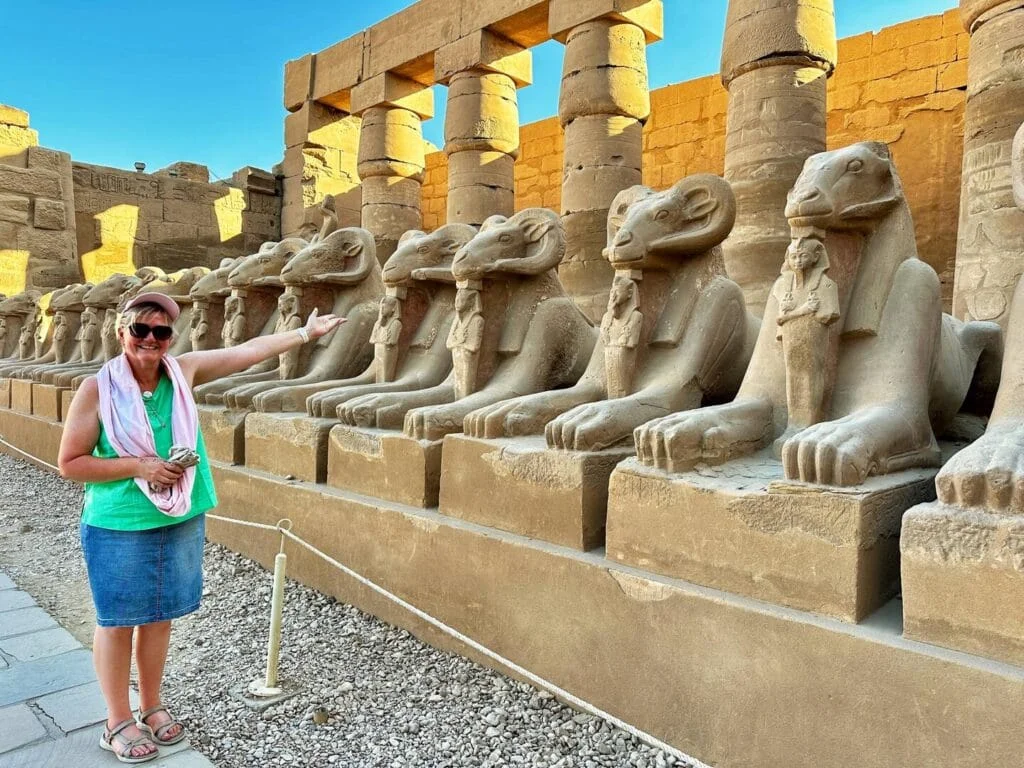
2. The Artistic Shift: From Ram-Headed to Human-Headed Guardians

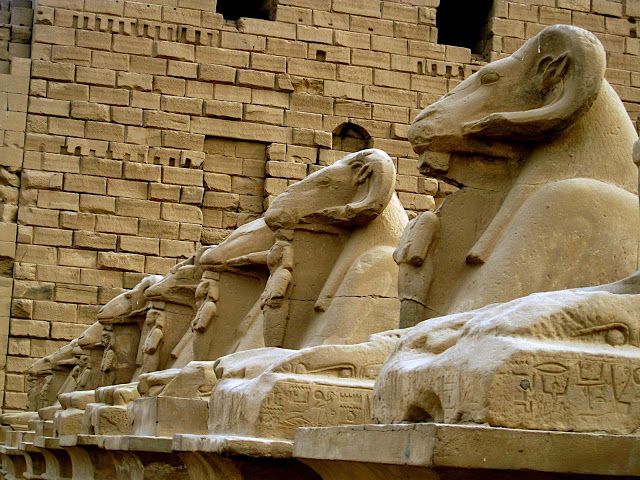
One of the most fascinating aspects of the avenue is the stylistic transition between the various types of sphinxes that guard the path. At the entrance to the Karnak Temple, the sphinxes are “Criosphinxes”—creatures with the body of a lion and the head of a ram, symbolizing the god Amun-Ra in his aspect of strength and fertility. As one moves further along the 2.7-kilometer stretch toward Luxor Temple, the iconography shifts to the classic human-headed sphinx, specifically modeled after the features of Nectanebo I. This shift isn’t just aesthetic; it represents a theological bridge between the raw, elemental power of the gods at Karnak and the human divinity of the Pharaoh at Luxor. Highlighting this distinction adds a layer of “detective work” for visitors, allowing them to spot the subtle changes in masonry and symbolism that mark the transition from the “City of the Gods” to the “Sanctuary of the King.”
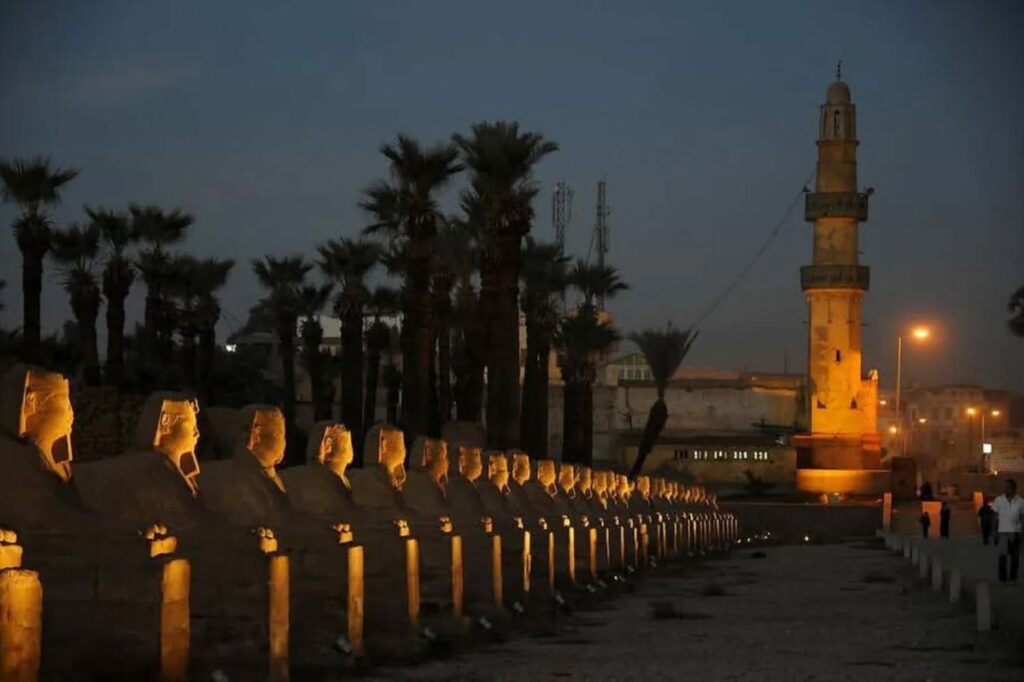
3. The Opet Festival: The Super Bowl of Antiquity

In the ancient world, the Avenue of Sphinxes was the stage for the Opet Festival, arguably the most important event in the Theban calendar. During the height of the Nile’s flood, the sacred barks of Amun, Mut, and Khonsu were carried in a grand parade from Karnak to Luxor. This was a sensory explosion of sound and color: priests in leopard skins burned incense, soldiers marched in rhythm, and thousands of citizens lined the avenue to catch a glimpse of the golden shrines. The festival was a moment of “national renewal,” where the Pharaoh’s spirit was recharged by the divine energy of Amun. For modern travelers, understanding this ritual transforms the avenue from a quiet archaeological site into a vibrant, historical theater. It allows them to imagine the road not as a ruin, but as a place of music, celebration, and communal faith that once defined the very pulse of the Egyptian state.
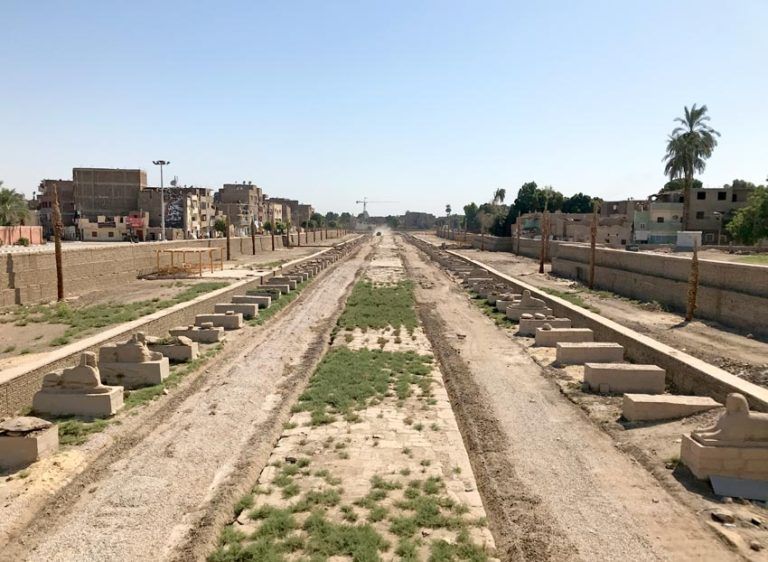
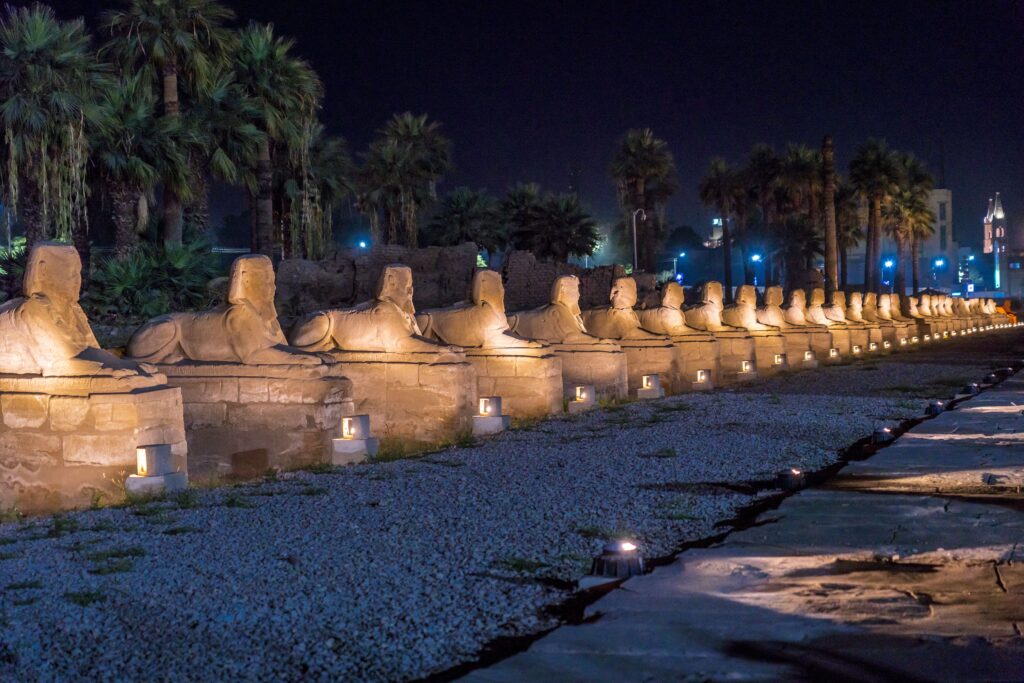
4. The Great Discovery: Unearthing a Buried Legacy

The story of how the Avenue of Sphinxes returned to the light is as dramatic as the history of the Pharaohs themselves. For centuries, this 2.7-kilometer path was lost to the world, swallowed by the rising silt of the Nile and the expansion of the modern city. Homes, businesses, and even a mosque were built directly over the ancient stone, hiding the sphinxes beneath meters of earth. The systematic excavation, which began in the mid-20th century and accelerated in the last decade, was a monumental feat of urban archaeology. Thousands of residents were relocated, and tons of debris were cleared to reveal the original paving stones and the silent guardians that had waited for millennia. For the modern traveler, knowing that they are walking on ground that was “missing” for a thousand years adds a layer of adventure and discovery to the experience. It positions the avenue not just as a ruin, but as a modern miracle of preservation and cultural heritage.

5. The Bark Shrines: Stations of the Divine

Along the winding path of the Avenue of Sphinxes, travelers will encounter the remains of several “Bark Shrines”—small, elegant stone structures that served as resting stations for the gods during their journey. Because the statues of Amun-Ra and his family were carried in heavy wooden boats (barks) on the shoulders of priests, these shrines provided a sacred space for the procession to stop, offer incense, and perform rituals. Many of these shrines were originally established by Queen Hatshepsut and later rebuilt or enhanced by Tutankhamun and Horemheb. These stations are “narrative checkpoints” for visitors; they offer a more intimate look at the logistics of ancient worship. Exploring these smaller ruins helps break up the long walk between the two temples, providing shade and a closer look at the intricate reliefs that depict the very ceremonies that took place on that exact spot thousands of years ago.

6. The Nocturnal Procession: Lighting the Path to Eternity

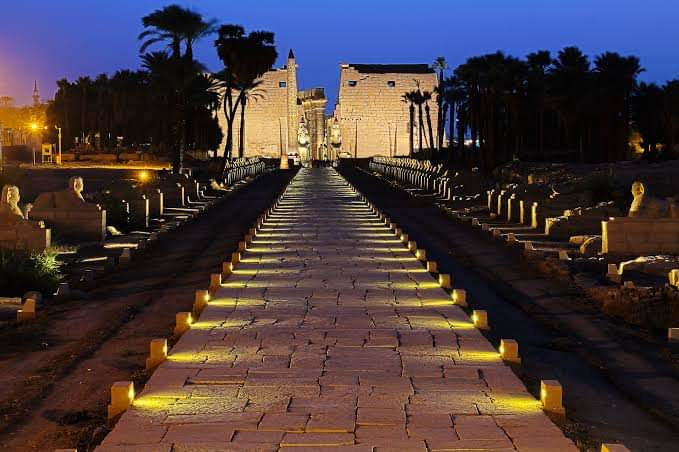
One of the most spectacular ways to experience the Avenue of Sphinxes is after the sun has set. Following its grand reopening, the entire 2.7-kilometer route was equipped with a state-of-the-art “intelligent” lighting system that illuminates the sphinxes from below, casting long, majestic shadows that emphasize the texture of the weathered stone. Walking the avenue at night feels like stepping into a cinematic dream; the modern city of Luxor fades into the background, leaving only the glowing eyes of the stone guardians and the silhouettes of the distant temple pylons. This nocturnal experience is a centerpiece of modern tourism marketing, as it allows guests to walk the “Path of the Gods” in the cool, quiet air of the evening. It transforms a historical site into a romantic and deeply atmospheric journey, where the ancient and modern worlds meet under a canopy of Egyptian stars.

7. Beyond the Sacred: Roman Workshops and Ancient Wine Presses

As archaeologists unearthed the Avenue of Sphinxes, they discovered that the road was not just a place for religious processions but a hub of ancient industry. During the Greco-Roman period, the areas adjacent to the path were repurposed for practical use. Excavations revealed sophisticated Roman workshops and, most notably, large-scale wine presses used to produce the “spirit of the Nile.” These findings prove that the avenue remained a vital part of Luxor’s urban life long after the era of the New Kingdom Pharaohs. For the modern traveler, these archaeological layers offer a fascinating contrast; one moment you are admiring the divine grace of a sphinx, and the next, you are standing before the remnants of a 2,000-year-old “factory.” It adds a grounded, human dimension to the site, showing that history is a continuous cycle of sacred ritual and daily survival.

8. The 2021 Grand Reopening: A Global Spectacle

The Avenue of Sphinxes regained international fame in November 2021 during a “Grand Reopening” ceremony that was watched by millions around the globe. This “Opet-inspired” parade featured hundreds of performers, traditional music, and a recreation of the sacred barks, all moving along the illuminated path from Karnak to Luxor Temple. The event was more than just a celebration; it was a powerful statement of Egypt’s commitment to preserving its heritage and sharing it with the world in a modern, dynamic way. For travel curators, the reopening transformed Luxor into a “single-site” museum, where the journey between the temples is just as important as the temples themselves. This event rebranded the avenue as a world-class destination, inviting a new generation of explorers to witness the “rebirth” of the most famous road in antiquity.

9. The "Hearing Ear" Shrines: The Voice of the People

Beyond the massive pylons where only priests and kings could enter, the eastern wall of Karnak features the unique “Hearing Ear” shrines. These were specialized stations built by various Pharaohs, including Thutmose III and Ramesses II, designed specifically for the common people who were not allowed into the inner sanctum of the temple. Here, the gods were believed to “hear” the prayers and petitions of the ordinary citizens of Thebes. These shrines are a touching reminder that Karnak was not just a fortress of the elite, but a place where the entire population felt a personal connection to the divine. For the modern travel narrative, the “Hearing Ear” shrines provide a rare and humanizing glimpse into the daily life and personal piety of ancient Egyptians. They represent the “voice of the people” within a complex of giants, making the history of Karnak feel accessible and deeply personal to every visitor.


10. The Engineering of the Pylons: Mountains of Masonry

The ten massive pylons of Karnak are the “chapters” of the temple’s long history, functioning as monumental gateways that separate the various courtyards. These sloping walls were masterpieces of civil engineering; built using mud-brick ramps to lift limestone blocks weighing several tons, they were designed to withstand the test of time and the annual flooding of the Nile. Inside some of these pylons, archaeologists have found “talatat” blocks—small, decorated stones from the dismantled temples of the “heretic” King Akhenaten—revealing how later Pharaohs used the structures of their predecessors as hidden foundations for their own glory. For the modern explorer, the pylons serve as a dramatic frame for the entire complex, offering a silhouette that is synonymous with the grandeur of the Pharaohs. They are the “sentinels” of the horizon, engineered to bridge the gap between the chaotic world outside and the sacred order of the sanctuary within.

11. Nocturnal Majesty: History Reawakened Under the Stars

While the temples are magnificent by day, they undergo a breathtaking transformation after sunset. The sophisticated “Sound and Light” experience and modern nocturnal illumination allow visitors to walk through the complex as it glows with a warm, golden hue. This night-time journey highlights architectural details—such as the deep-cut hieroglyphs and the soaring heights of the obelisks—that are often softened by the harsh midday sun. The cooling desert air and the silence of the night create a mystical atmosphere, where the shadows of the columns seem to breathe with the stories of the past. For the traveler, this is more than just a tour; it is a cinematic encounter with history, providing a romantic and serene perspective that captures the “spirit of the place” in a way that daylight simply cannot match.

12. Conclusion: The Road That Defied Time

In the final analysis, the journey between Karnak and Luxor stands as a triumphant bridge between the grandeur of the Pharaohs and the curiosity of the modern world. It is much more than a collection of stones and statues; it is a physical manifestation of ancient Egyptian philosophy, where the journey itself was considered a sacred act of devotion. By connecting the “City of Gods” with the “Sanctuary of the King,” this path remains the ultimate artery of Egyptian history. Whether you walk it in the heat of the day or under the golden glow of its nocturnal lights, it offers a sense of continuity that few places on Earth can match. To experience these sites is to truly understand the scale of the human spirit—a legacy that was lost to the sands for centuries but has eventually returned to guide us back into the heart of the greatest civilization in human history.

The Avenue of Sphinxes : Frequently Asked Questions

The avenue is approximately 2.7 kilometers (1.7 miles) long. Since the grand reopening in 2021, the entire path is open to the public. You can start your journey at either Karnak Temple or Luxor Temple and walk the full length, though many visitors choose to explore the sections closest to the temple entrances.

No. There are two main types of statues. At the northern end (Karnak), you will see ram-headed sphinxes (Criosphinxes), which represent the god Amun-Ra. Along the rest of the road, particularly the southern end (Luxor), the statues are human-headed sphinxes, primarily built by King Nectanebo I during the 30th Dynasty.

Generally, access to the avenue is included with your entry ticket to either Karnak Temple or Luxor Temple, as the path connects the two sites. However, it is always a good idea to check for the most current ticketing regulations at the entrance gates, especially if you plan to walk the entire distance from one to the other.

A leisurely walk along the entire 2.7-kilometer path takes about 45 to 60 minutes, depending on how often you stop to take photos or read the informational plaques. Because the path is entirely outdoors and offers little shade, it is best to do this walk in the early morning or late afternoon.

The “Golden Hour” (just before sunset) provides the most beautiful natural light for the stone carvings. However, the night-time illumination is truly spectacular and offers a completely different, cinematic perspective. Many photographers recommend visiting around sunset so you can experience both the daylight detail and the dramatic night-time glow.