
Welcome to

Tomb of Seti I (KV17): The Sistine Chapel of Ancient Egypt

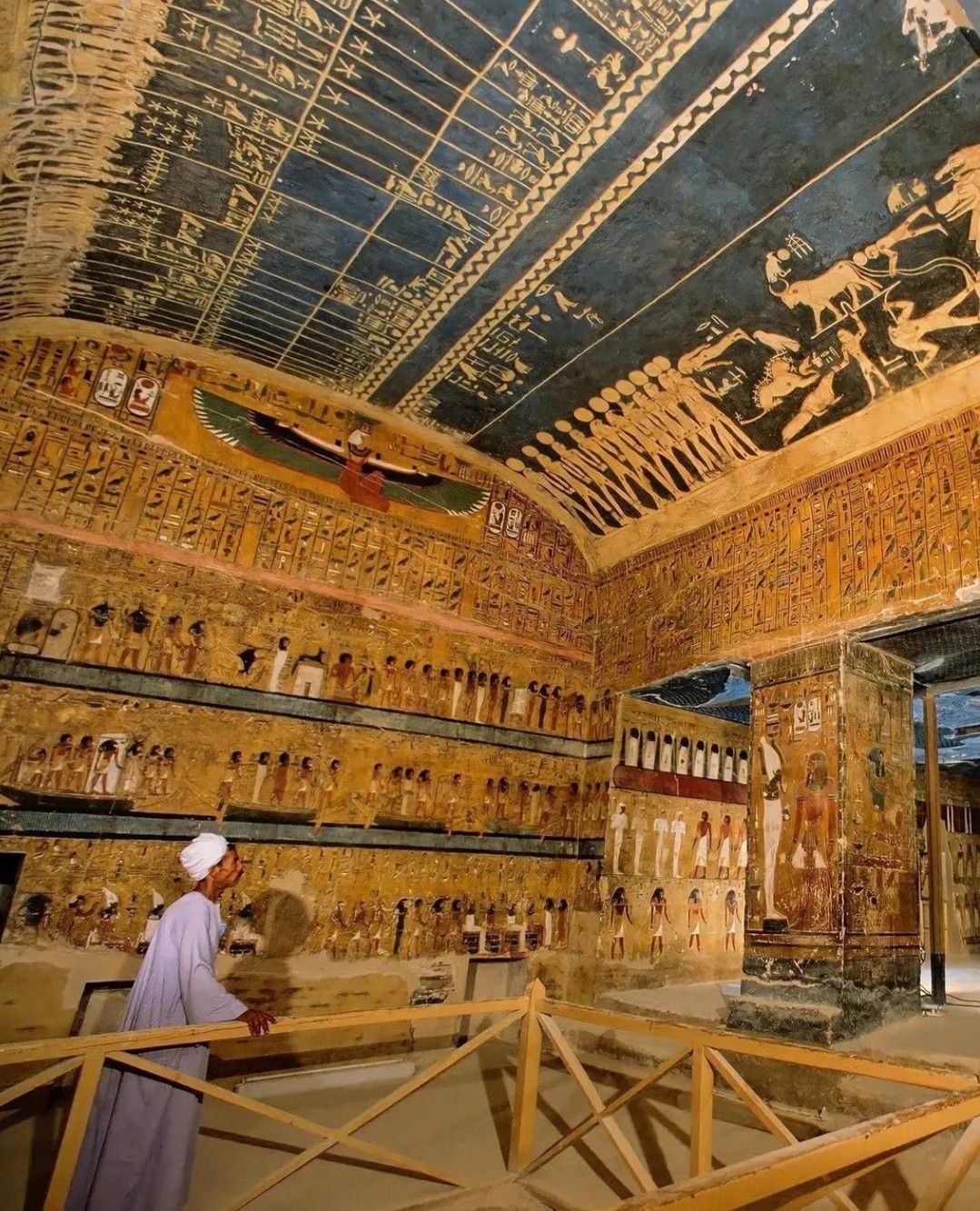
The Tomb of Seti I, designated as KV17, is widely regarded by archaeologists, historians, and travelers as the most magnificent burial site ever discovered in the Valley of the Kings. Since its modern discovery by Giovanni Belzoni in 1817, it has captivated the world’s imagination, earning the nickname “The Sistine Chapel of Ancient Egypt” due to the sheer density and quality of its vibrant wall paintings. Seti I, the second Pharaoh of the 19th Dynasty, sought to create a final resting place that surpassed everything that had come before it. His tomb is not only the longest and deepest in the valley, stretching over 137 meters into the heart of the limestone mountain, but it also represents the absolute peak of Ramesside artistic achievement. Every inch of its corridors and chambers is decorated with exquisite raised reliefs and a rich palette of colors that remain startlingly vivid after more than 3,300 years.

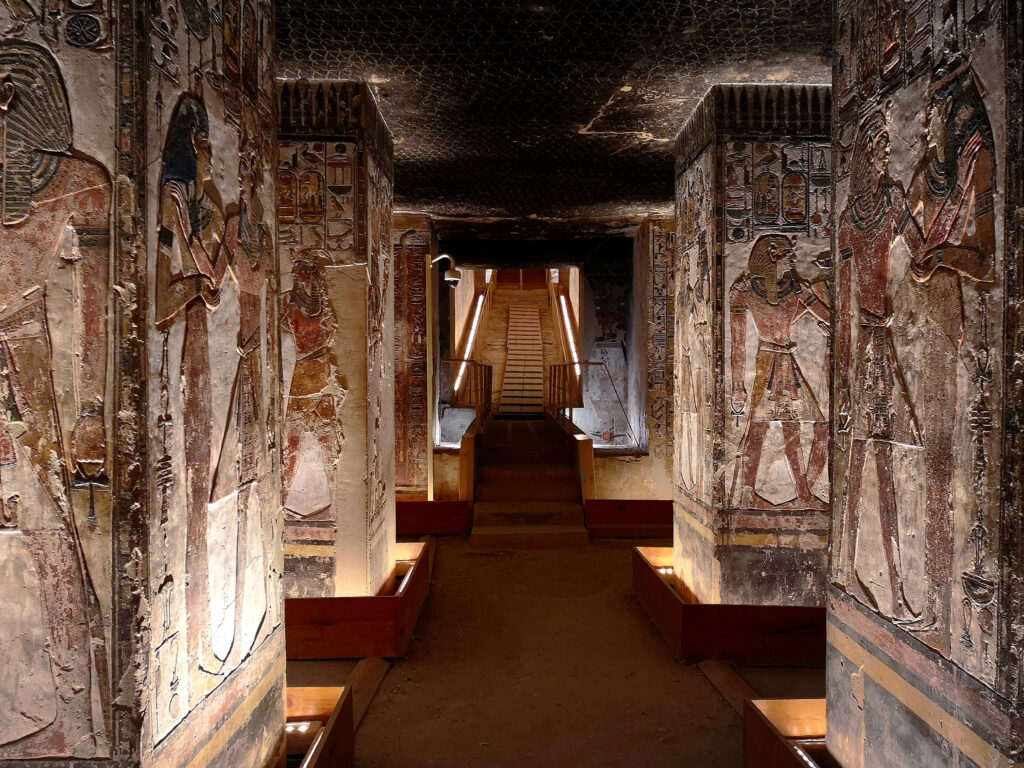
Entering KV17 is a sensory and spiritual experience that feels like stepping into a living, breathing library of the afterlife. The tomb’s architecture is a complex masterpiece, featuring a series of descending staircases, pillared halls, and hidden chambers that lead to a breathtaking vaulted burial chamber. Unlike many other tombs that suffered from erosion or looting, the artistic integrity of KV17 provides the most complete record of the royal funerary texts, including the Book of Gates, the Amduat, and the Opening of the Mouth ceremony. For the modern traveler, this site is the ultimate destination for luxury cultural tourism; it is a place where the boundaries between art and theology blur, offering a profound glimpse into a civilization that viewed death not as an end, but as a glorious, star-studded transition into the infinite cosmos.

1. The Architectural Mastery of the Longest Descent

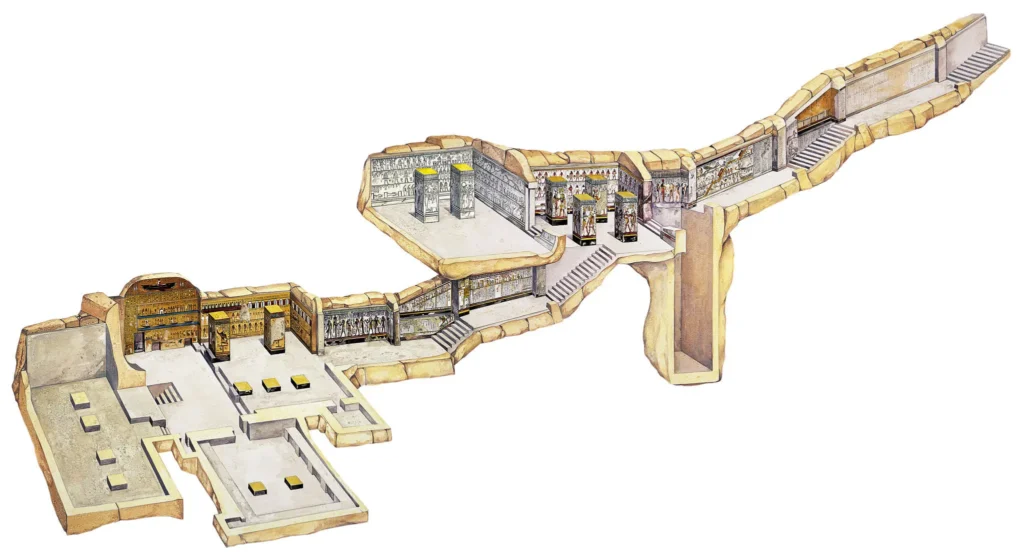
The architecture of KV17 is a towering achievement in the history of human construction, representing the most ambitious subterranean project of the New Kingdom. Spanning a total length of over 137 meters and descending vertically by more than 30 meters, the tomb is a masterpiece of spatial planning and engineering. It features a complex layout of three descending corridors, two pillared halls, and a majestic vaulted burial chamber, all connected by steep staircases that seem to plunge directly into the heart of the Earth. What makes Seti I’s tomb architecturally unique is its perfect symmetry and the introduction of the “Straight Axis” design, which replaced the “Bent Axis” of earlier dynasties. This straight alignment was intended to mirror the direct path of the sun god through the underworld. For the modern explorer, the descent into KV17 feels like an epic journey into another dimension; the air cools, and the silence deepens as you move further away from the desert surface. The technical skill required to carve these precise, smooth corridors into the limestone using only bronze tools and oil lamps is a feat that continues to baffle modern engineers. It is a structure built to endure for eternity, a stone corridor designed to funnel the King’s soul directly into the celestial realm.
2. The Artistic Pinnacle: Raised Reliefs and Vivid Pigments

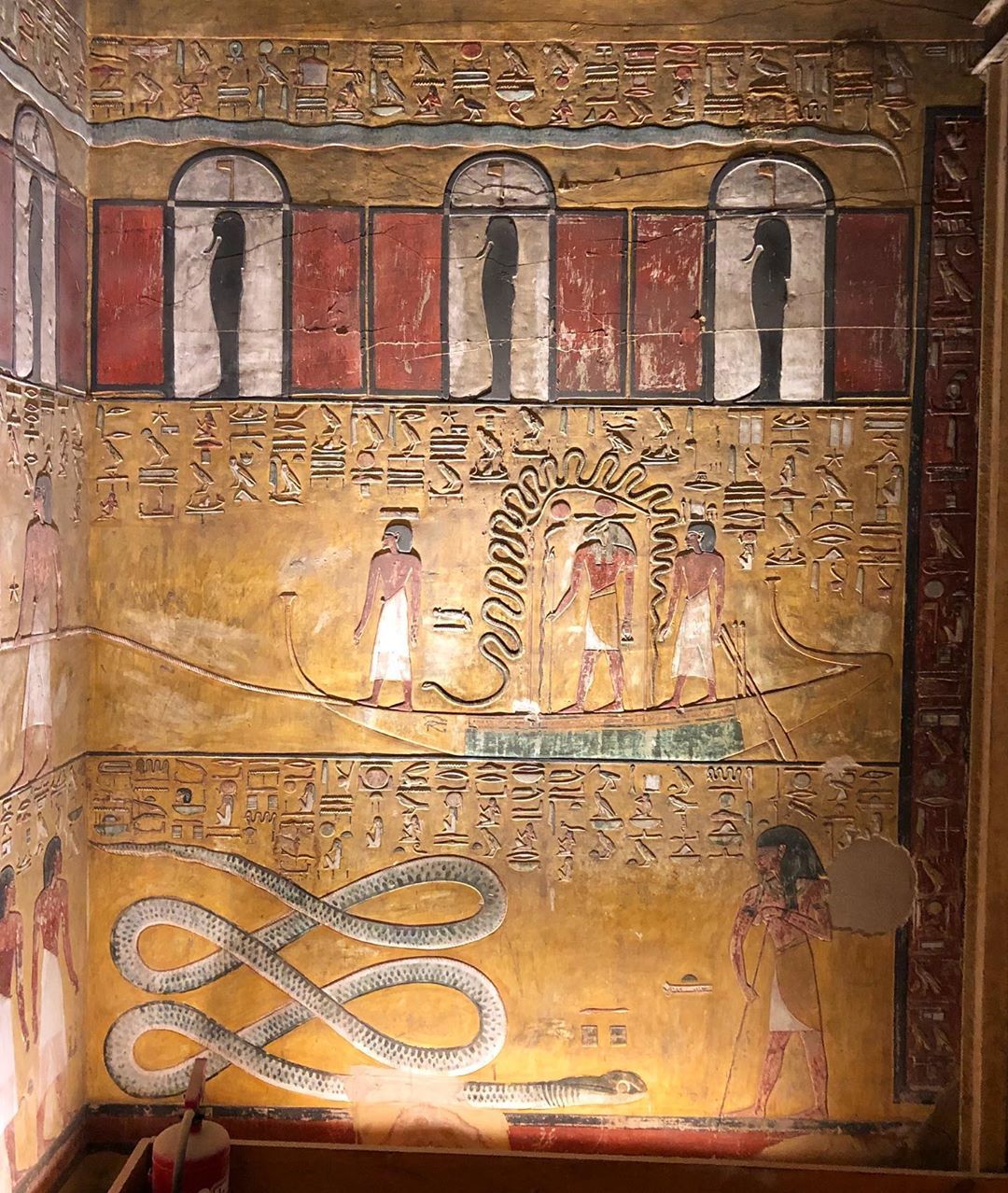
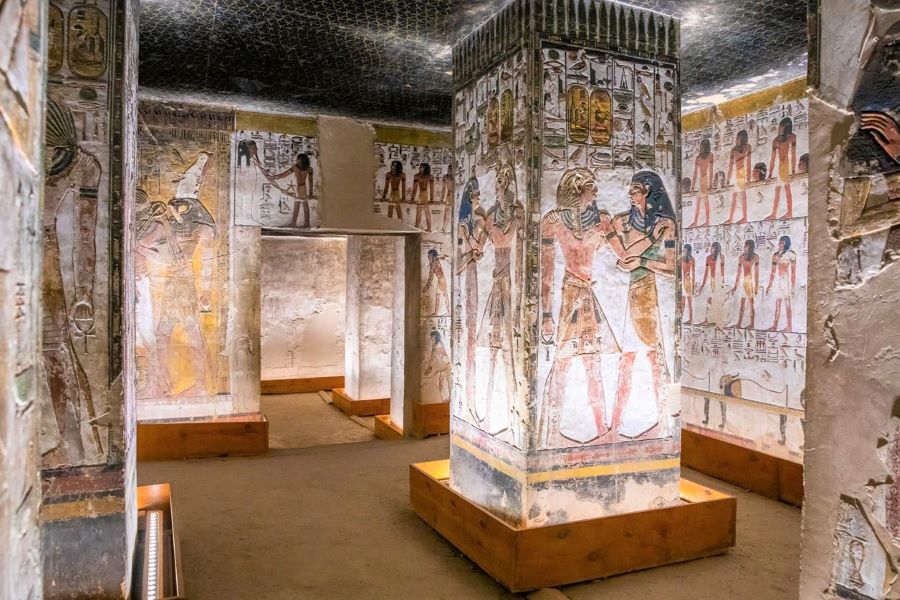
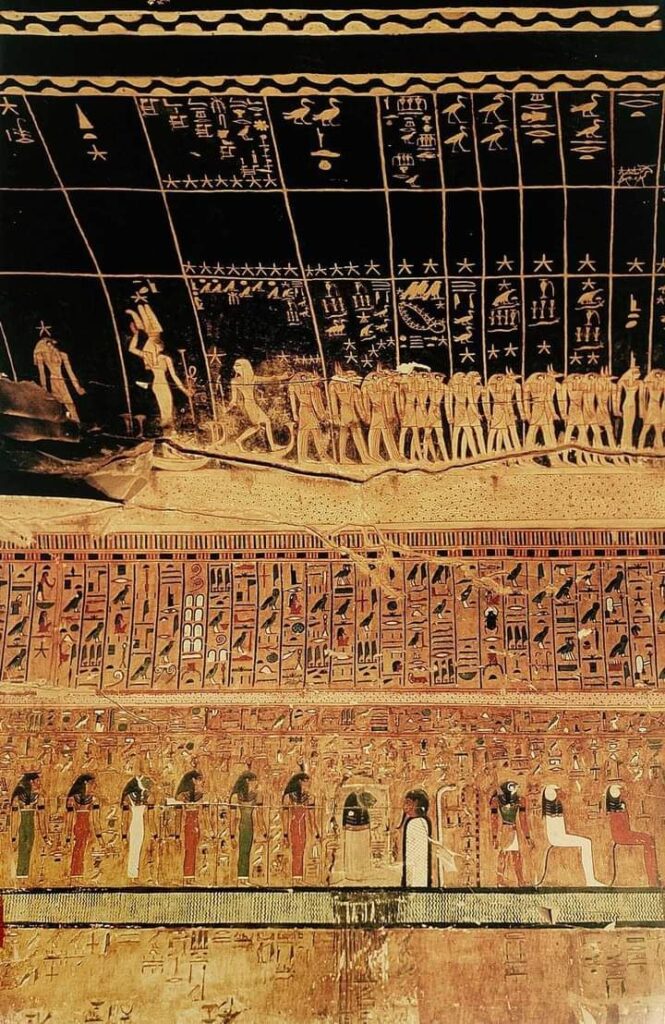
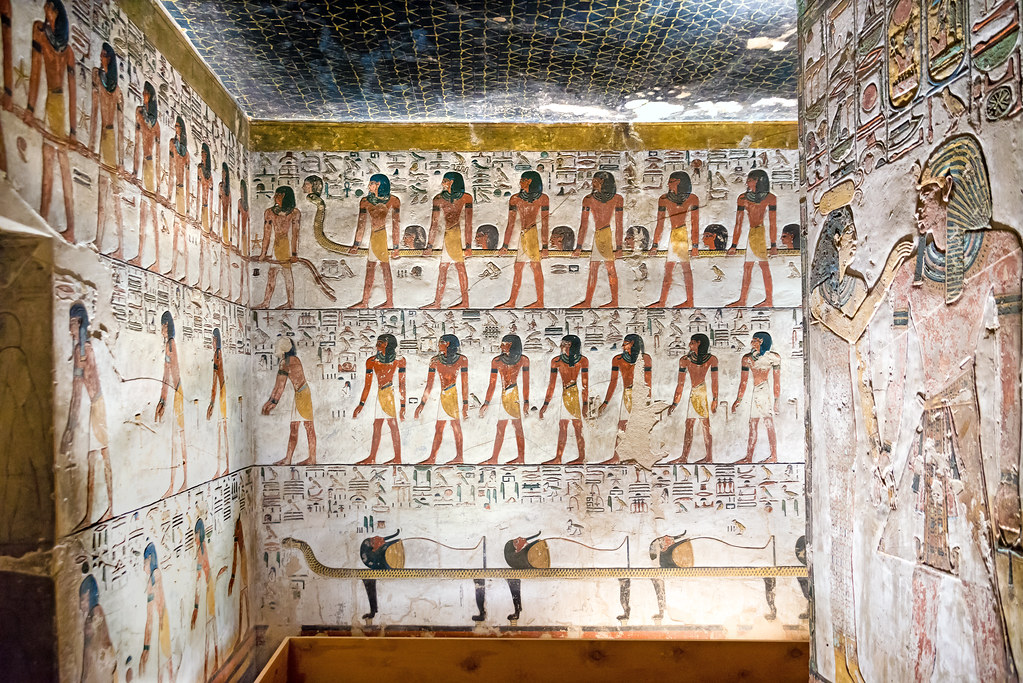
Artistically, the Tomb of Seti I stands in a category of its own, representing a moment in the 19th Dynasty when Egyptian craftsmanship reached its absolute zenith. Unlike many later tombs that used “Sunk Relief” to save time, KV17 is dominated by “Raised Relief,” a much more labor-intensive and delicate process where the background is carved away to leave the figures standing out from the wall. This technique gives the murals a stunning three-dimensional quality and a sense of lifelike texture. The colors used—vibrant blues made from lapis lazuli, deep ochres, and brilliant whites—have been preserved by the tomb’s extreme depth and stable environment. Every figure, from the protective goddesses Isis and Nephthys to the complex deities of the underworld, is rendered with a grace and fluidity that is unparalleled. For travel content creators and photographers, these walls provide an endless array of “perfect” compositions. The artistic program is so dense that one could spend days studying a single corridor without seeing every detail. This tomb is the definitive proof that the ancient Egyptians were not just builders, but some of the most sophisticated artists the world has ever known, creating a gallery that was never meant for human eyes, but for the gods themselves.
3. The Enigmatic Hidden Tunnel: The K-Corridor

One of the most enduring mysteries of the Valley of the Kings is the “K-Corridor,” a mysterious tunnel that begins at the floor of Seti I’s burial chamber and plunges even deeper into the mountain. For decades, archaeologists have speculated about the purpose of this passage, which extends for nearly 174 meters beyond the burial room. Some believe it was intended to reach the local water table, symbolizing the primordial waters of the Nun, while others suggest it was an unfinished project to link the tomb with another sacred site. Despite several excavation attempts—the most recent using high-tech robotic cameras—the end of the tunnel remains partially unexplored and filled with debris. This “hidden passage” adds a layer of adventure and intrigue to the KV17 narrative that is highly appealing to the modern traveler. It transforms the tomb from a static historical site into a living mystery that is still being solved. For the tourism industry, the K-Corridor is a powerful storytelling tool; it reminds us that even in a site as famous as the Valley of the Kings, there are still secrets waiting to be unearthed, and that Seti I’s journey into the afterlife may have been even more complex than we can imagine.
4. The Celestial Vault: The First Astronomical Ceiling

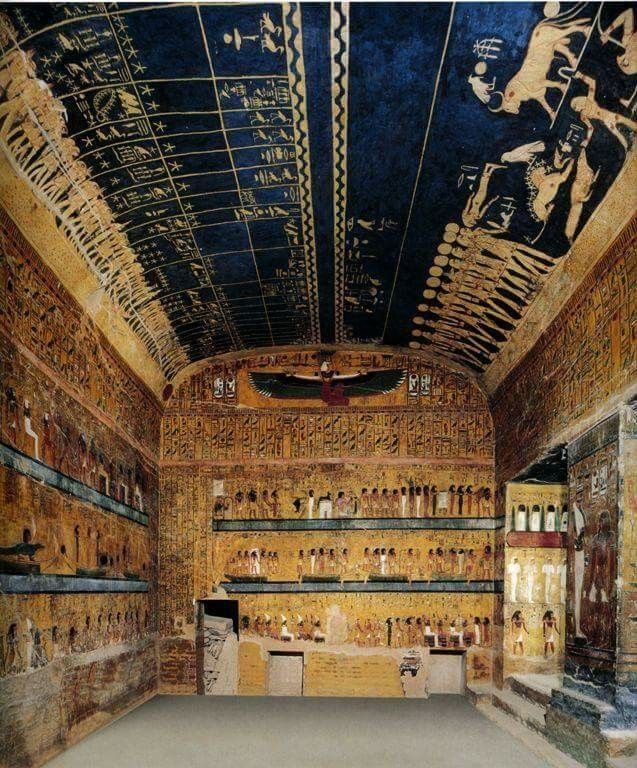
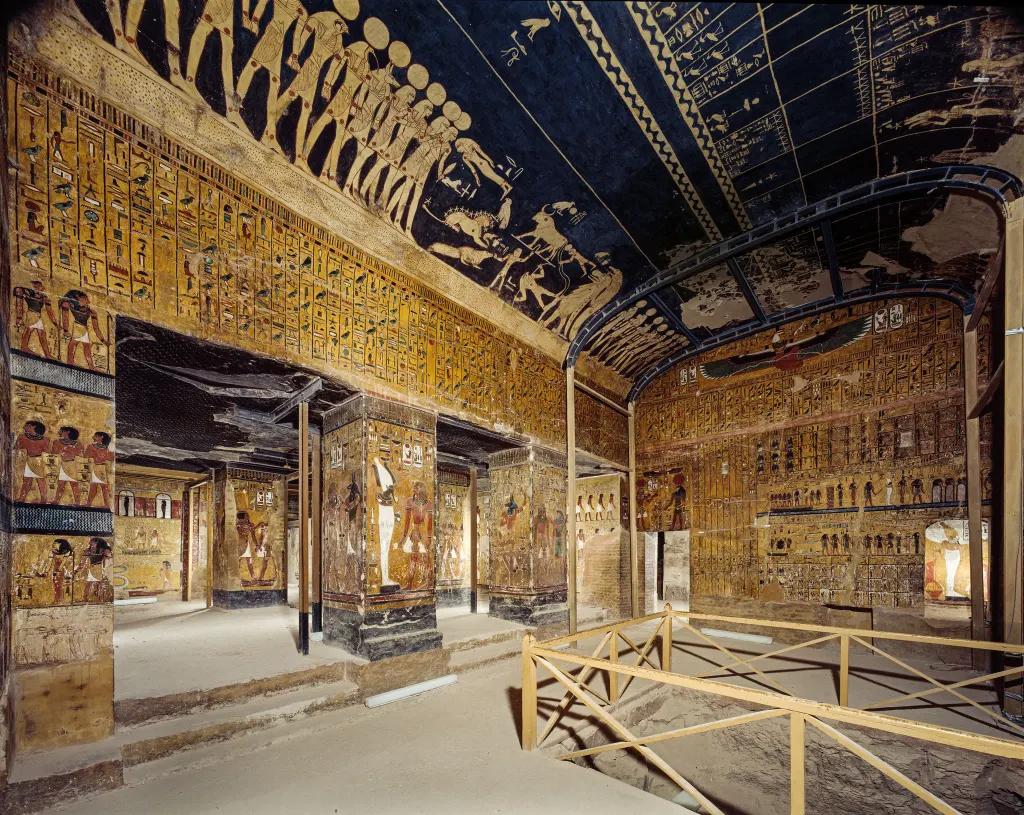
The burial chamber of Seti I features one of the most significant intellectual milestones in ancient Egyptian art: the first-ever complete astronomical ceiling in the Valley of the Kings. This vaulted roof is a stunning masterpiece of golden stars set against a deep, midnight-blue background, representing the night sky and the body of the sky goddess Nut. Unlike earlier decorative styles, this was a functional map of the heavens, depicting the constellations, the decans (star groups used for timekeeping), and the various planets known to the Egyptians. For the modern visitor, standing beneath this ceiling is a profound experience; it transforms the burial chamber into a cosmic portal, a space where the Pharaoh was intended to merge with the eternal rhythm of the stars. This astronomical program reflects a highly advanced understanding of mathematics and observation, proving that the Egyptian “House of Life” was a center of scientific inquiry as much as spiritual ritual. In a marketing context, this ceiling is the tomb’s “hero image,” a visual representation of the Pharaoh’s desire to achieve a status that was literally out of this world, ensuring that his soul would navigate the celestial waters for all of time.

5. The Alabaster Sarcophagus and the Lost Treasure

The center of the burial chamber once held what many consider the most beautiful sarcophagus ever found in Egypt. Carved from a single block of translucent alabaster (calcite), the sarcophagus of Seti I was so thin that when a lamp was placed inside, the entire vessel would glow, illuminating the delicate blue-filled engravings of the Book of Gates that covered its surface. Although the King’s mummy was moved in antiquity to protect it from looters, the sarcophagus itself remained in the tomb until its discovery in 1817. Today, this priceless artifact resides in the Sir John Soane’s Museum in London, but its presence is still felt in the empty space of the burial chamber. For travelers, the story of this sarcophagus adds a layer of international intrigue and “treasure hunting” history to the visit. It highlights the incredible craftsmanship of the 19th Dynasty, where stone was treated like glass, and every surface was utilized to ensure the King’s safe passage. Even without the physical vessel, the empty pit serves as a poignant reminder of the physical journey the Pharaoh’s remains took—from the depths of the Theban hills to the curiosity of the modern world.

6. The Belzoni Discovery: A 19th-Century Sensation

The modern history of KV17 is inextricably linked to the legendary Italian explorer Giovanni Belzoni, who “opened” the tomb on October 18, 1817. When Belzoni first entered, he was overwhelmed by the freshness of the colors, stating that it looked as if the painters had just left the day before. His discovery sent shockwaves through the scientific world, sparking a global fascination with Egypt that has never truly faded. Belzoni even created a full-scale wax and plaster replica of the tomb’s chambers for an exhibition in London, marking the birth of modern “Egyptomania.” For the tourism industry, the Belzoni narrative provides a thrilling human element to the site; it is a story of adventure, grit, and the literal unearthing of a lost world. When visitors walk through the corridors today, they are walking in the footsteps of those early pioneers who first shone light onto these masterpieces after three thousand years of darkness. This historical context enriches the visitor’s experience, connecting the ancient majesty of Seti I with the romantic era of discovery that defined the beginning of modern archaeology.

7. The "Hall of Beauties" and the Perfection of Proportion

Deep within the labyrinth of KV17 lies a chamber traditionally known as the “Hall of Beauties,” a space that serves as the ultimate showcase for the 19th Dynasty’s artistic canon. In this pillared hall, the raised reliefs reach a level of refinement that borders on the divine. The figures of Seti I, depicted standing before various deities such as Hathor and Horus, are carved with an almost melodic sense of proportion and grace. The profiles are delicate, the musculature is subtle, and the intricate details of the royal jewelry and pleated linen robes are rendered with astonishing clarity. For art historians and high-end cultural tourists, this room is the heart of the tomb; it represents the “Classical Age” of Egyptian art before the styles became more hurried in later reigns. The “Hall of Beauties” is a testament to the fact that for Seti I, the tomb was not merely a place of rest, but a gallery of perfection meant to reflect the harmony of the universe. It remains one of the most photographed and studied spaces in the entire necropolis, embodying a level of aesthetic excellence that continues to set the bar for artistic beauty thousands of years later.

8. Pioneering Restoration: Saving a Fragile Masterpiece

Because of its extreme depth and the delicate nature of its raised reliefs, the Tomb of Seti I has been at the center of some of the world’s most sophisticated conservation projects. In the past, the tomb suffered from fluctuating humidity and early, well-intentioned but damaging restoration attempts. However, the modern era has seen a revolution in how we protect this “Sistine Chapel.” Utilizing advanced environmental controls and non-invasive stabilization techniques, teams of international experts have worked tirelessly to ensure the vibrant pigments do not flake or fade. This includes the installation of specialized flooring to reduce dust and “cool” lighting systems that reveal the true depth of the carvings without introducing heat. For the modern traveler, understanding this ongoing preservation effort is a vital part of the visit. It transforms the guest from a passive observer into a stakeholder in the survival of global heritage. Highlighting these “silent” efforts is a powerful marketing tool, as it appeals to the growing demographic of “responsible travelers” who want to ensure that their presence supports the longevity of the sites they admire.

9. The Ultimate Luxury Destination: Exclusivity and Awe

In the competitive landscape of global tourism, the Tomb of Seti I holds a unique position as the ultimate “bucket list” destination for luxury travelers and connoisseurs of history. Due to its fragility and immense historical value, access to KV17 is often restricted and carries a higher ticket price than other tombs in the valley. This exclusivity is not just a logistical necessity; it is part of the tomb’s “brand” as a premium, once-in-a-lifetime experience. For tourism marketing, KV17 is the “Gold Standard” of cultural excursions. It is the site you visit when you want to see the very best that human history has to offer, away from the largest crowds. The feeling of standing in the silent, cool depths of the mountain, surrounded by the finest art of the ancient world, offers a sense of profound connection that few other places on earth can replicate. By positioning the tomb as a masterpiece of “exclusive heritage,” travel curators can offer their clients a journey that feels more like a private viewing in a royal gallery than a standard tourist stop, ensuring that the legacy of Seti I remains as prestigious today as it was during his glorious reign.

10. The Scientific Symbolism of the Solar Journey

The decorative program within KV17 is not merely an artistic display; it is a rigorous scientific and theological map detailing the physics of the Egyptian afterlife. The sequences of the Amduat and the Book of Gates carved into the walls represent a sophisticated understanding of the solar cycle and the passage of time. The royal architects used the tomb’s descent to physically mirror the “hours of the night,” where each corridor and chamber corresponds to a specific stage of the sun’s journey through the underworld. This integration of astronomical observation with funerary architecture shows that the “House of Life” priests were master chronometers. For the modern intellectual traveler, this adds a layer of “archeo-astronomy” to the visit. It demonstrates that the ancient Egyptians viewed the cosmos as a predictable, mathematical system that could be navigated through precise ritual and geometry. Every angle of the descent was calculated to ensure the King’s soul would successfully synchronize with the rising sun, proving that the tomb was a laboratory of spiritual science designed to conquer the chaos of darkness and ensure the eternal return of light.

11. Technical Mastery: The Engineering of the Abyss

The technical execution of KV17 remains one of the most impressive feats of the 19th Dynasty, showcasing a level of engineering mastery that allowed the royal builders to conquer the geological limitations of the mountain. To excavate over 137 meters of solid limestone while maintaining perfect structural integrity required an advanced understanding of lithostatic pressure and ventilation. The workers used bronze chisels and flint tools to create surfaces so smooth they could be plastered and carved with the finest raised relief. Furthermore, the lighting of these deep chambers was a marvel of ancient innovation; using a system of high-quality oil lamps with salt added to prevent smoke, the artists worked in near-perfect clarity far beneath the surface. For today’s engineering-minded visitors, the tomb is a testament to the “Trial and Error” and ultimate success of ancient project management. It highlights a period where human labor and scientific calculation combined to create a subterranean palace that has remained structurally sound for over three millennia, surviving earthquakes and the immense weight of the Theban peaks above.

12. Conclusion: The Eternal Masterpiece of the Pharaohs

In conclusion, the Tomb of Seti I (KV17) stands as the undisputed pinnacle of royal funerary art, a place where the grandeur of the Pharaohs reached its most perfect expression. It is far more than a grave; it is a “Stone Library” of human ambition, a “Sistine Chapel” carved into the heart of a mountain to protect a vision of eternity. While other tombs in the Valley of the Kings offer fragments of beauty, KV17 offers a total immersion into a world of vibrant color, complex science, and divine grace. As you ascend back toward the desert sun, the memory of the star-studded ceiling and the “Hall of Beauties” remains etched in your mind—a reminder that in the 19th Dynasty, the boundary between the mortal and the divine was bridged through the power of art. For any traveler, researcher, or dreamer, a journey into the depths of Seti I’s tomb is a journey into the soul of Ancient Egypt at its most glorious peak. It is the ultimate proof that with enough devotion and enough skill, a King can create a legacy that truly outshines the sun and outlasts the very mountains themselves.

The Tomb of Seti I : Frequently Asked Questions

Due to its incredible depth and the fragile nature of its “Raised Reliefs,” the tomb requires constant, high-tech environmental monitoring to prevent damage from humidity and dust. The higher ticket price acts as a conservation fee and a way to limit the number of visitors at any one time, ensuring that this unique masterpiece is preserved for future generations without being “over-visited.”

Currently, the K-Corridor is strictly for archaeological research and is not open to general visitors. Because it plunges so deeply and steeply into the bedrock, it presents significant safety and ventilation challenges. However, standing in the burial chamber and looking down into its entrance provides a thrilling sense of the “unsolved mysteries” that still exist within the valley.

“Raised Relief” is much harder to produce. The artists had to carve away the entire background of the wall to leave the figures standing out in 3D. In “Sunk Relief” (used in many later tombs), the figures are simply cut into the flat surface. The raised style in KV17 allows for much more detail in the facial expressions and clothing, which is why it is considered the highest form of Egyptian artistic skill.

Like his son Ramesses II, Seti I’s mummy was moved by priests in the 21st Dynasty to protect it from looters. It was eventually found in the “Royal Cache” (DB320) in 1881. Today, you can see his remarkably well-preserved mummy at the National Museum of Egyptian Civilization (NMEC) in Cairo. His face is often cited as one of the most “noble” and “lifelike” of all the royal mummies.

The black (actually a very deep midnight blue) and gold ceiling represents the “Starry Sky” or the body of the goddess Nut. It is a functional map of the heavens. The gold stars against the dark background were meant to guide the King’s soul through the night so he could rise with the sun in the morning, effectively turning the tomb into a celestial observatory for the afterlife.