
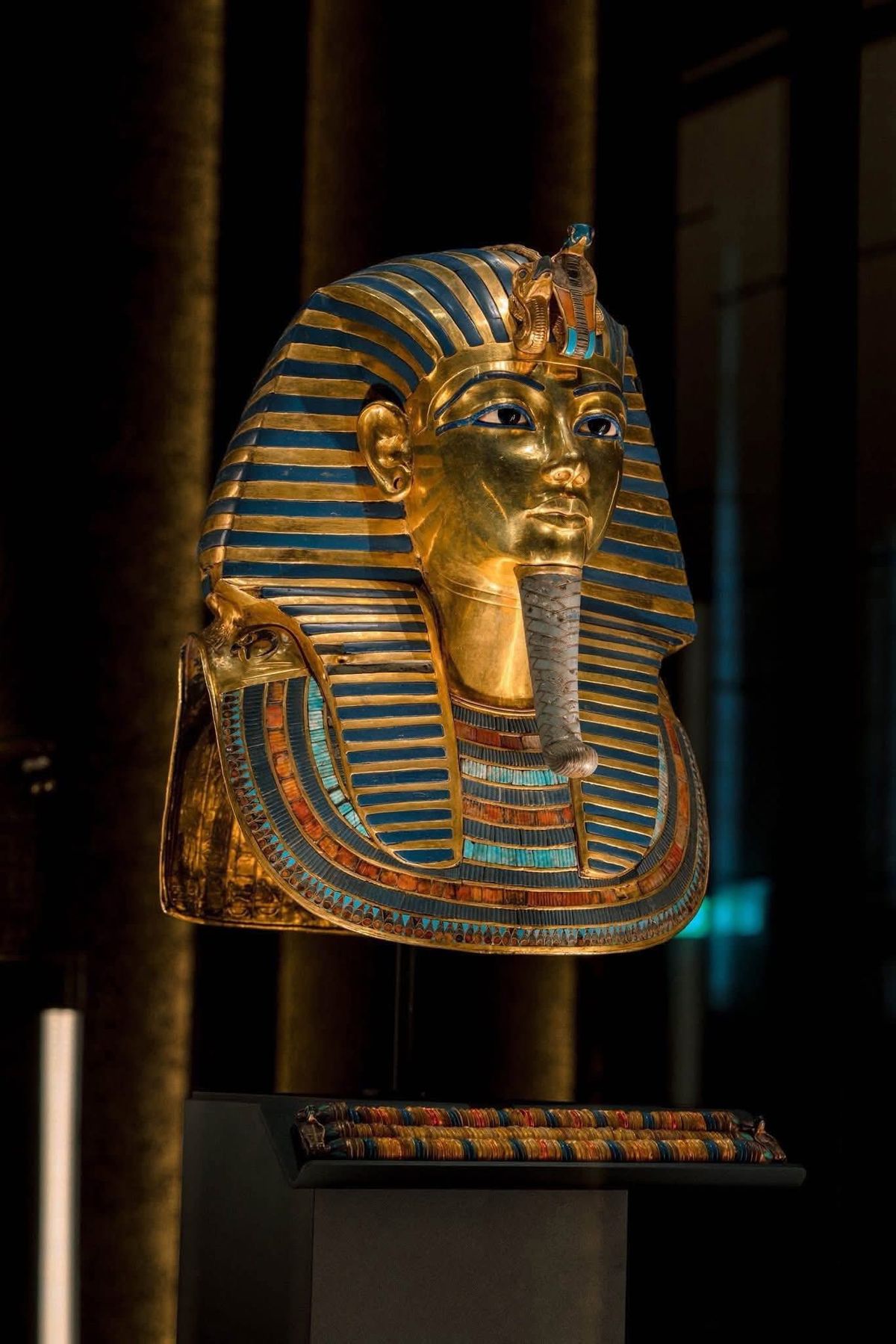
Welcome to

The Tomb of Tutankhamun: A Golden Portal to Ancient Egypt’s Majesty

On a quiet November morning in 1922, the world of archaeology was changed forever when Howard Carter caught the first glimmer of gold through a small hole in a sealed doorway. The discovery of KV62—the tomb of the boy-king Tutankhamun—was not merely a historical find; it was a cultural phenomenon that reignited a global obsession with Ancient Egypt. While the Great Pyramids and the Temple of Karnak demonstrate the monumental scale of the pharaohs, it is this small, once-hidden chamber in the Valley of the Kings that provides the most intimate and dazzling look at the sheer opulence of a royal burial. Tutankhamun himself was a relatively minor king who ruled for a short time during the 18th Dynasty, yet his tomb remained largely untouched by looters for over 3,000 years, preserving a treasure trove of over 5,000 artifacts that offer a window into a world of unimaginable craftsmanship and spiritual devotion.

For the modern traveler, entering the tomb of Tutankhamun is a transformative experience. It is a journey through a narrow corridor that leads into the heart of a legend. Here, the walls are adorned with vibrant scenes depicting the young king’s transition into the afterlife, guarded by the gods of the underworld. The highlight, of course, is the sight of the king’s mummified remains and the outer sarcophagi that once held the most famous gold mask in human history. To visit KV62 is to stand at the intersection of history and myth, where the “Curse of the Pharaohs” meets the meticulous science of archaeology. It remains the most visited and iconic site in the Theban Necropolis, a golden testament to a king who was once forgotten by time, only to become the most famous face of Ancient Egypt in the modern era.

1. The Moment of Discovery: A Ten-Year Obsession

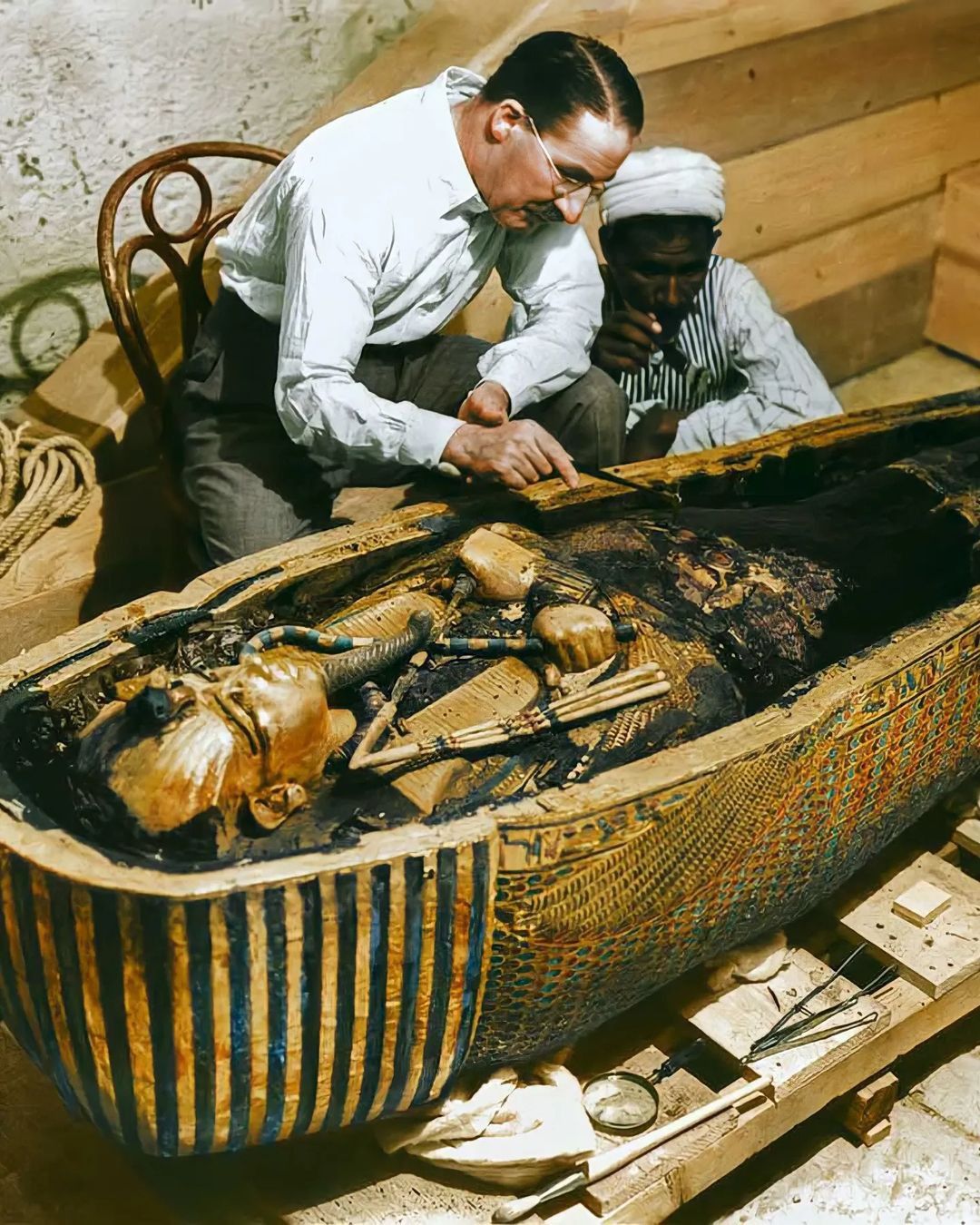
The story of KV62 is not just a tale of ancient gold, but a testament to human perseverance. For nearly a decade, Howard Carter and his financier, Lord Carnarvon, combed the Valley of the Kings with little success. By 1922, they were on the brink of giving up, with Carnarvon warning that this would be their final season. Fate intervened on November 4th, when a water boy discovered a stone step buried beneath the debris of ancient workmen’s huts. As they cleared the stairway and reached the sealed door, the tension was palpable. When Carter finally made a small breach in the second door, he held up a candle to the darkness. The hot air escaping the chamber caused the flame to flicker, but as his eyes adjusted, the glint of gold began to emerge from the shadows. When Carnarvon anxiously asked, “Can you see anything?”, Carter uttered the legendary words: “Yes, wonderful things.” This moment didn’t just uncover a tomb; it birthed “Tut-mania,” a global fascination that influenced everything from fashion to architecture in the 1920s. For the modern traveler, standing at that very entrance evokes a sense of shared discovery, making one feel like a witness to the greatest archaeological “find” in human history. It reminds us that even in a valley explored for centuries, secrets can remain hidden right beneath our feet.
2. The Artistic Narrative: A Hurried Journey to Eternity

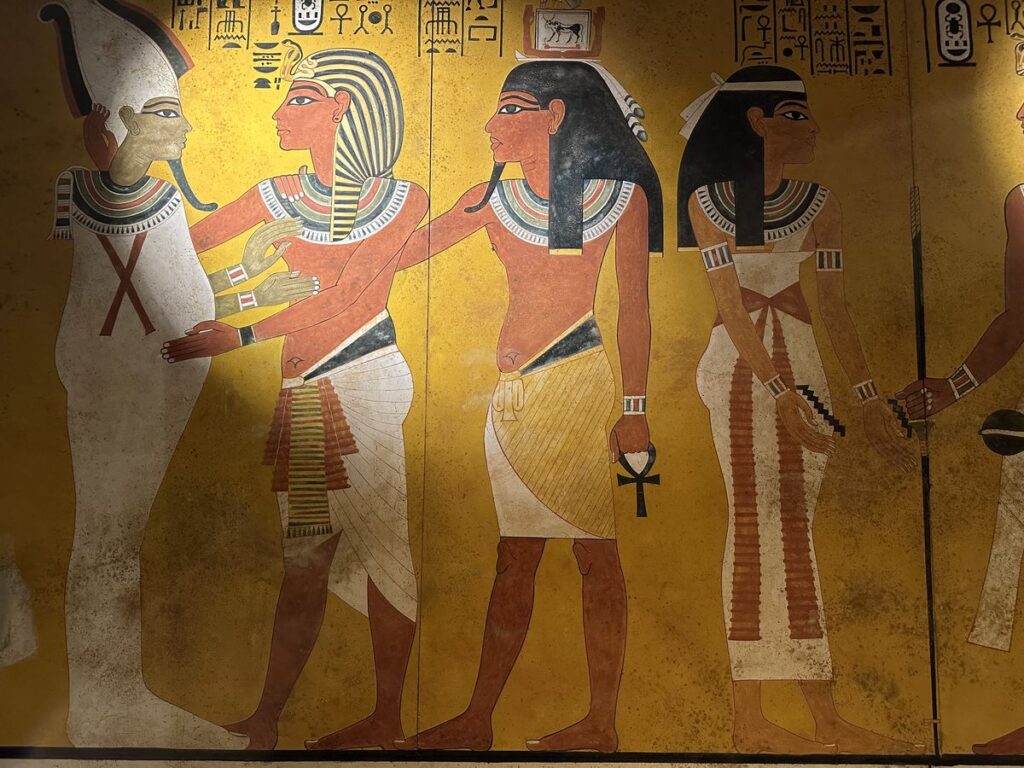
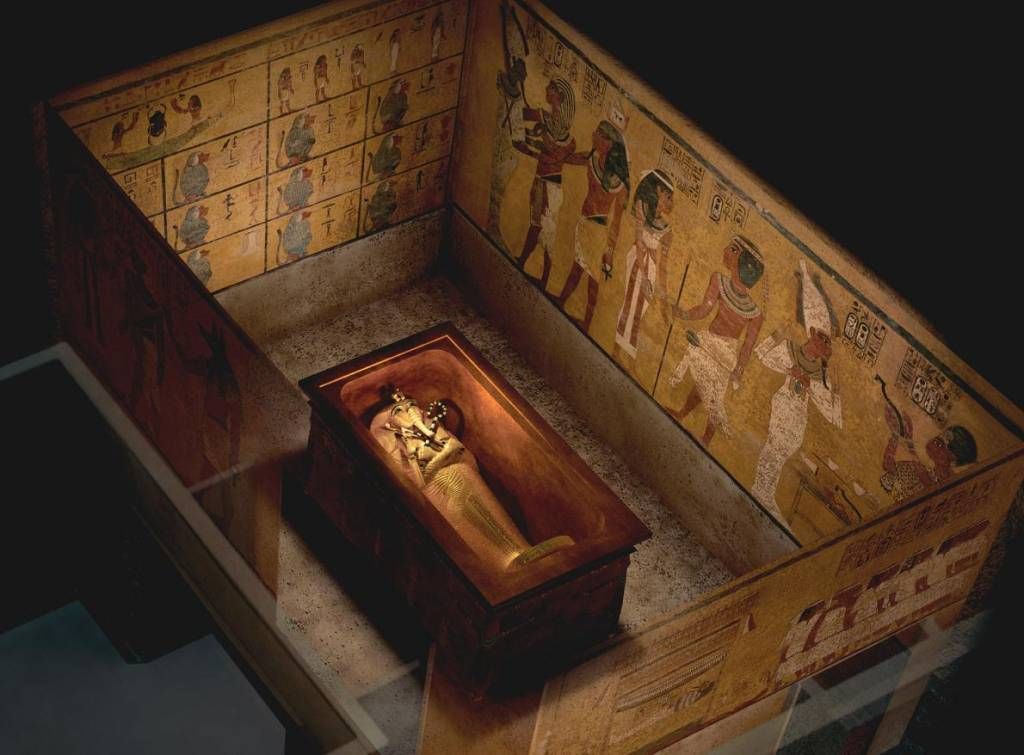
While the royal tombs of the 19th and 20th Dynasties are famous for their sprawling corridors and endless reliefs, Tutankhamun’s burial chamber is strikingly intimate. This small scale is a poignant reflection of the king’s sudden and unexpected death at the young age of nineteen. Because there was no grand tomb ready for him, a smaller private tomb was likely repurposed and finished in a frantic seventy-day period—the time required for mummification. The artistic style is a fascinating blend of the traditional and the revolutionary “Amarna” style inherited from his father, Akhenaten. The walls, painted a vibrant yellow to mimic the radiance of gold, depict the king’s transition into the divine realm. One particularly famous scene shows the “Opening of the Mouth” ceremony, performed by Ay, his successor, who is depicted wearing the leopard skin of a priest. However, a close look reveals small brown spots on the murals; these are ancient mold spores that grew because the tomb was sealed while the plaster and paint were still damp. This detail adds a hauntingly human layer to the site, proving that despite the royal opulence, the burial was a race against time. For visitors, these “imperfections” make the history feel tangible, closing the 3,300-year gap between the ancient painters and the modern observer.
3. The Enigma of the Sarcophagus and the Golden Shells

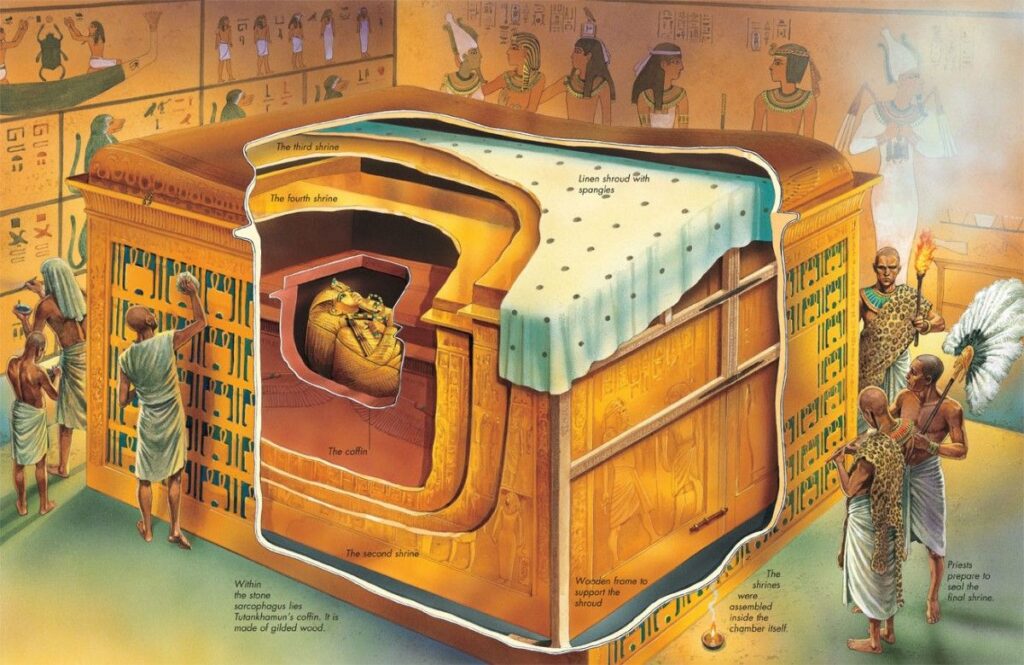
The burial chamber was once filled with four gilded wooden shrines, nested inside each other like Russian dolls, which protected the quartzite sarcophagus at the center. This sarcophagus is a masterpiece of New Kingdom stone-carving, featuring the protective goddesses Isis, Nephthys, Selket, and Neith at each corner, their winged arms outstretched to shield the king for eternity. Inside this stone shell were three magnificent coffins. The two outer coffins were made of gilded wood inlaid with semi-precious stones and glass, while the innermost coffin—a breathtaking 110 kilograms of solid gold—held the king’s mummy. While the most famous treasures, including the iconic funerary mask, have been moved to the Grand Egyptian Museum to ensure their preservation, the outer sarcophagus and the king’s mummy remain in situ. Seeing the king in his original resting place provides a spiritual weight that no museum gallery can replicate. It allows the traveler to understand the “protection” intended by the ancient priests; the layers of gold and stone weren’t just for display, but served as a magical fortress designed to keep the king’s soul (the Ka) safe from the dangers of the underworld. Standing in that cramped, silent space, one realizes that the true treasure isn’t just the gold, but the enduring devotion that sought to make a mortal boy immortal.
4. The Treasures of the Antechamber: A Royal Household for the Afterlife

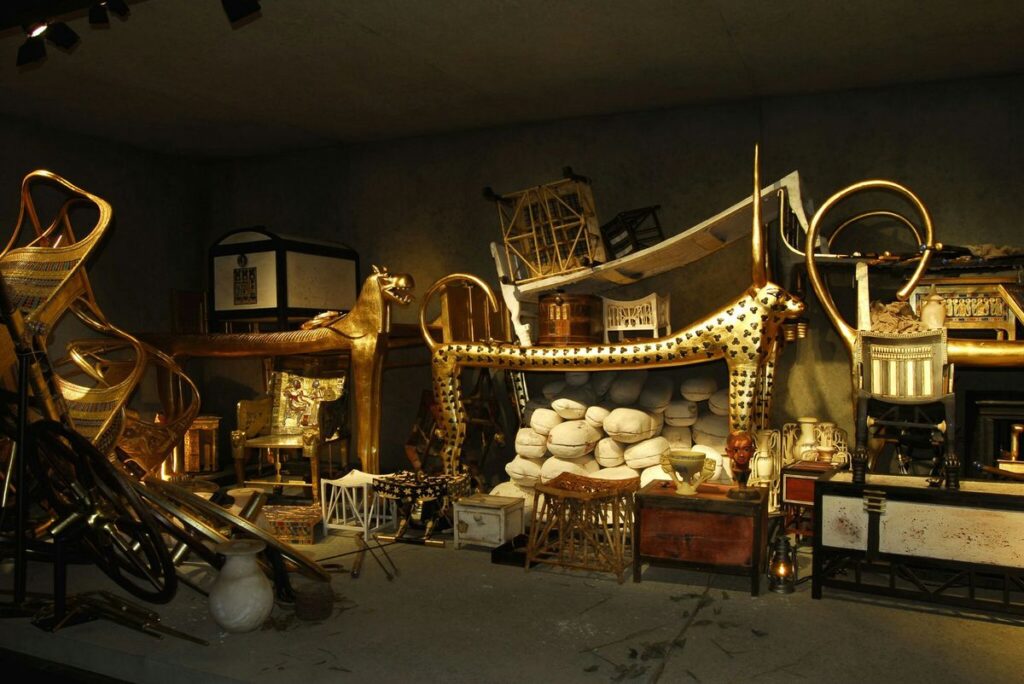
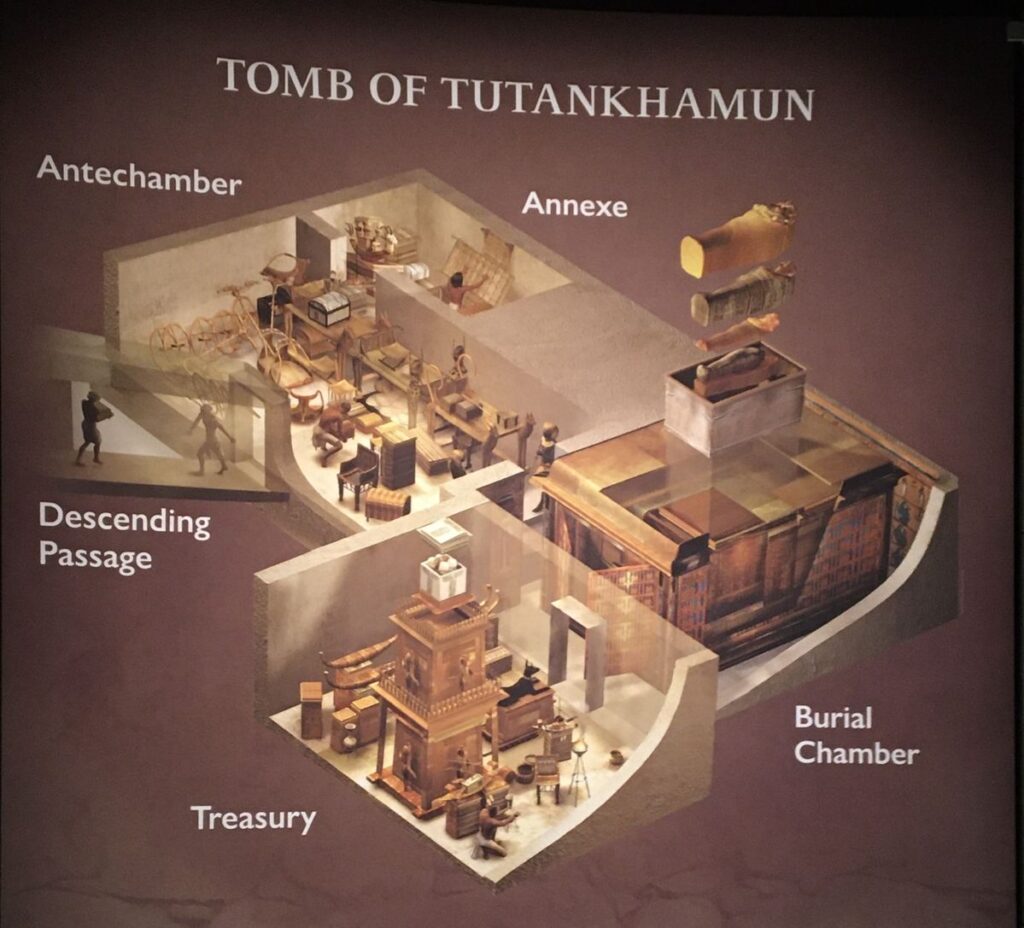
When Howard Carter first entered the antechamber, he was met with a scene of “organized chaos” that represented the entire lifestyle of an 18th-century Pharaoh. Unlike the burial chamber, which was spiritual, the antechamber was filled with the functional items Tutankhamun would need to maintain his royal status in the next world. There were three magnificent gilded funeral couches carved in the shapes of a celestial cow, a lioness, and a hippopotamus, designed to carry the king to the heavens. Stacked around them were four disassembled chariots, dozens of exquisite chests containing royal linen, and even a fleet of model boats to navigate the celestial Nile. One of the most touching discoveries was a small, ornate throne featuring an intimate scene of Tutankhamun and his wife, Ankhesenamun, illustrating that even in the afterlife, the king sought the comfort of his earthly relationships. For the traveler, this collection is a revelation of ancient Egyptian craftsmanship; the use of alabaster, ebony, ivory, and gold filigree shows a level of sophistication that rivaled any Renaissance workshop. These objects transform the boy-king from a historical footnote into a living person who enjoyed music, hunting, and the company of his family, making the tomb a profound museum of ancient daily life.

5. The Mystery of the "Curse" and the Scientific Reality

No discussion of KV62 is complete without addressing the legendary “Curse of the Pharaohs,” a narrative that captivated the world following the death of Lord Carnarvon shortly after the tomb’s opening. The media of the 1920s fueled stories of a protective spell inscribed on the tomb’s entrance, promising death to anyone who disturbed the king’s rest. However, Howard Carter himself lived for nearly 17 years after the discovery, dying at the age of 64 from natural causes. Modern science offers a more grounded explanation for the early deaths of some team members, pointing to the presence of ancient spores, fungi, or bacteria (such as Aspergillus flavus) that had been trapped in the stagnant air of the tomb for millennia. When the tomb was opened, these pathogens could have caused severe respiratory issues for those with weakened immune systems. Today, advanced ventilation systems and strict limits on the number of daily visitors ensure that the atmosphere inside the tomb is safe for both the ancient murals and the modern tourist. For the visitor, the “curse” remains a thrilling part of the site’s lore, adding an air of mystery and respect for the ancient dead, while the scientific reality highlights the incredible preservation work required to keep this world heritage site accessible for future generations.

6. The Significance of the "Boy-King" in Modern Egyptology

Tutankhamun was essentially a “forgotten pharaoh” until Carter’s discovery, his name having been erased from official records by later rulers who sought to distance themselves from the Amarna period. Ironically, this attempt to delete him from history is exactly what saved his tomb; because his name was unknown to ancient looters, his burial site remained hidden under the debris of the tomb of Ramses VI. Today, Tutankhamun serves as the ultimate ambassador for Egyptian tourism and archaeology. His tomb has taught us more about New Kingdom burial customs, jewelry making, and even royal health (through DNA analysis of his mummy) than almost any other site in the country. For the travel industry, “King Tut” is the gold standard of “bucket-list” experiences. The thrill of standing in the smallest tomb in the valley—which contained the greatest treasures ever found—creates a powerful narrative of the “underdog” who became the most famous king in the world. It serves as a reminder that in Egypt, the most significant discoveries often come from the most unexpected places, ensuring that the Valley of the Kings remains a place of endless fascination and potential for new revelations.

7. The Architecture of KV62: A Deviation from Royal Norms

The physical layout of Tutankhamun’s tomb is an archaeological anomaly that continues to spark debate among scholars. Unlike the grand, sprawling “Gateways to the Afterlife” built for pharaohs like Seti I or Ramses II—which feature deep descending corridors and multiple pillared halls—KV62 is remarkably compact and follows the plan of a private noble’s tomb rather than a king’s. It consists of a steep entryway, a single corridor, and four small chambers: the Antechamber, the Annex, the Burial Chamber, and the Treasury. This structural modesty supports the theory that Tutankhamun’s sudden death caught the royal architects off guard, forcing them to repurpose a smaller, pre-existing tomb intended for a high-ranking official or a member of the royal family. For the visitor, this architectural intimacy creates a powerful atmosphere; there is a tangible sense of the “hurry” and the intense labor that took place in these narrow spaces over 3,000 years ago. It forces one to reconsider the standard narrative of royal burials, showing that even for a Pharaoh, the practicalities of a sudden transition to the afterlife required quick thinking and masterful adaptation of the available space.

8. The Treasury: A Divine Storage of Power and Protection

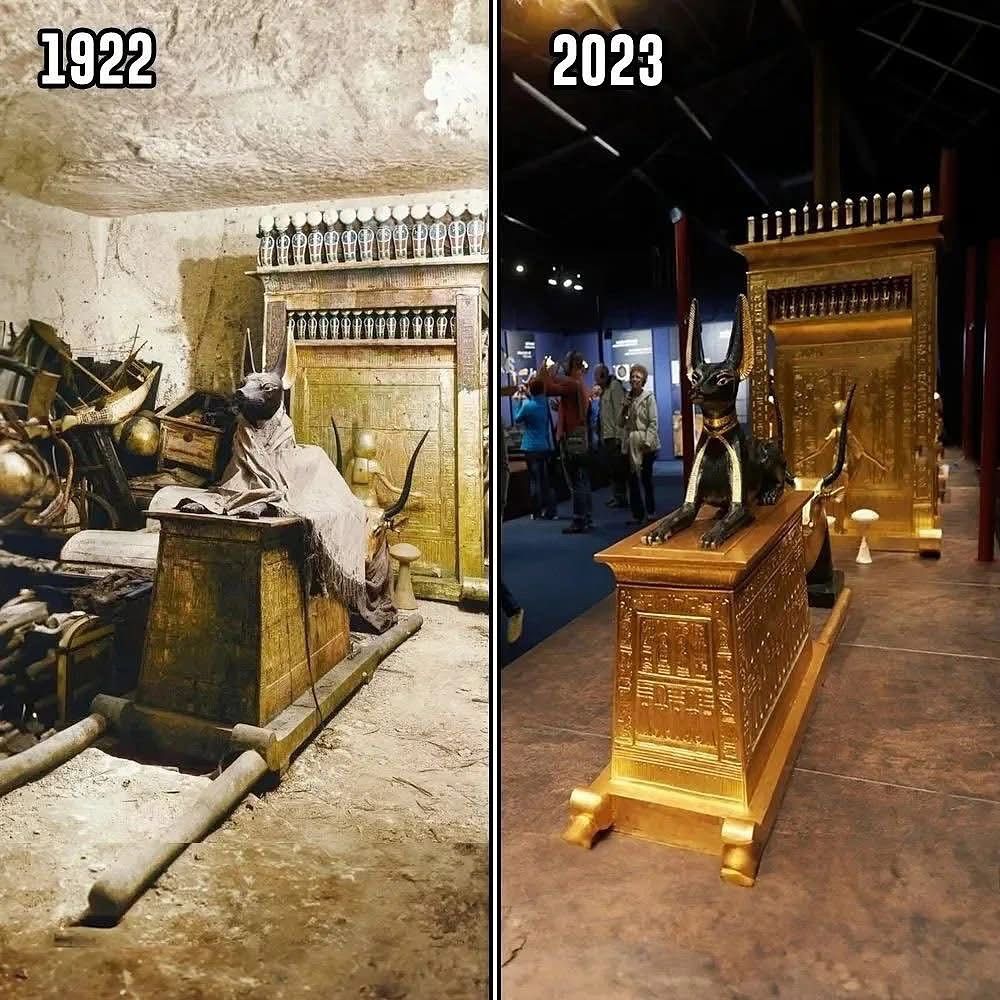
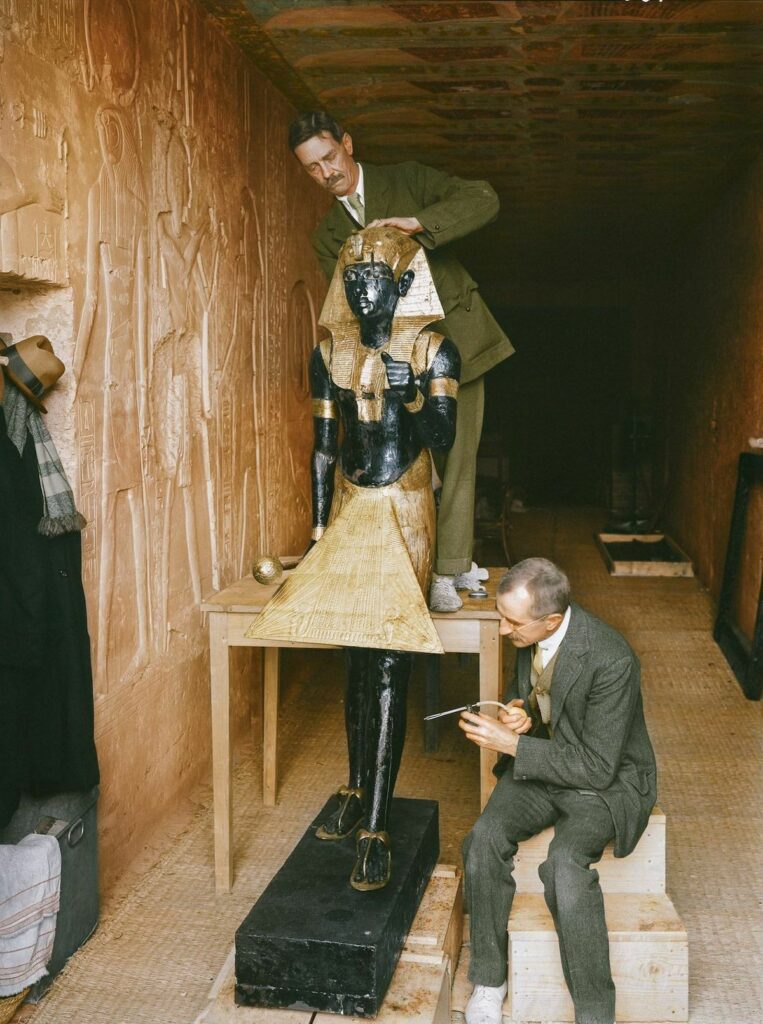
Beyond the burial chamber lies a room that Howard Carter described as the most “spiritually charged” space in the tomb: the Treasury. This room was guarded by a magnificent, life-sized statue of Anubis, the jackal-headed god of mummification, resting on a gilded shrine. The Treasury contained the most sensitive and symbolic items of the king’s funeral, most notably the Canopic Shrine. This stunning golden structure, guarded by the four protective goddesses, held the king’s internal organs in four miniature gold coffins. Surrounding the shrine were dozens of black wooden chests containing “Ushabti” figures—small servant statues meant to perform labor for the king in the afterlife. The complexity of the items in this room reveals the profound depth of ancient Egyptian theology; every object was a functional tool designed to ensure the king’s victory over the forces of chaos in the underworld. For travelers, the Treasury represents the peak of ancient ritualism, where gold was used not just for its beauty, but as a magical substance that could bridge the gap between the mortal world and the divine.

9. Preserving the Past: The Challenge of Modern Tourism

In the century since its discovery, KV62 has faced a new kind of threat: the very popularity that has made it a global icon. The influx of thousands of daily visitors introduced humidity, carbon dioxide, and dust into a space that had been perfectly sealed for millennia. These environmental factors began to take a toll on the delicate 3,000-year-old murals, leading to the “Great Restoration” project led by the Getty Conservation Institute and the Egyptian Ministry of Tourism and Antiquities. Today, the tomb is equipped with a sophisticated climate-control system and a carefully designed viewing platform that protects the original floors and walls while allowing visitors an unobstructed view. This balance between “access” and “preservation” is a central theme in modern Egyptian tourism. Visiting the tomb today is an exercise in responsible travel; by adhering to the strict entry limits and photography rules, tourists contribute to the ongoing survival of this world treasure. It serves as a reminder that we are merely temporary guests in the king’s eternal home, and our primary duty is to ensure that the “wonderful things” Carter saw in 1922 remain visible for generations to come.

10. The Scientific Legacy: What the Mummy Tells Us

Beyond the glitter of gold, the physical remains of Tutankhamun have provided a unique laboratory for modern bio-archaeology. Since the first X-ray in 1968 to the high-tech CT scans and DNA testing of the 21st century, the “Boy-King” has slowly revealed the secrets of his short life. We now know that he likely suffered from a clubfoot, malaria, and a degenerative bone disease, painting a picture of a young man who was physically fragile yet held the immense weight of an empire. DNA analysis also confirmed his parentage, identifying him as the son of the “heretic” Pharaoh Akhenaten, finally settling decades of academic debate. For the modern traveler, seeing the king’s mummy—still resting in his tomb under a climate-controlled glass case—adds a layer of profound empathy. He is no longer just a golden mask on a poster; he is a person who lived, struggled, and died at a pivotal moment in history. This scientific journey transforms the tomb into more than a museum; it becomes a site of ongoing discovery where the latest technology helps us listen to a voice that was silenced over three thousand years ago.

11. The "Tut-Mania" Effect: A Century of Global Influence

The discovery of KV62 in 1922 did more than just fill museum shelves; it triggered a global cultural explosion known as “Tut-mania.” As images of the treasures spread through newspapers and newsreels, the world became obsessed with Egyptian aesthetics. Art Deco architecture, jewelry design, fashion, and even cinema were heavily influenced by the motifs found in the tomb—lotus flowers, scarabs, and the distinct “Egyptian blue” began appearing in New York, London, and Paris. This phenomenon was the first time an archaeological discovery became a part of popular culture in real-time, creating a bridge between the ancient East and the modern West. For tourism professionals, this legacy is still felt today, as the name “Tutankhamun” remains the most powerful brand in the travel world. It is the primary catalyst that draws millions to the Valley of the Kings, proving that the king’s “afterlife” is very much alive in our collective imagination. Visiting the tomb allows one to stand at the source of this global inspiration, seeing the original masterpieces that redefined modern style and sparked a century of wanderlust.

12. Conclusion: The King Who Lives Forever

The story of Tutankhamun’s tomb is the ultimate narrative of irony and triumph. The very rulers who tried to erase his memory unintentionally ensured his immortality by burying his entrance under the rubble of history, protecting him from the looters who emptied the much larger tombs of his successors. Today, Tutankhamun is arguably the most famous name from antiquity, fulfilling the ancient Egyptian belief that “to speak the name of the dead is to make them live again.” His tomb remains the crown jewel of the Theban Necropolis, a place where the air is thick with the weight of the past and the brilliance of the human spirit. As you emerge from the quiet, dimly lit chamber back into the bright Egyptian sun, you carry with you a sense of awe that transcends time. The tomb of Tutankhamun is not just a destination; it is a reminder of our enduring desire to be remembered, a golden beacon that continues to shine from the heart of the desert, inviting the world to witness the eternal majesty of the Pharaohs.

Tomb of Tutankhamun : Frequently Asked Questions

As discussed in our architectural section, the tomb’s small size is likely due to the king’s sudden and unexpected death at age 19. Since a grand royal tomb took decades to carve into the limestone, his advisors likely had to repurpose a smaller, private tomb that was already near completion. This “emergency” burial is also why the paintings are only found in the burial chamber and not throughout the entire tomb.

While the king’s mummy and his outer stone sarcophagus remain in the Valley of the Kings, the iconic solid gold funerary mask, along with the two inner gold coffins and most of the 5,000+ artifacts, have been moved. They are now the centerpiece of the Grand Egyptian Museum (GEM) in Giza, where they are displayed in a massive, dedicated wing.

This is a subject of much historical debate. Recent research and letters suggest that Carter may have taken some small items—such as jewelry and amulets—as “souvenirs” or gifts for his patrons before the tomb was officially inventoried. However, the vast majority of the treasure was meticulously documented and remains in Egypt’s state collection.

To preserve the delicate murals from the humidity caused by human breath, visits are usually limited to about 10–15 minutes per group. The number of daily tickets is also strictly capped. It is highly recommended to visit early in the morning or during the “low season” to experience the chamber with fewer crowds.

In recent years, several high-tech radar scans were conducted to see if there were hidden doorways behind the north and west walls (with some speculating they might lead to the tomb of Nefertiti). However, after exhaustive testing by multiple international teams, the consensus among most archaeologists today is that there are no hidden rooms, and the walls are solid limestone.