
Welcome to

The Tomb of Nefertari: A Journey into the House of Eternity

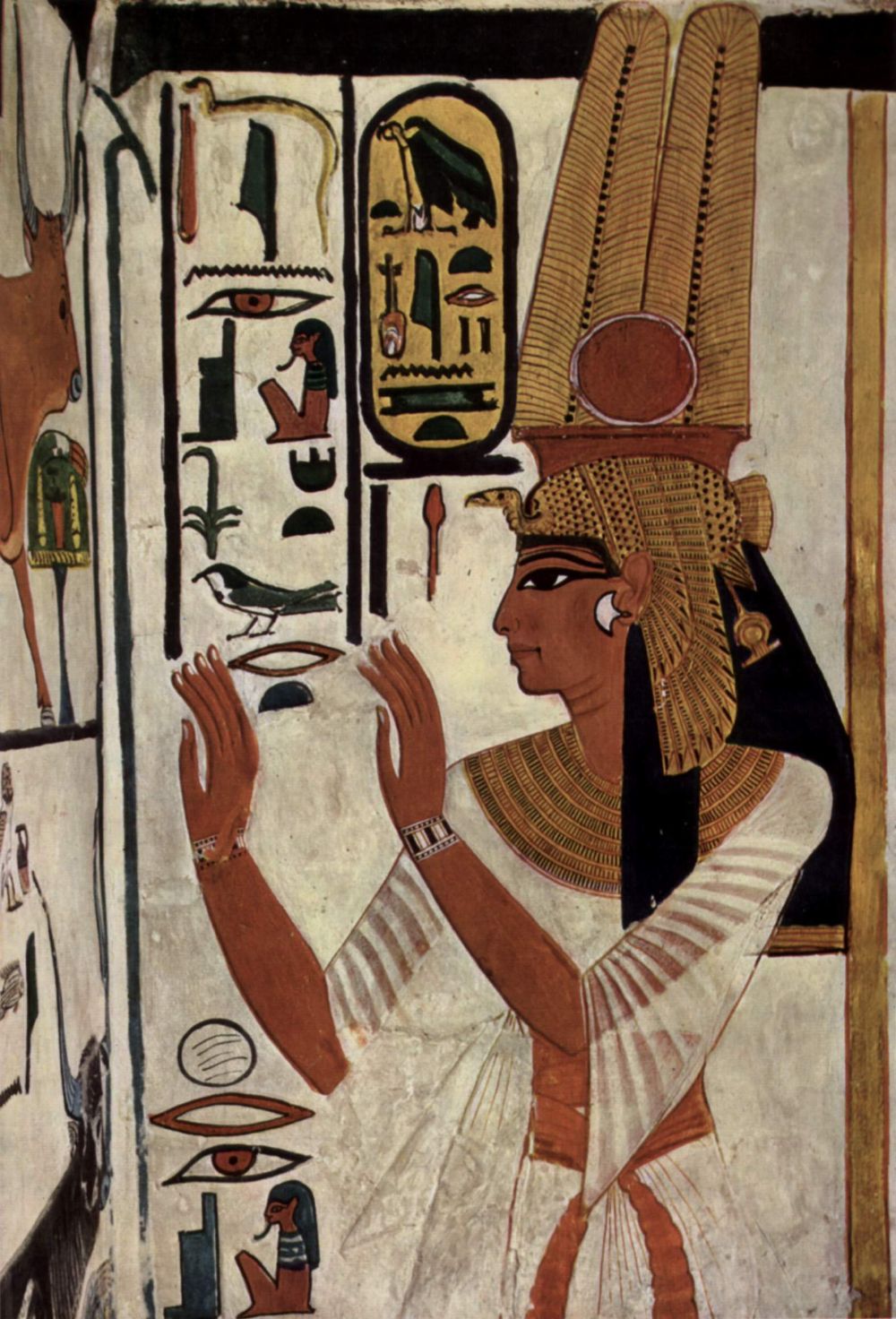
The Tomb of Nefertari, designated by archaeologists as QV66, is widely regarded as the most spectacular achievement of ancient Egyptian funerary art. Located in the Valley of the Queens on Luxor’s West Bank, this tomb was constructed for the favorite wife of Ramses the Great, a woman whose name meant “Beautiful Companion.” Since its discovery in 1904 by Ernesto Schiaparelli, it has captivated the world with the sheer vibrancy of its colors and the exquisite detail of its wall paintings, which appear so fresh they seem as though the artists had only just departed. For travelers planning a luxury tour of Egypt, entering this tomb is a rare privilege that offers a direct, visceral connection to the New Kingdom’s artistic peak. It is not merely a burial site but a sacred “House of Eternity,” designed to ensure the Queen’s successful transition into the afterlife through a series of divine rituals and celestial protections. The scale of the tomb and the quality of the craftsmanship reflect the immense love and respect Ramses II held for his queen, making it a monument to both royal power and human devotion. As you descend its limestone stairs, you leave the modern world behind and enter a realm where the boundaries between the earthly and the divine are beautifully blurred, revealing the spiritual sophistication of a civilization that viewed death as a glorious rebirth.

1. The Artistic Mastery of the 19th Dynasty

The artistry found within the Tomb of Nefertari represents the pinnacle of the 19th Dynasty’s creative output, showcasing a level of detail and emotional depth that is rarely seen in other royal tombs. The artists utilized a technique where the limestone walls were first smoothed with a fine layer of plaster, providing a luminous white canvas for the mineral-based pigments. What distinguishes these paintings is the sophisticated use of shading and depth, particularly in the rendering of the Queen’s features and her elegant, transparent linen robes. Her eyes are depicted with a striking clarity, and her skin tones possess a warmth that gives her a lifelike presence. The palette is rich with symbolic colors: deep lapis lazuli blues representing the night sky, vibrant yellows symbolizing the eternal flesh of the gods, and pure whites denoting ritual purity. Every figure is perfectly proportioned according to the Egyptian canon, yet there is a fluidity to the lines that suggests a personal touch from the master craftsmen of Deir el-Medina. For the cultural traveler, observing these details up close is an educational experience in ancient aesthetics, proving that the Egyptians were not only master builders but also pioneers in the use of color and perspective to create a sense of three-dimensional space within the rock-cut chambers.
2. A Map of the Underworld: The Book of the Dead

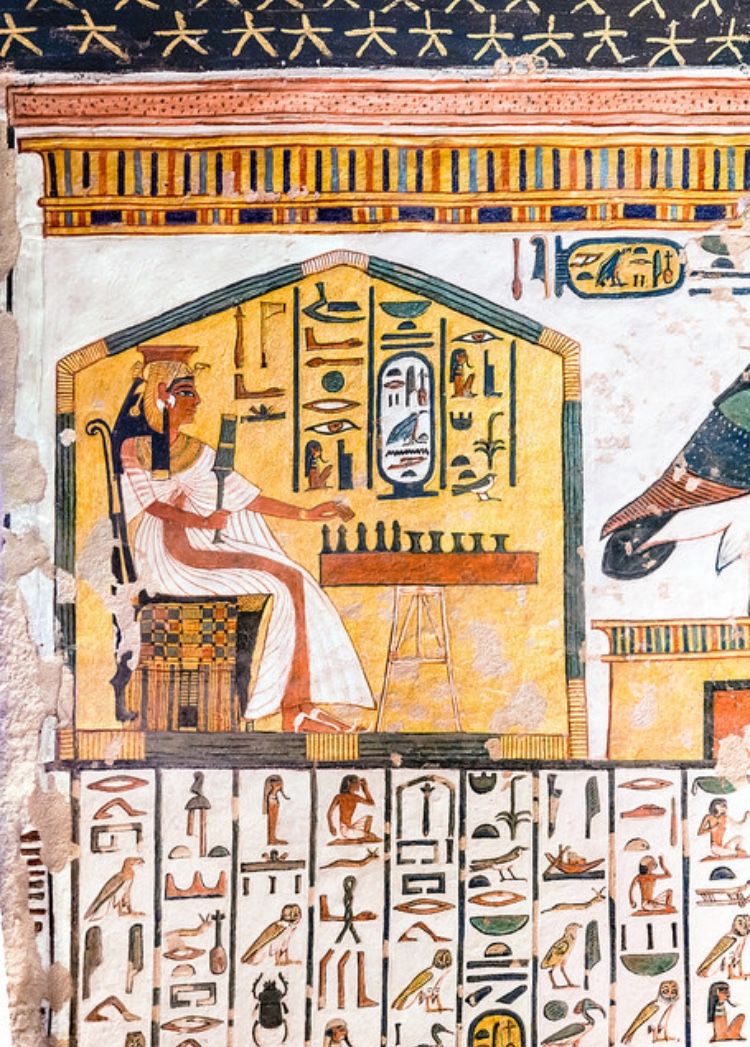
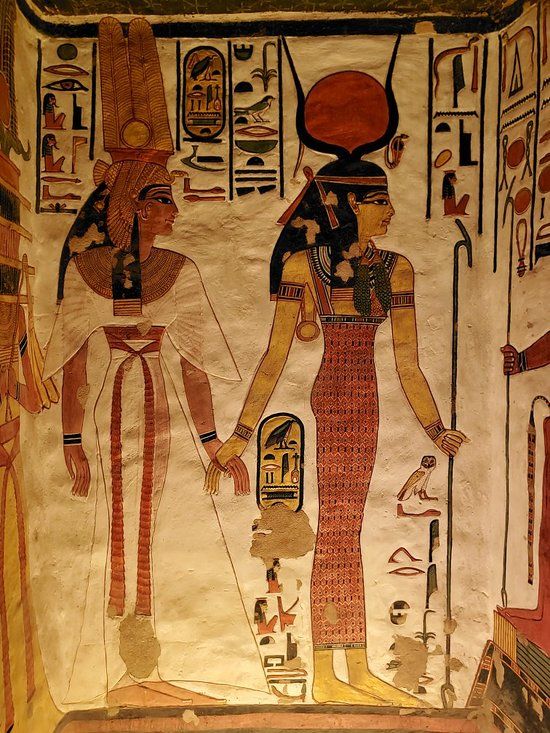
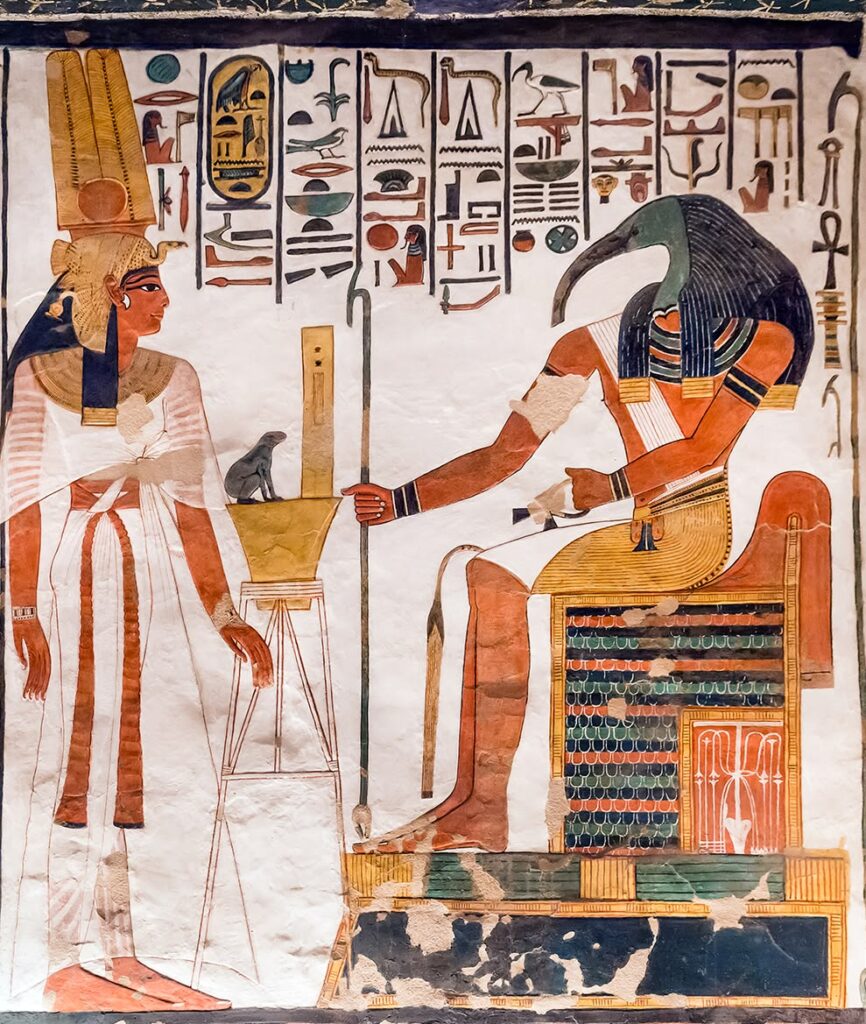
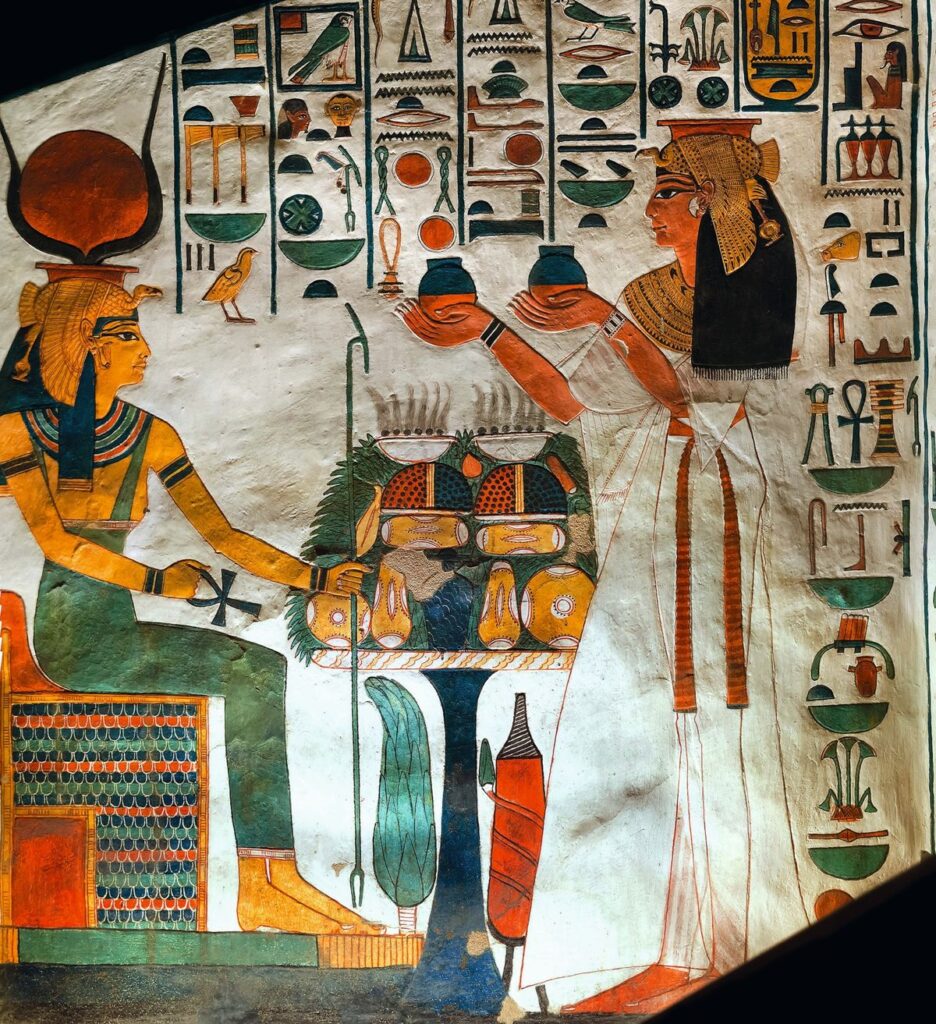
The decorative program of Nefertari’s tomb is not merely ornamental; it serves as a functional and spiritual guide through the perils of the afterlife, drawing heavily from the chapters of the Book of the Dead. As the Queen moves through the tomb’s chambers, she is depicted encountering various guardians and deities who protect the gates of the underworld. One of the most famous scenes shows Nefertari playing a game of Senet, a board game that served as a metaphor for the struggle of the soul to reach the Field of Reeds. This scene is particularly significant as it portrays the Queen’s intellectual and spiritual agency, demonstrating her ability to navigate the challenges of fate. Other walls show her being led by the hand by the goddess Isis or standing before the god Thoth, the divine scribe, to record her virtues. These inscriptions and spells were vital “passports” intended to give the Queen the knowledge and magic required to bypass the demons of the dark and gain entry into the presence of Osiris. For history enthusiasts, studying these walls is like reading an ancient manual on the soul’s journey, revealing a complex moral system where the ultimate goal was to achieve “Ma’at,” or cosmic balance, through a combination of righteous living and divine intercession.
3. The Divine Architecture of the Burial Chamber

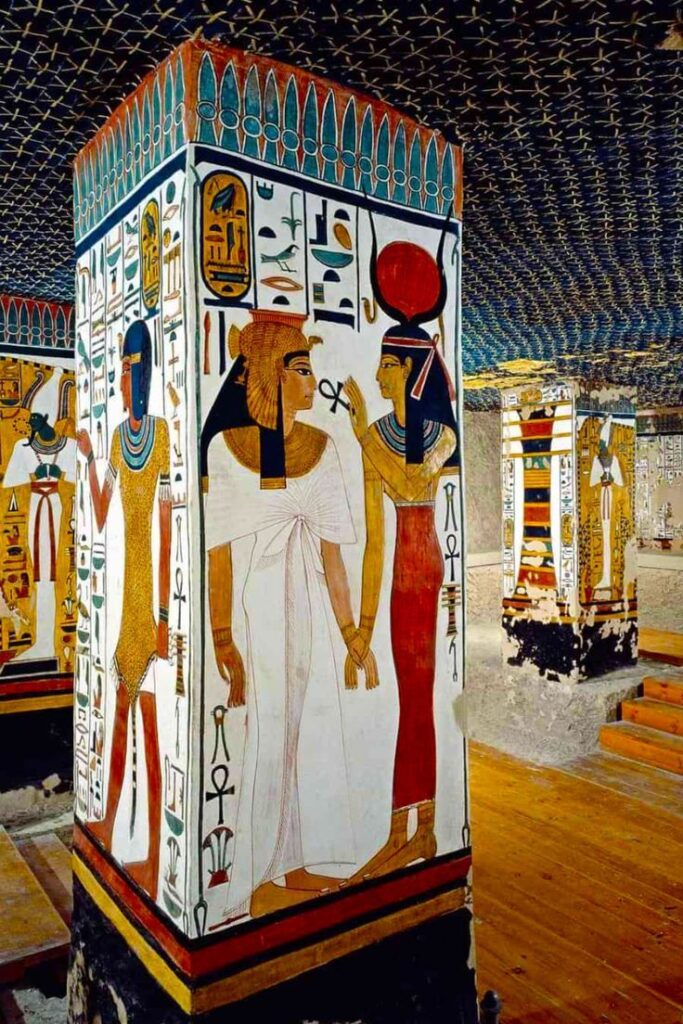
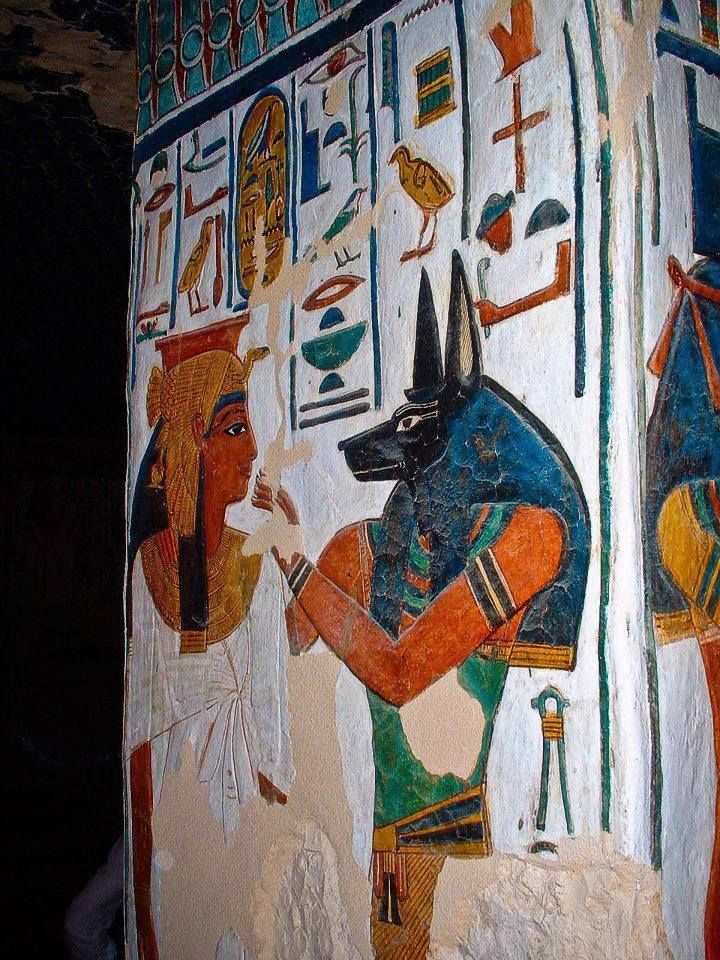
The architecture of the tomb is carefully designed to mirror the structure of the cosmos, leading the Queen from the physical world into the heart of the divine mystery. The tomb consists of an entrance staircase, an upper hall, and a lower burial chamber supported by four massive pillars. These pillars are decorated with scenes of the Queen being embraced by goddesses such as Hathor and Nut, symbolizing her return to the maternal embrace of the divine. The ceiling throughout the tomb is painted a deep, midnight blue and covered with a canopy of five-pointed golden stars, transforming the underground space into a celestial vault. This architectural layout creates a sense of rhythmic movement, guiding the visitor—and the soul of the Queen—deeper into the earth while simultaneously lifting the spirit toward the heavens. In the burial chamber, where the sarcophagus once rested, the atmosphere is one of profound silence and sacredness. The pillars act as the “legs of the sky,” supporting the weight of the mountain above while ensuring that the Queen remains protected within a sanctuary of light and color. For travelers, this transition from the bright desert sun into the cool, star-studded depths of the tomb is a transformative journey, offering a physical manifestation of the ancient Egyptian concept of the tomb as a portal to eternity.
4. The Enduring Legacy of Nefertari’s Royal Status

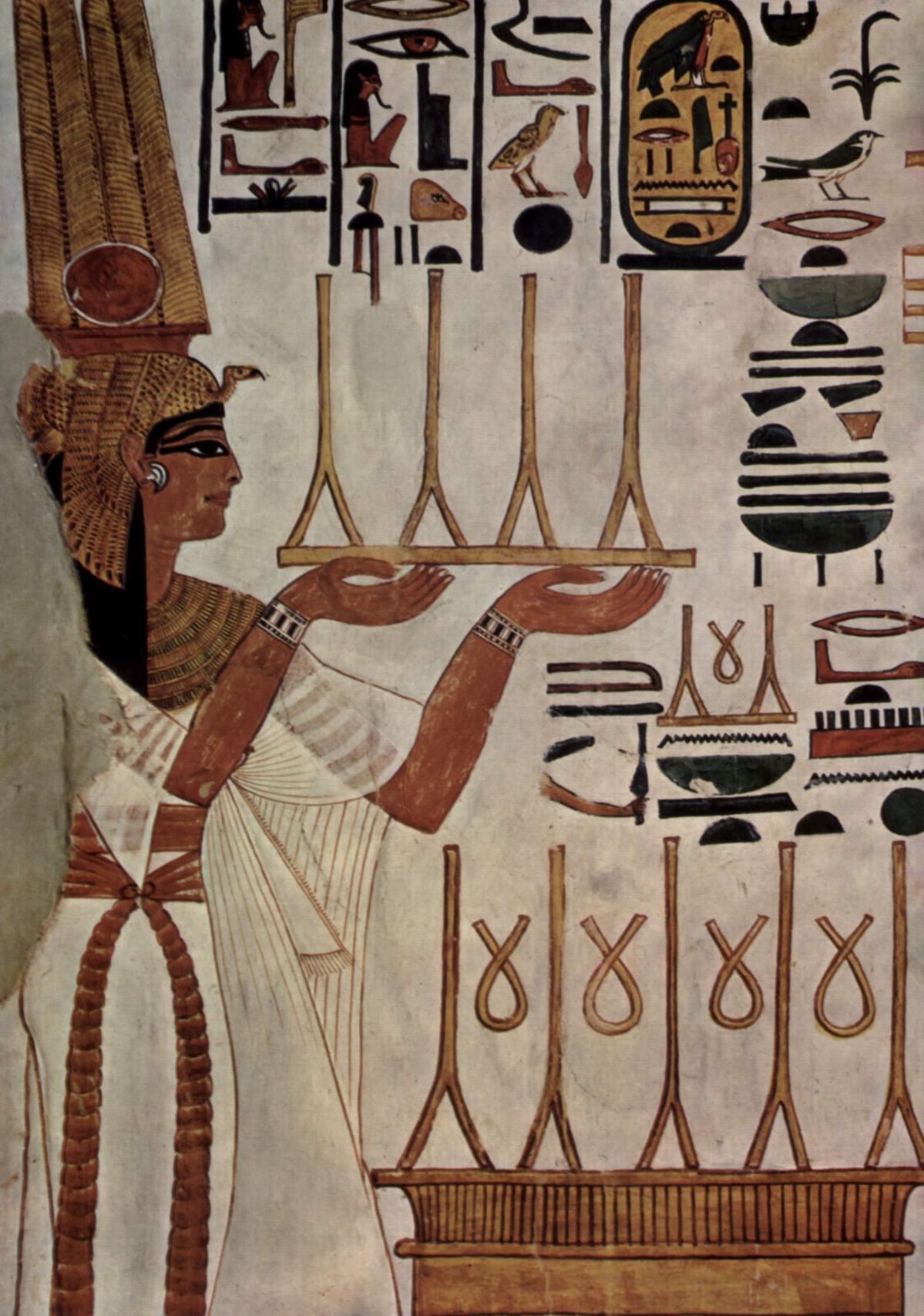
Nefertari was not merely a queen consort but a powerful political and religious figure in her own right, and her tomb serves as the ultimate proclamation of her elevated status. Throughout the chambers, she is frequently depicted wearing the elaborate vulture headdress of the goddess Mut, adorned with two tall plumes that signify her role as the God’s Wife of Amun. Unlike many other royal burials where the queen is seen only in the company of her husband, Nefertari is often shown as an independent figure, directly interacting with the supreme deities of the Egyptian pantheon. This signifies her unique agency and the belief that she possessed the spiritual authority to navigate the afterlife through her own merit and divine connections. The inscriptions highlight her numerous titles, including “Lady of the Two Lands” and “Mistress of Upper and Lower Egypt,” emphasizing her role as a partner to Ramses II in the governance and spiritual maintenance of the empire. For modern travelers, this aspect of the tomb offers a fascinating study in the history of female power, illustrating that the Great Royal Wife was a cornerstone of the Egyptian state whose influence extended far beyond the walls of the palace and into the very fabric of the cosmos.

5. Conservation and the Struggle Against Time

The preservation of the Tomb of Nefertari is one of the most remarkable stories in modern conservation history, highlighting the delicate balance between sharing heritage and protecting it. After its discovery, the tomb suffered from the crystallization of salt within the limestone, which caused the painted plaster to detach and crumble. For decades, the site was closed to the public to prevent further damage from the humidity introduced by human breath. It was not until the late 1980s that a massive, multi-year restoration project was launched by the Getty Conservation Institute and the Egyptian Antiquities Organization. A team of international experts meticulously cleaned the walls, re-attached the flaking plaster, and stabilized the structural elements using advanced chemical and artistic techniques. This project is now considered a gold standard in the world of heritage management. Today, access is strictly regulated with limited daily visitors and climate-control monitoring systems to ensure that the moisture levels remain stable. For travelers, paying the premium ticket price is not just about the view; it is a direct contribution to the ongoing survival of a masterpiece that was once on the verge of disappearing forever, allowing future generations to witness the same brilliance that Ramses II envisioned for his beloved queen.

6. The Symbolism of the Senet Game and Ritual Objects

One of the most enigmatic and popular scenes in the tomb is the depiction of Nefertari seated in a reed pavilion, playing the board game of Senet. While it appears to be a leisure activity, for the ancient Egyptians, Senet was a deeply symbolic ritual representing the soul’s journey through the various stages of the underworld. Each square on the board corresponded to a different trial or divine entity, and winning the game was synonymous with achieving immortality. This scene perfectly encapsulates the theme of the tomb: the intellectual and spiritual struggle to overcome chaos and reach the Field of Reeds. Surrounding this scene are various ritual objects, such as the Djed pillar for stability and the Ankh for life, which were believed to provide the Queen with the tools necessary for her transformation. The presence of these symbols alongside the detailed depictions of food offerings and luxury furniture ensures that Nefertari would lack for nothing in her eternal existence. For travelers who appreciate the nuances of symbolism, this part of the tomb provides a profound insight into how every detail of Egyptian art was infused with meaning, turning a simple depiction of a game into a powerful prayer for eternal success and cosmic harmony.

7. The Narrative Flow of the Upper Chambers

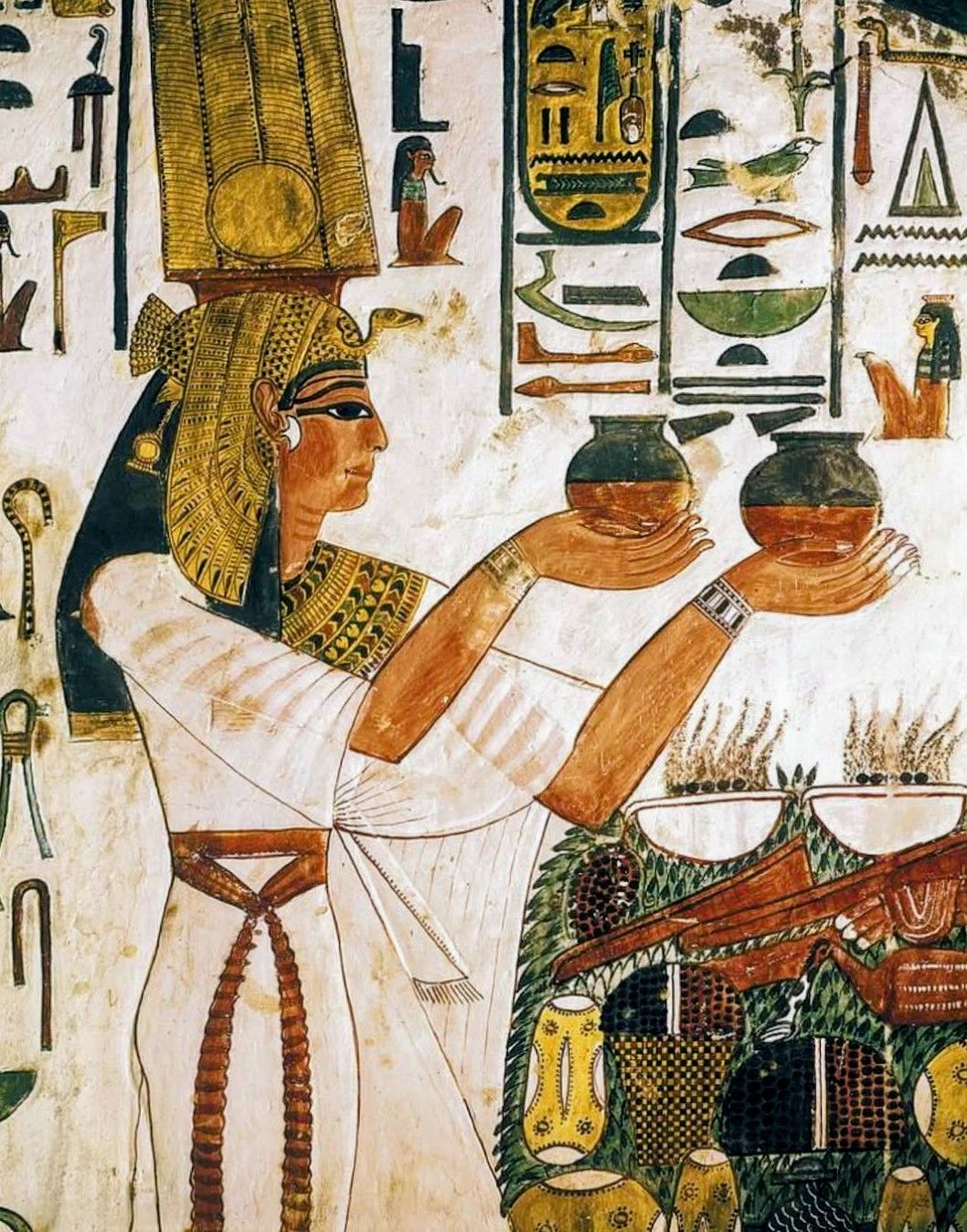
The upper level of the tomb serves as the introductory chapter of Nefertari’s journey, where the transition from the physical world to the spiritual realm begins. As visitors move through the first hall and its side chambers, they are greeted by an overwhelming display of religious narrative. One of the most striking walls shows the Queen standing before the sun god Ra-Horakhty, offering a series of vessels containing sacred oils and incense. This act of devotion is mirrored by her interaction with other major deities, such as the goddess Selket, who is easily identified by the scorpion atop her head. These upper chambers are designed to establish Nefertari’s purity and her readiness to enter the deeper, more dangerous levels of the Duat. The flow of the scenes is strictly logical, following the sequence of the Book of the Dead, ensuring that any spiritual being who entered the tomb would recognize her as a justified and righteous soul. For the modern observer, the narrative flow provides a sense of movement and purpose, turning the act of walking through the tomb into a lived experience of ancient mythology, where every step forward represents a successful hurdle cleared on the path to the stars.

8. The Iconography of Divine Protection

Throughout the tomb, the recurring theme of divine protection is manifested through a sophisticated system of iconography that surrounds the Queen at every turn. The walls are inhabited by a host of protective spirits and minor deities, some with the heads of lions, jackals, or hawks, each holding a knife to ward off the enemies of the deceased. These guardians were believed to stand watch over the various gates and portals that Nefertari had to pass through. Perhaps most touching is the constant presence of the sister-goddesses Isis and Nephthys, who are often shown flanking the doorways or mourning at the head and foot of the burial scenes. Their presence provides a maternal and sisterly shield, reinforcing the idea that the Queen was never alone on her journey. For travelers, these icons of protection offer a glimpse into the psychological comfort that religion provided to the ancient Egyptians; the tomb was not a place of fear, but a fortress of safety. The vibrant colors and the confident, rhythmic placement of these symbols create an atmosphere of profound security, reflecting a culture that invested all its artistic and material wealth into the belief that the soul could be eternally shielded from the forces of annihilation.

9. The Tomb as a Gateway to the Starry Sky

One of the most awe-inspiring features of the Tomb of Nefertari is the masterful use of the star-patterned ceiling, which transforms the subterranean rock-cut chambers into a mirror of the night sky. The ancient Egyptians believed that the tomb was a portal, and by painting the ceiling a deep, rich indigo and peppering it with thousands of yellow, five-pointed stars, they intended to facilitate the Queen’s ascent to the “Imperishable Stars”—the northern lights that never set. This celestial canopy is not merely decorative; it represents the goddess Nut, who was said to swallow the sun every evening and give birth to it every morning. By placing Nefertari beneath this starry vault, the architects were ensuring that she would participate in this eternal cycle of renewal. Standing beneath this ceiling today is a humbling experience for any traveler, as it collapses the distance between the ancient past and the present. It serves as a reminder that despite the thousands of years that separate us, the human desire to look at the stars and find hope for a life beyond the horizon remains unchanged. The tomb, in its final architectural statement, is not a house for the dead, but a launching pad for a soul destined to shine forever in the Egyptian firmament.

10. The Scientific Significance of Pigment Analysis

The Tomb of Nefertari is a primary site for modern Egyptologists to study the advanced chemical and artistic knowledge of the New Kingdom. Scientific analysis of the pigments used on these walls reveals a sophisticated understanding of mineralogy and synthetic chemistry. The brilliant “Egyptian Blue,” for instance, is one of the world’s first synthetic pigments, created by heating a mixture of copper, silica, and calcium. The radiant reds and yellows were derived from iron oxides and orpiment, while the stark whites came from huntite or gypsum. These materials were chosen not only for their beauty but for their permanence, intended to last for millions of years. For travelers with an interest in the intersection of art and science, the tomb serves as a testament to the fact that the ancient Egyptians were as much scientists as they were priests and artists. Understanding the labor involved in grinding these minerals and applying them to the wet plaster adds a layer of technical appreciation to the visit, revealing the immense physical and intellectual effort required to create a “House of Eternity” that remains vibrant over thirty centuries later.


11. Practical Tips for an Exclusive Visit

Due to the fragile nature and high demand of the site, visiting the Tomb of Nefertari requires more strategic planning than almost any other monument in Egypt. It is important to note that the tomb is subject to sudden closures for maintenance or humidity checks, so travelers should always confirm its status on the day of their visit. The special entrance fee is considerably higher than standard site tickets, often exceeding several thousand Egyptian pounds, but it is a self-limiting measure that ensures the tomb is never overcrowded. Once inside, visitors are usually limited to a ten-minute stay to prevent the buildup of carbon dioxide and moisture from breath. To maximize this short window, it is highly recommended to study the layout and major scenes beforehand so you can recognize the key figures—such as the Senet game or the embrace of Isis—immediately upon entry. Bringing a small, battery-operated fan can help keep you comfortable in the stagnant air of the burial chamber, and using a high-quality smartphone for low-light photography (without flash) is the best way to capture the colors for your personal archives. By treating the visit with the reverence and preparation it deserves, you can ensure that your ten minutes inside this ancient masterpiece become a lifelong memory.

12. Nefertari: The Eternal Symbol of Egypt’s Golden Age

In conclusion, the Tomb of Nefertari stands as the definitive symbol of the beauty, power, and spiritual depth of the 19th Dynasty. It is a monument that transcends its original purpose as a burial site, becoming a universal bridge to a civilization that mastered the art of living—and dying—with unparalleled grace. Every relief and every star on the ceiling tells the story of a woman who was loved by a king and protected by the gods, but also of a nation that reached the absolute zenith of its creative energy. As you emerge from the cool, silent depths of the tomb back into the bright light of the Luxor desert, the intensity of the colors remains etched in your mind, providing a new perspective on the endurance of the human spirit. Nefertari’s “House of Eternity” has fulfilled its promise; she remains alive in the eyes of every traveler who gazes upon her painted face, ensuring that the legacy of Egypt’s most beautiful companion will never fade. For anyone seeking the absolute pinnacle of historical tourism, this tomb is not just a destination—it is a sacred encounter with the very heart of ancient Egyptian excellence.

the Tomb of Nefertari: Frequently Asked Questions

The premium price is a deliberate conservation strategy. The tomb’s plaster and pigments are extremely sensitive to the humidity and carbon dioxide introduced by human breath. By maintaining a high ticket price and a strict time limit (usually 10 to 15 minutes), the Egyptian government limits the total volume of visitors, which helps preserve the site’s integrity and prevents the salt crystallization that previously threatened to destroy the art.

In most ancient Egyptian art, colors were applied in flat, solid blocks. However, in Nefertari’s tomb, artists used subtle gradations of color to suggest depth and volume, particularly in the Queen’s cheeks and the folds of her sheer linen garments. This technique was highly advanced for the 19th Dynasty and gives the Queen a “human” and three-dimensional appearance that is rarely found in other pharaonic burials.

Yes, the two sites are deeply linked. At Abu Simbel, Ramses II dedicated the smaller temple to Nefertari (and the goddess Hathor), featuring statues of her that are the same size as his own—a rare honor. The tomb in Luxor and the temple in Nubia together form a complete narrative of her importance, with the tomb focusing on her spiritual journey and the temple on her earthly and divine status.

Like almost all royal tombs in the Theban necropolis, Nefertari’s tomb was looted in antiquity. When Ernesto Schiaparelli discovered it in 1904, the sarcophagus had been smashed and most of the gold and jewelry were gone. However, he did find a few poignant items: a pair of woven palm-leaf sandals, several “ushabti” figures (servant statues), and a fragment of the Queen’s mummified knees, which are now housed in the Egyptian Museum in Turin.

The vulture headdress is the traditional regalia of the Great Royal Wife and is associated with the goddess Mut. It signifies Nefertari’s role as a protective mother figure of the nation and her divine link to the queen of the gods. In the tomb, it reinforces her identity as a queen who has been transformed into a divine being, ready to take her place among the immortals.