
Welcome to

Karnak Temple Complex: The Horizon of the Gods

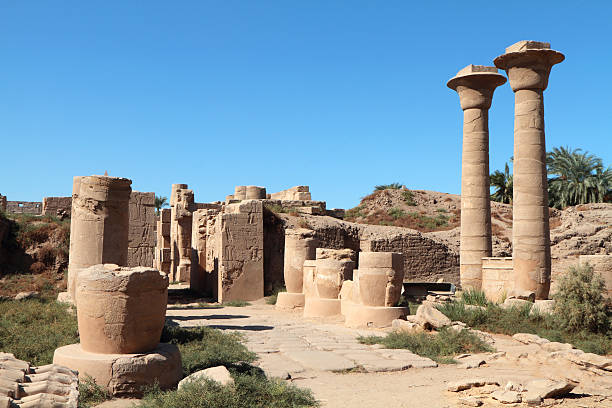
The Karnak Temple Complex stands as the most massive religious structure ever built in human history, a sprawling “City of Gods” that served as the spiritual and political heart of the Egyptian Empire for over 1,500 years. Spanning more than 200 acres on the east bank of the Nile in Luxor, Karnak is not a single temple but a colossal open-air museum—a magnificent forest of stone where nearly every Pharaoh of the Middle and New Kingdoms sought to leave an eternal mark. Dedicated primarily to the Theban Triad of Amun-Ra, Mut, and Khonsu, the complex is a breathtaking architectural chronicle of Egypt’s golden age. From the soaring obelisks that seem to pierce the sky to the Great Hypostyle Hall, which remains one of the world’s greatest engineering marvels, Karnak represents the pinnacle of ancient ambition, where the boundaries between the earthly and the divine were intentionally blurred through monumental stone and sacred geometry.

For the modern traveler, Karnak is an overwhelming sensory experience that demands a journey through time. It is a place where history is written in the shadows of 134 massive columns and carved into the towering pylons that have witnessed the rise and fall of dynasties. To walk down the Avenue of Sphinxes is to follow in the footsteps of kings, priests, and pilgrims who once gathered here for the great Opet Festival. Today, Karnak remains a site of active discovery and profound wonder, offering an unparalleled glimpse into a civilization that believed its monuments could reach the heavens and endure for all eternity. It is the ultimate anchor for any Egyptian travel narrative—a place of such staggering scale and artistic density that it continues to redefine our understanding of human architectural possibility and spiritual devotion.

Karnak-Temple

1. The Great Hypostyle Hall: A Forest of Stone Giants

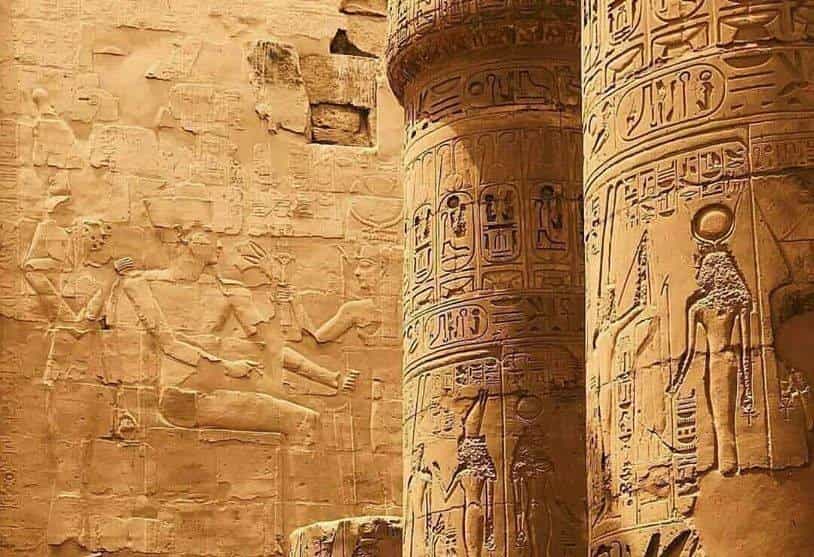
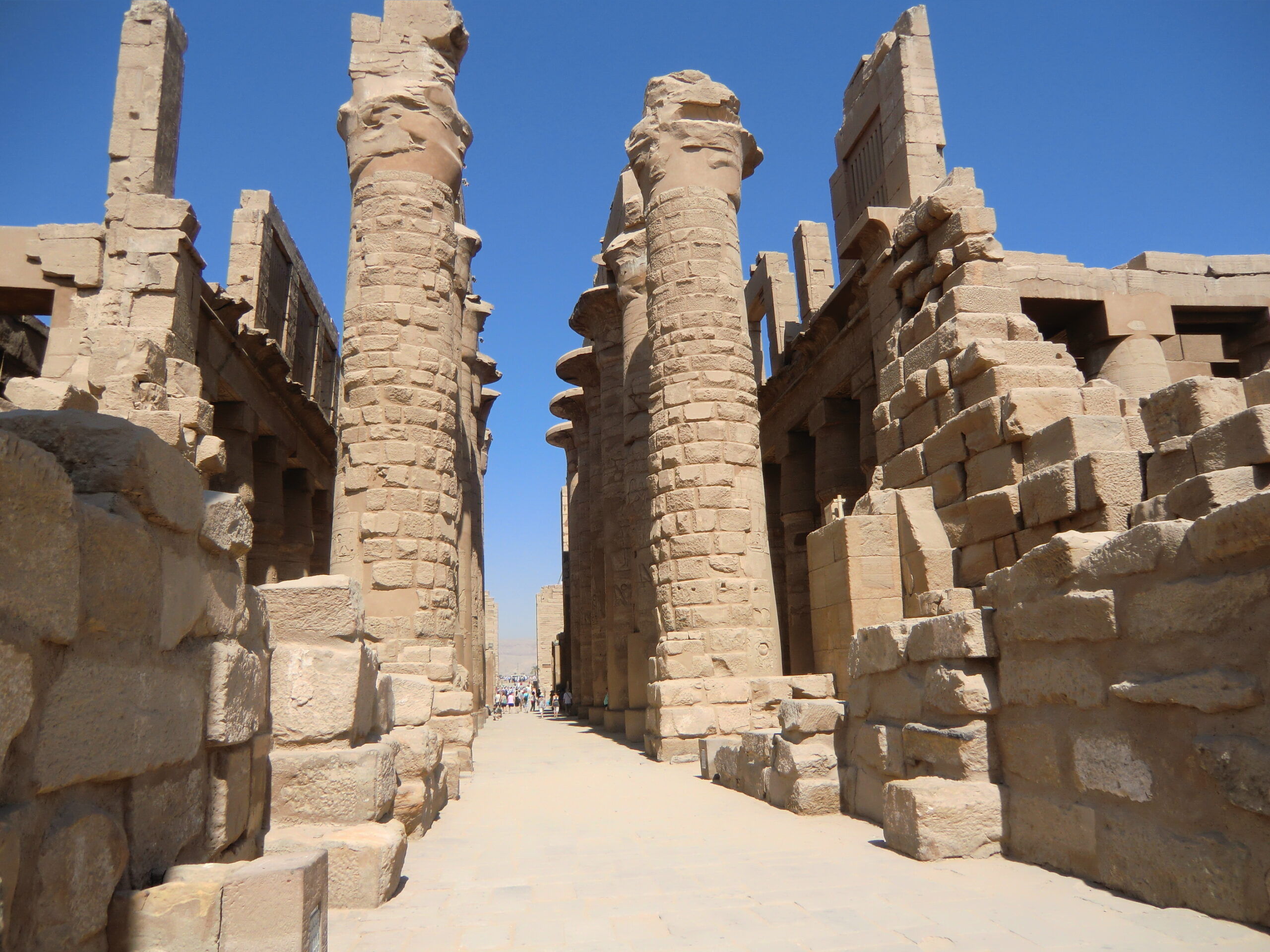
The Great Hypostyle Hall of Karnak is arguably the single most impressive architectural space in the ancient world, a breathtaking “forest of stone” that covers over 5,000 square meters. Completed primarily during the reigns of Seti I and Ramesses II, the hall features 134 colossal papyrus-shaped columns that once supported a massive stone roof. The twelve central columns stand an incredible 21 meters tall, with capitals large enough to accommodate a hundred standing men. To stand in the center of this hall is to feel the overwhelming power of the New Kingdom; the sheer verticality was designed to make the human visitor feel small in the presence of the divine. Originally, this space was a vibrant masterpiece of color, with every inch of the columns covered in deeply carved reliefs and brilliant pigments that narrated the King’s relationship with Amun-Ra. For the modern traveler, the hall is a playground of light and shadow, especially during the “golden hour” when the sun filters through the high clerestory windows, illuminating the intricate hieroglyphs. It remains a global benchmark for monumental engineering, proving that the ancient Egyptians had mastered the art of creating spaces that transcend time, transforming simple stone into a spiritual cathedral that continues to leave the modern world in absolute awe.
Karnak-Temple

2. The Sky-Piercing Obelisks: Monuments of Light and Power

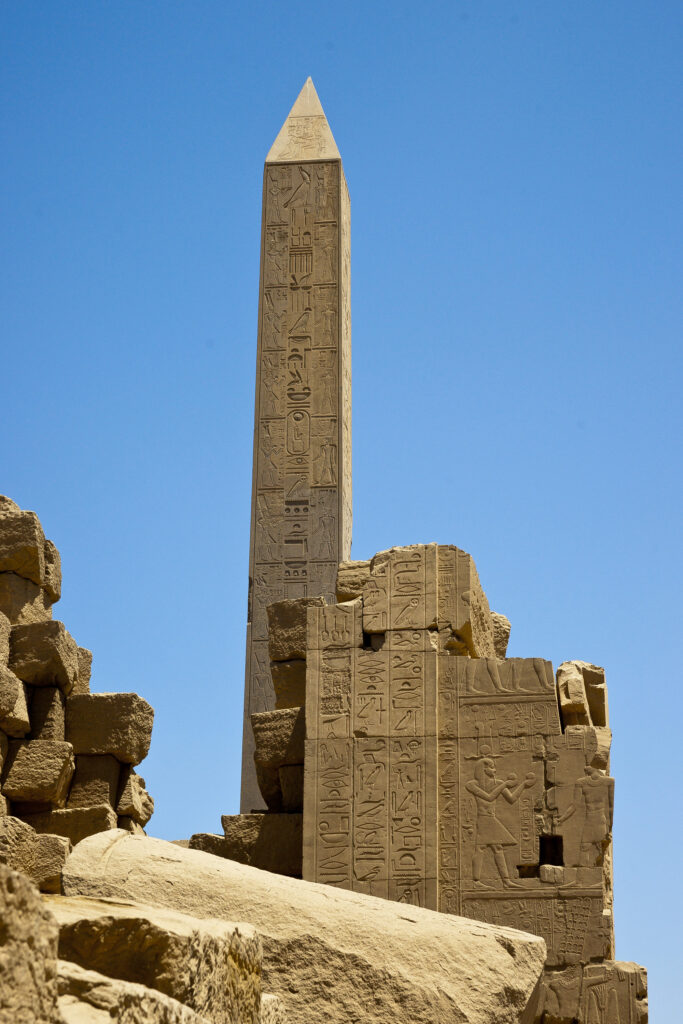
Rising above the horizontal sprawl of Karnak’s pylons are its legendary obelisks, monolithic needles of red granite that were intended to symbolize the “Benben” or the first ray of the sun. The most famous of these is the Obelisk of Queen Hatshepsut, which stands nearly 30 meters high and weighs over 300 tons. Carved from a single block of granite at the quarries of Aswan and transported hundreds of miles down the Nile, its erection was a feat of engineering that still puzzles modern scholars. These obelisks were originally tipped with “electrum” (a mix of gold and silver) to catch the first light of dawn, reflecting the sun’s glory across the entire city of Thebes. For the tourism narrative, the obelisks are a powerful symbol of royal legitimacy and divine connection. Hatshepsut’s obelisk, in particular, tells a story of a female Pharaoh’s triumph and her desire to be remembered for eternity. Standing at the base of these monuments, visitors are reminded of the incredible precision of ancient stone-cutting; the surfaces are so smooth and the inscriptions so sharp that they appear to have been laser-cut rather than hand-carved, standing as eternal witnesses to the “Age of Light.

Karnak-Temple

3. The Avenue of Sphinxes: The Sacred Path of the Gods

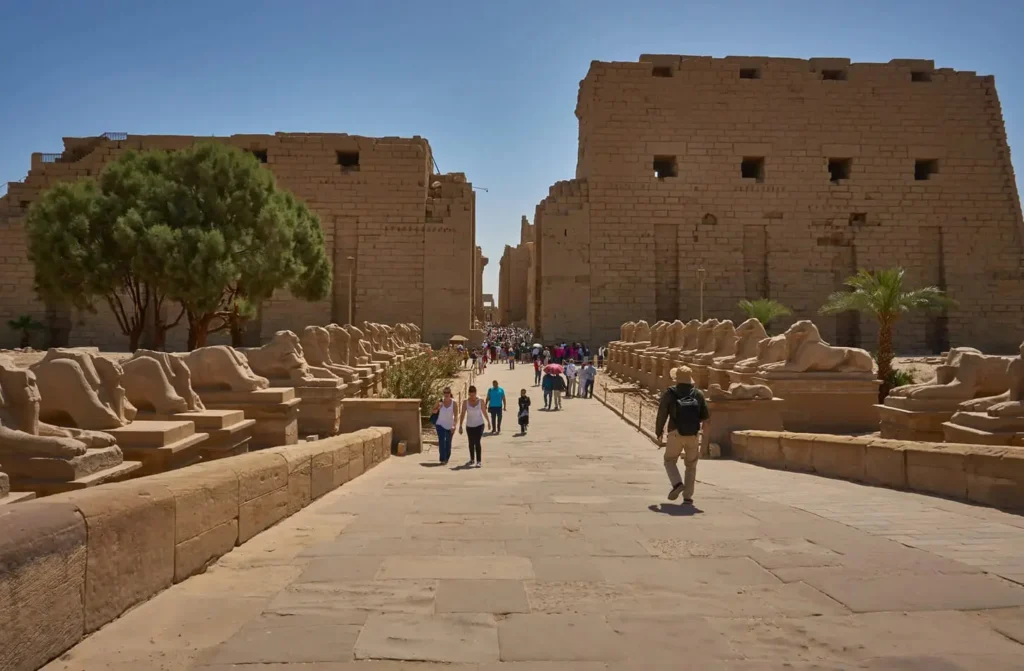
Connecting the temples of Karnak and Luxor is the magnificent Avenue of Sphinxes (Kebash Road), a 2.7-kilometer sacred road lined with hundreds of ram-headed and human-headed sphinxes. For centuries, much of this road was buried under the modern city, but recent, massive excavation and restoration efforts have fully reopened this “Way of the Gods” to the public. In antiquity, this avenue was the stage for the Opet Festival, one of the most important religious celebrations in Egypt, where the statues of the gods were carried in grand processions amidst music, dancing, and royal fanfare. For today’s travelers, walking this path provides a unique “processional” experience that links the two greatest temple complexes of Luxor into a single, unified historical narrative. The ram-headed sphinxes at the entrance of Karnak specifically honor Amun-Ra, symbolizing his protective power and wisdom. This avenue is more than just a road; it is a ceremonial bridge between the past and the present, offering a grand, cinematic entrance to the “Horizon of the Gods” and providing photographers with one of the most iconic vistas in all of archaeology—a literal path through the heart of history.
4. The Botanical Garden of Thutmose III: A Stone Herbarium

Deep within the festival hall of Thutmose III lies one of the most intellectually fascinating rooms in the entire complex, known as the “Botanical Garden.” Unlike the monumental battle scenes found elsewhere, the walls of this chamber are decorated with exquisite, life-sized carvings of exotic plants, flowers, and animals that the Pharaoh brought back from his military campaigns in the Levant and beyond. This room serves as a “stone encyclopedia” of 15th-century BC flora and fauna, showcasing everything from pomegranates and irises to gazelles and exotic birds. For the modern traveler, the Botanical Garden is a refreshing departure from traditional royal propaganda; it reveals the scientific curiosity of the ancient Egyptians and their desire to document the natural world. It positions Thutmose III not just as a conqueror, but as an early naturalist who viewed his empire as a vast laboratory for discovery. In a marketing sense, this chamber is a “hidden treasure” that appeals to nature lovers and history buffs alike, offering a sophisticated look at the world’s first documented botanical expedition recorded in eternal stone.

Karnak-Temple

5. The Sacred Lake: The Mirror of the Cosmos

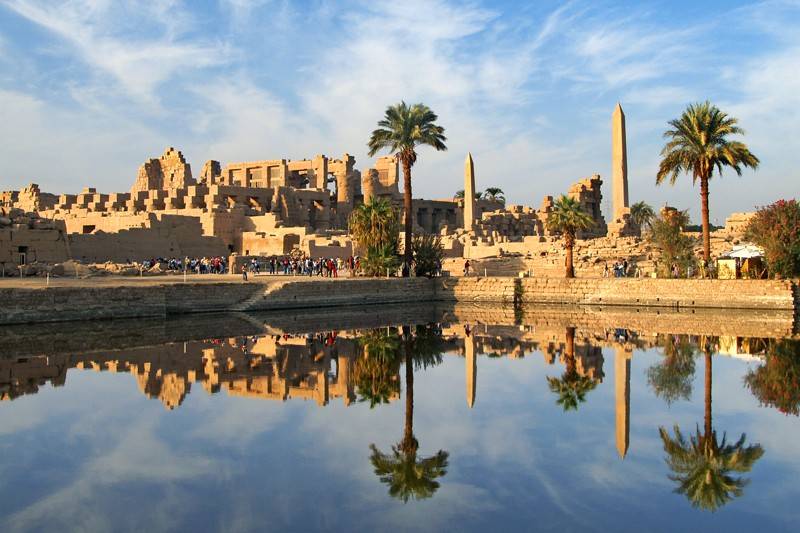
The Sacred Lake at Karnak is the largest of its kind in Egypt, a massive rectangular body of water that served as the ritual heart of the temple’s daily operations. Fed by the Nile, the lake was where the priests would perform multiple daily purifications before entering the inner sanctuaries to serve the gods. It was also the stage for spectacular “Water Festivals,” where the sacred barks of the Theban Triad would sail across its surface under the moonlight. Today, the lake acts as a stunning mirror, reflecting the towering pylons and obelisks in its still, dark waters. At the northwestern corner of the lake stands the famous “Giant Scarab” statue of Amenhotep III, where travelers often walk in circles for good luck. For travel curators, the Sacred Lake provides a moment of tranquility and reflection amidst the massive scale of the surrounding ruins. It represents the “Primordial Waters” of creation from which the Egyptians believed the world emerged, offering a serene and cinematic atmosphere that is particularly magical during the Sound and Light show or at sunset.

Karnak-Temple

6. The Colossal Statue of Ramesses II: The Guardian of the Pylon

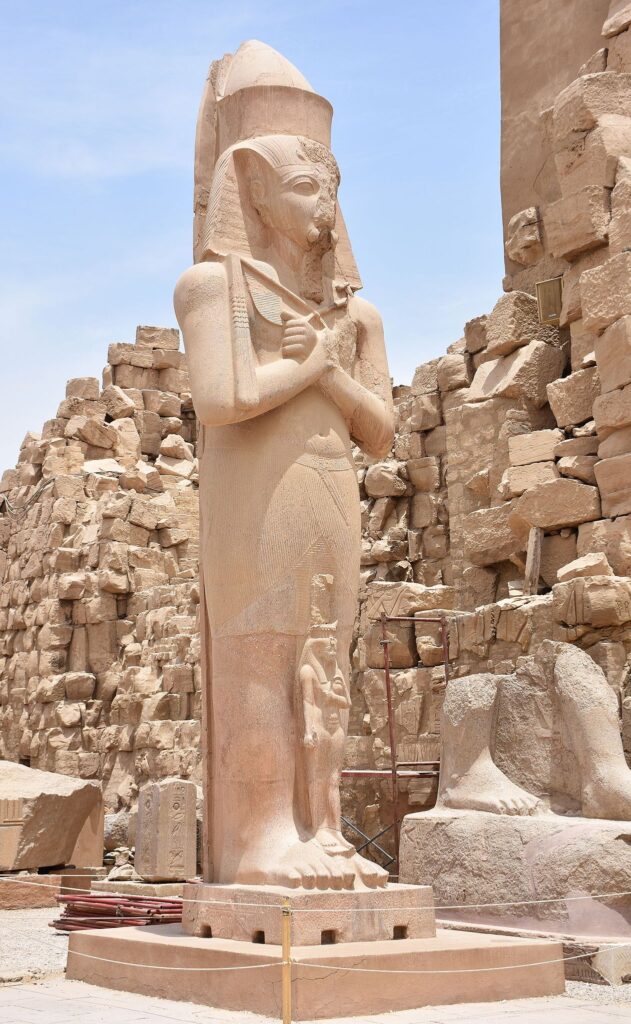
Guarding the entrance to the inner courts of Karnak is the magnificent colossal statue of Ramesses II, standing in a classic “striding” pose with a smaller figure of his beloved daughter, Bentanta, at his feet. Carved from a single block of grey granite, this statue is a masterclass in royal portraiture, capturing the Pharaoh’s idealized features and the serene confidence of a living god. The statue’s presence at the heart of the complex serves as a reminder of the “Ramesside” stamp on Karnak, where the King’s image was used to reinforce his role as the eternal protector of the temple. For the modern visitor, the statue provides a perfect sense of scale; standing next to the Pharaoh’s feet, one truly understands the monumental ego and artistic ambition of the 19th Dynasty. It is one of the most iconic “Instagrammable” spots in the temple, serving as a powerful visual anchor that connects the personal story of Egypt’s greatest builder with the cosmic scale of the temple of Amun-Ra.

7. The Temple of Khonsu: A Lunar Masterpiece

While Amun-Ra dominates the main axis of Karnak, the Temple of Khonsu, located in the southwest corner, offers a more intimate and exceptionally preserved look at New Kingdom theology. Dedicated to the Moon God, Khonsu—the son of Amun and Mut—this temple is a pristine example of a complete “cult temple” layout. Visitors can walk through its pylons into a courtyard and a pillared hall that still retains much of its original color and roof. The reliefs here are particularly fine, depicting the King in intimate rituals with the lunar deity. For travelers, the Temple of Khonsu is often a quieter, more reflective escape from the crowds of the Great Hypostyle Hall. It provides a vital narrative link to the “Theban Triad,” showing how the ancient Egyptians viewed the divine family unit. In tourism marketing, this temple is frequently highlighted for its artistic integrity and the “blue-sky” ceilings that represent the night, offering a perfect classroom for understanding the layout and function of a classic Egyptian sanctuary.

8. The Open-Air Museum: The White and Red Chapels

The “Open-Air Museum” at Karnak is a curated sanctuary of reconstructed history, housing some of the most delicate and beautiful structures from the Middle and New Kingdoms. The stars of this collection are the White Chapel of Senusret I and the Red Chapel of Hatshepsut. The White Chapel is a marvel of Middle Kingdom art, featuring some of the finest, most detailed hieroglyphic carvings ever discovered, executed in high-quality white limestone. In contrast, the Red Chapel is a striking quartzite structure that once served as a bark shrine for the Queen. These buildings were actually found dismantled and used as “filler” inside later temple pylons—a common ancient practice of recycling. Their reconstruction allows modern travelers to see a different side of Karnak: the smaller, more refined chapels that demonstrate incredible artistic precision. This area is a “must-see” for those who appreciate the finer details of Egyptian craftsmanship and the fascinating story of how modern archaeologists “reassembled” the past from hidden fragments.

9. The Shrines of the "Hearing Ear": A Connection to the People

Beyond the massive pylons where only priests and kings could enter, the eastern wall of Karnak features the unique “Hearing Ear” shrines. These were specialized stations built by various Pharaohs, including Thutmose III and Ramesses II, designed specifically for the common people who were not allowed into the inner sanctum of the temple. Here, the gods were believed to “hear” the prayers and petitions of the ordinary citizens of Thebes. These shrines are a touching reminder that Karnak was not just a fortress of the elite, but a place where the entire population felt a personal connection to the divine. For the modern travel narrative, the “Hearing Ear” shrines provide a rare and humanizing glimpse into the daily life and personal piety of ancient Egyptians. They represent the “voice of the people” within a complex of giants, making the history of Karnak feel accessible and deeply personal to every visitor who walks through its sprawling gates.

Karnak-Temple

10. The Engineering of the Pylons: Mountains of Masonry

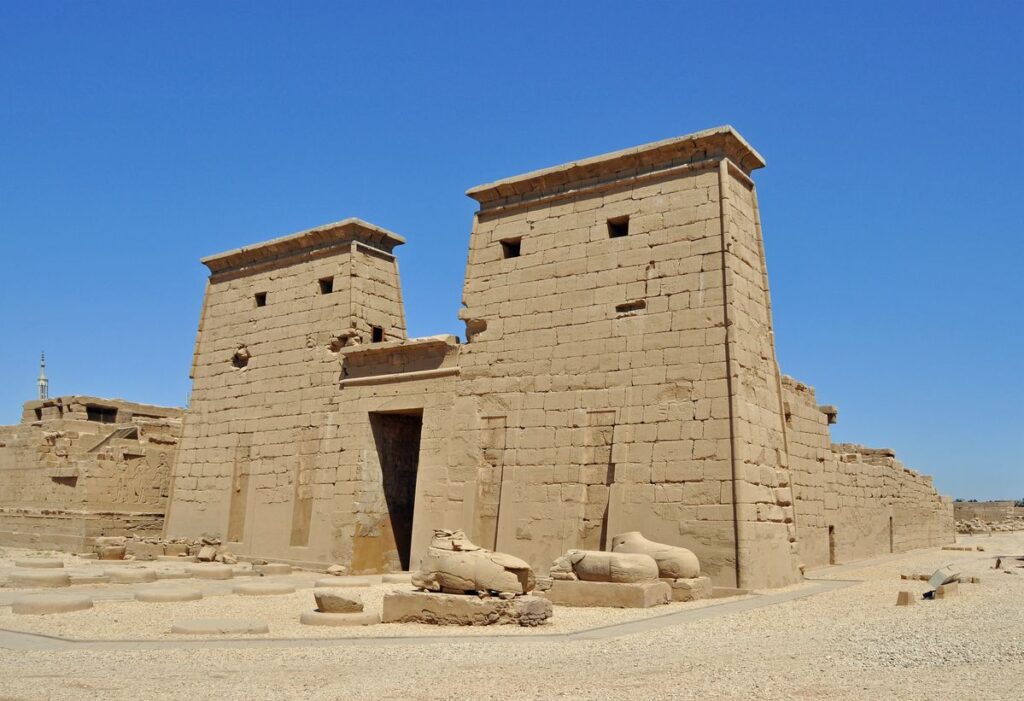
The ten massive pylons of Karnak are the “chapters” of the temple’s long history, functioning as monumental gateways that separate the various courtyards. These sloping walls were masterpieces of civil engineering; built using mud-brick ramps to lift limestone blocks weighing several tons, they were designed to withstand the test of time and the annual flooding of the Nile. Inside some of these pylons, archaeologists have found “talatat” blocks—small, decorated stones from the dismantled temples of the “heretic” King Akhenaten—revealing how later Pharaohs used the structures of their predecessors as hidden foundations for their own glory. For the modern explorer, the pylons serve as a dramatic frame for the entire complex, offering a silhouette that is synonymous with the grandeur of the Pharaohs. They are the “sentinels” of the horizon, engineered to bridge the gap between the chaotic world outside and the sacred order of the sanctuary within.

11. The Sound and Light Experience: History Reawakened

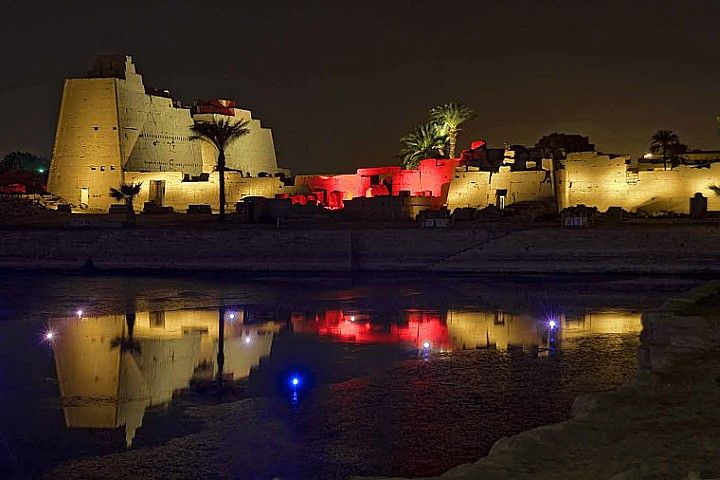
As the sun sets over the Nile, Karnak undergoes a theatrical transformation during the world-renowned Sound and Light Show. This nocturnal journey allows visitors to walk through the temple illuminated by dramatic spotlights that highlight architectural details often missed in the harsh daylight. Narrated by voices representing the gods and Pharaohs, the show tells the epic story of Karnak’s construction and the legends of those who built it. The experience culminates at the Sacred Lake, where the illuminated ruins reflect perfectly in the water, creating a cinematic atmosphere that feels truly otherworldly. For tourism marketing, this show is a vital “after-hours” attraction that breathes life into the cold stone, allowing guests to experience the temple’s “voice” in the silence of the desert night. It is a powerful emotional experience that connects the modern imagination with the ancient spirit of Thebes.

12. Conclusion: The Eternal Echo of Karnak

In the final analysis, the Karnak Temple Complex is more than an archaeological site; it is an eternal testament to the human desire to reach for the divine. It is a place where every stone has a story and every column holds the weight of empires. From the staggering scale of the Great Hypostyle Hall to the quiet, personal prayers of the “Hearing Ear” shrines, Karnak captures the full spectrum of the ancient Egyptian experience. As the greatest center of worship ever created, it remains a source of endless fascination, proving that while dynasties may fall, the monuments built with true devotion can endure for thousands of years. To visit Karnak is to walk through a living chronicle of humanity’s architectural and spiritual zenith—a journey that leaves every visitor with a profound sense of awe and a deeper connection to the timeless legacy of the Nile.

The Karnak Temple Complex : Frequently Asked Questions

Karnak is considered a complex because it contains multiple temples, chapels, and smaller sanctuaries built over 1,500 years. It includes the massive Precinct of Amun-Ra, but also separate areas dedicated to the goddess Mut and the god Montu, as well as several smaller temples for deities like Ptah and Khonsu. It was essentially a “religious city” rather than a single building.

Because of its immense size (over 200 acres), a standard highlights tour takes about 2 to 3 hours. However, for those who want to explore the Open Air Museum, the Sacred Lake, and the outer temples like the Temple of Khonsu, a visit can easily stretch to 4 or 5 hours. Most visitors find that a morning visit is best to avoid the midday heat.

Located near the Sacred Lake, this large granite scarab was dedicated by Amenhotep III. In ancient Egypt, the scarab was a symbol of the sun god Khepri and represented rebirth and transformation. Today, a popular local tradition suggests that walking around the statue seven times (usually counter-clockwise) will bring good luck, health, or a future marriage!

Yes! While much of the color on the lower parts of the columns has faded due to centuries of exposure, if you look at the upper sections and the undersides of the remaining architraves (the horizontal beams), you can still see vibrant reds, blues, and yellows. Recent cleaning and restoration projects are continuing to reveal more of these original New Kingdom pigments.

While both are dedicated to Amun-Ra, Karnak was the primary administrative and religious center—the “official” home of the god. Luxor Temple, located about 2.7 km to the south, was used primarily for the annual Opet Festival, where the god’s statue would travel from Karnak to Luxor to celebrate the renewal of kingship. They are connected by the famous Avenue of Sphinxes, which you can now walk in its entirety.