
Welcome to

The Ramesseum: The Eternal Memorial of Ramses the Great

The Ramesseum, the magnificent mortuary temple of Pharaoh Ramses II, stands as a powerful testament to the ambition and longevity of one of Egypt’s most iconic rulers. Located on the West Bank of Luxor, this “House of Millions of Years” was designed to serve as a place of worship for the king’s deified spirit and a permanent monument to his military triumphs and religious devotion. Although time and the annual flooding of the Nile have taken their toll on the structure, the Ramesseum remains one of the most intellectually stimulating sites in the Theban necropolis. It represents the architectural transition between the traditional temples of the early New Kingdom and the massive, fortified complexes like Medinet Habu. For travelers, the Ramesseum offers a more contemplative and romantic experience; its picturesque ruins, scattered giant colossi, and elegant colonnades inspired poets like Percy Bysshe Shelley to reflect on the nature of power and time. Visiting this site allows you to walk through the personal history of a king who ruled for sixty-six years, witnessing the grand scale on which he envisioned his legacy and the sophisticated urban planning that once surrounded this sacred core.

1. The Fallen Colossus of Ozymandias

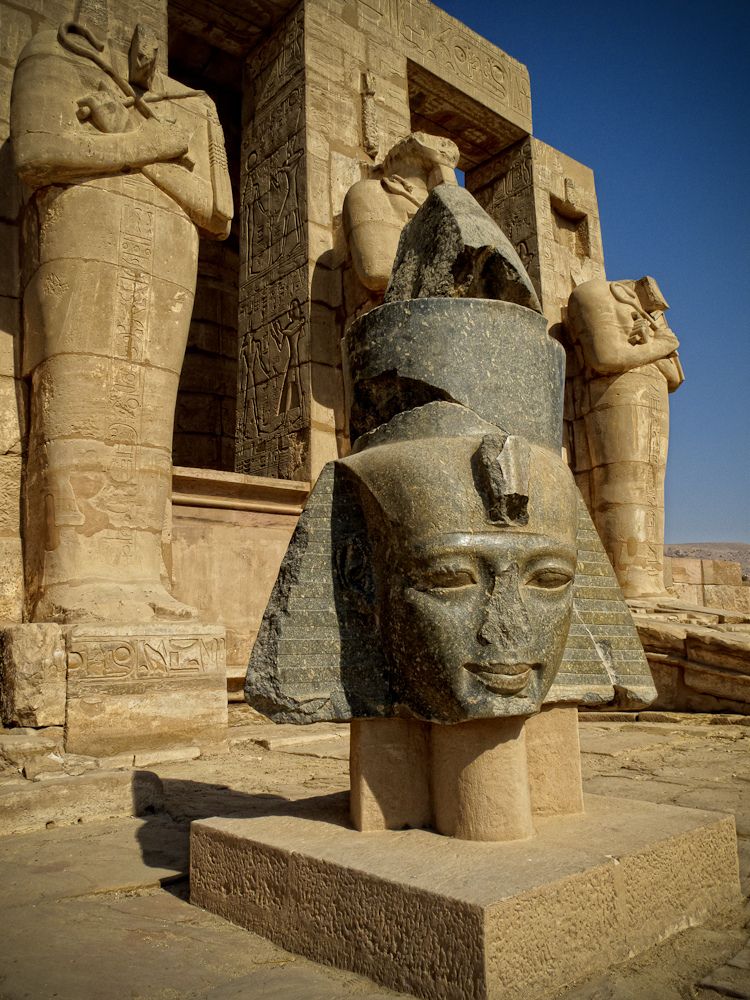
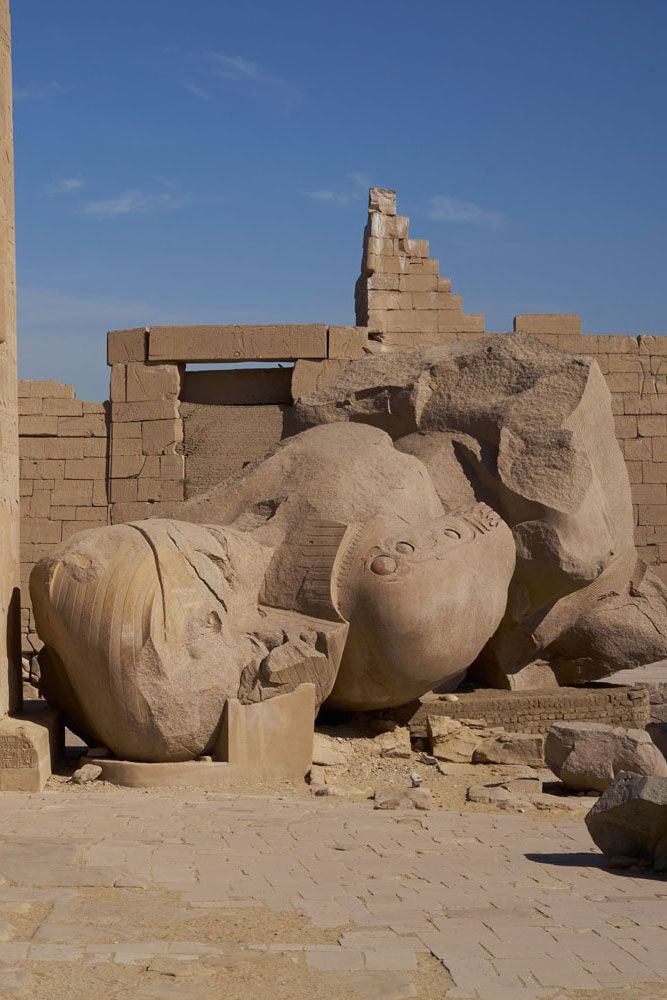
The most famous feature of the Ramesseum is undoubtedly the shattered remains of the “Great Colossus,” a massive seated statue of Ramses II that once stood nearly 18 meters high and weighed over 1,000 tons. Carried across the desert from the quarries of Aswan, this single block of granite was a feat of engineering that defied the limits of the ancient world. Today, the statue lies in pieces within the first courtyard, its head and torso resting on the sand, providing a staggering sense of the scale on which the pharaoh operated. It was this specific ruin that inspired Shelley’s famous poem, “Ozymandias,” which meditates on the inevitable decay of even the mightiest empires. For cultural tourists, the fallen colossus is a poignant reminder of the human desire for immortality. Seeing the intricate details of the royal headdress and the muscularity of the torso, even in its fragmented state, allows visitors to visualize the awe this statue would have inspired in the ancient pilgrims who entered the temple. It remains the ultimate symbol of Ramses II’s “Greatness,” showing that even in ruin, his presence dominates the landscape and continues to capture the global imagination.
2. The Battle of Kadesh: History Carved in Stone

The exterior walls and pylons of the Ramesseum serve as a massive stone canvas for Ramses II’s favorite narrative: the Battle of Kadesh. Fought against the Hittite Empire in what is now modern-day Syria, this battle was the defining military event of Ramses’ early reign. The reliefs at the Ramesseum are among the most detailed and dynamic in Egypt, depicting the pharaoh alone in his chariot, charging into the heart of the enemy lines with the god Amun by his side. The carvings show thousands of soldiers, chariots in mid-gallop, and the strategic movements of the Egyptian army across the Orontes River. While modern historians recognize the battle ended in a stalemate and the world’s first peace treaty, to Ramses, it was a supreme personal victory that validated his divine right to rule. For history enthusiasts, studying these walls is like reading an ancient war report; the level of detail regarding the enemy’s dress, weaponry, and the topography of the battlefield provides invaluable insights into 13th-century BC warfare. These scenes were intended to project strength and stability to the Egyptian people, ensuring that the king’s role as the protector of the borders was literally etched into the sacred architecture of his memorial.
3. The Hypostyle Hall and the Astronomical Ceiling

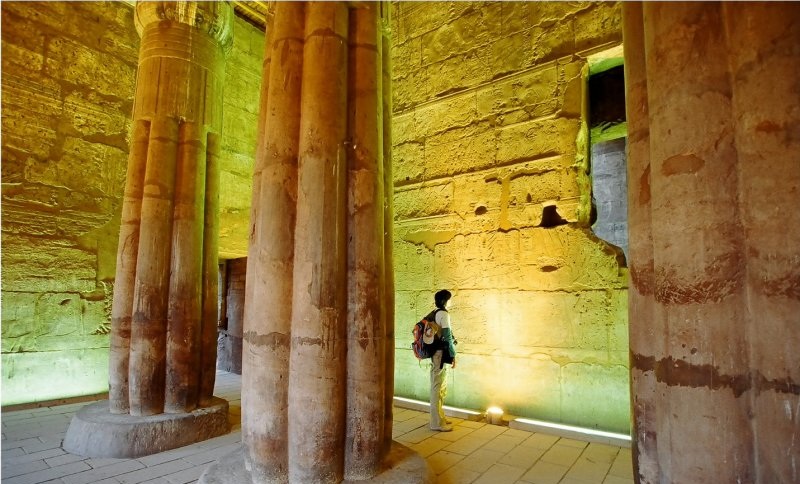
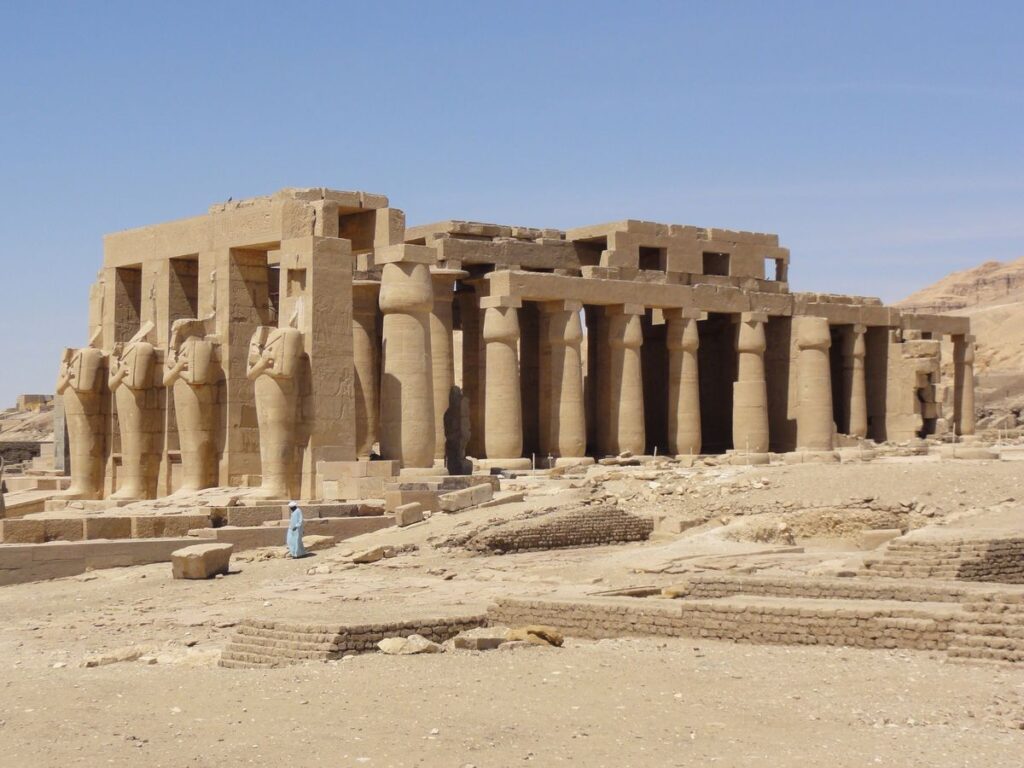
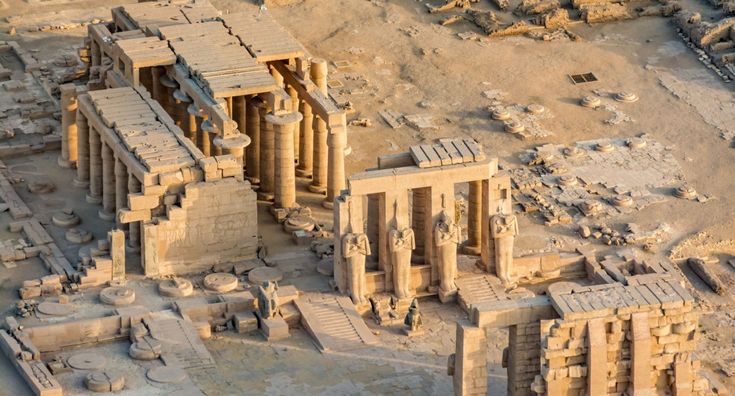
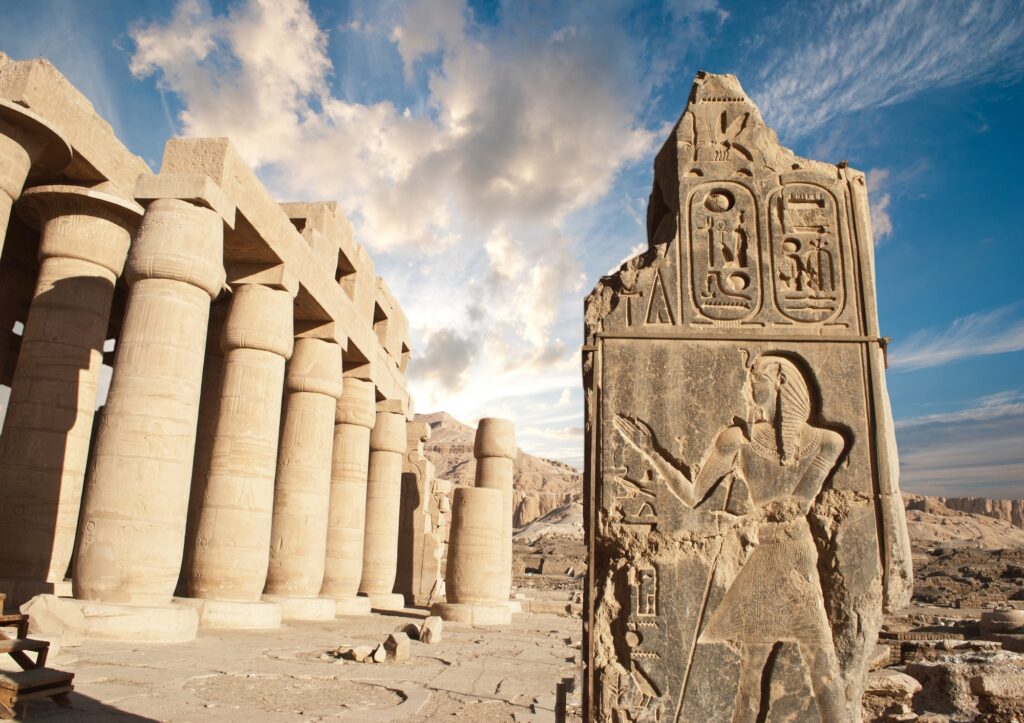
Moving into the inner sanctum of the Ramesseum, visitors encounter the majestic Hypostyle Hall, which once boasted 48 massive papyrus-bud columns supporting a soaring roof. Although much of the roof has disappeared, the remaining columns still convey a sense of the hall’s original forest-like atmosphere, intended to represent the primeval marsh from which the world was created. One of the most significant intellectual treasures of this hall is the astronomical ceiling in the smaller chamber located just behind the main hall. Here, the ancient Egyptians carved a complex celestial map, including the decans (star groups), the constellations, and the various months of the Egyptian calendar. This ceiling demonstrates that the Ramesseum was not just a place of prayer, but a center of scientific and astronomical observation. The orientation of the temple and its decorative program were designed to align the king’s cult with the cosmic cycles of the stars and the seasons. For the curious traveler, this ceiling provides a fascinating look at the Egyptian obsession with time and the heavens, showing how they integrated rigorous scientific observation into their religious architecture to ensure the king’s memory was in harmony with the eternal order of the universe.
4. The Library of Ozymandias and the House of Life

Beyond its religious and military significance, the Ramesseum was a vital intellectual hub, housing one of the most famous libraries of the ancient world. Often referred to as the “House of Life” (Per-Ankh), this administrative and scholarly wing was a place where papyrus scrolls containing medical, magical, and historical knowledge were authored, copied, and preserved. Diodorus Siculus, the Greek historian, described this library as the “Healing Place of the Soul,” reflecting its role as a center for higher learning and spiritual growth. During excavations in the late 19th century, archaeologists discovered a shaft beneath the temple floor containing a box of papyri, including the famous “Ramesseum Papyri,” which cover topics ranging from literature to veterinary medicine. For the modern traveler, this adds a layer of intellectual depth to the site; the Ramesseum was not just a monument to a king’s ego, but a functioning university and archive that sustained the cultural and scientific life of the New Kingdom. It reminds us that Ramses II envisioned his legacy not just through stone and muscle, but through the enduring power of the written word and the preservation of human knowledge.

5. The Mud-Brick Granaries and Economic Power

While the stone temple was the spiritual heart of the complex, the surrounding mud-brick structures reveal the immense economic power of the Ramesseum. To this day, the site is encircled by remarkably well-preserved vaulted granaries and storehouses. These long, arched tunnels were used to store vast quantities of grain, wine, and oil, which served as the “treasury” for the temple’s hundreds of employees and the local administration. The sheer scale of these warehouses indicates that the Ramesseum was the focal point of a massive redistribution system, collecting taxes and offerings from across the region. For history enthusiasts, walking through these mud-brick ruins is a highlight, as they provide a rare and tangible look at the everyday infrastructure of ancient Egypt. Unlike the temples of the gods, which were designed for eternity, these practical structures show the logistical reality of how a pharaoh maintained his influence over the living. The contrast between the immortal limestone of the sanctuary and the organic, earthy brick of the warehouses offers a complete picture of a royal estate—a self-sustaining city that fueled the prosperity of the West Bank for centuries.

6. Artistic Innovations and the "Ramses Style"

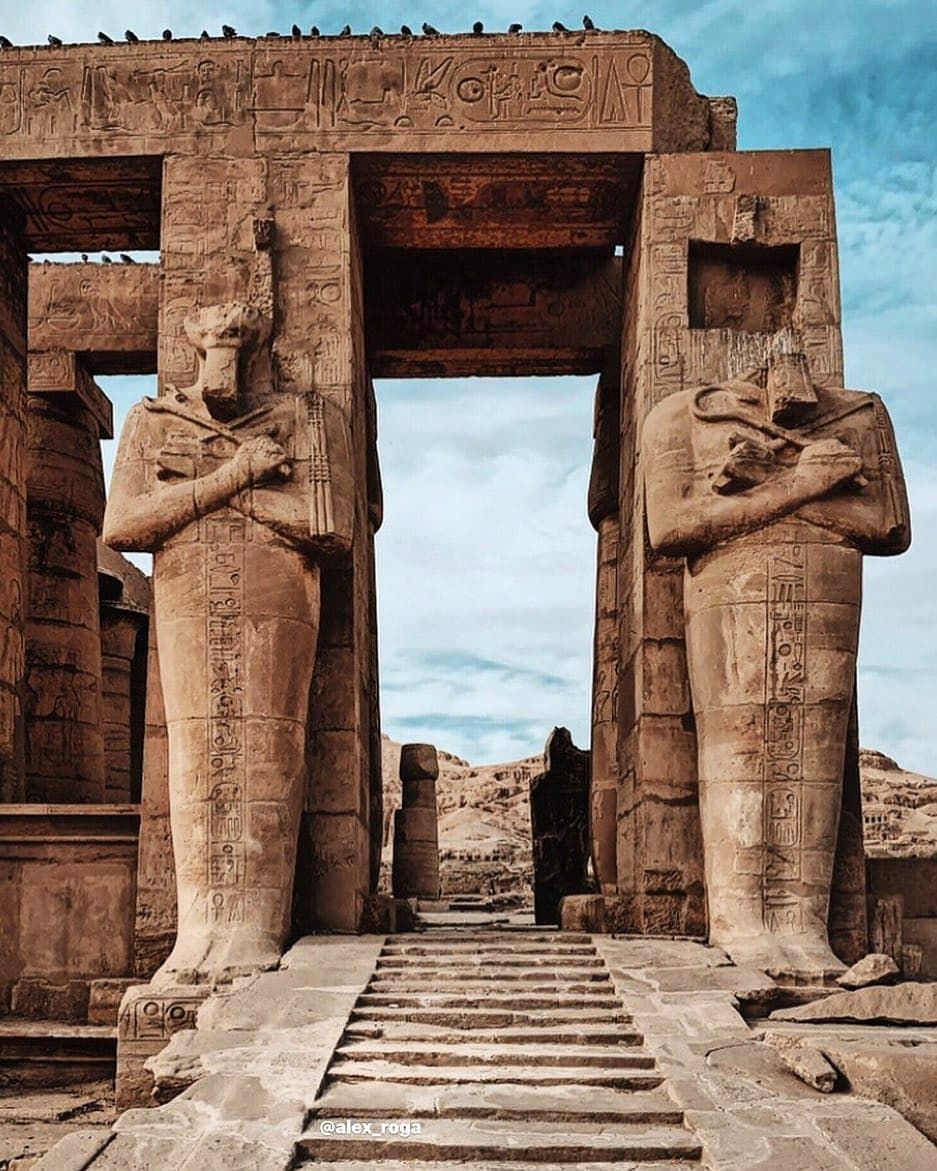
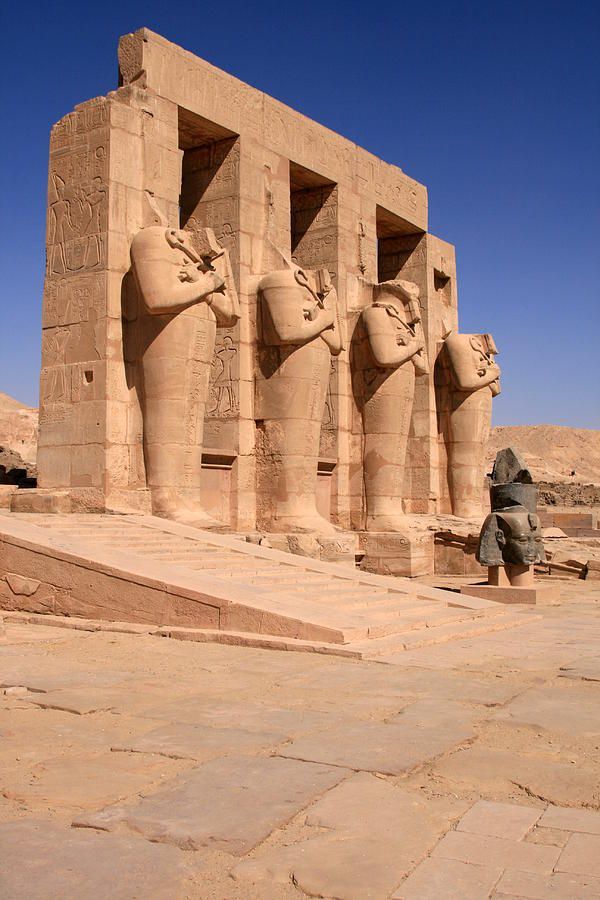
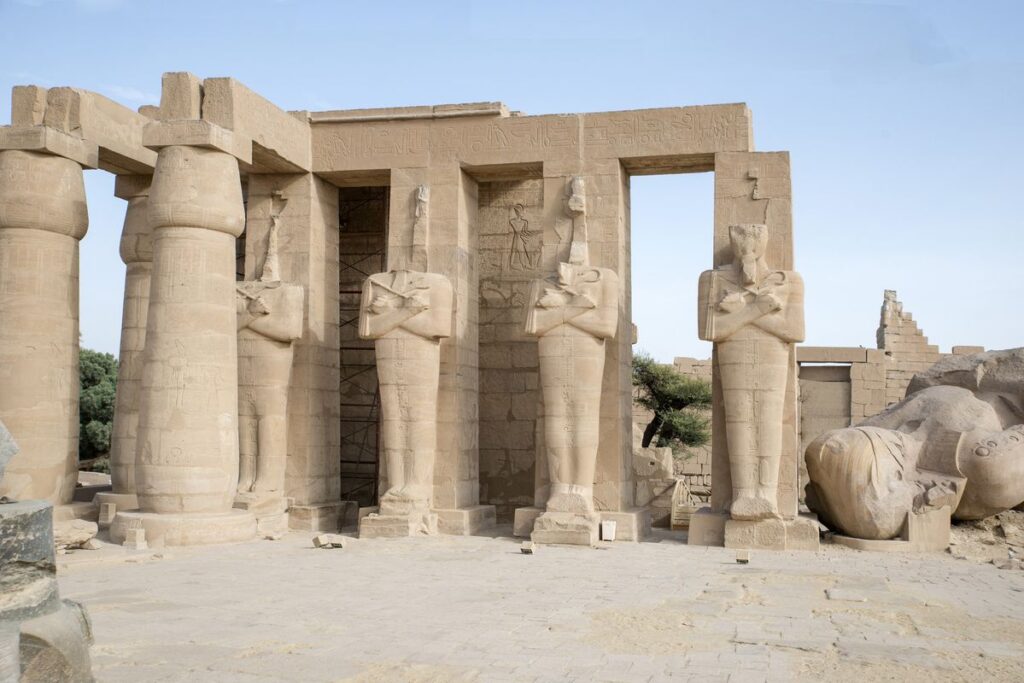
The Ramesseum was a laboratory for artistic and architectural innovations that would go on to define the later New Kingdom. The temple features an early and highly developed use of the “Osiride” pillar—statues of the king in the form of Osiris, the god of the afterlife—which line the second courtyard. These figures, showing the pharaoh with crossed arms holding the crook and flail, create a rhythmic and powerful architectural presence that emphasizes the king’s transition into divinity. Furthermore, the reliefs at the Ramesseum display a transition toward deeper, more dramatic carvings, a technique perfected here to catch the harsh Egyptian sun and create high-contrast shadows. This “Ramses Style” prioritized legibility and grandiosity, ensuring that even from a distance, the king’s message of triumph and piety was unmistakable. For travelers who appreciate art history, observing these transitions is fascinating; the Ramesseum serves as the bridge between the delicate, low-relief elegance of the 18th Dynasty and the massive, deep-cut “propaganda” style of the 20th Dynasty. It is a site where one can see the evolution of the royal image, moving from the human to the truly monumental.

7. The Palace and the Royal Presence at the Necropolis

Adjacent to the first courtyard of the Ramesseum lies the ruins of the royal palace, a structure that served as the Pharaoh’s residence during major festivals and religious ceremonies. While the temple was for the gods and the deceased king’s spirit, the palace was a functional space designed to accommodate Ramses II and his immediate court when they crossed the Nile from the East Bank. Excavations have revealed the foundations of a throne room and various private chambers, which would have been decorated with colorful tiles and frescoes. This proximity of the palace to the temple highlights the unique “living” nature of the mortuary complex; it was not a silent tomb, but a place of royal activity where the king could oversee the rituals performed in his honor. For travelers, exploring these foundations provides a more intimate perspective on royal life, moving beyond the monumental pylons and into the domestic sphere of the pharaoh. It allows one to imagine the bustling atmosphere of the court, the sound of diplomatic discussions, and the preparation of royal banquets that took place right in the shadow of the king’s eternal memorial.

8. The Legacy of the 20th Dynasty and Later Use

Following the death of Ramses II, the Ramesseum continued to play a vital role in the history of the Theban necropolis, particularly during the 20th Dynasty. The complex served as a blueprint for Ramses III’s temple at Medinet Habu, and for many years, it remained the administrative heart of the West Bank. During the reign of Ramses IX, the temple’s granaries were the site of the famous “tomb robbery” trials, where corrupt officials and looters were held accountable for the desecration of royal burials. Later, during the Third Intermediate Period, the temple grounds were repurposed as a burial site for high-ranking priests and their families, with shafts dug directly into the temple floors. In the Christian era, parts of the temple were converted into a church, with some reliefs being plastered over and replaced with Coptic imagery. For the history enthusiast, these layers of occupation are fascinating; they show that the Ramesseum was a dynamic, evolving space that adapted to the shifting religious and political landscape of Egypt. It is a site where the story of the New Kingdom fades into the complexities of the later periods, offering a continuous timeline of Egyptian history.

9. Restoration Efforts and the Franco-Egyptian Center

Because the Ramesseum was built on the edge of the Nile’s floodplain, it has suffered more from environmental damage than many other Theban sites. Over the last several decades, the Ramesseum has been the focus of intense conservation efforts led by the Association pour la Sauvegarde du Ramesseum and the Franco-Egyptian Center. These teams have worked tirelessly to stabilize the remaining columns, protect the mud-brick granaries from erosion, and document the fading inscriptions on the temple walls. One of the most impressive aspects of the modern site is the “lapidarium,” where hundreds of fallen fragments have been cataloged and organized, allowing researchers to mentally reconstruct the temple’s original glory. For the cultural traveler, seeing these ongoing restoration efforts adds a layer of contemporary relevance to the visit. It demonstrates the global commitment to preserving the heritage of Ramses the Great and provides a behind-the-scenes look at the science of archaeology. The work being done here ensures that the “House of Millions of Years” can survive for future generations, maintaining its status as one of the most important archaeological treasures on the West Bank.

10. The Colossal "Knees" and the Mystery of the Sarcophagus

While the fallen torso of Ozymandias captures most of the headlines, the sheer scale of the Ramesseum is best understood by looking at the smaller, yet equally massive, fragments scattered throughout the courtyards. In the second courtyard, you can find the colossal “knees” and feet of another granite statue of Ramses II, which give a terrifyingly accurate sense of the sheer mass of these monuments before they were toppled by earthquakes or intentional destruction. Interestingly, the Ramesseum also presents a mystery regarding the king’s final resting place; while he was buried in the Valley of the Kings (KV7), some archaeologists believe a grand granite sarcophagus was originally intended to be housed within the Ramesseum’s inner sanctuary to serve as a focal point for his cult. The remains of a massive granite lid found at the site suggest that the temple was designed to be as much a “tomb for the spirit” as the Valley was a “tomb for the body.” For travelers, piecing together these granite puzzles becomes a fascinating detective game, revealing a pharaoh who spared no expense to ensure his physical and spiritual presence was felt in every corner of his mortuary city.

11. Strategic Tips for Visiting the "Ozymandias" Site

To truly appreciate the Ramesseum without the rush of large tour groups, it is best to visit in the late afternoon when the golden light hits the western face of the fallen colossus and the remaining columns of the hypostyle hall. Unlike the more enclosed temples of Luxor, the Ramesseum is quite open, meaning the sun can be intense; carry an umbrella or wear a wide-brimmed hat as you navigate the vast courtyards. The site is located slightly off the main road that connects the Valley of the Queens to the Colossi of Memnon, making it a quieter, more atmospheric stop. It is highly recommended to spend extra time in the mud-brick granaries behind the main stone temple, as they offer the best shade and the most unique photo opportunities of the vaulted architecture. If you are a fan of literature, bringing a copy of Shelley’s poem to read while standing next to the shattered head of Ramses II is a classic traveler’s ritual that adds a layer of poetic irony to the experience. Ensure your guide focuses on the “House of Life” and the economic significance of the site, as these details turn the stone ruins into a living, breathing history of ancient Egyptian administration.

12. The Ramesseum as the Blueprint for Eternity

In the final analysis, the Ramesseum stands as the blueprint for the grand mortuary complexes that would follow, most notably the temple of Ramses III at Medinet Habu. It was here that the concept of the “temple-palace-fortress” was refined, combining religious ritual, economic storage, and royal residence into a single, cohesive unit. Although the temple is in a state of romantic ruin, the strength of Ramses II’s vision remains unbroken; the site continues to project the power, intellect, and divine aspirations of its creator. It serves as a bridge between the physical world and the eternal, a place where a king’s mortal achievements were translated into the immortal language of stone and stars. For the modern traveler, a journey through the Ramesseum is a journey through the ego and the legacy of Egypt’s most prolific builder. It leaves you with a profound sense of the scale of ancient Egyptian ambition and a reminder that while empires may fall and statues may shatter, the stories carved into the walls of the Ramesseum continue to speak to us across the millennia, ensuring that Ramses the Great remains, as he intended, truly eternal.

the Ramesseum : Frequently Asked Questions

The Ramesseum was built on the very edge of the Nile’s cultivation zone. For centuries, the annual Nile floods reached the temple’s foundations, weakening the sandstone and causing structural collapses. Furthermore, in later dynasties, the temple was unfortunately treated as a “quarry,” with stone being taken to build other structures. Despite this, its ruins remain some of the most evocative in Luxor.

Yes, a direct one. The fallen colossus in the first courtyard is the inspiration for Percy Bysshe Shelley’s 1818 sonnet. “Ozymandias” was a Greek corruption of Ramses II’s throne name, Usermaatre. When the massive head of the statue was transported to the British Museum, it caused a sensation in London, prompting Shelley to write about the irony of a king who claimed to be “King of Kings” while his monuments lay shattered in the sand.

The House of Life (Per-Ankh) acted as a scriptorium, library, and university. It was where the most learned priests and scribes recorded medical knowledge, drafted religious texts, and calculated astronomical movements. The Ramesseum was famous for its collection of papyri, proving that the temple was as much an intellectual institution as it was a place of worship.

The mud-brick vaults at the rear of the temple were capable of storing enough grain to support thousands of people. This made the Ramesseum a central “bank” or economic hub for the West Bank of Luxor. During times of low harvests or political unrest, the control of these food supplies gave the temple priests and the king immense leverage over the local population.

Yes, the Pylon walls contain some of the most dynamic depictions of the battle. Look specifically for the scenes showing the Hittite chariots being driven into the Orontes River and the Egyptian camp being defended. Even after 3,000 years, the deep-cut reliefs allow you to see the details of the horses’ harnesses and the individual expressions of the soldiers, making it one of the best “action” narratives in ancient art.