
Welcome to

Hatshepsut Temple: The Architectural Miracle of the Female Pharaoh

Welcome to the sun-drenched cliffs of Deir el-Bahari, where the golden limestone of the Theban Hills meets the most daring architectural feat of the ancient world. The Hatshepsut Temple is not merely a monument; it is a defiant statement of power, a symphony of symmetry, and a timeless testament to Egypt’s most successful female pharaoh. Rising in three majestic terraces, this “Splendor of Splendors” (Djeser-Djeseru) breaks the traditional mold of Egyptian temples, trading dark, cramped pylons for airy colonnades that seem to grow organically out of the mountain itself. As you stand before its massive ramps, you aren’t just looking at ruins; you are witnessing the legacy of a woman who challenged the gods and the patriarchal status quo of the New Kingdom. This architectural masterpiece serves as a gateway to an era of unprecedented prosperity, maritime exploration, and artistic revolution. Whether you are a history buff, an amateur archaeologist, or a traveler seeking the soul of ancient Thebes, Hatshepsut’s temple offers a narrative of ambition and beauty that remains unparalleled in human history. Prepare to step back 3,500 years into a world where stone tells stories of divine births, exotic expeditions to the Land of Punt, and the sheer willpower of a queen who chose to rule as a king. Every pillar here whispers secrets of ancient Egyptian religion and the brilliance of the royal architect Senenmut. As the desert sun illuminates the vibrant reliefs, you will realize why this site remains a cornerstone of global tourism. It is not just a destination; it is an experience that connects the modern world to the profound spiritual depth of the Nile Valley. Embark on this journey through time and let the grandeur of the most powerful woman in history captivate your senses and ignite your imagination forever.

1. The Bold Ambition of a Rising Queen

The story of this temple begins with the rise of Maatkare Hatshepsut, a figure who navigated the complex corridors of power with unparalleled grace and strategic brilliance. Born as the daughter of Thutmose I, she initially served as queen-regent for her young stepson, Thutmose III. However, her ambition could not be contained by traditional roles. In a world governed by male kingship, Hatshepsut took the revolutionary step of declaring herself Pharaoh, adopting the full royal titulary and the traditional false beard. This temple was her ultimate PR campaign—a grand stage designed to legitimize her reign by showcasing her divine right to rule. Every stone laid here was a brick in the foundation of her authority, blending religious devotion with political necessity. By commissioning her royal architect, Senenmut, to create something never before seen, she ensured that her name would be whispered by the winds of the Nile forever. To the modern visitor, this paragraph of history represents the first time a woman commanded the total resources of the Egyptian Empire to immortalize her image. Her reign was characterized by peace and the restoration of trade routes, yet her most enduring legacy remains this limestone sanctuary. As you walk through the first courtyard, you are walking through the physical manifestation of a woman’s dream to be remembered as a king among kings. She broke the glass ceiling of the 18th Dynasty, proving that leadership was not a matter of gender, but of divine selection and administrative genius. This temple is the primary evidence of her success, standing firm against the backdrop of the Theban peaks, inviting every traveler to witness the dawn of a golden age led by a visionary woman who refused to stay in the shadows of history.
 

2. Senenmut: The Visionary Behind the Stone

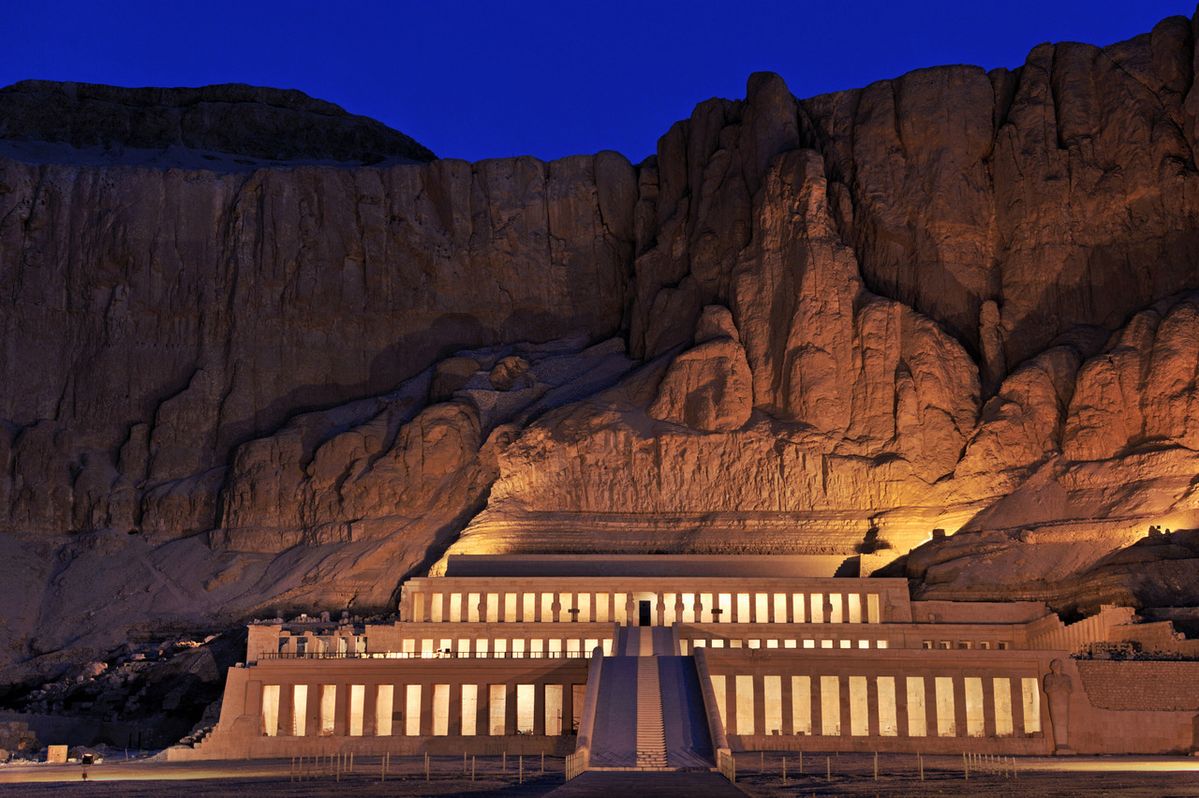
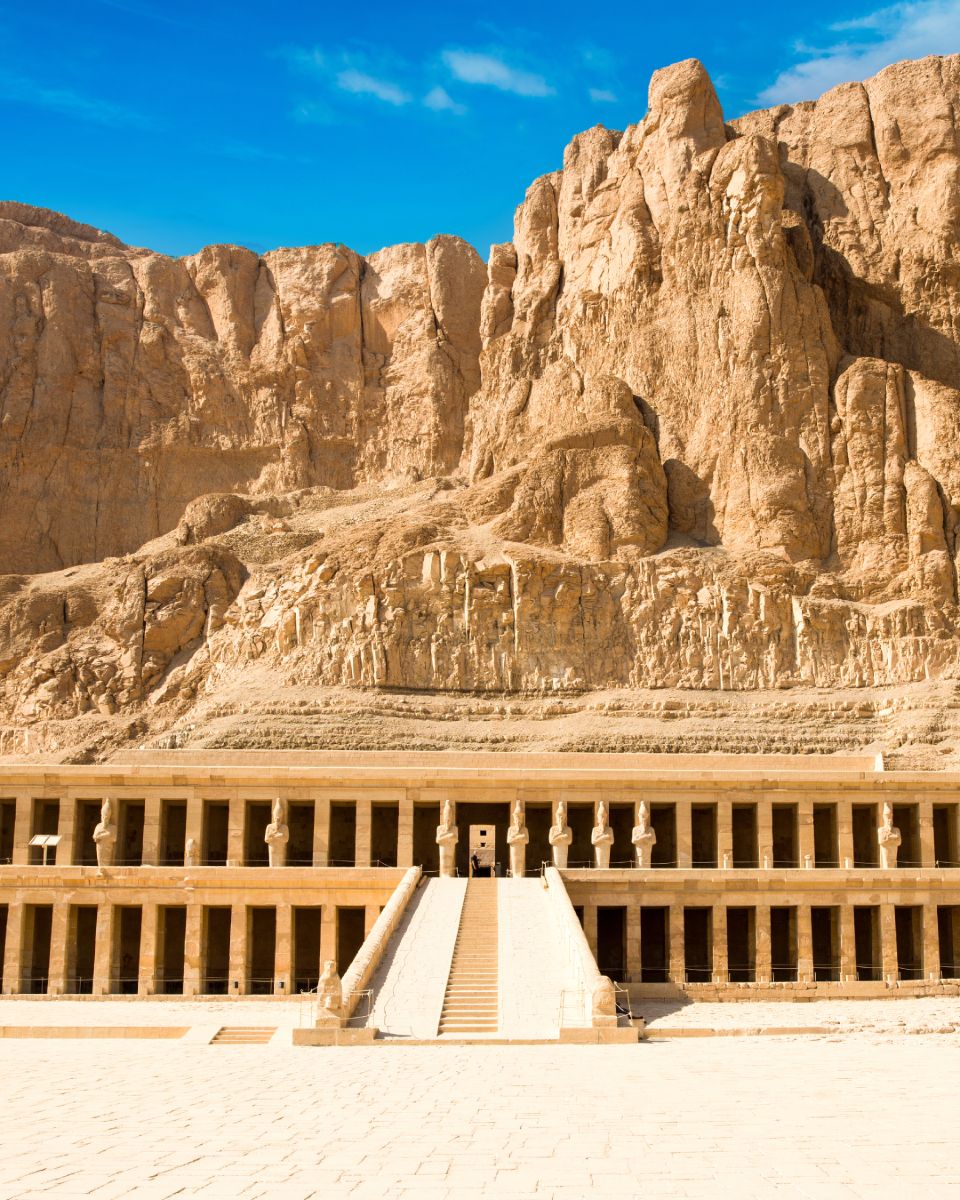
To understand the temple’s unique aesthetic, one must understand Senenmut, the Queen’s closest advisor and rumored confidant. Unlike the traditional temple designs found in Karnak or Luxor, Senenmut looked to the surrounding cliffs for inspiration, creating a structure that utilized horizontal lines to contrast with the verticality of the mountains. This was the first true example of “environmental architecture” in history. The temple’s design creates a visual dialogue with the natural landscape, making the massive cliffs of Deir el-Bahari feel like a protective backdrop for the Queen’s sanctuary. Senenmut’s genius lay in his ability to use light and shadow to create a sense of movement as visitors ascended the ramps. This partnership between pharaoh and architect birthed a monument that feels surprisingly modern, even today, emphasizing harmony, proportion, and a seamless integration with the earth. Beyond his architectural skill, Senenmut held over eighty titles in the royal court, making him the most powerful non-royal in Egypt. His influence is felt in every colonnade and every perfectly aligned terrace. Scholars often marvel at how he broke away from the heavy, enclosed styles of the past to create something that felt light and celestial. By using local limestone, he ensured the temple would blend perfectly with its surroundings, appearing as if it were carved by nature itself rather than by human hands. This design philosophy was radical for its time, challenging the rigid standards of Egyptian art. When you visit today, you see his signature in the precision of the porticos and the elegant flow of the terraces. Senenmut did not just build a temple; he built a bridge between the mortal world and the divine, ensuring that his Queen’s spirit would have a home that was as innovative as her reign was revolutionary.
3. The Sacred Terraces of Deir el-Bahari

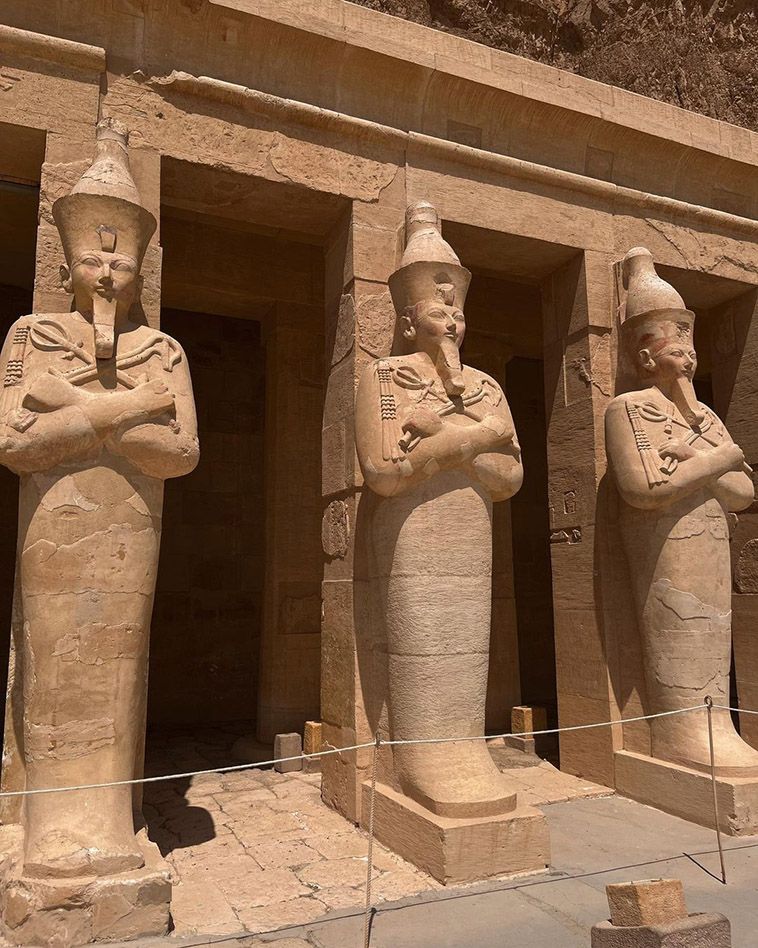
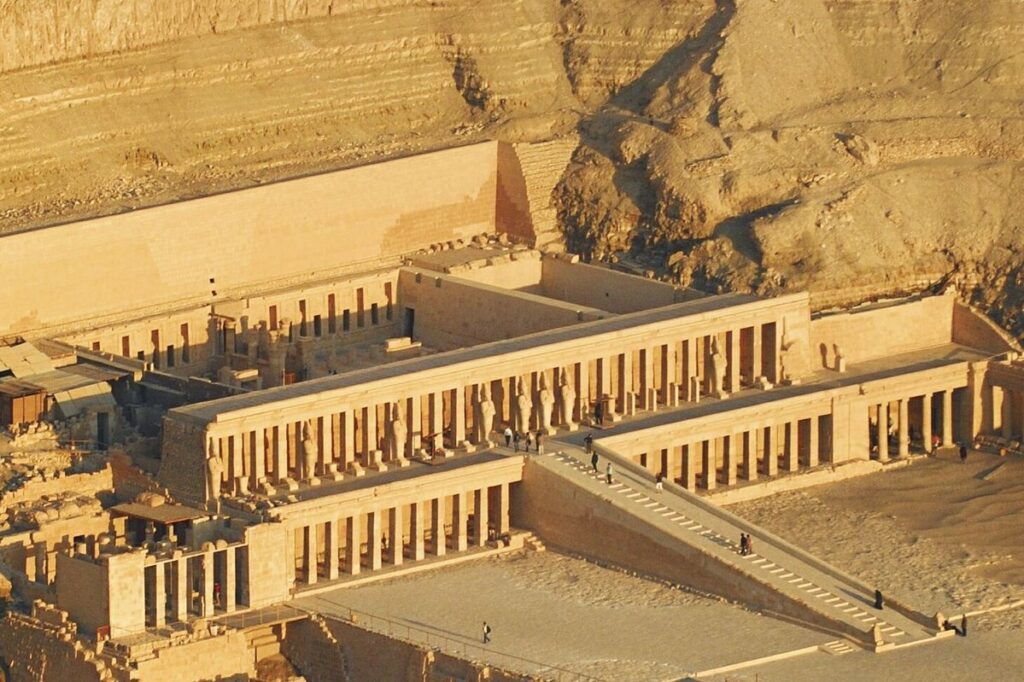
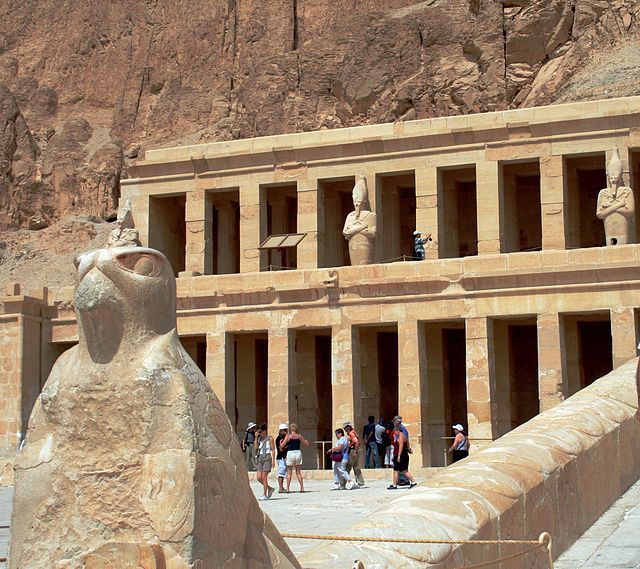
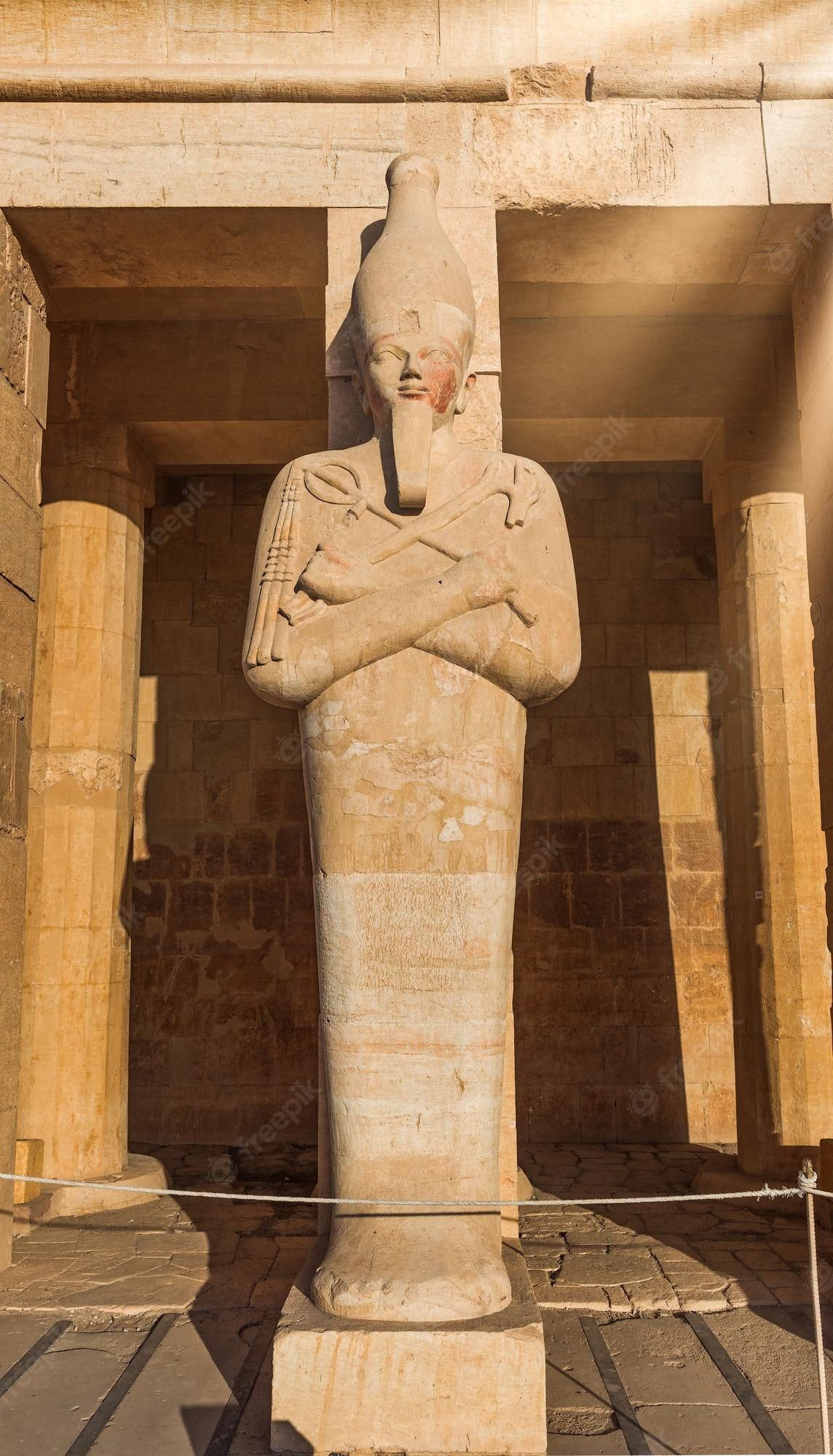
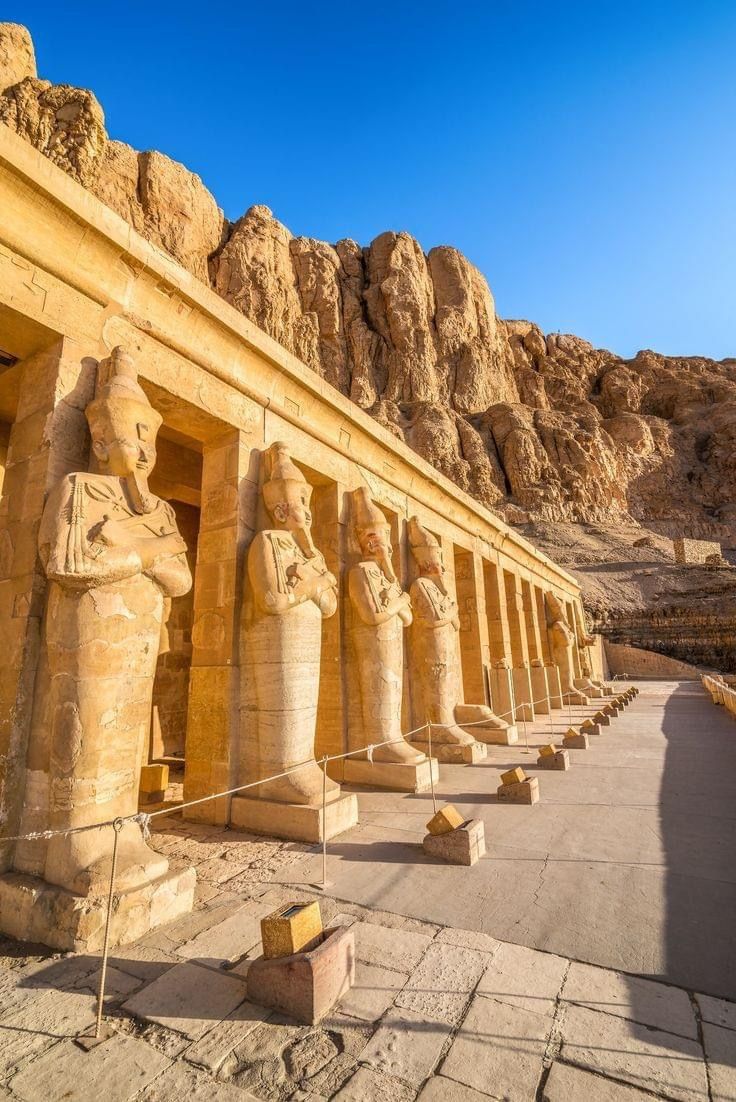
The temple’s layout is a masterpiece of hierarchical progression, organized into three distinct levels that symbolize the journey from the earthly realm to the divine. The lower terrace, once a lush garden filled with exotic trees brought from foreign lands, served as the welcoming ground for worshippers. Moving up the grand central ramp, visitors reach the middle terrace, which houses the famous birth colonnade and the Punt reliefs. Finally, the upper terrace houses the inner sanctum, where the Queen communed with the gods. Each level was once guarded by sphinxes and lined with vibrant statues of the Queen in the guise of Osiris. This tiered approach allowed for a dramatic unfolding of the temple’s narrative, ensuring that every step taken toward the mountain was a step closer to the gods themselves. In antiquity, the approach to the temple was a multisensory experience; the smell of burning incense from the Punt expedition filled the air, and the reflection of the sun on the white limestone was blindingly beautiful. The terraces are not just floors; they are stages for the performance of royal and religious rituals. As guests ascended, the noise of the Nile Valley faded away, replaced by the sacred silence of the mountain. This architectural progression served a psychological purpose, humbling the visitor while elevating the status of the Pharaoh. Today, as you climb these same ramps, the scale of the achievement becomes clear. The engineering required to move these massive blocks and align them with such mathematical precision is staggering. Each terrace offers a new perspective of the Luxor landscape, connecting the temple to the wider sacred landscape of Ancient Thebes. It is a place where the horizontal lines of human ambition meet the vertical majesty of the gods, creating a space that feels both grounded in history and suspended in eternity.
4. The Divine Birth: A Tale of Heavenly Origin

On the walls of the middle terrace lies one of the most significant propaganda pieces in ancient history: the Divine Birth cycle. To solidify her claim to the throne, Hatshepsut claimed she was not merely the daughter of a king, but the daughter of the god Amun-Ra himself. The reliefs meticulously depict the god Amun taking the form of her father, Thutmose I, and visiting her mother, Queen Ahmose. This divine union, supervised by the gods of the Egyptian pantheon, supposedly resulted in the birth of the “Perfect Goddess” Hatshepsut. By carving this story into the very skin of the temple, she made her sovereignty unquestionable. To challenge her reign was not just a political coup; it was an act of sacrilege against the King of the Gods. This narrative was crucial because, in the Egyptian worldview, the Pharaoh was the living link between the people and the divine. By proving her celestial lineage, Hatshepsut silenced her critics and ensured the loyalty of the powerful priesthood. The artwork in this section is delicate and masterful, showcasing the “Theban style” of the 18th Dynasty with its elongated figures and refined features. Visitors can still see the god Khnum fashioning the young Hatshepsut and her Ka (spirit) on a potter’s wheel, a scene that emphasizes her destiny from the moment of creation. These reliefs served as a permanent legal document in stone, visible to all who entered the sacred precinct. They transformed a political anomaly—a female king—into a theological necessity. As you study these faded but beautiful images, you are looking at the ancient world’s most sophisticated campaign of religious legitimacy, ensuring that her right to wear the Double Crown was seen as a decree from the heavens themselves.

5. Sailing to Punt: The First Great Maritime Adventure

Perhaps the most captivating section of the temple is the “Punt Colonnade,” which documents a massive naval expedition to the mysterious Land of Punt. Hatshepsut was a pharaoh of peace and trade rather than war, and this expedition was her crowning achievement. The reliefs show Egyptian ships laden with treasures: gold, ivory, ebony, and—most importantly—live frankincense and myrrh trees. These trees were planted on the temple’s terraces, creating the first recorded botanical garden in history. The detail in these carvings is astounding, depicting the exotic wildlife of Punt and the Queen of Punt herself, providing historians with a rare glimpse into the global trade networks of the 15th century BCE. This maritime journey was not just a commercial venture; it was a religious mission to bring back the “tears of the gods” (incense) used in temple rituals. The precision of the reliefs allows us to see the fish in the Red Sea and the unique architecture of the Puntite stilt houses. By documenting this success, Hatshepsut proved that her reign brought prosperity and divine favor to Egypt without the need for bloody conquests. For the modern visitor, these walls serve as a stone-carved travelogue, inviting us to share in the wonder of ancient explorers who ventured into the unknown. The Punt reliefs remain a highlight for any tourist, offering a vibrant break from traditional religious scenes and showcasing the Queen’s curiosity about the wider world. Her ability to organize such a logistically complex mission across both land and sea stands as a testament to the stability and wealth of Egypt under her firm yet sophisticated guidance.

6. The Cult of Hathor and Anubis

While the temple is dedicated primarily to Amun, it also features exquisite chapels for other major deities, most notably Hathor and Anubis. The Hathor Chapel is famous for its unique “Hathoric columns,” topped with the face of the cow-eared goddess of love, music, and foreign lands. This section emphasizes the feminine energy of the temple, connecting Hatshepsut to the great goddesses of the Egyptian pantheon. Nearby, the Chapel of Anubis features beautifully preserved colors that look as if they were painted yesterday. Anubis, the jackal-headed god of the afterlife, was crucial for ensuring the Queen’s safe passage into eternity. These chapels functioned as spiritual hubs where the boundaries between the living, the dead, and the divine became blurred under the desert sun. In the Hathor sanctuary, the reliefs show the goddess licking the hand of the Queen, a sign of extreme divine affection and protection. The blue and red pigments still visible on these walls provide a rare opportunity to see the temple as it appeared thousands of years ago—vibrant and full of life. By incorporating these deities into her mortuary complex, Hatshepsut ensured she had the protection of the most powerful forces in the Egyptian cosmos. For travelers, these side chapels offer a more intimate experience than the grand terraces, allowing for a closer look at the masterful artistry of New Kingdom craftsmen. The transition from the bright, open terraces to the cool, dimly lit chapels creates a sense of sacred mystery that is quintessential to the ancient Egyptian experience. It is within these smaller chambers that one truly feels the deep, personal connection between the Pharaoh and her gods.

7. The Mystery of the Damnatio Memoriae

One of the most intriguing aspects of Hatshepsut’s temple is the evidence of ancient “cancel culture.” Years after her death, many of her images and names were systematically chiseled away from the walls. For centuries, historians believed this was the work of a vengeful Thutmose III, seeking revenge for his stolen throne. However, modern research suggests a more political motive: the removal of her images was likely an attempt to ensure a smooth transition for the male line of succession and to erase the “anomaly” of a female king. Walking through the temple today, you can still see the ghostly outlines where her statues once stood, creating a poignant reminder of the fragility of legacy and the power of memory. This “damnatio memoriae” or condemnation of memory, was not complete, as many of her grandest achievements were too massive to destroy entirely. The hackers often targeted only the royal insignia or the feminine pronouns in her inscriptions, leaving the religious context intact. This selective destruction tells us a great deal about the Egyptian concept of the afterlife; by removing her name, her enemies were theoretically preventing her soul from finding its way back to the earthly realm. Paradoxically, this attempt to erase her from history has only made her more famous in the modern era, as archaeologists work like detectives to piece together her story from the remaining fragments. The scars on the stone walls serve as a secondary narrative, a silent battle between a powerful woman and those who wished to forget her. Today, visitors stand in awe of these “erasures,” realizing that even the most powerful efforts to silence Hatshepsut ultimately failed to dim the brilliance of her architectural and historical impact.

8. The Restoration Miracle: A Polish-Egyptian Effort

The temple we see today is the result of decades of painstaking archaeological restoration and a testament to modern scientific dedication. When early explorers arrived at Deir el-Bahari in the 19th century, the site was a chaotic pile of rubble, largely destroyed by ancient earthquakes, Christian iconoclasm during the Coptic era, and the aforementioned political erasures. Since 1961, a joint mission between the Polish Centre of Mediterranean Archaeology and the Egyptian Ministry of Tourism and Antiquities has been working tirelessly to reassemble the “giant jigsaw puzzle” of stone fragments. Using a technique called anastylosis, where original architectural elements are incorporated with new materials only when necessary for structural integrity, experts have returned original blocks to their rightful places. This has allowed the temple’s grand silhouette to dominate the Theban landscape once more, rather than lying in heaps of shattered limestone. This ongoing project is one of the most successful and longest-running examples of cultural heritage preservation in the world. Visitors today can see the subtle difference between the weathered, original ancient stones and the smoother, modern sandstone used to support the structure. This transparency in restoration allows the public to appreciate the authentic history while understanding the Herculean effort required to save it. The mission has not only rebuilt walls but has also uncovered thousands of fragments of reliefs and statues that provide new insights into the Queen’s reign. Without this international cooperation, the “Splendor of Splendors” might have remained a mystery buried under the desert sands. Instead, it stands as a bridge between the 15th century BCE and the 21st century, proving that even after millennia of decay and human interference, the spirit of Hatshepsut’s vision can be reclaimed and shared with the global community.

9. The Solar Altar and the Upper Terrace

The highest level of the temple is where the most sacred rituals took place, serving as the interface between the pharaoh and the celestial bodies. Here, you will find the Solar Cult Court, featuring a massive, open-air altar dedicated to the sun god Ra-Horakhty. This was a place of daily transformation, where the rising sun’s first rays would strike the sanctuary, symbolizing the eternal rebirth of the universe and the Queen’s own rejuvenation. The upper terrace also contains the Sanctuary of Amun-Ra, carved deep into the living rock of the cliff, where the air remains cool and the atmosphere heavy with ancient energy. During the “Beautiful Festival of the Valley,” the cult statue of Amun would travel from Karnak Temple across the Nile to visit this specific sanctuary, staying overnight to recharge its divine power. This annual event turned the temple into a vibrant center of celebration, connecting the city of the living with the necropolis of the dead through music, wine, and prayer. Access to this level was strictly limited in ancient times to high priests and the Pharaoh herself, making it the most exclusive real estate in the Theban hills. Today, visitors can walk through the restored granite portal and stand where the Queen once stood, overlooking the vast expanse of her kingdom. The architectural precision here is designed to capture the light in specific ways during the solstices, showcasing the Egyptians’ advanced understanding of astronomy. Standing on this third level, one feels a sense of verticality and proximity to the divine that is absent from the lower grounds, making it the emotional and spiritual climax of any visit to the site.

10. Life and Landscape at Deir el-Bahari

The location of the temple, known as Deir el-Bahari (The Northern Monastery), was not chosen by mere coincidence or convenience. This natural amphitheater had been sacred to the goddess Hathor for centuries and was already home to the smaller, earlier mortuary temple of the Middle Kingdom pharaoh Mentuhotep II. By building her temple directly adjacent to a historical hero, Hatshepsut was physically and symbolically anchoring her reign to the glorious past of Egypt’s reunification. The stark contrast between the pale, polished white limestone and the deep, rugged orange of the Theban cliffs creates a visual impact that remains unmatched in the entire Nile Valley. For the ancient Egyptians, this site was the “Gateway to the West,” the sacred threshold where the sun set and the journey into the Duat (the afterlife) began. In its heyday, the landscape was far from the arid desert we see today; grand avenues of sphinxes stretched toward the river, and the terraces were draped in greenery and exotic blooms from foreign lands. The engineering feat of channeling water to these heights to maintain a lush garden in the middle of a desert canyon was as impressive as the stone masonry itself. This integration of architecture and nature serves as a reminder that the Egyptians did not view themselves as separate from their environment, but as partners with the land and the gods who inhabited it. Today, the silence of the canyon and the overwhelming scale of the cliffs continue to provide a sense of sanctuary, offering a moment of quiet reflection away from the bustling modern streets of Luxor.

11. Photography and the Golden Hour

For modern travelers and content creators, the Temple of Hatshepsut is a dream landscape for photography and cinematography. To capture the monument in its most flattering and dramatic light, one must arrive either at the crack of dawn or during the late afternoon “golden hour.” As the sun moves across the desert sky, the long, rhythmic shadows of the colonnades stretch across the vast limestone terraces, highlighting the incredible precision and depth of the ancient masonry. The view from the top terrace, looking back toward the Nile and the distant, towering pylons of Karnak, is one of the most iconic vistas in all of Egypt. It is a place where you can truly feel the immense scale of the ancient world compared to the modern horizon. The temple’s clean, geometric lines and repetitive patterns make it a favorite for architectural photographers, offering a stark, minimalist beauty that provides a refreshing contrast to the more ornate and crowded decorations of later Ramesside periods. Professional photographers often suggest using the natural framing of the porticos to capture the Theban peaks, or focusing on the surviving pigments in the Anubis chapel for vibrant close-ups. Because the temple faces east, the morning light illuminates the facade directly, turning the white stone into a glowing beacon of gold. Whether you are using a professional DSLR or a high-end smartphone, the play of light on the tiered levels offers endless opportunities to document the harmony of human design. It is not just about taking a picture; it is about capturing the way the ancient architects manipulated light to create a sense of awe that has lasted for over three and a half millennia.

12. Legacy of the Woman Who Would Be King

Ultimately, the Temple of Hatshepsut is a monument to the endurance of the human spirit and the triumph of intellect over tradition. Despite the calculated attempts by later generations to erase her from the annals of history, Hatshepsut’s temple stands as one of the most visited and beloved archaeological sites in modern Egypt. It serves as a powerful, enduring symbol for female empowerment, visionary leadership, and the courage to redefine one’s destiny. As you walk down the final ramp and look back at the towering limestone cliffs that embrace the structure, you realize that Hatshepsut succeeded in her ultimate goal: she achieved true immortality. Her name is once again known worldwide, her face—reconstructed through archaeological brilliance—is recognized by millions, and her “Splendor of Splendors” remains a beacon of human achievement. A visit here is far more than a simple sightseeing tour; it is a profound encounter with a woman who dared to dream in stone and left behind a legacy that even the harshest desert sands and most determined political rivals could never bury. The temple continues to inspire architects, historians, and travelers from every corner of the globe, standing as a reminder that greatness is not defined by the expectations of others, but by the scale of one’s own vision. As the sun sets behind the Theban Hills, casting long shadows over the terraces she built, the spirit of the female Pharaoh remains a palpable presence. She remains a king among kings, an architect of an era, and the eternal guardian of Deir el-Bahari, inviting us all to witness the incredible story of the queen who reached for the stars and left her mark on the very foundation of civilization.

Valley of the Kings : Frequently Asked Questions

Unlike the traditional “pylon” temples (like Karnak or Luxor) which are built on a flat, enclosed axis, Hatshepsut’s temple is a terraced masterpiece. Its architect, Senenmut, employed a “classical” style that features long colonnades and open ramps that mimic the horizontal layers of the surrounding limestone cliffs. This creates a seamless integration between human-made architecture and the natural environment, making it feel more like a modern monument than an ancient ruin.

Yes! While much of the exterior has been bleached by the sun over 3,500 years, the interior chapels—specifically the Chapel of Anubis and the Chapel of Hathor—retain stunningly vibrant original pigments. You can see deep Egyptian blue, rich ochre, and terracotta reds that look remarkably fresh. These colors were made from natural minerals like lapis lazuli and malachite, preserved for millennia by the dry desert climate.

The temple was designed by Senenmut, who was much more than just an architect; he was the Queen’s Chief Steward and most trusted advisor. There is much historical intrigue surrounding him, with some Egyptologists suggesting a hidden romance between him and the Queen. He was so favored that he was even granted the rare honor of having his own tomb started within the temple’s sacred precinct, a privilege usually reserved only for royalty.


This is the result of an ancient practice called Damnatio Memoriae (condemnation of memory). About 20 years after Hatshepsut’s death, her stepson and successor, Thutmose III, ordered her name and image to be erased from public monuments. This wasn’t necessarily out of hatred, but likely a political move to ensure the throne’s legitimacy remained in the male line. Today, these “scars” on the walls are a fascinating part of the temple’s story, showing the struggle for power in the 18th Dynasty.

The best time to visit is early morning (around 6:00 AM to 8:00 AM) or late afternoon (after 4:00 PM). The temple faces east, so the morning sun hits the facade directly, making the white limestone glow beautifully for photos. Visiting early also helps you avoid the intense midday desert heat and the large crowds from tour buses, allowing you to experience the spiritual “silence” of Deir el-Bahari that the ancients so cherished.