
1. The Moment of Discovery: A Ten-Year Obsession
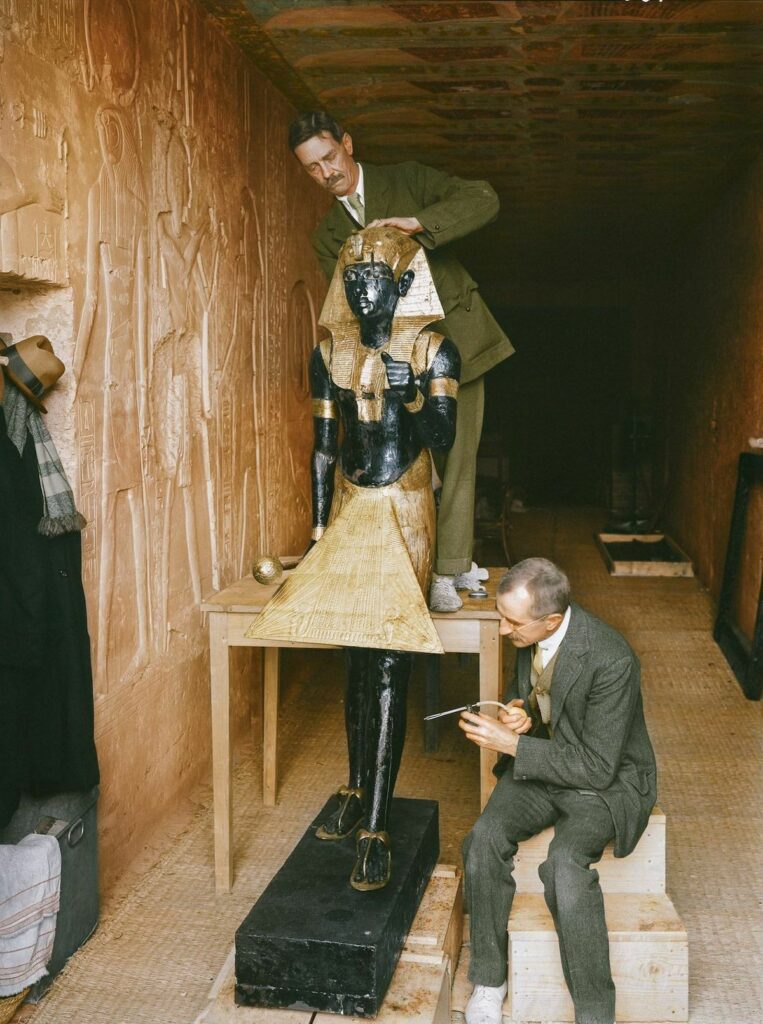
The story of KV62 is not just a tale of ancient gold, but a testament to human perseverance. For nearly a decade, Howard Carter and his financier, Lord Carnarvon, combed the Valley of the Kings with little success. By 1922, they were on the brink of giving up, with Carnarvon warning that this would be their final season. Fate intervened on November 4th, when a water boy discovered a stone step buried beneath the debris of ancient workmen’s huts. As they cleared the stairway and reached the sealed door, the tension was palpable. When Carter finally made a small breach in the second door, he held up a candle to the darkness. The hot air escaping the chamber caused the flame to flicker, but as his eyes adjusted, the glint of gold began to emerge from the shadows. When Carnarvon anxiously asked, “Can you see anything?”, Carter uttered the legendary words: “Yes, wonderful things.” This moment didn’t just uncover a tomb; it birthed “Tut-mania,” a global fascination that influenced everything from fashion to architecture in the 1920s. For the modern traveler, standing at that very entrance evokes a sense of shared discovery, making one feel like a witness to the greatest archaeological “find” in human history. It reminds us that even in a valley explored for centuries, secrets can remain hidden right beneath our feet.
2. The Artistic Narrative: A Hurried Journey to Eternity
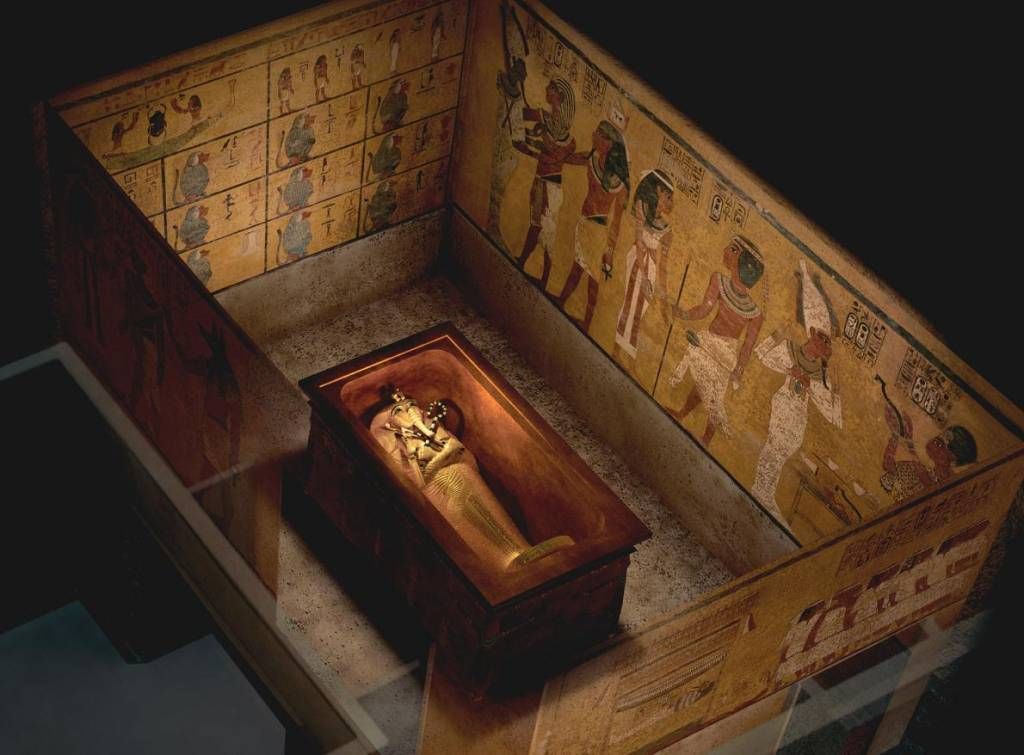
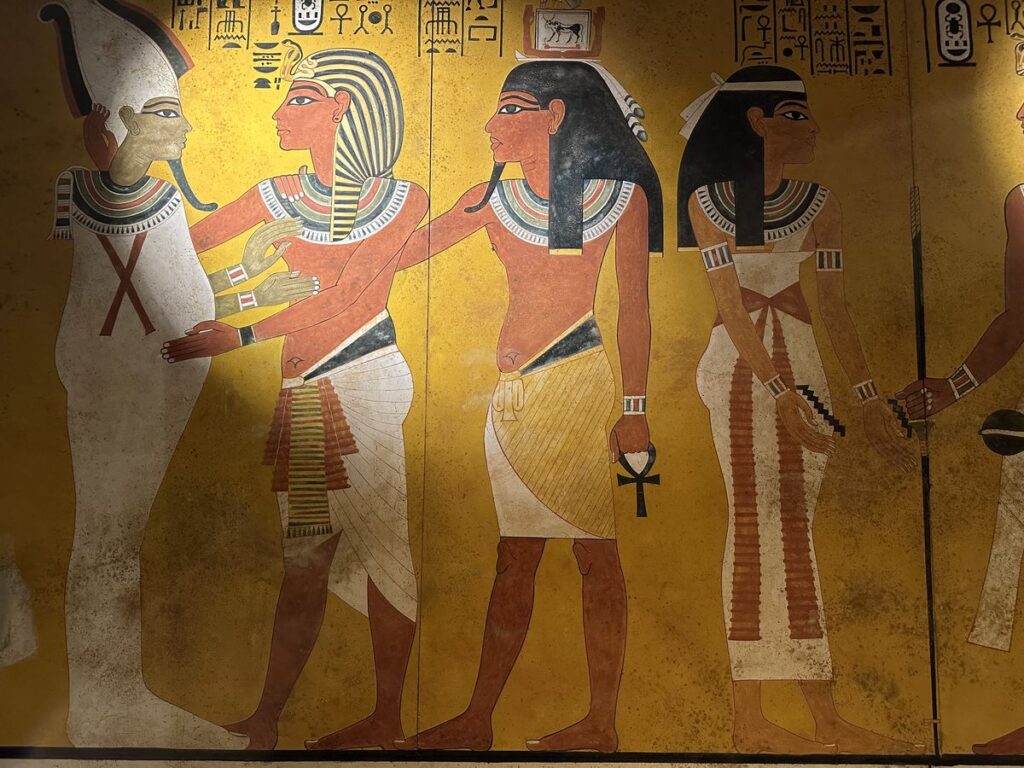
While the royal tombs of the 19th and 20th Dynasties are famous for their sprawling corridors and endless reliefs, Tutankhamun’s burial chamber is strikingly intimate. This small scale is a poignant reflection of the king’s sudden and unexpected death at the young age of nineteen. Because there was no grand tomb ready for him, a smaller private tomb was likely repurposed and finished in a frantic seventy-day period—the time required for mummification. The artistic style is a fascinating blend of the traditional and the revolutionary “Amarna” style inherited from his father, Akhenaten. The walls, painted a vibrant yellow to mimic the radiance of gold, depict the king’s transition into the divine realm. One particularly famous scene shows the “Opening of the Mouth” ceremony, performed by Ay, his successor, who is depicted wearing the leopard skin of a priest. However, a close look reveals small brown spots on the murals; these are ancient mold spores that grew because the tomb was sealed while the plaster and paint were still damp. This detail adds a hauntingly human layer to the site, proving that despite the royal opulence, the burial was a race against time. For visitors, these “imperfections” make the history feel tangible, closing the 3,300-year gap between the ancient painters and the modern observer.
3. The Enigma of the Sarcophagus and the Golden Shells
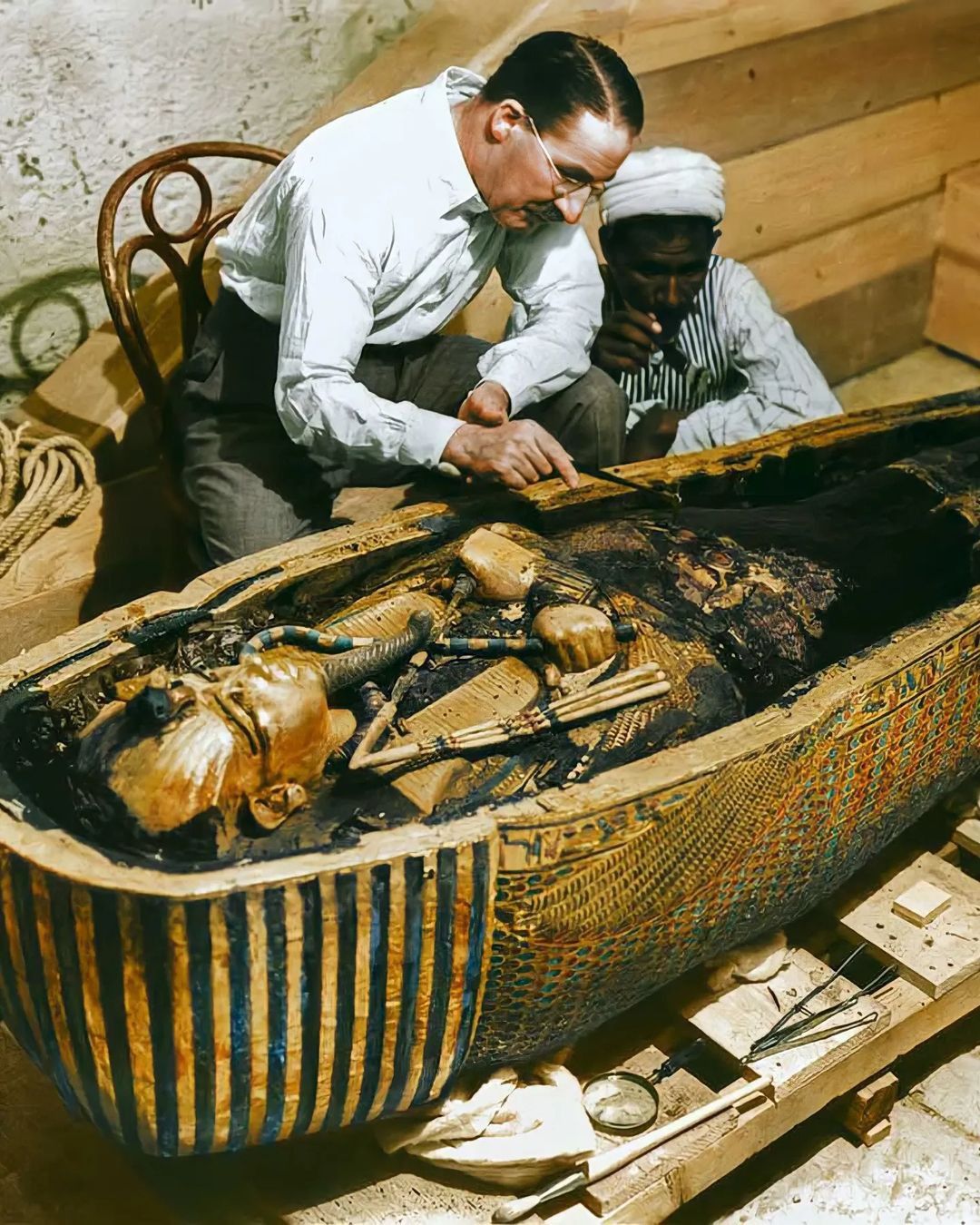
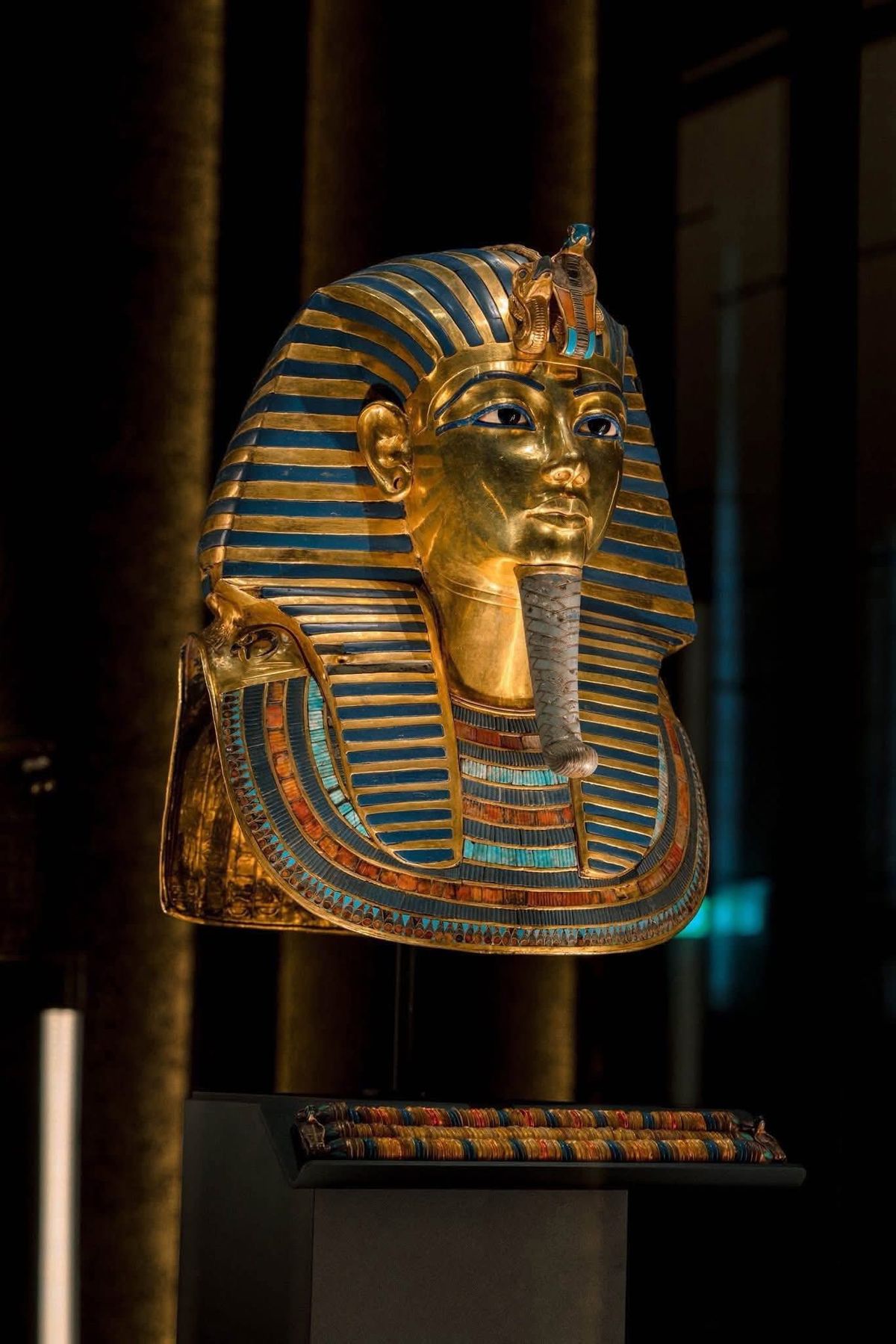
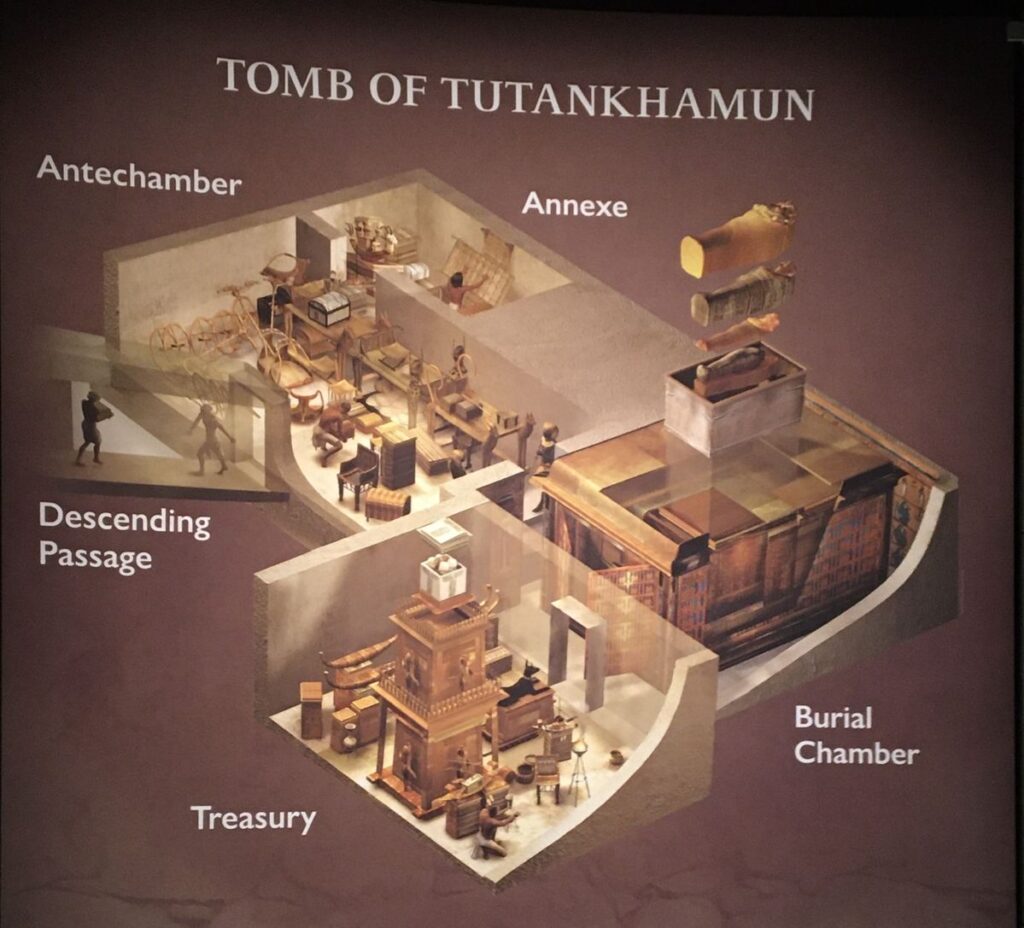
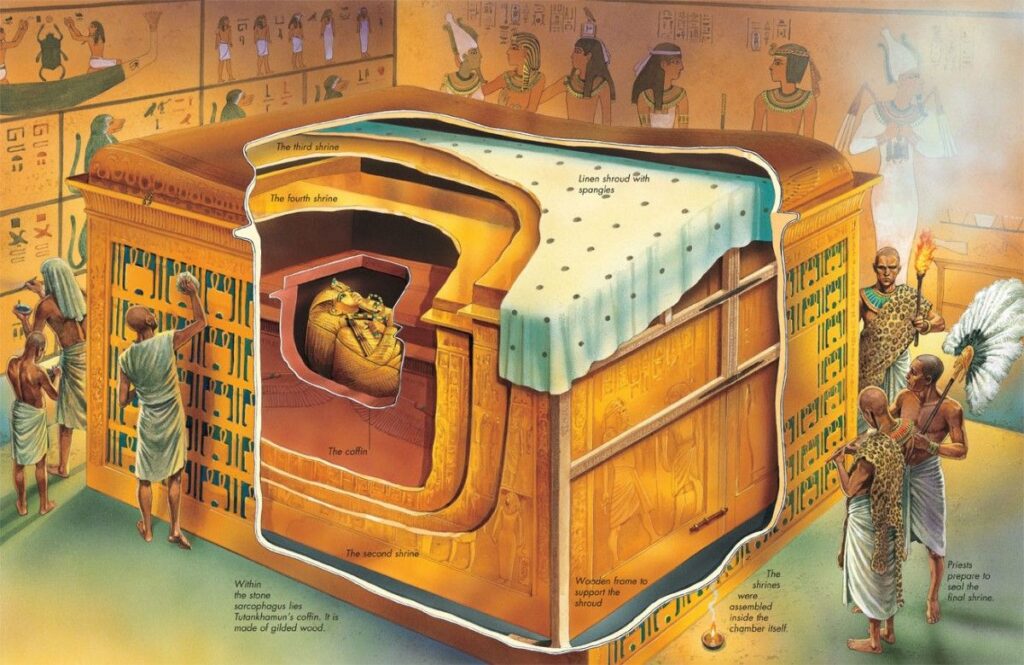
The burial chamber was once filled with four gilded wooden shrines, nested inside each other like Russian dolls, which protected the quartzite sarcophagus at the center. This sarcophagus is a masterpiece of New Kingdom stone-carving, featuring the protective goddesses Isis, Nephthys, Selket, and Neith at each corner, their winged arms outstretched to shield the king for eternity. Inside this stone shell were three magnificent coffins. The two outer coffins were made of gilded wood inlaid with semi-precious stones and glass, while the innermost coffin—a breathtaking 110 kilograms of solid gold—held the king’s mummy. While the most famous treasures, including the iconic funerary mask, have been moved to the Grand Egyptian Museum to ensure their preservation, the outer sarcophagus and the king’s mummy remain in situ. Seeing the king in his original resting place provides a spiritual weight that no museum gallery can replicate. It allows the traveler to understand the “protection” intended by the ancient priests; the layers of gold and stone weren’t just for display, but served as a magical fortress designed to keep the king’s soul (the Ka) safe from the dangers of the underworld. Standing in that cramped, silent space, one realizes that the true treasure isn’t just the gold, but the enduring devotion that sought to make a mortal boy immortal.