
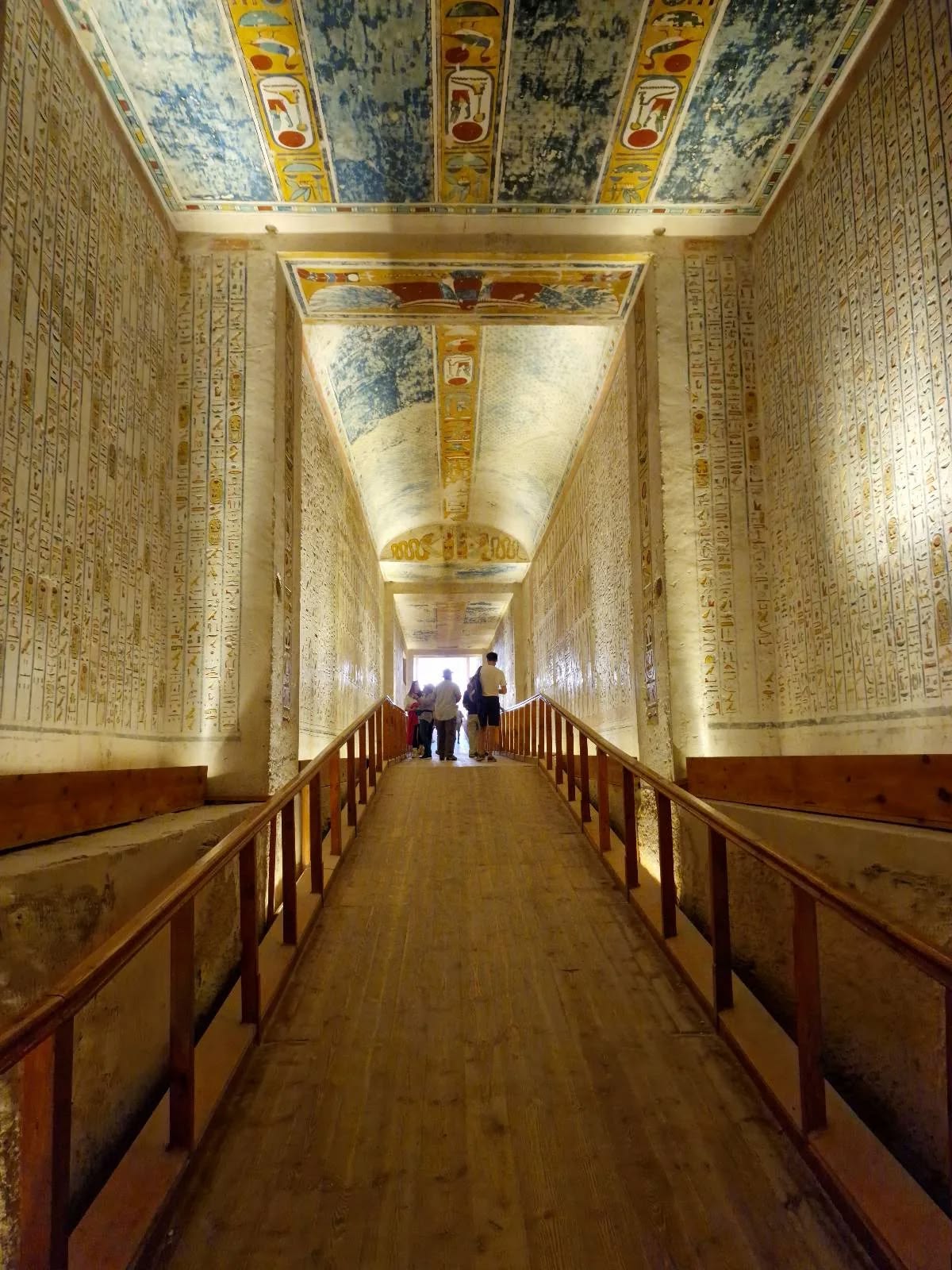
Welcome to

The Tomb of Ramesses V and VI: A Celestial Masterpiece in the Valley of the Kings

Deep within the limestone heart of the Theban Necropolis lies KV9, a tomb that stands as a breathtaking testament to the artistic and theological heights of the New Kingdom. Known to many as the “Tomb of Memnon” during the Roman era, this subterranean gallery is unique because it served as the final resting place for two pharaohs: Ramesses V, who began the excavation, and his successor Ramesses VI, who enlarged and completed it. For the modern traveler, entering KV9 is akin to walking into a colossal, ancient storybook. Unlike many other tombs where time and nature have faded the walls, the colors here remain startlingly vivid, as if the artists had only just laid down their brushes. The tomb is celebrated not just for its immense scale, but for possessing some of the most complex and perfectly preserved astronomical ceilings in all of Egypt, offering an unparalleled journey into the ancient Egyptian conception of the universe and the journey of the soul.

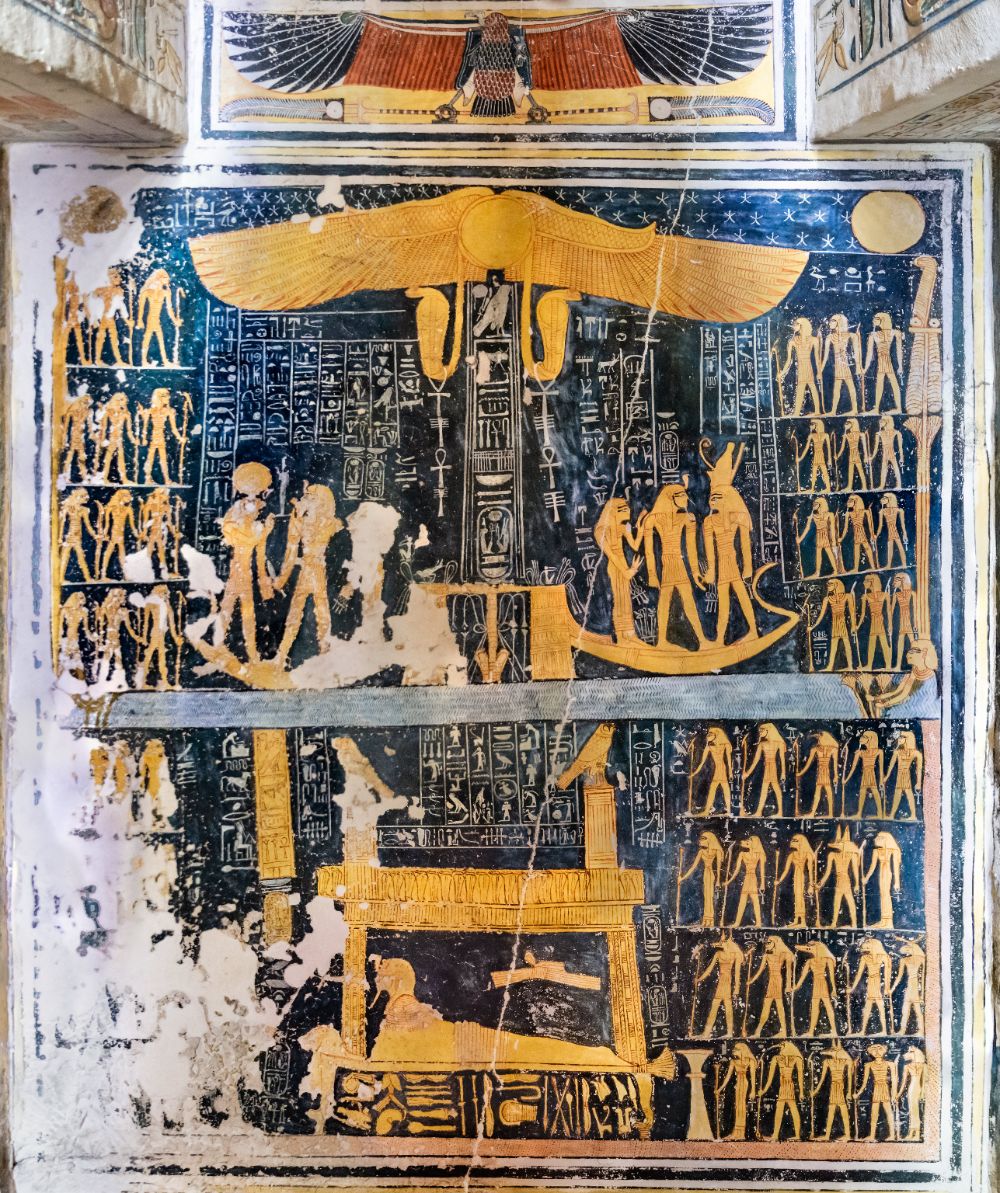
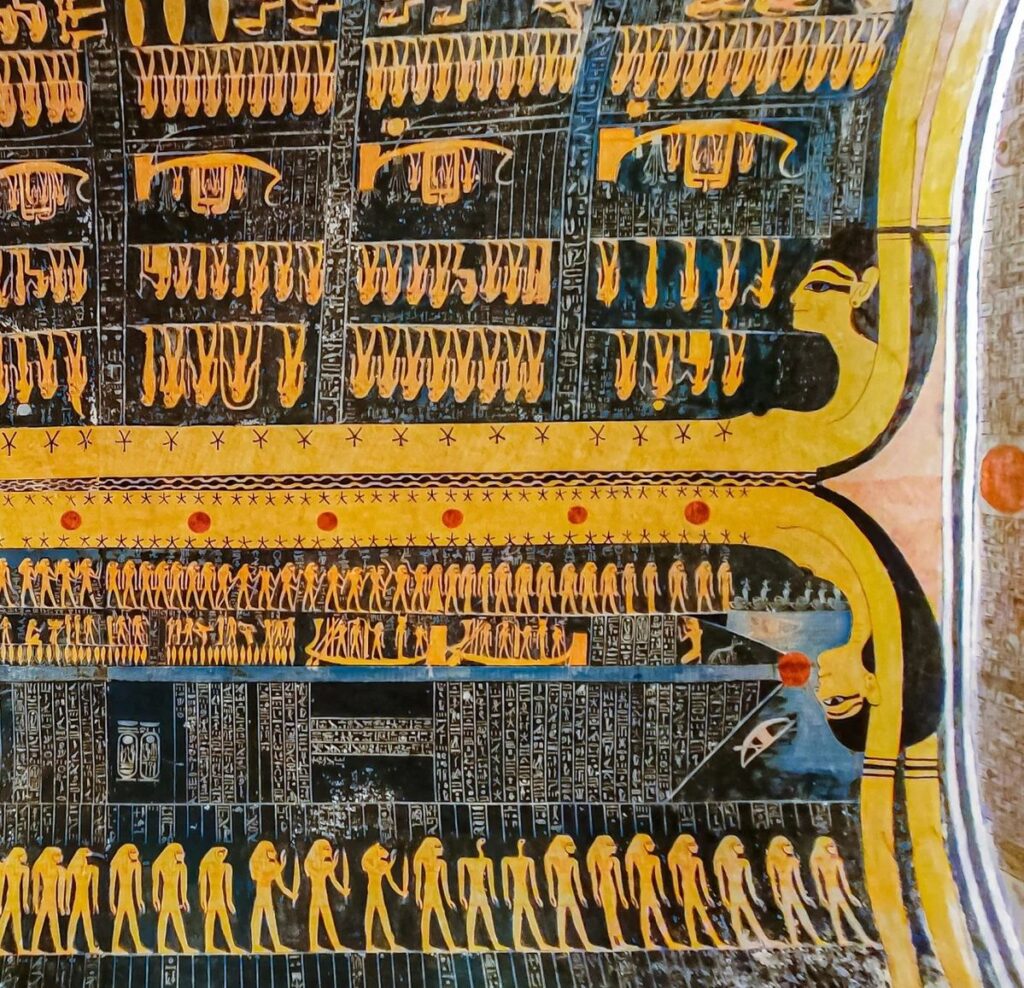
While the tomb of Tutankhamun is famous for its hidden gold, the tomb of Ramesses V and VI is cherished for its “intellectual gold”—the wealth of sacred texts and celestial maps that cover every square inch of its walls and ceilings. It is a place where the physical and the spiritual collide; as you descend through its long, sloping corridors, you are surrounded by the Book of Gates, the Book of Caverns, and the Book of the Earth. The journey culminates in a burial chamber that is nothing short of a masterpiece, dominated by a ceiling that depicts the sky goddess Nut swallowing the sun each night to give birth to it again at dawn. To visit KV9 is to witness the absolute peak of Ramesseside art; it is an immersive experience that leaves the observer in awe of the precision, the devotion, and the eternal ambition of the Pharaohs.

1. The Dual Legacy: Two Kings, One Masterpiece

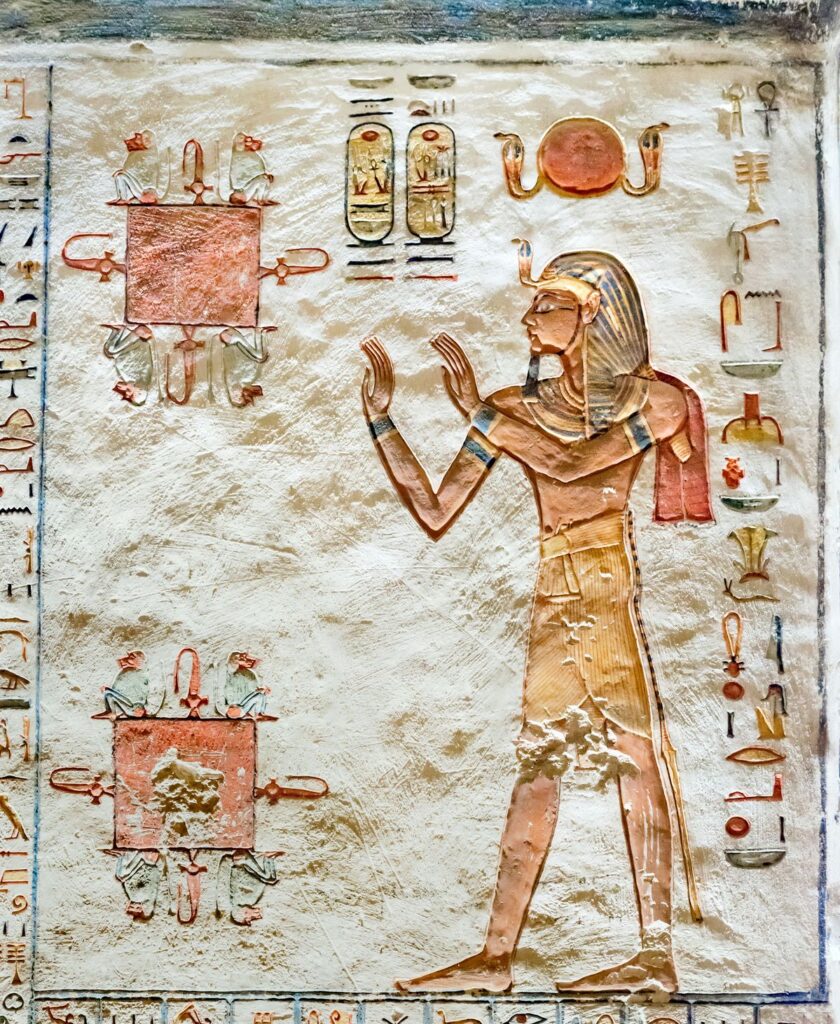
The history of KV9 is a rare example of royal “re-use” that resulted in one of the most structurally sound and visually impressive monuments in the Valley of the Kings. Originally commissioned by Ramesses V during the mid-20th Dynasty, the tomb was only partially completed when he died. His successor, Ramesses VI, made the pragmatic yet ambitious decision to not only take over the site but to significantly expand it, turning a modest project into a grand, multi-chambered gallery. This dual ownership is visible in the cartouches (royal name stamps) throughout the tomb, where the names of both kings are found in different sections. For archaeologists, this shared space provides a unique look at the transition of power and the continuity of artistic workshops during the Ramesseside period. For the modern traveler, the tomb’s shared history is a reminder of the shifting fortunes of the late New Kingdom. By combining the resources of two reigns, KV9 achieved a scale and decorative consistency that few other tombs could match. It stands today as a symbol of architectural collaboration across generations, ensuring that both kings achieved a level of immortality that neither might have reached alone in the turbulent political climate of their time.
2. The Architectural Descent into the Underworld

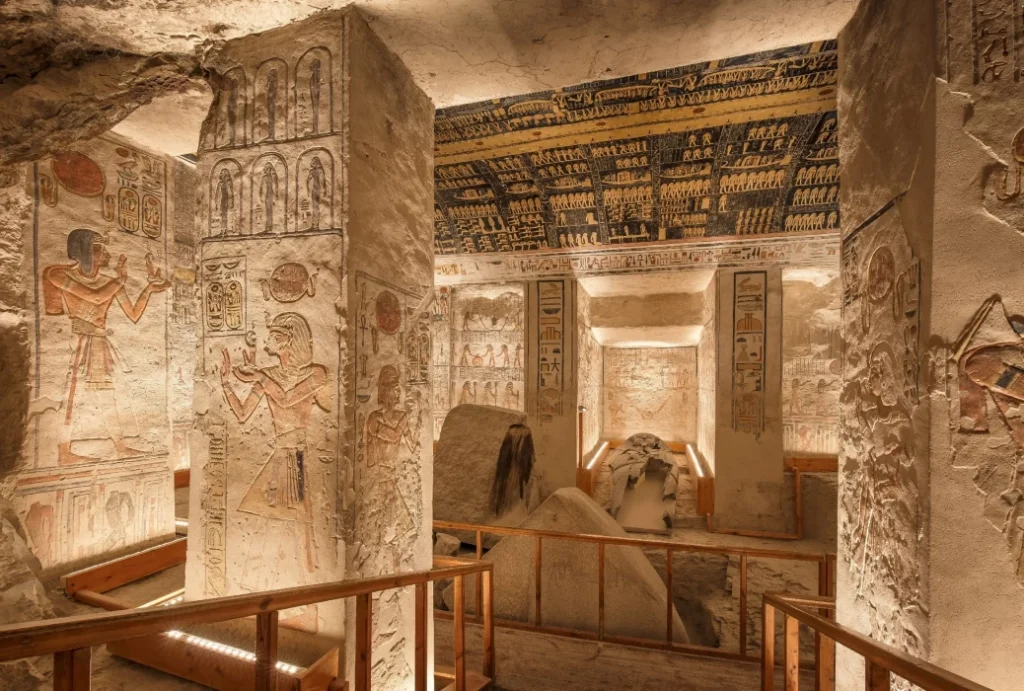
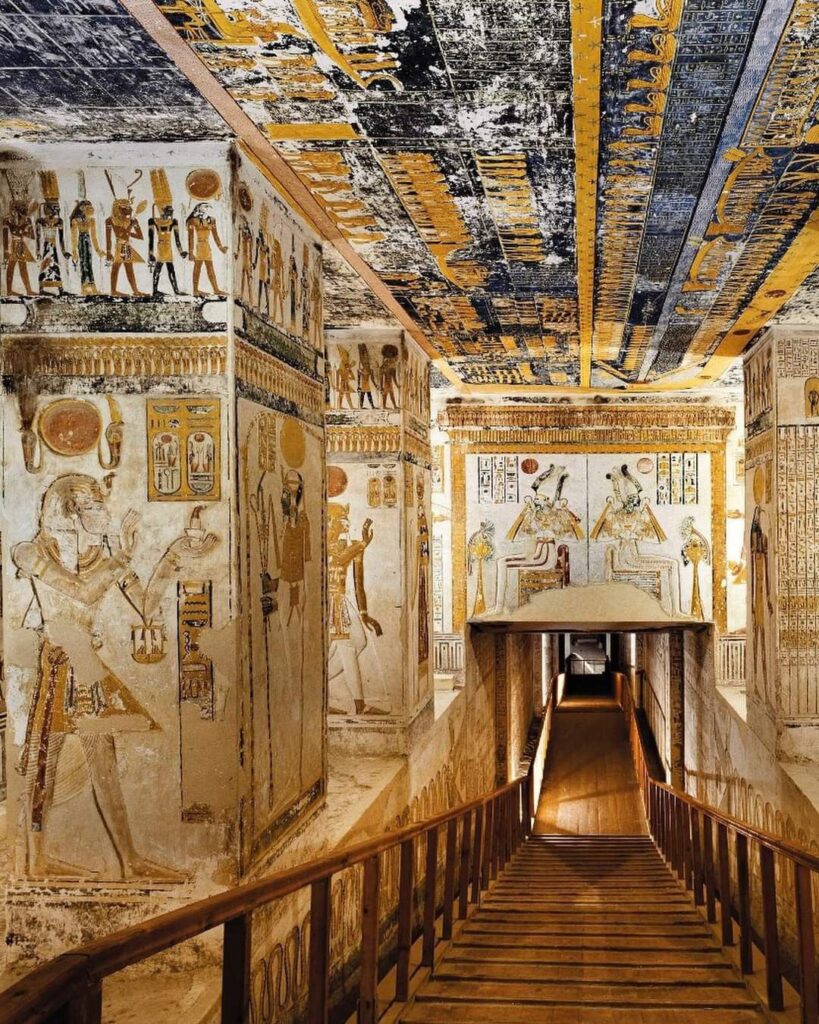
The design of KV9 represents the architectural perfection of the “Straight Axis” tomb, a style that evolved during the 20th Dynasty to emphasize a direct, unobstructed path to the burial chamber. As you enter, the tomb begins with a series of three wide, sloping corridors that lead deeper into the limestone mountain. Unlike earlier tombs that utilized sharp turns or “well shafts” to deter robbers, KV9 relies on its sheer length and imposing scale to create a sense of majesty. The descent is intentionally gradual, designed to facilitate the complex funeral processions of the era. Every surface of these corridors is covered in high-quality sunk relief, which was then painted in a vibrant palette of ochre, Egyptian blue, and deep reds. For the visitor, walking down this long, illuminated hallway is a hypnotic experience; the repetitive patterns of the sacred texts and the rhythmic placement of the pillars create a feeling of movement, as if you are traveling alongside the Sun God on his nightly journey. The symmetry of the rooms and the precision of the stone-cutting demonstrate that even during a period of economic decline, the royal craftsmen of Deir el-Medina maintained a standard of excellence that remains breathtaking over three thousand years later.
3. The Litany of Ra and the Sacred Texts

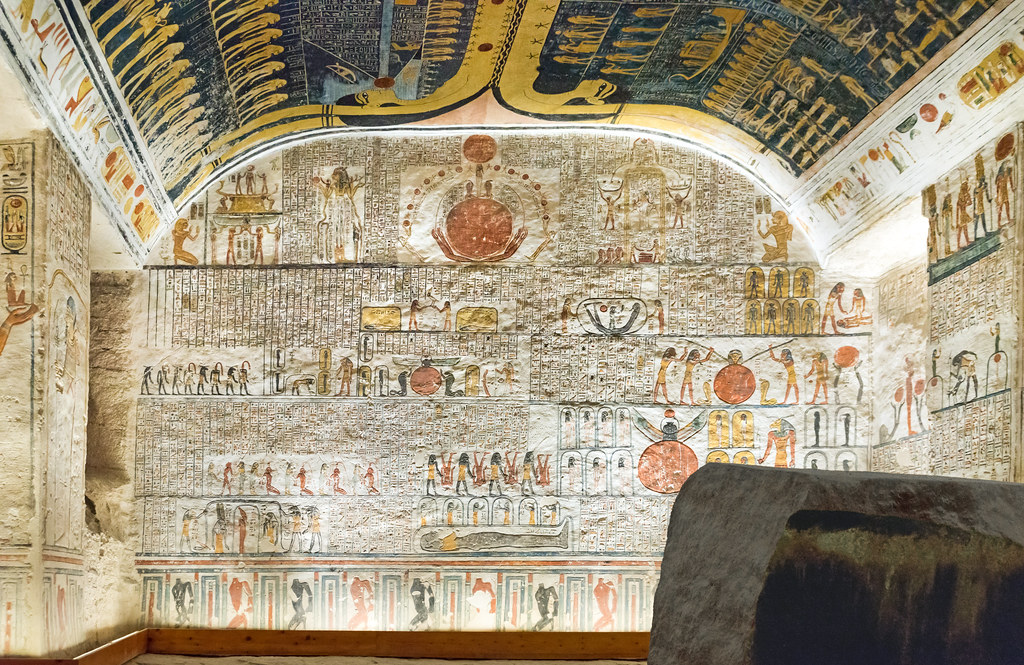
What sets KV9 apart from almost every other site in the valley is its status as a “Library of the Afterlife.” Every wall is meticulously decorated with an encyclopedic collection of funerary literature, primarily the Book of Gates, the Book of Caverns, and the Book of the Dead. These texts were not merely decorative; they were functional “cheat sheets” intended to help the king’s soul navigate the dangerous gates and monstrous guardians of the underworld. The craftsmanship here is remarkably delicate; the hieroglyphs are carved with such precision that they retain their sharpness even under modern lighting. One of the most striking sections is the Litany of Ra, which appears near the entrance and praises the Sun God in his 75 different forms. For history enthusiasts and SEO-focused travel content, this tomb is often described as the most “readable” tomb in Luxor because the narrative flow of the images is so clear. As you walk deeper, the themes transition from the earthly to the cosmic, preparing the observer for the grand finale in the burial chamber. It is an immersive educational experience that allows the visitor to understand the ancient Egyptian mindset—a world where life, death, and the movement of the stars were all part of one grand, interconnected cycle.
4. The Celestial Vault: The Book of Nut

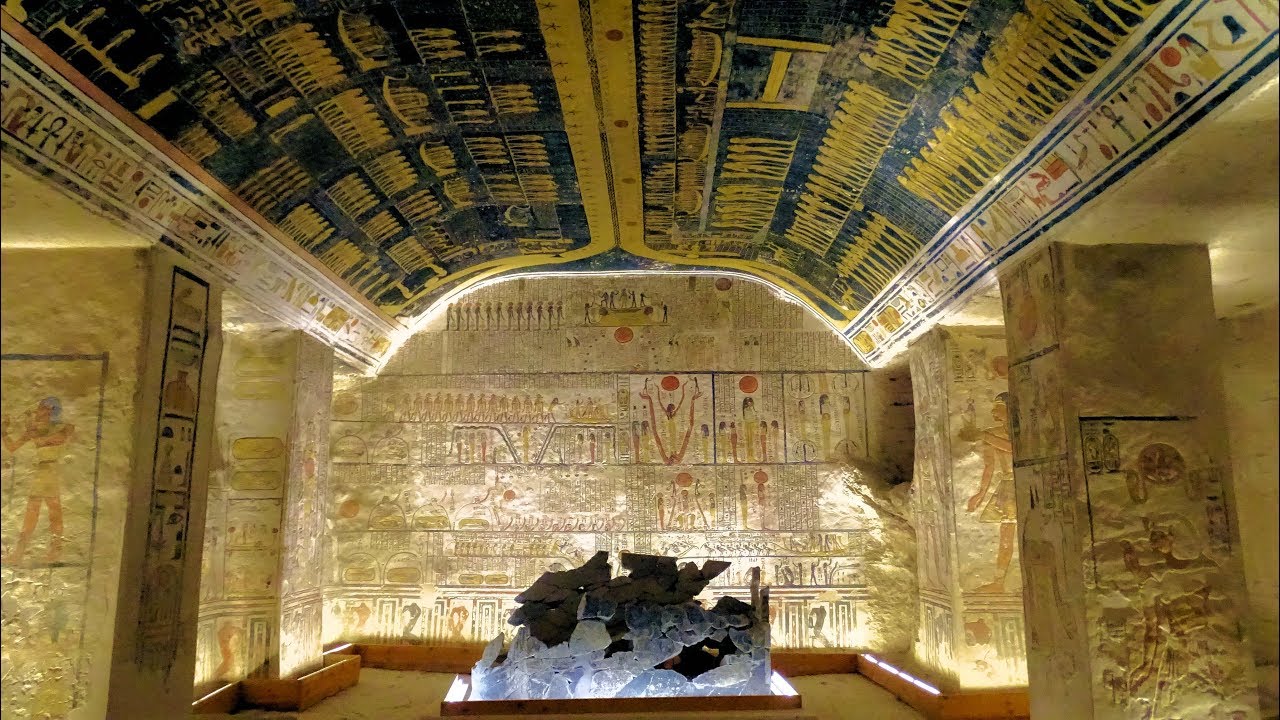
The crowning glory of KV9 is undoubtedly the astronomical ceiling of the burial chamber, which houses one of the most famous and well-preserved depictions of the sky goddess Nut in existence. Spanning the entire width of the ceiling, two colossal figures of Nut are painted back-to-back, representing the day sky and the night sky. According to ancient Egyptian cosmology, Nut swallowed the sun every evening, where it traveled through her body during the twelve hours of the night—a journey depicted by a sequence of sun disks—to be reborn at dawn. This “Book of Nut” is surrounded by a complex map of the stars and constellations, meticulously organized into decans. For the modern traveler, looking up at this ceiling is a dizzying and awe-inspiring experience; the deep blue background and golden yellow figures create a shimmering effect that feels like a prehistoric planetarium. It is a masterpiece of both art and science, proving that the ancient Egyptians were not just builders and priests, but master astronomers who looked to the heavens to explain the mystery of existence. This ceiling is the most photographed part of the tomb and serves as a powerful visual reminder that the Pharaoh’s final resting place was intended to be a mirror of the entire universe.

5. The Burial Chamber and the Broken Sarcophagus

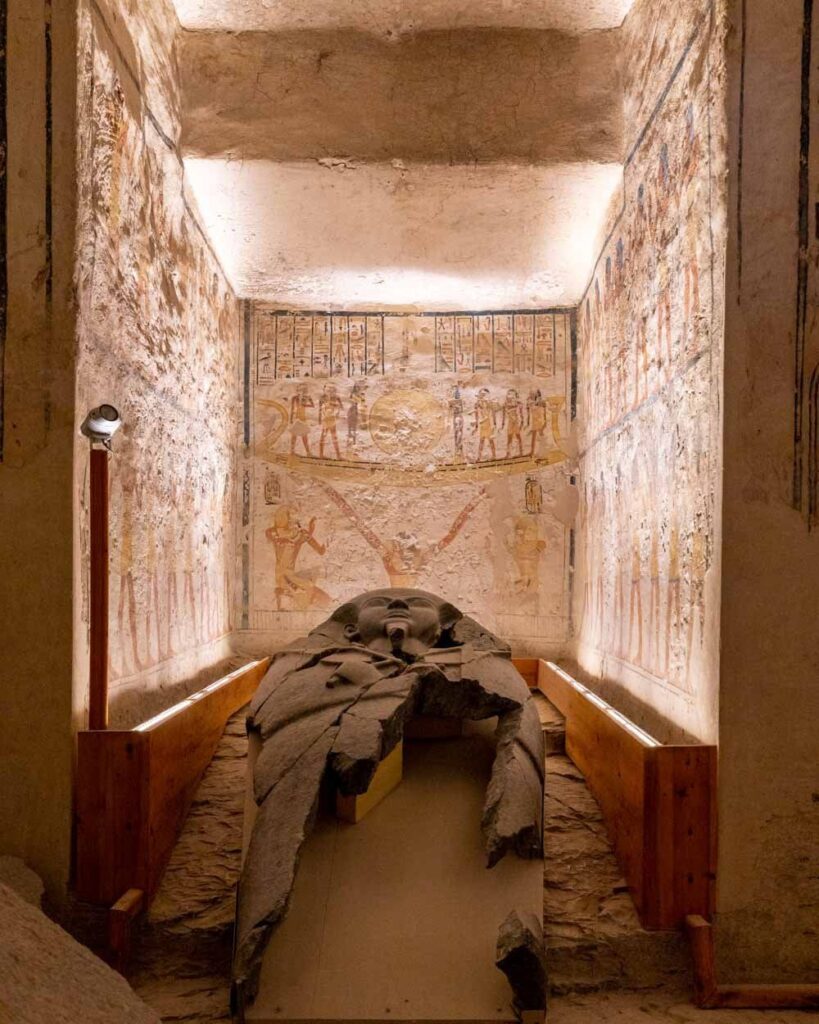
The journey through KV9 culminates in a massive, pillared burial chamber that feels like a subterranean cathedral. At the center of the room sits the remains of the colossal granite sarcophagus, which was once a single, magnificent block of stone designed to protect the king’s mummified remains. Interestingly, the sarcophagus was found smashed into pieces by ancient tomb robbers who were desperate to reach the treasures hidden within. In recent years, it has been painstakingly reconstructed by archaeologists, allowing visitors to appreciate its original scale. The walls of this chamber are decorated with the Book of the Earth, featuring intricate scenes of the sun god’s emergence from the underworld and the destruction of the enemies of Ra. The vibrant colors in this room—reds, yellows, and blacks—are exceptionally preserved because of the tomb’s depth and the lack of moisture. For visitors, standing in this chamber provides a palpable sense of the “heaviness” of history; it is a space where the absolute power of the Pharaohs meets the stark reality of their mortality. The contrast between the shattered stone and the eternal, glowing paintings on the walls creates a profound narrative about the struggle between the physical world and the spiritual quest for immortality.

6. The "Tomb of Memnon" and Ancient Graffitists

KV9 holds a fascinating secret that connects the pharaonic era to the Greco-Roman world: it is one of the few tombs that remained open and accessible throughout antiquity. During the Roman period, it was mistakenly identified as the “Tomb of Memnon” (a legendary hero of the Trojan War), making it a popular “tourist attraction” even 2,000 years ago. This history is written directly onto the walls in the form of ancient graffiti. Visitors from the Greek and Roman eras left behind over 1,000 inscriptions in Greek, Latin, and Coptic, documenting their names, where they came from, and their reactions to the “wonderful carvings.” Some visitors even recorded how long it took them to reach the tomb from the Nile. For the modern traveler, these ancient “reviews” add a fascinating layer of human history to the site; you aren’t just a tourist, you are following in the footsteps of travelers from the time of the Roman Emperors. This long history of visitation makes KV9 more than just a burial site; it is a historical record of humanity’s enduring curiosity about the past. It transforms the tomb into a living bridge across millennia, where the voices of ancient priests, Roman soldiers, and modern explorers all meet in the silent, colorful corridors of the Valley of the Kings.

7. The Restoration and Conservation of KV9

Maintaining the pristine condition of a tomb as vibrant as KV9 is a monumental task that requires a delicate balance between public access and scientific preservation. Over the decades, the influx of thousands of daily visitors has introduced fluctuating humidity levels and dust, which can threaten the integrity of the ancient pigments. To combat this, the Egyptian Ministry of Tourism and Antiquities, in collaboration with international conservation teams, has implemented a sophisticated management plan. This includes a state-of-the-art lighting system that uses “cool” LED bulbs to prevent heat damage and UV fading, as well as a raised wooden flooring system that prevents physical contact with the original limestone. For the traveler, these measures mean the tomb remains one of the most comfortable and visually accessible sites in the valley. It serves as a model for how modern technology can safeguard the “Place of Truth.” When you visit, you aren’t just seeing a ruin; you are witnessing a carefully curated environment where every breath and every footstep is managed to ensure that the celestial maps on the ceiling remain as vivid for the next generation as they were for the Roman travelers of the past.

8. A Photographer’s Dream: The Visual Appeal of KV9

In the age of digital storytelling and social media, the Tomb of Ramesses V and VI has gained a new reputation as the most “Instagrammable” tomb in all of Egypt. While the historical and theological significance is paramount, the sheer visual impact of the site is undeniable. The long, perfectly symmetrical corridors provide a sense of depth and perspective that is rare in ancient architecture, while the saturation of the colors—especially the deep blues and vibrant yellows—creates a natural “filter” that makes every corner a masterpiece of composition. For travel bloggers and content creators, the tomb offers an endless array of details, from the intricate hieroglyphic rows to the colossal, stylized figures of the gods. However, the true beauty lies in the interplay of light and shadow; as the modern lighting glints off the sunk reliefs, the figures seem to vibrate with life. It is a site that rewards those who take their time to look closely at the small details—a carved scarab, a golden sun disk, or a protective wing—reminding us that in the world of the Pharaohs, every artistic choice was made with the intention of creating eternal, visual perfection.

9. The Political Symbolism of the "Golden Age" Art

The importance of the Tomb of Ramesses V and VI extends far beyond its aesthetic beauty; it serves as a critical political and religious document reflecting the 20th Dynasty’s ambition to restore the prestige of the state. During a period of fluctuating economic fortunes, the inscriptions in KV9 were meticulously designed to reaffirm the “Royal Legitimacy” and the Pharaoh’s direct connection to the divine. The heavy use of masterfully executed sunk relief was not merely a stylistic choice, but a strategic one. This technique creates a dynamic interplay between light and shadow, giving the impression that the walls are physically breathing with life. The artists’ focus on depicting Ramesses VI in positions of profound devotion to major deities like Amun-Ra and Osiris was a clear message to history: the King remained the sole protector of Ma’at (cosmic order). For tourism professionals, this tomb represents the “Golden Standard” of late Ramesside art, blending complex theology with overwhelming visual appeal. It is a living lesson in how art was used as a tool of power and immortality, which explains why its colors retain the same piercing intensity today as they did over three millennia ago.

10. The Scientific Precision of Ancient Astronomers

While the murals of KV9 are undeniably artistic masterpieces, they also reveal a startling level of scientific accuracy that continues to baffle modern researchers. The astronomical ceilings in this tomb are not merely decorative patterns; they are sophisticated celestial maps created by the most learned priests and scholars of the “House of Life.” These maps accurately track the movement of the stars and the positions of the constellations as they were understood during the 20th Dynasty. The placement of the “Book of Nut” and the detailed lists of decans (star groups) demonstrate that the ancient Egyptians were master astrophysicists who viewed the tomb as a permanent laboratory for their observations. Every sun disk and star was placed with intentionality, aligning the king’s journey with the cosmic rhythm of the universe. For the modern traveler, this section of the tomb highlights a different side of Ancient Egypt—one where religion and science were perfectly integrated. It proves that the architects weren’t just building a burial chamber, but a high-tech spiritual machine designed to synchronize the Pharaoh’s soul with the eternal movements of the galaxy. Standing beneath these maps, one realizes that the “Place of Truth” was as much about understanding the laws of physics and time as it was about magic and the afterlife.

11. Preservation Challenges in the Modern Era

Protecting a site as vibrant as KV9 in the age of global mass tourism is an ongoing challenge that requires the world’s most advanced conservation technology. Because the tomb is one of the most visited and iconic locations in the Valley of the Kings, it faces constant environmental threats. Each visitor introduces moisture, carbon dioxide, and microscopic dust particles into a space that remained perfectly sealed for millennia. To combat the resulting salt crystallization and pigment fading, the Egyptian Ministry of Tourism and Antiquities has implemented rigorous, cutting-edge protocols. High-tech sensors now monitor humidity levels in real-time, and a sophisticated ventilation system ensures a constant flow of filtered air. Furthermore, the transition to “cool” LED lighting has been crucial; unlike older bulbs, these do not emit heat or UV rays that can degrade the organic binders in the ancient paint. These invisible efforts are what allow the tomb to remain a sustainable destination. For the tourism industry, emphasizing these preservation efforts is vital—it educates the traveler on “responsible tourism,” ensuring that their desire to witness this beauty doesn’t contribute to its destruction. It is a delicate balance of keeping the “gateway” open while safeguarding the integrity of the limestone and its precious colors for the next thousand years.

12. Conclusion: The Eternal Gateway to the Stars

In conclusion, the Tomb of Ramesses V and VI (KV9) stands as the most enchanting and intellectually rich portal into the ancient Egyptian belief in eternity. It is far more than a subterranean burial chamber; it is a masterfully curated “observatory” that narrates the epic story of the sun’s journey from the darkness of sunset to the triumphant glory of sunrise. While other tombs in the valley might offer silence and shadow, KV9 offers a symphony of color, light, and complex theology, revealing a ceiling studded with stars and walls that resonate with the profound wisdom of a civilization that refused to be forgotten. As you climb back toward the desert surface and leave the cool depths of the mountain, the vibrant blues of the goddess Nut and the golden radiance of the sun disks stay with you—a lingering reminder that in the Valley of the Kings, the past is never truly gone. For the modern traveler and the history enthusiast alike, a journey through KV9 is a journey into the very heart of human ambition and spiritual devotion. It is the ultimate testament to the fact that through stone, art, and an unwavering gaze toward the heavens, a Pharaoh can indeed bridge the gap between the mortal world and the infinite stars, achieving a form of immortality that continues to inspire awe in every generation that follows.

The Tomb of Ramesses V and VI : Frequently Asked Questions

This is a fascinating case of mistaken identity. During the Roman era, tourists visited this tomb believing it belonged to Memnon, the mythical Ethiopian king who fought in the Trojan War. Because the tomb remained open for centuries, Roman and Greek travelers left behind over a thousand pieces of graffiti, making it one of the earliest examples of a “tourist attraction” in history.

While the goddess Nut appears in many Egyptian monuments, the depiction in KV9 is widely considered the most complete and beautifully preserved version of the Book of Night and the Book of Day. Its clarity and vibrant blue pigments make it the definitive reference for how ancient Egyptians visualized the mechanics of the cosmos and the solar cycle.

By the time of Ramesses VI, the Egyptian economy was struggling, and resources for massive construction projects were limited. By expanding KV9 rather than starting from scratch, Ramesses VI was able to create a much grander and more deeply carved monument in a shorter timeframe, essentially “merging” the legacies of two reigns to ensure a high-quality final product.

Unlike Tutankhamun’s tomb, KV9 was looted shortly after the end of the New Kingdom. Most of the gold and burial equipment was stolen in antiquity. However, the true “treasure” left behind is the wall decoration. Because the tomb was larger and more accessible, it provided archaeologists with a massive amount of religious text that has helped us translate and understand Egyptian funeral rites.

In the 18th Dynasty (like the tomb of Thutmose III), walls were often painted on flat plaster. In KV9, the artists used deep “Sunk Relief,” where the figures are carved into the limestone before being painted. This technique is much more durable and creates a 3D effect that makes the colors pop, which is why the tomb looks so much more “alive” than others in the valley.