
1. The Pylon of Ramesses II: A Gateway of Colossal Grandeur
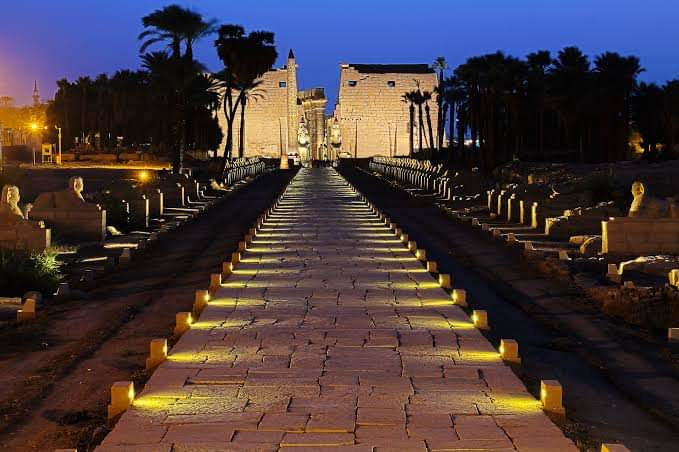
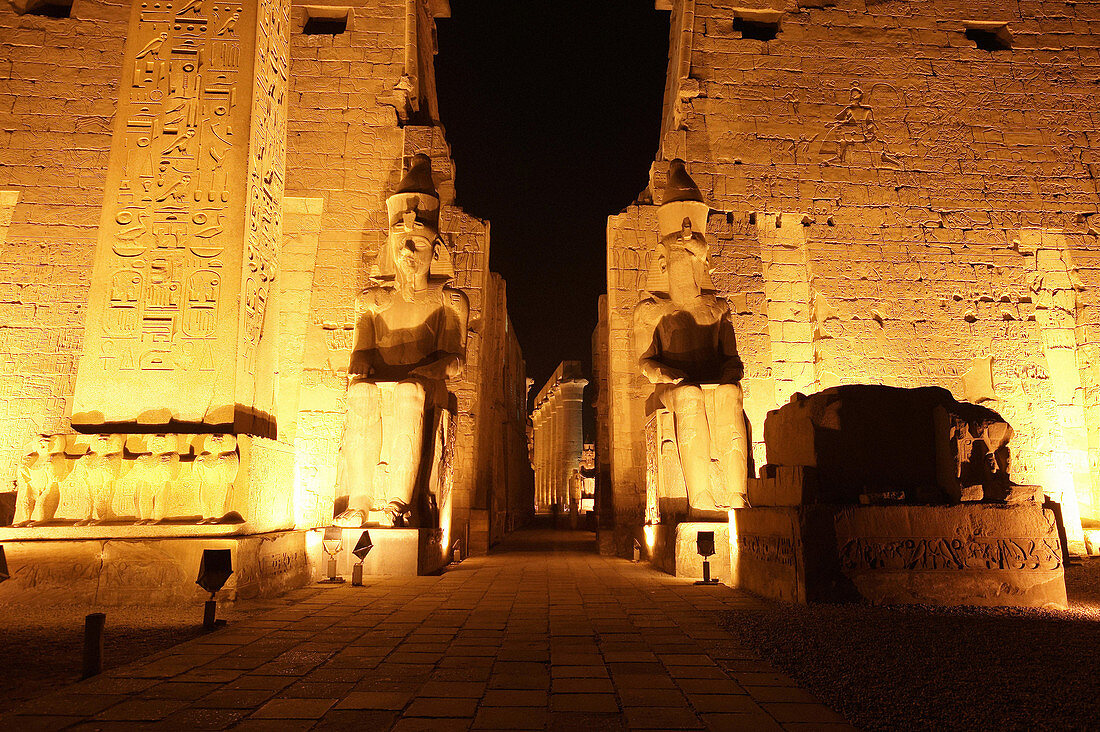
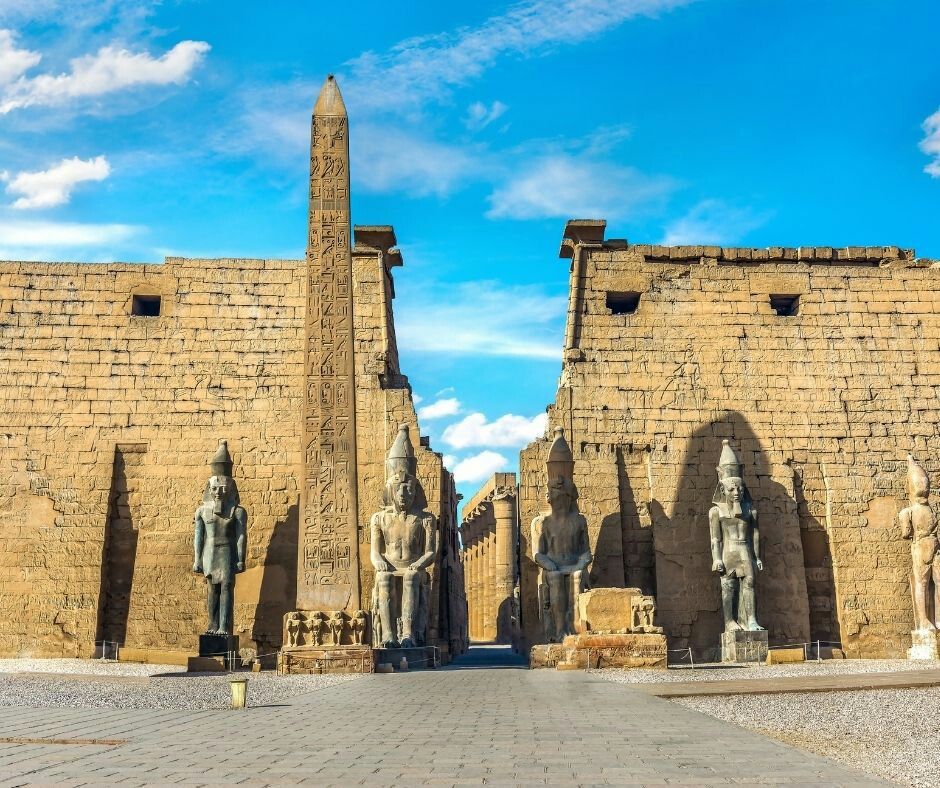
The entrance to Luxor Temple is defined by the massive first pylon, a monumental gateway built by Ramesses II that serves as a masterclass in royal propaganda. Originally flanked by two towering red granite obelisks and six colossal statues of the Pharaoh, the entrance remains one of the most iconic sights in Egypt. The walls of the pylon are intricately carved with scenes from the Battle of Kadesh, showcasing the King’s military prowess and divine protection. Today, one magnificent obelisk remains, its twin now standing in the Place de la Concorde in Paris—a testament to the global legacy of this site. For travelers, passing through this gateway is a transformative experience; the sheer scale of the seated colossi, which reach over 14 meters in height, immediately establishes the temple as a place of supreme power. It is the perfect starting point for any cultural narrative, grounding the visitor in the epic ambition of the 19th Dynasty and the Pharaoh’s role as the guardian of the cosmic order.
2. The Mosque of Abu Haggag: A Living Layer of History
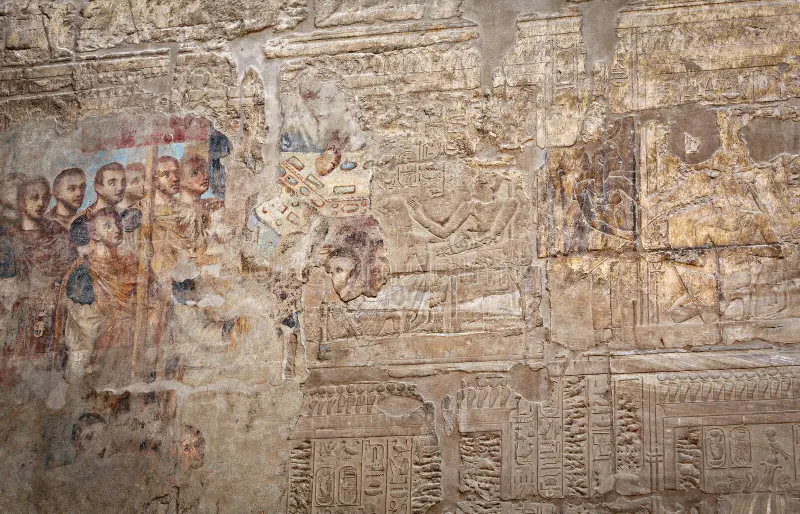
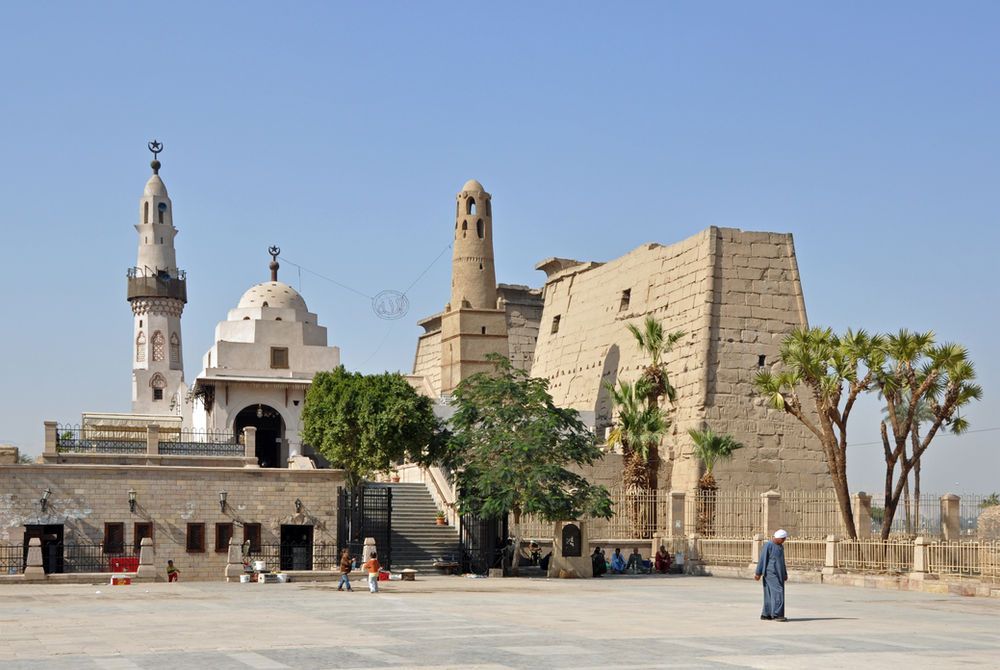
Perhaps the most extraordinary feature of Luxor Temple is the Mosque of Abu Haggag, which sits perched atop the ancient columns of the courtyard of Ramesses II. Built in the 13th century, the mosque was constructed when the temple was still largely buried under centuries of silt and debris. Rather than a conflict of faiths, the mosque represents a beautiful, continuous thread of spiritual devotion that has lasted for over 3,500 years. Today, it remains an active place of worship, its minaret standing in striking contrast to the ancient Egyptian lotus-bud columns below. This “architectural sandwich” is a key highlight for tourism marketing, as it illustrates the unique “living history” of Luxor. It proves that the site was never truly abandoned; instead, it evolved, serving as a temple, a church, and a mosque. For visitors, seeing the vibrant life of the mosque integrated into the silent majesty of the Pharaohs offers a profound lesson in cultural continuity and the enduring sanctity of this specific patch of Nile soil.
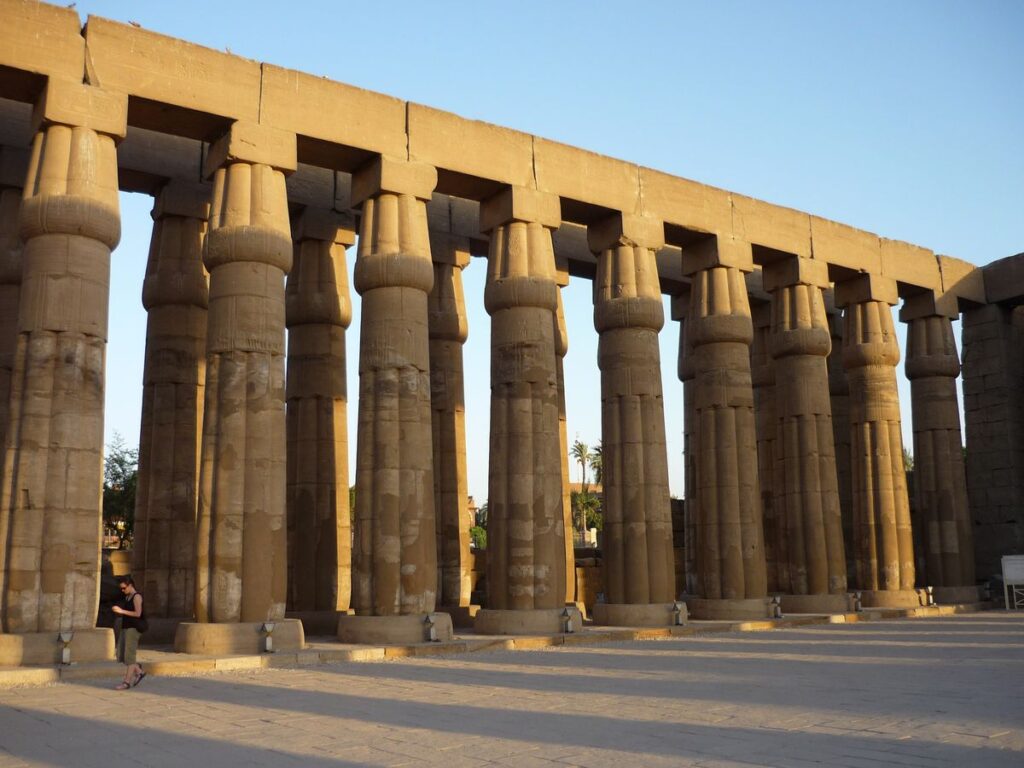
3. The Colonnade of Amenhotep III: The Path of the Sun
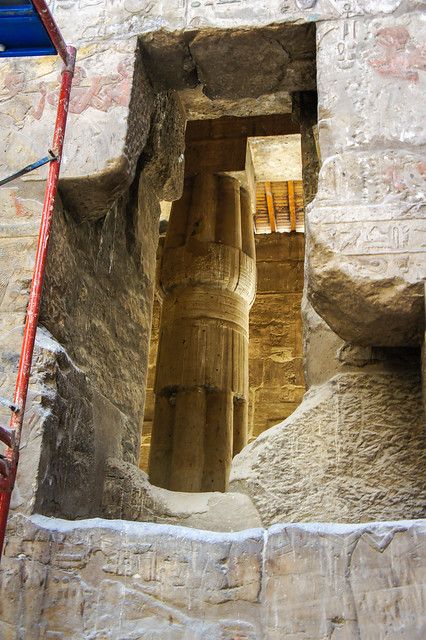
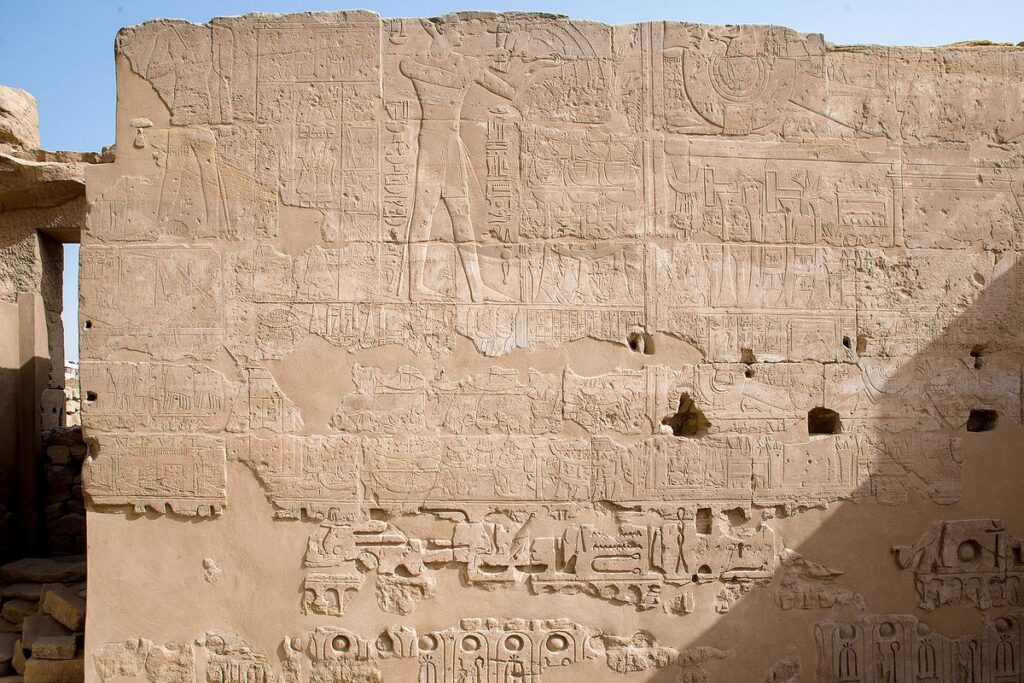
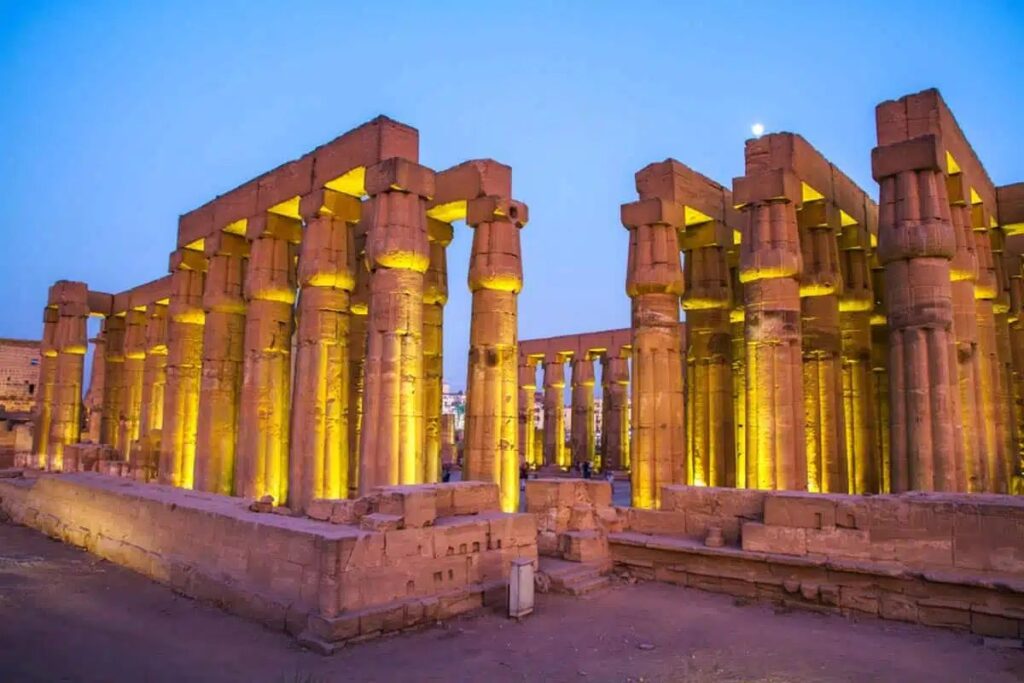
Beyond the courtyard of Ramesses II lies the breathtaking Colonnade of Amenhotep III, a majestic hall featuring 14 massive papyrus-capital columns arranged in two rows. Standing at a height of 16 meters, these columns were designed to create a sense of vertical rhythm and light, symbolizing the “Path of the Sun” as it moves through the sky. The walls of this colonnade are decorated with some of the most famous reliefs in Egypt, depicting the Opet Festival in vivid detail. Travelers can follow the stone carvings like a comic strip, seeing the sacred barks of the gods being carried from Karnak to Luxor amidst crowds of dancers, musicians, and soldiers. The artistic refinement of these reliefs, dating back to the late 18th Dynasty, represents the “Golden Age” of Egyptian art—where figures are rendered with a grace and fluidity that feels surprisingly modern. For the visitor, walking through this hall is like stepping into the heart of a royal procession, offering a sensory connection to the celebrations that once defined the life of the ancient city.