
1. The Great Temple: A Throne of Sandstone and Power
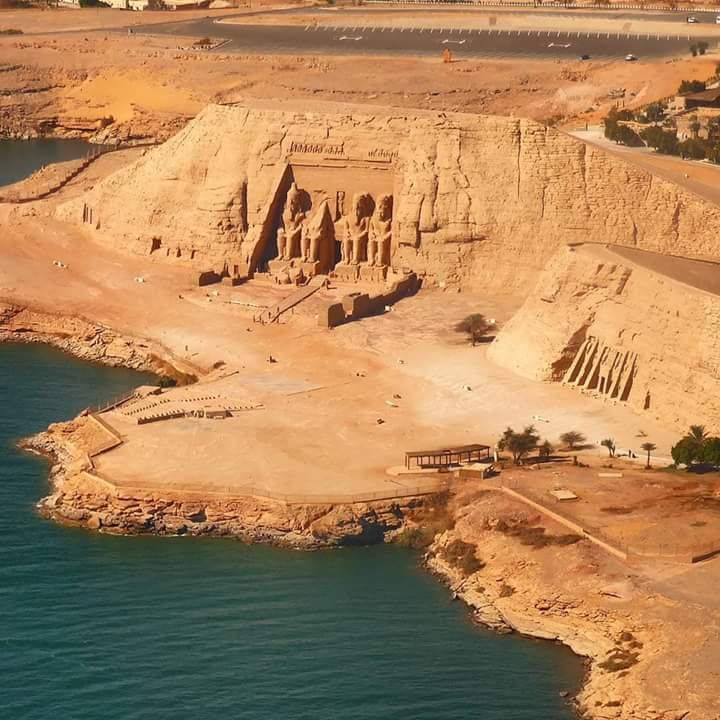
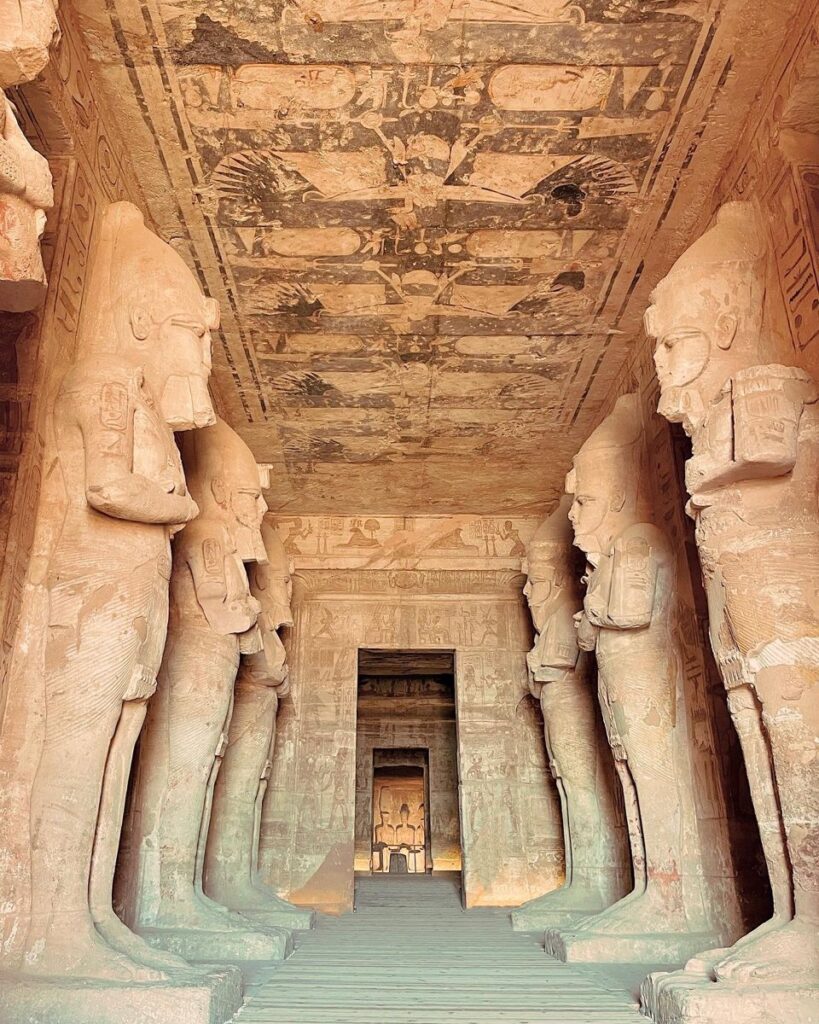
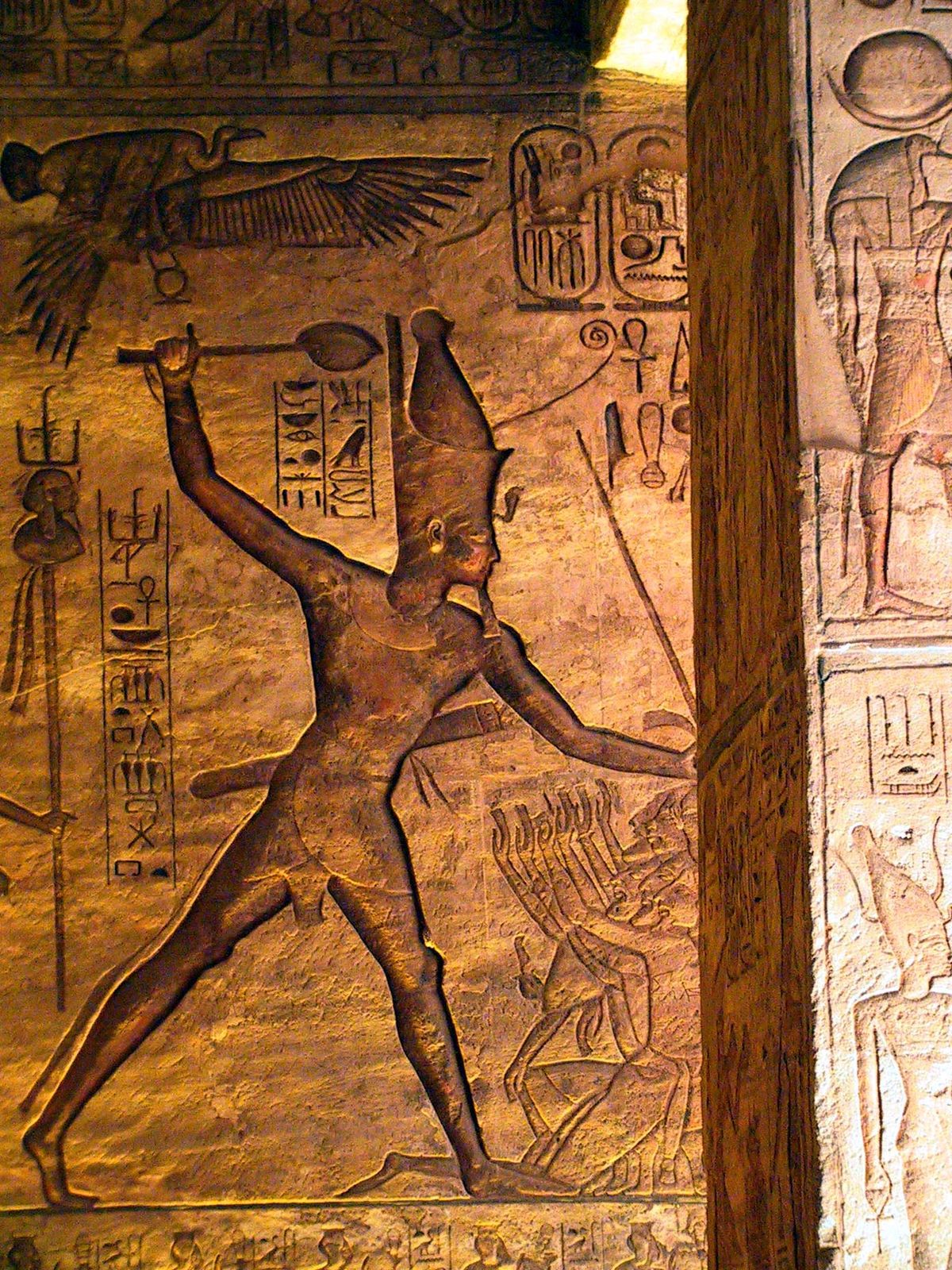
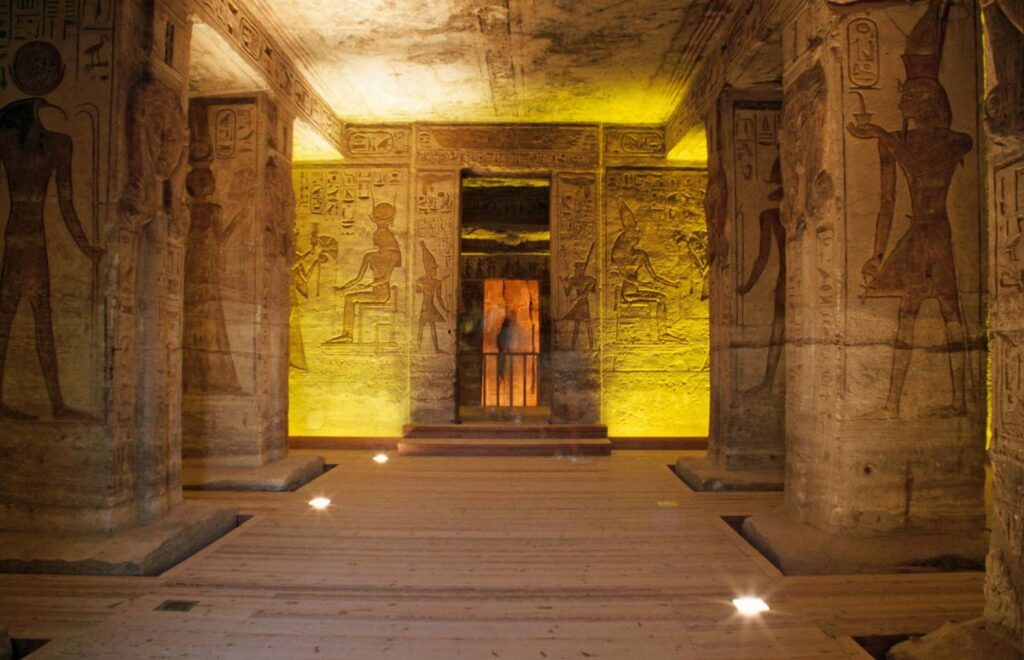
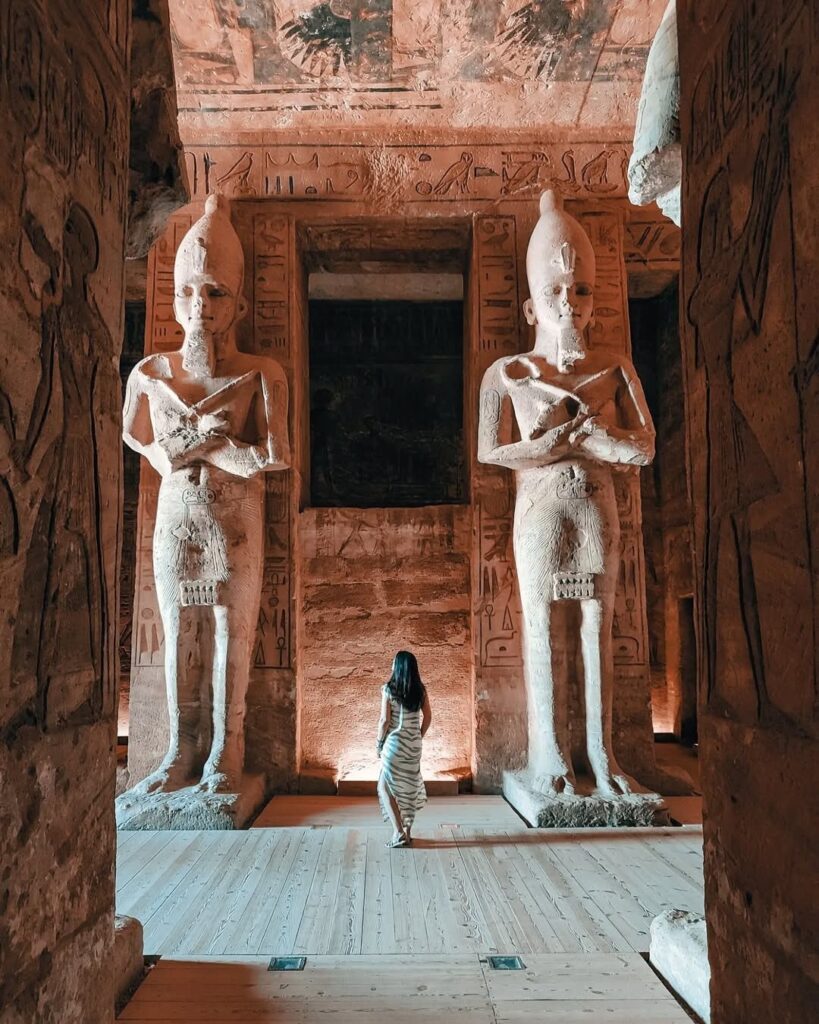
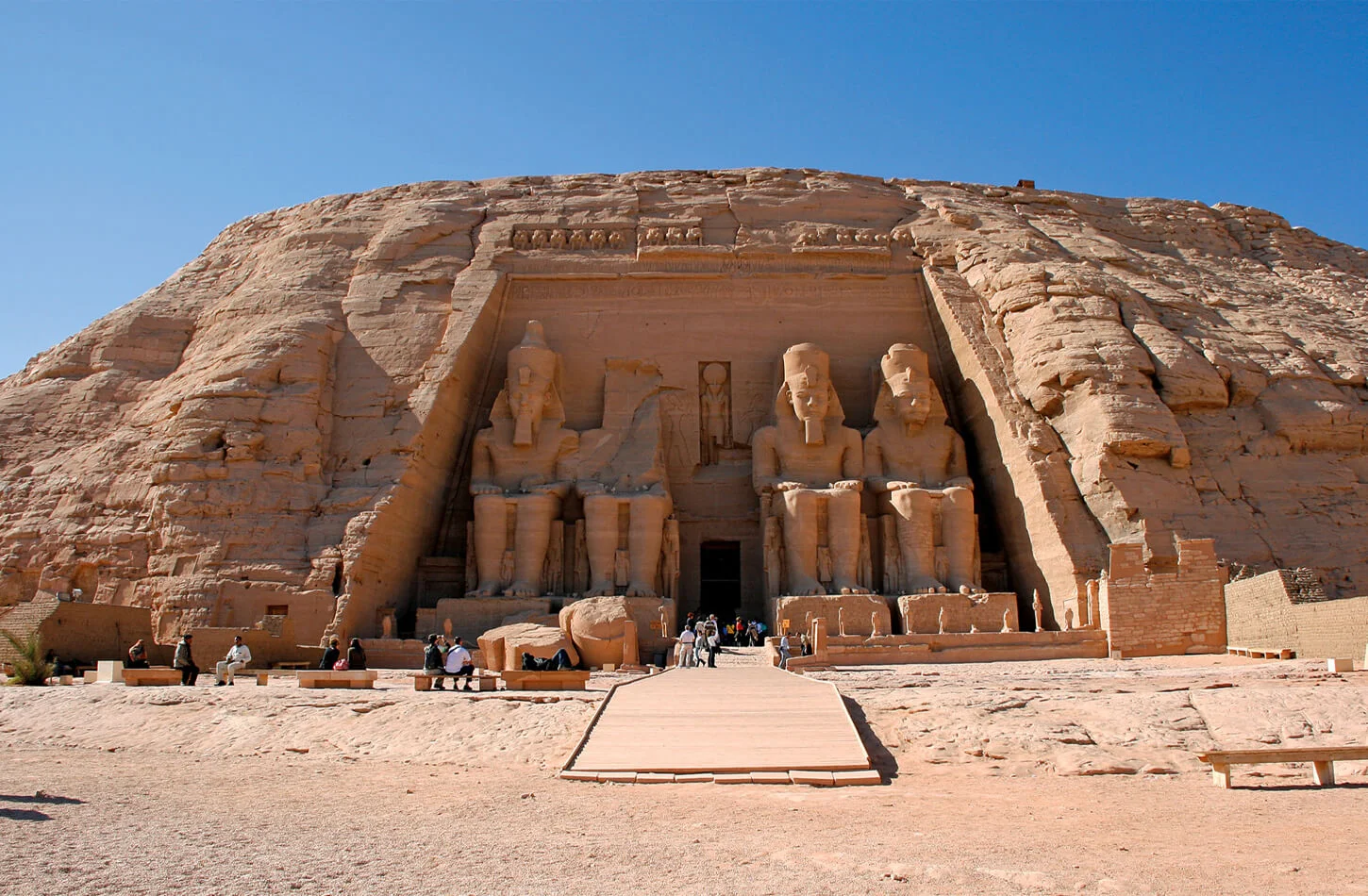
The Great Temple of Abu Simbel is the ultimate expression of Ramesses II’s ego and divine ambition. The facade is dominated by four colossal statues of the Pharaoh, seated on his throne and wearing the double crown of Upper and Lower Egypt. Even the smaller statues at his feet—representing his mother, Queen Tuya, and his favorite children—are larger than life-size. Inside, the Great Hypostyle Hall features eight massive pillars carved in the form of Osiris, each bearing the likeness of Ramesses. The walls are a vivid “war diary,” showcasing the famous Battle of Kadesh in such intricate detail that one can almost hear the thundering of chariots. This structure wasn’t just a place of worship; it was a psychological tool of diplomacy, designed to intimidate anyone entering Egypt from the south with the sheer scale of the Pharaoh’s authority.
2. The Temple of Nefertari: A Monument to Divine Love
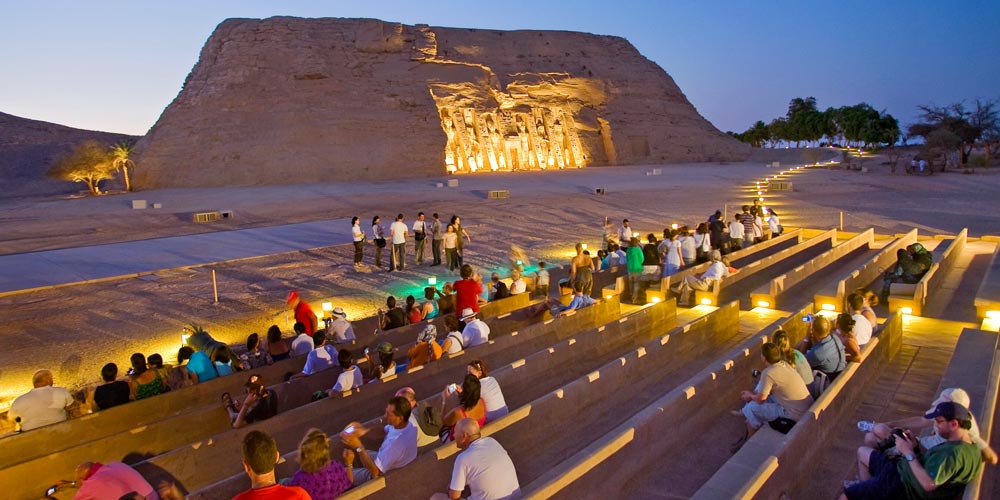
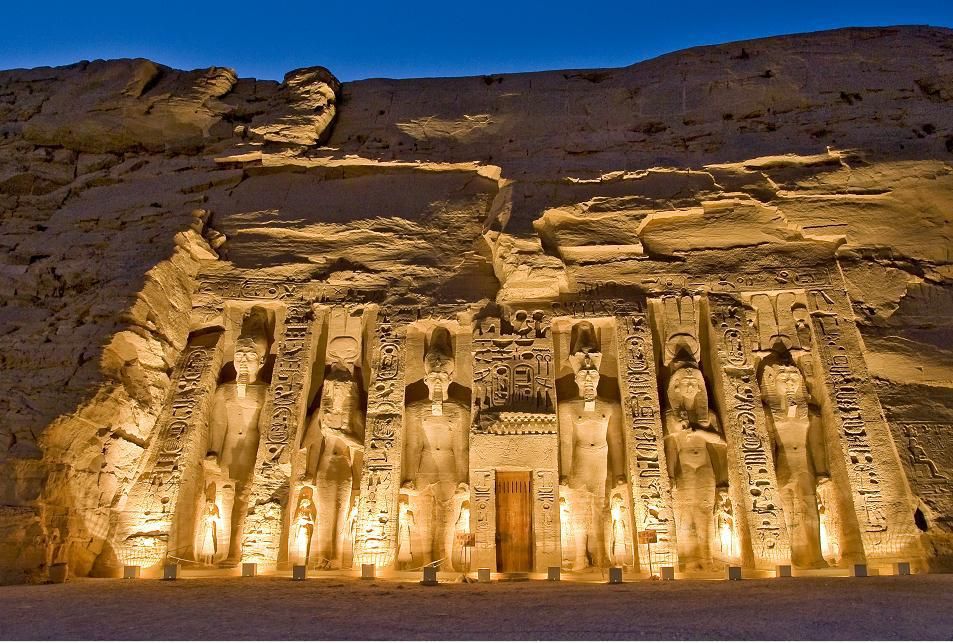
Just a short walk from the Great Temple stands the smaller, yet equally exquisite, temple dedicated to Queen Nefertari and the goddess Hathor. This temple is historically significant because it is one of the rare instances in Egyptian history where the statues of a Queen are carved to the same scale as those of the Pharaoh himself. Usually, queens were depicted only reaching the Pharaoh’s knees, but here, Nefertari stands as his equal, flanked by the grace of the goddess of love and music. The interior reliefs are softer and more refined than the Great Temple, showing Nefertari participating in divine rituals and being crowned by the goddesses Isis and Hathor. For travelers, this temple provides a beautiful counter-narrative to the masculine power of the Great Temple, highlighting the profound influence and elevated status of the “One for whom the sun shines.”
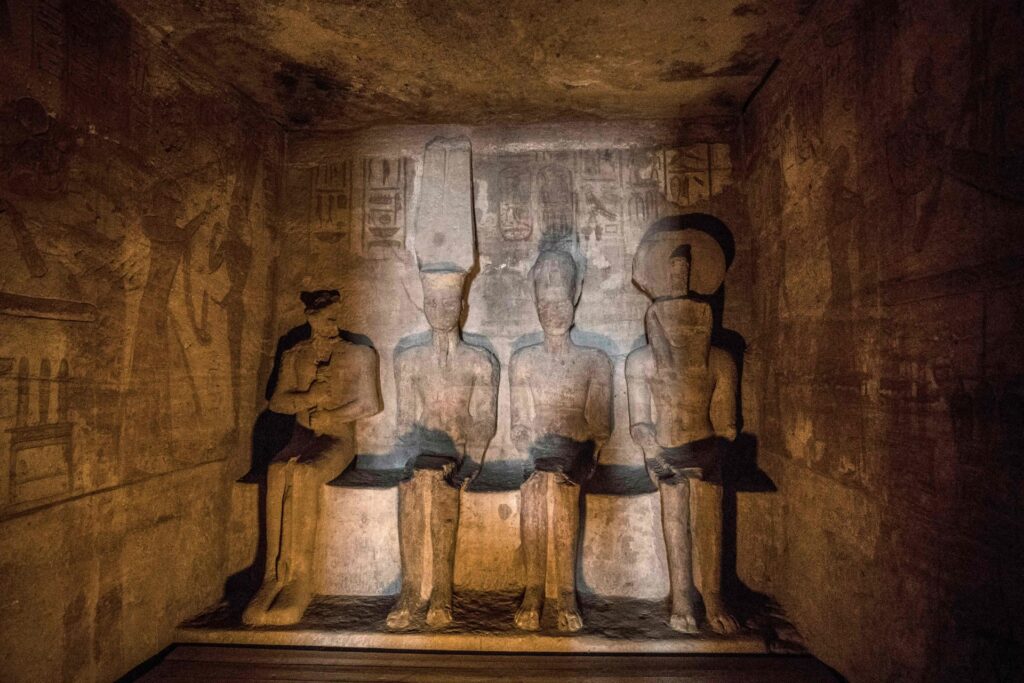
3. The Solar Phenomenon: An Ancient Clock of Light
The most enduring mystery of Abu Simbel is its perfect alignment with the sun. Twice a year—traditionally on February 22nd (the date of the Pharaoh’s ascension to the throne) and October 22nd (his birthday)—the sun’s rays travel 60 meters deep into the temple’s mountain-carved sanctuary. The light precisely illuminates three of the four statues seated in the darkness: Amun-Ra, the deified Ramesses II, and Ra-Horakhty. Crucially, the fourth statue, representing Ptah—the god of the underworld—remains perpetually in shadow. This astronomical feat demonstrates that the ancient architects were also master astronomers. What is even more remarkable is that during the UNESCO relocation project, engineers had to recalculate the placement of the temple with such precision that they maintained this solar alignment, ensuring that the “miracle of the sun” continues to occur exactly as it did 3,000 years ago.