
1. The Importance of Farmers in Ancient Egyptian Civilization
Farmers were the backbone of Ancient Egyptian civilization, providing the food and agricultural resources that supported every level of society. While Pharaohs ruled the kingdom and priests managed religious ceremonies, it was the work of ordinary farmers that kept Egypt prosperous and stable. Their dedication to agriculture allowed one of the world’s greatest civilizations to flourish along the fertile banks of the Nile River for thousands of years.
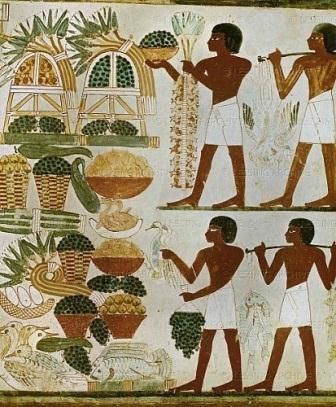
Agriculture was the primary source of Egypt’s wealth. The annual flooding of the Nile created fertile farmland capable of producing abundant harvests of wheat, barley, flax, vegetables, fruits, and other crops. These harvests supplied food not only for farming families but also for royal households, temple workers, soldiers, craftsmen, merchants, and government officials.
Most Egyptians lived in rural villages where farming shaped everyday life. Families worked together throughout the agricultural year, preparing fields, planting seeds, maintaining irrigation systems, harvesting crops, and storing grain. Children learned farming skills from an early age, ensuring that agricultural knowledge passed from one generation to the next.
Farmers also played a central role in Egypt’s economy. Grain served as one of the kingdom’s most valuable resources and was often used to pay taxes, wages, and trade goods. Large grain stores helped Egypt survive years of poor harvests and supported ambitious construction projects such as temples, pyramids, and royal monuments.
The success of Egyptian agriculture depended on careful planning and cooperation. Communities worked together to maintain canals, repair irrigation systems, and organize harvests. Government officials supervised agricultural production and collected taxes to ensure the kingdom remained financially stable.
Religion further emphasized the importance of farming. Egyptians believed that gods such as Osiris, Hapi, and Renenutet protected crops, fertility, and the annual Nile flood. Farmers regularly offered prayers and thanks for successful harvests, recognizing the close connection between agriculture and divine blessings.
Without the dedication and skill of Ancient Egyptian farmers, the remarkable achievements of Egyptian civilization would never have been possible. Their hard work transformed the fertile Nile Valley into one of history’s most productive agricultural regions and laid the foundation for centuries of prosperity.
2. The Nile River and the Agricultural Seasons
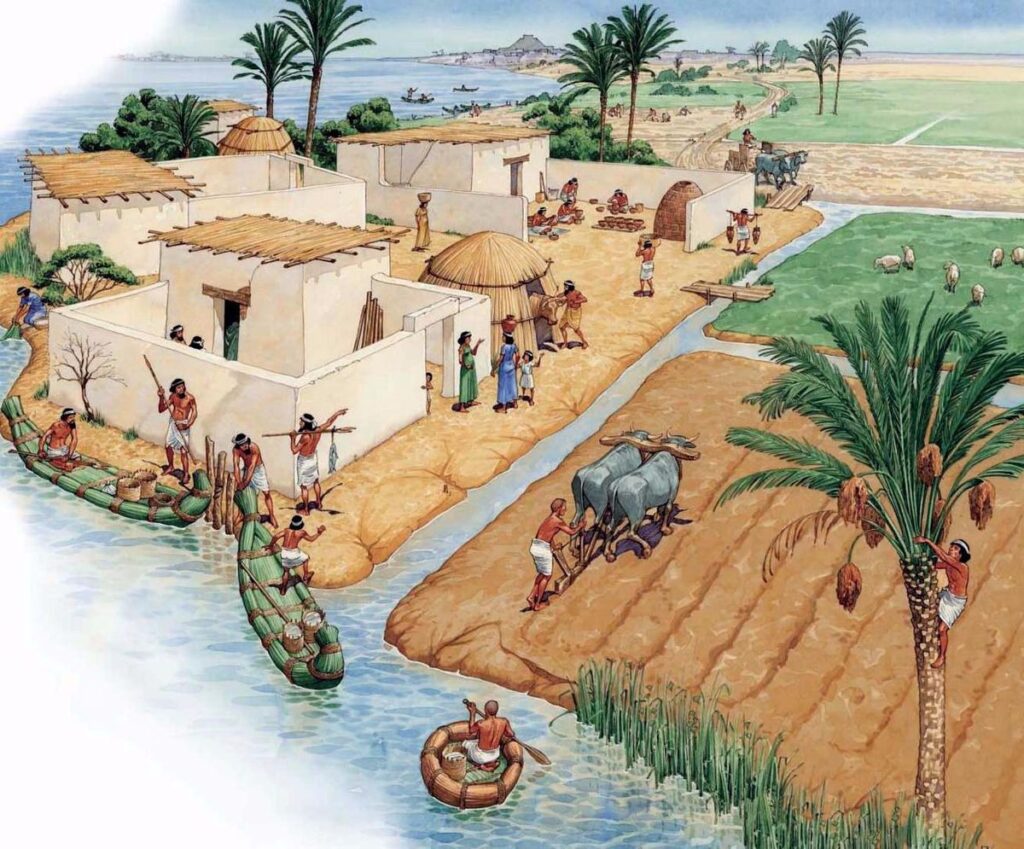
The Nile River was the lifeblood of Ancient Egypt and the single most important factor influencing the daily lives of farmers. Unlike many rivers that flooded unpredictably, the Nile followed a regular annual cycle that provided fertile soil, fresh water, and ideal conditions for agriculture. Ancient Egyptian farming depended entirely on understanding and adapting to this natural rhythm.
The Egyptian calendar divided the agricultural year into three main seasons. The first season, Akhet (Flooding), lasted from approximately June to September. During this period, floodwaters from central Africa overflowed the riverbanks and spread across surrounding farmland. Although fields could not be cultivated during the flood, the water deposited nutrient-rich black silt that renewed the soil each year.
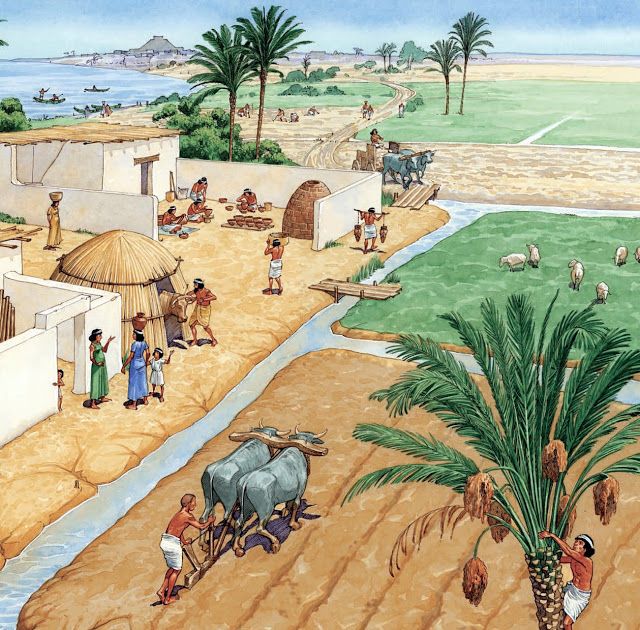
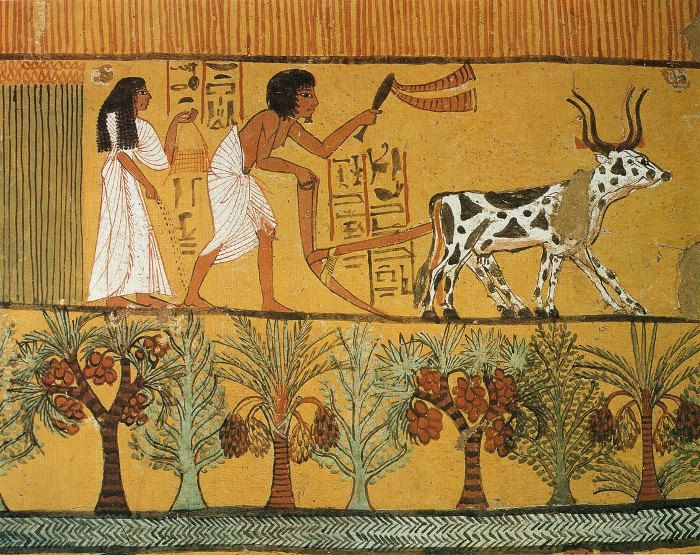
After the floodwaters receded came Peret, the growing season. Farmers prepared the fertile land using wooden plows pulled by oxen, scattered seeds by hand, and used simple irrigation systems to supply water when necessary. Wheat and barley became the principal grain crops, while vegetables, flax, onions, garlic, lettuce, beans, figs, grapes, and dates were also widely cultivated.
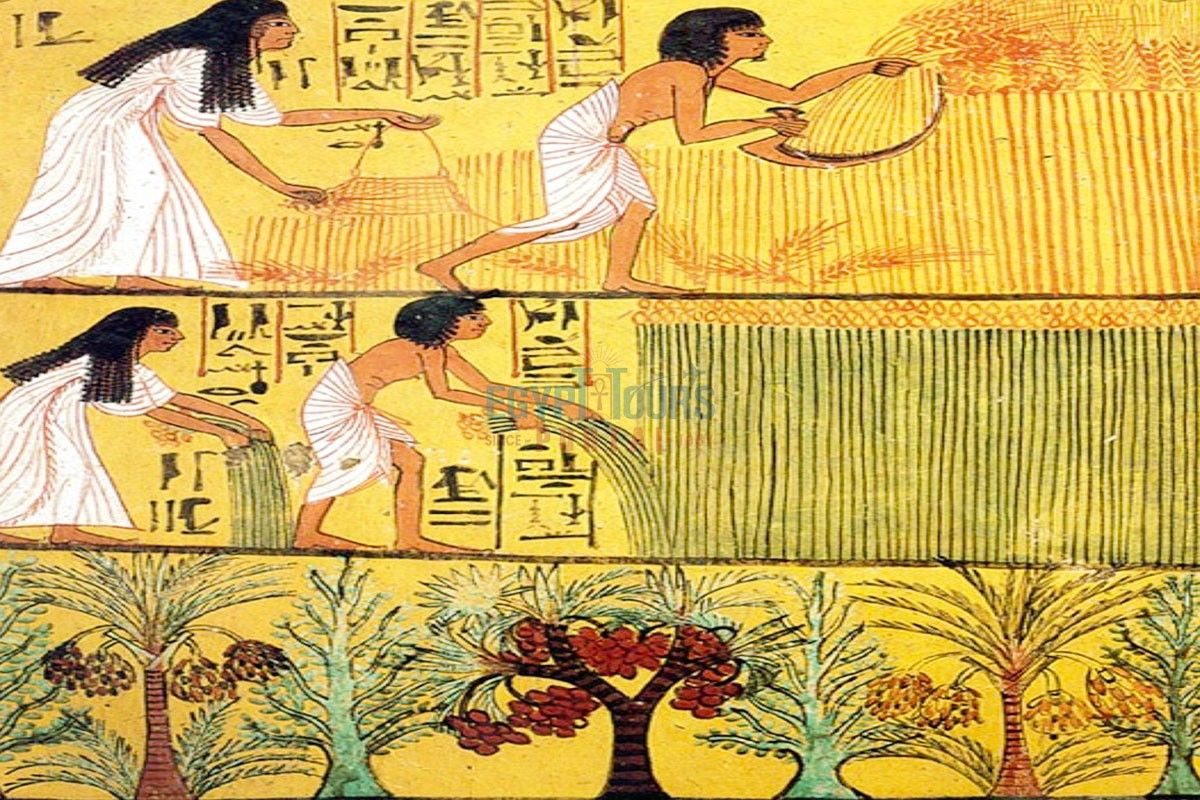
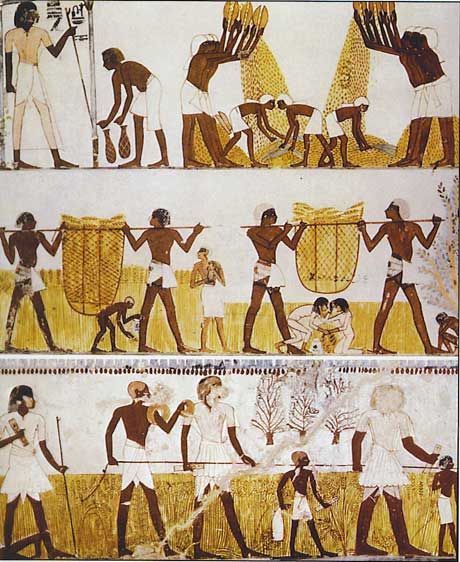
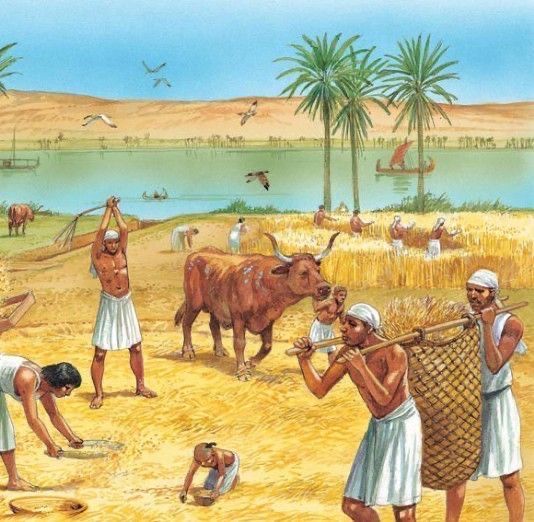
The final season, Shemu, marked the harvest. Families worked together to gather mature crops using sickles with flint blades. Grain was carefully collected, threshed, and stored in large granaries to protect it from moisture and pests. Harvest season was one of the busiest and most important periods of the agricultural year because it determined food supplies for the coming months.
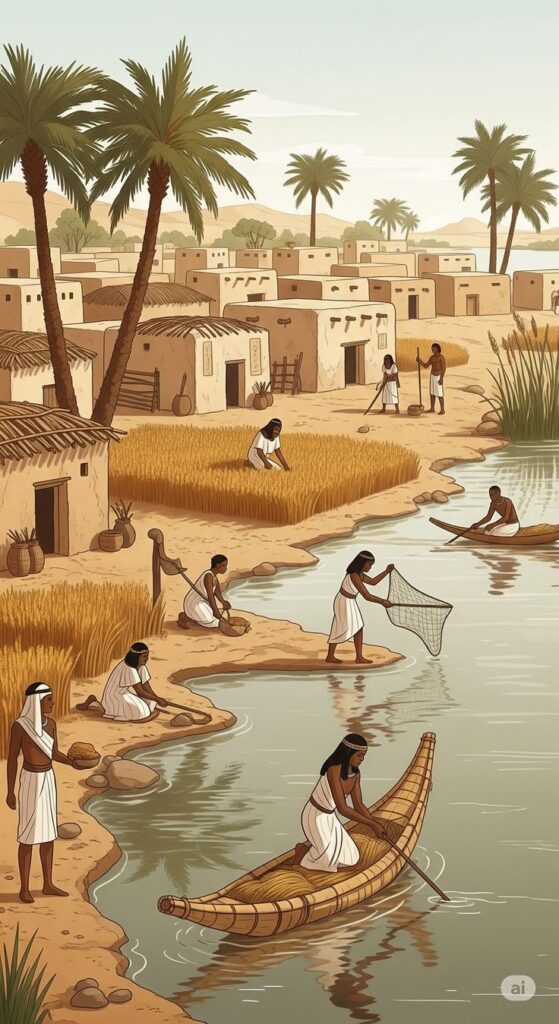
The Nile also supported fishing, transportation, trade, livestock, and daily household activities. Villages developed close to the river because it provided drinking water, fertile land, and convenient travel throughout Egypt.
Ancient Egyptians regarded the Nile as a sacred gift from the gods. They celebrated the annual flood with religious festivals and honored Hapi, the god associated with the river’s life-giving waters. The dependable flooding cycle gave Egypt an agricultural advantage unmatched by many neighboring civilizations.
The close relationship between farmers and the Nile shaped every aspect of Ancient Egyptian life. From planting and harvesting to religion and government, the river remained the foundation of Egypt’s prosperity and one of the greatest natural resources in human history.
3. A Typical Day in the Life of an Ancient Egyptian Farmer
The daily life of an Ancient Egyptian farmer was filled with hard work, careful planning, and constant cooperation with family members. Every day followed the rhythms of nature and the agricultural seasons, with activities changing according to the time of year. Although farming demanded physical endurance, it provided the food and resources that sustained Egyptian civilization for thousands of years.
Farmers usually began work at sunrise to take advantage of the cooler morning temperatures. After a simple breakfast of bread, onions, dates, and sometimes beer, they walked to their fields carrying farming tools such as hoes, wooden plows, baskets, ropes, and sickles. During the planting season, they prepared the soil, scattered seeds, and managed irrigation canals to ensure crops received enough water.
When crops were growing, farmers spent much of their time removing weeds, repairing irrigation channels, protecting fields from animals, and monitoring the health of their plants. Caring for livestock such as cattle, sheep, goats, donkeys, ducks, and geese was also an important daily responsibility. These animals provided milk, meat, wool, transportation, and assistance with farming activities.
Harvest season required the entire family to work together. Men cut grain using sickles, women gathered and tied harvested crops, while children helped carry bundles and collect leftover grain. After harvesting, grain was threshed by allowing animals to walk over it before being cleaned and stored in granaries.
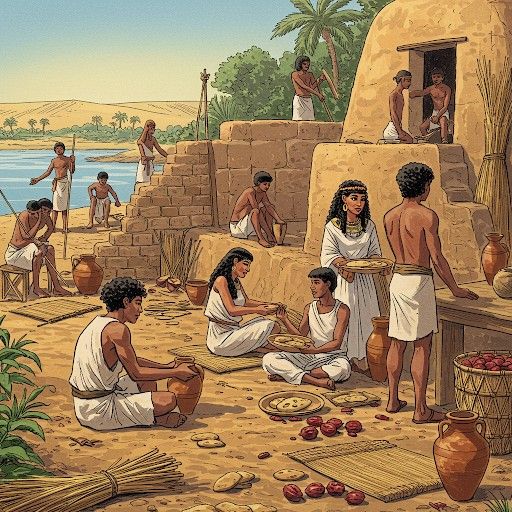
Life was not limited to farming alone. Families also repaired homes, prepared food, produced clothing from flax, attended local markets, participated in religious festivals, and supported community projects. During the flood season, when farming activities temporarily stopped, many farmers worked on royal construction projects, including temples, canals, and public buildings.
Evenings were spent with family members sharing meals, telling stories, honoring household gods, and preparing for the next day’s work. Despite long hours and demanding labor, strong family bonds and community cooperation made rural life rewarding.
The daily routine of Ancient Egyptian farmers demonstrates their resilience, practical knowledge, and dedication. Their tireless efforts supported the economy, religion, government, and culture of one of history’s greatest civilizations.