
Welcome to

The Grand Egyptian Museum: A Monumental Gateway to Ancient Wonders

The Grand Egyptian Museum (GEM) stands as one of the world’s most ambitious and breathtaking cultural projects, offering travelers an unparalleled journey into the heart of Egypt’s royal history, archaeological splendor, and futuristic vision. Situated on the Giza Plateau, overlooking the legendary Great Pyramids, this massive complex has been captivating the global imagination for years with its colossal glass facade, state-of-the-art galleries, and an atmosphere of modern majesty. Designed to be the largest archaeological museum in the world dedicated to a single civilization, the GEM is far more than a simple repository of artifacts; it is a bridge where the ancient past meets the cutting edge of the 21st century.

For travelers seeking an authentic encounter with the Pharaohs and a deep dive into Egypt’s chronological narrative, the Grand Egyptian Museum offers a sensory masterpiece filled with the golden glow of treasures, the towering presence of colossal statues, and the immersive power of digital storytelling. From the complete collection of King Tutankhamun to the soaring Grand Staircase and the meticulously restored Solar Boat, every gallery reveals a new layer of wonder. Whether you are a history enthusiast, an architecture lover, or a curious explorer, the GEM promises an unforgettable odyssey through the treasures of a civilization that continues to shape the identity of the modern world.

The Grand Egyptian Museum

1. A Journey Through the World’s Most Modern Gateway to Antiquity

The Grand Egyptian Museum is one of Cairo’s most revolutionary and architecturally stunning destinations, offering travelers a transformative journey into the zenith of Egypt’s cultural heritage and pharaonic legacy. Conceived as a modern home for the nation’s most precious antiquities, this legendary complex has served as a beacon of pride, scientific research, and global tourism even before its full completion. Located just kilometers from the Pyramids of Giza, the museum is far more than a building—it is a monumental achievement where the desert landscape meets glass, steel, and stone in perfect harmony. For travelers seeking the ultimate historical experience in Egypt, the GEM provides one of the city’s most sophisticated and awe-inspiring adventures.

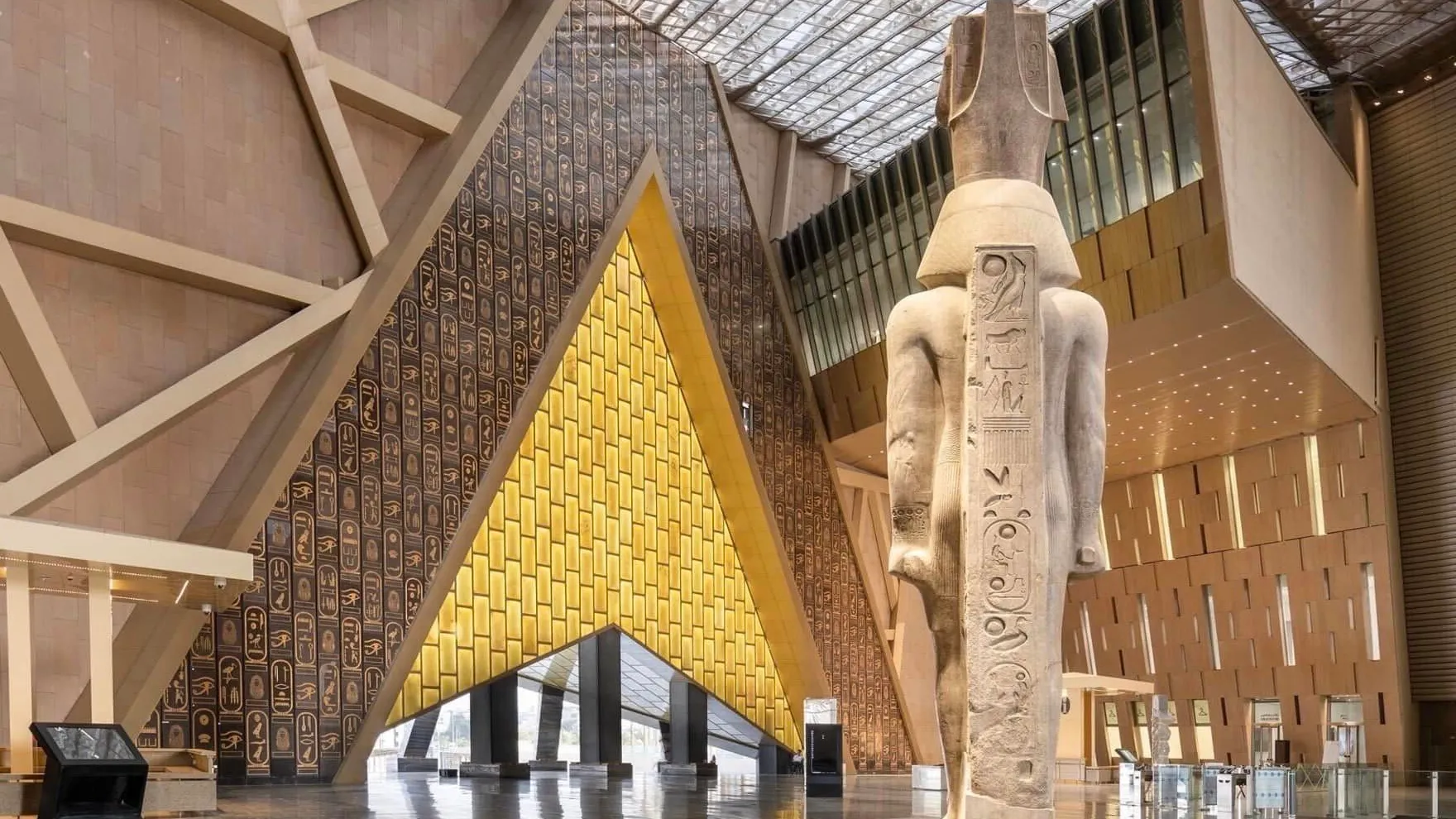
Walking through the GEM feels like stepping into a future where the majesty of the Old Kingdom is celebrated with contemporary grace. The museum’s vast, sun-drenched halls, dramatic geometric lines, and the iconic “folded” roof create a visual spectacle unlike any other museum on earth. Every corridor reveals a new perspective, from the massive Ramses II statue greeting guests in the atrium to the panoramic views of the pyramids visible through the Great Glass Wall. The scale of the architecture reflects the scale of the history it protects, making the very act of walking through the space deeply moving.

What makes the Grand Egyptian Museum truly extraordinary is its role as a cultural hub. Unlike traditional museums that can feel static, this legendary institution is designed as a living center for education, conservation, and celebration. It represents the forward-looking spirit of Egypt—a place where the grandeur of the past is preserved using the most advanced technology of the present. Whether you are passionate about engineering, Egyptology, or the sheer beauty of human endeavor, the GEM offers a profound introduction to the nation’s eternal soul and remains the most anticipated landmark to visit in modern Cairo.
2. Discovering the Golden Treasures of King Tutankhamun

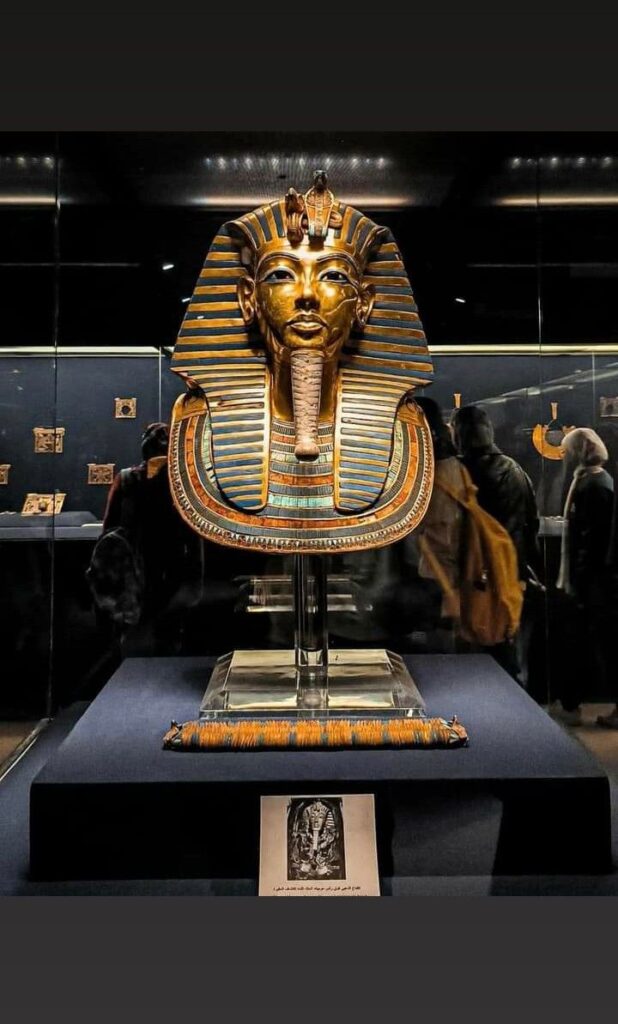
Exploring the dedicated galleries of King Tutankhamun within the Grand Egyptian Museum is one of the most prestigious and dazzling experiences visitors can enjoy, offering a level of intimacy with history that was previously impossible. This legendary collection is famous for being displayed in its entirety for the first time since its discovery in 1922, featuring over 5,000 artifacts that reflect the opulence, artistry, and religious devotion of the New Kingdom. From the moment you enter the darkened, climate-controlled halls, you are surrounded by golden masks, chariots, intricate jewelry, ornate thrones, and the everyday items that accompanied the Boy King into the afterlife. For travelers seeking the “gold standard” of Egyptian history, no other exhibition on earth matches the richness found here.

What makes this collection especially memorable is the narrative flow of the display. Each gallery is meticulously organized to tell the story of the king’s life, his sudden death, and the incredible journey of his tomb’s discovery by Howard Carter. Each display case reveals hidden details, from the delicate floral collars to the masterfully crafted daggers, giving visitors the opportunity to appreciate the skill of ancient artisans in high definition. Many of these items have been painstakingly restored by world-class conservators at the GEM’s own labs, ensuring that every piece of wood, gold, and textile looks as vibrant as it did three millennia ago.

The experience is also an educational marvel, as the museum uses interactive displays to explain the symbolism and craftsmanship behind the treasures. Beyond the sheer value of the gold, the collection allows travelers to engage directly with the personal side of Egyptian royalty, seeing the sandals he wore and the games he played. The Grand Egyptian Museum is not simply displaying wealth; it is providing a curated window into a specific, magical moment in time where art and eternity collided. It is a vibrant cultural journey where every artifact becomes a bridge to a long-lost royal world.
3. The Grand Staircase: A Royal Ascent Through Time

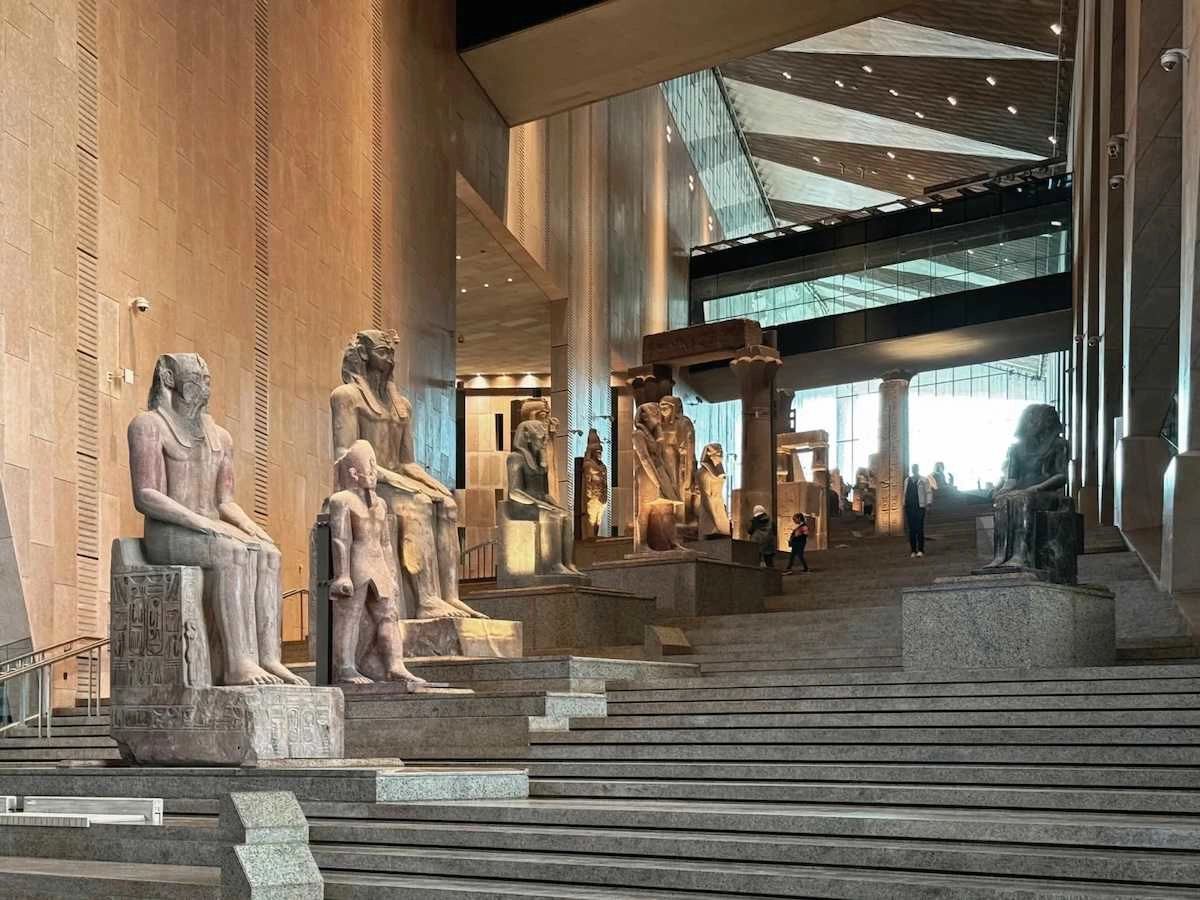
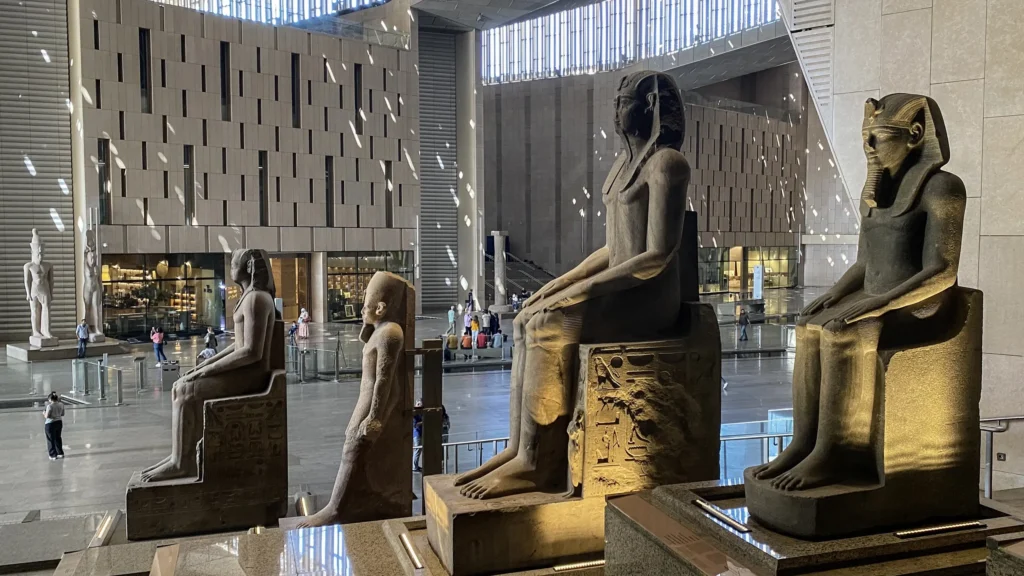
No visit to the Grand Egyptian Museum feels complete without ascending the legendary Grand Staircase, one of the museum’s most dramatic and photographable features. Nestled within the central heart of the building, this architectural marvel hosts a chronological procession of royal statues, sarcophagi, and architectural elements that have commanded respect for thousands of years. Established as a vertical timeline, the staircase is far more than a functional path—it is a symbolic rise through the ranks of Egyptian divinity and kingship. For travelers seeking a powerful visual summary of Egypt’s dynastic eras, this breathtaking ascent remains an essential highlight.

Stepping onto the staircase feels like entering a royal court of the gods. The massive basalt and granite figures, the glowing overhead lights, and the sheer height of the space create a captivating atmosphere that reflects the power of the Pharaohs. Unlike traditional horizontal galleries, the Grand Staircase offers an experience built around perspective and scale. Standing at the base and looking up at dozens of colossal figures allows visitors to absorb the evolution of Egyptian art and royal portraiture from a uniquely impressive vantage point.

Beyond its visual impact, the staircase holds a special place in the museum’s design, ending with a spectacular view of the Giza Pyramids through a massive floor-to-ceiling window. This physical connection between the artifacts inside and the monuments outside reinforces the GEM’s identity as the guardian of the plateau. Whether you stop to examine the muscular details of a statue or spend time simply admiring the alignment of the sun against the stone, the Grand Staircase offers one of the most iconic experiences in the GEM. It is not just a walkway—it is a spiritual and historical climb that honors the enduring legacy of Egypt’s greatest rulers.
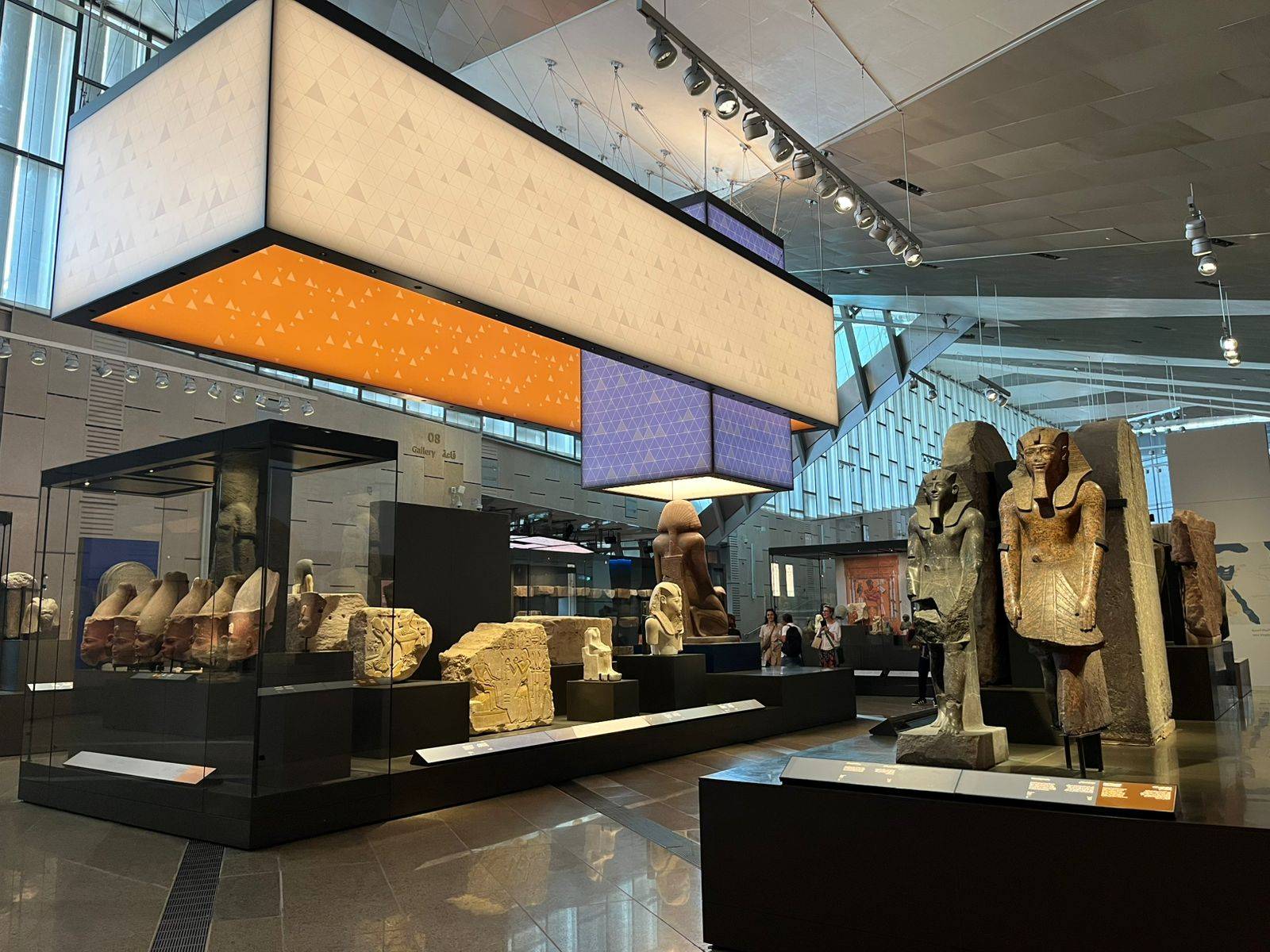
4. A Photographer’s Paradise: Capturing the Future of the Past

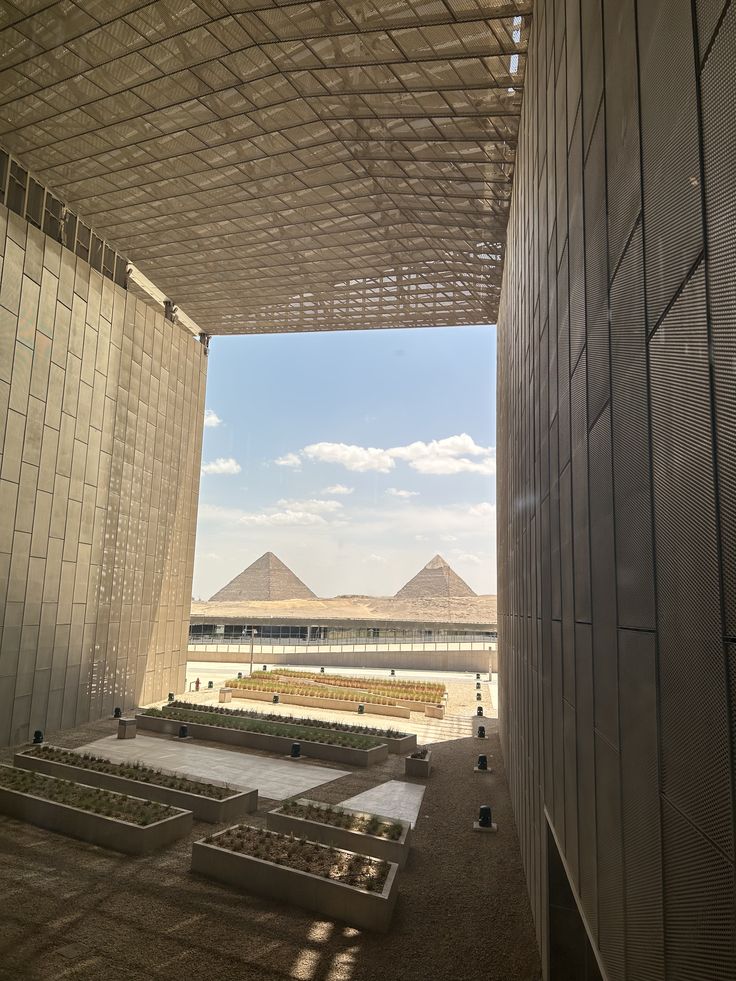
The Grand Egyptian Museum is not only a premier historical destination, but also one of the most visually stunning locations for photographers and modern travelers who appreciate structural elegance. Every angle of this massive site offers a unique frame waiting to be captured, from the translucent stone facade that glows at night to the sharp, contemporary shadows cast across the courtyard by the desert sun. For visitors interested in architectural photography in Egypt, the GEM provides an extraordinary environment where the geometry of the pyramids is mirrored in the sharp triangles of the museum’s walls, creating a seamless visual dialogue.

Walking through the museum with a camera feels like exploring a futuristic landscape dedicated to the ancient dead. The constantly changing light through the glass walls creates dynamic scenes full of clarity and drama, while the contrast between the rough ancient stone and the polished museum floors adds a timeless cinematic quality. Whether capturing the massive head of a colossus or the intricate hieroglyphs on a sarcophagus, photographers will find endless inspiration in the interplay of light and shadow. Late afternoon visits are particularly magical, as the “Golden Hour” illuminates the museum and provides a perfect glow over the distant pyramids.

Beyond its physical beauty, the GEM offers something deeper for digital storytellers—the ability to capture the intersection of two eras. Unlike the crowded, narrow streets of the city, this vast space preserves a sense of quiet majesty and intellectual order that makes every photograph feel significant. Even casual visitors with smartphones will find themselves constantly drawn to the scale of the atrium and the panoramic vistas. Whether you are a professional filmmaker, a social media enthusiast, or someone who simply loves aesthetic perfection, the Grand Egyptian Museum remains one of the most photogenic places on earth, offering countless “wow” moments through every lens.

5. Innovation and Leisure: A Taste of Modern Egyptian Hospitality

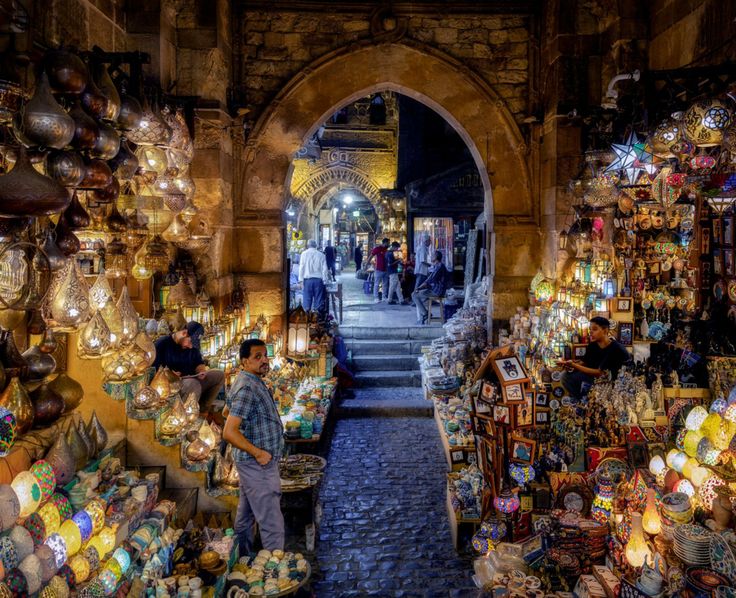
Beyond shopping and historic architecture, Khan El Khalili Bazaar offers visitors a rich culinary and social experience that captures the authentic spirit of old Cairo. Hidden among its bustling alleys and vibrant market streets are traditional cafés and local eateries where travelers can pause, relax, and experience the flavors that have shaped Cairo’s social culture for generations. From aromatic Egyptian coffee and refreshing mint tea to traditional sweets and local street snacks, the bazaar offers far more than sightseeing—it provides a true sensory journey through Egyptian hospitality and daily life. For travelers seeking authentic food experiences in Cairo, Khan El Khalili remains one of the city’s most atmospheric destinations.

What makes dining here especially memorable is the atmosphere itself. Sitting at a traditional café surrounded by historic architecture, lively conversations, and the timeless rhythm of the marketplace creates an experience that feels deeply connected to Cairo’s heritage. Many cafés maintain a classic old-world charm, where ornate décor, traditional seating, and warm hospitality reflect generations of local culture. Whether enjoying a simple cup of tea while people-watching or tasting traditional Egyptian desserts after shopping, every pause becomes part of the cultural adventure.

For many visitors, these moments of relaxation become just as memorable as the shopping itself. The market’s cafés offer a rare chance to slow down, absorb the atmosphere, and experience Cairo as locals do. Rather than rushing through the bazaar, taking time to enjoy its flavors and social energy transforms the visit into a richer and more immersive cultural journey. Khan El Khalili is not simply a place to explore—it is a place to taste, connect, and experience the enduring charm of traditional Cairo.

6. The Art of Preservation: A Peek into the World’s Best Labs

One of the most impressive and scientifically significant parts of visiting the Grand Egyptian Museum is understanding its role as the world’s leading center for archaeological conservation. Unlike many museums that only show the finished product, the GEM is built around a massive Conservation Center that works tirelessly to save Egypt’s crumbling history. For many travelers, learning about the science of the museum becomes one of the most fascinating aspects of the visit, transforming a standard tour into a deep appreciation for the effort required to keep history alive.

The Conservation Center at the GEM is not just a backroom office—it is a high-tech facility where the latest chemical and digital technologies are used to stabilize wood, textile, and stone. Visitors often get a sense of this “behind-the-scenes” magic through specialized tours or informative displays that explain how a 3,000-year-old chariot was moved and restored. Seeing the level of care given to even the smallest fragment of papyrus highlights the museum’s commitment to the future of the past. This scientific layer adds a professional dimension to the site, making it feel like a true temple of knowledge.

For students, history buffs, and curious minds, this focus on preservation is incredibly inspiring. It highlights the collaboration between Egyptian experts and international scientists who have spent years preparing the collection for its new home. The experience adds a human and intellectual dimension to the museum that goes beyond mere display. In the Grand Egyptian Museum, preservation is not just a technical task—it is a sacred responsibility that ensures the story of Egypt will continue to be told for a thousand more years.

7. Evening Illumination: The GEM’s Nighttime Splendor

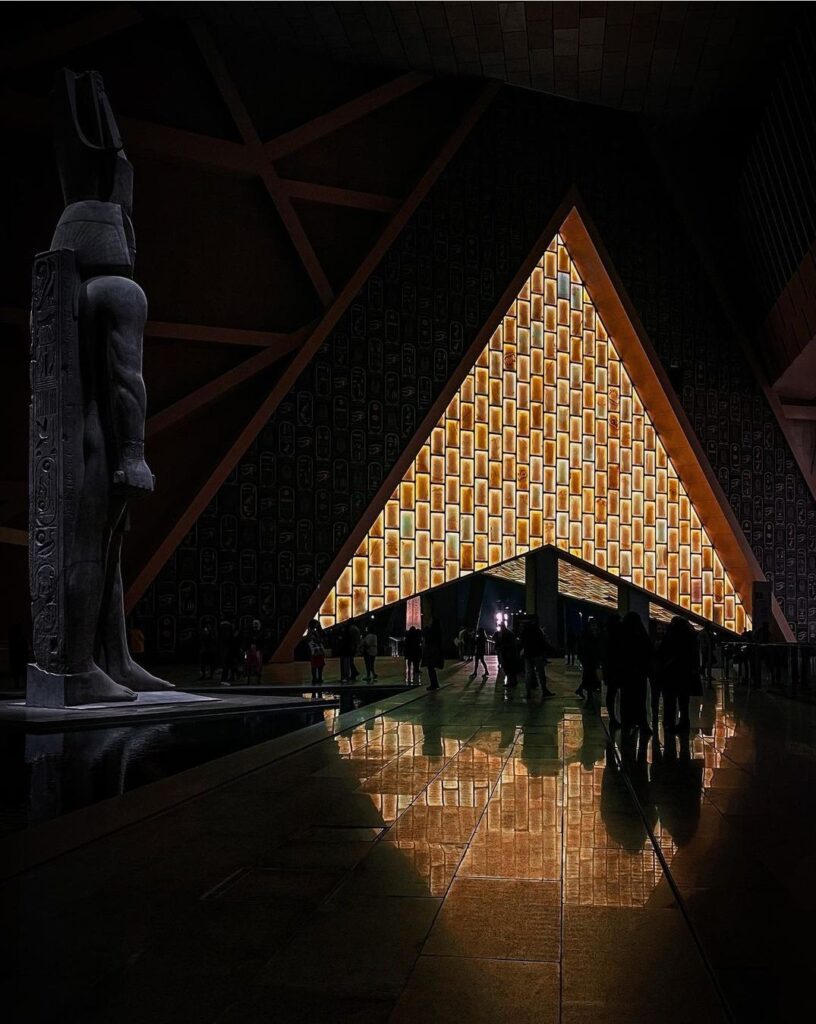
While the GEM is breathtaking during the day, many travelers believe the complex becomes even more enchanting in the evening, when the architecture is transformed by masterfully designed lighting. As night falls, the museum’s translucent stone wall and the grand plaza are lit from within, creating a glowing landmark that can be seen for miles. For visitors seeking a more exclusive and atmospheric experience in Giza, exploring the museum grounds and its commercial district after dark offers a stunning look at Cairo’s modern nightlife and architectural ambition.

The evening hours bring a sophisticated beauty to the site, as the sharp angles of the building are softened by warm lights and the desert sky provides a deep blue backdrop. The outdoor sculptures and the Obelisk of Ramses II are highlighted with dramatic spotlights, creating a cinematic feel that is perfect for a night out. The air is cooler, the crowds are often smaller, and the entire atmosphere feels more intimate and hushed. Couples and luxury travelers often find this to be the most romantic time to visit, as the museum glows like a giant jewel on the edge of the plateau.

Beyond the aesthetics, evening visits allow travelers to enjoy the museum’s high-end social scene. The restaurants and event spaces often host cultural performances or gala dinners, making the GEM a central part of Cairo’s elite social calendar. Rather than just being a place for education, the museum at night becomes a stage for celebration and modern Egyptian pride. Experiencing the GEM under the stars is not just a museum visit—it is a glimpse into the glamorous future of Egyptian tourism.

8. A Strategic Gateway to the Great Pyramids of Giza

The Grand Egyptian Museum is far more than a stand-alone attraction—it also serves as the ultimate gateway for exploring the Great Pyramids and the Sphinx. Located on the edge of the plateau, the museum is physically and conceptually linked to the ancient necropolis, providing a seamless transition from the artifacts of the kings to the monuments they built. For travelers planning a comprehensive tour of Giza, the GEM offers the perfect starting point to understand the context, engineering, and religious significance of the pyramids before seeing them in person.

What makes this location so powerful is the “visual bridge” the museum creates. Large galleries are oriented specifically toward the pyramids, allowing visitors to maintain a constant visual connection with the structures while viewing the treasures that were once inside them. This creates a cohesive narrative where the history on the walls and the history on the horizon become one. Few museums in the world can boast such a direct and powerful relationship with an outdoor archaeological site, making the GEM a vital part of any Giza itinerary.

Beyond the view, the museum’s proximity to the plateau simplifies logistics for travelers. Visitors can spend their morning immersed in the high-tech galleries of the GEM and then take a short shuttle or walk to stand in the shadow of Khufu’s Great Pyramid. This integration of the indoor and outdoor worlds helps visitors better appreciate the scale of ancient Egyptian ambition. Whether you are a first-time visitor or a returning explorer, the Grand Egyptian Museum offers the most sophisticated and complete lens through which to view the wonders of the ancient world.

9. Hidden Details and Future Discoveries

One of the most exciting aspects of the Grand Egyptian Museum is the sense that there is always something more to discover within its vast footprint. Beyond the main Tutankhamun galleries and the Grand Staircase, the museum is designed to hold over 100,000 artifacts, many of which have been in storage for decades and are being seen by the public for the first time. Exploring the secondary galleries and themed halls reveals a more detailed side of the museum, where the daily life of ancient Egyptians, their medicine, and their technology are given center stage.

These lesser-known sections often house some of the museum’s most fascinating “hidden” treasures. Visitors might find incredibly preserved wooden models of ancient workshops, rare botanical specimens from tombs, or the world’s oldest papyrus scrolls. Unlike the crowded highlights, these areas allow for a quieter, more academic exploration where the nuances of the civilization become clear. The museum is so large that it invites multiple visits, with each trip uncovering a new statue or a forgotten queen’s jewelry that you might have missed before.

For scholars, researchers, and serious history fans, these detailed exhibits offer the most rewarding moments. The museum’s layout encourages a journey of curiosity, leading visitors from the “famous” pieces to the “significant” ones that define the culture. Rather than a one-time stop, the GEM feels like an unfolding story that will continue to reveal new chapters as more galleries open and more research is shared. In the Grand Egyptian Museum, the thrill of discovery is not just for the archaeologists—it is for every guest who walks through the door.

10. Practical Tips for Your Grand Egyptian Museum Visit

A visit to the Grand Egyptian Museum is a highlight of any trip to Egypt, and a few practical tips can help make your day as smooth and enjoyable as possible. Given the museum’s massive size—roughly 500,000 square meters—wearing comfortable walking shoes is essential for navigating the long galleries and the outdoor plazas. Arriving early in the morning is highly recommended to beat the heat and the larger tour groups, while booking your tickets online in advance is the best way to ensure entry into the most popular timed exhibitions like the Tutankhamun galleries.

It is also wise to check the museum’s official website for the latest opening updates, as certain sections may open in phases. Since the GEM is located on the Giza Plateau, combining your visit with a trip to the Pyramids is efficient, but be sure to allocate at least 4 to 5 hours for the museum alone to truly appreciate the collection. Photography is generally allowed with smartphones, but professional equipment may require a separate permit, so it is best to travel light and enjoy the moment.

Hiring an expert Egyptologist guide can significantly enhance your experience, providing stories and context that aren’t always visible on the labels. The GEM is a high-tech facility, so make use of the interactive kiosks and digital guides available throughout the halls. With a little bit of planning, your time at the Grand Egyptian Museum will be a comfortable, educational, and absolutely unforgettable centerpiece of your Cairo journey.

11. Why the GEM is the Crown Jewel of Global Travel

While Egypt has always been a top-tier destination for its ancient ruins, the Grand Egyptian Museum offers something that has been missing—a world-class, modern infrastructure that matches the prestige of the artifacts it holds. It is one of the few places on earth where the facility is as much of an attraction as the collection. From the artisan-level curation to the stunning views of the Giza Plateau, the GEM provides a high-end experience that satisfies the modern traveler’s desire for comfort, technology, and authentic culture all in one place.

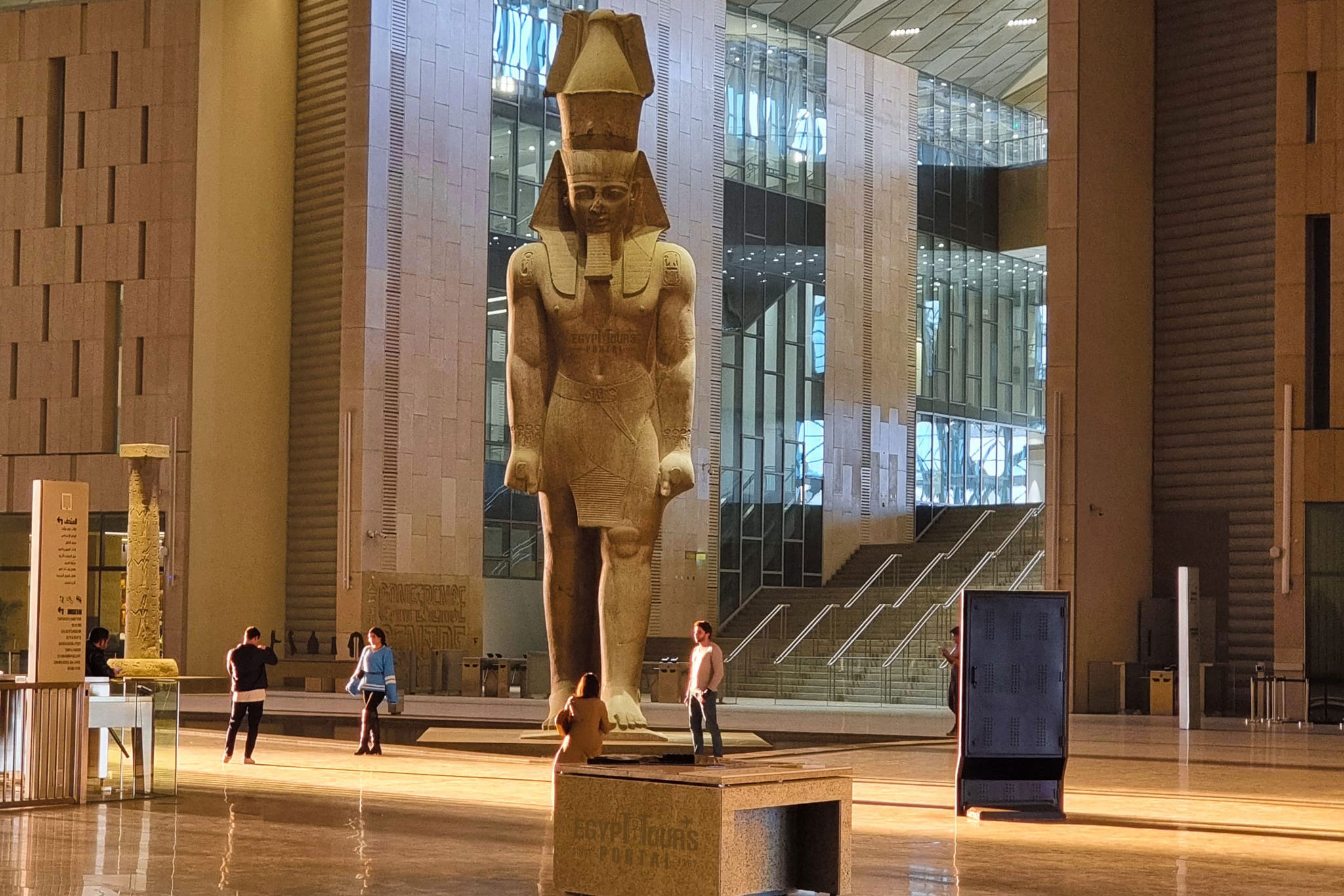
What makes the GEM truly indispensable is its emotional resonance. It is not just a building full of old things; it is a statement of national identity and a gift to the world. Standing in the atrium under the watchful eye of a 3,200-year-old Ramses II, surrounded by the best of 21st-century architecture, creates a feeling of being at the center of human history. Whether you are browsing the museum shop for high-quality replicas or standing in awe before the golden mask, every interaction feels significant and well-designed.

For families, solo adventurers, and luxury tourists alike, the Grand Egyptian Museum delivers the most complete and spectacular experience in Cairo. It captures the eternal spirit of the Pharaohs while providing all the amenities of a modern cultural capital. It is a destination that honors the past while fearlessly looking toward the future, making it the most essential stop on any 2026 Egypt itinerary.

12. An Unforgettable Farewell to the World of the Pharaohs

As your journey through the Grand Egyptian Museum comes to an end, you leave with far more than photos of gold and stone—you leave with a profound sense of the continuity of human civilization. Few places on earth capture the imagination quite like this legendary museum, where thousands of years of royal secrets, artistic breakthroughs, and religious mysteries are brought into the light of the modern day. From the towering presence of the Grand Staircase to the delicate beauty of King Tut’s jewelry, every moment in the GEM is a reminder of the brilliance of the human spirit.

What makes the Grand Egyptian Museum truly unforgettable is not just the scale of its galleries, but the way it makes the ancient world feel immediate and alive. It is a place where history is not a dry subject but a vibrant, breathing experience that can be touched, felt, and understood. Whether you came for the gold, the architecture, or the connection to the pyramids, the museum offers a sense of closure and wonder that stays with you long after you leave the plateau.

As you continue your journey through Egypt or head back home, the memory of the GEM’s glowing facade and its silent, majestic guardians will remain a highlight of your life. It is more than just a museum—it is a monument to what humanity can achieve when it values its heritage. For anyone seeking the true majesty of the ancient world in a modern setting, the Grand Egyptian Museum remains an experience that will define your travel memories forever.

Grand Egyptian Museum : Frequently Asked Questions

The GEM is best enjoyed in the early morning (around 9:00 AM) to avoid the peak crowds and the midday sun, or in the late afternoon for the best photography lighting and a more relaxed atmosphere in the commercial areas.

The GEM has been opening in phases, with the Grand Atrium, the Grand Staircase, and the commercial zone currently welcoming visitors. Full access to the Tutankhamun galleries and main exhibition halls depends on the official final opening schedule.

The museum is located in Giza and is easily accessible via taxi, ride-sharing apps (like Uber), or private tour buses. It is approximately 30-45 minutes from Downtown Cairo, depending on traffic.

Yes, the GEM features a wide variety of dining options, from quick cafés and snack bars to high-end restaurants offering both Egyptian and international cuisine, mostly located in the beautiful commercial plaza.

Absolutely. Because the GEM is located right next to the Giza Plateau, it is highly recommended to combine both into one day of exploration for the most efficient and immersive experience.