
Welcome to

Abydos Temple – The Sacred Heart of Ancient Egyptian Religion

Abydos Temple is one of the most important and sacred archaeological sites in Ancient Egypt, located in the western desert near the modern city of Sohag in Upper Egypt. Known as one of the oldest religious centers in Egyptian history, Abydos played a major role in the spiritual beliefs, royal traditions, and religious practices of ancient Egyptians for thousands of years. The site is especially famous for the magnificent Temple of Seti I, which contains some of the finest wall reliefs and inscriptions ever created in Ancient Egyptian art.

Unlike many ancient temples that were built mainly to honor a single ruler or deity, Abydos held deep religious significance because it was associated with Osiris, the god of the afterlife, resurrection, and eternal life. Ancient Egyptians believed that Abydos was connected with the burial place of Osiris and became one of the most important pilgrimage destinations in Egypt. People from different parts of the kingdom traveled to Abydos to participate in religious ceremonies and honor the god who represented hope and rebirth.

The most famous monument at the site is the Temple of Seti I, built during the New Kingdom period by Pharaoh Seti I and completed by his son Ramesses II. The temple is considered one of the greatest achievements of Egyptian architecture because of its beautifully preserved decorations, detailed hieroglyphic inscriptions, and unique religious design. It also contains the famous Abydos King List, a valuable historical record showing the names of many Egyptian Pharaohs.

Abydos was not only a religious center but also an important place for understanding Egyptian history. The temples, tombs, and inscriptions discovered at the site provide information about ancient Egyptian kings, mythology, and the development of religious traditions.

Today, Abydos Temple remains one of the most fascinating destinations in Upper Egypt. Travelers visiting Abydos can explore the impressive Temple of Seti I, discover ancient Egyptian beliefs about the afterlife, and experience one of the most important spiritual locations of the Nile Valley civilization.

Abydos Temple Excursions

1. History of Abydos Temple and Its Importance in Ancient Egypt

The history of Abydos Temple stretches back thousands of years, making it one of the oldest and most significant religious sites in Ancient Egypt. Before the construction of the famous Temple of Seti I, Abydos had already been considered a sacred place for early Egyptian communities. The site developed over many historical periods and became closely connected with Egyptian kingship, religious beliefs, and the worship of Osiris.

During the Early Dynastic Period, Abydos became an important royal burial area. Many early Egyptian rulers were buried near the site, and archaeological discoveries have revealed some of the oldest royal tombs in Egypt. These early burials helped establish Abydos as a place connected with kings, ancestors, and the journey to the afterlife.

The importance of Abydos increased significantly when it became associated with Osiris, the god of death and resurrection. According to Egyptian mythology, Osiris was one of the most important gods who represented eternal life and the triumph of order over chaos. Ancient Egyptians believed that visiting Abydos could bring spiritual benefits and strengthen their connection with the afterlife.

Throughout Egyptian history, many Pharaohs supported the development of Abydos by building temples, chapels, and monuments. Kings wanted to connect themselves with the sacred traditions of the site and demonstrate their relationship with the gods. This royal support transformed Abydos into one of the most important religious centers in the country.

The New Kingdom period was one of the greatest eras for Abydos. Pharaoh Seti I built his magnificent temple at the site as a tribute to the gods and previous rulers of Egypt. His temple became a masterpiece of Egyptian architecture and preserved some of the most detailed artistic achievements of the civilization.

Later rulers, including Ramesses II, continued to honor Abydos and contributed to its religious importance. The site remained a place of pilgrimage where Egyptians celebrated festivals, performed rituals, and honored Osiris.

Today, Abydos Temple provides valuable evidence about the development of Ancient Egyptian religion and royal traditions. Its history reveals how deeply connected faith, kingship, and the belief in eternal life were within one of the world’s greatest civilizations.
abydos temple

2. Temple of Seti I: The Greatest Monument of Abydos Egypt

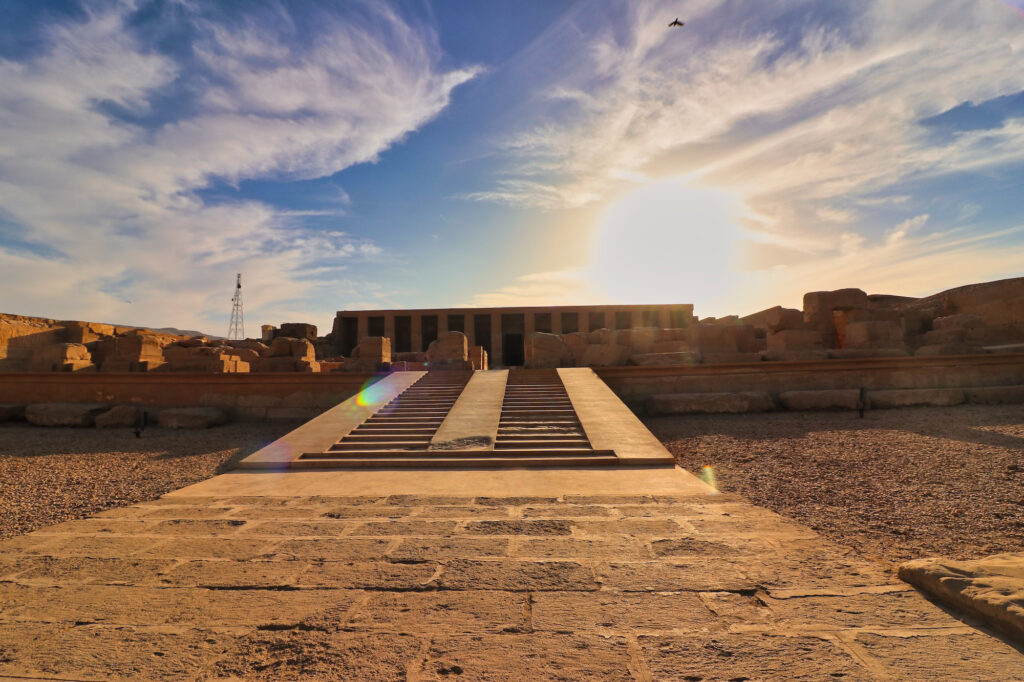
The Temple of Seti I is the most famous and impressive structure within the Abydos Temple complex. Built during the New Kingdom period, this extraordinary temple represents the artistic, architectural, and religious achievements of Ancient Egypt at its highest level. Located in Abydos, the temple was constructed by Pharaoh Seti I and later completed by his son Ramesses II, creating one of the most remarkable monuments in Egyptian history.

The main purpose of the Temple of Seti I was to honor important Egyptian gods, especially Osiris, Isis, Horus, Ptah, Amun, and Ra-Horakhty. Unlike many Egyptian temples dedicated to a single deity, Seti I’s temple contains several sanctuaries, reflecting the importance of different gods within Egyptian religious traditions.

The architecture of the temple is unique compared with many other ancient Egyptian temples. Instead of following a simple straight layout, the design includes multiple chapels and sacred areas connected to different deities. This structure reflects the complex religious beliefs of Ancient Egyptians and their understanding of the divine world.

One of the most remarkable features of the Temple of Seti I is the quality of its wall reliefs. The carvings are considered among the finest examples of Egyptian artwork because of their incredible detail, depth, and preservation. The scenes show Pharaoh Seti I performing rituals, making offerings to gods, and connecting with previous rulers.

The temple also contains the famous Abydos King List, a valuable historical inscription that records the names of many Egyptian Pharaohs from early dynasties to Seti I’s own reign. This list provides historians with important information about Egyptian royal history.

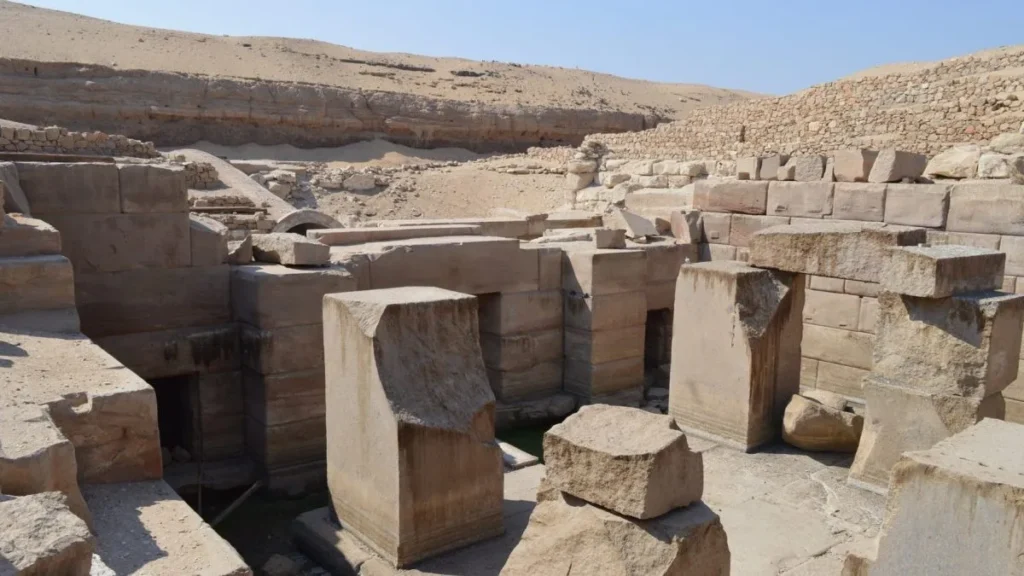
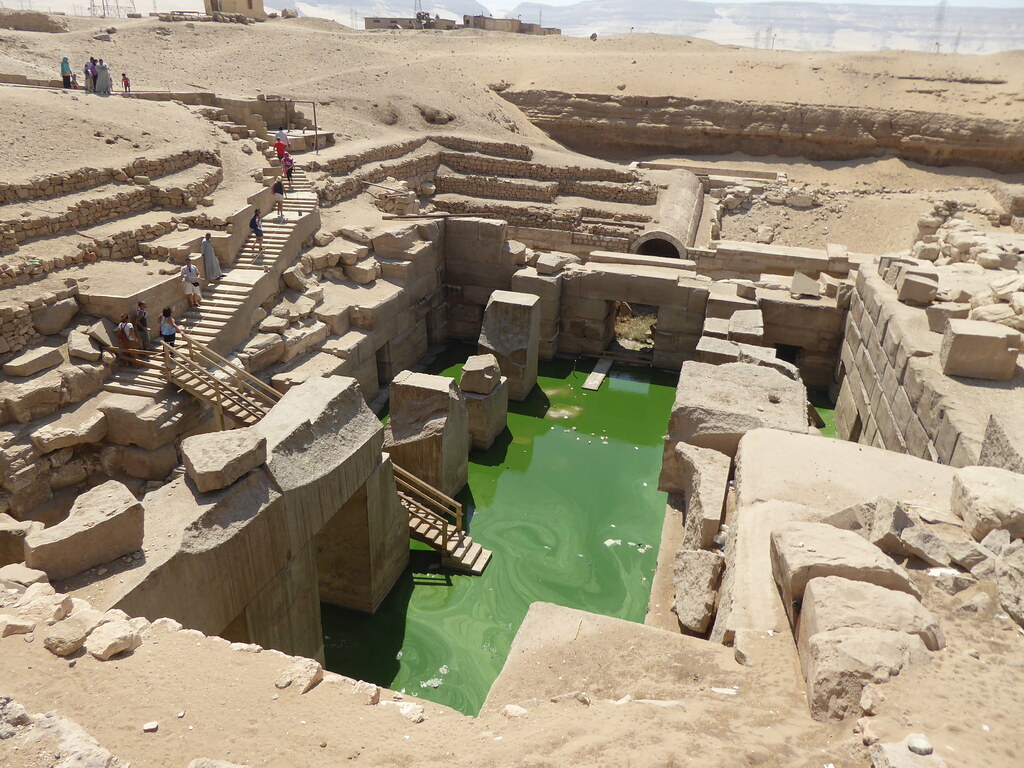
Another fascinating feature of the temple is the Osireion, a mysterious underground structure located behind the main temple. It is believed to have been connected with Osiris worship and represents the ancient Egyptian belief in resurrection and eternal life.

The Temple of Seti I remains one of the most important ancient Egyptian monuments because it combines history, religion, architecture, and art. A visit to this remarkable temple offers travelers a rare opportunity to experience the spiritual and artistic achievements of Ancient Egypt.
abydos temple

3. Osiris Worship and the Religious Importance of Abydos

The religious importance of Abydos Temple is deeply connected to the worship of Osiris, one of the most important gods in Ancient Egyptian mythology. Osiris represented resurrection, eternal life, fertility, and the afterlife, making him one of the most beloved deities among ancient Egyptians. Because of this connection, Abydos became one of the most sacred pilgrimage destinations in Ancient Egypt.

According to Egyptian mythology, Osiris was the ruler of the afterlife and the symbol of rebirth. Ancient stories describe how Osiris was killed by his brother Seth and later restored through the efforts of his wife Isis. This myth became a powerful symbol of hope, showing that life could continue beyond death. Egyptians believed that Abydos was connected to the story of Osiris and considered it a place of spiritual transformation.

The annual Osiris festivals held at Abydos were among the most important religious celebrations in Ancient Egypt. During these ceremonies, priests performed rituals that represented the death and resurrection of Osiris. Pilgrims traveled from different regions to participate in these events and seek blessings related to protection and eternal life.

Many Egyptians wanted to be associated with Abydos even after death. Wealthy individuals built memorial chapels and left inscriptions at the site to show their devotion to Osiris. They believed that having a connection with Abydos could improve their chances of achieving a successful journey into the afterlife.

The Temple of Seti I contains several areas dedicated to Osiris worship, including sacred chambers and inscriptions describing religious traditions. These decorations provide important information about Egyptian beliefs regarding death, resurrection, and the divine world.

The connection between Abydos and Osiris also influenced Egyptian burial traditions throughout history. The site became a symbol of spiritual renewal and the promise of eternal existence.

Today, Abydos Temple remains one of the best places to understand Ancient Egyptian religion. Through its temples, inscriptions, and sacred traditions, visitors can explore the beliefs that shaped Egyptian civilization and discover why Abydos was considered one of the holiest places along the Nile Valley.
4. The Abydos King List: A Historical Record of Egyptian Pharaohs

One of the most valuable treasures inside the Temple of Seti I at Abydos is the famous Abydos King List, an extraordinary historical inscription that provides important information about the rulers of Ancient Egypt. This royal list is one of the most significant archaeological discoveries for understanding Egyptian history because it records the names of many Pharaohs who ruled the country before Seti I.

The Abydos King List is located on the wall of a corridor inside the Temple of Seti I. It shows Pharaoh Seti I accompanied by his son, the future Pharaoh Ramesses II, presenting offerings to a long sequence of royal names. The inscription includes approximately 76 Egyptian kings, beginning with the early rulers of unified Egypt and continuing until Seti I’s own reign during the New Kingdom period.

The purpose of the Abydos King List was not simply to record history. It had a strong religious meaning because Ancient Egyptians believed that honoring previous rulers helped maintain the connection between the present king and the divine traditions of Egypt. By including the names of earlier Pharaohs, Seti I demonstrated his respect for his royal ancestors and strengthened his legitimacy as ruler.

The list provides historians with valuable evidence about Egyptian chronology and royal succession. It confirms the importance of many Pharaohs and helps researchers understand the development of Egyptian dynasties. However, like many ancient historical records, the list was selective and did not include every ruler. Some kings who were considered politically controversial were intentionally omitted.

Among the Pharaohs included are famous rulers such as Menes, who was traditionally believed to have unified Upper and Lower Egypt, and great kings from the Old, Middle, and New Kingdom periods. The inscription demonstrates the Egyptians’ strong interest in preserving royal traditions and historical memory.

The Abydos King List remains one of the most important historical sources from Ancient Egypt. Together with archaeological discoveries, temple inscriptions, and other records, it helps modern historians reconstruct the long and fascinating history of Egyptian Pharaohs.

For visitors exploring Abydos Temple, seeing the Abydos King List provides a unique connection to thousands of years of Egyptian history and allows them to discover the names of rulers who shaped one of the world’s greatest civilizations.

abydos temple

5. Architecture and Artistic Masterpieces of Abydos Temple

The architecture and artwork of Abydos Temple represent some of the finest achievements of Ancient Egyptian craftsmanship. The Temple of Seti I is especially famous for its elegant design, perfectly carved reliefs, and beautifully preserved inscriptions. The combination of religious symbolism, architectural innovation, and artistic excellence makes Abydos one of the most impressive ancient Egyptian temples.

The design of the Temple of Seti I is different from many traditional Egyptian temples. Instead of following a simple central axis dedicated to one god, the temple contains several sanctuaries dedicated to different deities. These include Osiris, Isis, Horus, Ptah, Amun, and Ra-Horakhty. This unique arrangement reflects the importance of multiple gods within Ancient Egyptian religious beliefs.

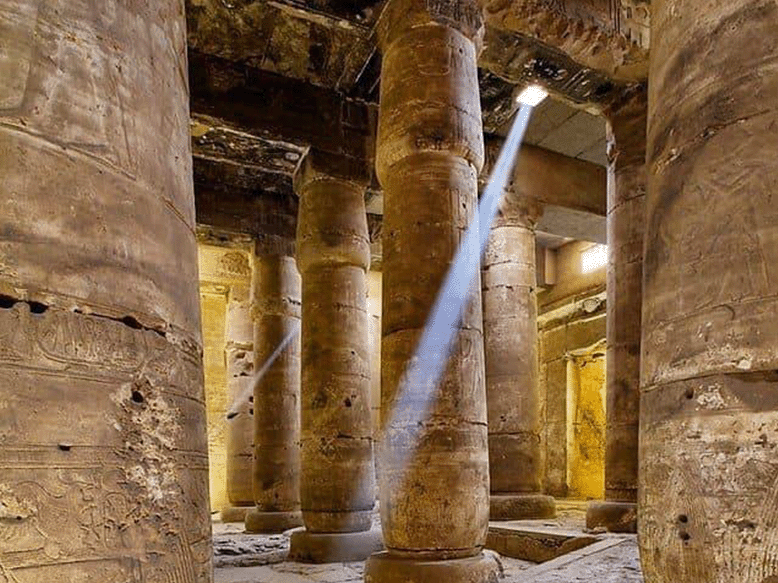
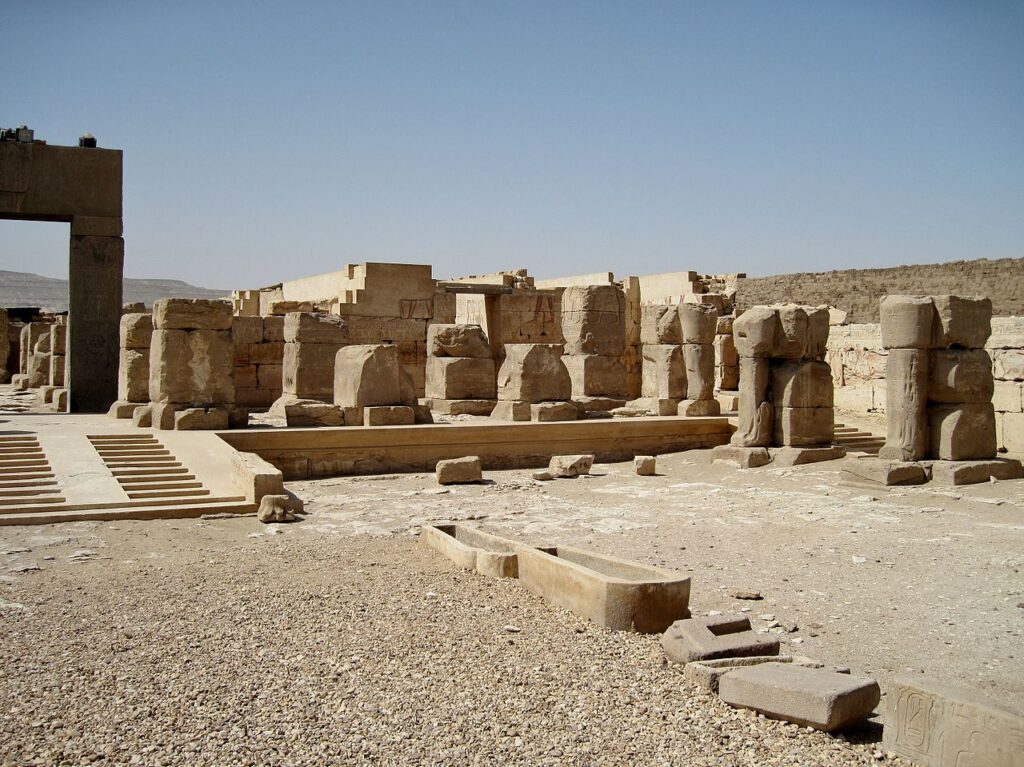
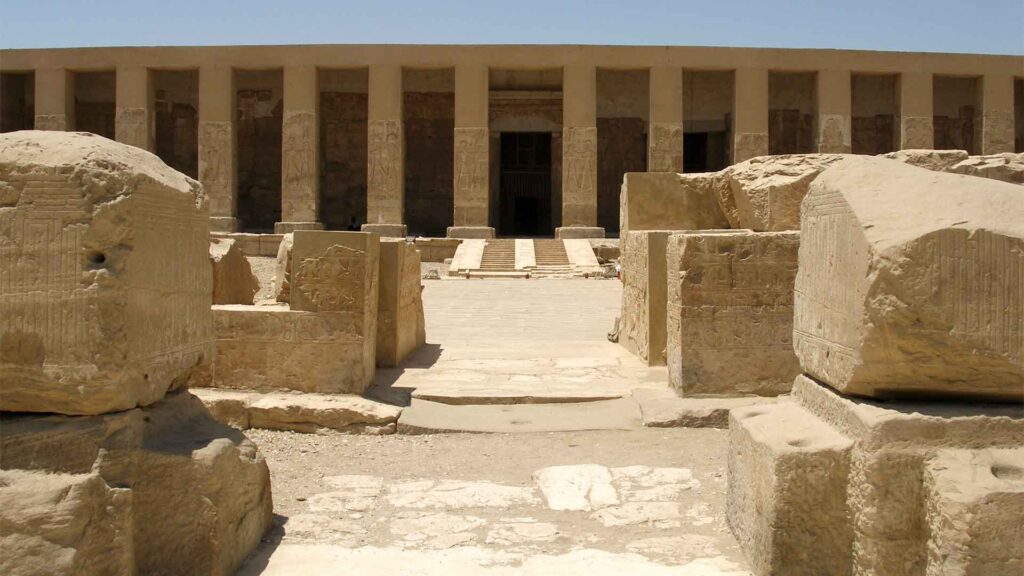
The entrance of the temple originally included a large first pylon and courtyard, although some parts have been damaged over time. Beyond the entrance, visitors enter impressive halls decorated with detailed columns and religious scenes. The hypostyle halls contain beautifully carved pillars that demonstrate the skill of Egyptian architects and artists.

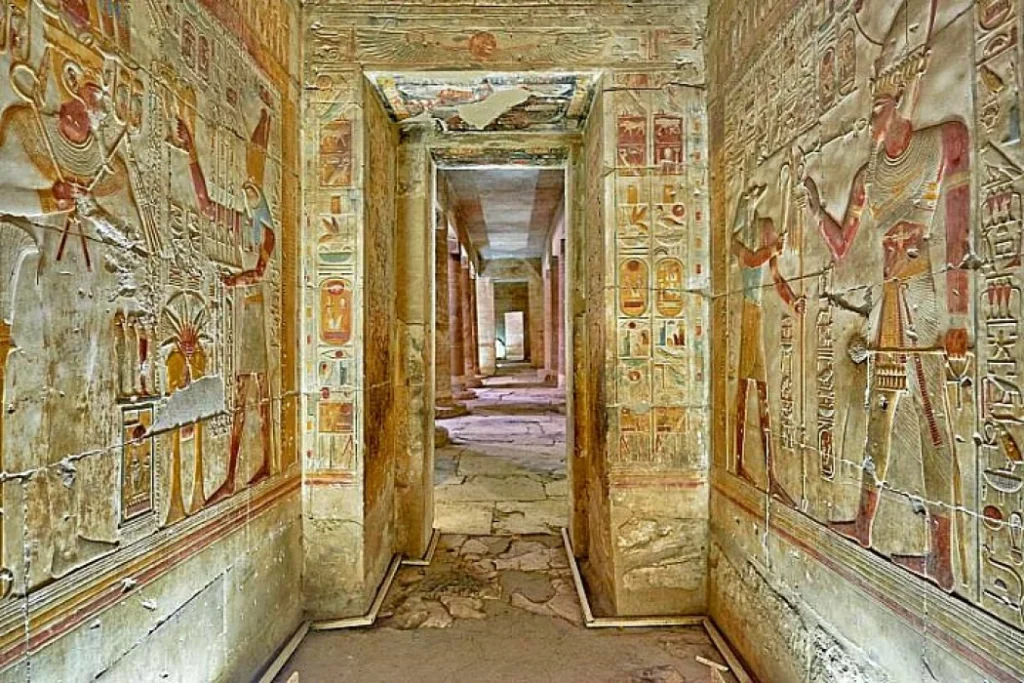
The wall reliefs of Abydos Temple are considered among the best-preserved examples of Ancient Egyptian art. Unlike many later carvings that were created quickly, the reliefs at Seti I’s temple display exceptional precision and depth. The images show the Pharaoh performing sacred rituals, making offerings to gods, and participating in religious ceremonies.

One of the reasons Abydos artwork is so important is the preservation of original colors in some areas. Ancient Egyptian artists used natural pigments to create detailed scenes that represented gods, kings, and symbolic events. These colors helped bring religious stories and royal achievements to life.

The temple inscriptions also provide important information about Ancient Egyptian mythology, government, and religious traditions. Hieroglyphic texts cover many walls, explaining ceremonies and honoring the gods.

The artistic achievements of Abydos Temple reveal the extraordinary abilities of Ancient Egyptian craftsmen. Every column, carving, and inscription reflects a civilization that valued beauty, precision, and spiritual expression.

Today, the architecture of Abydos continues to inspire historians, archaeologists, and travelers who visit Egypt to experience the remarkable legacy of Ancient Egyptian art and culture.

abydos temple

6. The Osireion: The Mysterious Sacred Structure of Abydos

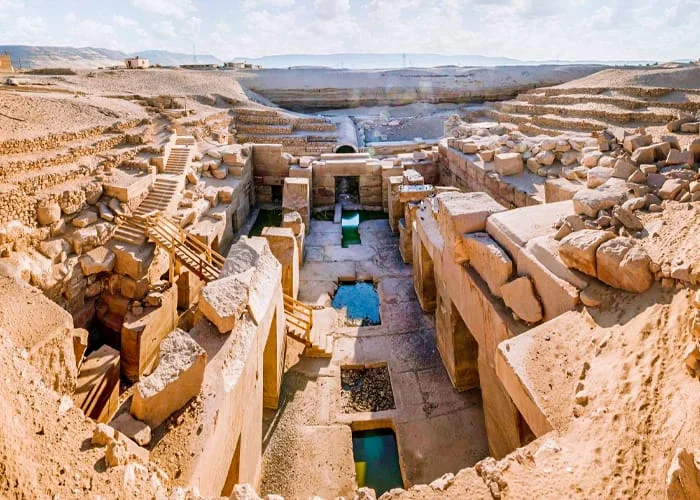
The Osireion is one of the most mysterious and fascinating structures within the Abydos Temple complex. Located behind the Temple of Seti I, this ancient monument is closely connected with the worship of Osiris and represents one of the most unique architectural features in Ancient Egypt. Its purpose, construction date, and symbolism have attracted the attention of historians and archaeologists for many years.

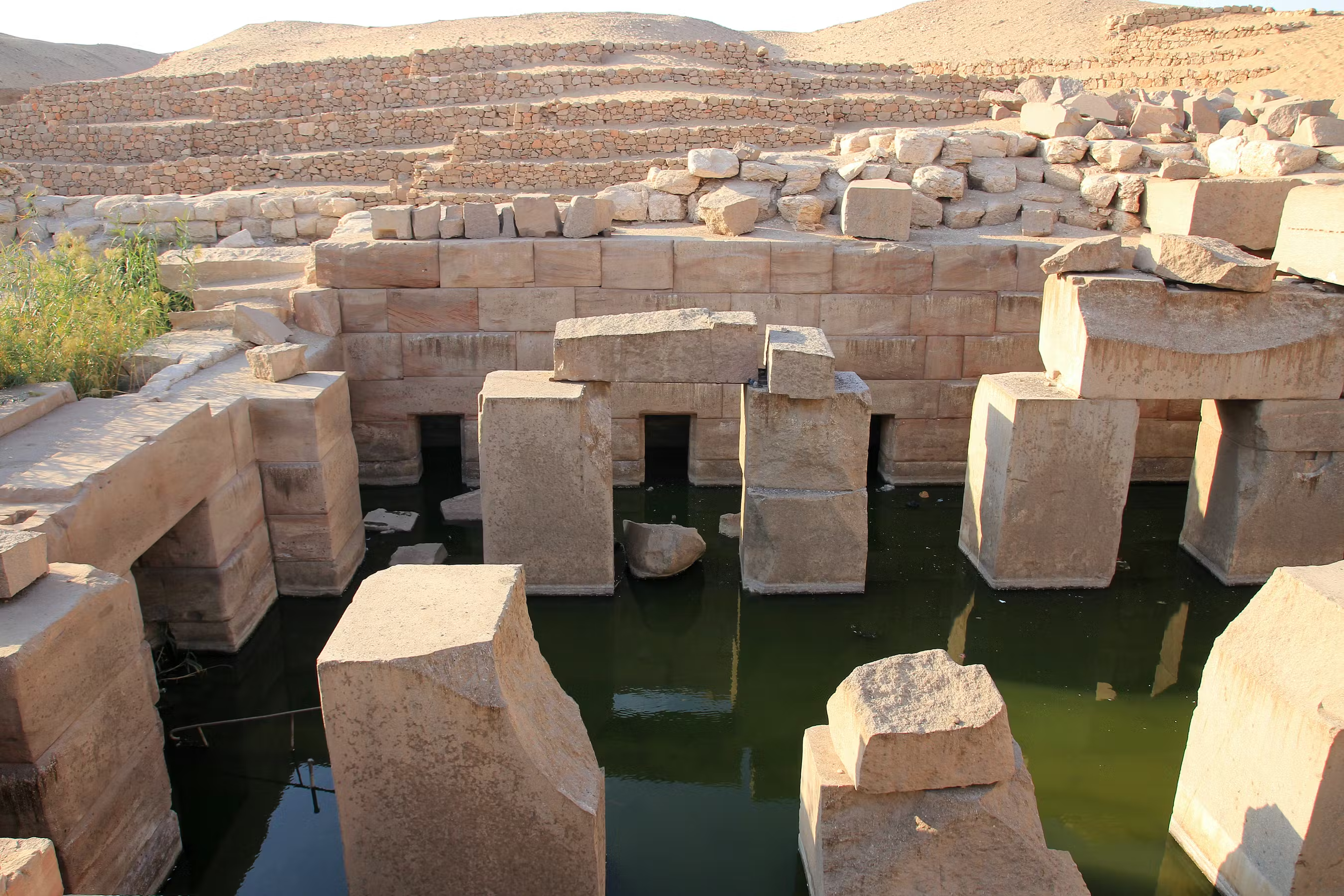
The Osireion is a large underground structure built from massive stone blocks, giving it a completely different appearance from many other Egyptian temples. The design includes a central hall surrounded by water channels, enormous granite pillars, and a symbolic island platform. These features are believed to represent the mythical tomb of Osiris and the concept of creation and rebirth.

Ancient Egyptians associated Osiris with resurrection and eternal life, and the Osireion was likely designed as a sacred location connected with these beliefs. The structure reflects the Egyptian idea that life emerges from the waters of creation and that death is part of a continuous cycle of renewal.

Although the exact date of the Osireion remains debated, many scholars believe that it was connected to the religious traditions of Abydos and may have been built or restored during the reign of Seti I. Its design intentionally imitates ancient architectural styles, giving it a timeless appearance.

The walls of the Osireion contain important religious inscriptions, including parts of the Book of the Earth, a collection of texts describing the journey through the underworld and the mysteries of the afterlife. These writings provide valuable insight into Ancient Egyptian beliefs about death and resurrection.

The location of the Osireion behind the Temple of Seti I was carefully chosen. Its connection with the main temple created a powerful religious landscape where worshippers could honor Osiris and participate in ceremonies related to eternal life.

Today, the Osireion remains one of the most intriguing parts of Abydos Temple. Its massive stones, unusual design, and religious symbolism make it an essential attraction for visitors interested in Ancient Egyptian mysteries and spirituality.

Exploring the Osireion allows travelers to discover another fascinating aspect of Egyptian civilization and understand the deep beliefs that influenced the construction of sacred places throughout the Nile Valley.

abydos temple

7. Abydos Temple and the Ancient Egyptian Belief in the Afterlife

The connection between Abydos Temple and the Ancient Egyptian belief in the afterlife is one of the main reasons this site became one of the most sacred places in Egypt. Ancient Egyptians had a deep belief that death was not the end of existence but a transition into another eternal life. Abydos became a powerful symbol of resurrection, spiritual transformation, and the hope of achieving a successful journey into the afterlife.

The importance of Abydos was strongly linked to the worship of Osiris, the god of the underworld and eternal life. Egyptians believed that Osiris represented the cycle of death and rebirth, making him the perfect symbol of the human journey after death. Because Abydos was associated with Osiris, many Egyptians considered visiting the site a religious duty that could bring spiritual benefits.

Pilgrims traveled long distances to Abydos to participate in religious festivals, make offerings, and leave inscriptions honoring Osiris. Many wealthy Egyptians built memorial chapels near the sacred area because they wanted their names and memories to remain connected with this holy location forever. Being associated with Abydos was considered a great honor and was believed to improve one’s chances of reaching the afterlife.

The Temple of Seti I contains many scenes related to Egyptian beliefs about death and resurrection. The decorations show the Pharaoh interacting with gods, performing sacred rituals, and receiving divine protection. These images reflect the Egyptian belief that rulers had a special relationship with the gods and would continue their existence after death.

The Osireion behind the temple also represents the importance of resurrection beliefs. Its design symbolizes the mythical burial place of Osiris and reflects ancient ideas about creation, renewal, and the eternal cycle of life.

Abydos also played an important role in royal traditions. Pharaohs wanted to connect themselves with Osiris because they believed that the god’s power over death and rebirth could protect them in eternity. This connection strengthened the religious authority of Egyptian kings.

Today, Abydos Temple provides visitors with a unique understanding of Ancient Egyptian views about life, death, and the afterlife. The monuments, inscriptions, and sacred structures reveal a civilization deeply focused on achieving harmony between the earthly world and the eternal realm.

8. Ramesses II and His Contributions to Abydos Temple

Pharaoh Ramesses II, one of the most famous rulers of Ancient Egypt, played an important role in the completion and development of the Abydos Temple complex. Known as Ramesses the Great, he ruled during the 19th Dynasty and continued many of the ambitious building projects started by his father, Pharaoh Seti I. His contributions helped preserve Abydos as one of Egypt’s most important religious centers.

After the death of Seti I, Ramesses II completed the construction and decoration of the Temple of Seti I. Although his artistic style differed slightly from his father’s, he continued the tradition of honoring the gods and preserving the religious importance of Abydos. His inscriptions and additions can still be seen throughout the temple complex.

Ramesses II was known for building some of the greatest monuments in Egyptian history. His desire to create lasting monuments was connected with the Egyptian belief in eternal memory. By adding his name and achievements to important temples, he ensured that future generations would remember his reign.

At Abydos, Ramesses II contributed additional decorations and structures that celebrated Egyptian religion and royal power. His images appear in temple scenes showing him making offerings to gods and participating in sacred ceremonies. These depictions reinforced the traditional image of the Pharaoh as the chosen representative of the gods on Earth.

Ramesses II also strengthened the connection between the royal family and Abydos. The site was already associated with ancient kings and Osiris worship, and his support helped maintain its importance during the New Kingdom period.

Beyond Abydos, Ramesses II became famous for monuments such as the temples of Abu Simbel, the Ramesseum at Luxor, and numerous statues throughout Egypt. His long reign brought political stability, military achievements, and remarkable architectural accomplishments.

The presence of Ramesses II at Abydos demonstrates how Pharaohs used temples to express religious devotion and preserve their legacy. His contributions ensured that Abydos remained an important symbol of Egyptian history and spirituality.

Today, visitors exploring Abydos can discover the achievements of both Seti I and Ramesses II, two powerful Pharaohs whose dedication created one of the greatest temple complexes of Ancient Egypt.

abydos temple

9. Abydos Temple Connection with Dendera, Luxor, and Upper Egypt Tours

Abydos Temple is an essential destination for travelers exploring the historical treasures of Upper Egypt. Located in the Nile Valley, Abydos is often combined with visits to other important ancient sites, especially Dendera Temple and Luxor. Together, these locations provide a complete journey through Egyptian religion, architecture, and royal history.

Abydos and Dendera share a strong religious connection because both sites were important centers of worship. While Abydos was mainly dedicated to Osiris, the god of resurrection and the afterlife, Dendera was dedicated to Hathor, the goddess of love, beauty, motherhood, and protection. Visiting both temples allows travelers to understand the diversity of Ancient Egyptian beliefs and the relationships between different gods.

The famous Dendera Temple Complex contains the magnificent Temple of Hathor, known for its beautiful columns, astronomical ceiling, and well-preserved reliefs. In comparison, Abydos offers visitors the Temple of Seti I, the Abydos King List, and the sacred Osireion. Together, these temples represent different aspects of Egyptian religious traditions.

Luxor is another important destination connected with Abydos. Ancient Luxor, known as Thebes, was once the capital of Egypt during the New Kingdom and contains some of the most famous monuments in the country, including Karnak Temple, Luxor Temple, and the Valley of the Kings.

Many travelers choose private Egypt tours that combine Abydos and Dendera with Luxor because these sites are located within Upper Egypt and provide a deeper understanding of ancient civilization. A Dendera and Abydos day trip from Luxor is especially popular among visitors who want to explore lesser-known temples away from the busiest tourist areas.

The journey through Upper Egypt allows travelers to follow the history of Egyptian civilization along the Nile River. From the sacred temples of Abydos and Dendera to the royal monuments of Luxor, each location reveals different chapters of ancient Egyptian life.

Abydos Temple is not only an isolated archaeological site; it is part of a larger historical landscape that demonstrates the religious, artistic, and architectural achievements of Ancient Egypt. Exploring these connected destinations creates an unforgettable experience for anyone interested in the mysteries and wonders of the Nile Valley.

abydos temple

10. How to Visit Abydos Temple: Location, Tours, and Travel Tips

Abydos Temple is one of the most rewarding historical destinations in Upper Egypt, offering visitors the chance to explore a sacred site filled with ancient stories, impressive architecture, and beautifully preserved artwork. Located near the modern town of El Balyana in Sohag Governorate, approximately 160 kilometers north of Luxor, Abydos can be reached through private tours, guided excursions, or organized Egypt travel packages.

Many travelers visit Abydos as part of a private Abydos and Dendera tour from Luxor, Hurghada, Makadi Bay, Soma Bay, El Gouna, Marsa Alam, or other Red Sea resorts. These tours usually include comfortable private transportation and an experienced Egyptologist guide who explains the historical importance of the Temple of Seti I, the Abydos King List, and the religious traditions connected with Osiris.

The best time to visit Abydos Temple is between October and April when temperatures in Upper Egypt are more comfortable for sightseeing. Early morning visits are highly recommended because the weather is cooler, the lighting is excellent for photography, and visitors can enjoy the temple with fewer crowds.

When preparing for a visit, travelers should wear comfortable walking shoes because exploring Abydos involves walking through large halls, courtyards, and outdoor archaeological areas. Bringing water, sunscreen, and a hat is especially important during the warmer months.

The main attraction of the site is the Temple of Seti I, where visitors can admire some of the finest reliefs in Ancient Egypt. The temple’s detailed carvings, colorful artwork, and historical inscriptions require enough time to fully appreciate. Visitors should not miss the Abydos King List, which records the names of many Egyptian Pharaohs, and the nearby Osireion, one of the most mysterious structures in the complex.

Photography at Abydos is a major highlight because the temple preserves remarkable details that show the skill of ancient Egyptian artists. The hieroglyphic inscriptions and reliefs provide excellent opportunities to capture the beauty of Egyptian architecture.

A visit to Abydos Temple is more than a sightseeing trip; it is a journey into the spiritual world of Ancient Egypt. Exploring this sacred site allows travelers to discover the beliefs, achievements, and traditions that shaped one of the greatest civilizations in history.

abydos temple

11. The Importance of Abydos Temple in Modern Egypt Tourism

Abydos Temple has become one of the most important historical attractions in Upper Egypt because it provides visitors with a deeper understanding of Ancient Egyptian religion, royal traditions, and artistic achievements. While Egypt is famous for iconic monuments such as the pyramids and the Valley of the Kings, Abydos offers a unique experience focused on spirituality, mythology, and the connection between Pharaohs and the gods.

One of the reasons Abydos is so valuable for modern tourism is the exceptional preservation of the Temple of Seti I. The detailed reliefs, hieroglyphic texts, and architectural features allow visitors to experience Ancient Egyptian art in remarkable condition. Many travelers consider Abydos one of Egypt’s hidden gems because it provides a peaceful and authentic historical experience away from the larger crowds.

Abydos also plays an important role in archaeological research. The inscriptions found in the temple, especially the Abydos King List, help historians understand Egyptian dynasties and royal succession. The religious texts and artwork provide information about ancient beliefs, ceremonies, and the importance of Osiris worship.

For Egypt tourism, Abydos represents an opportunity to expand beyond the traditional tourist routes. Visitors interested in history and archaeology often choose private tours that include Abydos and Dendera because these destinations reveal different aspects of Egyptian civilization. These tours allow travelers to explore ancient temples while learning directly from professional Egyptologists.

The site also contributes to cultural preservation. Tourism supports efforts to protect and maintain Egypt’s ancient monuments, ensuring that future generations can continue to study and appreciate these historical treasures.

Abydos has become increasingly popular among travelers seeking meaningful experiences rather than only famous landmarks. Walking through the Temple of Seti I allows visitors to connect with the spiritual beliefs of ancient Egyptians and understand how religion influenced their architecture, art, and daily life.

Today, Abydos Temple represents a bridge between the ancient and modern worlds. It preserves the memory of Pharaohs, gods, priests, and communities that shaped Egyptian civilization for thousands of years. Its importance in Egypt tourism continues to grow as more travelers discover the beauty and mystery of this extraordinary archaeological site.

12. Why Abydos Temple Is One of Egypt’s Greatest Ancient Sites

Abydos Temple remains one of the greatest ancient Egyptian sites because it combines religious importance, historical value, architectural beauty, and artistic excellence in one extraordinary location. Although Egypt contains many impressive monuments, Abydos holds a special position because it reveals the spiritual heart of Ancient Egyptian civilization.

The Temple of Seti I is the centerpiece of Abydos and represents one of the highest achievements of Egyptian temple construction. Its perfectly carved reliefs, detailed hieroglyphics, and carefully designed sacred chambers demonstrate the incredible abilities of Egyptian architects and craftsmen. The temple provides a rare opportunity to see ancient artwork preserved with exceptional quality.

Abydos is also unique because of its deep connection with Osiris worship. The belief in resurrection and eternal life was one of the most important elements of Ancient Egyptian religion, and Abydos became a symbol of hope and spiritual transformation. The site attracted pilgrims for thousands of years who came to honor Osiris and seek blessings for the afterlife.

The Abydos King List adds another layer of importance by preserving the names of many Egyptian Pharaohs. This historical record connects visitors with the long story of Egyptian kingship and demonstrates the importance of royal traditions in ancient society.

The Osireion, sacred chambers, and religious inscriptions further increase the mystery and importance of Abydos. These features reveal the complexity of Egyptian beliefs about creation, death, and eternal existence.

For modern travelers, Abydos offers a different experience from many other Egyptian attractions. Instead of focusing only on royal power, the temple reveals the spiritual ideas that influenced every part of Ancient Egyptian life.

Abydos Temple is more than an archaeological site; it is a place where history, mythology, and architecture come together. Its walls continue to tell stories of Pharaohs, gods, and ancient communities, making it one of the most fascinating destinations in Egypt.

Anyone exploring the wonders of Ancient Egypt should include Abydos in their journey. The temple provides an unforgettable connection to a civilization that continues to inspire the world thousands of years after its creation.

Frequently Asked Questions About Abydos Temple

Abydos Temple is located in Upper Egypt near the modern town of El Balyana in Sohag Governorate, about 160 kilometers north of Luxor. It is one of the most important ancient Egyptian archaeological sites.

Abydos Temple is famous for the Temple of Seti I, the Abydos King List, the worship of Osiris, and its exceptionally preserved Ancient Egyptian reliefs and inscriptions.

Abydos was important because it was associated with Osiris, the god of resurrection and the afterlife. Ancient Egyptians considered it a sacred pilgrimage destination connected with eternal life.

Yes, Abydos Temple can be visited on a private day trip from Luxor, Hurghada, Makadi Bay, Soma Bay, El Gouna, and other destinations. Many tours combine Abydos with Dendera Temple.

The Temple of Seti I was built by Pharaoh Seti I during the 19th Dynasty and was completed by his son Ramesses II. It is considered one of the finest examples of Ancient Egyptian temple architecture.