
Welcome to

Fatnas Island: The Idyllic Sunset Sanctuary of Siwa Oasis

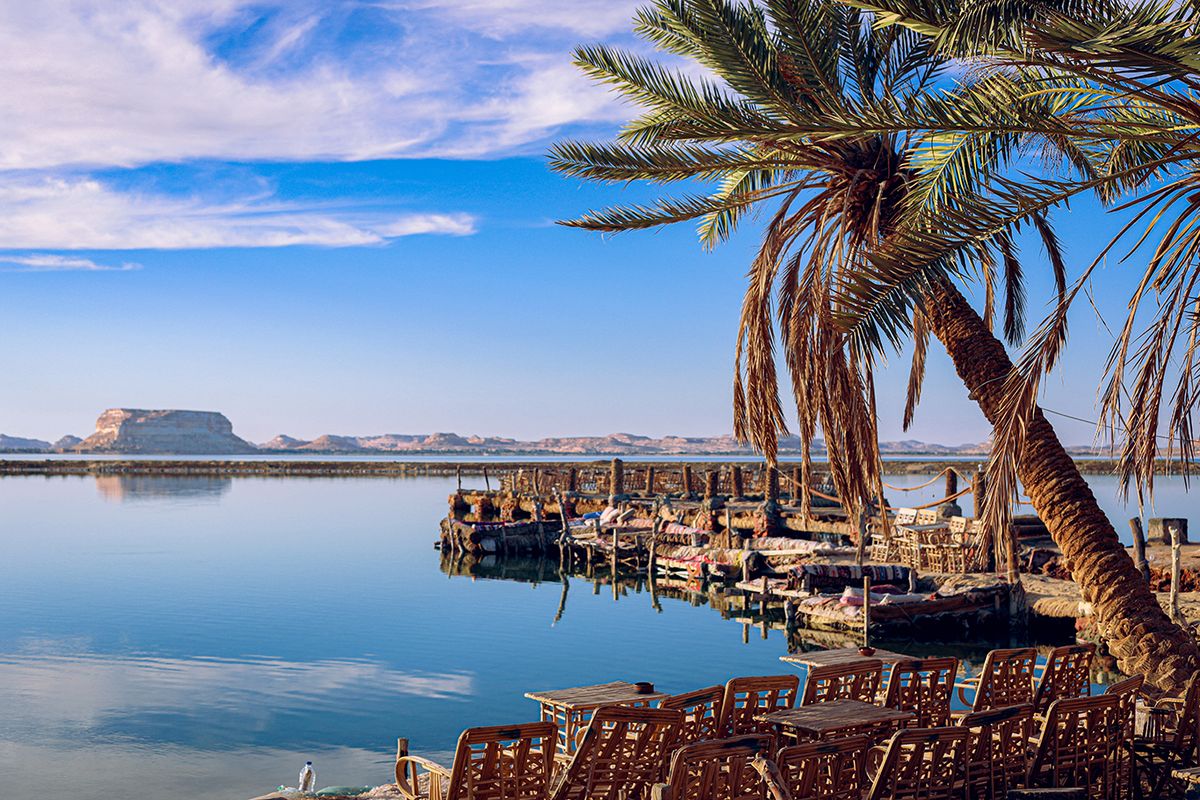
Deep within the hyper-arid expanses of the Egyptian Western Desert lies a breathtaking, emerald-and-turquoise paradise that feels entirely disconnected from the modern world: the legendary Fatnas Island. Known locally as Gezirat Fatnas and celebrated globally by romantic travelers as “Fantasy Island,” this idyllic peninsula juts gracefully into the expansive, hyper-saline waters of Lake Siwa. Fringed by hundreds of thousands of majestic date palms, ancient olive groves, and wild desert greenery, Fatnas represents the absolute pinnacle of natural tranquility and ecological beauty within the oasis. Historically a true island that could only be reached by traditional wooden boats, it is now connected to the mainland by a narrow, scenic earthen causeway, allowing visitors to easily step into a realm of pure, undisturbed peace. The true magic of Fatnas lies in its legendary status as the ultimate sunset viewing location in all of North Africa. As the blazing desert sun slowly dips below the horizon, it bathes the shimmering salt lake and the dramatic silhouettes of the surrounding mountains in an ethereal, shifting canvas of amber, violet, and crimson light. For travel writers, digital content creators, and global adventurers seeking a profound connection with nature, Fatnas Island is far more than a scenic stop; it is a therapeutic, soul-stirring sanctuary where the rugged elements of the desert harmoniously melt into a lush, tropical mirage. It stands as a brilliant testament to the eco-tourism potential of Egypt’s hidden wilderness, inviting travelers to pause, breathe, and witness the timeless, breathtaking poetry of a true desert oasis.

1. From Isolated Island to Modern Peninsula: Tracing the Geography of Fatnas

To appreciate the enchanting layout of Fatnas Island, one must first explore its fascinating geographic evolution within the hydro-geological system of the Siwa Oasis. For centuries, Gezirat Fatnas was a true, isolated island sitting gracefully in the western salt basin of Lake Siwa, completely detached from the mainland. Historically, reaching this tropical oasis-within-an-oasis required a short, romantic voyage across the hyper-saline waters using traditional wooden rowboats crafted by local Siwan fishermen. However, as modern eco-tourism began to flourish in the region, a narrow, scenic earthen causeway was carefully constructed to link the island directly to the mainland. This eco-friendly roadway allows modern travelers to effortlessly access the sanctuary on foot, by bicycle, or via a traditional horse-drawn carriage (Kareta). Despite this physical connection, Fatnas has miraculously preserved its distinct, island-like atmosphere of profound isolation and pristine natural beauty. Surrounded on three sides by the shimmering, crystalline waters of the salt lake, the peninsula remains physically and energetically sheltered from the bustling sounds of the modern town center, acting as a protected sanctuary where nature entirely dominates the landscape.
2. The Emerald Canopy: Exploring the Lush Flora of the Peninsula

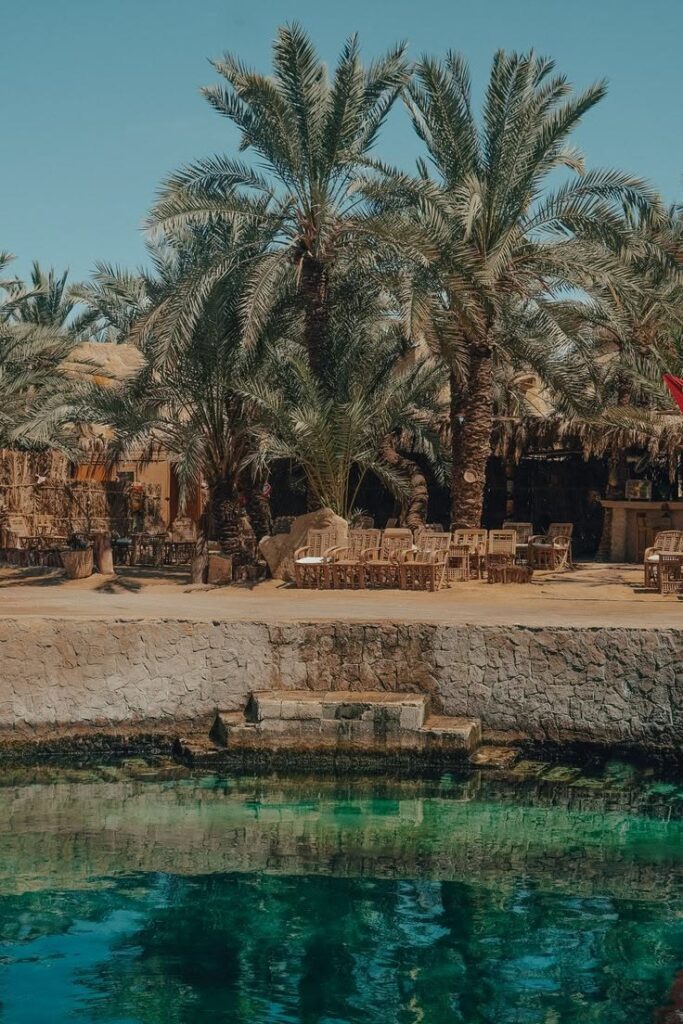
Stepping onto the fertile soil of Fatnas Island rewards travelers with an immediate sensory explosion of lush, vibrant greenery that stands in stark, dramatic contrast to the pale, arid sands of the surrounding Western Desert. The peninsula is completely blanketed by a dense, magnificent emerald canopy consisting of tens of thousands of mature date palms and ancient, twisted olive orchards. These trees are not merely decorative; they form the very agricultural backbone of traditional Siwan life, nourished by the rich, fertile soil and the abundant freshwater springs bubbling up from beneath the island’s surface. Walking along the shaded, winding paths beneath these towering palms feels akin to entering a primordial, tropical jungle where the desert air becomes instantly cooler, crisp, and richly oxygenated. Interspersed among the palm groves are wild banana trees, sweet citrus bushes, and fragrant desert flora that release a delicate, soothing perfume into the gentle breeze. This rich, self-sustaining ecosystem serves as a vital environmental shield, blocking the harsh desert winds and creating a tranquil microclimate that offers a deeply therapeutic, cooling refuge for weary global travelers seeking to escape the intense afternoon sun.
3. The Healing Waters: The Ancient Freshwater Spring of Fatnas

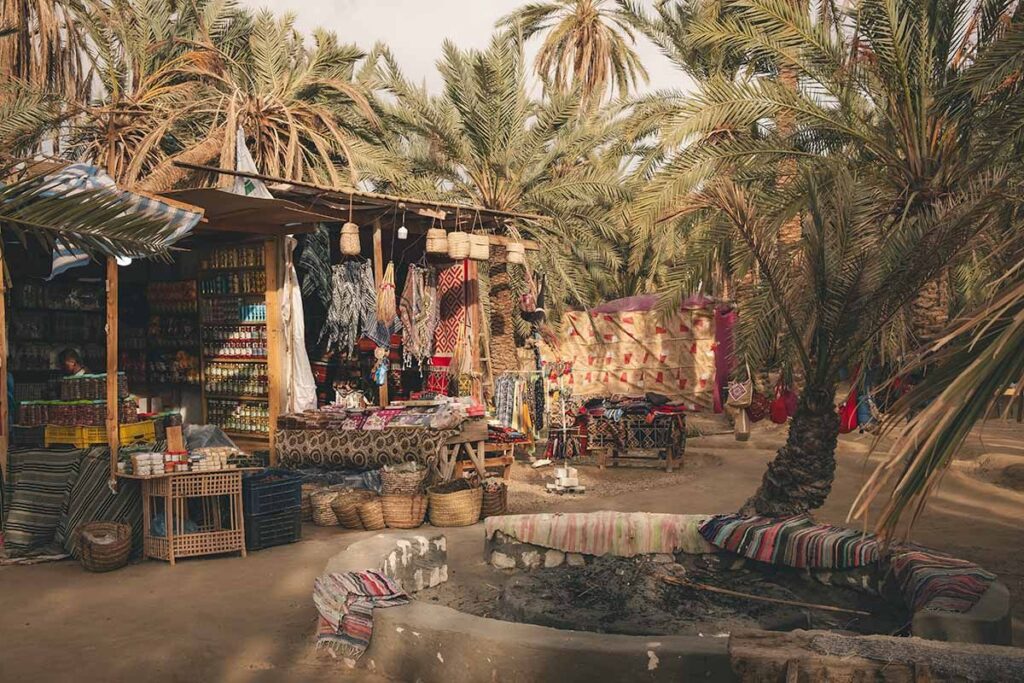
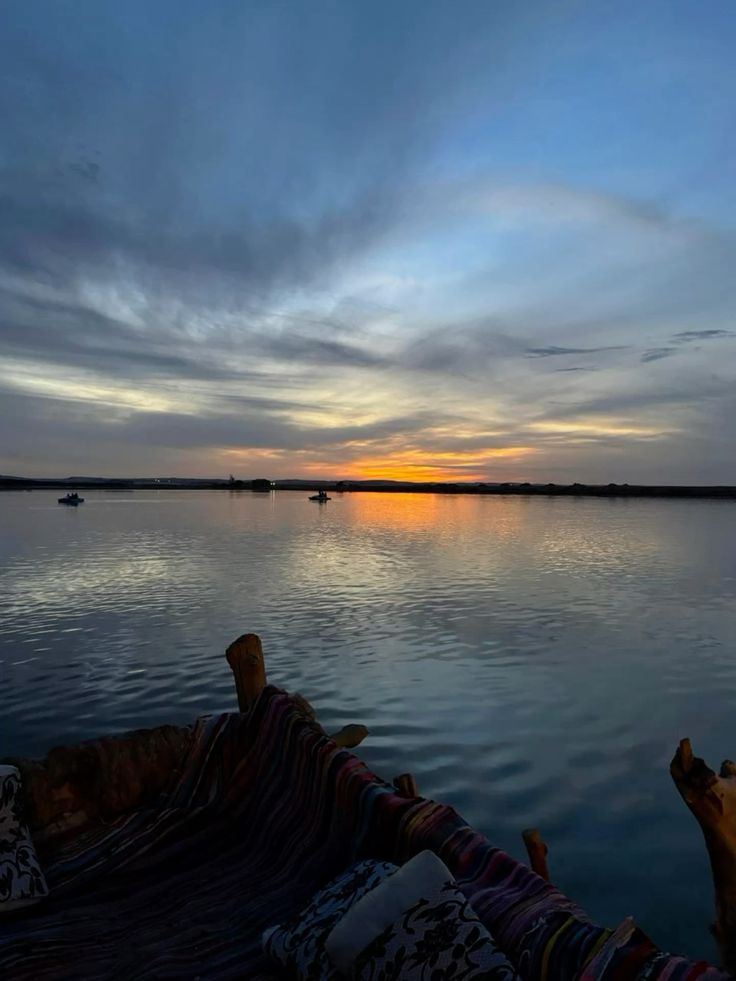
At the very heart of Fatnas Island lies one of its most environmentally significant and culturally beloved features: the ancient, circular freshwater spring known locally as Ain Fatnas. This natural artesian pool is a true geological marvel, continually pumping crystal-clear, mineral-rich thermal water from deep within the subterranean limestone aquifers of the Sahara Desert. The spring is beautifully enclosed by a rustic, traditional stone ring, creating a picturesque, natural swimming pool right on the edge of the vast salt lake. Interestingly, while the surrounding lake water is highly saline and uninhabitable, the water inside Ain Fatnas is completely fresh, pure, and rich in natural minerals that are highly celebrated for their therapeutic and skin-healing properties. For generations, this natural pool has served as a joyful gathering place for local Siwan youth and weary desert travelers, who plunge into its cool, refreshing waters to rejuvenate their bodies after a long day of desert exploration. Sitting on the edge of this historic stone spring, listening to the gentle bubbling of the water while watching the surrounding palm trees reflect perfectly across its glass-like surface, offers an unforgettable encounter with the true life-giving magic of oasis hydro-geology.
4. An Avian Sanctuary: The Rich Birdlife of the Salt Basin

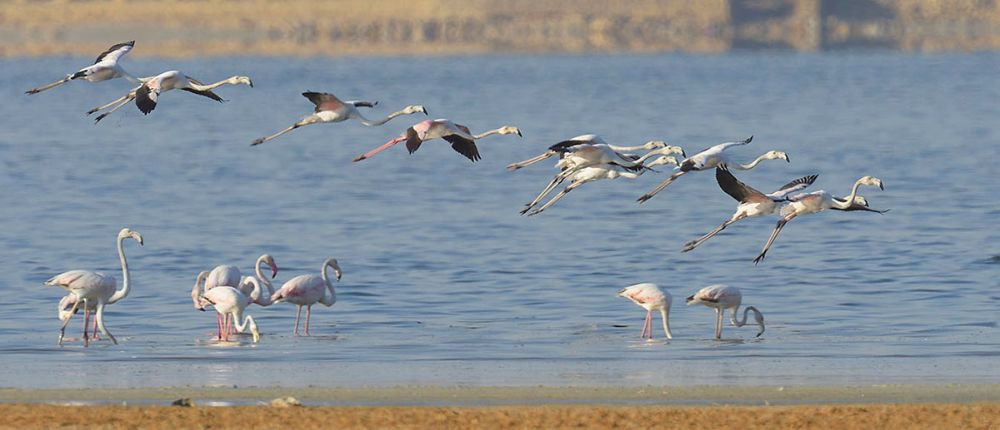
Beyond its spectacular botanical beauty, Fatnas Island serves as a critically important ecological haven and an absolute paradise for international birdwatchers and wildlife researchers. The unique intersection of a lush freshwater spring, dense palm canopies, and a vast, calm saltwater lake creates the perfect wetland microclimate for a diverse array of avian species. Throughout the year, and particularly during the peak autumn and spring migration seasons, the skies and shores around the peninsula come alive with thousands of migratory birds traveling between Europe and Sub-Saharan Africa. Visitors relaxing on the island can witness the breathtaking sight of elegant Greater Flamingos wading gracefully through the shallow, crystalline waters of the salt lake, their soft pink plumage reflecting beautifully against the water. The dense fronds of the surrounding date palms provide safe nesting grounds for elegant herons, rare falcons, colorful kingfishers, and various species of singing desert warblers. This vibrant, thriving ecosystem transforms Fatnas into a living, open-air theater of natural history, proving that the Siwa Oasis is not a barren wilderness, but rather a vital, biological bridge where diverse animal life thrives harmoniously amidst the harsh geography of the Great Sand Sea.

5. The Legendary Golden Hour: Witnessing the North African Sunset

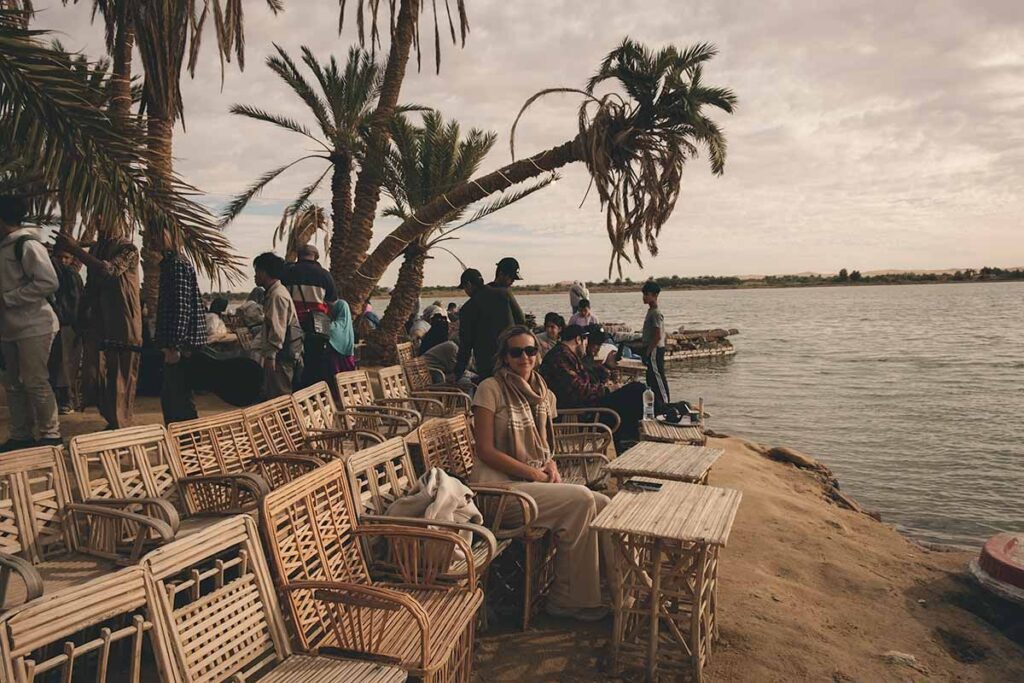
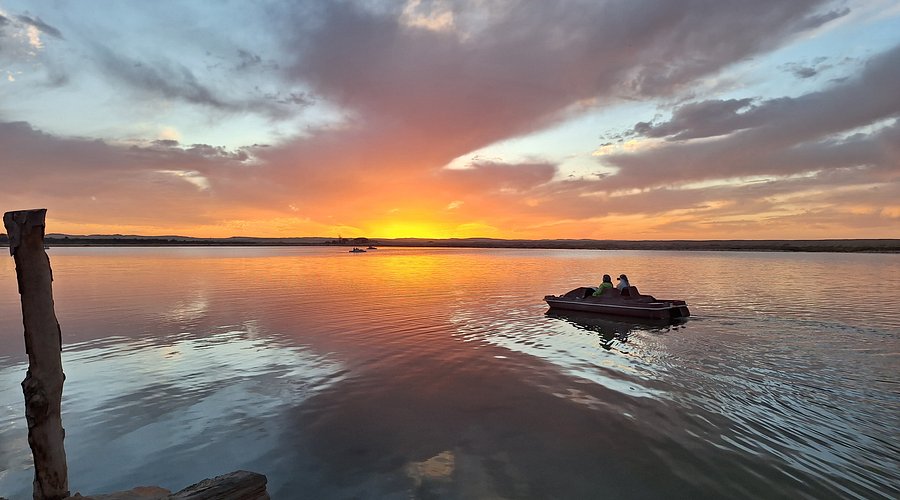
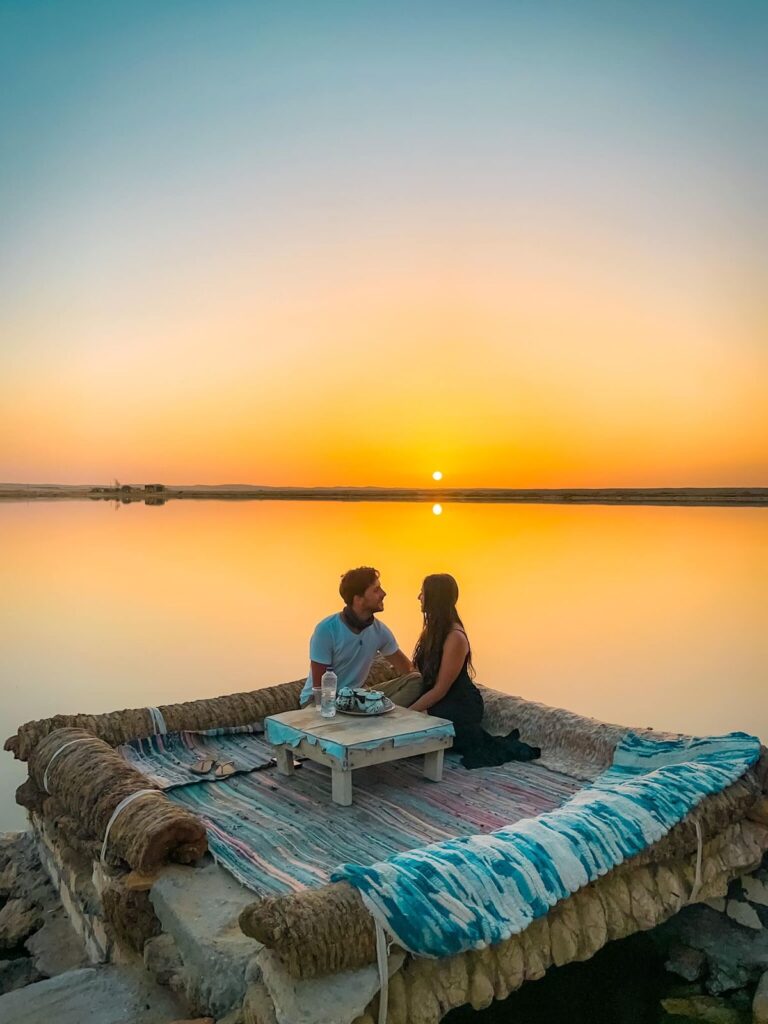
The absolute crown jewel of the Fatnas Island experience, and the primary reason thousands of international travelers journey to this remote peninsula, is its legendary, world-class sunset. As the late afternoon approaches, the atmosphere on the island shifts into a state of quiet, expectant reverence. Positioned perfectly on the western edge of the oasis basin, Fatnas offers an entirely unobstructed, front-row seat to one of the most visually spectacular astronomical displays in North Africa. The magic begins when the blazing desert sun hovers just above the horizon, painting the massive expanse of Lake Siwa in a brilliant sheet of liquid gold. Gradually, as the sun dips lower behind the distant, jagged silhouettes of the mud-brick mountains, the sky explodes into a breathtaking, moving canvas of deep amber, violet, magenta, and fiery crimson light. Because the lake water is highly still and saturated with salt, it acts as a giant, flawless mirror, perfectly reflecting the shifting colors of the heavens and the dramatic, dark outlines of the palm trees. It is a deeply poetic, almost spiritual sensory experience that leaves onlookers in absolute silence, freezing a moment of pure, timeless natural beauty that defines the very soul of Siwan tourism.

6. The Rustic Oasis Cafés: Experiencing Authentic Siwan Hospitality

Enhancing the tranquil natural beauty of Fatnas Island is the presence of its charming, low-impact rustic eco-cafés that line the western shoreline of the peninsula. Built completely in harmony with the environment, these traditional open-air lounges are constructed using organic local materials like palm fronds, olive wood beams, and comfortable reed mats spread across the sandy ground. There are no loud music or concrete structures here; instead, the cafés are designed to provide an authentic, slow-paced sanctuary where travelers can sit back, relax, and immerse themselves in the famous hospitality of the indigenous people. As the golden hour approaches, local Siwan hosts serve guests traditional lemongrass tea, aromatic Arabic coffee brewed over open charcoal fires, and fresh, locally harvested dates. Many of these eco-cafés feature rustic wooden swings and hammocks hung directly over the edge of the shallow water, allowing visitors to swing gently over the reflection of the sunset. This unique, relaxed seating arrangement encourages deep conversation, creative reflection, and a profound sense of peace, making it the ultimate destination to unwind and experience the genuine, unhurried rhythm of desert oasis life.

7. Eco-Tourism in Practice: Preserving the Delicate Balance of Fatnas

As global travel shifts toward sustainability and environmental awareness, Fatnas Island stands out as a highly successful example of community-led ecological conservation. The local Siwan people, acutely aware of the delicate nature of their oasis ecosystem, have fiercely protected the peninsula from modern commercial overdevelopment and concrete construction. The infrastructure on the island remains strictly low-impact and biodegradable, ensuring that the heavy influx of international tourists does not disrupt the natural freshwater springs or chase away the migratory bird populations. Trash management and environmental maintenance are carried out meticulously by local youths who take immense pride in keeping the shores of the salt lake pristine and pollution-free. By maintaining this strict, eco-conscious philosophy, Fatnas proves to the global tourism industry that a natural destination can achieve worldwide fame while completely preserving its raw, primitive beauty and ecological integrity. For the modern conscious traveler, spending an evening on the island offers the deep satisfaction of knowing that their visit directly supports a community dedicated to protecting one of the last true, untouched wilderness sanctuaries in North Africa.

8. The Soundtrack of Silence: Embracing the Acoustic Serenity of the Lake

One of the most profound, yet frequently overlooked aspects of visiting Fatnas Island is its extraordinary acoustic environment. In a modern world dominated by constant industrial noise and digital distractions, Fatnas offers global travelers a rare encounter with absolute, deep acoustic serenity. Because motor vehicles are restricted to the designated parking areas at the very entrance of the causeway, the interior of the peninsula remains a strictly quiet zone where the only sounds are those generated by the natural elements. Sitting along the shore, your ears will adjust to a beautiful, organic soundtrack: the soft, rhythmic rustling of thousands of palm fronds swaying in the gentle desert breeze, the gentle bubbling of the central freshwater spring, and the distant, melodic calls of migratory birds settling into their nests for the evening. This absolute lack of artificial noise creates a highly meditative atmosphere that induces an immediate sense of psychological relief and mental clarity. For writers, artists, and wellness travelers, this pristine silence acts as a powerful catalyst for creative reflection and deep relaxation. It transforms Fatnas from a simple photogenic viewpoint into a deeply therapeutic, sensory sanctuary where the frantic energy of the modern world completely dissolves into the quiet, timeless rhythm of the Sahara Desert.

9. The Ultimate Canvas: Photography Techniques for the Perfect Fatnas Shot

For professional travel photographers, digital storytellers, and visual artists, Fatnas Island offers a masterclass in natural lighting and geometric composition. The primary challenge and reward of shooting on the peninsula lie in managing the intense contrast between the dark, detailed textures of the palm groves and the brilliant, blinding glare of the salt lake mirror. To capture the true essence of the island, photographers flock to the western shoreline at least an hour before sunset to secure the ideal position. During this time, the soft, angled sunlight illuminates the coarse bark of the ancient olive trees and the shimmering salt crusts along the water’s edge. As the sun dips lower, utilizing a circular polarizer filter helps control the intense reflection off the lake, bringing out deep turquoise and amber tones in the water. For the ultimate dramatic shot, photographers position the rustic wooden swings or the silhouettes of traditional Siwan Karetas against the fiery, gradient sky. Whether using a professional DSLR camera or a modern smartphone, the ethereal quality of the light at Fatnas ensures that every frame captured feels like a poetic, timeless painting of desert paradise.

10. Cultural Crossroads: Understanding the Berber Roots of the Oasis

While Fatnas Island is celebrated primarily for its jaw-dropping natural scenery, it is also a vital cultural space that offers deep insights into the ancient Amazigh (Berber) heritage of the Siwa Oasis. The island has historically served as a neutral, peaceful gathering ground where different Siwan tribal clans would come together to rest, harvest agricultural crops, and celebrate seasonal festivals away from the fortified walls of Shali Citadel. Engaging with the local Siwan hosts at the lakeside cafés allows tourists to learn about the unique social customs, oral traditions, and folklore that have shaped this isolated community for thousands of years. The very hospitality extended to visitors—serving tea brewed with fresh desert herbs and offering locally grown dates—is rooted in centuries-old codes of desert survival and mutual respect. By spending time on the peninsula and listening to the soft cadences of the native Siwi language spoken by your guides, you are not merely visiting a scenic viewpoint; you are actively stepping into a living, breathing cultural crossroads that has proudly maintained its distinct North African identity against the currents of globalization.

11. Active Exploration: Biking and Trekking to the Peninsula

For adventure travelers and eco-tourists who prefer an active, immersive journey, the trip to Fatnas Island is just as rewarding as the destination itself. Instead of taking motorized transport, the absolute best way to experience the geography of the oasis is by renting a traditional multi-speed bicycle from the town center and pedaling your way to the peninsula. The flat, scenic route takes you through winding dirt paths bordered by towering mud-brick walls, vast fields of alfalfa, and dense irrigation canals that have watered the oasis since Roman times. This slow-paced travel allows you to fully absorb the sights, sounds, and earthy scents of the rural Siwan countryside. Once you arrive at the causeway, the journey transitions into a beautiful, shaded trek beneath the emerald palm canopy, where you can explore hidden footpaths that lead to secluded viewpoints along the lake shore. This active approach perfectly aligns with the principles of sustainable eco-tourism, reducing your carbon footprint while allowing your body to fully engage with the physical beauty and tranquil energy of the Western Desert.

12. The Practical Guide: Planning Your Unforgettable Journey to Fatnas Island

To ensure your journey to Fatnas Island is entirely seamless and deeply rewarding, a few essential, practical travel tips should be integrated into your itinerary. The peninsula is located approximately 4 kilometers west of modern Siwa town, making it exceptionally accessible via a leisurely 15-minute bicycle ride, a scenic walk, or a short ride in a traditional horse-drawn Kareta. While entry to the island itself is generally free, purchasing a refreshing drink or a snack from the local eco-cafés is highly encouraged as a polite gesture to support the local hosts who meticulously maintain the grounds. To secure the absolute best seating spot on the rustic wooden swings or the lakeside carpets, it is highly recommended to arrive at least one to two hours before the scheduled sunset. Because the environment is kept completely natural and low-impact, there is minimal artificial lighting on the paths; therefore, carrying a small flashlight or ensuring your smartphone is fully charged for the return trip after dark is incredibly wise. Additionally, packing eco-friendly insect repellent is a smart choice to keep harmless lakeside midges at bay during the twilight hours. By keeping these simple, practical details in mind, your expedition to the peaceful shores of Fatnas will undoubtedly stand out as a magical, beautifully soul-stirring highlight of your Egyptian desert adventure.

Fatnas Island : Frequently Asked Questions

Fatnas Island, known locally as Gezirat Fatnas and often called “Fantasy Island,” is a stunning peninsula located approximately 4 kilometers west of the modern town center of the Siwa Oasis. It sits gracefully on the edge of Lake Siwa, surrounded by salt flats and desert landscapes.

Historically, Fatnas was a true island that could only be accessed by traditional wooden rowboats across the salt lake. Today, it is connected to the mainland by a narrow, scenic earthen causeway. Visitors can easily reach it from the town center on foot, by renting a bicycle, or by taking a traditional horse-drawn carriage known as a Kareta.

Fatnas Island is widely considered the absolute best sunset viewing location in North Africa. Because it faces west over the wide, perfectly still, hyper-saline waters of Lake Siwa, the lake acts as a giant mirror. It reflects a breathtaking 360-degree display of amber, violet, and crimson light, silhouetting the surrounding palm trees and distant desert mountains.

While the open lake surrounding the island is hyper-saline (highly salty) and shallow, the heart of the peninsula features a famous, ancient circular freshwater spring called Ain Fatnas. This artesian pool continuously pumps fresh, mineral-rich thermal water from deep underground and is a popular, refreshing spot for travelers to plunge into and swim.

The island is completely open to the public and free to enter, though supporting the local eco-cafés by buying a drink or a date snack is highly encouraged. For the best experience, arrive one to two hours before sunset to secure a prime seating spot on the rustic wooden swings. Additionally, bring eco-friendly insect repellent for the twilight hours and a small flashlight for the ride back to town after dark.