
Welcome to

Solar Boat of Giza: The Eternal Vessel of Khufu’s Journey Through the Afterlife

The Solar Boat of Giza stands as one of Egypt’s most extraordinary archaeological treasures, offering travelers a fascinating journey into the origins of ancient naval architecture, royal burial traditions, and the earliest engineering achievements of human civilization. Located adjacent to the monumental Great Pyramid on the legendary Giza Plateau, this majestic vessel serves as a spectacular monument to pharaonic ingenuity, preserving an incredible concentration of carpentry mastery, ritualistic significance, and timeless historical mystery. Most famously, this cedarwood ship is the world’s oldest intact full-sized vessel, representing one of the most important milestones in maritime history and ancient global engineering. For travelers seeking a deeper connection with ancient Egypt beyond the towering stone blocks of the pyramids, discovering the history of the Solar Boat offers far more than a simple sightseeing stop—it provides an immersive experience into the innovation, artistry, and spiritual beliefs that shaped one of the world’s greatest civilizations. From learning about the complex puzzle of its reconstruction to admiring its elegant, streamlined silhouette designed for cosmic travel, every aspect of the ship tells a story of royal ambition, master craftsmanship, and a timeless pharaonic legacy. Whether you are passionate about naval history, ancient engineering, photography, or cultural exploration, the story of the Solar Boat promises one of the most rewarding and unforgettable historical highlights near Cairo. Stepping into the world of this celestial craft allows visitors to walk in the footsteps of ancient shipwrights and visionary high priests who redefined how sacred journeys are recorded and preserved. Today, this legendary vessel keeps the grand maritime history of the Old Kingdom vibrant, making it a premier destination for those who want to witness the actual transportation methods that carried the divine pharaohs across the cosmic skies.

1. The Spectacular Rediscovery in the Shadow of the Great Pyramid

The modern rediscovery of the Solar Boat of Giza is an absolute masterpiece of archaeological drama, intuition, and technical triumph that rivals the grandeur of the pyramids themselves. In May 1954, a brilliant young Egyptian journalist and archaeologist named Kamal el-Mallakh was directing routine clearance work along the southern face of the Great Pyramid of King Khufu. While removing a massive mountain of ancient desert debris, he uncovered a hidden row of forty-one monumental limestone blocks, seamlessly sealed together with mortar that had remained completely undisturbed for over four and a half millennia. Driven by a profound sense of historical curiosity, el-Mallakh carefully drilled a small hole through one of the massive fifteen-ton stone slabs, peering down into the dark abyss below. To his absolute astonishment, the air that rushed out carried the distinct, unmistakable scent of ancient cedarwood, and his flashlight beam illuminated a perfectly arranged pile of dark wooden planks, elegant oars, and intricate organic ropes. This historic breakthrough sent shockwaves through the global scientific community, instantly capturing the imagination of travelers and historians around the world. Today, learning about el-Mallakh’s incredible discovery adds an extra layer of romance and high adventure for luxury travelers visiting the Giza Plateau. It transforms a standard sightseeing trip into a thrilling walk through the golden age of modern Egyptian exploration, showcasing how a single moment of academic perseverance successfully unlocked one of the most significant and pristine secrets of the ancient maritime world.
2. Hag Ahmed Youssef and the Ultimate Multi-Dimensional Puzzle

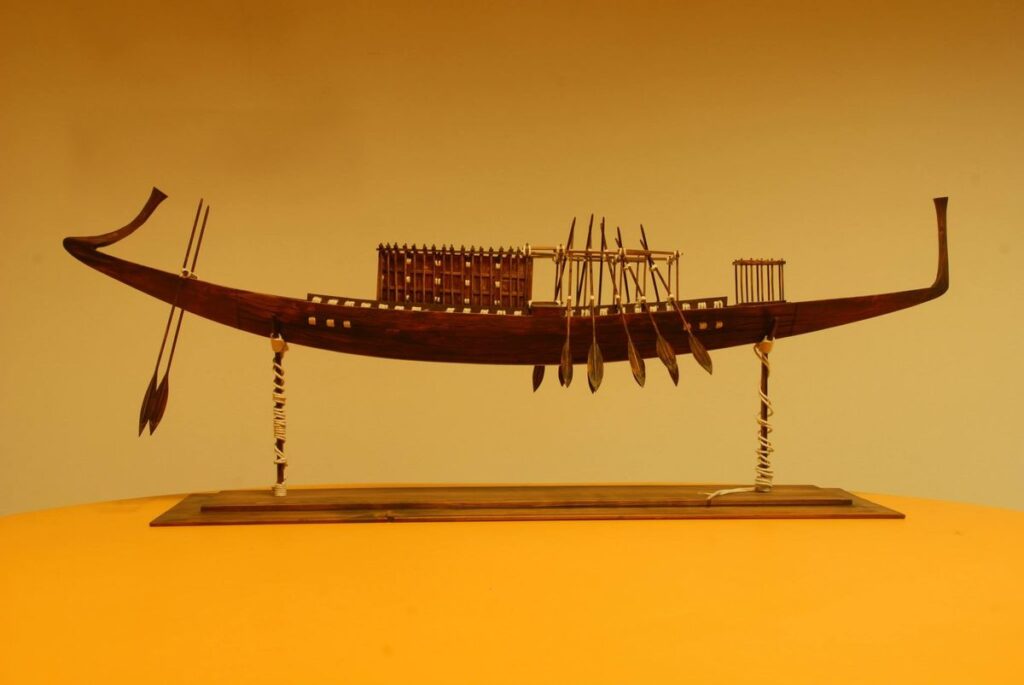
While the initial discovery of King Khufu’s vessel filled the archaeological world with immense excitement, transforming those ancient pieces into a majestic standing ship required a level of dedication that defines human genius. The celestial vessel had not been placed in the underground pit fully assembled; instead, it had been systematically dismantled into exactly 1,224 separate pieces, arranged in thirteen neat, highly organized layers. The monumental task of reconstructing this ancient masterpiece fell upon Hag Ahmed Youssef, a legendary Egyptian restoration expert who dedicated over fourteen years of his life to solving this ultimate multi-dimensional puzzle. Youssef approached the challenge with incredible scientific rigor, meticulously studying the remaining fragments of ancient model boats found in royal tombs, visiting modern traditional shipyards along the Nile, and learning ancient seafaring knot techniques. Without the aid of modern digital computers or contemporary engineering software, he painstakingly cataloged, treated, and reassembled every single cedarwood plank, utilizing only the original structural logic established by the pharaonic shipwrights. For photography enthusiasts and history buffs alike, understanding this monumental restoration journey highlights the immense patience, physical skill, and deep material knowledge required to revive a national treasure. It stands as a beautiful testament to modern Egyptian craftsmanship and intellectual resilience, ensuring that when luxury travelers gaze upon the ship’s sweeping lines, they are honoring both the ancient creators and the modern savior of this timeless masterpiece.
3. The Brilliant Structural Design of the World's Oldest Intact Ship

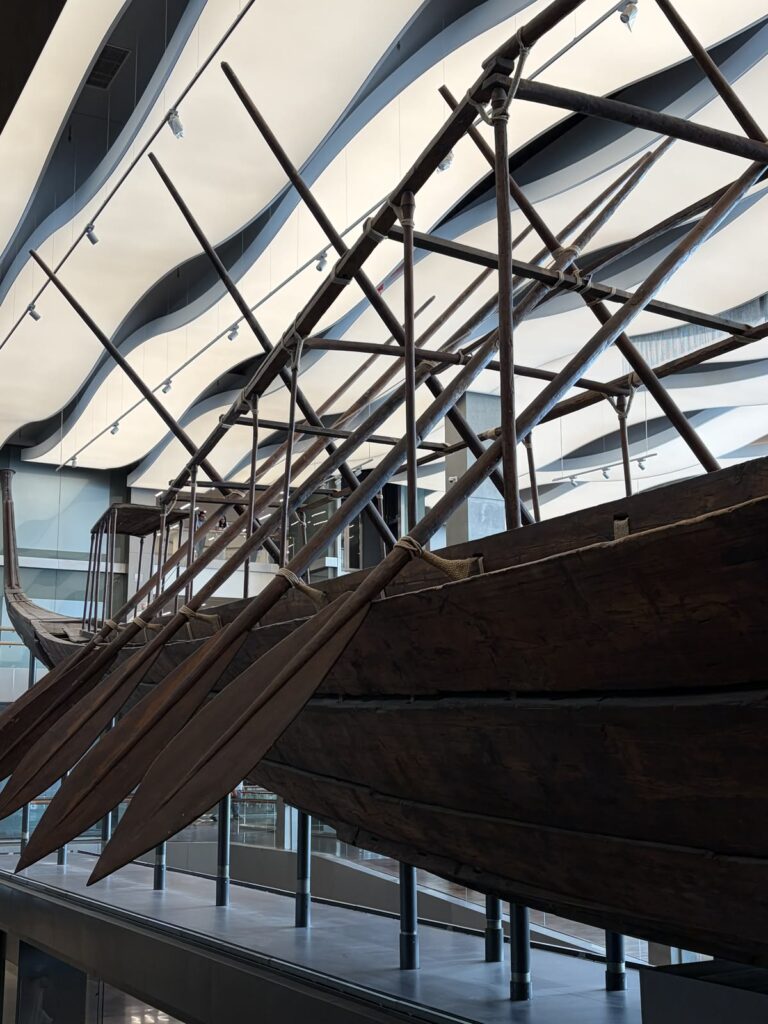
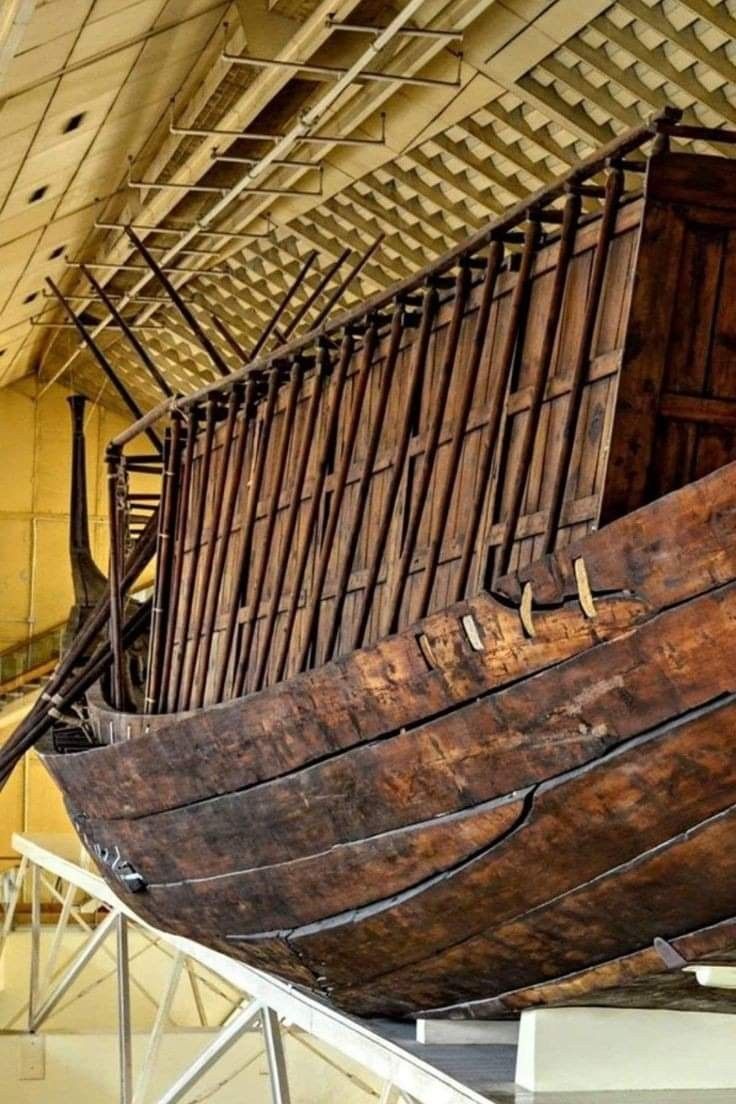
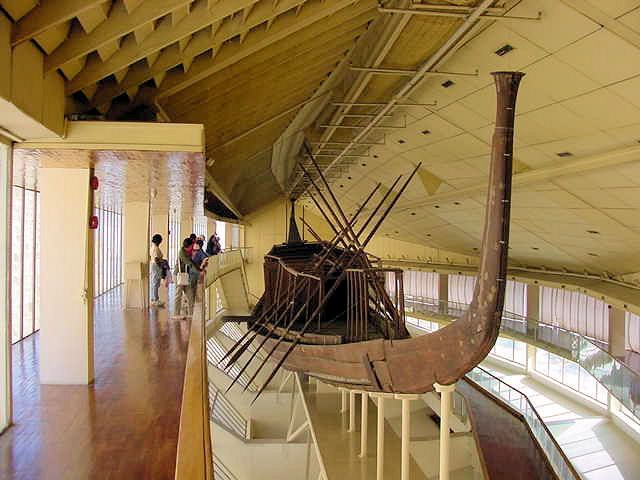
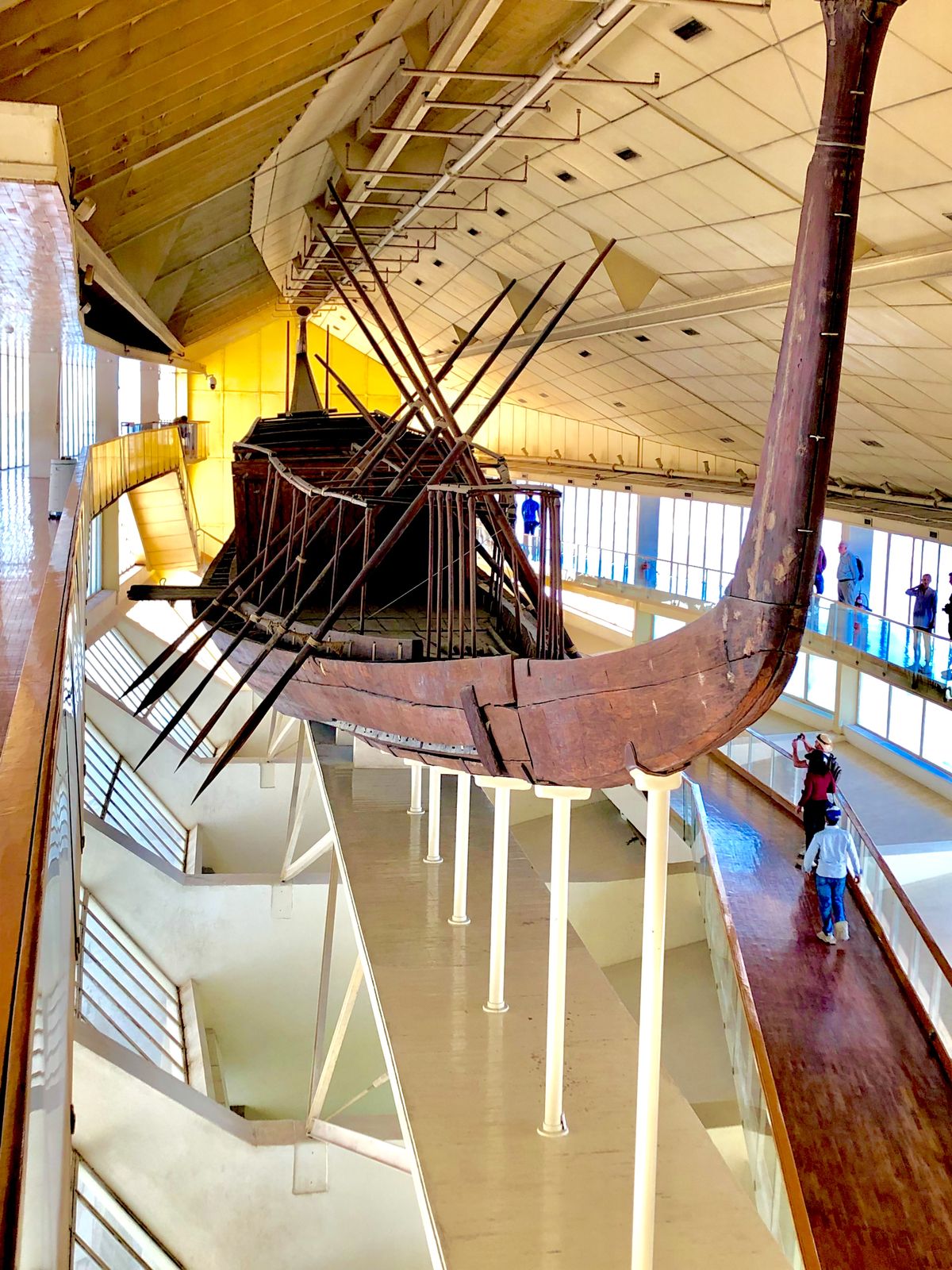
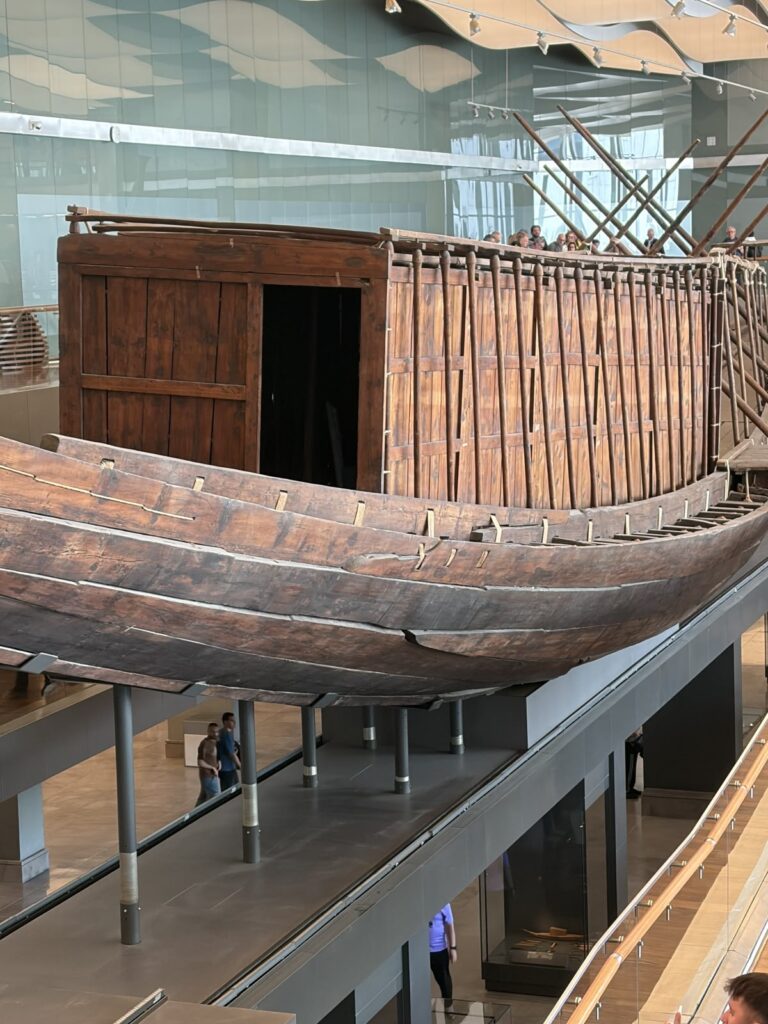
The structural design of the Solar Boat of Giza represents an absolute pinnacle of ancient maritime engineering, showcasing a level of sophisticated craftsmanship that continues to leave modern naval architects completely spellbound. Measuring an impressive forty-three meters in length and nearly six meters in width, this magnificent vessel is constructed primarily from premium, imported Lebanese cedarwood, which was highly prized by Old Kingdom pharaohs for its incredible durability and aromatic qualities. Remarkably, the entire hull of the ship was constructed using a completely “shell-first” technique, meaning it was built without an internal structural frame or a central keel. Instead, the master shipwrights utilized an ingenious system of interlocking mortise-and-tenon joints, combined with an intricate web of thousands of meters of organic halfa-grass ropes threaded through hidden interior channels. When the vessel was placed in water, the wooden planks would naturally expand, while the organic ropes would shrink, creating an incredibly tight, completely waterproof seal without a single iron nail or metal fastener. Walking around this elegant vessel allows luxury travelers to appreciate the brilliant mechanical simplicity and intellectual brilliance of the pharaonic era. The ship’s streamlined hull, towering papyrus-shaped prow, and twelve long steering oars prove that the ancient Egyptians were not just masters of monumental stone architecture, but also visionary pioneers of advanced naval design who successfully conquered the physical demands of both earthly rivers and cosmic oceans.
4. The Grand Migration to the Grand Egyptian Museum (GEM)

A vital and thrilling new chapter in the preservation of King Khufu’s celestial vessel unfolded with its historic relocation to the magnificent Grand Egyptian Museum (GEM). For decades, the ship was housed in a dedicated glass pavilion directly adjacent to the Great Pyramid, but the aging structure presented significant climate control risks to the delicate, millennia-old cedarwood. In a spectacular display of modern engineering and logistical brilliance, the Egyptian Ministry of Tourism and Antiquities successfully orchestrated the safe transportation of the fragile artifact to its new, state-of-the-art home. The entire forty-three-meter vessel was seamlessly enclosed within a specially designed, shock-absorbing protective container and transported in a single, unbroken piece using a remote-controlled smart vehicle. Today, the Solar Boat serves as one of the ultimate crown jewels of the GEM, displayed inside a dedicated, ultra-luxurious building that utilizes cutting-edge environmental monitoring systems to permanently regulate humidity and temperature. For luxury travelers, visiting the boat within this architectural masterpiece offers an unparalleled sightseeing experience, allowing you to admire the ancient ship through panoramic glass walls that provide a stunning, direct visual connection to the Giza Pyramids outside. This multi-million-dollar preservation effort beautifully demonstrates Egypt’s unwavering commitment to safeguarding its timeless world heritage, offering modern global explorers a seamless blend of ancient historical wonder and sophisticated, 21st-century museum curation that breathes spectacular new life into the eternal legacy of the pharaohs.

5. The Strategic Layout of the Giza Boat Pits

To fully comprehend the grand scale of pharaonic funerary planning, visitors must appreciate that King Khufu’s famous vessel was not an isolated find, but part of a highly complex network of sacred boat pits scattered across the Giza Plateau. Archaeologists have identified at least five major boat pits carved directly into the solid limestone bedrock surrounding the Great Pyramid, each strategically positioned to align with specific cardinal directions and temple structures. While two pits on the eastern side were found completely empty—likely looted in antiquity—and another adjacent to the causeway was heavily damaged, they all share the same elegant, ship-like architectural silhouette. The presence of multiple vessels suggests a highly coordinated spiritual defense system designed to provide the deceased pharaoh with a complete royal fleet capable of navigating any corner of the celestial realm. For luxury travelers exploring the Giza landscape, visualizing this vast, subterranean naval armada adds an incredible layer of architectural depth to the site. It reveals that the entire desert plateau was envisioned by ancient engineers not just as a static field of stone tombs, but as a dynamic, fully equipped cosmic shipyard ready to launch the divine king into his eternal destiny among the stars.

6. Revealing the Miraculous Excavation of the Second Solar Boat

The story of Giza’s celestial navy entered a thrilling modern chapter with the miraculous excavation and recovery of King Khufu’s second solar boat, located just a few meters away from where the first was found. For decades, this second subterranean pit remained sealed and protected, safely monitored by international archaeological teams utilizing advanced non-destructive technology. When the comprehensive excavation finally commenced as a collaborative project between Egyptian and Japanese scientists, the team utilized a specialized, airtight cleanroom enclosure built directly over the pit to protect the fragile wood from modern atmospheric pollution. To their delight, they uncovered hundreds of beautifully preserved cedarwood pieces, steering oars, and ancient copper fittings that matched the architectural brilliance of the first vessel. This high-tech excavation process has provided global scholars with invaluable data regarding ancient preservation techniques and Old Kingdom carpentry secrets. For contemporary travelers visiting the Grand Egyptian Museum, learning about this ongoing scientific triumph adds a profound sense of modern relevance to the exhibition, proving that the ancient sands of Giza are still actively yielding world-class discoveries that redefine our understanding of human history.

7. Unveiling the Mastery of Ancient Egyptian Royal Carpentry

A close inspection of the Solar Boat of Giza reveals a level of sophistication in royal carpentry that completely redefines our understanding of ancient bronze-age technology. Without the benefit of modern iron saws, steel drills, or synthetic adhesives, pharaonic artisans transformed massive trunks of imported cedar into sleek, flexible marine planks using primitive yet incredibly effective copper chisels, stone adzes, and wooden mallets. The true genius of these ancient craftsmen lies in their mastery of wood bending; they utilized sophisticated heat and moisture techniques to precisely curve the heavy wooden beams, allowing the hull to achieve its elegant, aerodynamic profile. Furthermore, the artisans carved subtle, directional markings and symbolic hieroglyphs directly onto the individual wooden segments, effectively creating the world’s earliest instruction manual to ensure the vessel could be perfectly reassembled when needed. Standing next to these masterfully shaped planks inside the museum gallery offers furniture designers, architects, and art lovers an unmatched appreciation for the tactile brilliance of the pharaonic workforce, showcasing a timeless standard of manual excellence where every single joint and curve was crafted entirely by human hands to achieve absolute perfection.

8. The Advanced Environmental Science of Ancient Wooden Preservation

The fact that King Khufu’s vessel survived in such a flawless state of preservation for over forty-five centuries is not merely a stroke of luck, but a stunning testament to the advanced environmental science practiced by ancient Egyptian architects. When the pharaoh’s master builders constructed the subterranean limestone pit on the south side of the Great Pyramid, they carefully engineered an airtight, moisture-proof capsule that functioned as a perfect time machine. The forty-one monumental limestone slabs used to seal the pit were cut with such astonishing precision that they fit together seamlessly, leaving virtually no gaps for air or external contaminants to enter. To guarantee an absolute seal, the ancient workers poured a specialized mortar mixture over the joints, creating an impenetrable barrier against the harsh elements of the desert. Inside this dark, subterranean chamber, the temperature and humidity levels remained perfectly constant for thousands of years, preventing the delicate organic fibers of the Lebanese cedarwood from warping, rotting, or being destroyed by insects. Standing before the majestic ship today, luxury travelers can appreciate the brilliant long-term planning and scientific mastery of the Old Kingdom builders. They did not just design a monument for their immediate generation; they successfully created a flawless preservation system that defied the destructive forces of time, allowing modern global explorers to witness the exact materials, craftsmanship, and engineering brilliance that defined the glorious dawn of human civilization.

9. Preserving the Timeless Horizon of Egypt's Maritime Soul

As your luxury exploration of King Khufu’s celestial vessel draws to a magnificent close, stepping away from its panoramic museum gallery leaves every traveler with a profound appreciation for the enduring spirit of human innovation. The historic transformation of heavy Lebanese cedar logs into a sleek, majestic chariot for the cosmos represents an absolute milestone that forever altered our understanding of ancient engineering capabilities. Today, this legendary ship does not merely function as an archaeological exhibit; it stands as an active, breathing monument dedicated to safeguarding the delicate maritime soul of the Old Kingdom from being lost to the passing of millennia. By walking through its state-of-the-art exhibition halls, admiring the brilliant reassembly work of modern Egyptian masters, and witnessing the ancient interlocking joints firsthand, international visitors help maintain an unbreakable bridge that spans across forty-five centuries of human achievement. The sweeping lines of this eternal vessel are far more than a beautiful display; they are tactile pieces of living history and symbols of ancient intellectual resilience that continue to capture the imagination of the entire world. The Solar Boat of Giza remains a powerful testament to the timeless power of human vision, reminding us that while earthly empires may rise and fall like the desert tides, the brilliant ideas, royal journeys, and spiritual wisdom launched upon the cosmic currents will remain beautifully preserved forever.

The Solar Boat of Giza: Frequently Asked Questions

While constructed primarily for King Khufu’s spiritual journey through the afterlife, compelling physical evidence shows it likely sailed on the Nile. During its restoration, experts discovered distinct signs of physical wear, including subtle water marks and organic river silt residues on the wooden planks. This suggests it may have served as a royal barge to transport the pharaoh’s body or sacred statues on a final pilgrimage before being buried.

The Solar Boat has been permanently relocated from its old glass pavilion next to the Great Pyramid to its new, state-of-the-art home inside the Grand Egyptian Museum (GEM). It is displayed in a dedicated, ultra-modern building equipped with advanced climate-control technology to preserve the ancient wood, offering visitors an unparalleled view of the ship through panoramic glass walls with the pyramids visible in the background.

The structural engineering of the vessel is an absolute masterpiece of ancient carpentry. The master shipwrights utilized a “shell-first” technique, joining the premium Lebanese cedar planks together using an intricate system of interlocking mortise-and-tenon joints. They then wrapped the hull with thousands of meters of organic halfa-grass ropes; when placed in water, the wood expanded and the ropes shrank, creating a completely waterproof seal.

The vessel was discovered in May 1954 by the brilliant Egyptian archaeologist and journalist Kamal el-Mallakh, who found it dismantled into 1,224 separate pieces inside a sealed limestone pit. The monumental task of reconstructing this ancient puzzle fell upon the legendary restoration expert Hag Ahmed Youssef, who spent over fourteen years meticulously studying ancient seafaring techniques to rebuild the ship perfectly by hand.

Archaeologists have discovered at least five major boat pits carved directly into the bedrock around King Khufu’s pyramid. In ancient Egyptian cosmology, these pits were strategically placed to provide the deceased pharaoh with a complete subterranean naval armada. This celestial fleet ensured that the divine king could successfully navigate any cardinal direction or cosmic current across the underworld alongside the sun god Ra.