
1. The Role of Ma'at in the Ancient Egyptian Punishment System
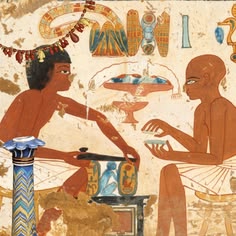
The principle of Ma’at provided the moral foundation for the Ancient Egypt punishment system. Egyptians believed that the universe depended on balance, truth, justice, and proper order.
When someone committed a crime, the offense was understood as more than a personal disagreement. Wrongdoing could disturb the harmony of the community and contribute to chaos, known as isfet.
The responsibility of government officials was therefore to restore Ma’at whenever it was threatened. Punishing criminals was one way of protecting the stability of society.
The pharaoh was regarded as the chief guardian of Ma’at. His responsibility included protecting the kingdom, enforcing justice, and ensuring that criminals did not undermine public order.
Judges and officials were expected to make decisions fairly. Corruption, favoritism, and false testimony could themselves become serious offenses because they prevented justice from being achieved.
The principle of Ma’at also influenced the severity of punishments. Officials had to consider the seriousness of an offense and its effect on other people.
For minor offenses, restoring balance could involve repayment or compensation. If someone damaged another person’s property, for example, replacing or compensating for the loss could restore the relationship.
More serious crimes required stronger measures because they posed greater threats to society.
Ma’at also connected earthly justice with the afterlife. Egyptians believed that individuals would eventually face divine judgment, where their hearts would be weighed against the feather of Ma’at.
This belief created an additional moral deterrent against crime. Even if a person escaped punishment during life, Egyptians believed that wrongdoing could still have consequences after death.
Thus, Ma’at was not simply a religious concept. It shaped the way Egyptians understood law, punishment, morality, and social responsibility.
2. Fines, Compensation, and Restitution
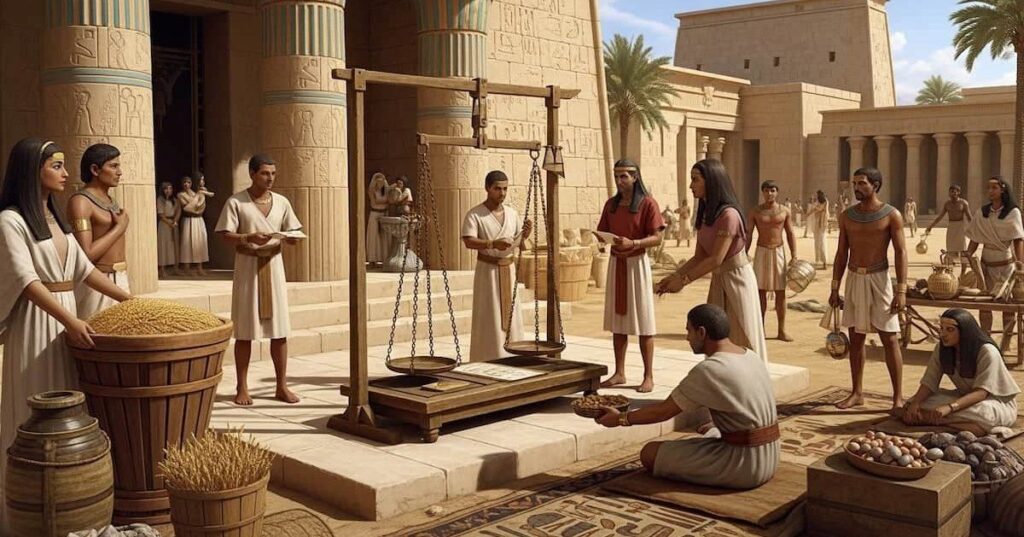
Not every offense in Ancient Egypt resulted in physical punishment. Fines, compensation, and restitution were important tools within the Ancient Egypt punishment system, particularly when a crime involved financial loss or property damage.
If an individual harmed another person’s property, the offender could be required to replace the lost item or provide compensation. This approach helped restore the victim’s financial position while discouraging future wrongdoing.
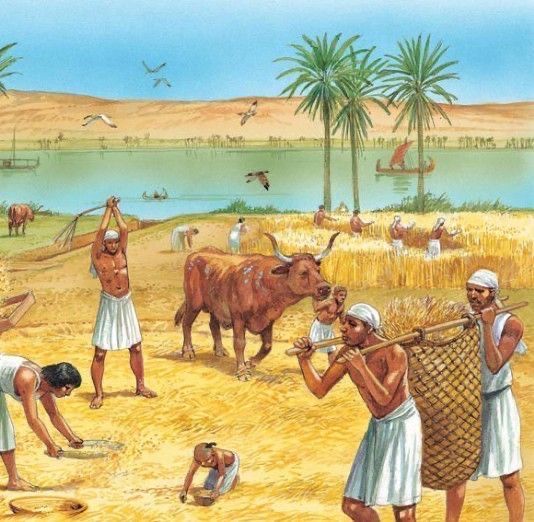
Property disputes were common in an agricultural society. Land, livestock, crops, tools, and household possessions were valuable, so disagreements over ownership could create serious conflicts.
Written contracts and administrative records helped determine who had legal rights to property. If someone violated an agreement, compensation could be required.
Financial penalties could also be used for certain offenses involving theft, negligence, or administrative violations.
Restitution had an important practical advantage: it repaired some of the damage caused by the crime. Instead of simply punishing the offender, authorities could help restore the victim.
The amount of compensation depended on the circumstances and seriousness of the offense. More serious financial crimes could result in much heavier penalties.
Officials who abused their positions could also lose property or face financial consequences in addition to other punishments.
The use of compensation demonstrates that Egyptian justice was not based entirely on physical punishment. Authorities had different methods for dealing with different kinds of offenses.
Restitution also supported the principle of Ma’at because restoring what had been taken or damaged helped return society to a state of balance.
For ordinary Egyptians, financial penalties could nevertheless be extremely serious because losing livestock, crops, or valuable property could threaten a family’s livelihood.
Fines and compensation therefore served both as punishment and as a means of repairing social and economic relationships.
3. Physical Punishments in Ancient Egypt
Physical punishment was another component of the Ancient Egypt punishment system, particularly for offenses considered serious enough to require a stronger deterrent.
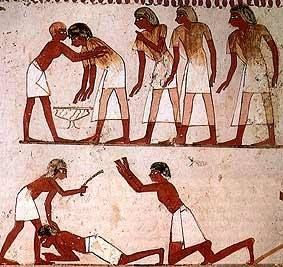
Ancient Egyptian sources describe punishments that could include beating, corporal penalties, and other forms of physical discipline. The severity depended on the offense and the circumstances surrounding it.
Beating was sometimes used for crimes involving theft, disobedience, or violations of official regulations. It could also appear as a disciplinary measure within workplaces or institutions.
Physical punishment was intended to discourage both the offender and others from committing similar offenses.
However, surviving evidence does not mean that every accused person automatically received a physical punishment. Egyptian justice involved different responses depending on the nature of the case.
Officials also had to determine whether an accusation was supported by sufficient evidence. False accusations could themselves create serious problems within the justice system.
Corporal punishment could be accompanied by other penalties, such as fines, confiscation of property, or forced labor.
For serious crimes, physical punishment could become much more severe. Egyptian records and legal texts indicate that authorities sometimes used harsh measures when offenses threatened the state or public security.
The treatment of criminals also varied according to social circumstances, the seriousness of the offense, and the period of Egyptian history.
The use of physical penalties reflects the values and legal standards of the ancient world, which were generally much harsher than modern criminal justice systems.
Nevertheless, Ancient Egyptian authorities did not rely on a single form of punishment. They used a range of measures intended to protect society and restore order.
Physical punishment was therefore one part of a broader system that included compensation, detention, forced labor, confiscation, and severe penalties for major crimes.