
Welcome to

Ancient Egypt Agriculture System

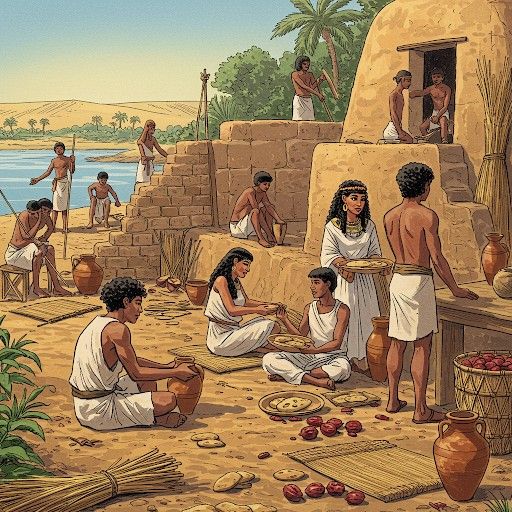
The Ancient Egypt agriculture system was the foundation of one of the world’s greatest civilizations. For thousands of years, the fertile lands surrounding the Nile River provided the resources necessary to support a growing population, powerful kingdoms, monumental construction projects, and a thriving economy. Agriculture was not only the backbone of daily life in Ancient Egypt but also the key to its political stability, economic prosperity, and long-term success. Without the Nile and the sophisticated farming practices developed by the ancient Egyptians, the civilization of Ancient Egypt would not have flourished.

The Nile River played a central role in Egyptian agriculture through its annual flooding cycle. Each year, the river overflowed its banks, depositing nutrient-rich silt across the surrounding farmland. This fertile soil allowed farmers to grow abundant crops and sustain communities throughout the kingdom. The agricultural year was divided into three seasons: Akhet (the Flooding Season), Peret (the Planting and Growing Season), and Shemu (the Harvest Season). These seasonal cycles determined the rhythm of life for farmers and agricultural workers across Egypt.

Ancient Egyptian farmers cultivated a wide variety of crops, including wheat, barley, flax, lentils, beans, onions, garlic, lettuce, dates, figs, and grapes. Wheat and barley were especially important because they were used to produce bread and beer, the staple foods of the Egyptian diet. Livestock such as cattle, sheep, goats, pigs, ducks, and geese also played a significant role in agricultural production and food supply.

To maximize crop yields, the Egyptians developed irrigation systems that directed water from the Nile to agricultural fields. Canals, reservoirs, dikes, and basin irrigation techniques helped manage water resources and expand farming into areas beyond the immediate riverbanks. These innovations demonstrated the advanced agricultural knowledge and engineering skills of Ancient Egyptian society.

In this guide, we explore the Ancient Egypt agriculture system, including Nile River farming, irrigation methods, agricultural seasons, major crops, livestock management, farming tools, and the economic importance of agriculture. Discover how the agricultural achievements of Ancient Egypt supported one of the most successful and enduring civilizations in human history.

1. The Role of the Nile River in Ancient Egyptian Agriculture

The Nile River was the heart of the Ancient Egypt agriculture system and the main reason civilization developed along its banks. Without the Nile, Egypt would have remained a largely desert region with limited possibilities for permanent settlement. The river provided water, fertile soil, transportation routes, and natural resources that supported agriculture and daily life.

The annual flooding of the Nile was the most important natural event in the Egyptian agricultural calendar. Every year, usually between June and September, the river overflowed and spread across the surrounding lands. When the floodwaters retreated, they left behind a thick layer of nutrient-rich black soil that was ideal for planting crops.

Ancient Egyptians divided their agricultural year into three main seasons based on the Nile cycle:

Akhet (The Flood Season):
During this period, farmland was covered with water, and farmers could not cultivate their fields. Instead, many workers participated in government projects, repaired tools, maintained canals, or helped build temples and monuments.

Peret (The Growing Season):
After the floodwaters disappeared, farmers planted seeds in the fertile soil. They used irrigation channels to provide additional water when necessary and carefully monitored crop growth.

Shemu (The Harvest Season):
Farmers collected mature crops, including wheat, barley, and flax. Harvesting was a busy period requiring cooperation between family members and workers.

The Nile also supported agriculture by providing transportation. Farmers and merchants used boats to move grain, livestock, tools, and other products between villages, cities, and temples. This made agricultural trade easier and strengthened the Egyptian economy.

Egyptians developed irrigation systems to control and distribute Nile water. They built canals, basins, and reservoirs that allowed farmers to use floodwater efficiently. These systems increased agricultural productivity and protected fields from unpredictable flood conditions.

The Nile was also deeply connected with Egyptian religion. Egyptians believed that gods controlled the river and its fertility. They worshiped deities such as Hapi, the god of the Nile flood, and offered prayers for successful harvests.

The relationship between the Nile River and agriculture shaped every aspect of Ancient Egyptian civilization. The river provided the foundation for food production, economic growth, and the development of one of the greatest civilizations in history.
2. Farming Seasons and Agricultural Calendar in Ancient Egypt

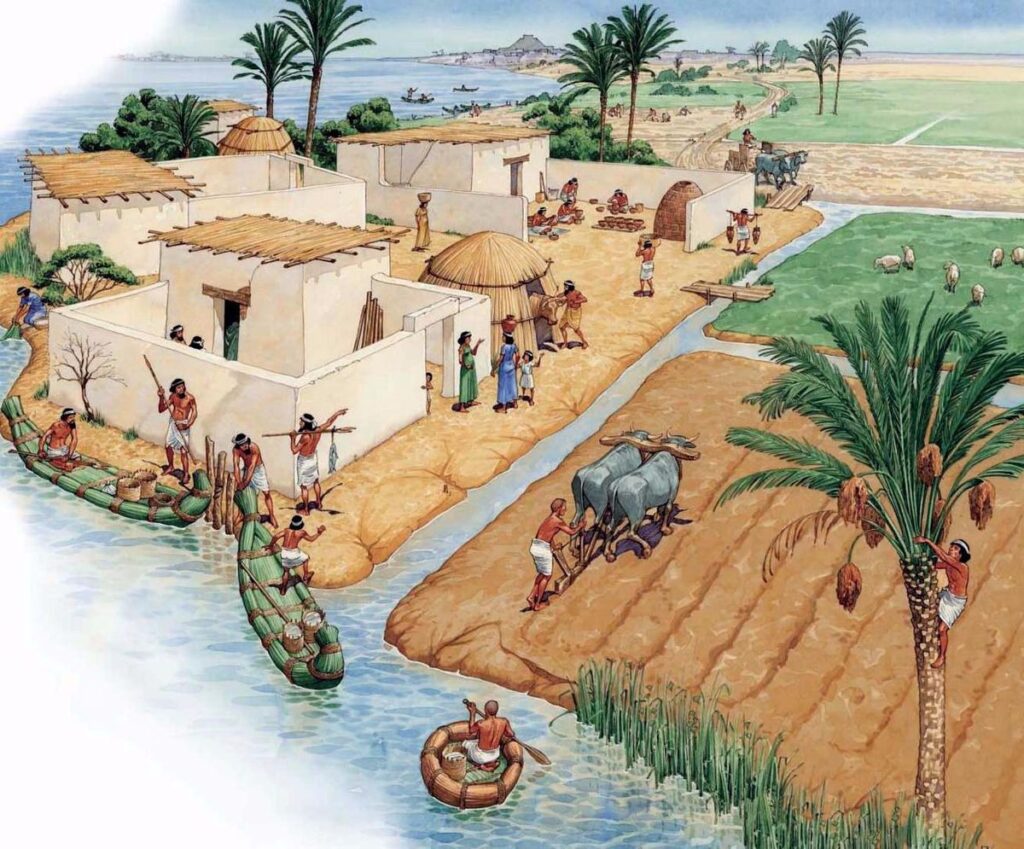
The Ancient Egyptian agricultural calendar was carefully organized around the natural cycle of the Nile River. Farmers depended on understanding seasonal changes to determine the best times for planting, growing, and harvesting crops. This organized approach allowed Ancient Egyptians to maximize agricultural production and maintain a stable food supply.

The Egyptian calendar consisted of three major farming seasons: Akhet, Peret, and Shemu. Each season lasted approximately four months and represented a different stage of agricultural activity.

Akhet: The Flood Season

Akhet was the season of the annual Nile flood. During this period, fields were covered with water, making farming activities impossible. However, this was not an inactive period. Farmers repaired agricultural tools, maintained irrigation channels, prepared storage areas, and participated in construction projects organized by the government.

Many farmers worked on temples, pyramids, roads, and other public projects during the flood season. This system allowed the state to use available labor while agricultural activities were temporarily paused.

Peret: The Planting and Growing Season

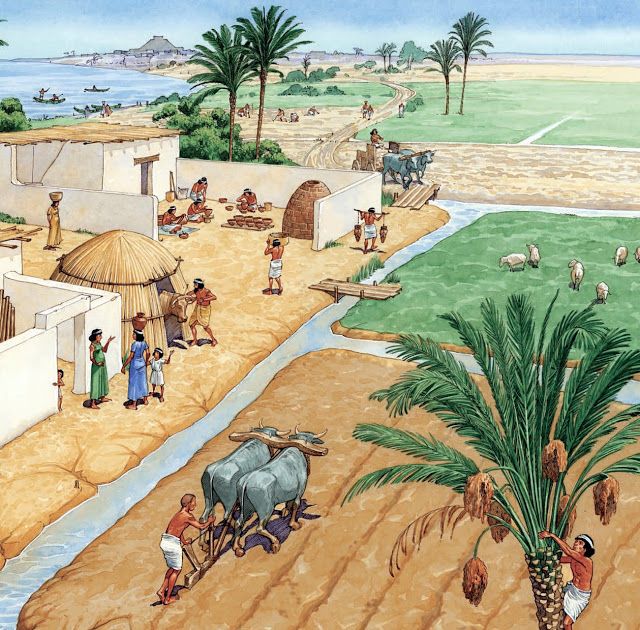
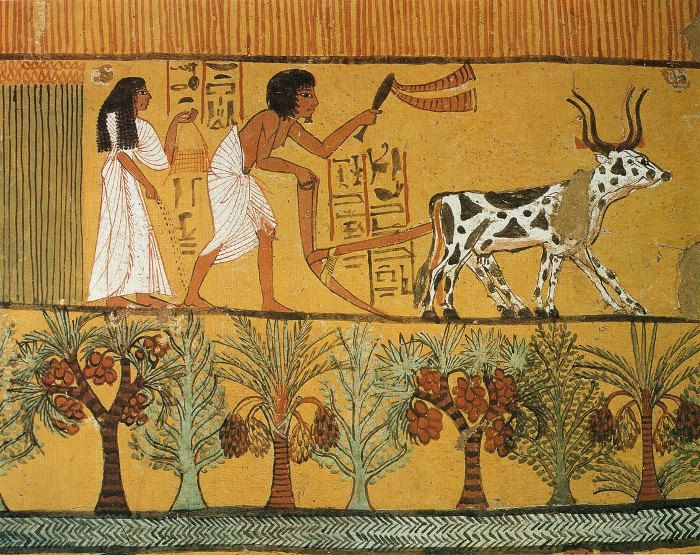
When the floodwaters disappeared, farmers began preparing the fields. They used wooden plows pulled by oxen to break the soil and create planting areas. Seeds were scattered across the fields and pressed into the ground.

Farmers grew wheat, barley, flax, vegetables, and other crops during this season. Irrigation channels helped provide water when rainfall was insufficient. Families worked together to protect crops from animals, insects, and environmental challenges.

Shemu: The Harvest Season

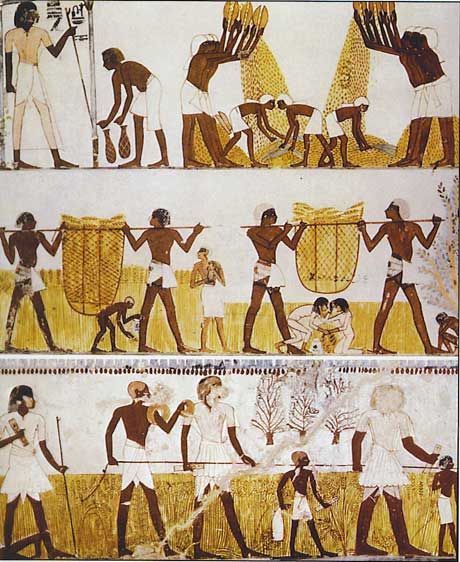
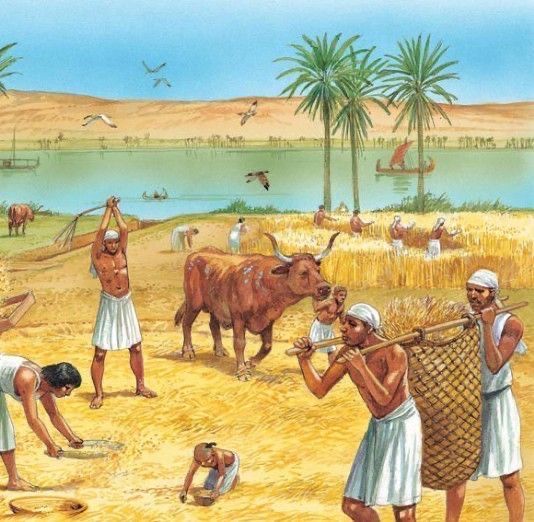
Shemu was the busiest period of the agricultural year. Farmers harvested crops using curved sickles with sharp blades. Wheat and barley were cut, collected, and processed into food products such as bread and beer.

After harvesting, crops were transported to storage facilities and government granaries. Scribes recorded production levels and collected taxes from farmers in the form of agricultural goods.

The agricultural calendar influenced Egyptian society, economy, religion, and daily life. Festivals were often connected with planting and harvesting seasons, celebrating fertility and gratitude for successful crops.

The careful organization of farming seasons demonstrates the advanced knowledge of Ancient Egyptian farmers. Their understanding of nature and the Nile cycle allowed them to create one of the most productive agricultural systems in the ancient world.
3. Ancient Egyptian Farming Tools and Techniques

The success of the Ancient Egypt agriculture system depended on the development of effective farming tools and techniques. Although Egyptian farmers did not have modern machinery, they created practical methods that allowed them to cultivate large areas of land, manage water resources, and produce enough food to support a growing population.

One of the most important farming tools was the wooden plow. Pulled by oxen, the plow helped farmers break the soil after the Nile flood and prepare fields for planting. The fertile soil was relatively easy to cultivate, making this simple tool highly effective.

Farmers also used hoes made from wood and stone or metal blades. Hoes were useful for preparing planting areas, removing weeds, and maintaining vegetable gardens. These tools were essential for everyday agricultural activities.

During harvest season, farmers used sickles with curved blades to cut wheat, barley, and flax. Harvesting required teamwork because crops needed to be collected quickly before they were damaged by weather or animals.

Irrigation was one of the greatest achievements of Ancient Egyptian agriculture. Farmers built canals and water channels to transport Nile water to fields located away from the river. They also created basins that collected floodwater and allowed it to remain on farmland for longer periods.

The shaduf was an important irrigation device introduced during later periods of Egyptian history. It consisted of a wooden pole with a bucket and counterweight, allowing farmers to lift water from canals into higher fields.

Ancient Egyptians also practiced methods that improved soil productivity. They used animal manure as fertilizer and carefully selected planting times based on environmental conditions. Farmers understood which crops grew best in different areas and managed their fields according to seasonal needs.

Storage techniques were equally important. Grain was collected and stored in large granaries to protect food supplies from shortages. Government officials monitored these stores to ensure resources were available throughout the kingdom.

The tools and techniques developed by Ancient Egyptian farmers demonstrate their practical intelligence and agricultural knowledge. Their innovations created a farming system capable of supporting a powerful civilization for thousands of years.
4. Major Crops and Plants Grown in Ancient Egypt

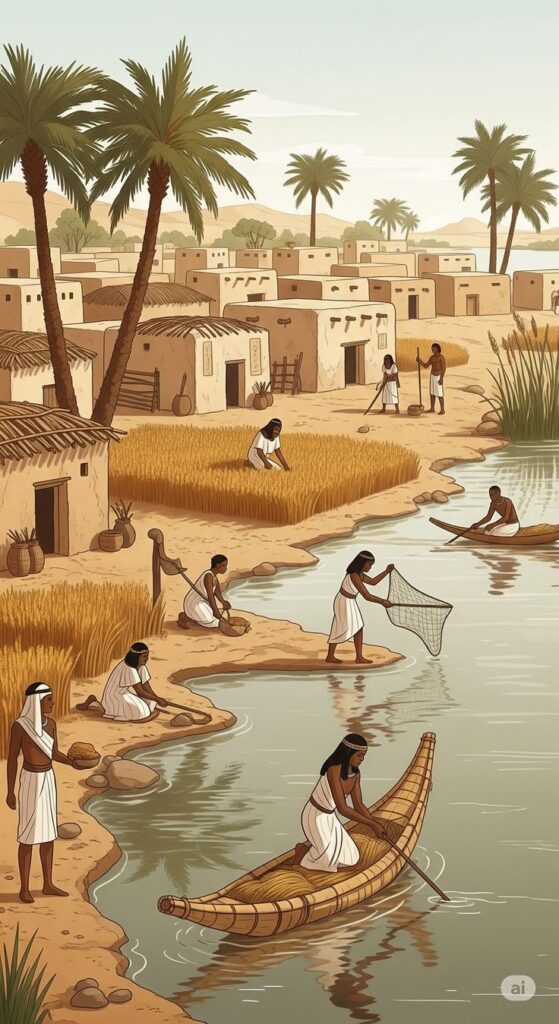
The success of the Ancient Egypt agriculture system depended on the ability of Egyptian farmers to cultivate a wide variety of crops and plants. The fertile soil created by the Nile River allowed agriculture to flourish and provided Egyptians with essential food, clothing materials, and resources for trade. Crops were carefully selected according to the climate, soil conditions, and seasonal farming cycle.

The most important crop in Ancient Egypt was wheat. Wheat production was essential because it was used to make bread, the main food consumed by Egyptians from all social classes. Farmers planted wheat after the Nile flood and harvested it during the Shemu season. Large quantities of wheat were stored in government granaries to provide food supplies and support workers throughout the kingdom.

Barley was another major agricultural product. It was used primarily to produce beer, one of the most important beverages in Ancient Egyptian society. Beer was consumed daily by workers, farmers, and officials because it provided energy and nutrition. It was also used in religious ceremonies and offered to the gods.

Flax was a highly valuable crop in Ancient Egypt. Although it was not eaten, flax fibers were used to produce linen, one of Egypt’s most famous products. Linen was used for clothing, household textiles, sails, ropes, and burial materials. Egyptian linen became highly valued throughout the ancient world.

Vegetable farming was also an important part of the agricultural system. Egyptians cultivated onions, garlic, lettuce, cucumbers, beans, peas, lentils, radishes, and leeks. These vegetables formed a significant part of the daily diet, especially among farmers and workers.

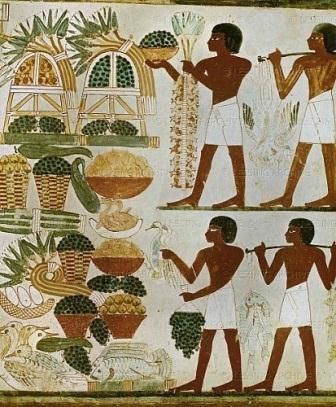
Fruit cultivation was common in gardens and orchards. Egyptians grew dates, figs, grapes, pomegranates, melons, and sycamore figs. Dates and figs were especially popular because they could be dried and stored for long periods. Grapes were used for producing wine, which was mainly consumed by wealthy Egyptians and used during religious festivals.

The Nile environment also supported the growth of papyrus plants, which were extremely important in Ancient Egyptian life. Papyrus was used to create writing material, boats, baskets, mats, and household objects.

Farmers also cultivated plants used for medicine, perfumes, and religious purposes. Herbs such as coriander, cumin, and fennel were used for cooking and healing.

The diversity of crops grown in Ancient Egypt demonstrates the advanced knowledge of Egyptian farmers. Their agricultural system provided food, materials, and economic resources that supported every level of society.

5. Irrigation Systems and Water Management in Ancient Egypt

The development of effective irrigation systems in Ancient Egypt was one of the greatest achievements of Egyptian agriculture. Although the Nile River provided regular flooding, farmers needed additional methods to control, distribute, and store water to maximize crop production. Through careful water management, Ancient Egyptians transformed desert lands into highly productive agricultural areas.

The annual Nile flood was the foundation of Egyptian farming. However, the flood did not always reach every farming area equally. To solve this problem, Egyptians developed a network of canals, basins, and channels that carried water from the river to distant fields.

One of the earliest irrigation methods was basin irrigation. Farmers created large enclosed areas surrounded by earth embankments. When the Nile flooded, water filled these basins and remained there for several weeks. As the water slowly disappeared, it left behind fertile soil and provided enough moisture for planting crops.

Canals were another important part of the Ancient Egyptian irrigation system. These waterways transported water from the Nile to agricultural fields and helped farmers cultivate larger areas of land. Maintaining canals was a shared responsibility among communities because damaged irrigation systems could affect entire villages.

During later periods, Egyptians used the shaduf, a simple but effective water-lifting device. The shaduf consisted of a long wooden pole balanced on a support, with a bucket attached to one end and a counterweight on the other. Farmers used it to raise water from canals into higher fields, allowing cultivation in areas that were difficult to reach.

Water management required careful organization by the Egyptian government. Officials and scribes monitored irrigation networks, measured agricultural production, and organized maintenance projects. The ability to control water resources strengthened the authority of the Pharaoh and helped maintain economic stability.

The Nile irrigation system also supported multiple harvests in some areas and increased the amount of available farmland. This agricultural productivity allowed Egypt to support a large population and maintain powerful cities, temples, and administrative centers.

Religion was closely connected with water management. Egyptians believed that the Nile flood was a blessing from the gods, especially Hapi, the deity associated with fertility and abundance. Successful irrigation and harvests were seen as signs of harmony between humans, nature, and divine forces.

The irrigation achievements of Ancient Egypt remain one of the greatest examples of early environmental management. Their ability to control water transformed a desert landscape into a thriving agricultural civilization that lasted for thousands of years.

6. The Role of Farmers in the Ancient Egyptian Economy

Farmers were the foundation of the Ancient Egyptian economy and played one of the most important roles in maintaining the strength and stability of the kingdom. Although Pharaohs and nobles controlled political power, the success of Egypt depended heavily on the agricultural production of millions of farmers who cultivated the land along the Nile River.

Agriculture provided the majority of resources needed by Egyptian society. Farmers produced wheat, barley, vegetables, fruits, flax, and livestock products that supported the population. The food they grew fed workers, soldiers, priests, craftsmen, government officials, and the royal family.

Grain production was especially important because wheat and barley could be stored for long periods. Government officials collected part of the harvest as taxes and stored grain in large granaries. These supplies were used during difficult years, supported government workers, and provided food for large construction projects.

Farmers also contributed to Egypt’s economy through the production of valuable materials. Flax farming supported the famous Egyptian linen industry, while crops such as grapes and dates contributed to trade. Livestock production provided meat, milk, leather, and animals needed for transportation and farming.

During the annual Nile flood season, when fields were underwater, many farmers participated in public projects. They helped build temples, monuments, canals, roads, and other structures. This seasonal labor system allowed the government to use available workers while agricultural activities were temporarily paused.

Farmers also supported local markets by trading agricultural products. Villages exchanged grain, vegetables, fish, and livestock with craftsmen who produced tools, pottery, clothing, and other goods. This created a connected economic system throughout Egypt.

The government depended on accurate agricultural records. Scribes measured fields, estimated harvests, recorded taxes, and managed grain storage. This administrative system helped maintain control over Egypt’s resources.

Despite their importance, farmers often faced difficult conditions. They worked under the hot sun, depended on successful Nile floods, and were responsible for paying agricultural taxes. However, their knowledge and dedication allowed Egyptian civilization to survive and prosper for thousands of years.

The contribution of farmers demonstrates that the greatness of Ancient Egypt was not created only by kings and monuments. It was built on the daily efforts of ordinary people who transformed the Nile Valley into one of the most productive agricultural regions in the ancient world.

7. Livestock Farming and Animal Husbandry in Ancient Egypt

Livestock farming was an important part of the Ancient Egypt agriculture system, providing Egyptians with food, materials, labor, and religious resources. While crop cultivation was the foundation of Egyptian agriculture, raising animals helped create a balanced farming economy that supported both rural communities and wealthy households. Ancient Egyptian farmers developed effective methods for breeding, feeding, and managing domestic animals along the Nile Valley.

Cattle were among the most valuable animals in Ancient Egypt. They provided meat, milk, leather, and physical power for agricultural work. Oxen were used to pull wooden plows and assist farmers in preparing fields after the Nile flood. Cattle were also symbols of wealth and status, and large herds were often owned by temples, nobles, and the royal administration.

Sheep and goats were also widely raised by Egyptian farmers. These animals provided meat, milk, and wool. Goat milk was an important food source, while animal skins were used for making clothing, tools, and household items. Goats were especially useful because they could survive in different environments and required fewer resources than larger animals.

Poultry farming was common in Ancient Egypt. Egyptians raised ducks, geese, pigeons, and other birds for meat and eggs. Birds were often kept near homes and farms, providing families with a regular source of animal products. Wealthy Egyptians enjoyed roasted poultry during banquets and special celebrations.

The Nile River supported fishing and the raising of aquatic resources. Fish was one of the most important sources of protein for ordinary Egyptians. Fishermen used boats, nets, and hooks to catch different types of fish. Some fish were eaten fresh, while others were dried and preserved for later use.

Animals also had important religious significance. Certain animals were associated with Egyptian gods and were respected or considered sacred. Cattle, especially bulls, played a role in religious ceremonies, and some temples maintained special animals connected with divine worship.

Animal husbandry required careful management. Farmers had to provide food, shelter, and protection for their animals. They used agricultural by-products such as grain remains and plant materials to feed livestock. Veterinary knowledge also existed in Ancient Egypt, with evidence showing that Egyptians treated animal injuries and illnesses.

Livestock farming contributed greatly to the Egyptian economy. Animal products were used in households, exchanged in markets, offered in temples, and supplied to royal institutions. The combination of crop cultivation and animal farming created a sustainable agricultural system.

The success of Ancient Egyptian animal husbandry demonstrates the practical knowledge of farmers and their ability to manage natural resources effectively. Livestock was not only a source of food but also an essential part of Egyptian economic, social, and religious life.

8. Agricultural Workers, Farmers’ Daily Life, and Social Status

The daily life of Ancient Egyptian farmers and agricultural workers was closely connected to the rhythm of the Nile River and the changing agricultural seasons. Farmers represented the largest group in Egyptian society and performed the essential work that supported the economy, provided food, and maintained the stability of the kingdom.

Most farmers lived in villages located near agricultural fields along the Nile Valley. Their homes were usually built from mud bricks and contained simple rooms for sleeping, storage, and food preparation. Family members often worked together in farming activities, with men, women, and children contributing to household production.

The daily routine of farmers began early in the morning. They traveled to their fields, cared for crops, repaired irrigation channels, and managed livestock. During planting seasons, they prepared soil, planted seeds, and protected young crops. During harvest periods, farmers worked long hours cutting, collecting, and storing grain.

Agricultural work required cooperation. Families and village communities often worked together during important farming activities, especially harvesting. The success of the entire community depended on teamwork because delays or problems could affect food supplies.

Farmers used simple but effective tools, including wooden plows, hoes, sickles, baskets, and irrigation equipment. Although their tools were basic compared with modern farming equipment, their knowledge of soil, water, and crop cycles allowed them to achieve impressive agricultural productivity.

The social status of farmers was lower than that of scribes, priests, officials, and nobles. However, they were highly respected because their labor was essential for survival. Without farmers, Egypt could not support its cities, temples, armies, and monumental construction projects.

Farmers paid taxes to the government, usually in the form of crops and agricultural products. Scribes measured farmland and recorded harvests to determine tax obligations. In return, the state maintained irrigation systems, protected agricultural lands, and organized food storage.

Life as a farmer was challenging. Farmers faced risks from poor floods, droughts, pests, and difficult working conditions. However, successful harvests brought stability and allowed families to maintain their homes and traditions.

Religion was also part of agricultural life. Farmers prayed for successful floods and good harvests, believing that fertility and prosperity came from harmony between humans, nature, and the gods.

The lives of Ancient Egyptian agricultural workers show that ordinary people played a crucial role in building and maintaining one of history’s greatest civilizations. Their daily efforts created the foundation that allowed Egypt to flourish for thousands of years.

9. Ancient Egyptian Agriculture and Religious Beliefs

Agriculture in Ancient Egypt was deeply connected to religion, mythology, and spiritual beliefs. Egyptians believed that the success of their crops, the fertility of the land, and the annual flooding of the Nile were influenced by divine forces. As a result, farming was not only an economic activity but also a sacred relationship between humans, nature, and the gods.

The Nile River was considered a divine blessing. Egyptians believed that the annual flood was controlled by the gods and brought fertility to the land. One of the most important deities connected with agriculture was Hapi, the god of the Nile flood. Egyptians honored Hapi through prayers, hymns, and offerings, asking for abundant floods and successful harvests.

The agricultural cycle was also connected with the story of Osiris, the god of the afterlife, fertility, and vegetation. According to Egyptian mythology, Osiris represented renewal and the cycle of life. The growth of crops after the Nile flood was seen as a symbol of rebirth and regeneration.

Farmers participated in religious rituals before planting and harvesting. They offered food, prayers, and ceremonies to gain the favor of the gods and ensure agricultural success. Temples often owned large agricultural estates where workers cultivated crops used for religious offerings and supporting temple communities.

Food offerings were a major part of Egyptian religious practices. Temples received bread, beer, fruits, vegetables, meat, and other agricultural products as offerings to the gods. These rituals reflected the belief that maintaining a relationship with divine powers was essential for prosperity.

Agriculture also influenced Egyptian festivals. Many celebrations were connected with fertility, harvests, and the changing seasons. During these festivals, communities gathered to share food, perform ceremonies, and express gratitude for the resources provided by the Nile.

The Pharaoh was believed to have a special responsibility for maintaining Ma’at, the Egyptian concept of balance and harmony. Successful agriculture was considered evidence that the Pharaoh was fulfilling his duty and maintaining order between humans, nature, and the gods.

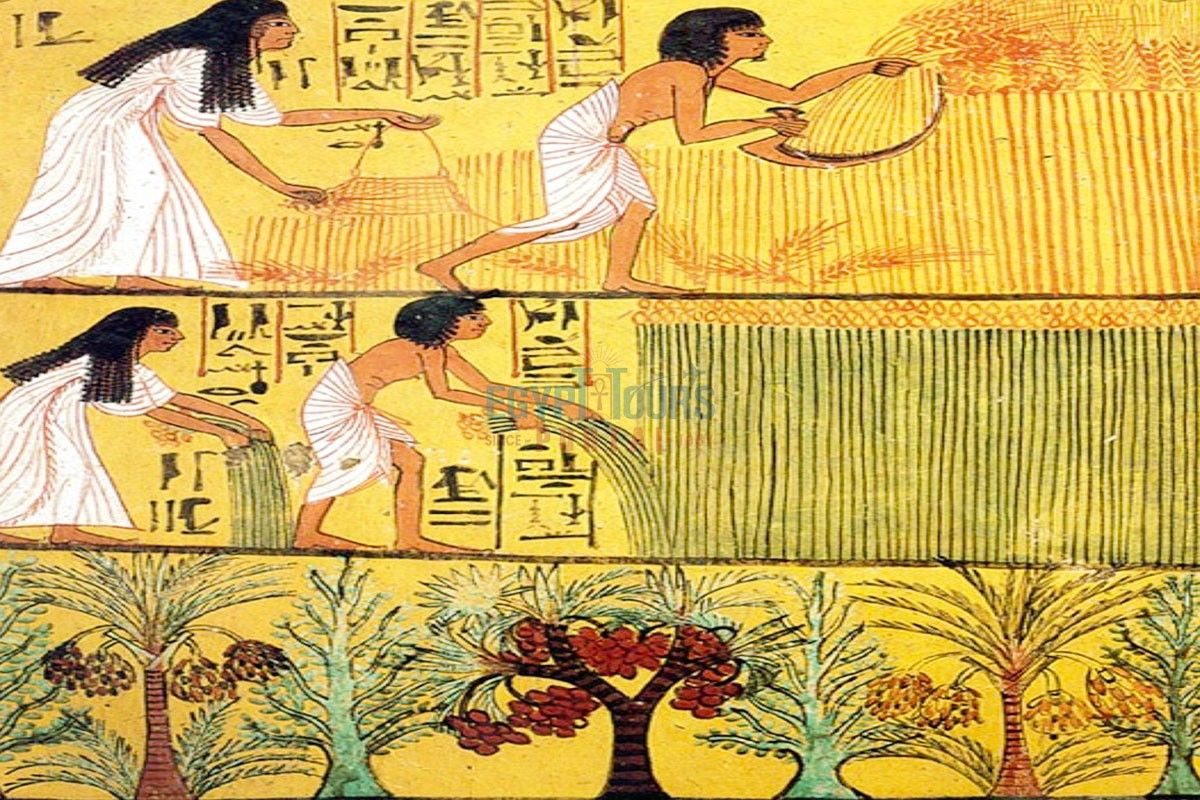
Tomb paintings frequently show agricultural scenes, including planting, harvesting, fishing, and food production. These images represented not only everyday activities but also hopes for eternal abundance in the afterlife.

The connection between agriculture and religion demonstrates how deeply farming was integrated into Ancient Egyptian culture. The fields along the Nile were viewed as a sacred source of life, and the work of farmers was considered essential for maintaining the prosperity and harmony of Egyptian civilization.

10. Agricultural Taxes, Government Control, and Grain Storage in Ancient Egypt

The government control of agriculture in Ancient Egypt was one of the most important factors that allowed the civilization to maintain stability and prosperity for thousands of years. Since farming produced the majority of Egypt’s resources, the government developed an organized system to manage agricultural lands, collect taxes, store grain, and distribute food throughout the kingdom.

The Pharaoh was considered the owner of all Egyptian lands and was responsible for ensuring that agricultural production continued successfully. Although farmers often worked their own fields, they were required to provide a portion of their harvest to the state. These agricultural taxes were usually collected in the form of grain, vegetables, livestock products, and other goods rather than money.

Scribes played a major role in managing the agricultural taxation system. Because they were among the few people who could read and write, they recorded the size of farms, estimated crop production, measured harvests, and documented the amount of taxes owed by farmers. These records helped the government organize resources and maintain control over the economy.

The amount of agricultural taxes depended on several factors, including the size of the farmland, the quality of the harvest, and the success of the Nile flood. During years of abundant flooding and successful crops, Egypt produced large surpluses. However, poor floods or environmental problems could reduce harvests and create difficulties for farmers and the state.

One of the greatest achievements of the Ancient Egyptian agricultural administration was the development of large grain storage systems. Government and temple granaries stored enormous quantities of wheat and barley collected from farmers. These supplies protected Egypt during years of poor harvests and provided food for workers, soldiers, priests, and officials.

Granaries were carefully managed by government officials and temple administrators. Scribes recorded the amount of stored grain, incoming supplies, and distributions. This organized system helped prevent shortages and allowed Egypt to support large populations and major construction projects.

The state also invested in maintaining irrigation systems. Officials organized workers to repair canals, strengthen riverbanks, and manage water distribution. Since agriculture depended completely on the Nile, controlling water resources was essential for national stability.

The agricultural administration of Ancient Egypt demonstrates the advanced organization of Egyptian government. Through taxation, record keeping, irrigation management, and grain storage, Egypt created one of the most successful agricultural systems in the ancient world.

11. Agricultural Trade and Economic Importance of Farming in Ancient Egypt

Agriculture was the foundation of the Ancient Egyptian economy, providing the resources needed for trade, industry, government, and daily life. The crops and products produced by farmers were not only used for local consumption but also played a major role in internal and international trade. The agricultural wealth of Egypt helped the civilization become one of the most powerful societies of the ancient world.

Grain was one of Egypt’s most valuable economic resources. Wheat and barley were produced in large quantities and stored in government granaries. Surplus grain could be exchanged, transported to different regions, or used to support the army and government workers. Egypt’s ability to produce extra food strengthened its political power and economic stability.

Agricultural products were also traded in local markets. Farmers exchanged vegetables, fruits, fish, livestock, and grains for tools, pottery, clothing, and other goods produced by craftsmen. This connection between farmers and artisans created a strong economic network throughout Egyptian villages and cities.

The Nile River played an essential role in agricultural trade. Boats transported goods efficiently between Upper and Lower Egypt, allowing farmers and merchants to move products over long distances. The river acted as a natural transportation system that connected communities and encouraged economic growth.

Egypt also traded agricultural products with neighboring regions. Linen made from flax, wine from Egyptian vineyards, grain, and other goods were exchanged for valuable resources such as timber, metals, luxury items, and exotic materials. International trade helped increase Egypt’s wealth and influence.

Temples were also major economic centers connected to agriculture. Many temples owned large areas of farmland managed by workers who produced crops and livestock. These agricultural resources supported religious activities, temple employees, and construction projects.

Agriculture also supported Egypt’s skilled workforce. Farmers produced the food needed to support craftsmen, builders, soldiers, and officials. Without a strong agricultural system, Egypt could not have created its impressive architecture, organized government, or developed advanced culture.

The economic importance of farming was recognized throughout Egyptian history. Farmers were the foundation of society because their work provided the resources necessary for every other profession.

The success of Ancient Egypt was therefore closely connected to the productivity of its agricultural system. The combination of fertile land, skilled farmers, organized trade, and government management transformed the Nile Valley into one of the richest and most stable civilizations of the ancient world.

12. The Legacy of Ancient Egyptian Agriculture System

The legacy of the Ancient Egyptian agriculture system continues to influence our understanding of farming, water management, and sustainable resource use. The agricultural achievements of Ancient Egypt demonstrate how human creativity and environmental knowledge can transform challenging landscapes into productive and prosperous regions.

The Nile-based farming system was one of the greatest accomplishments of the ancient world. By understanding the river’s natural cycle, Egyptians developed methods of irrigation, crop cultivation, and land management that allowed them to produce enough food to support a large population for thousands of years.

Ancient Egyptian farmers created agricultural traditions that influenced later civilizations. Their techniques for planting, harvesting, storing grain, and managing water resources provided valuable lessons for societies living in similar environments. The organization of Egyptian agriculture became an example of effective resource management.

The use of irrigation canals and water control systems demonstrates the advanced engineering skills of Ancient Egyptians. Their ability to distribute Nile water across farmland helped maximize agricultural production and allowed settlements to grow beyond areas immediately next to the river.

The crops developed and cultivated by Ancient Egyptian farmers also left a lasting impact. Wheat, barley, flax, dates, grapes, and various vegetables remained important agricultural products throughout history. Many foods associated with Egyptian culture today have roots in ancient farming traditions.

Ancient Egyptian agriculture also shaped social and economic development. Farming supported the growth of cities, temples, government institutions, and skilled professions. The surplus food produced by farmers allowed Egypt to invest resources in architecture, art, science, and cultural achievements.

Modern archaeological discoveries continue to reveal the importance of agriculture in Ancient Egypt. Tomb paintings, farming tools, papyri, and preserved seeds provide valuable information about ancient farming methods and daily life. These discoveries help researchers understand how Egyptians interacted with their environment.

Today, the agricultural heritage of Ancient Egypt remains an important part of Egypt’s cultural identity. The Nile Valley continues to be one of the most productive agricultural areas in the region, continuing a tradition that began thousands of years ago.

The story of Ancient Egyptian agriculture reminds us that great civilizations are built on the efforts of ordinary people. The farmers who cultivated the land, managed water, and produced food created the foundation that allowed Egypt to become one of history’s greatest civilizations.

Frequently Asked Questions

Agriculture was important because it provided food, materials, and resources that supported the entire civilization. It allowed Egypt to develop cities, temples, armies, and a strong economy.


The Nile River provided water and fertile soil through its annual floods. The rich soil left behind after flooding allowed farmers to grow abundant crops.

Ancient Egyptians grew many crops, including wheat, barley, flax, onions, garlic, lettuce, beans, lentils, dates, grapes, figs, and papyrus.


Farmers used simple but effective tools such as wooden plows, hoes, sickles, baskets, and irrigation devices like the shaduf to cultivate and water their fields.


Farmers were the foundation of Egyptian society. They produced food, paid agricultural taxes, supported the economy, and provided the resources needed for Egypt’s development and achievements.