
Welcome to

Ancient Egypt Work System

The Ancient Egypt work system was a highly organized structure that supported one of the most successful civilizations in human history. From farmers and craftsmen to scribes, priests, soldiers, and government officials, every profession played a vital role in maintaining the economy, administration, and cultural achievements of Ancient Egypt. Labor was carefully organized by the state, temples, and local communities, allowing the Egyptians to build monumental pyramids, magnificent temples, irrigation systems, and thriving cities along the Nile River.

Agriculture formed the foundation of the Ancient Egyptian workforce. Most Egyptians worked as farmers, cultivating wheat, barley, flax, vegetables, and fruits on the fertile lands enriched by the annual Nile flood. During periods when agricultural work was limited, many laborers participated in large state-sponsored construction projects, helping build temples, tombs, canals, and royal monuments. Contrary to popular myths, many of these workers were skilled laborers who received food, clothing, housing, and other forms of compensation for their services.

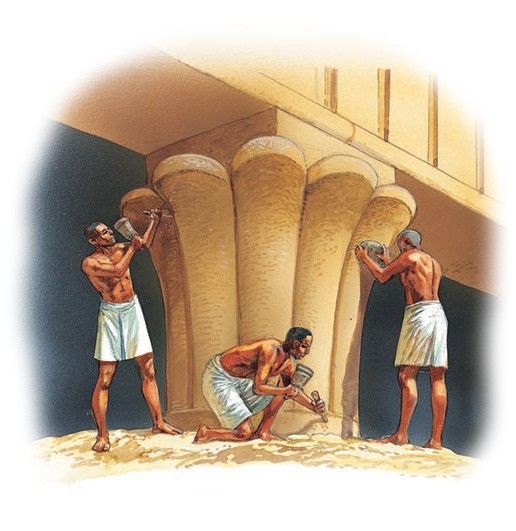
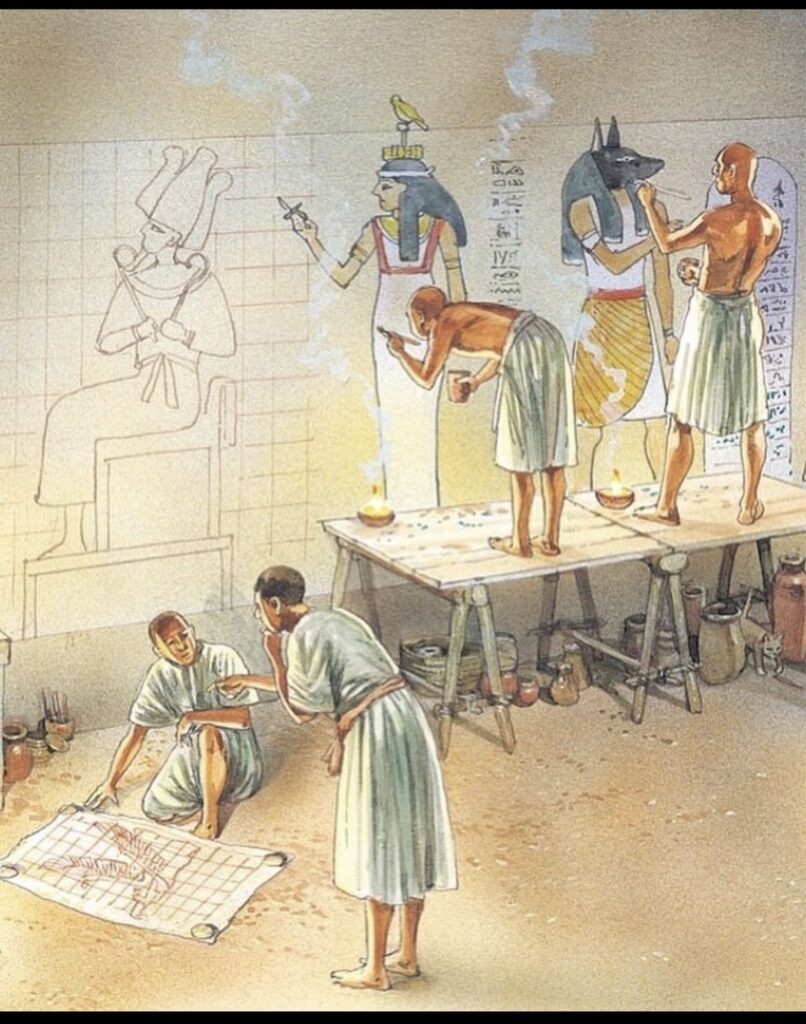
Skilled craftsmen occupied an important place within the work system of Ancient Egypt. Artisans such as stonemasons, sculptors, painters, carpenters, jewelers, metalworkers, and potters created the statues, furniture, jewelry, tomb decorations, and architectural masterpieces that continue to impress the world today. Communities like Deir el-Medina housed highly trained workers responsible for constructing and decorating royal tombs in the Valley of the Kings.

Scribes were among the most respected professionals in Egyptian society. Their ability to read and write hieroglyphics and administrative scripts enabled them to maintain records, collect taxes, manage government affairs, and oversee economic activities. Education provided opportunities for talented individuals to enter administrative careers and improve their social status.

The work system also included priests, merchants, fishermen, traders, builders, physicians, teachers, and soldiers. Government officials supervised labor projects, managed resources, and ensured the efficient operation of the kingdom. In return, workers received compensation through food, grain, clothing, livestock, housing, or other valuable goods, as coin-based currency was not widely used for much of Egyptian history.

In this guide, we explore the Ancient Egypt work system, including labor organization, farming, craftsmanship, government administration, skilled professions, worker compensation, social classes, and the economic structure that enabled Ancient Egypt to flourish for more than three thousand years.

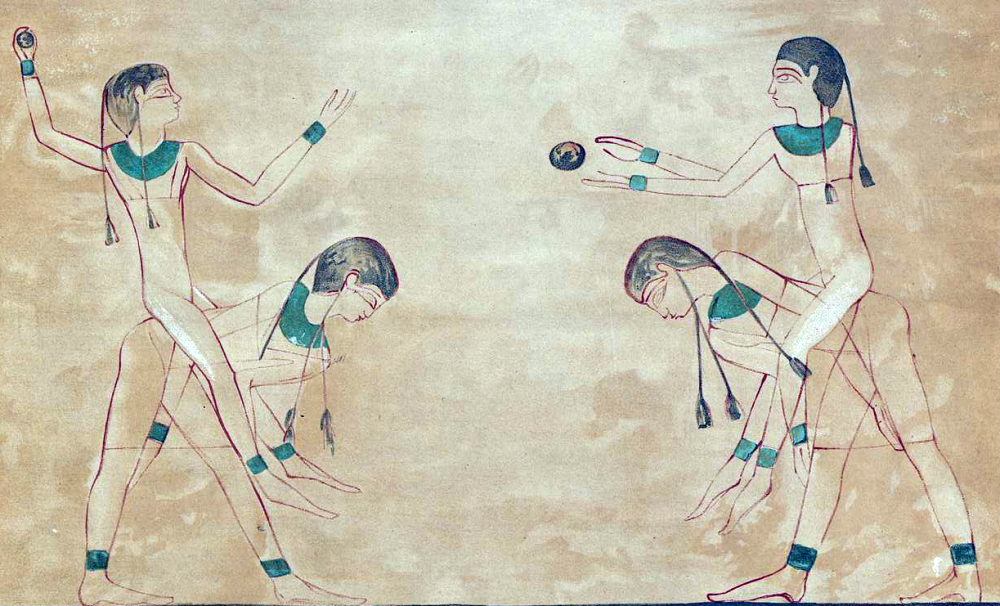
Ancient Egypt – Children Life

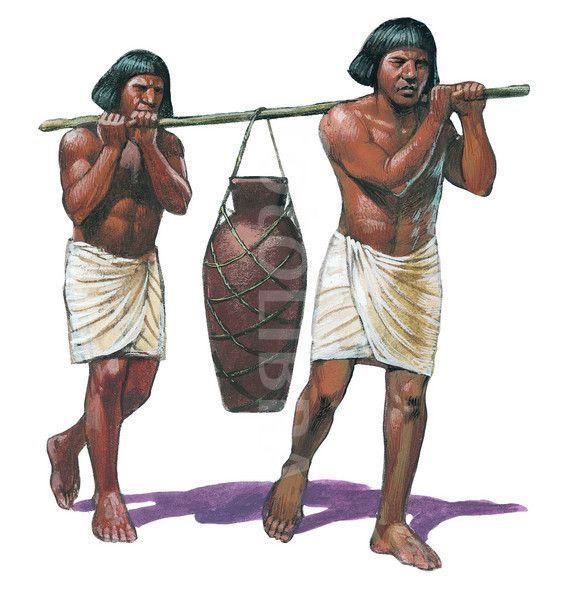
1. Farmers: The Foundation of the Ancient Egyptian Workforce

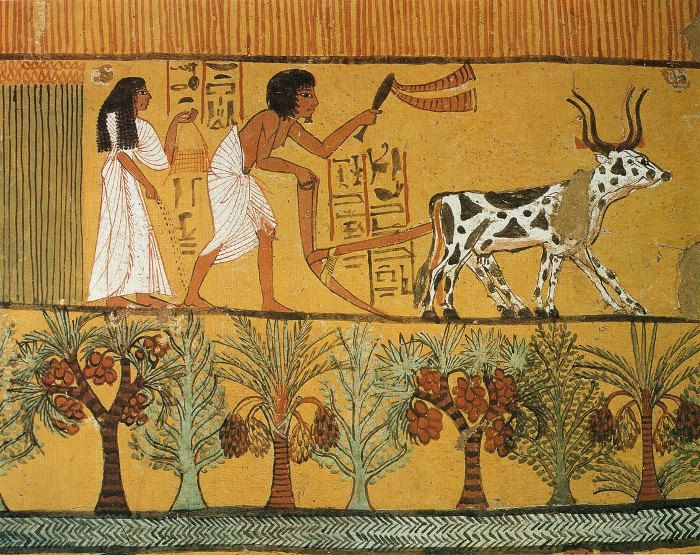
Farmers were the largest and most important group in the Ancient Egypt work system. Since agriculture was the foundation of the economy, farmers provided the food and raw materials needed to support the entire population. Their work along the Nile River allowed Egyptian civilization to grow and prosper.

The majority of Egyptians lived in villages near agricultural lands. Farmers cultivated crops such as wheat, barley, flax, vegetables, and fruits. Wheat was especially important because it was used to produce bread, one of the main foods in Ancient Egyptian society. Barley was used for making beer, which was also an important part of daily life.

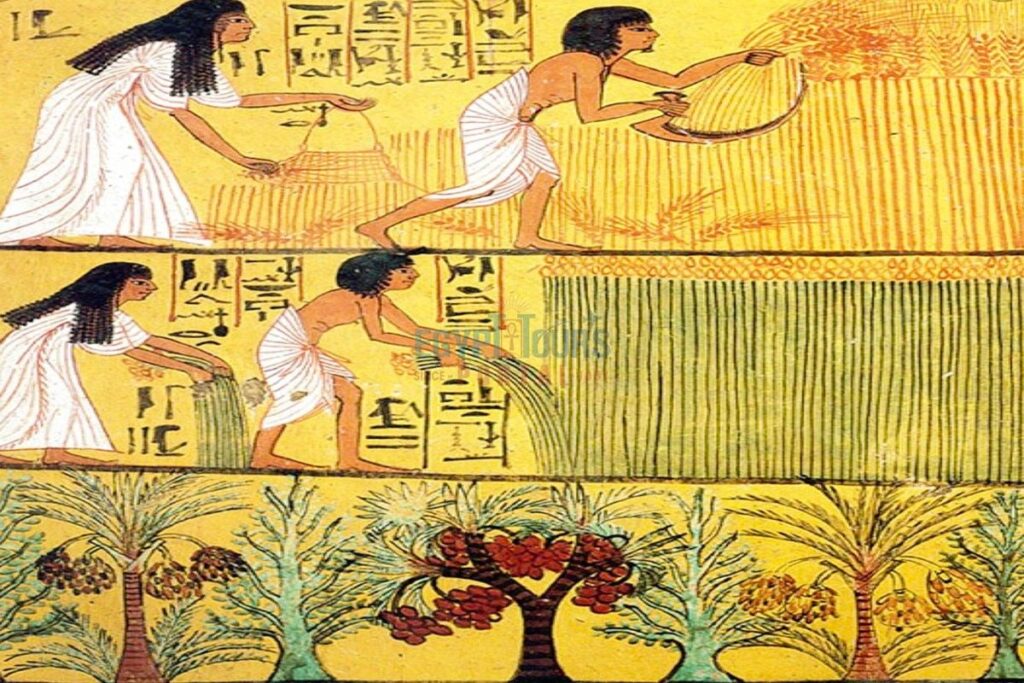
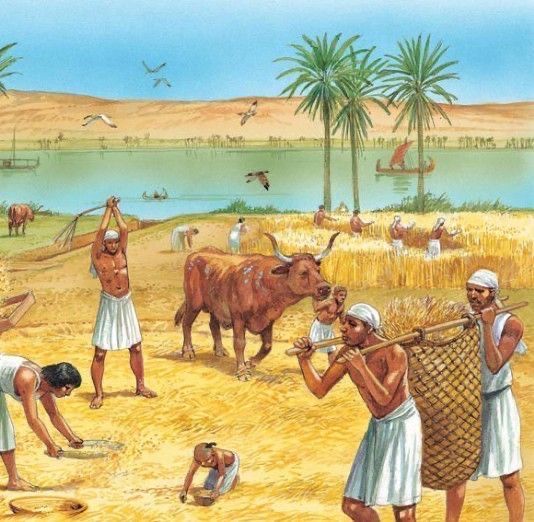
The farming year was organized around the Nile flood cycle. Ancient Egyptians divided agricultural activities into three main seasons: the flooding season, the planting season, and the harvesting season. During the flood season, farmers had more available time and often participated in construction projects organized by the government.

Farmers used different tools to improve agricultural production. They worked with wooden plows, sickles, hoes, and irrigation equipment. They also used canals and water management systems to distribute Nile water across farmland.

In addition to crop production, many farmers raised animals such as cattle, sheep, goats, and poultry. Animal farming provided meat, milk, leather, and materials used in daily life.

Farmers paid taxes to the government through agricultural products. Officials measured harvests and collected portions of crops to support temples, armies, workers, and government institutions.

Although farmers were among the lowest social groups, their contribution was extremely valuable. Without their agricultural production, Egypt could not have supported its cities, monuments, or complex administration.

The work of farmers represents the foundation of the Ancient Egyptian economy and labor system. Their relationship with the Nile River created one of the most productive agricultural societies of the ancient world.
2. Craftsmen and Skilled Workers in Ancient Egypt

Craftsmen were among the most respected workers in the Ancient Egypt work system because they possessed specialized skills required to create valuable products. Their abilities contributed greatly to Egyptian art, architecture, trade, and cultural development.

Ancient Egyptian craftsmen worked in many fields, including jewelry making, pottery production, woodworking, metalworking, stone carving, textile production, and sculpture. Each profession required years of training and experience.

Jewelry makers created beautiful objects using gold, silver, precious stones, and colored materials. Egyptian jewelry was not only decorative but also had religious and symbolic meanings. Royal families and temples especially valued skilled jewelers.

Stone workers played a crucial role in construction projects. They extracted and shaped limestone, granite, and sandstone used for temples, statues, and monuments. Their craftsmanship helped create many of the structures that represent Ancient Egypt today.

Carpenters produced furniture, boats, doors, and wooden objects. Since Egypt had limited forests, imported wood was highly valuable, making skilled woodworking an important profession.

Textile workers produced linen, one of Egypt’s most famous products. Linen was used for clothing, household materials, and religious purposes. Skilled weavers created high-quality fabrics that were also used in trade.

Potters produced containers for storing food, water, oils, and other goods. Their products were essential for everyday life and economic activities.

Many craftsmen worked in specialized workshops connected to temples, royal palaces, and government institutions. These workshops provided materials, tools, and organized employment.

Skilled workers often received better wages and living conditions compared with ordinary laborers. They could gain respect and higher social status because their skills were valuable.

The work of craftsmen demonstrates the importance of specialization in Ancient Egypt. Through creativity, technical knowledge, and dedication, craftsmen helped build a civilization known for its remarkable artistic and architectural achievements.
3. Builders and Construction Workers in Ancient Egypt

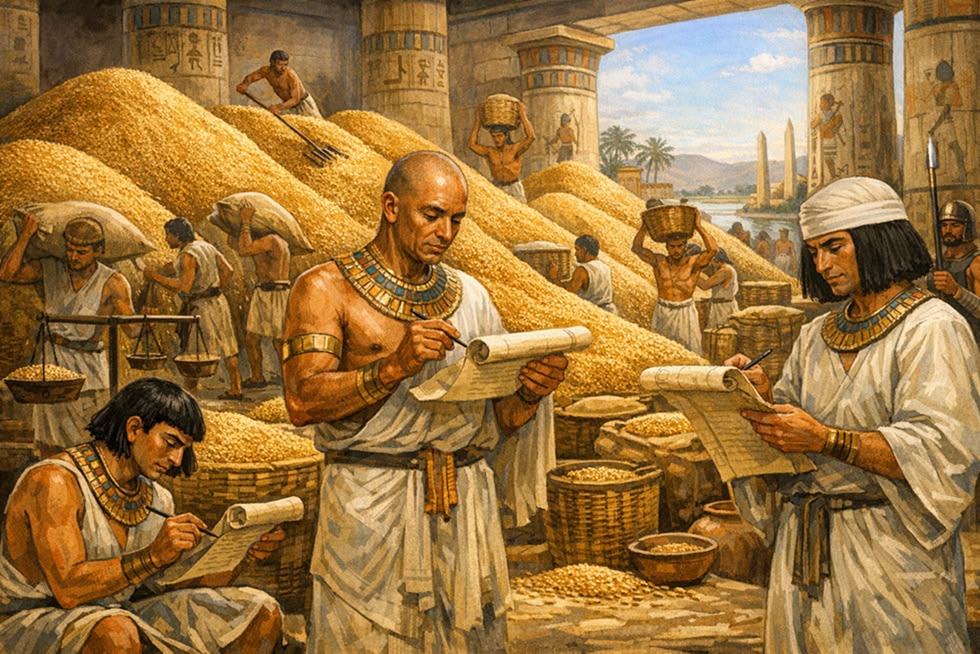
Construction workers were among the most important groups in the Ancient Egypt labor system. They were responsible for building some of history’s greatest monuments, including pyramids, temples, tombs, statues, and royal structures.

Large construction projects required thousands of workers with different skills. The workforce included stone cutters, builders, engineers, transport workers, architects, painters, and supervisors. Each group had a specific role in completing massive projects.

Stone workers extracted blocks from quarries and shaped them according to building plans. Transport workers moved heavy stones using sledges, boats, and organized transportation systems. Builders carefully placed stones to create strong and impressive structures.

Engineers and architects planned construction projects. They calculated measurements, designed structures, and supervised technical details. Their knowledge allowed Egyptians to create buildings with remarkable accuracy.

Many workers were organized into teams. Archaeological discoveries show that construction workers lived in organized communities near major building sites. These communities included houses, bakeries, workshops, and storage areas.

Workers received regular payments in the form of food supplies and other goods. They were provided with bread, beer, vegetables, clothing, and sometimes additional benefits.

The government played a major role in construction labor. Officials organized workers, supplied materials, and managed schedules. Scribes recorded the number of workers and the resources needed for projects.

Construction work was not always performed by slaves, as commonly believed. Many workers were skilled laborers, craftsmen, and seasonal workers who contributed through organized employment systems.

The achievements of Egyptian builders demonstrate the effectiveness of the Ancient Egyptian work system. Their cooperation, skills, and organization allowed Egypt to create monuments that remain among the greatest achievements of human history.
4. Scribes and Administrative Workers in Ancient Egypt

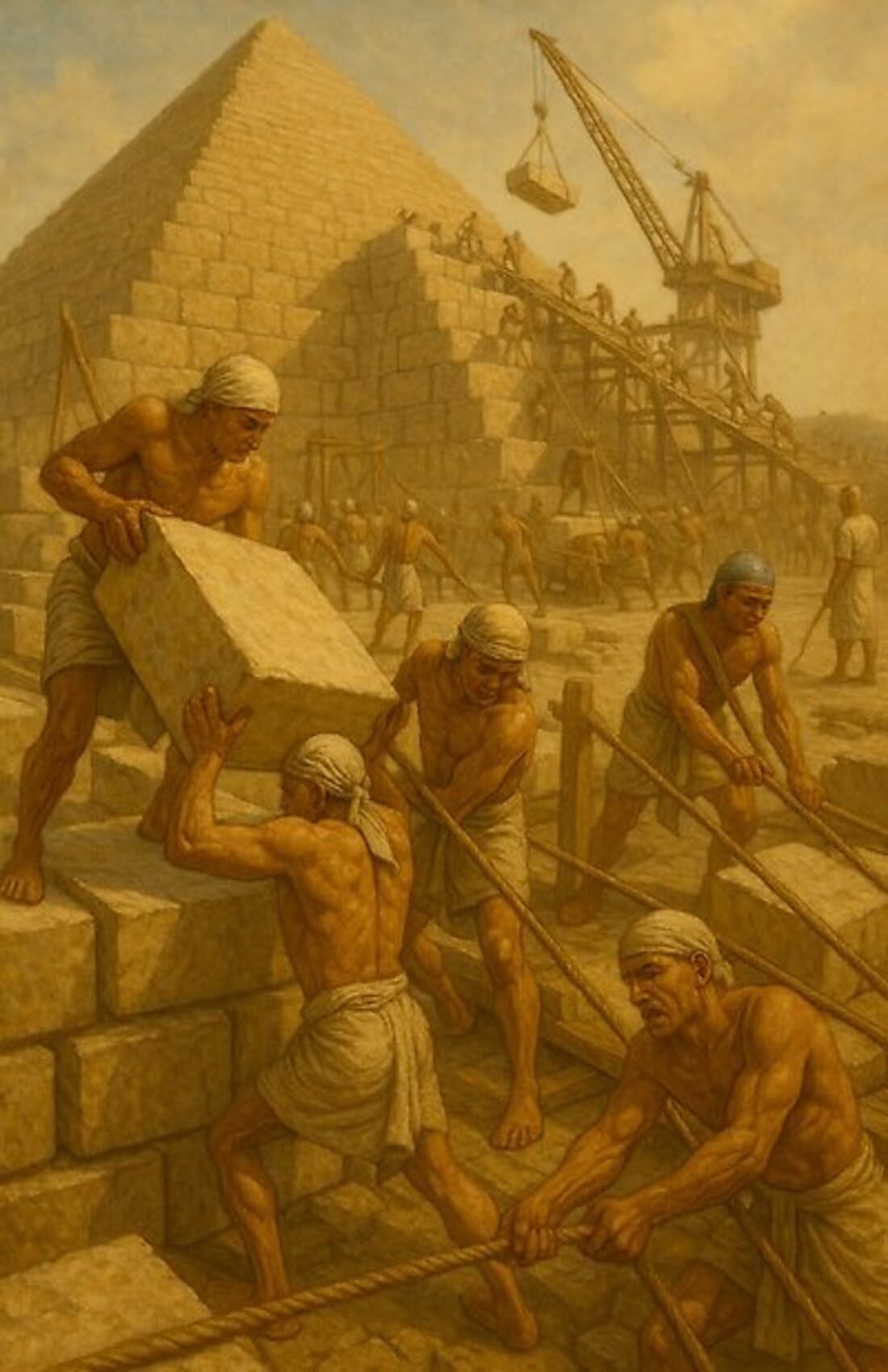
Scribes and administrative workers were among the most important groups in the Ancient Egypt work system because they managed the information, records, and organization needed to operate one of the world’s most complex civilizations. Their ability to read and write made them highly respected members of society and essential employees of the government, temples, and royal institutions.

Unlike most workers who performed physical labor, scribes worked mainly with documents, calculations, and administrative tasks. They recorded taxes, agricultural production, trade activities, worker payments, legal documents, and government decisions. Their records helped officials manage the resources of the kingdom efficiently.

Becoming a scribe required extensive education and training. Young students learned hieroglyphic writing, mathematics, accounting, and administrative skills. Because literacy was limited, scribes enjoyed a higher social position compared with farmers and ordinary laborers.

Scribes worked in many areas of Egyptian society. Government scribes assisted officials in managing provinces, collecting taxes, and organizing public projects. Temple scribes recorded religious activities, donations, and temple resources. Royal scribes worked directly for the Pharaoh and documented important political and economic matters.

The role of scribes was especially important in the economy. They measured farmland, calculated harvests, recorded payments, and supervised storage facilities. Their work ensured that taxes and resources were collected and distributed correctly.

Scribes also supported large construction projects. They kept records of workers, materials, tools, and supplies. Without their administrative skills, projects such as pyramids, temples, and royal tombs would have been difficult to organize.

Many scribes became government officials because their knowledge and skills were valuable. Some reached high positions and gained wealth and influence.

The importance of scribes shows that the Ancient Egyptian work system depended not only on physical labor but also on intellectual skills. Through writing, calculation, and administration, scribes helped maintain the stability and success of Egyptian civilization for thousands of years.

5. Soldiers and Military Roles in the Ancient Egyptian Work System

Soldiers were an important part of the Ancient Egypt work system, protecting the kingdom, securing borders, and supporting economic activities. Although their primary role was military defense, soldiers also contributed to trade protection, resource management, and government expansion.

The Egyptian military developed over time as the kingdom faced internal and external challenges. Soldiers protected Egypt from invasions, guarded important locations, and maintained security along borders and trade routes.

The army included different ranks and professions. Ordinary soldiers formed the main fighting force, while officers, commanders, archers, chariot warriors, and military administrators managed operations. Each group had specific responsibilities within the military structure.

Soldiers helped protect valuable economic resources. Gold mines, quarries, trade routes, and foreign expeditions required security. Military forces accompanied some mining and trading missions to protect workers and valuable materials.

During periods of expansion, the Egyptian army played a role in gaining access to foreign resources. Military campaigns brought wealth, tribute, and valuable goods into Egypt, strengthening the economy.

Soldiers received compensation from the government. Their payments could include food, land grants, clothing, weapons, and other benefits. Experienced soldiers and officers often received higher rewards for their service.

The military also provided employment opportunities for many Egyptians. Young men could join the army and gain social status, income, and access to resources.

Soldiers worked closely with other parts of the economy. They protected farmers, craftsmen, merchants, and government officials, allowing economic activities to continue safely.

The role of soldiers demonstrates that the Ancient Egyptian labor system included many different professions beyond agriculture and construction. Military service was an important occupation that supported political stability and economic development.

Through organization, training, and government support, the Egyptian military became one of the strongest institutions of the ancient world and played a major role in protecting Egypt’s civilization.

6. Merchants and Trade Workers in Ancient Egypt

Merchants and trade workers played a significant role in the Ancient Egypt work system by connecting producers, markets, and foreign civilizations. Their activities helped move goods throughout Egypt and expanded the kingdom’s economic relationships with neighboring regions.

Merchants were responsible for buying, selling, transporting, and exchanging products. They traded agricultural goods, textiles, pottery, tools, jewelry, and luxury items within Egypt and with foreign lands.

The Nile River was essential for Egyptian merchants. Boats allowed them to transport goods between villages, cities, temples, and ports. River transportation made trade faster and more efficient.

Some merchants operated in local markets, exchanging everyday goods such as food, clothing, and household items. Others participated in long-distance trade missions to regions such as Nubia, Punt, and the Levant.

International merchants helped Egypt obtain valuable resources that were not available locally. They brought back cedar wood, incense, precious stones, metals, ivory, and exotic products. In exchange, Egypt exported grain, gold, linen, papyrus, and crafted goods.

Trade workers included sailors, shipbuilders, port workers, and caravan organizers. These professions supported the movement of goods and were essential for maintaining commercial networks.

The government often supervised major trade activities. Officials organized foreign expeditions, protected trade routes, and recorded imported and exported goods. Scribes documented transactions and ensured proper management.

Merchants contributed to cultural exchange as well. Through their travels, they introduced new ideas, materials, and technologies to Egyptian society.

Although merchants were not always among the highest social classes, their work was important for economic growth. They helped create connections between different communities and supported the prosperity of the kingdom.

The role of merchants demonstrates the complexity of the Ancient Egyptian economy. Trade was not only an economic activity but also a way of connecting Egypt with the wider ancient world.

7. Women and Work Roles in Ancient Egypt

Women played an important role in the Ancient Egypt work system, contributing to economic, social, religious, and household activities. Unlike many ancient societies, Egyptian women had significant legal and economic rights, allowing them to participate in various occupations and manage property.

The daily work of women depended on their social position and family background. Many women worked in agriculture, food production, textile manufacturing, trade, and domestic management. Their contributions were essential to the stability of Egyptian households and communities.

Textile production was one of the most common occupations for women in Ancient Egypt. Women worked as spinners and weavers, producing linen fabrics used for clothing, household items, and religious purposes. Linen was one of Egypt’s most important products and played a major role in local and international trade.

Women also participated in agricultural activities. They helped with harvesting crops, processing grain, preparing food, and managing livestock. Farming communities depended on the combined efforts of men and women to maintain production.

Some women worked in markets and small businesses. They could produce and sell goods such as bread, beer, textiles, perfumes, and handmade products. Egyptian women had the legal ability to own property, make contracts, and manage financial matters.

In religious institutions, some women served as priestesses or musicians. These roles were especially important in temples where music, ceremonies, and religious activities were performed.

Royal and wealthy women sometimes held powerful positions. Queens and noblewomen managed estates, supervised servants, and controlled economic resources. Some women even influenced political affairs and played important roles in government.

Household work was also considered a valuable contribution. Women managed family resources, prepared food, cared for children, and organized domestic activities that supported society.

The participation of women in different occupations shows that the Ancient Egyptian labor system was more diverse than many other ancient civilizations. Women contributed to production, trade, religion, and family life.

The role of women demonstrates that economic success in Ancient Egypt depended on the efforts of many groups. Their work helped maintain the strength and stability of Egyptian society for thousands of years.

8. Workers’ Rights, Conditions, and Daily Life in Ancient Egypt

The working conditions and rights of Ancient Egyptian workers were an important part of the labor system. Although life was challenging for many workers, especially farmers and laborers, evidence shows that Egyptian workers had organized systems of employment, payment, and protection.

Workers in Ancient Egypt were not all treated the same. Their living conditions depended on their occupation, social status, skills, and employer. Skilled craftsmen, government workers, and temple employees often enjoyed better conditions than ordinary laborers.

One of the most important aspects of worker life was regular payment. Workers usually received wages in the form of food supplies and goods, including grain, bread, beer, vegetables, fish, and clothing. These payments helped support workers and their families.

Construction workers involved in royal projects had organized communities. Archaeological discoveries from workers’ villages reveal planned housing, bakeries, storage areas, and facilities that supported daily life.

Workers also had specific rights and could express complaints. Historical records show that some workers protested when they did not receive their expected payments. The famous strike of workers at Deir el-Medina during the New Kingdom demonstrates that laborers could demand their rights.

Working hours depended on the occupation and season. Farmers followed the agricultural calendar, while craftsmen and builders worked according to project requirements. During the Nile flood season, many agricultural workers participated in construction activities.

Safety conditions varied depending on the job. Mining and quarry workers faced difficult environments, while craftsmen and administrators often worked in more comfortable settings.

Workers also received support from institutions. Temples and royal organizations provided resources, tools, and supplies to maintain their workforce.

The Ancient Egyptian labor system shows that workers were an essential part of society. Their contributions were recognized because the success of the kingdom depended on their skills and effort.

The organization of worker payments, communities, and labor responsibilities demonstrates that Ancient Egypt had a surprisingly advanced approach to managing employment and workforce needs.

9. Labor Organization and Government Control of Workers

The organization of labor in Ancient Egypt was highly structured and controlled by government institutions, temples, and royal authorities. Managing a large workforce required careful planning, record keeping, and distribution of resources.

The Pharaoh was the highest authority in the Egyptian labor system. The government organized major projects, controlled resources, and assigned workers to important activities such as agriculture, construction, mining, and military service.

Officials supervised different areas of labor. They managed workers, provided supplies, organized schedules, and reported progress to higher authorities. Their administrative role ensured that large projects could be completed efficiently.

Scribes were essential for labor organization. They recorded the names of workers, job assignments, payments, supplies, and working hours. These records helped the government maintain control over thousands of employees.

Large construction projects required advanced workforce management. Workers were divided into teams with specific responsibilities. Stone cutters, builders, transport workers, artists, and supervisors worked together under organized leadership.

Temples also controlled large numbers of workers. They employed farmers, craftsmen, priests, and servants to manage temple lands, workshops, and religious activities.

The labor system was closely connected with taxation. The government collected resources from agriculture and used them to support workers through food distribution and other payments.

Seasonal labor was another important feature. During the Nile flood period, when farming activities stopped temporarily, many farmers worked on government projects. This allowed Egypt to use its workforce effectively throughout the year.

The government also managed specialized labor such as mining expeditions. Workers sent to distant locations required transportation, supplies, and protection.

The organized nature of the Egyptian labor system contributed to the success of the civilization. It allowed thousands of people to cooperate in building monuments, producing goods, and maintaining economic activities.

The Ancient Egyptian approach to labor organization shows the importance of administration and planning. Through effective management, Egypt created a workforce capable of achieving remarkable accomplishments that continue to inspire the world today.

10. Slavery and Forced Labor in Ancient Egypt

The topic of slavery and forced labor in Ancient Egypt is an important part of understanding the Ancient Egyptian work system. For many years, popular images suggested that large monuments such as pyramids were built mainly by slaves, but archaeological discoveries show a more complex reality. The Egyptian workforce included farmers, skilled craftsmen, seasonal workers, paid laborers, and some groups who performed forced labor.

In Ancient Egyptian society, labor obligations were often connected to the government system. Many people contributed work to state projects as part of their social responsibilities. During periods when agricultural activities were limited because of the Nile flood, farmers could be assigned to construction projects, irrigation works, and other public activities.

Forced labor, sometimes called corvée labor, was used by the state for certain projects. Workers could be required to serve the government for a specific period, especially in large construction projects, mining expeditions, and public works. This system allowed the Pharaoh and officials to organize large numbers of workers.

However, evidence from worker settlements shows that many monument builders were not slaves. For example, communities near major construction sites contained organized housing, bakeries, storage areas, and medical facilities. Workers received food supplies and other forms of payment for their contributions.

Slavery did exist in Ancient Egypt, especially during periods of warfare and foreign expansion. Captured prisoners could become slaves and were sometimes used in households, agriculture, mining, or domestic services. However, enslaved people represented only one part of the larger labor system.

Skilled workers and craftsmen generally had higher status than forced laborers. Their specialized knowledge was highly valued, and many enjoyed better living conditions and regular compensation.

The Egyptian government carefully organized labor through officials and scribes. Records were kept of workers, supplies, assignments, and payments, demonstrating a structured approach to workforce management.

Understanding slavery and labor in Ancient Egypt requires recognizing the diversity of occupations and employment systems. The construction of temples, pyramids, and monuments was achieved through a combination of skilled workers, organized labor, and government administration rather than a single workforce group.

The study of Ancient Egyptian labor provides valuable insight into how one of history’s greatest civilizations managed human resources and completed extraordinary achievements.

11. The Importance of Work in Ancient Egyptian Society and Economy

Work had a central role in the Ancient Egyptian society and economy, shaping daily life, social organization, and the success of the civilization. Egyptians believed that every person had a responsibility to contribute to maintaining order and prosperity in the kingdom.

The concept of Ma’at, which represented balance, harmony, and order, influenced many aspects of Egyptian life. Productive work was considered part of maintaining this balance because farmers, craftsmen, officials, and workers all contributed to the stability of society.

Agricultural work was the foundation of the economy. Farmers produced food that supported the population, supplied temples, and provided resources for trade. Without agricultural production, Egypt could not have supported cities, armies, or large construction projects.

Craftsmanship was also highly valued. Skilled workers created tools, furniture, jewelry, statues, and artistic objects that reflected Egyptian culture and supported economic development. Their products were used locally and exchanged with foreign civilizations.

Administrative work performed by scribes and officials was essential for managing the kingdom. They organized taxes, recorded resources, supervised workers, and maintained government operations.

Religious work also played an important role. Priests, temple workers, and craftsmen supported religious institutions that controlled large economic resources and influenced Egyptian society.

Military service represented another important occupation. Soldiers protected borders, secured trade routes, and supported the expansion of Egyptian influence.

Work also provided social identity. A person’s occupation often determined their position in society and their opportunities. Skilled professions could provide respect and economic security.

The Egyptian economy depended on cooperation between different professions. Farmers produced raw materials, craftsmen transformed them into products, merchants distributed goods, and administrators managed resources.

The importance of work extended beyond economic benefits. Egyptians viewed productive activity as a way to support their families, communities, and the kingdom itself.

The Ancient Egyptian work system demonstrates how organized labor contributed to one of the longest-lasting civilizations in history. Through cooperation, specialization, and dedication, workers created the foundation for Egypt’s achievements.

12. The Legacy of the Ancient Egyptian Work System

The legacy of the Ancient Egypt work system continues to influence our understanding of labor organization, economic management, and social development. Ancient Egyptians created one of the most advanced workforce systems of the ancient world, combining agriculture, craftsmanship, administration, construction, and trade.

One of the greatest achievements of the Egyptian labor system was its ability to organize thousands of workers for large-scale projects. The construction of pyramids, temples, and monuments required detailed planning, skilled labor, and effective resource management.

The specialization of occupations was another important legacy. Ancient Egyptians developed many professions, including scribes, architects, engineers, builders, craftsmen, farmers, merchants, and soldiers. This division of labor helped create a productive and organized society.

The administrative methods used by Egyptian officials and scribes influenced later civilizations. Their systems of record keeping, taxation, and workforce management demonstrated the importance of organization in maintaining a complex state.

Ancient Egypt also provides valuable lessons about worker communities and employment systems. Archaeological discoveries reveal that many workers lived in organized settlements with access to food supplies, housing, and essential services.

The skills of Egyptian craftsmen remain admired today. Their achievements in stone carving, jewelry making, architecture, and textile production demonstrate advanced knowledge and creativity.

The connection between work and society was another important aspect of Egyptian civilization. Egyptians understood that the success of the kingdom depended on cooperation between different groups and professions.

Modern historians continue to study the Ancient Egyptian labor system to understand how early civilizations managed large populations and economic resources.

The legacy of Ancient Egyptian workers is visible in the monuments, artifacts, and records they left behind. Their efforts created achievements that survived thousands of years and continue to represent human creativity and organization.

The Ancient Egypt work system proves that a successful civilization depends not only on rulers and leaders but also on the dedication and skills of ordinary workers who build, produce, and maintain society.

Frequently Asked Questions

The main occupations included farming, construction, craftsmanship, writing, administration, trade, military service, fishing, and religious work.

Most evidence suggests that pyramids were built mainly by organized workers, including skilled craftsmen, laborers, and seasonal workers. Slavery existed in Ancient Egypt, but it was not the main workforce behind pyramid construction.

Workers were usually paid with goods such as grain, bread, beer, vegetables, clothing, and other necessities rather than coins.


Farming was the most important occupation because agriculture supported the economy and provided food for the entire population.


Yes, women worked in many areas including textile production, agriculture, trade, household management, and religious roles. Some women also owned property and managed businesses.