
1. Ancient Egyptian Mathematics and Numerical Innovation
Mathematics was one of the most important areas of Ancient Egypt innovation and science. Egyptians developed practical mathematical methods that were essential for agriculture, construction, taxation, trade, and administration.
The Egyptian numerical system used symbols to represent different powers of ten. Scribes combined these symbols to record quantities and perform calculations.
Fractions were particularly important. Egyptians developed methods for working with fractions, although their notation differed considerably from modern mathematical notation.
Scribes used arithmetic to calculate quantities of grain, livestock, building materials, wages, and taxes.
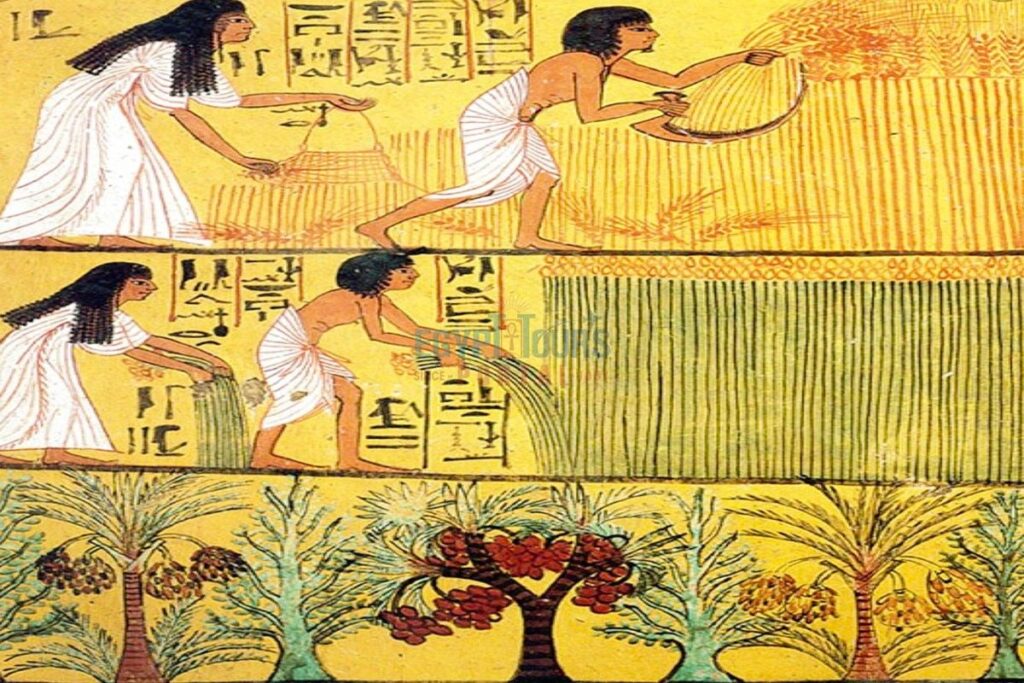
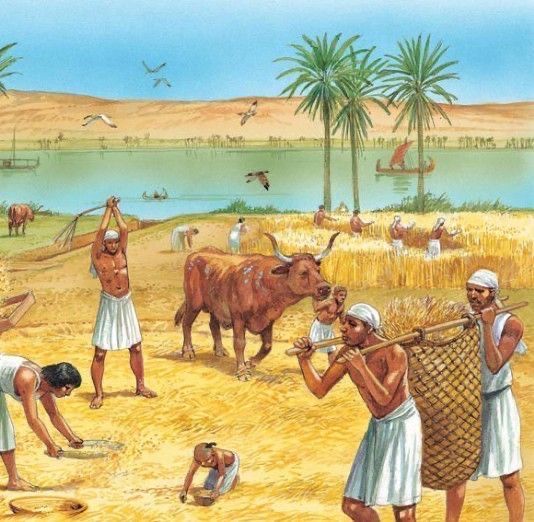
Geometry was equally valuable. After the annual Nile flood, officials sometimes needed to measure agricultural fields and determine boundaries. Mathematical methods helped them calculate areas and organize taxation.
Construction projects required precise measurements. Architects and builders needed to calculate dimensions, slopes, volumes, and quantities of materials.
The Rhind Mathematical Papyrus is one of the best-known surviving sources of Egyptian mathematical knowledge. It contains numerous mathematical problems involving arithmetic, fractions, geometry, and practical calculations.
The Moscow Mathematical Papyrus provides additional evidence of Egyptian mathematical techniques, including problems involving geometry and volumes.
Egyptian mathematics was strongly practical. Rather than developing mathematics purely as an abstract discipline, scribes generally applied it to real administrative and engineering problems.
This practical approach was extremely effective for a society that depended on agriculture, construction, and centralized administration.
Mathematical knowledge was passed from experienced scribes to students through written exercises and repeated practice.
The ability to calculate accurately was highly valued because errors could affect taxes, supplies, land measurements, or construction projects.
Egyptian mathematics therefore provided an essential foundation for many other areas of civilization.
From surveying farmland to constructing monumental architecture, mathematical knowledge allowed Egyptians to solve problems that would otherwise have been extremely difficult.
2. Ancient Egyptian Medicine and Medical Innovation
Ancient Egyptian medicine represents one of the most impressive areas of Ancient Egypt innovation and science. Egyptian physicians developed extensive practical knowledge about injuries, diseases, medicines, and treatments.
Medical knowledge was recorded in papyri, allowing information to be preserved and transmitted between generations.
The Ebers Papyrus contains numerous medical remedies and descriptions of health conditions. It provides valuable evidence about Egyptian approaches to medicine.
The Edwin Smith Papyrus focuses heavily on injuries and trauma. Its organization of cases demonstrates a practical approach involving examination, diagnosis, prognosis, and treatment.
Egyptian physicians treated wounds using materials such as honey, oils, plant products, and other substances. Some treatments had practical antibacterial or protective properties, even though Egyptians did not understand modern microbiology.
Egyptians also had knowledge of bones, wounds, burns, and other physical injuries.
Medical practitioners could specialize in particular areas. Egyptian sources mention physicians associated with different parts of the body and particular types of treatment.
At the same time, Egyptian medicine was not completely separate from religion. Magical formulas, prayers, and religious practices could be used alongside physical treatments.
This combination reflects the Egyptian understanding of illness, which included both physical and supernatural explanations.
Egyptian knowledge of anatomy was also influenced by the practice of mummification, although the exact relationship between embalming and medical knowledge remains complex.
Hygiene was valued in Egyptian society. Cleanliness, bathing, diet, and personal care were considered important aspects of health.
Medical training was likely transmitted through experienced practitioners and specialized institutions.
Although Egyptian medicine cannot be considered modern scientific medicine, its emphasis on observation, written case descriptions, diagnosis, and treatment represents an important stage in the history of medical knowledge.
The surviving medical papyri provide remarkable evidence of how Egyptians attempted to understand and treat the human body.
3. Ancient Egyptian Astronomy and the Calendar
Astronomy was another important field of Ancient Egypt innovation and science. Egyptians carefully observed the sun, moon, and stars to organize time and understand seasonal changes.
The agricultural cycle depended heavily on the Nile flood. Egyptians therefore needed reliable methods for identifying seasons and planning farming activities.
Egyptians developed a calendar consisting of 365 days. The year was divided into three major agricultural seasons associated with the Nile and farming cycle.
The appearance of Sirius, known to Egyptians as Sopdet, was particularly important. Its heliacal rising was associated with the annual Nile flood and the beginning of a new agricultural cycle.
Egyptian priests and scholars observed the night sky and incorporated astronomical knowledge into religious and administrative traditions.
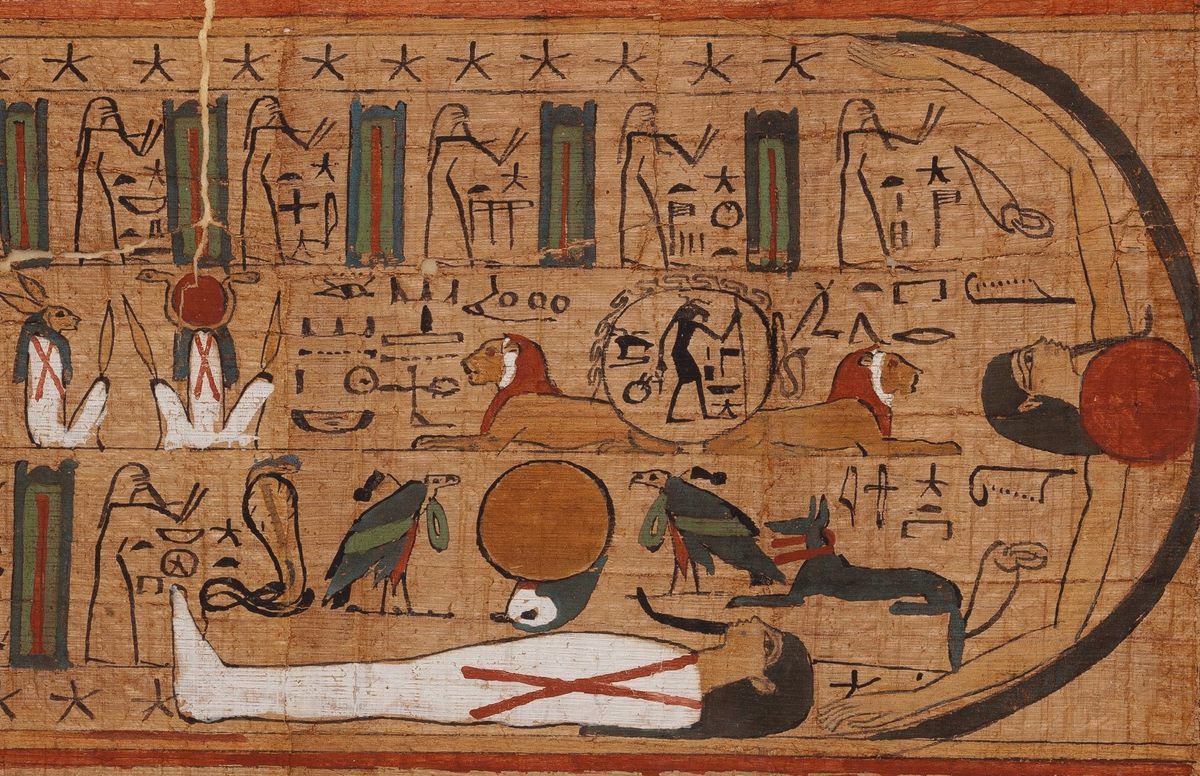
Stars were also important in Egyptian religious beliefs. Certain celestial bodies were associated with gods and the journey of the deceased through the afterlife.
Astronomical knowledge influenced temple architecture. Some Egyptian temples and structures were oriented according to celestial or solar patterns.
The movement of the sun was particularly important. Egyptians used observations of shadows and sunlight to understand time during the day.
Sundials and other timekeeping methods helped Egyptians divide the day into manageable periods.
Water clocks were also used to measure time, particularly during nighttime or when sunlight was unavailable.
Egyptian astronomical knowledge was therefore both practical and religious.
It helped administrators organize agricultural activities and religious festivals while also contributing to the symbolic design of temples and monuments.
Although Egyptian astronomy was different from modern astronomy, it involved systematic observation of celestial phenomena over long periods.
The ability to track predictable astronomical cycles demonstrates the impressive observational skills of Egyptian scholars.
Astronomy became another example of how Egyptians transformed repeated observations of nature into practical knowledge that supported agriculture, religion, and administration.