
Welcome to

Ancient Egypt Calendar System

The Ancient Egypt calendar system was one of the earliest and most influential methods of timekeeping in human history. Developed thousands of years ago, the Egyptian calendar helped organize agriculture, religious festivals, government administration, trade, and daily life throughout the kingdom. By carefully observing the movements of the sun, stars, and the annual flooding of the Nile River, the ancient Egyptians created a remarkably accurate calendar that laid the foundation for later calendar systems used by the Greeks, Romans, and other civilizations.

The Ancient Egyptian calendar consisted of 365 days divided into 12 months, with each month containing 30 days. To complete the year, five additional days known as the epagomenal days were added at the end of the calendar. These extra days were associated with the births of important Egyptian deities, including Osiris, Isis, Horus, Seth, and Nephthys. This structure made the Egyptian calendar one of the earliest known solar calendars in the world.

The calendar was closely connected to the annual cycle of the Nile River. Ancient Egyptians divided the year into three seasons: Akhet (the Flooding Season), Peret (the Growing Season), and Shemu (the Harvest Season). Each season lasted four months and reflected the agricultural activities that sustained Egyptian civilization. This seasonal calendar allowed farmers to plan planting and harvesting while helping officials manage resources across the kingdom.

Astronomy played a crucial role in the Egyptian calendar system. The heliacal rising of Sirius, known to the Egyptians as Sopdet, signaled the beginning of the Nile flood and marked the start of the new year. Priests and astronomers carefully observed celestial events to maintain the calendar and determine the dates of religious festivals, temple ceremonies, and state events.

The Ancient Egypt calendar system demonstrates the remarkable scientific knowledge and organizational skills of Egyptian civilization. By combining astronomy, agriculture, religion, and administration into a unified method of timekeeping, the Egyptians created a calendar that influenced later cultures and remains one of the most significant achievements in the history of science.

In this guide, we explore the Ancient Egypt calendar system, including its months, seasons, astronomical foundations, religious significance, agricultural importance, and lasting influence on the development of calendars throughout the ancient world.

1. The Origins of the Ancient Egyptian Calendar

The origins of the Ancient Egypt calendar system are closely connected with the Nile River and the agricultural cycle. Egyptian society depended on the predictable rhythm of flooding, planting, and harvesting.

Early Egyptians needed to recognize recurring natural events. The annual Nile inundation was one of the most important.

By observing the river, the sun, moon, and stars, Egyptians gradually developed methods for organizing the passage of time.

The earliest Egyptian systems of timekeeping were probably based partly on lunar observations and natural seasonal events.

As Egyptian civilization became more centralized, a more standardized calendar became increasingly important.

Government officials needed to organize taxes, agricultural activities, labor, religious ceremonies, and administrative records.

The development of a civil calendar provided a common framework for these activities.

Egyptians eventually established a year of 365 days. This was a remarkable achievement because it provided a relatively simple and consistent system for organizing long periods of time.

The calendar was divided into 12 months, each containing 30 days.

At the end of the 12 months, Egyptians added five extra days to bring the total to 365.

These additional days had special religious significance and were associated with the birthdays of several major gods.

The Egyptian calendar was not created through a single invention. It developed gradually through centuries of observation and administrative use.

Astronomy played an important role because Egyptians could observe recurring celestial events.

The annual appearance of Sirius was particularly valuable for tracking the agricultural year.

The calendar therefore emerged from the interaction between nature and human organization.

Egyptians transformed recurring environmental and astronomical patterns into a system that could regulate the activities of an entire civilization.
2. The 365-Day Egyptian Civil Calendar

The 365-day civil calendar was the central component of the Ancient Egypt calendar system. It consisted of 12 months, each containing exactly 30 days.

This created 360 regular days.

Egyptians then added five additional days at the end of the year, producing a total of 365 days.

The five extra days were called the epagomenal days. They were associated with the births of important deities in Egyptian mythology.

The traditional sequence connected these days with Osiris, Horus the Elder, Set, Isis, and Nephthys.

The structure of the calendar was simple and convenient for administration.

Each month had the same number of days, making calculations easier for scribes and officials.

The 12-month structure also allowed Egyptians to organize agricultural and religious activities efficiently.

However, the civil year had a major limitation. A true solar year is slightly longer than 365 days.

Because the Egyptian calendar did not originally include an additional leap day every four years, the calendar slowly shifted relative to the seasons.

Over many years, a particular calendar date could occur at different points in the agricultural cycle.

This gradual movement is known as the wandering year.

Despite this problem, the calendar remained in use for thousands of years because it was simple and administratively effective.

The fixed 365-day structure was particularly useful for government records, contracts, taxation, and official documents.

Egyptians could calculate dates without needing to constantly adjust the length of individual months.

The calendar demonstrates an important feature of Egyptian administration: simplicity could be highly valuable.

Even though the system was not perfectly synchronized with the solar year, it provided a stable framework for recording events.

The Egyptian 365-day calendar later influenced other calendar systems in the ancient world.

Its structure remains an important achievement in the history of timekeeping.
3. The Three Seasons of the Ancient Egyptian Year

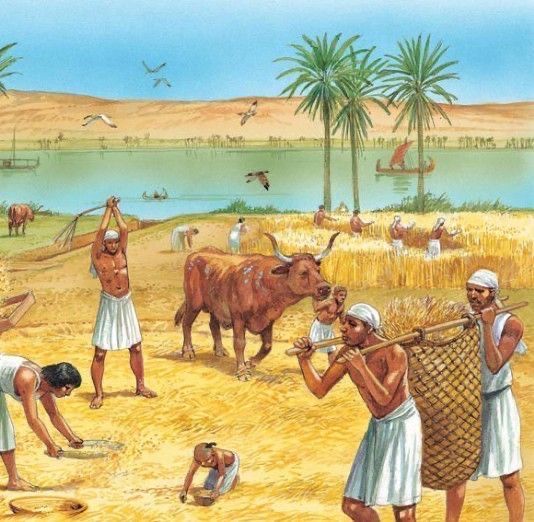
The Egyptian year was divided into three major seasons, each consisting of four months. These seasons were closely connected with the Nile and agriculture.

The first season was Akhet, usually translated as the inundation. It was associated with the period when the Nile flooded agricultural land.

During Akhet, floodwater deposited fertile sediment across the fields.

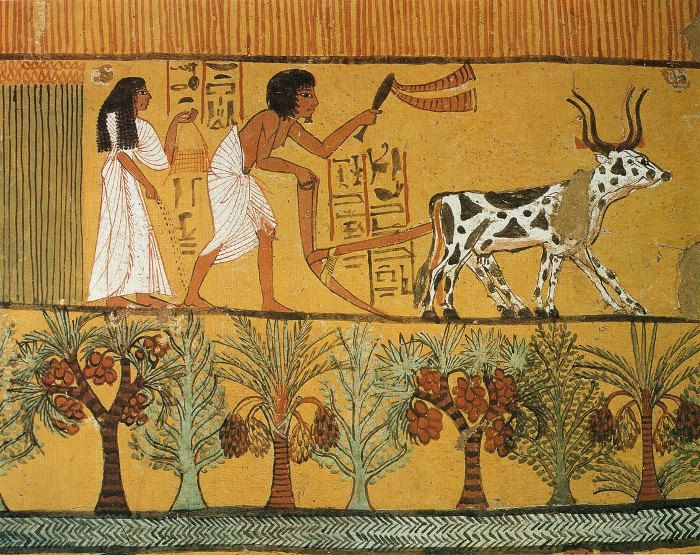
The second season was Peret, often associated with emergence or growth. As the floodwaters receded, farmers could plant crops in the fertile soil.

This was an important agricultural period because successful planting determined the future harvest.

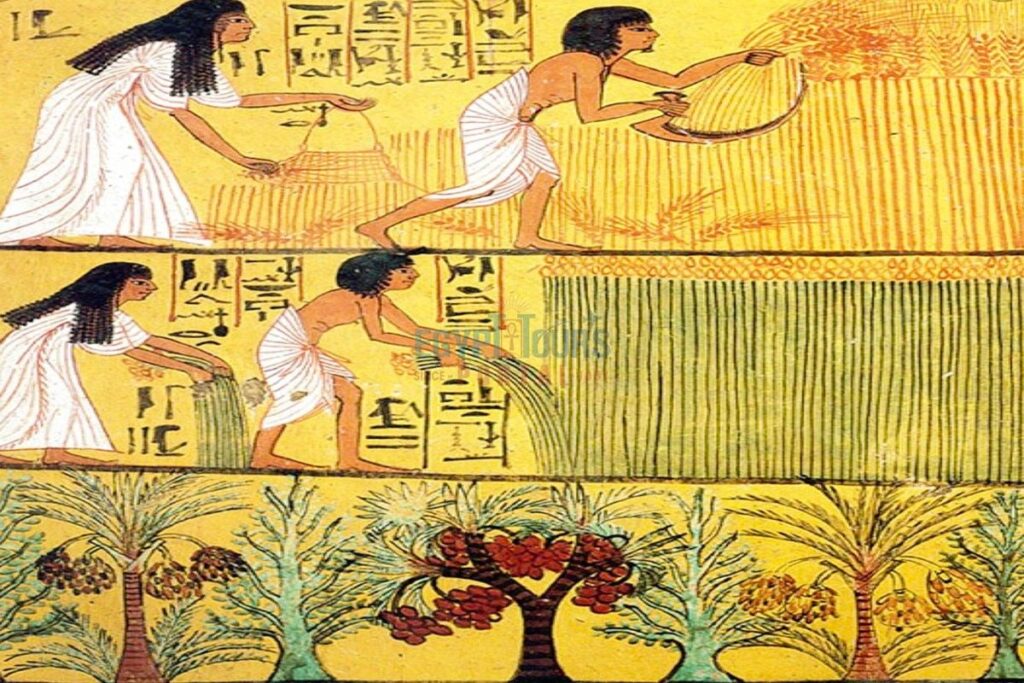
The third season was Shemu, generally associated with harvesting and the dry season.

Farmers gathered crops during this period and prepared food supplies for the coming year.

The three-season system demonstrates how closely Egyptian timekeeping was connected with agriculture.

Rather than viewing the year simply as an abstract measurement of days, Egyptians connected different periods with important environmental activities.

Each season contained four 30-day months.

The final five epagomenal days came after these 12 months.

The exact timing of the seasons could shift relative to the civil calendar because the 365-day year was slightly shorter than the solar year.

Nevertheless, the traditional names preserved the fundamental agricultural structure of Egyptian society.

The Nile was therefore at the heart of Egyptian timekeeping.

The calendar helped farmers and officials understand the expected sequence of flooding, cultivation, and harvesting.

Religious ceremonies were also associated with different times of the year.

The three-season system remained an important feature of Egyptian civilization for thousands of years.

It provides modern researchers with valuable insight into how Egyptians understood the relationship between nature, agriculture, and the passage of time.
4. Ancient Egyptian Months and Month Names

The Ancient Egypt calendar system divided the year into 12 regular months, with four months belonging to each of the three major seasons. Each month contained 30 days, creating a simple structure that was easy for scribes and officials to use.

The four months of Akhet, the inundation season, were traditionally known as Thoth, Phaophi, Athyr, and Choiak. These names became especially familiar through later Greek and Roman usage.

The four months of Peret, the growing season, followed Akhet. They were known as Tybi, Mechir, Phamenoth, and Pharmuthi.

The final four months belonged to Shemu, the harvesting season. They were known as Pachons, Payni, Epiphi, and Mesore.

These names were not always used in exactly the same way throughout Egyptian history. Egyptian month names and calendars changed over thousands of years, and different periods could use different naming conventions.

The months were also sometimes identified by their position within a season rather than by a fixed name.

For example, an Egyptian date could be expressed according to the season, month, and day. A scribe could identify a particular date by stating that it was a certain day of the second month of Akhet.

This system was useful for administrative documents and official records.

Religious festivals were also assigned to specific dates within the calendar.

The final five days of the year were outside the normal 12-month structure. These epagomenal days were considered special and were associated with major Egyptian deities.

The month system demonstrates how Egyptians combined a simple mathematical structure with agricultural and religious concepts.

Although the Egyptian calendar changed over time, the basic division into three seasons and twelve 30-day months remained a central feature of the civil calendar.

5. Ancient Egyptian Lunar Calendar and Moon Cycles

The lunar calendar was another important component of the Ancient Egypt calendar system. Egyptians observed the phases of the moon and used lunar cycles for religious and ceremonial purposes.

Unlike the civil calendar, which contained a fixed 365 days, a lunar calendar followed the approximately 29.5-day cycle of the moon.

Because a lunar year is shorter than a solar year, additional adjustments were sometimes necessary to keep lunar months aligned with the agricultural and seasonal cycle.

Lunar observations were particularly important for religious ceremonies.

Temple priests needed to know when certain festivals and rituals should take place.

The phases of the moon provided a natural way of measuring shorter periods of time.

Egyptians could observe the new moon, full moon, and other lunar phases without sophisticated instruments.

The lunar cycle also influenced the organization of certain religious calendars.

Egyptian dates could therefore be recorded according to different calendrical systems depending on the purpose.

The civil calendar was particularly useful for administration, while lunar calendars had important religious applications.

This distinction shows that Egyptians did not necessarily depend on one calendar for every activity.

Their system of timekeeping was flexible and could accommodate different needs.

The moon was also important in Egyptian mythology. Lunar deities and celestial symbolism appeared in religious traditions.

Priests and astronomers observed the sky carefully and incorporated celestial cycles into their understanding of time.

The use of lunar observations demonstrates the close connection between astronomy and religion in Ancient Egypt.

Egyptian calendar systems were therefore not simply mathematical constructions. They reflected the natural world and the religious beliefs of Egyptian society.

By observing the moon, Egyptians could organize religious events and recognize recurring celestial patterns.

The combination of lunar and solar observations contributed to the complexity and sophistication of Egyptian timekeeping.

6. Astronomy, Sirius, and the Egyptian Calendar

Astronomy played a major role in the development of the Ancient Egypt calendar system. Egyptians carefully observed the sun, moon, stars, and other celestial phenomena to understand the passage of time.

One of the most important stars was Sirius, known to the Egyptians as Sopdet.

The annual appearance of Sirius shortly before sunrise, known as its heliacal rising, was particularly significant.

This event occurred close to the beginning of the Nile’s annual inundation during important periods of Egyptian history.

The relationship between Sirius, the Nile, and the agricultural cycle made the star an important marker of the year.

Egyptian priests and astronomers carefully monitored celestial events.

The rising and setting of stars could also help Egyptians determine the passage of nighttime hours.

The Egyptians developed systems known as decans, groups of stars that appeared at different times throughout the year.

Decans were particularly important for measuring nighttime and later became connected with religious and funerary traditions.

Egyptian temples were sometimes designed with astronomical considerations in mind. Certain structures show careful orientation toward particular directions or celestial phenomena.

The movement of the sun was also significant.

The changing position of sunlight helped Egyptians recognize seasons and construct calendars.

Solar observations could be made using shadows and simple astronomical instruments.

Egyptian astronomy was closely connected with religion. The sky was understood as a divine realm populated by gods and associated with the journey of the sun.

The god Ra was associated with the sun and its daily journey across the sky.

Astronomical knowledge therefore served both practical and religious purposes.

The Egyptians’ observations of Sirius and other celestial bodies helped them organize time and understand recurring natural cycles.

Their astronomical tradition demonstrates that the Ancient Egypt calendar system was built not only around administrative needs but also around careful observation of the heavens.

Ancient Egypt Scribes Importance

7. Ancient Egyptian Festivals and Calendar Celebrations

Festivals were an essential part of the Ancient Egypt calendar system. Egyptian religious life followed a large number of festivals, ceremonies, processions, and rituals that took place on specific dates throughout the year.

These celebrations connected the calendar with Egyptian religion and community life.

One of the most important festivals was the Opet Festival, celebrated at Thebes in honor of Amun and other deities. During the festival, sacred images of the gods were carried in ceremonial processions.

The Wepet-Renpet, meaning the “Opening of the Year,” was associated with the beginning of a new annual cycle.

Another important celebration was the Beautiful Festival of the Valley, during which religious processions connected the temples and communities of Thebes with the western necropolis.

The Sed Festival was associated with the renewal of the king’s power and was traditionally celebrated after the ruler had completed a long period of reign.

Festivals could involve offerings, music, dancing, food, processions, prayers, and religious ceremonies.

Temple priests followed carefully organized schedules to ensure that rituals occurred at the appropriate times.

The five epagomenal days at the end of the Egyptian civil year also had special religious significance. They were associated with the births of major gods and were treated as exceptional days.

Calendar festivals were not only religious events. They could also provide opportunities for communities to gather and participate in celebrations.

People could receive food and drink during some festivals, while processions allowed religious images to be seen outside temple sanctuaries.

The calendar therefore helped organize both sacred and social life.

Festivals also reinforced the relationship between the king, the gods, temples, and wider Egyptian society.

The large number of religious celebrations demonstrates how deeply timekeeping was connected with Egyptian beliefs.

For Egyptians, the passing of time was not simply a sequence of days. Certain dates had religious meaning and were connected with stories about gods, kingship, death, renewal, and the natural world.

8. Ancient Egyptian Timekeeping: Hours, Clocks, and Sundials

The measurement of smaller periods of time was another important feature of the Ancient Egypt calendar system. Egyptians needed to measure not only days and months but also hours and shorter intervals.

During the daytime, people could use the position of the sun and the movement of shadows to estimate time.

Sundials and shadow clocks provided practical methods for measuring portions of the day.

These instruments used the movement of a shadow cast by a vertical or angled object.

As the sun moved across the sky, the shadow changed position, allowing people to estimate the time.

Egyptians also developed water clocks, which could measure time without relying directly on sunlight.

A water clock used the gradual movement of water from one container to another.

The level of water could indicate the passage of a certain period.

One of the earliest known Egyptian water clocks dates to the New Kingdom and is associated with the reign of Amenhotep III.

Water clocks were particularly useful at night when sundials could not be used.

Priests could use timekeeping devices to organize nighttime religious rituals.

Egyptians also developed systems for dividing the day and night into hours.

The length of an hour was not necessarily identical throughout the year in the way modern fixed hours are.

Daytime and nighttime were traditionally divided into twelve parts, meaning that the length of an individual hour could vary seasonally.

Later developments in astronomy contributed to more sophisticated methods of measuring time.

The use of clocks and astronomical observations demonstrates the practical importance of timekeeping in Egyptian society.

Time measurement was required for religious ceremonies, administrative activities, work, and daily routines.

The development of sundials, shadow clocks, and water clocks shows that Egyptian timekeeping went far beyond simply counting calendar days.

It involved careful observation of the sun, stars, shadows, and flowing water.

These technologies represent significant achievements in the history of ancient measurement and demonstrate the close relationship between astronomy, mathematics, and everyday life.

9. The Egyptian Calendar and Agriculture

Agriculture was one of the main reasons the Ancient Egypt calendar system was so important. Egyptian civilization depended heavily on the Nile, and farmers needed to understand the recurring cycle of flooding, planting, and harvesting.

The Egyptian year was divided into three seasons that reflected the agricultural cycle.

Akhet, the inundation season, was associated with the flooding of the Nile. Water spread across agricultural fields and deposited fertile sediment.

After the floodwaters receded, Peret began. Farmers planted crops in the fertile soil left behind by the inundation.

The final season, Shemu, was associated with harvesting.

This seasonal organization helped farmers understand the general rhythm of agricultural work.

The calendar also helped government officials organize taxation and the collection of agricultural products.

Grain and other crops were important sources of wealth for the Egyptian state.

Officials needed systems for recording agricultural production and managing supplies.

Religious beliefs were also connected with agriculture. The Nile flood was essential to Egyptian prosperity and was associated with divine forces.

The god Hapi personified the inundation and was associated with fertility and abundance.

Although the civil calendar contained exactly 365 days, it was slightly shorter than the actual solar year. As a result, calendar dates gradually moved through the seasons.

This did not make the calendar useless. Instead, Egyptians could use environmental observations, astronomical events, and traditional knowledge to understand the actual agricultural conditions.

The annual appearance of Sirius was particularly important because it provided a celestial reference associated with the seasonal cycle.

Agricultural planning therefore involved both calendar dates and observation of nature.

The Egyptian calendar demonstrates how closely administration, astronomy, religion, and farming were connected.

For a civilization dependent on the Nile, understanding time meant understanding the natural cycles that supported life.

The calendar became one of the essential tools that helped Egyptian society organize those cycles over thousands of years.

10. Ancient Egyptian Calendar and Government Administration

The Ancient Egypt calendar system was essential for government administration. Egyptian officials needed a reliable way to record dates, organize taxation, manage labor, schedule ceremonies, and maintain legal and administrative documents.

Scribes were responsible for much of this work. They recorded transactions, deliveries, appointments, agricultural production, and official events using established dating systems.

Dates could be written according to the king’s regnal year. For example, an official document might identify an event as occurring in a particular year of the reigning pharaoh, followed by the season, month, and day.

This system was especially useful because the identity of the king provided a clear chronological reference.

The calendar also helped officials organize agricultural taxation. Farmers produced crops at different times of the year, and government administrators needed to monitor harvests and collect taxes or other obligations.

Labor management also depended on organized timekeeping. Large construction projects required workers to be assigned duties and supplies according to planned schedules.

Temples used calendars to organize offerings and religious ceremonies.

Government and religious administration were closely connected in Egyptian society, so accurate dates were important for both institutions.

Legal documents could also include dates. Contracts, property records, and administrative decisions could be connected to a particular day or regnal year.

The calendar therefore provided a framework for maintaining official records across large territories.

Egyptian scribes had to understand calendrical calculations and the conventions used to express dates.

The simplicity of the 365-day civil year made administrative calculations relatively straightforward.

However, because the calendar gradually shifted relative to the solar seasons, officials also needed knowledge of natural cycles and astronomical observations.

The calendar was consequently more than a method for counting days.

It was an administrative tool that allowed the Egyptian state to organize resources, people, agriculture, religious activities, and historical records.

Its long survival demonstrates how effectively it served the needs of Egyptian government.

11. The Egyptian Calendar and Religious Beliefs

Religion was deeply connected with the Ancient Egypt calendar system. Egyptian religious life followed a complex schedule of festivals, rituals, offerings, processions, and ceremonies.

Temples maintained calendars that determined when particular religious activities should take place.

Priests needed to know the appropriate dates for performing rituals and presenting offerings to the gods.

Different gods had different festivals, and important temples could have extensive annual schedules.

The calendar was also connected with Egyptian ideas about death and renewal.

The annual cycle of the Nile, the movement of the sun, and the changing seasons provided powerful symbols of regeneration.

The sun’s daily disappearance and return was associated with ideas about death and rebirth.

Similarly, the agricultural cycle could symbolize renewal and fertility.

Egyptian religious festivals often reflected these themes.

The five epagomenal days were particularly important because they were associated with the births of major deities.

These days existed outside the regular 12-month structure and therefore had a distinctive religious character.

Astronomy also influenced religious traditions. The movement of the sun, moon, and stars was closely observed by priests.

Celestial bodies were often associated with gods or divine concepts.

The star Sirius, or Sopdet, had particular significance because its annual rising was connected with the Nile inundation and the beginning of an important seasonal cycle.

Religious calendars could therefore preserve astronomical observations as well as mythological traditions.

Temples served as important centers of astronomical and calendrical knowledge.

Priests were among the specialists responsible for maintaining ritual schedules and observing celestial events.

The Egyptian calendar consequently connected earthly life with the divine order.

Time was understood as part of a larger cosmic system in which gods, nature, kingship, agriculture, and human society were interconnected.

This religious dimension helped make the calendar one of the most enduring institutions of Egyptian civilization.

12. The Legacy of the Ancient Egypt Calendar System

The Ancient Egypt calendar system left an important legacy in the history of timekeeping, astronomy, mathematics, and administration.

The Egyptian civil calendar established a simple 365-day year, divided into 12 months of 30 days followed by five additional days.

Although it did not originally account for the extra fraction of a day in the solar year, the system was remarkably practical.

Its fixed structure allowed Egyptian officials to record dates and organize government activities over long periods.

The division of the year into Akhet, Peret, and Shemu reflected the agricultural importance of the Nile.

Egyptians also developed sophisticated observations of the sun, moon, and stars.

Their attention to Sirius, the decans, and other celestial phenomena contributed to their understanding of the annual and daily cycles.

They developed practical timekeeping devices including sundials, shadow clocks, and water clocks.

The Egyptian calendar also influenced later calendrical traditions.

During the Hellenistic period, Egyptian calendrical knowledge interacted with Greek astronomical traditions.

The Alexandrian calendar and later reforms incorporated aspects of Egyptian timekeeping.

The Roman world also adopted and modified Egyptian calendrical ideas. The introduction of the Alexandrian leap-year system under Roman rule helped address the problem caused by the 365-day wandering year.

The broader history of calendars demonstrates the importance of the Egyptian contribution to organized timekeeping.

Egyptian calendars were not perfect, but they provided a durable framework that supported one of the world’s longest-lasting civilizations.

Today, the study of Egyptian calendars helps historians understand ancient agriculture, religion, astronomy, administration, and chronology.

The calendar also reveals how closely Egyptian society depended on natural cycles.

For Egyptians, measuring time meant observing the Nile, the sun, the moon, and the stars while coordinating human activities with religious and agricultural traditions.

The Ancient Egypt calendar system therefore remains an important achievement in the history of civilization and one of the clearest examples of how ancient people transformed observations of nature into an organized system for society.

Frequently Asked Questions

The Egyptian civil calendar contained 365 days: 12 months of 30 days each plus five additional epagomenal days.


The three seasons were Akhet, the inundation season; Peret, the growing season; and Shemu, the harvesting season.


Yes. Their civil calendar had 12 months, each consisting of 30 days.


The annual rising of Sirius (Sopdet) was an important astronomical event associated with the seasonal cycle and, during relevant periods, the expected arrival of the Nile inundation.


Yes. Egyptians used sundials, shadow clocks, and water clocks to measure portions of the day and night.