
1. Art in Ancient Egyptian Homes
Art was an important feature of Ancient Egyptian homes, although the amount and quality of decoration varied according to wealth and social status. Egyptian houses were primarily designed for practical living, but furniture, household objects, textiles, pottery, and decorative items could add beauty and personality to domestic spaces. Ancient Egyptian home decoration therefore provides an important insight into the relationship between art and everyday life.
Furniture was one of the most visible forms of artistic craftsmanship inside wealthy Egyptian homes. Skilled carpenters produced beds, chairs, stools, tables, chests, boxes, and storage containers. Some pieces were decorated with carved designs, painted surfaces, animal figures, floral patterns, or precious materials. Wealthy families could own highly decorated furniture, while ordinary households generally used simpler wooden objects.
Pottery was another important part of domestic life. Egyptian households required bowls, cups, jars, cooking vessels, and storage containers. Some pottery was plain and designed primarily for practical use, while other pieces included painted patterns, geometric designs, plants, animals, or human figures.
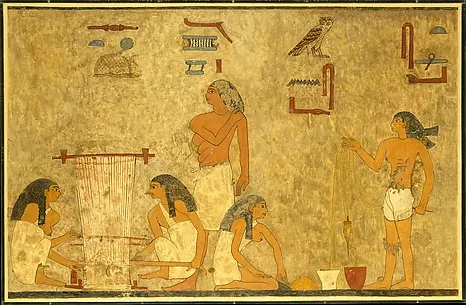
Textiles also contributed to the appearance of Egyptian interiors. Linen fabrics were used for clothing, curtains, bedding, and other household purposes. Wealthier families could use finer textiles, while ordinary households relied on simpler fabrics.
Small decorative objects were also found in homes. Amulets, figurines, cosmetic containers, mirrors, beads, and carved objects could have both practical and symbolic functions. Some household objects featured images of gods or protective symbols because Egyptians believed that supernatural forces could influence everyday life.
Household art was therefore not simply intended to make a room attractive. Objects could express social status, religious beliefs, family traditions, and personal identity. The craftsmanship found in furniture, pottery, textiles, and decorative objects demonstrates the importance of Ancient Egyptian art in domestic life.
Through archaeological discoveries and tomb representations, historians can reconstruct many aspects of Egyptian homes. These sources show that art was not restricted to monuments but was integrated into the ordinary objects that surrounded Egyptian families every day.
2. Clothing, Jewelry, and Personal Appearance
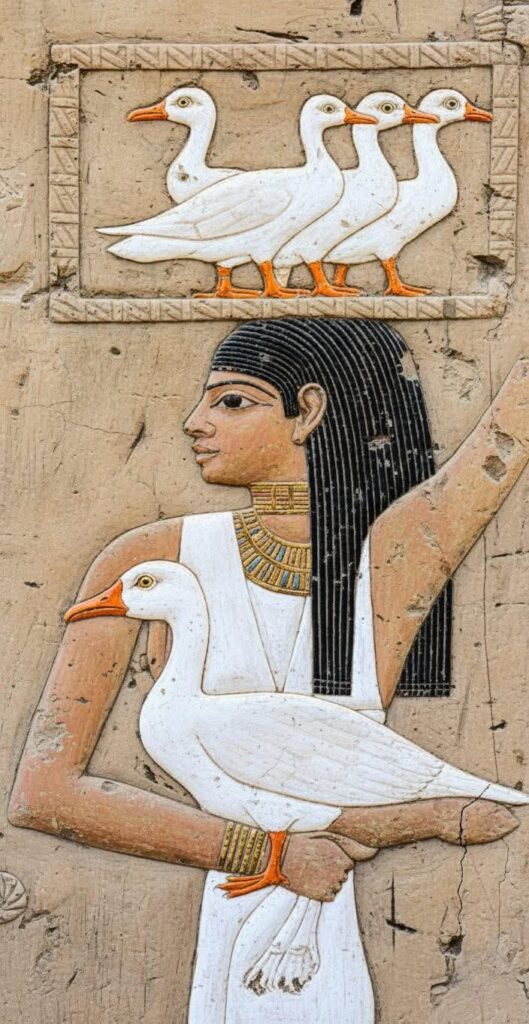
Personal appearance was an important part of life in Ancient Egypt, and artistic craftsmanship played a major role in how Egyptians presented themselves. Clothing, jewelry, cosmetics, wigs, sandals, and other accessories were practical items but could also communicate wealth, social position, religious beliefs, and personal identity. Ancient Egyptian clothing and jewelry therefore provide an important example of how art became part of everyday life.
Linen was the most common material used for clothing. It was made from flax grown in the Nile Valley and could be produced in different qualities. Ordinary people generally wore relatively simple garments, while wealthy Egyptians could afford extremely fine linen clothing with pleats, decorative details, and elaborate accessories.
Jewelry was particularly important among wealthy Egyptians, although people from different social groups could wear some forms of jewelry. Necklaces, bracelets, rings, earrings, collars, and amulets were made from gold, silver, copper, faience, glass, and colored stones. Gold was highly valued because it was associated with permanence and divine qualities.
Amulets had an especially important role in Egyptian culture. Symbols such as the scarab, Eye of Horus, ankh, and images of gods were worn for protection and religious purposes. These objects demonstrate how Ancient Egyptian art and religion were closely connected.
Cosmetics were also part of personal appearance. Egyptians used substances to decorate and protect the eyes, face, and skin. Eye cosmetics were widely used and could have practical as well as aesthetic purposes. Perfumes and scented oils were also valued by wealthy Egyptians and were used during ordinary life and special occasions.
Wigs and hairstyles could communicate social status and fashion. Both men and women used different hairstyles and wigs during various periods of Egyptian history. Sandals, belts, and other accessories completed an individual’s appearance.
Personal decoration therefore combined practical needs with artistic expression. Clothing and accessories helped Egyptians communicate who they were and where they stood within society.
The surviving jewelry, clothing remains, cosmetics containers, and artistic representations provide valuable information about Ancient Egyptian fashion, beauty, personal adornment, social status, religious symbolism, and daily life.
3. Pottery and Decorative Household Objects
Pottery was one of the most common forms of art and craftsmanship in Ancient Egyptian daily life. Nearly every household needed ceramic containers for storing water, grain, oil, wine, beer, and other food products. Egyptians also used pottery for cooking, serving meals, religious offerings, and funerary purposes. Because pottery was both practical and sometimes decorative, it provides an excellent example of how Ancient Egyptian art appeared in ordinary life.
Egyptian potters used clay obtained from the Nile Valley and surrounding regions. The clay was prepared and shaped by hand or with a potter’s wheel before being dried and fired. Skilled craftsmen could produce vessels in many different shapes and sizes according to their intended purpose.
Some household pottery was simple and undecorated because its main purpose was storage or cooking. Other vessels were carefully shaped and decorated with painted patterns, geometric designs, plants, birds, animals, and human figures. Decorative pottery could reflect artistic traditions that changed over different periods of Egyptian history.
Small ceramic objects were also used in homes. Bowls, cups, plates, cosmetic containers, lamps, figurines, and other objects could be decorated or shaped in distinctive styles. Some objects had religious or symbolic meanings and were kept for protection or ritual purposes.
Food and drink were central parts of Egyptian daily life, making pottery essential to household activities. Large jars stored grain and liquids, while smaller vessels were used for serving meals and beverages. Pottery could also be used to transport products between different communities.
Archaeologists frequently discover pottery at Egyptian settlements, tombs, temples, and archaeological sites. Because ceramic objects are relatively durable, they provide valuable evidence about ancient diets, trade, manufacturing techniques, household activities, and artistic traditions.
Pottery also demonstrates the connection between function and beauty in Egyptian culture. A vessel could be designed to perform a practical task while also displaying artistic decoration.
The importance of Ancient Egyptian pottery and household objects shows that art was not restricted to elite monuments. Ordinary objects used for cooking, storing food, drinking, and personal care could also reflect Egyptian craftsmanship, artistic traditions, cultural beliefs, and everyday experiences.