
Welcome to

Ancient Egypt Sports and Games

Sports and games played an important role in daily life, recreation, military training, and social activities in Ancient Egypt. From competitive athletic events and physical exercises to board games enjoyed by both royalty and commoners, the ancient Egyptians valued entertainment, skill, and physical fitness. Evidence from tomb paintings, temple reliefs, archaeological discoveries, and ancient texts reveals a fascinating world of sports, hunting activities, martial training, and leisure games that were enjoyed by people of all ages throughout Egyptian history.

Ancient Egyptian sports included wrestling, archery, swimming, rowing, running, gymnastics, weightlifting, and various forms of combat training. Many of these activities were not only recreational but also served practical purposes, preparing soldiers for military service and promoting physical strength and endurance. Pharaohs often portrayed themselves as skilled athletes, hunters, and warriors, emphasizing their power and ability to protect the kingdom. Archery, chariot racing, and hunting expeditions became symbols of royal authority and leadership.

Board games were equally popular in Ancient Egypt, with Senet being the most famous game played by nobles, pharaohs, and ordinary citizens alike. Other games, such as Mehen and various strategy-based competitions, provided entertainment while also carrying religious and symbolic meanings. Game boards, playing pieces, and illustrations discovered in tombs suggest that these activities were believed to continue in the afterlife, reflecting their cultural importance.

Children and adults participated in a variety of recreational activities, including ball games, juggling, dancing, acrobatics, and group competitions. Festivals and public celebrations often featured sporting events and performances that brought communities together. These activities offered opportunities for social interaction, entertainment, and the development of physical skills.

In this guide, we explore the fascinating world of Ancient Egypt sports and games, examining athletic competitions, military training exercises, hunting traditions, board games such as Senet, children’s activities, and the role of recreation in one of the world’s most enduring civilizations.

1. Wrestling: The Most Popular Ancient Egyptian Sport

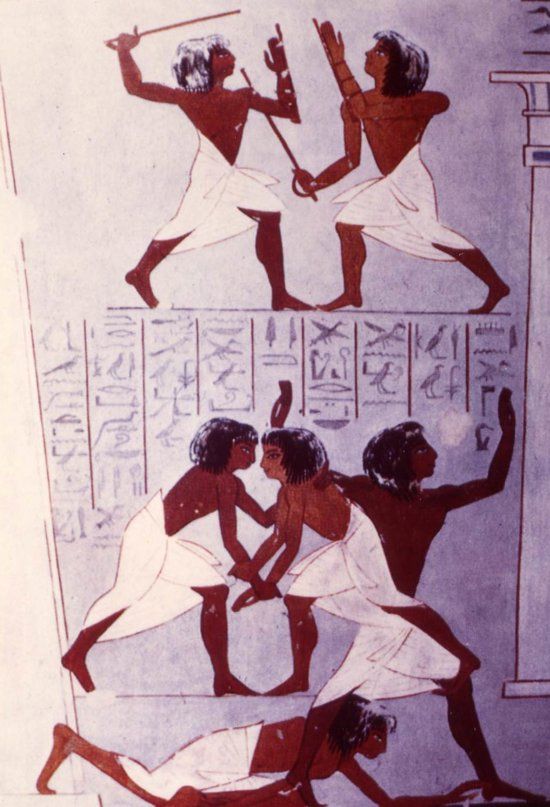
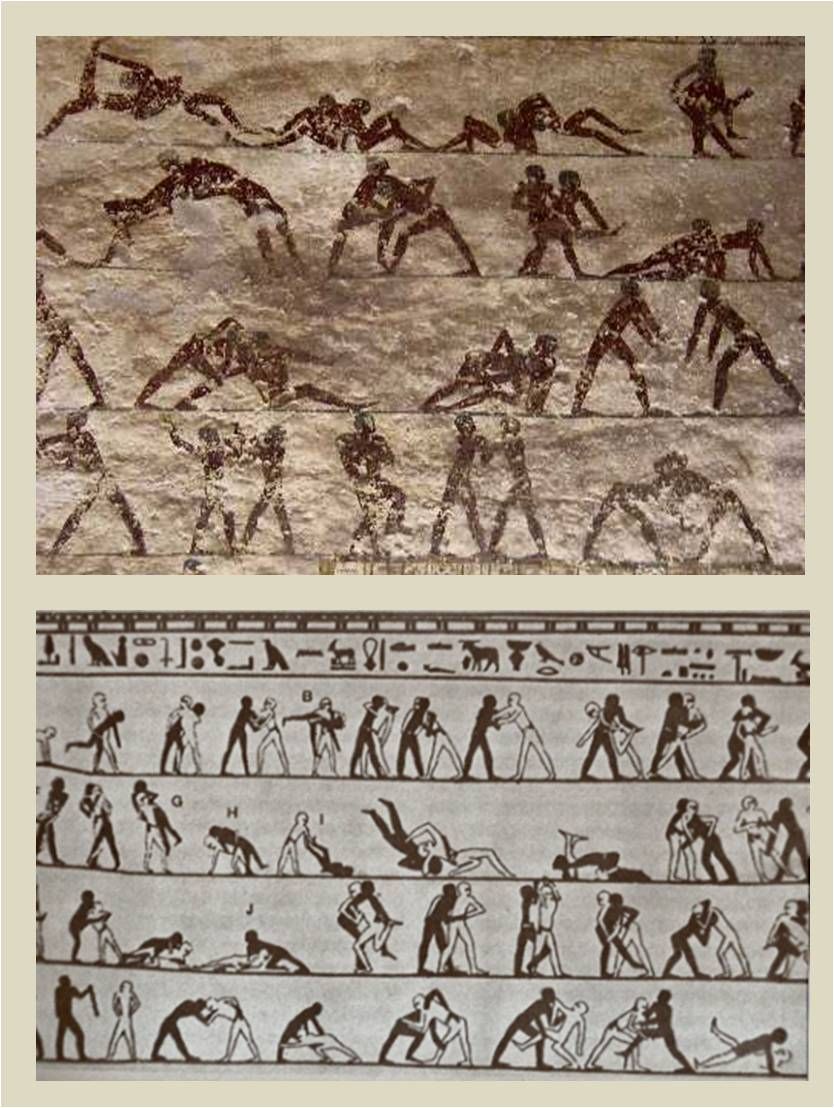
Wrestling was one of the oldest and most popular sports in Ancient Egypt, enjoyed by both soldiers and civilians. Tomb paintings dating back to the Old Kingdom show hundreds of wrestling positions, proving that the sport was highly organized and widely practiced. Wrestling served as entertainment, physical training, and military preparation, making it one of the most important athletic activities in Egyptian society.

Egyptian wrestlers competed using strength, balance, agility, and technique rather than weapons. Artistic scenes from the tombs at Beni Hasan illustrate more than 200 different wrestling holds, throws, and defensive movements. These detailed images suggest that wrestlers followed established rules and practiced regularly to improve their skills.

For soldiers, wrestling was excellent preparation for close combat. It developed endurance, flexibility, coordination, and confidence—qualities that were valuable during military campaigns. Young men often learned wrestling as part of their physical education, while experienced fighters could demonstrate their abilities during festivals and public competitions.

Wrestling also had a social role. Competitions were held during celebrations and community gatherings, attracting spectators who enjoyed watching skilled athletes compete. Unlike royal hunting or elite sports, wrestling could be practiced by people from many social classes, making it one of the most accessible forms of recreation in Ancient Egypt.

The popularity of wrestling demonstrates that Ancient Egyptian sports were not only about entertainment but also about discipline, fitness, and personal achievement. Today, the remarkable wrestling scenes preserved in Egyptian tombs remain some of the earliest visual records of organized sport in human history.
2. Archery and Military Sports

Archery was one of the most respected sports and military skills in Ancient Egypt. While it was essential for hunting and warfare, it also became a competitive athletic activity that demonstrated precision, concentration, and physical strength. Pharaohs often portrayed themselves as master archers, using the sport to symbolize their ability to protect Egypt and defeat its enemies.

Egyptian bows were made from wood and later from composite materials that increased power and range. Archers practiced shooting at stationary and moving targets, improving both accuracy and speed. Soldiers trained extensively with bows because archery was one of the most effective military techniques during the New Kingdom.

Royal inscriptions frequently describe pharaohs performing extraordinary feats of archery. Kings such as Amenhotep II claimed they could shoot arrows through thick copper targets while riding in fast-moving chariots. Whether exaggerated or not, these stories emphasized the ideal image of the strong and skilled ruler.

Archery competitions were also popular during festivals and military celebrations. Participants competed for accuracy rather than simply distance, and successful archers earned admiration for their discipline and technical ability.

Beyond warfare, hunting with bows allowed wealthy Egyptians to pursue birds, gazelles, and other animals in the marshes and deserts. This combined recreation with practical food gathering and reinforced the connection between sport and survival.

The importance of Ancient Egyptian archery shows how athletic activities could serve both recreational and military purposes. It was a sport that celebrated precision, courage, and leadership while preparing soldiers for the defense of the kingdom.
3. Swimming and Rowing on the Nile

The Nile River made swimming and rowing natural sports for Ancient Egyptians. Living beside one of the world’s greatest rivers meant that many Egyptians learned to swim from an early age, while rowing became both a practical skill and a competitive activity. Water sports were especially important for fishermen, sailors, soldiers, and communities living along the Nile.

Swimming appears frequently in Egyptian artwork, where people are shown diving, floating, and moving confidently through the water. Children often learned to swim while playing near the river, making it both a recreational activity and an essential survival skill in a country surrounded by canals and waterways.

Rowing required teamwork, endurance, and coordination. Egyptian boats were used for transportation, fishing, trade, and religious ceremonies, but rowing competitions also provided entertainment during festivals. Teams competed to move their boats as quickly and smoothly as possible, creating exciting public events along the Nile.

Royal families also enjoyed boating. Pharaohs participated in ceremonial journeys and recreational trips that combined sport with luxury. Wealthy Egyptians organized pleasure cruises featuring music, food, and entertainment while sailing on the river.

Swimming and rowing also supported military training. Soldiers needed strong swimming abilities to cross rivers and canals, while coordinated rowing prepared crews for transporting troops and supplies during campaigns.

The popularity of these water sports highlights the central role of the Nile in Egyptian life. Unlike civilizations separated from major waterways, Egyptians naturally incorporated rivers into their recreation, fitness, and transportation.

Together, Ancient Egyptian swimming and rowing demonstrate how geography shaped athletic culture. The Nile was not only Egypt’s economic lifeline—it was also a place where people exercised, competed, celebrated, and enjoyed some of their favorite sports.
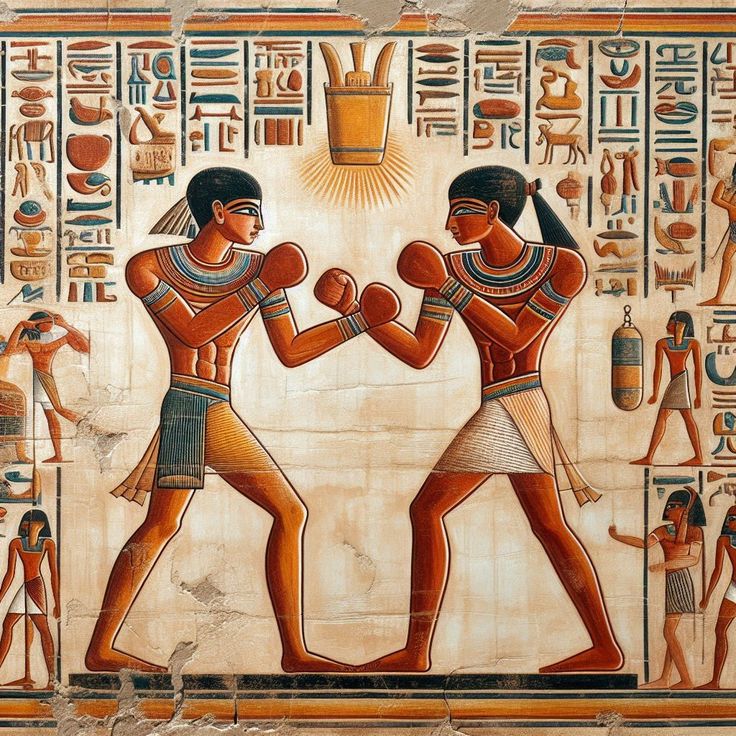
4. Boxing and Combat Sports in Ancient Egypt

Boxing and other forms of combat training were important physical activities in Ancient Egypt. Although wrestling is better documented, Egyptian artwork also provides evidence of fighters using techniques that resemble boxing and organized combat sports. These activities helped develop strength, speed, endurance, and coordination while providing entertainment for spectators.

Ancient Egyptian combat athletes could train using their hands and body rather than weapons. Scenes from Egyptian tombs show participants facing one another in controlled competitions. Some representations appear to show fighters striking with their fists, while others depict grappling and wrestling techniques.

Combat sports were particularly valuable for soldiers. Egyptian armies required men who could fight effectively in close combat, and physical training helped develop the strength and confidence needed for warfare. Wrestling, boxing, running, and weapon training could all contribute to military preparation.

Competitive fighting could also be part of festivals and public celebrations. Spectators could gather to watch athletes demonstrate their physical abilities. Successful fighters could earn recognition and respect within their communities.

Ancient Egyptian art is particularly valuable for understanding these activities. Tomb paintings and reliefs preserve images of athletes in different positions, allowing historians to study ancient sporting techniques. These representations also demonstrate that physical fitness was respected in Egyptian culture.

Combat sports were not limited to professional soldiers. Young men could participate in physical training as part of their development, while workers and other members of society could enjoy wrestling and fighting as recreation.

It is important to distinguish ancient Egyptian combat activities from modern boxing. The rules, equipment, and competitive structures were different, and surviving evidence does not allow historians to reconstruct every detail of the competitions.

Nevertheless, Ancient Egyptian boxing, wrestling, and combat sports demonstrate a strong cultural appreciation for physical strength and athletic ability. These activities provided entertainment while also developing skills that were useful in everyday life and military service.

5. Running and Athletic Competitions

Running was another important form of physical activity in Ancient Egypt. It helped develop endurance, speed, and strength and could be used for both practical training and ceremonial purposes. Evidence from Egyptian inscriptions and artwork shows that running had a particularly important connection with the pharaoh and royal ceremonies.

One of the best-known examples is the Heb-Sed Festival, a royal celebration designed to renew the pharaoh’s physical and political power. During the festival, the king performed a ceremonial running course. This was not simply a sporting competition; it had deep religious and political significance.

The royal running ceremony demonstrated that the pharaoh remained physically capable of ruling Egypt. By completing the course, the king symbolically proved his strength and ability to maintain order in the kingdom.

Running was also useful for ordinary Egyptians. Farmers, soldiers, messengers, hunters, and workers needed physical endurance for their occupations. Soldiers especially benefited from running as part of military preparation.

Children and young people could participate in running games and races as part of their recreation. Racing provided a simple form of competition that required little equipment and could take place in villages, open spaces, or during celebrations.

Athletic competitions could bring communities together. Spectators could watch participants compete and celebrate successful athletes. Physical competition also encouraged qualities such as determination, discipline, speed, and coordination.

Ancient Egyptian representations of athletic activities provide important evidence about how physical fitness was valued. Although fewer detailed records survive for ordinary running competitions than for royal ceremonies, the importance of physical strength appears throughout Egyptian culture.

Ancient Egyptian running and athletic competitions therefore combined recreation, physical training, religious symbolism, and royal ideology. From children playing games to pharaohs performing ceremonial races, running was an important expression of strength and vitality in Egyptian civilization.

6. Boat Racing and Water Sports

Boat racing was a natural form of entertainment in a civilization built around the Nile River. Egyptians depended on boats for transportation, fishing, agriculture, trade, and military activities, but boats also provided opportunities for recreation and competition. Ancient Egyptian boat racing and water sports demonstrate the importance of the Nile in both practical life and entertainment.

Egyptian boats were constructed from materials such as papyrus and wood. Different boats were designed for different purposes, ranging from small fishing vessels to large transportation and ceremonial boats. Rowing required cooperation between crew members, making it an excellent activity for developing teamwork and physical strength.

Boat competitions could involve teams racing across sections of the Nile or through canals. Rowers had to maintain rhythm and coordinate their movements to move quickly through the water. Successful crews required strong athletes and effective leadership.

Water sports also included swimming and other activities around the river. Young people could swim for recreation, while fishermen and sailors developed swimming skills as part of their occupations.

The Nile provided an ideal setting for outdoor entertainment. Communities living along its banks could gather near the water to watch boats, participate in festivals, fish, swim, or enjoy social activities.

Royal and elite Egyptians also used boats for leisure. Wealthy families could organize pleasure trips along the Nile, accompanied by musicians, food, and servants. These journeys combined relaxation with luxury and social entertainment.

Boats also had religious importance. Egyptian temples used ceremonial boats to transport sacred statues during festivals. Although these vessels were not used for sport, their presence in public processions could create large gatherings that included music and entertainment.

The connection between boats and Egyptian society was therefore extremely strong. Ancient Egyptian water sports developed naturally from the civilization’s dependence on the Nile.

Boat racing, rowing, swimming, and recreational sailing demonstrate how Egyptians transformed an essential natural resource into a place for work, travel, exercise, competition, celebration, and entertainment.

7. Hunting as a Sport and Elite Recreation

Hunting was one of the most important outdoor activities in Ancient Egypt and served as both a practical activity and a form of elite recreation. Egyptians hunted birds, fish, gazelles, antelope, hippopotamuses, and other animals found along the Nile Valley, in marshlands, and in desert regions. Ancient Egyptian hunting required strength, patience, accuracy, and physical courage, making it closely connected with sports and athletic culture.

For ordinary Egyptians, hunting and fishing could help provide food for their families. People used nets, spears, bows, throwing sticks, and other tools to capture animals and fish. These activities required knowledge of the environment and considerable physical skill.

For pharaohs and wealthy officials, hunting became an important leisure activity. Elite hunters could travel into the desert or marshes with servants and specialized equipment. Hunting expeditions provided excitement and allowed wealthy Egyptians to demonstrate their strength and skill.

Archery was especially important during hunting. Hunters had to aim accurately at fast-moving birds and animals. This helped develop skills that were also valuable for soldiers.

Royal hunting scenes frequently appear on temple walls and monuments. Pharaohs are often shown hunting dangerous animals, particularly lions and bulls. These images had a symbolic meaning: the king was portrayed as powerful, courageous, and capable of defeating chaos and protecting Egypt.

Bird hunting in the Nile marshes was another popular activity. Hunters could stand in boats while using throwing sticks or nets to capture birds. Tomb paintings show detailed scenes of these activities, including plants, fish, birds, boats, and hunting equipment.

Hunting also provided opportunities for social interaction. Elite Egyptians could organize group expeditions involving servants, hunters, boat crews, and other participants.

Although hunting was not always a formal sport with standardized rules, it required many athletic abilities, including balance, endurance, strength, speed, and coordination.

Therefore, Ancient Egyptian hunting and outdoor recreation played several roles at once. It provided food, developed practical skills, offered entertainment, and allowed members of the elite to display physical strength and social status. Hunting scenes also became an important part of Egyptian art and provide modern historians with valuable evidence about ancient wildlife, technology, and sporting traditions.

8. Fishing and Recreational Activities Along the Nile

Fishing was an essential activity in Ancient Egypt because the Nile provided an abundant supply of fish. While fishing was primarily important for food production, it could also be enjoyed as recreation, particularly by wealthy Egyptians. Ancient Egyptian fishing required patience, coordination, physical skill, and knowledge of the river environment.

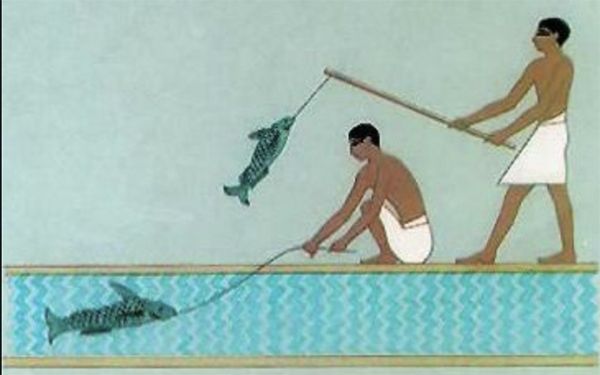
Egyptians used different fishing methods, including hooks, nets, spears, and harpoons. Fishermen could work from small boats or stand along the riverbanks and canals. Large nets allowed groups of fishermen to capture significant quantities of fish, while individual fishermen could use hooks or spears.

Fishing scenes are common in Egyptian tombs. These paintings show fishermen working in the Nile marshes, catching different species of fish, preparing their equipment, and transporting their catches. The artwork provides detailed information about ancient fishing technology.

For wealthy Egyptians, fishing could become a relaxing outdoor pastime. Tomb scenes sometimes show elite individuals fishing and hunting in the marshes while servants accompany them. Such activities allowed wealthy people to escape the routines of household and administrative life.

Fishing also required physical abilities that were useful in other sports. Fishermen needed balance while standing in boats, strength when handling nets, and coordination when using spears or hooks.

The Nile environment also provided opportunities for other recreational activities. Swimming, boating, rowing, and bird hunting could take place in the same areas. These activities made the river an important center of Ancient Egyptian sports and leisure.

Fishing had economic importance as well. Fish could be dried, preserved, transported, and traded. Fishing communities depended on the river for part of their livelihood.

Religious beliefs also influenced the Egyptian relationship with fish and the Nile. Certain animals had religious associations, and different regions could have their own traditions and beliefs.

The combination of practical fishing and recreational activities shows how closely Egyptian life was connected with the Nile. Ancient Egyptian fishing and water recreation were not separate from everyday life; they were connected with food, work, transportation, exercise, entertainment, and culture.

9. Ball Games and Physical Recreation

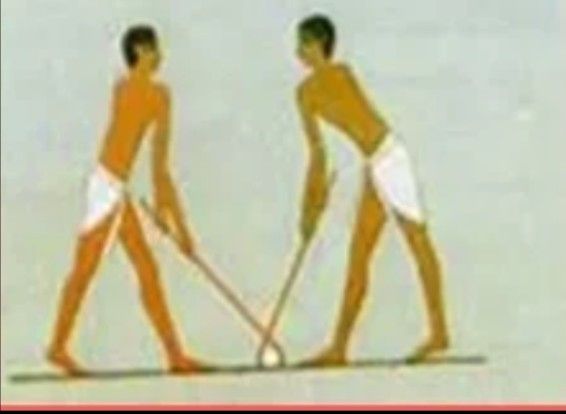
Ball games were another form of Ancient Egyptian sports and entertainment. Archaeologists have discovered balls made from materials such as leather, papyrus, and other natural fibers. Egyptian artwork also depicts people participating in physical activities that may have involved throwing, catching, balancing, and competing with balls.

Ball games were particularly popular among children and young people. Playing with balls provided exercise while helping develop coordination, balance, speed, and teamwork. Simple games could be played with relatively little equipment, making them accessible to many families.

Some Egyptian balls were carefully manufactured and could contain layers of materials wrapped around one another. Their construction demonstrates that ancient craftsmen understood how to produce lightweight objects capable of bouncing or being thrown.

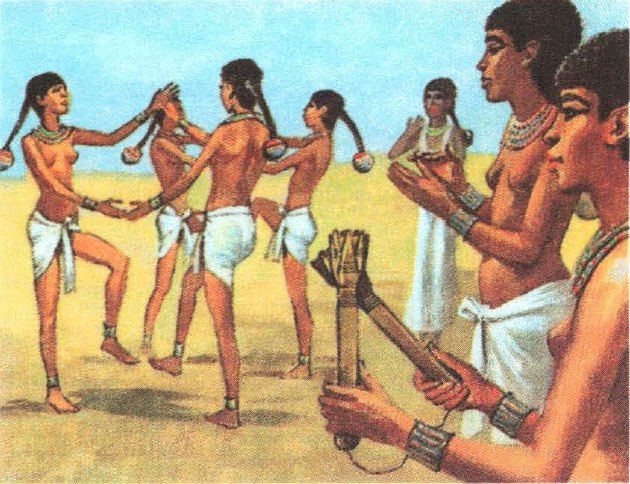
Women and girls also appear in Egyptian artistic representations participating in physical games. Some scenes show groups of young women playing together, demonstrating that recreational activities were not exclusively male.

Physical recreation could include jumping, running, acrobatics, wrestling, and other activities. These games helped young people develop physical abilities that would later be useful in work, military service, and daily life.

Team-based activities may also have encouraged cooperation and communication. Although the exact rules of many Egyptian ball games are unknown, artistic representations indicate that they involved coordinated movements and interaction between participants.

Games could be played at home, outdoors, or during social gatherings. Children could invent their own activities using simple objects, while more organized competitions may have taken place during festivals.

The discovery of ancient balls is particularly valuable because they provide direct archaeological evidence of recreation. Unlike paintings, which may have symbolic purposes, physical objects demonstrate that Egyptians actually possessed and used equipment for games.

Ancient Egyptian ball games therefore provide an important glimpse into childhood and leisure. They show that physical play, competition, creativity, and social interaction were part of everyday Egyptian life.

Together with wrestling, swimming, running, and board games, ball games demonstrate the remarkable variety of Ancient Egyptian sports, games, and recreational activities.

10. Senet and Board Games in Ancient Egypt

Board games were among the most popular forms of indoor entertainment in Ancient Egypt. Unlike physical sports such as wrestling and archery, board games allowed Egyptians to enjoy competition, strategy, and social interaction while sitting with family members, friends, or other players. Ancient Egyptian board games included Senet, Mehen, and several other games whose rules are not completely understood today.

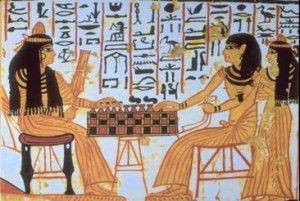
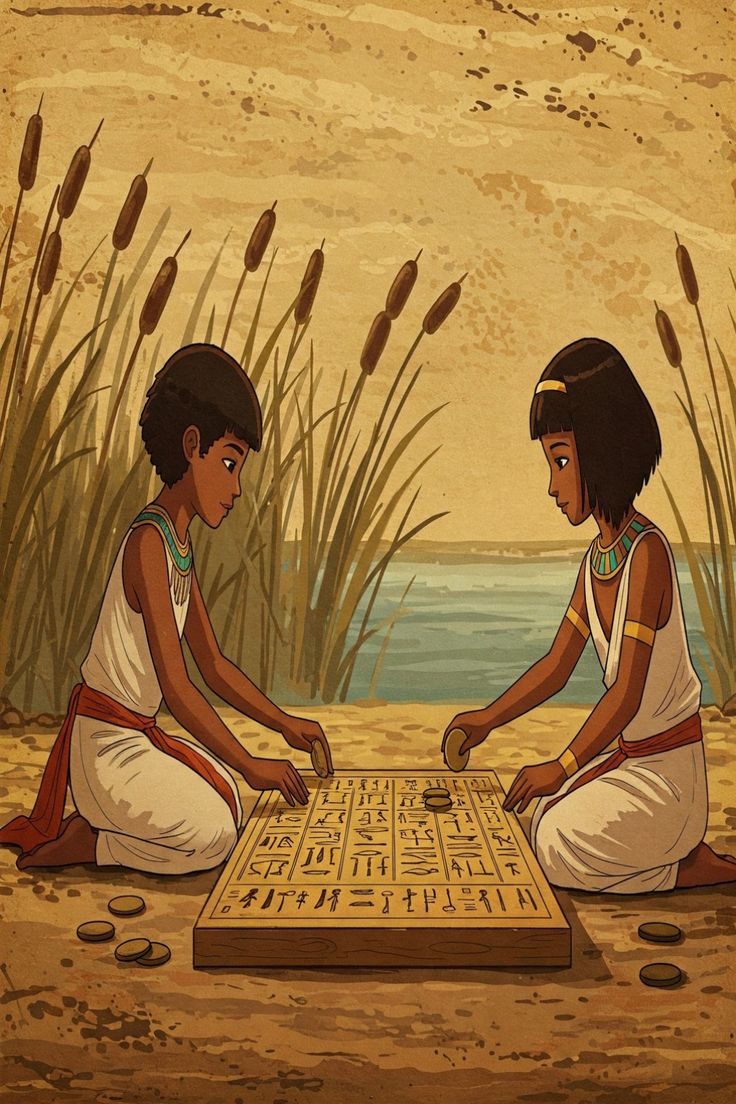
Senet is the best-known Egyptian board game. It was played on a rectangular board containing thirty squares arranged in three rows. Players moved pieces across the board according to rules involving throwing sticks or other randomizing devices. The exact rules remain uncertain, but archaeological and artistic evidence shows that Senet was played for thousands of years.

Senet was not restricted to one social class. Examples have been found in royal and elite tombs as well as other archaeological contexts. Paintings sometimes show individuals playing the game, demonstrating its popularity.

Over time, Senet developed religious associations. The journey of game pieces across the board was connected symbolically with the journey of the deceased through the afterlife. Some tombs contained Senet boards or representations of the deceased playing the game.

Mehen was another Egyptian board game. Its board was shaped like a coiled serpent divided into sections. Archaeological examples show that Mehen was played during earlier periods of Egyptian history, although its exact rules remain unknown.

Board games provided more than simple entertainment. They required players to make decisions, anticipate outcomes, and compete against opponents. They could therefore develop strategic thinking and patience.

Games were also social activities. Players could sit together for extended periods, talk, compete, and enjoy each other’s company. This made board games an important part of Ancient Egyptian leisure and social life.

The surviving gaming boards and pieces are valuable archaeological evidence. They provide information about Egyptian craftsmanship, leisure activities, religious symbolism, and social relationships.

The popularity of Senet and other games demonstrates that Ancient Egyptian games included both physical and intellectual recreation. Egyptians enjoyed testing their strength through sports, but they also enjoyed testing their strategy and luck through board games.

11. Sports Training and the Role of Physical Fitness

Physical fitness was important in Ancient Egyptian society because strength, endurance, and coordination were useful for many occupations. Farmers, soldiers, hunters, fishermen, rowers, and laborers all depended on physical abilities. Ancient Egyptian sports training therefore had practical purposes as well as recreational value.

Young Egyptians could develop physical skills through running, wrestling, swimming, rowing, ball games, and other activities. These exercises helped strengthen the body and prepare young people for adult responsibilities.

Military training was particularly demanding. Soldiers needed to march long distances, handle weapons, swim across waterways, and fight at close range. Wrestling and boxing could help develop strength and combat skills, while archery training improved accuracy and coordination.

Rowing was also important for military and transportation purposes. Crews needed to work together and maintain a steady rhythm while moving boats through the Nile or along the coast. This required physical endurance and teamwork.

Hunters developed strength and accuracy through repeated practice with bows, spears, and other weapons. Elite hunting also served as a demonstration of physical ability and courage.

Sports could also develop social qualities. Competition encouraged discipline, determination, teamwork, and confidence. Successful athletes could gain recognition from their communities.

The pharaoh’s physical abilities had special importance. Royal ceremonies such as the Heb-Sed Festival included a ceremonial running event intended to demonstrate the king’s continuing strength and fitness. Physical ability was therefore connected with political legitimacy and divine authority.

Ancient Egyptian art frequently depicts athletic bodies, wrestlers, runners, soldiers, hunters, and other physically active individuals. These representations demonstrate that strength and fitness were respected qualities.

Although there was no modern system of organized physical education, the Egyptians clearly understood the value of exercise and training.

Ancient Egyptian sports and physical fitness were therefore connected with work, military service, recreation, royal ceremonies, and social status. Through activities such as wrestling, swimming, running, archery, and rowing, Egyptians developed skills that were useful throughout their lives.

12. The Importance of Sports and Games in Ancient Egyptian Society

Sports and games played an important role in Ancient Egyptian daily life, providing opportunities for exercise, competition, entertainment, social interaction, and skill development. From wrestling and archery to swimming, hunting, fishing, ball games, and board games, Egyptians had a wide variety of recreational activities.

Physical sports helped people develop strength, endurance, balance, speed, and coordination. These qualities were especially important for soldiers, farmers, hunters, fishermen, and workers. Sports therefore had practical value beyond entertainment.

Wrestling was one of the best-documented sports and appears in detailed scenes from Egyptian tombs. Archery developed skills that were essential for hunting and warfare. Swimming and rowing were naturally connected with the Nile, while hunting and fishing combined recreation with food production.

Board games provided a different form of entertainment. Senet and Mehen allowed Egyptians to compete through strategy and chance. Senet also became associated with beliefs about the afterlife, demonstrating how recreation could become connected with religion.

Children had their own forms of entertainment, including balls, dolls, animal toys, running, wrestling, and other physical games. These activities provided opportunities for learning and social development.

Sports were also connected with royal ideology. Pharaohs were often portrayed as strong hunters, skilled archers, and physically capable rulers. Ceremonial athletic activities demonstrated the king’s ability to protect Egypt and maintain order.

Ancient Egyptian art is one of the most important sources of information about sports. Tomb paintings, temple reliefs, statues, and archaeological discoveries preserve images and objects associated with athletic activities.

Ultimately, Ancient Egyptian sports and games reveal an active and diverse society. Egyptians did not spend all their time working or performing religious rituals. They also played, competed, exercised, celebrated, and enjoyed leisure.

The study of Ancient Egyptian sports, games, recreation, physical fitness, board games, wrestling, archery, swimming, hunting, and children’s activities helps create a more complete picture of Egyptian civilization. These activities demonstrate the importance of physical ability, competition, entertainment, and social interaction in life along the Nile.

Frequently Asked Questions

Ancient Egyptians participated in many sports and physical activities, including wrestling, archery, swimming, rowing, running, boxing, hunting, fishing, and ball games. These activities provided entertainment and exercise while also helping develop skills needed for farming, hunting, military service, and other occupations.


Wrestling was one of the most popular and well-documented sports in Ancient Egypt. Tomb paintings, especially those from Beni Hasan, show numerous wrestling positions and techniques. Wrestling helped develop strength, balance, flexibility, and combat skills.

Ancient Egyptians played several board and physical games. Senet was the most famous board game, while Mehen was another known ancient Egyptian game. Children also played with balls, dolls, animal figures, and other toys. Physical activities included wrestling, running, swimming, and acrobatics.


Yes. The Nile provided excellent opportunities for swimming, rowing, fishing, and boating. Swimming was useful for recreation and survival, while rowing was important for transportation, military activities, and competition. Water-based activities were an important part of life in a civilization centered around the Nile.


Sports helped Egyptians develop strength, endurance, coordination, discipline, and teamwork. They also provided entertainment and opportunities for competition. For soldiers and hunters, physical training developed practical skills, while sports and games gave families and communities opportunities for recreation and social interaction.