
Welcome to

Ancient Egypt Legacy of Civilization

The legacy of Ancient Egypt is one of the most remarkable and enduring achievements in human history. For more than 3,000 years, Ancient Egyptian civilization flourished along the banks of the Nile River, creating groundbreaking advancements in architecture, engineering, writing, medicine, mathematics, astronomy, governance, and religion. The influence of Ancient Egypt extended far beyond its borders, shaping neighboring civilizations and leaving a lasting impact that continues to inspire the modern world.

Ancient Egypt is best known for its monumental achievements, including the Great Pyramids of Giza, the Sphinx, the temples of Karnak and Luxor, Abu Simbel, and the royal tombs of the Valley of the Kings. These architectural masterpieces demonstrate the extraordinary skills of Egyptian engineers, architects, and craftsmen. Their innovations in construction, urban planning, and monument building remain subjects of admiration and study thousands of years later.

The civilization also made significant contributions to knowledge and learning. Ancient Egyptians developed one of the world’s earliest writing systems, hieroglyphics, which allowed them to preserve history, religious beliefs, scientific observations, and administrative records. Their achievements in medicine, surgery, mathematics, astronomy, and agriculture influenced later civilizations, including the Greeks and Romans. Ancient Egyptian medical papyri, engineering techniques, and scientific understanding laid important foundations for future generations.

Beyond its technological and intellectual accomplishments, Ancient Egypt left a profound cultural and spiritual legacy. Its mythology, religious traditions, artistic styles, concepts of kingship, and beliefs about the afterlife continue to fascinate historians, archaeologists, and travelers worldwide. The stories of famous pharaohs such as Tutankhamun, Hatshepsut, Akhenaten, and Ramesses II have become symbols of one of history’s greatest civilizations.

In this guide, we explore the enduring legacy of Ancient Egypt, examining its contributions to architecture, science, medicine, writing, religion, art, governance, and culture. From the pyramids and temples to hieroglyphics and royal dynasties, the achievements of Ancient Egypt continue to shape our understanding of human civilization and remain among the most important accomplishments in world history.

1. Ancient Egypt and the Development of Writing

One of the greatest contributions of Ancient Egypt to civilization was the development and long-term use of writing. Egyptian writing allowed people to preserve religious beliefs, government records, economic transactions, scientific observations, literature, and historical information. The Egyptian writing system became one of the most important tools for preserving knowledge across thousands of years.

The best-known form was hieroglyphic writing, which used pictures and symbols to represent sounds, words, and concepts. Hieroglyphs appeared on temples, tombs, statues, monuments, coffins, and other objects. Their visual nature made them particularly suitable for religious and monumental inscriptions.

Egyptians also developed other forms of writing for practical purposes. Hieratic was a more simplified script commonly used by scribes for administrative, religious, and literary documents. Later, Demotic became widely used for everyday and administrative purposes.

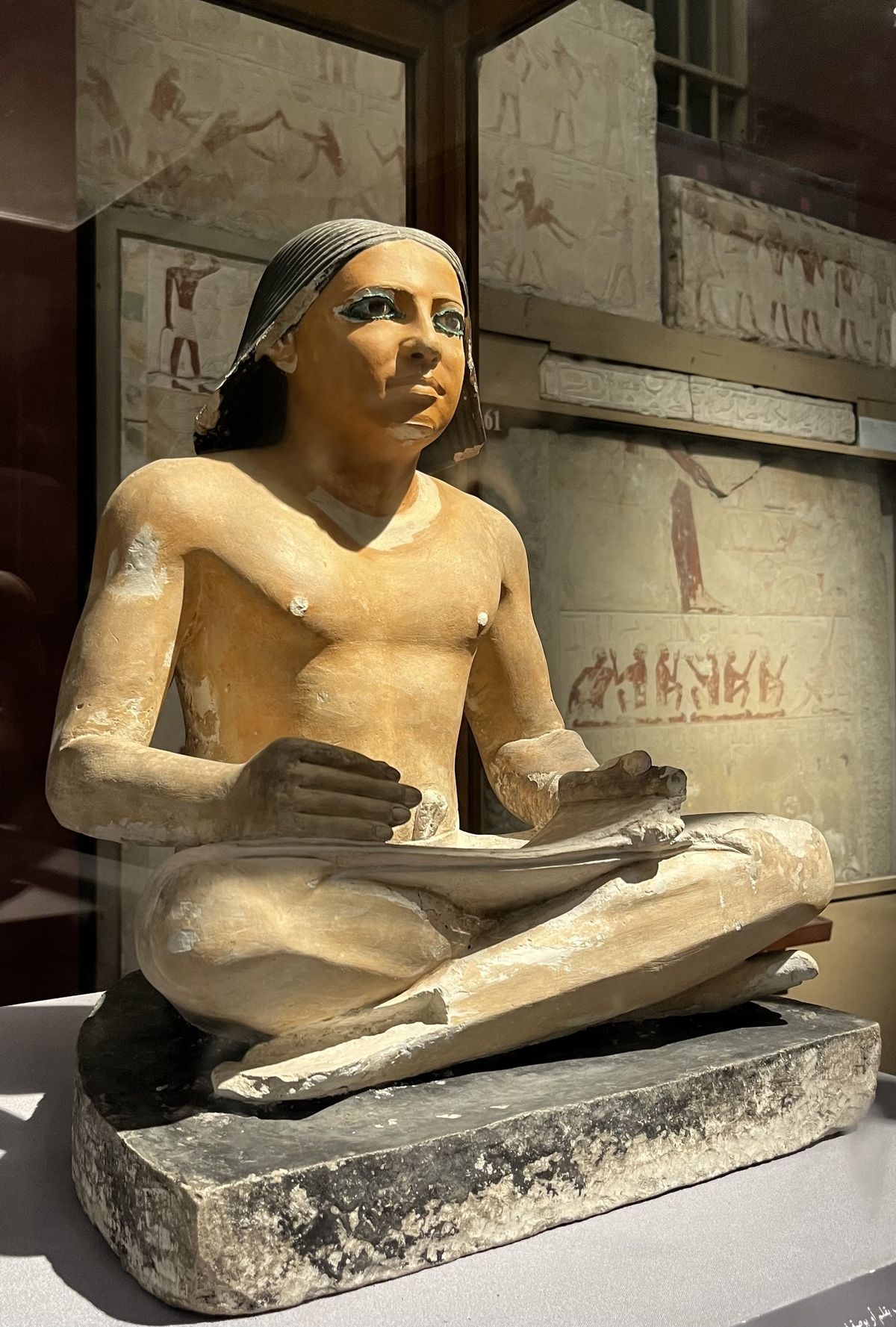
Writing was closely connected with the development of the scribal profession. Scribes received specialized education and learned how to read, write, calculate, and prepare official documents. They became essential to government administration and the preservation of knowledge.

Egyptian writing was recorded on many materials. Stone was used for permanent inscriptions, while papyrus provided a lighter writing material for documents and books. Egyptians also wrote on pottery fragments, wooden boards, leather, and other surfaces.

Written records covered a remarkably wide range of subjects. Administrative documents recorded taxes, land, workers, food supplies, and trade. Religious texts preserved prayers, hymns, rituals, and funerary beliefs. Medical papyri recorded treatments, while mathematical documents demonstrated methods of calculation.

Egyptian literature included stories, poems, hymns, wisdom teachings, and autobiographical texts. These works provide valuable evidence about Egyptian values, emotions, religion, and social relationships.

The discovery of the Rosetta Stone played a crucial role in modern understanding of Egyptian writing. Because the stone contained the same decree in multiple scripts, including Greek and Egyptian forms, it helped scholars decipher hieroglyphs.

Today, Egyptian writing remains one of the most important sources for understanding the ancient civilization.

The legacy of Ancient Egyptian writing is therefore much greater than a collection of symbols. It created a system through which information could be recorded, transmitted, and preserved, allowing modern generations to learn about Egyptian history, religion, government, science, literature, and daily life.
2. Ancient Egyptian Architecture and Engineering Legacy

The architectural achievements of Ancient Egypt represent one of the most visible parts of its civilization legacy. The pyramids, temples, tombs, obelisks, statues, and other monuments demonstrate the Egyptians’ ability to combine engineering, mathematics, planning, craftsmanship, religious symbolism, and organized labor.

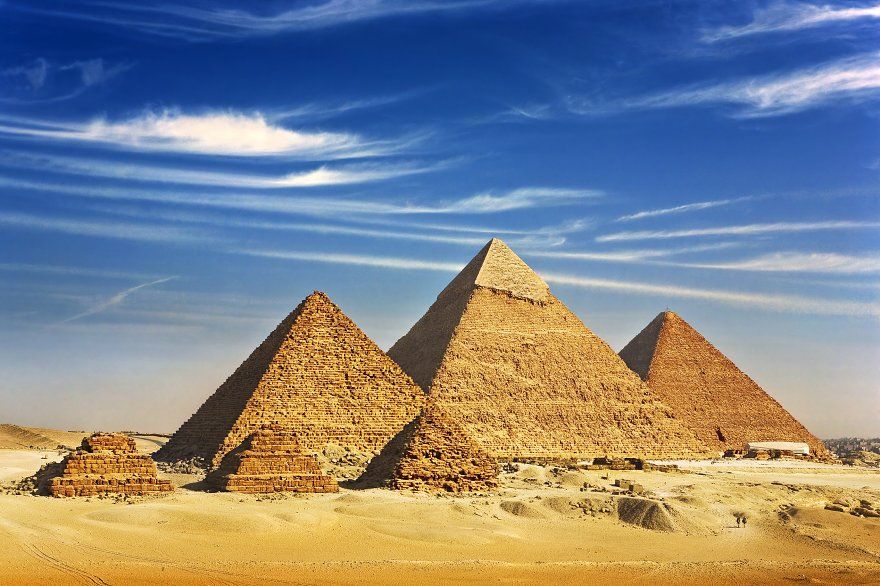
The pyramids of Giza are among the most famous examples. Their enormous size and precise construction demonstrate the ability of Egyptian builders to plan large-scale projects and coordinate thousands of workers, craftsmen, administrators, and suppliers.

The Great Pyramid of Khufu became one of the most famous monuments of the ancient world. Its construction required extensive knowledge of surveying, stoneworking, transportation, logistics, and architectural planning.

Egyptian temples also demonstrate sophisticated architectural design. Complexes such as Karnak, Luxor, Dendera, Edfu, and Abu Simbel included massive pylons, courtyards, columns, halls, sanctuaries, statues, and decorated walls.

Egyptian architects carefully incorporated religious symbolism into their structures. The orientation, layout, decoration, and placement of sacred spaces were often connected with religious beliefs and royal ideology.

Engineering knowledge was also necessary for quarrying and transporting stone. Egyptians extracted limestone, sandstone, granite, and other materials from distant quarries and transported them to construction sites.

The Nile River played an important role in this process. Heavy stone could be transported by boat, allowing materials from Upper Egypt and other regions to reach major construction centers.

Egyptian builders also developed practical methods for measuring and organizing construction. Surveying techniques were especially important for maintaining accurate proportions and establishing boundaries.

The architectural legacy of Egypt influenced later civilizations. Egyptian-style columns, obelisks, monumental gateways, and decorative elements were adopted or imitated in different parts of the ancient Mediterranean and in later periods.

Modern engineers and archaeologists continue to study Egyptian monuments to understand how they were designed and constructed. New discoveries and technologies provide additional information about ancient building techniques.

The legacy of Ancient Egyptian architecture and engineering is therefore both physical and intellectual. The monuments remain standing thousands of years later, while the knowledge demonstrated by their construction continues to inspire researchers.

Through pyramids, temples, tombs, and monumental structures, Ancient Egypt left one of the most enduring architectural legacies in world history.
3. Ancient Egypt and the Legacy of Medicine and Science

Ancient Egypt made important contributions to the history of medicine and scientific knowledge. Egyptian healers developed practical methods for treating injuries and illnesses, while scribes recorded medical observations and treatments on papyrus. These records provide valuable evidence of how ancient people understood the human body and disease.

Several important Ancient Egyptian medical papyri have survived. They contain descriptions of injuries, symptoms, treatments, medicines, and medical procedures. Among the best known are the Ebers Papyrus and the Edwin Smith Papyrus.

The Edwin Smith Papyrus is particularly important because it focuses heavily on injuries and provides systematic descriptions of wounds, examinations, diagnoses, and treatments. It demonstrates an approach that included careful observation of physical symptoms.

The Ebers Papyrus contains information about numerous medical conditions and remedies. Egyptian healers used ingredients derived from plants, minerals, and animal products in different treatments.

Egyptian medicine combined practical observation with religious and magical beliefs. Physicians and healers could use physical treatments alongside prayers, spells, and protective amulets.

Surgery was also known in Ancient Egypt. Medical texts describe the treatment of wounds, fractures, burns, and other injuries. Egyptian knowledge developed partly through experience treating accidents, warfare injuries, and other physical problems.

Egyptians also understood aspects of anatomy through mummification. Embalmers gained practical knowledge of the human body while preparing deceased individuals for burial.

Scientific knowledge extended beyond medicine. Egyptians developed mathematical techniques used for construction, taxation, land measurement, and administration.

Astronomy was also important. Egyptians observed celestial bodies and developed calendars that helped organize agricultural and religious activities.

The Egyptian calendar was closely connected with the annual Nile flood and agricultural cycles. Knowledge of the seasons allowed farmers and administrators to plan important activities.

Egyptian knowledge of geometry and measurement supported architecture and land administration. Mathematical documents demonstrate methods for calculating areas, volumes, fractions, and other quantities.

The legacy of Egyptian science should be understood within its historical context. Egyptian scholars did not practice modern science, but they developed extensive practical knowledge based on observation, experience, calculation, and accumulated traditions.

Today, these achievements contribute to the history of medicine, mathematics, astronomy, engineering, and scientific knowledge.

The lasting legacy of Ancient Egyptian science demonstrates how early civilizations developed sophisticated methods for understanding and managing the natural world.
4. Ancient Egypt and the Legacy of Mathematics

Mathematics was an important part of Ancient Egyptian civilization and played a practical role in agriculture, construction, taxation, trade, and administration. Egyptian mathematical knowledge was not developed as an abstract discipline in exactly the same way as modern mathematics, but Egyptian scribes created effective methods for solving practical problems involving numbers, measurements, fractions, areas, and volumes.

The Nile River made accurate measurement especially important. Annual flooding could cover agricultural boundaries, so officials needed methods for surveying and measuring land. Egyptian surveyors used mathematical techniques to determine the size of fields and establish property boundaries.

Mathematics was also essential to the construction of pyramids, temples, tombs, and other monuments. Architects and builders needed to calculate dimensions, angles, areas, and quantities of building materials.

Egyptian scribes used a decimal system based on powers of ten. They had symbols for different numerical values and could perform calculations using addition, subtraction, multiplication, and division.

Fractions were particularly important in Egyptian mathematics. Scribes developed methods for representing and working with fractions, especially unit fractions.

The Rhind Mathematical Papyrus is one of the most important surviving sources of Egyptian mathematical knowledge. It contains mathematical problems involving arithmetic, geometry, fractions, proportions, and practical calculations.

The Moscow Mathematical Papyrus is another important source. It contains problems involving geometry and calculations related to areas and volumes.

Mathematics was also necessary for taxation and economic administration. Officials needed to calculate agricultural production, workers’ wages, food supplies, storage quantities, and trade transactions.

Merchants and administrators used calculations when measuring commodities and organizing economic exchanges. Accurate measurements helped maintain order in the Egyptian economy.

Egyptian mathematical knowledge was closely connected with education. Scribes trained students by having them copy examples and solve practical problems. This allowed mathematical techniques to be passed from one generation to another.

The Egyptian approach demonstrates the relationship between mathematics and everyday life. Numbers were not simply theoretical concepts; they were tools for managing agriculture, construction, trade, administration, and government.

Although Egyptian mathematics differed from modern mathematical systems, its practical achievements were significant for the ancient world.

The legacy of Ancient Egyptian mathematics remains important to historians because it demonstrates how early societies used numerical reasoning to solve complex practical problems.

Through mathematical texts, monuments, surveying practices, and administrative records, Ancient Egypt contributed an important chapter to the history of mathematics, engineering, architecture, and scientific knowledge.

5. Ancient Egypt and the Legacy of Religion and Philosophy

The religious and philosophical ideas of Ancient Egypt form another major part of its civilization legacy. Egyptian beliefs developed over thousands of years and influenced nearly every aspect of life, including government, morality, art, architecture, burial customs, literature, and ideas about the universe.

Egyptians worshipped many gods and goddesses, including Ra, Osiris, Isis, Horus, Amun, Hathor, Anubis, Thoth, and Ptah. Different cities had their own important religious traditions, but these beliefs were often combined and adapted over time.

The concept of Ma’at was particularly important. It represented truth, justice, balance, harmony, and cosmic order. Egyptians believed that individuals and rulers had a responsibility to maintain Ma’at and prevent disorder.

Egyptian ideas about death and the afterlife became one of the most recognizable elements of their civilization. Egyptians believed that death was a transition to another existence rather than simply the end of life.

Mummification was developed to preserve the body, while tombs were equipped with objects, food, texts, and images intended to support the deceased.

The Pyramid Texts, Coffin Texts, and Book of the Dead preserved religious beliefs and funerary traditions. These texts provide modern historians with important information about Egyptian concepts of the soul and afterlife.

Egyptian mythology also explored themes such as death, resurrection, creation, kingship, family, justice, and the struggle between order and chaos.

The story of Osiris, Isis, and Horus became one of the most influential Egyptian religious traditions. It connected ideas about death, resurrection, family loyalty, kingship, and divine justice.

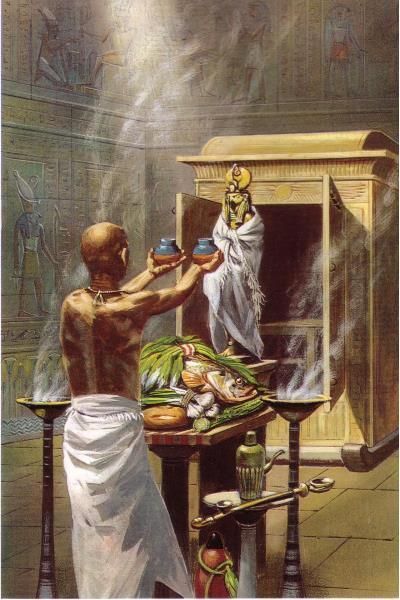
Egyptian temples served as religious centers but were also important institutions of economic and cultural activity. Priests maintained rituals, preserved texts, and participated in the transmission of religious knowledge.

Egyptian religious traditions influenced later Mediterranean cultures. The worship of Isis, in particular, spread beyond Egypt during the Hellenistic and Roman periods.

Egyptian symbols such as the ankh, scarab, Eye of Horus, and djed pillar remain widely recognized today.

The legacy of Ancient Egyptian religion continues to influence modern art, literature, popular culture, archaeology, and historical scholarship.

More importantly, Egyptian religious beliefs demonstrate how an ancient civilization used mythology and philosophy to understand life, death, morality, nature, kingship, and the universe.

6. Ancient Egypt and the Legacy of Art and Culture

The artistic legacy of Ancient Egypt is one of the most recognizable cultural traditions in world history. Egyptian paintings, sculptures, reliefs, jewelry, pottery, furniture, architecture, and decorative objects provide detailed evidence of the civilization’s religious beliefs, social structure, daily life, and artistic values.

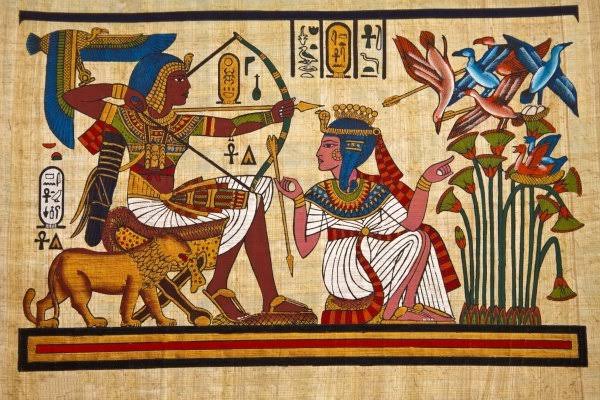
Egyptian artists developed distinctive conventions that remained recognizable for thousands of years. Human figures were often represented according to established proportions and poses, while important individuals such as pharaohs could be shown larger than other people to emphasize their status.

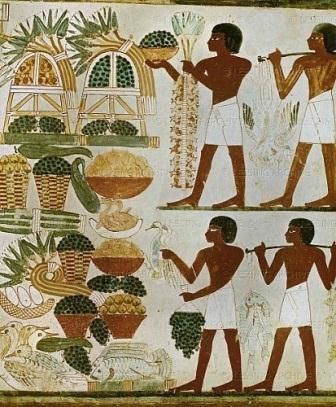
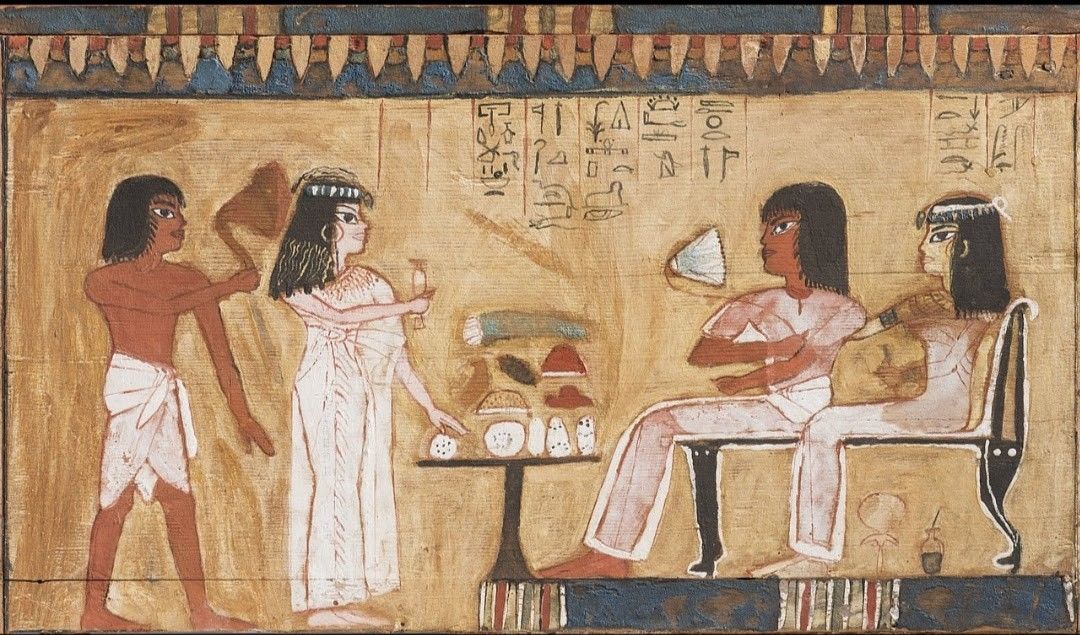
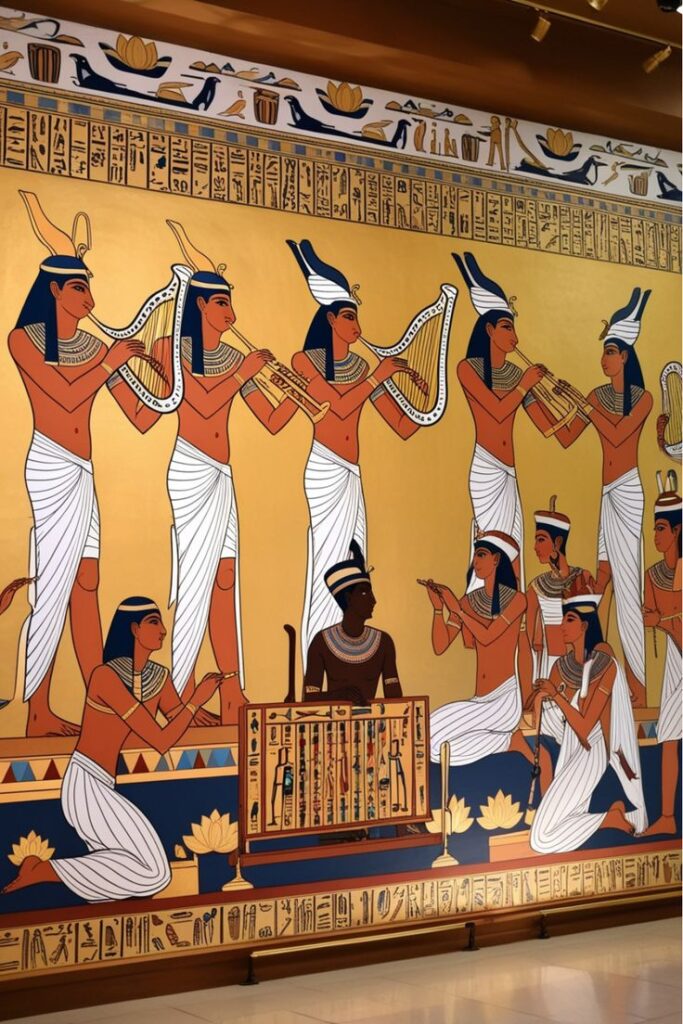
Tomb paintings are particularly valuable historical sources. They depict farming, fishing, hunting, cooking, music, dancing, crafts, trade, family life, and religious ceremonies.

Temple reliefs often show pharaohs making offerings to gods, participating in religious rituals, or celebrating military victories. These scenes combined artistic expression with political and religious messages.

Egyptian sculpture included statues of kings, queens, gods, officials, and private individuals. Statues were often created from durable materials such as granite, limestone, sandstone, wood, and other materials.

Jewelry was another important part of Egyptian culture. Gold, colored stones, faience, and other materials were used to create necklaces, bracelets, rings, amulets, and decorative objects.

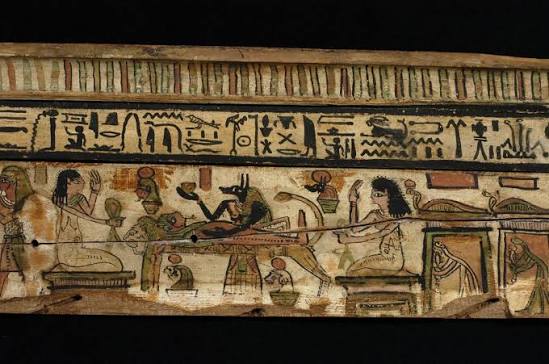
Egyptian artists also created beautifully decorated coffins and funerary objects. These objects often included images and texts intended to protect the deceased and assist them in the afterlife.

The artistic tradition was closely connected with religion. Symbols such as the ankh, scarab, lotus, papyrus, and Eye of Horus carried religious and cultural meanings.

Craftsmanship was highly developed. Egyptian artisans specialized in stone carving, metalworking, woodworking, pottery, textile production, glassmaking, and jewelry manufacture.

The Egyptian artistic tradition influenced later cultures, particularly during the Greek and Roman periods. Egyptian motifs were adopted in architecture and decorative art outside Egypt.

In modern times, Ancient Egyptian art has inspired painters, sculptors, architects, designers, filmmakers, and writers around the world. Museums display Egyptian collections that attract millions of visitors.

Archaeologists also use Egyptian art to reconstruct aspects of ancient society that may not be described in written records.

The legacy of Ancient Egyptian art and culture therefore extends beyond aesthetic beauty. It preserves information about religion, technology, social relationships, clothing, occupations, architecture, and everyday life.

Through its extraordinary artistic achievements, Ancient Egypt created a cultural legacy that continues to influence world art, archaeology, architecture, museums, education, and popular culture.

weddings in ancient egypt

7. Ancient Egypt and the Legacy of Government and Administration

The government and administrative system of Ancient Egypt left an important legacy in the history of organized states. For thousands of years, Egyptian rulers developed systems for managing territory, collecting resources, organizing labor, maintaining infrastructure, administering justice, and supporting religious institutions. This complex administration helped Egypt remain politically and economically organized across many periods.

At the center of the government was the pharaoh, who was considered the highest political and religious authority. The king was responsible for maintaining order, defending Egypt, supporting temples, and ensuring that the principles of Ma’at were respected.

The pharaoh depended on a large administrative structure. One of the most important officials was the vizier, who supervised major areas of government and helped coordinate the work of other officials.

Below senior officials were governors, tax administrators, scribes, military officers, priests, and local administrators. Together, they managed different regions and responsibilities throughout the kingdom.

Scribes were particularly important because Egyptian administration depended heavily on written records. They recorded taxes, agricultural production, land ownership, workers, food supplies, construction projects, legal matters, and government orders.

The Egyptian state also developed systems for collecting agricultural resources. Grain and other products could be collected as taxes or stored in government and temple facilities. These resources could then support officials, workers, religious institutions, and large projects.

Large construction projects required sophisticated organization. Administrators had to provide workers with food, tools, housing, transportation, and other necessities.

The government also managed irrigation and agricultural infrastructure. Maintaining canals and water systems was essential to maximizing agricultural production and supporting communities along the Nile.

Military administration became increasingly important as Egypt expanded its influence beyond the Nile Valley. Officials organized soldiers, supplies, fortresses, and military expeditions.

The Egyptian administrative tradition demonstrates the importance of record keeping and specialized government roles. Different officials had clearly defined responsibilities, and written documents helped coordinate their activities.

Some administrative practices changed over time, especially during periods of political decentralization and foreign rule. Nevertheless, the basic importance of organized administration remained a central feature of Egyptian civilization.

The legacy of Ancient Egyptian government can be seen in its sophisticated use of bureaucracy, taxation, written records, regional administration, labor organization, and centralized authority.

Although later civilizations developed their own systems independently, Ancient Egypt provides historians with one of the earliest detailed examples of a large territorial state supported by a complex administrative structure.

8. Ancient Egypt and the Legacy of Trade and Economic Organization

The economic and trading system of Ancient Egypt made a major contribution to the civilization’s long-term development. Egypt’s location along the Nile and between Africa, the Mediterranean, and the Near East allowed it to participate in extensive networks of exchange.

The Nile River served as the main internal transportation route. Boats carried grain, stone, pottery, textiles, livestock, and other goods between different parts of the country.

Agriculture formed the foundation of the Egyptian economy. Farmers cultivated wheat, barley, vegetables, fruits, flax, and other crops on fertile land near the Nile.

The annual flooding of the river helped replenish agricultural soil. The resulting food surplus supported urban populations, temples, armies, government officials, and craftsmen.

Egyptian economic administration depended heavily on record keeping. Scribes documented agricultural production, taxes, wages, storage, deliveries, and other transactions.

Trade connected Egypt with many regions. Egyptian merchants and expeditions traveled toward Nubia, the Sinai Peninsula, the Levant, the Red Sea, and the Western Desert.

Egypt imported materials that were scarce locally. Timber from the Levant was especially valuable because Egypt did not have large forests suitable for producing the quantities of wood required for major construction and shipbuilding.

Gold from Nubia and the Eastern Desert was another important resource. Egypt also obtained copper, turquoise, incense, ivory, ebony, and other luxury materials through trade and expeditions.

The famous Egyptian expeditions to Punt brought back incense, aromatic resins, exotic animals, and other valuable goods.

Craft production was another major part of the economy. Skilled workers produced pottery, tools, weapons, furniture, jewelry, textiles, statues, and religious objects.

Large institutions such as temples and royal estates controlled considerable agricultural resources and employed large numbers of workers.

Egyptian economic organization demonstrates how the state could coordinate agriculture, taxation, storage, labor, trade, transportation, and craft production on a large scale.

The legacy of this economic system is important because it shows how one of the world’s earliest complex civilizations managed resources across a large territory.

Ancient Egyptian trade and economic practices also strengthened cultural connections with neighboring regions. Goods, technologies, artistic styles, and ideas could move along the same routes as merchants and expeditions.

The economic legacy of Ancient Egypt therefore reflects the importance of the Nile, agriculture, trade networks, craftsmanship, administration, and resource management in supporting one of history’s longest-lasting civilizations.

9. Ancient Egypt and the Legacy of Education and Knowledge Preservation

The educational and intellectual legacy of Ancient Egypt is another important contribution of the civilization. Egyptians developed systems for training scribes, priests, administrators, craftsmen, and other specialists. Knowledge was preserved through writing, apprenticeship, religious institutions, professional training, and practical experience.

Education was strongly connected with the scribal profession. Scribes needed to learn reading, writing, mathematics, and administrative procedures. Their skills were essential for managing the Egyptian state.

Students often learned by copying texts and practicing calculations. This method helped them develop writing skills while also preserving important literary and administrative traditions.

Egyptian education included practical subjects. Students could study mathematics because calculations were needed for taxation, construction, land measurement, and economic administration.

Religious education was also important. Priests needed knowledge of rituals, hymns, sacred texts, calendars, and temple traditions.

Medical knowledge was transmitted through practical experience and written documents. Medical papyri preserved treatments, observations, and procedures that could be studied by later generations.

Architectural and craft knowledge was usually passed through apprenticeship. Young craftsmen learned from experienced workers how to cut stone, shape wood, make pottery, produce jewelry, weave textiles, and create other objects.

Knowledge preservation also took place through monuments. Egyptian temples and tombs contained inscriptions and images that recorded religious traditions, historical events, royal achievements, and cultural practices.

Libraries and temple institutions played important roles in preserving written traditions. Although much ancient material has been lost, surviving papyri demonstrate the scale and diversity of Egyptian written culture.

Egyptian literature included stories, wisdom texts, hymns, poems, religious compositions, and autobiographical inscriptions. These works provide insight into Egyptian ideas about morality, family, leadership, religion, and human experience.

The development of papyrus as a writing material greatly supported the preservation and distribution of information. Lightweight papyrus documents could be stored, transported, copied, and reused.

The legacy of Egyptian knowledge preservation became particularly important to modern Egyptology. The decipherment of hieroglyphs allowed scholars to access thousands of ancient inscriptions and documents.

Today, museums, universities, archaeological institutions, and digital databases continue to preserve and study Egyptian records.

The educational legacy of Ancient Egypt therefore extends beyond formal schooling. It includes a broad tradition of writing, apprenticeship, documentation, professional training, scientific observation, literature, and cultural preservation.

This tradition allowed Egyptian knowledge to survive across generations and remains one of the most valuable aspects of the legacy of Ancient Egyptian civilization.

Ancient Egypt Scribes Importance

10. Ancient Egypt and the Legacy of Religion and Spiritual Beliefs

The religious legacy of Ancient Egypt is one of the most enduring aspects of Egyptian civilization. Egyptian religious beliefs developed over thousands of years and influenced government, architecture, art, literature, medicine, burial customs, and everyday life. Their ideas about gods, creation, death, morality, and the afterlife continue to attract historians and visitors from around the world.

Ancient Egyptians worshipped a large number of gods and goddesses, including Ra, Osiris, Isis, Horus, Amun, Hathor, Anubis, Thoth, and Ptah. Different regions often had their own important deities, while religious traditions could merge and change over time.

The concept of Ma’at was central to Egyptian spirituality. Ma’at represented truth, justice, balance, harmony, and cosmic order. Pharaohs were expected to maintain Ma’at, while individuals were encouraged to live according to its moral principles.

Egyptian beliefs about death were particularly influential. Egyptians generally viewed death as a transition to another form of existence. The preservation of the body through mummification was intended to help the deceased continue their existence in the afterlife.

Tombs were filled with objects, food, images, and religious texts. These items were believed to support the deceased in the next world.

The Book of the Dead and earlier funerary traditions such as the Pyramid Texts and Coffin Texts provide detailed information about Egyptian beliefs concerning the afterlife.

The Weighing of the Heart represented an important idea of moral judgment. The deceased’s heart was compared with the feather of Ma’at, symbolizing the importance of truth and proper conduct.

Egyptian temples were major religious institutions. They were centers for rituals and offerings but also controlled land, workers, storage facilities, and economic resources.

Egyptian religious traditions also influenced artistic expression. Gods were represented through human, animal, or combined forms, creating a distinctive visual tradition that remains recognizable today.

Some Egyptian deities became popular outside Egypt. The worship of Isis spread throughout the Mediterranean during the Hellenistic and Roman periods.

Egyptian religious symbols such as the ankh, scarab, Eye of Horus, and lotus remain popular in modern art and cultural representations.

The legacy of Ancient Egyptian religion is therefore much broader than mythology. It represents a complete worldview concerning life, death, morality, nature, kingship, justice, and the relationship between humans and the divine.

11. Ancient Egypt and the Legacy of Language, Literature, and Historical Records

The language and literature of Ancient Egypt provide one of the richest records left by any ancient civilization. Egyptian texts survived on temple walls, tombs, statues, papyri, coffins, ostraca, and other materials. Together, they allow modern researchers to reconstruct many aspects of Egyptian history and culture.

Ancient Egyptian writing developed over a very long period. Hieroglyphs were commonly used for monumental and religious inscriptions, while hieratic and later Demotic scripts were used for more practical purposes.

Egyptian scribes recorded information about government, taxation, agriculture, trade, religious ceremonies, medicine, mathematics, and legal matters.

Literature was also an important part of Egyptian culture. Egyptians produced stories, poems, hymns, wisdom texts, religious compositions, autobiographical inscriptions, and teachings.

Wisdom literature provided advice about morality, leadership, family relationships, honesty, and social behavior. These texts offer valuable insights into Egyptian ideas about proper conduct.

Stories such as the Tale of Sinuhe provide evidence of Egyptian storytelling and ideas about identity, exile, kingship, and returning home.

Religious literature preserved hymns to gods and descriptions of creation, death, resurrection, and the afterlife.

Historical records were often connected with royal achievements. Pharaohs recorded military campaigns, temple construction, religious activities, and important political events in inscriptions.

These records are extremely valuable to modern historians, although they must be interpreted carefully because royal inscriptions often emphasized victories and achievements rather than failures.

Administrative papyri provide another perspective. They document everyday activities such as wages, food distributions, property transactions, taxation, and labor organization.

The discovery and decipherment of the Rosetta Stone transformed the study of Egyptian civilization. By providing the same decree in Greek and Egyptian scripts, it helped scholars understand hieroglyphic writing.

Modern Egyptologists use Egyptian texts together with archaeological evidence to reconstruct the past. This combination allows researchers to study both elite culture and everyday life.

The Egyptian language also changed over time, and its later forms contributed to the development of Coptic, which preserves an important stage of the Egyptian language.

The legacy of Egyptian literature and writing is therefore enormous. It preserved information that would otherwise have disappeared and created a direct connection between modern researchers and the people who lived thousands of years ago.

Through its language, literature, inscriptions, papyri, and historical records, Ancient Egypt left one of the world’s most important documentary legacies.

12. The Lasting Legacy of Ancient Egyptian Civilization

The legacy of Ancient Egyptian civilization extends far beyond its famous pyramids and temples. Egypt influenced the history of architecture, writing, medicine, mathematics, astronomy, government, religion, art, agriculture, trade, and cultural preservation. Its civilization survived for thousands of years, leaving an extraordinary body of knowledge and material remains.

Egyptian architecture and engineering remain among the clearest examples of this legacy. The pyramids, temples, obelisks, tombs, and statues demonstrate the ability of Egyptian society to organize large-scale projects and develop sophisticated construction techniques.

Egyptian writing created another lasting contribution. Hieroglyphic inscriptions and papyrus documents preserved information about government, religion, science, literature, and everyday life.

The development of mathematics and surveying supported agriculture, architecture, taxation, and administration. Egyptian mathematical texts demonstrate practical methods for solving problems involving numbers, fractions, areas, and volumes.

Ancient Egyptian medicine also contributed to the history of medical knowledge. Medical papyri recorded treatments, observations, injuries, and remedies, providing evidence of systematic approaches to healthcare.

The Egyptian understanding of astronomy and timekeeping influenced calendars and agricultural planning. Observations of the stars and the annual Nile cycle helped organize religious and economic activities.

Egyptian religious traditions had a wide cultural influence. Ideas surrounding Osiris, Isis, Horus, Ma’at, death, resurrection, and the afterlife became important subjects in later Mediterranean cultures.

Egyptian art continues to influence modern designers, architects, filmmakers, artists, and writers. The distinctive style of Egyptian temples, statues, symbols, and decorative patterns remains instantly recognizable.

The civilization’s legacy is also preserved through archaeology and Egyptology. Excavations, inscriptions, museums, and research institutions continue to reveal information about Egyptian society.

Modern tourism has further increased global interest in Egyptian heritage. Sites such as Giza, Saqqara, Luxor, Karnak, the Valley of the Kings, Abu Simbel, and Dendera attract visitors interested in ancient history and culture.

Perhaps the most important part of Egypt’s legacy is its demonstration of how a complex civilization can develop through the interaction of geography, government, religion, science, agriculture, trade, and culture.

Ancient Egypt was not simply a civilization that built monuments. It developed institutions and traditions that preserved knowledge across generations.

Today, its achievements continue to be studied in universities, museums, archaeological sites, books, documentaries, and educational programs.

Ultimately, the legacy of Ancient Egypt is a lasting contribution to world history. Its monuments, writings, scientific knowledge, artistic traditions, religious ideas, and cultural achievements continue to shape our understanding of the ancient world and remain an important part of humanity’s shared heritage.

Frequently Asked Questions

The legacy of Ancient Egypt includes writing, architecture, mathematics, medicine, astronomy, government, religion, art, engineering, and literature. These achievements provide important evidence of one of the world’s longest-lasting civilizations.


Ancient Egyptians developed impressive pyramids, temples, tombs, obelisks, and statues. Their construction projects demonstrated advanced knowledge of surveying, mathematics, engineering, stoneworking, transportation, and large-scale organization.


Egyptian medical papyri recorded information about diseases, injuries, treatments, medicines, and surgical practices. Documents such as the Ebers Papyrus and Edwin Smith Papyrus are important sources for the history of ancient medicine.

Egyptians used hieroglyphs, hieratic, and Demotic writing to record religious texts, government documents, medical information, mathematical calculations, literature, trade records, and everyday activities. These records allow historians to study Egyptian civilization thousands of years later.


Ancient Egypt continues to influence archaeology, history, architecture, art, literature, tourism, education, and popular culture. Its monuments and written records provide valuable information about ancient society and remain an important part of humanity’s cultural heritage.