Welcome to

Ancient Egyptian Gods

The Ancient Egyptian gods were at the heart of one of the world’s oldest and most fascinating civilizations. For thousands of years, the people of Ancient Egypt worshipped a vast pantheon of deities who governed every aspect of life, death, nature, and the universe. From the mighty sun god Ra and the ruler of the afterlife Osiris to the protective goddess Isis and the falcon-headed Horus, these divine beings shaped Egyptian religion, culture, mythology, and daily life along the Nile River.

Ancient Egyptian mythology was built upon the belief that gods controlled the forces of nature and maintained cosmic order, known as Ma’at. Temples, rituals, festivals, and offerings were dedicated to these powerful deities in hopes of securing protection, prosperity, health, and a successful journey into the afterlife. The stories of the Egyptian gods explain the creation of the world, the struggle between good and evil, and the eternal cycle of life, death, and rebirth that formed the foundation of Ancient Egyptian beliefs.

The gods of Ancient Egypt were often depicted with human bodies and animal heads, each symbolizing unique powers and characteristics. Ra represented the sun and creation, Anubis guided souls to the afterlife, Thoth governed wisdom and writing, Hathor embodied love and joy, while Seth was associated with chaos and storms. These deities played crucial roles in royal ceremonies, temple worship, mummification practices, and funerary traditions that continue to captivate historians and travelers today.

In this guide, we explore the most important Ancient Egyptian gods and goddesses, their symbols, powers, myths, temples, and influence on Egyptian civilization. Whether you are interested in Egyptian mythology, ancient religion, the Book of the Dead, or the beliefs that inspired the construction of Egypt’s magnificent temples and tombs, this comprehensive overview will introduce you to the remarkable world of the Egyptian gods.

1. Ra – The Ancient Egyptian Sun God

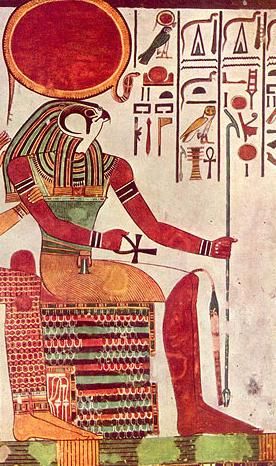
Ra was one of the most important and influential gods in Ancient Egyptian religion. He was primarily associated with the sun, light, creation, and royal power. Egyptians believed that the sun was essential for life, so the daily movement of the sun across the sky became an important part of religious thought.

Ra was commonly represented as a man with a falcon’s head crowned with a solar disk surrounded by a protective cobra. The falcon connected him with the sky, while the solar disk represented the sun and its life-giving power.

According to some Egyptian creation traditions, Ra emerged from the primordial waters and helped bring the world into existence. Different Egyptian religious centers had different creation stories, so the exact role of Ra could vary depending on the period and location.

The daily journey of the sun was one of the most important myths associated with Ra. Egyptians believed that Ra traveled across the sky during the day in a solar boat. At night, he journeyed through the underworld before being reborn with the sunrise.

During this nightly journey, Ra was believed to encounter dangerous forces, particularly the serpent Apep, which represented chaos and disorder. Ra’s victory over Apep symbolized the daily triumph of order over chaos.

Ra was closely connected with Egyptian kingship. Pharaohs were often associated with the sun god and were expected to maintain order in the kingdom.

Over time, Ra became associated with other important deities. One of the most famous combinations was Amun-Ra, which united the powerful Theban god Amun with Ra.

Ra’s influence was especially strong during periods when solar religion became closely connected with royal authority. Temples and monuments were dedicated to solar worship, and solar imagery appeared throughout Egyptian art.

The sun also had an important role in Egyptian beliefs about death and rebirth. The daily cycle of sunrise and sunset provided a powerful symbol of renewal and eternal life.

Ra therefore represented more than the physical sun. He symbolized life, creation, kingship, renewal, and cosmic order.

The enduring importance of Ra demonstrates how Ancient Egyptians used natural phenomena to understand the universe and express their religious beliefs.
2. Osiris – The Ancient Egyptian God of the Afterlife

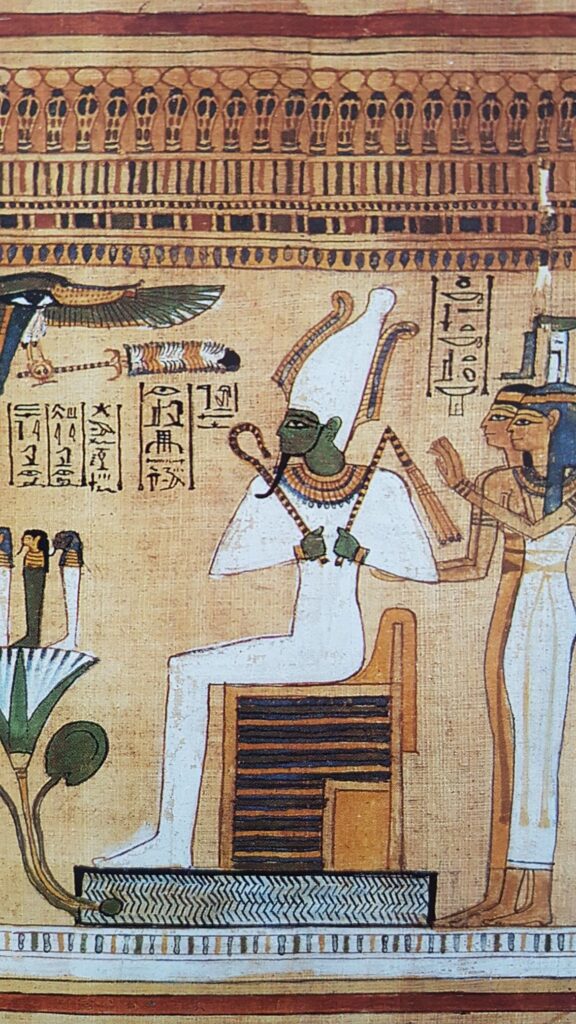
Osiris was one of the most important gods in Ancient Egyptian religion and was strongly associated with the afterlife, death, resurrection, and fertility. His mythology played a central role in Egyptian beliefs about death and the possibility of eternal life.

Osiris was traditionally described as the son of Geb, the earth god, and Nut, the sky goddess. He was the brother and husband of Isis and the brother of Seth and Nephthys.

According to the famous Osiris myth, Osiris became a ruler of Egypt and was associated with prosperity and civilization. His brother Seth, however, became jealous and eventually murdered him.

Isis searched for Osiris and worked to restore his body. Through her magical abilities and the assistance of other deities, Osiris was revived in the divine realm. He could not return permanently to earthly life, however, and instead became ruler of the underworld.

The story of Osiris became a powerful symbol of death and resurrection. Egyptians connected the cycle of death and renewal with the natural world, particularly agriculture and the annual renewal associated with the Nile.

Osiris was often depicted as a mummified man wearing a crown and holding royal symbols such as the crook and flail. His green or dark coloration in some representations could symbolize fertility and regeneration.

Osiris became particularly important in funerary religion. Egyptians hoped to join Osiris in the afterlife after death.

The judgment of the dead was another important part of Osirian belief. The deceased appeared before divine judges, and the heart was weighed against the feather of Ma’at, representing truth and justice.

Osiris was also closely connected with Egyptian ideas about the continuation of life after death. Proper burial, mummification, funerary rituals, and offerings were believed to help the deceased achieve eternal existence.

The worship of Osiris became widespread throughout Egypt. Important centers of his cult included Abydos, which became one of the most important pilgrimage destinations in ancient Egypt.

Festivals honoring Osiris reenacted elements of his myth and celebrated themes of death, resurrection, fertility, and renewal.

Osiris’s influence extended beyond religion. His story shaped Egyptian funerary art, literature, temple rituals, and beliefs about human destiny.

The legacy of Osiris remains particularly important because his mythology provides one of the clearest examples of how Ancient Egyptians understood the relationship between death, resurrection, justice, and eternal life.
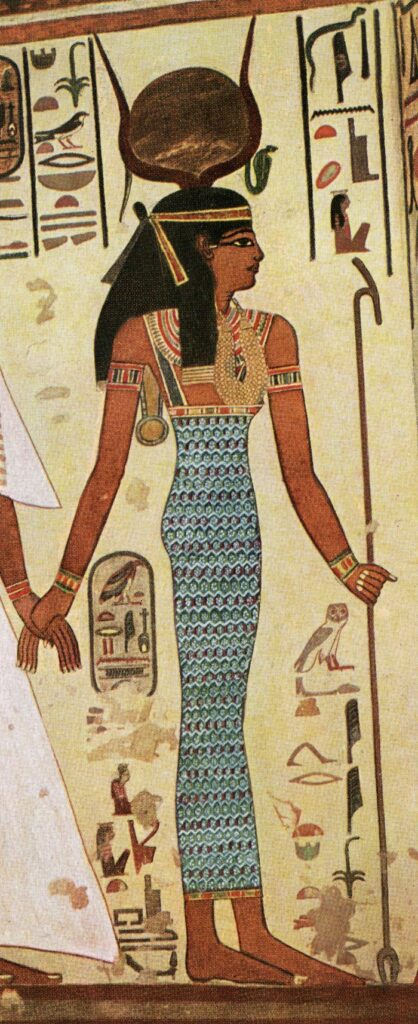
3. Isis – The Ancient Egyptian Goddess of Magic and Protection

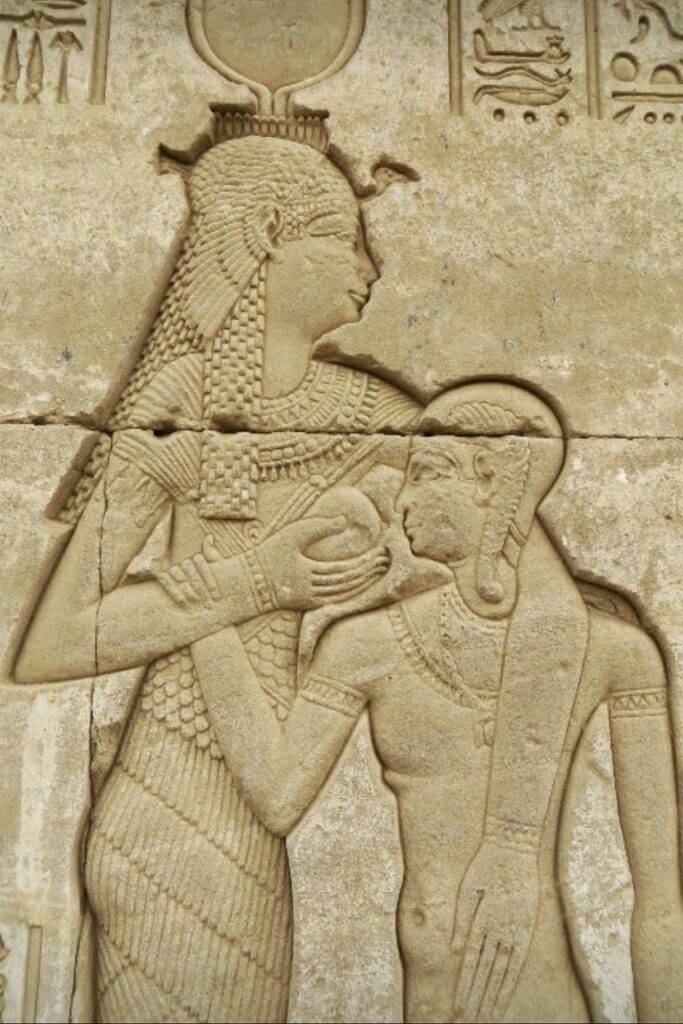
Isis was one of the most important and widely worshipped goddesses in Ancient Egypt. She was associated with magic, motherhood, protection, healing, family, and royal power. Her influence eventually extended beyond Egypt, and her worship became known throughout the Mediterranean world.

Isis was the daughter of Geb and Nut and the sister and wife of Osiris. She was also the mother of Horus, one of the most important gods associated with Egyptian kingship.

The most famous story involving Isis is the Osiris myth. After Seth murdered Osiris and scattered his body, Isis searched for the pieces and helped restore him through her magical powers.

Her devotion to Osiris became an important symbol of loyalty and love. Isis was also presented as a protective mother who worked to protect her son Horus from danger.

Isis was frequently depicted as a woman wearing a throne-shaped symbol on her head. In other representations, she appears with outstretched wings, symbolizing protection.

Her association with magic was particularly strong. Egyptians believed that Isis possessed powerful knowledge of magical words and rituals. She could use this knowledge to heal, protect, and overcome dangerous forces.

Isis was also associated with motherhood. Her relationship with Horus made her an important symbol of maternal protection and devotion.

The goddess became connected with healing. People could pray to Isis for protection from illness, danger, and other problems.

Isis was closely associated with Egyptian kingship through Horus. Because the pharaoh was connected with Horus, Isis could also be understood as a divine mother of the royal line.

Temples dedicated to Isis existed in different parts of Egypt. One of the most important surviving temples associated with her worship is the Temple of Isis at Philae, near Aswan.

The worship of Isis eventually spread outside Egypt, especially during the Hellenistic and Roman periods. Temples dedicated to her appeared in parts of the Mediterranean world.

Her popularity continued long after the height of Ancient Egyptian civilization, making her one of the most internationally influential Egyptian deities.

Isis represents the importance of magic, motherhood, healing, protection, loyalty, and family in Egyptian religious thought.

Her story also demonstrates how Egyptian gods could develop broader meanings over time and how Egyptian religious traditions influenced cultures beyond the Nile Valley.
4. Horus – The Ancient Egyptian God of Kingship and the Sky

Horus was one of the most important gods in Ancient Egyptian religion. He was strongly associated with the sky, kingship, protection, and divine authority. His worship continued for thousands of years, and his image became one of the most recognizable symbols of Ancient Egyptian civilization.

Horus was usually represented as a falcon or as a man with a falcon’s head. The falcon was connected with the sky because of its ability to fly high above the earth. His association with the heavens helped establish him as a powerful divine figure.

One of the most important traditions identifies Horus as the son of Osiris and Isis. According to the Osiris myth, Horus grew up under the protection of his mother after his father was killed by Seth.

Horus eventually confronted Seth in a struggle for the Egyptian throne. Their conflict represented the struggle between legitimate kingship and disorder.

The story of Horus and Seth became an important explanation for the legitimacy of Egyptian kingship. The pharaoh was traditionally associated with the living Horus, while the deceased king was connected with Osiris.

The famous Eye of Horus became a powerful symbol of protection, healing, and restoration. According to mythology, Horus lost an eye during his conflict with Seth, but the eye was restored through divine intervention.

The Eye of Horus was later used as an amulet and protective symbol. Egyptians believed it could provide safety and well-being.

Horus had several forms and local traditions. Different regions could worship different manifestations of the god, reflecting the diversity of Egyptian religion.

Temples dedicated to Horus included the famous Temple of Horus at Edfu, one of the best-preserved temples in Egypt. Its inscriptions and reliefs provide valuable information about Horus’s mythology and worship.

Horus was closely connected with the pharaoh’s role as protector of Egypt. Royal imagery often showed the king receiving protection or support from the god.

His connection with kingship also reinforced the religious foundations of Egyptian government. The ruler was not simply a political leader but was connected with a divine tradition stretching back to the gods.

Horus therefore represented royal authority, protection, victory, the sky, and legitimate succession.

His enduring importance demonstrates how deeply Egyptian religion was connected with the institution of kingship. The image of the falcon god became one of the strongest symbols of Egyptian royal power.

5. Anubis – The Ancient Egyptian God of Mummification and the Dead

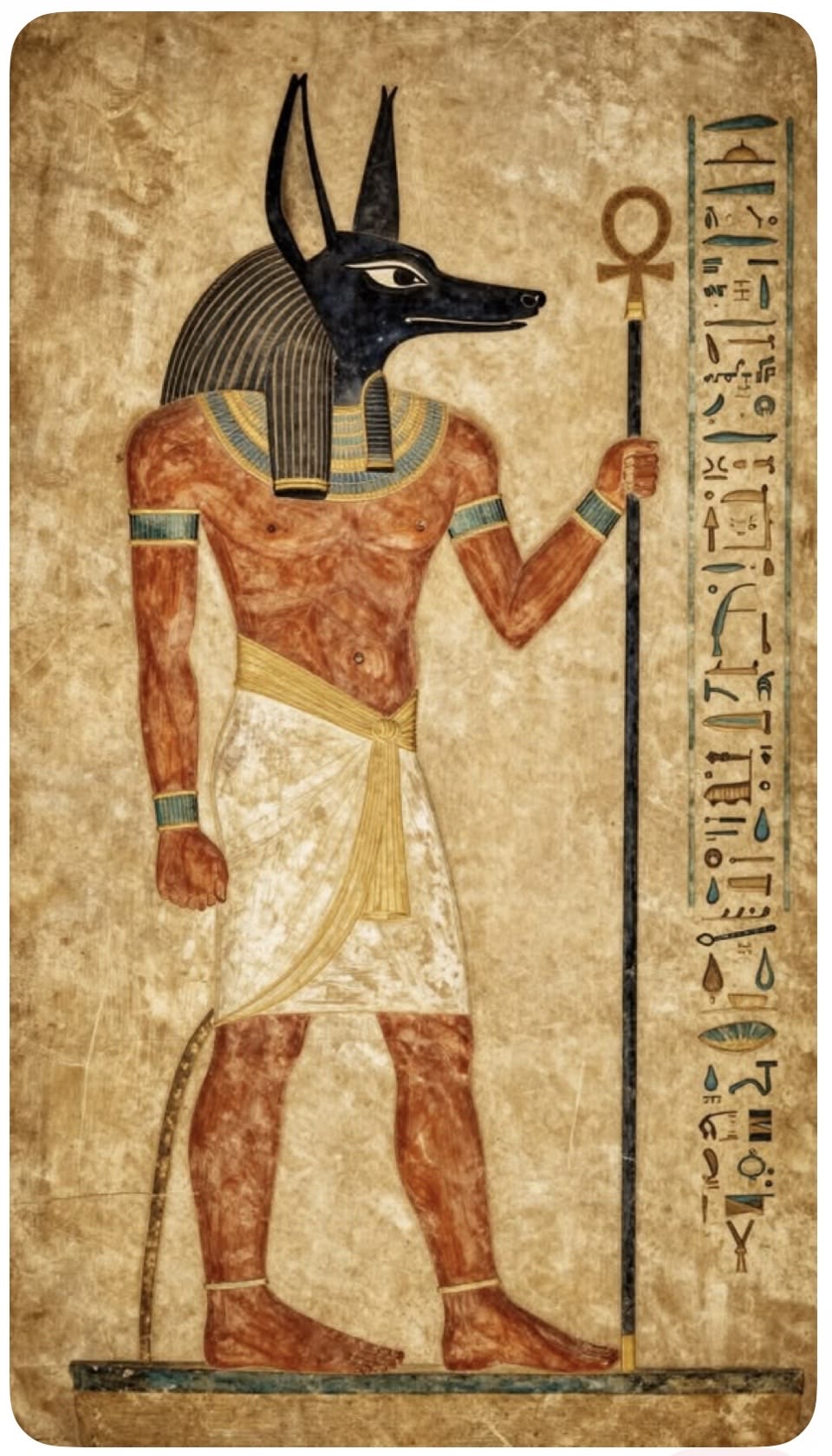
Anubis was one of the most recognizable gods of Ancient Egyptian religion. He was primarily associated with mummification, funerary rituals, protection of the dead, and the transition to the afterlife.

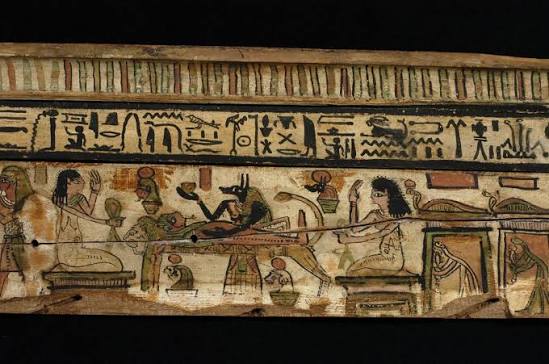
Anubis was usually depicted as a man with the head of a jackal or as a complete black jackal. Jackals were commonly seen near cemeteries, which may have contributed to their connection with death and burial.

Anubis played an important role in the preservation and protection of the deceased. Ancient Egyptians believed that proper treatment of the body was essential for successful existence in the afterlife.

According to Egyptian religious traditions, Anubis was associated with mummification. Priests performing funerary rituals could invoke his protection while preparing the body.

Anubis was also associated with the protection of tombs. Egyptians placed religious symbols and images of protective deities in burial spaces to guard the deceased from danger.

One of Anubis’s most important roles was connected with the judgment of the dead. He was traditionally associated with the weighing of the deceased person’s heart.

In the judgment scene, the heart was placed on one side of a scale and the feather of Ma’at on the other. Anubis could be shown overseeing or assisting with the weighing process.

If the heart was balanced with Ma’at, the deceased could continue into the afterlife. If it was judged unworthy, the deceased faced a terrible fate.

Anubis was sometimes associated with Osiris, who became the principal ruler of the underworld. As religious traditions developed, some responsibilities connected with the dead shifted between different deities.

Anubis remained an important protective figure even as Osiris became increasingly prominent in funerary religion.

The jackal god appeared frequently in tomb paintings, coffins, funerary papyri, and religious objects. His image communicated safety and protection for the deceased.

The color black associated with Anubis could also carry positive meanings in Egyptian symbolism. Black was connected with the fertile soil of the Nile and could therefore symbolize renewal and regeneration, rather than simply death.

Anubis demonstrates how Egyptians viewed death as a carefully managed transition rather than an absolute end.

His role connected mummification, burial, protection, judgment, and the afterlife, making him one of the most important gods in Egyptian funerary traditions.

6. Thoth – The Ancient Egyptian God of Wisdom and Writing

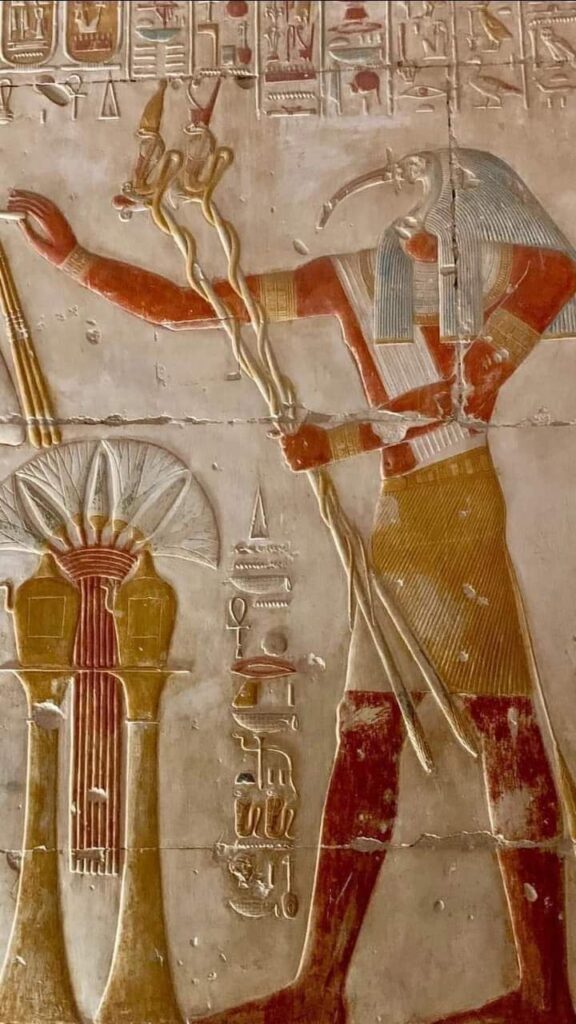
Thoth was one of the most important intellectual deities in Ancient Egyptian religion. He was associated with wisdom, writing, knowledge, language, mathematics, measurement, and the moon. Scribes particularly respected him because of his connection with writing and learning.

Thoth was commonly represented as a man with the head of an ibis or sometimes as a baboon. The ibis became closely associated with the god, and mummified ibis remains have been discovered at several Egyptian religious sites.

As the god of writing, Thoth was believed to have an important role in recording and preserving divine and human knowledge. Egyptian scribes could invoke him for assistance with their work.

Thoth was also associated with language and speech. Egyptians believed that words had great power, especially in religious and magical contexts.

Mathematics and measurement were also connected with Thoth. His association with precise knowledge made him an important deity for scribes, administrators, and scholars.

Thoth played a role in Egyptian mythology as a wise and intelligent figure who could resolve conflicts between gods.

He was particularly important in the mythology surrounding Horus and Seth. When Horus was injured during his conflict with Seth, Thoth was associated with healing and restoration.

Thoth was also connected with the judgment of the dead. In scenes depicting the weighing of the heart, he could be shown recording the result of the judgment.

His relationship with Ma’at was therefore significant. Accurate recording and truthful judgment were essential for maintaining divine and social order.

Thoth was associated with the moon and with the measurement of time. This connection strengthened his role as a deity of calculation and cosmic order.

Important centers of his worship included Hermopolis, where he was associated with the creation of the universe in local religious traditions.

The god became particularly important during the later periods of Egyptian history, and Greek writers associated him with Hermes, contributing to the later concept of Hermes Trismegistus.

Thoth represents the Egyptian belief that knowledge, writing, measurement, wisdom, and communication were powerful forces capable of maintaining order.

His importance to scribes demonstrates the high value Egyptians placed on literacy and intellectual skills.

Through Thoth, Egyptian religion connected divine power with the preservation of knowledge. His legacy therefore reflects the close relationship between religion, education, writing, mathematics, and intellectual life in Ancient Egypt.

7. Hathor – The Ancient Egyptian Goddess of Love, Music, and Joy

Hathor was one of the most widely worshipped goddesses in Ancient Egypt. She was associated with love, motherhood, music, dance, beauty, fertility, joy, and protection. Her worship continued for thousands of years, and she played different roles in Egyptian mythology and daily religious life.

Hathor was commonly represented as a woman wearing a solar disk between the horns of a cow. She could also appear as a cow or as a woman with cow-like features. Cows were associated with nourishment, motherhood, and fertility.

Hathor was closely connected with motherhood and feminine power. Egyptian families could pray to her for protection, fertility, and the well-being of mothers and children.

Music and dance were important parts of her worship. Priests and musicians performed songs, played instruments, and participated in festivals dedicated to the goddess.

Hathor was also associated with beauty and love. Her influence extended beyond romantic relationships to happiness, celebration, femininity, and social harmony.

One of the most important centers of Hathor’s worship was Dendera, where the magnificent Temple of Hathor was built and expanded over several periods. The temple contains detailed reliefs and inscriptions dedicated to the goddess.

Hathor also had connections with the sun. In some traditions, she was associated with the solar deity and represented aspects of the sun’s power.

Another important role was her connection with the afterlife. Hathor could be portrayed as a protective goddess who welcomed the deceased and helped them enter the next world.

She was sometimes called the Lady of the West, connecting her with the western horizon where the sun appeared to set and where many Egyptian cemeteries were located.

Hathor’s mythology also included a powerful and dangerous aspect. In the story of the Eye of Ra, she could take the form of a fierce goddess who punished humanity before being transformed back into a more peaceful form.

This duality reflected the Egyptian understanding that divine forces could have both protective and destructive aspects.

Hathor was worshipped by people from many levels of Egyptian society. Her festivals could include music, dancing, drinking, processions, and communal celebrations.

Her broad range of roles made her one of Egypt’s most important goddesses.

Hathor represented love, joy, motherhood, music, fertility, beauty, protection, and renewal, making her an essential figure in both religious traditions and everyday Egyptian life.

8. Amun – The Ancient Egyptian God of Kingship and Creation

Amun was one of the most powerful gods in Ancient Egyptian religion, particularly during the New Kingdom. Originally associated with the city of Thebes, Amun gradually became a major national deity and was eventually combined with the sun god Ra as Amun-Ra.

The name Amun is often interpreted as meaning “the hidden one,” reflecting his early association with invisible or mysterious divine power. His original nature was connected with hidden forces and creation.

Amun was commonly depicted as a human figure wearing a distinctive crown with two tall feathers. He could also appear in other forms depending on the period and religious tradition.

As Thebes became politically powerful, the importance of Amun increased. Pharaohs who ruled from Thebes supported his temples and priesthood, helping transform him into one of Egypt’s most important gods.

The enormous Karnak Temple Complex became one of the greatest centers of Amun’s worship. Successive pharaohs expanded the complex over many centuries.

Amun’s connection with kingship became particularly strong during the New Kingdom. Pharaohs presented themselves as favored by Amun and credited the god with supporting their military victories and political authority.

The combination Amun-Ra united Amun’s Theban traditions with Ra’s solar power. This created one of the most influential divine forms in later Egyptian religion.

Amun was also connected with creation. Some Egyptian traditions associated him with the emergence of the universe and the mysterious forces responsible for existence.

The priesthood of Amun became extremely powerful, especially during the New Kingdom. The wealth of the temples dedicated to Amun gave his priests considerable economic influence.

This power contributed to political tensions at different points in Egyptian history. The religious reforms of Akhenaten temporarily reduced the prominence of Amun and other traditional gods.

After Akhenaten’s reign, the traditional worship of Amun was restored and strengthened.

Amun’s influence extended beyond Thebes. He became associated with Egyptian imperial power and was worshipped in areas connected with Egypt’s expanding political influence.

The god’s importance demonstrates how Egyptian religion could change as political circumstances changed.

Amun ultimately represented hidden divine power, creation, kingship, and national authority. His combination with Ra created one of the most powerful religious traditions in Ancient Egypt.

9. Seth – The Ancient Egyptian God of Chaos and the Desert

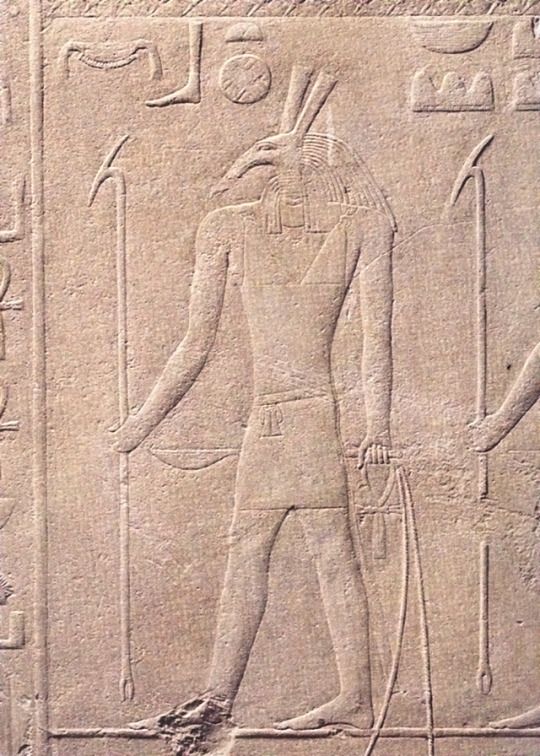
Seth, also known as Set, was one of the most complex gods in Ancient Egyptian religion. He was associated with the desert, storms, disorder, violence, strength, and foreign lands. Unlike a simple representation of evil, Seth could also have positive and protective roles.

Seth was traditionally described as a son of Geb, the earth god, and Nut, the sky goddess. He was the brother of Osiris, Isis, and Nephthys.

Seth is most famous for his conflict with Osiris and Horus. According to the Osiris myth, Seth murdered Osiris and attempted to take control of Egypt.

Horus, the son of Osiris and Isis, eventually challenged Seth for the right to rule Egypt. Their struggle became a major Egyptian myth about kingship, legitimacy, order, and chaos.

Seth was often associated with the desert because Egyptians viewed the desert as a dangerous and unpredictable environment compared with the fertile Nile Valley.

He was also connected with storms, thunder, and powerful natural forces. These characteristics reflected his unpredictable nature.

The animal associated with Seth is known as the Seth animal, a creature with unusual features that does not clearly correspond to a single modern species. Egyptian artists used it to represent the god’s distinctive identity.

Although Seth was associated with disorder, he was not always considered purely negative. In some traditions, he was a powerful protector of Ra during the sun god’s nightly journey through the underworld.

Seth could fight the serpent Apep, helping Ra overcome the forces threatening the cosmic order. This shows that Egyptian gods could have complicated and sometimes contradictory roles.

Seth was also associated with strength and military power. Some Egyptian rulers valued his warrior qualities and used his imagery to represent courage and power.

His reputation changed over time. During certain periods, Seth was respected and worshipped, while in later traditions his association with violence and disorder became increasingly negative.

This changing reputation reflects the complexity of Egyptian religion. A deity could be viewed differently depending on the historical period, political circumstances, and religious tradition.

The conflict between Seth and Horus also helped explain the importance of the pharaoh. The king was associated with Horus and therefore represented the restoration of legitimate order.

Seth’s story demonstrates the Egyptian concern with the constant struggle between Ma’at and disorder, fertility and desert, stability and chaos.

Rather than being simply a “god of evil,” Seth represented powerful and dangerous forces that could sometimes threaten order but could also be used to defend it.

His complex character makes Seth one of the most fascinating figures in Ancient Egyptian mythology.

Ancient Egypt Scribes Importance

10. Ptah – The Ancient Egyptian God of Creation and Craftsmen

Ptah was an important Ancient Egyptian god associated with creation, craftsmanship, artisans, architecture, and artistic skill. He was especially worshipped in Memphis, one of Egypt’s most important ancient cities.

Ptah was commonly depicted as a mummified man wearing a close-fitting garment and holding a staff that combined several important symbols. His unusual appearance distinguished him from many other Egyptian deities.

According to the Memphite creation tradition, Ptah created the world through thought and speech. The god first conceived things in his heart and then brought them into existence through his words. This idea gave great importance to intelligence, planning, and spoken language.

Ptah’s creative power made him particularly important to craftsmen and artisans. Sculptors, metalworkers, builders, carpenters, and other skilled workers could honor him as their divine patron.

The city of Memphis was the principal center of his worship. The temple complex dedicated to Ptah was known as Hut-ka-Ptah, and the name is believed to have influenced the later Greek term from which the word “Egypt” ultimately developed.

Ptah was also connected with architecture and monumental construction. Egyptian builders depended on planning and skilled craftsmanship, making Ptah an appropriate divine patron for these professions.

Ptah’s family was associated with other important gods. In the Memphite tradition, his consort was Sekhmet, while their son was often identified as Nefertem, a deity connected with beauty, fragrance, and the lotus.

Ptah was sometimes associated with healing and protection as well. His cult developed over many centuries and adapted to changing Egyptian religious traditions.

His importance demonstrates that Egyptian religion recognized the value of human creativity and skilled labor. Craftsmen were not simply workers; their abilities were essential for producing temples, statues, tombs, tools, jewelry, and religious objects.

The connection between Ptah and creation also reflects an Egyptian belief that the universe could be brought into existence through thought, planning, and speech.

Ptah therefore represented more than craftsmanship. He embodied the creative intelligence that transformed ideas into physical reality.

His legacy provides insight into the high status of craftsmanship in Egyptian civilization and the importance Egyptians placed on art, architecture, creativity, technical knowledge, and skilled work.

11. The Burial and Afterlife of Ancient Egyptian Pharaohs

Sekhmet was one of the most powerful and complex goddesses in Ancient Egyptian religion. She was associated with war, destruction, protection, disease, healing, and royal power. Her character demonstrated how Egyptian gods could possess both dangerous and protective qualities.

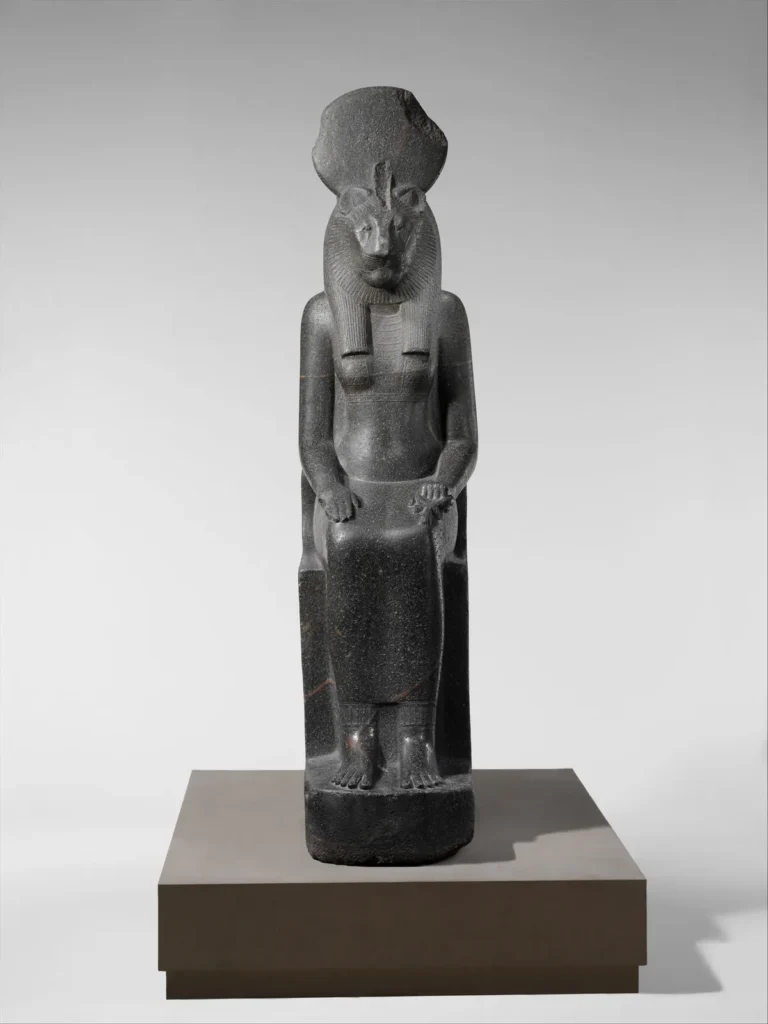
Sekhmet was usually represented as a woman with the head of a lioness, often wearing a solar disk and uraeus cobra. The lioness symbolized strength, aggression, and protection.

Her name is commonly connected with the idea of power or might, reflecting her fierce nature.

Sekhmet was closely associated with the sun god Ra. In one famous tradition, she was sent to punish humanity after people rebelled against Ra.

Her destructive power became so great that Ra needed to stop her from continuing the slaughter. According to the myth, a drink resembling blood was used to calm her, allowing humanity to survive.

This story illustrates the dual nature of Sekhmet. She could represent destruction and disease, but she could also protect people and restore health.

Because of her connection with illness and healing, priests associated with Sekhmet could have specialized religious and medical roles.

Sekhmet was also connected with the pharaoh and the defense of Egypt. Her fierce nature made her an appropriate protector of the king and the kingdom.

Hundreds of statues of Sekhmet were produced during the reign of Amenhotep III, demonstrating the importance of her cult during the New Kingdom.

Her association with the sun also connected her with divine power and royal authority.

Sekhmet was sometimes connected with other goddesses, particularly Hathor, reflecting the Egyptian tendency to understand divine personalities through different forms and aspects.

Her relationship with Ptah was also significant. In the Memphite religious tradition, Ptah and Sekhmet formed a divine family with Nefertem.

Sekhmet’s mythology reveals an important Egyptian idea: forces that could cause destruction could also provide protection when properly controlled.

She therefore represented both the danger and the healing power of divine energy.

The legacy of Sekhmet illustrates how Ancient Egyptians understood war, disease, protection, healing, strength, and royal authority through religious symbolism.

Her lioness image remains one of the most recognizable representations of feminine power and divine protection in Ancient Egyptian art.

12. Ancient Egyptian Gods and Their Influence on Daily Life

The Ancient Egyptian gods influenced almost every aspect of Egyptian life. Religion was not separated from politics, agriculture, medicine, family life, education, or death. Egyptians believed that divine forces were active in the natural world and that maintaining proper relationships with the gods was essential for personal and social well-being.

Different gods were associated with different aspects of life. Ra represented the sun and creation, Osiris was connected with the afterlife, Isis with motherhood and protection, Horus with kingship, and Anubis with funerary traditions.

Farmers depended on the Nile and the agricultural cycle, which were connected with religious beliefs about fertility, renewal, and divine order.

Families could keep small religious objects or amulets in their homes. These objects were believed to provide protection, health, fertility, or good fortune.

People also participated in religious festivals. These events could include processions, music, dancing, offerings, prayers, and celebrations associated with particular gods.

Temples were the major centers of formal religious activity. Priests performed rituals, maintained sacred images, presented offerings, and carried out ceremonies on behalf of the divine world.

Ordinary Egyptians did not necessarily enter the innermost areas of temples. However, they could participate in public festivals and visit sacred places to pray or seek divine assistance.

The gods were also connected with medicine and healing. People could combine practical treatments with prayers, magical spells, and protective amulets.

Religion influenced education and writing as well. Scribes copied religious texts, while priests preserved traditions involving mythology, rituals, calendars, and sacred knowledge.

The pharaoh’s authority was also deeply religious. The king was expected to maintain Ma’at, protecting Egypt from disorder and ensuring that the relationship between humans and the gods remained balanced.

Death was perhaps the area where religion had its strongest influence. Egyptians invested considerable effort in mummification, tomb construction, funerary rituals, and offerings because they believed these practices helped the deceased achieve eternal life.

Egyptian art was also strongly influenced by religion. Gods appeared in temples, tombs, statues, papyri, jewelry, and household objects.

The gods therefore were not distant figures existing only in mythology. They were part of the daily experiences, traditions, fears, hopes, celebrations, and responsibilities of Egyptian people.

The legacy of Ancient Egyptian religion continues today through surviving temples, statues, inscriptions, myths, and archaeological discoveries. Studying the gods provides a deeper understanding of how Egyptians interpreted nature, society, life, death, justice, and the universe.

Frequently Asked Questions

There was no single god who was always the most important. Ra, Amun-Ra, Osiris, Horus, Isis, and Ptah were among the most influential deities, and their importance changed depending on the period and location.


Ancient Egyptian religion included hundreds of gods and goddesses. Some were worshipped throughout Egypt, while others were mainly important in particular cities or regions.


Different gods represented different aspects of life and nature. They were associated with the sun, sky, Nile, fertility, love, wisdom, war, protection, death, healing, kingship, and creation.


Egyptian gods were often given human personalities and emotions, but they were represented in many different forms. They could appear as humans, animals, combinations of humans and animals, or symbolic forms.


Worship included temple rituals, prayers, offerings, festivals, processions, amulets, and household religious practices. Priests performed formal temple ceremonies, while ordinary people could participate in festivals and make personal offerings or prayers.