
Welcome to

The Dendera Temple Complex – A Hidden Treasure of Ancient Egypt

The Dendera Temple Complex is one of the most impressive and well-preserved ancient Egyptian religious sites, located on the western bank of the Nile River near the modern city of Qena in Upper Egypt. Famous for the magnificent Temple of Hathor, this extraordinary archaeological site offers visitors a unique opportunity to explore ancient Egyptian religion, architecture, art, and astronomy. Unlike many other temples in Egypt, Dendera preserves remarkable details of its original decorations, making it one of the most fascinating destinations for history lovers and Egypt travelers.

The centerpiece of the complex is the Temple of Hathor, dedicated to Hathor, the ancient Egyptian goddess of love, beauty, motherhood, music, joy, and fertility. Hathor was one of the most widely worshiped deities in Ancient Egypt, and her temple at Dendera became an important center of religious activities for thousands of years. The temple’s beautiful columns, detailed reliefs, astronomical scenes, and colorful inscriptions reveal the deep spiritual beliefs and advanced knowledge of ancient Egyptians.

Although the current structure was mainly built during the Ptolemaic and Roman periods, the religious importance of Dendera dates back much earlier to the Old Kingdom. Different Egyptian rulers contributed to the development of the site, creating a complex that reflects thousands of years of Egyptian history. Pharaohs and later Roman emperors added their own inscriptions and decorations, showing their connection to traditional Egyptian religion.

The Dendera Temple Complex is especially famous for the stunning Zodiac of Dendera, a unique astronomical ceiling that demonstrates the ancient Egyptians’ understanding of the stars and the universe. The temple also contains impressive underground crypts, sacred chambers, and rare depictions of Egyptian gods and royal ceremonies.

Today, the Dendera Temple Complex is considered one of the best-preserved ancient Egyptian temples and is an essential attraction for travelers exploring Upper Egypt. Many visitors combine a visit to Dendera with Abydos Temple, Luxor, or Nile River tours to discover the incredible heritage of ancient Egyptian civilization.

Dendera temple

1. History of the Dendera Temple Complex Through Ancient Egyptian Periods

The history of the Dendera Temple Complex stretches back thousands of years, making it one of the oldest continuously used religious locations in Egypt. Although the magnificent Temple of Hathor that visitors see today was mainly constructed during the Ptolemaic and Roman periods, the sacred importance of Dendera existed long before this time. The site reflects the evolution of Ancient Egyptian religion from the early dynastic period to the final centuries of Egyptian temple building.

Archaeological evidence suggests that Dendera was an important religious center as early as the Old Kingdom. Ancient Egyptians considered the area sacred because of its connection with Hathor, one of the most beloved goddesses in Egyptian mythology. Over centuries, different rulers rebuilt and expanded the temple complex, adding new structures, inscriptions, and artistic decorations.

During the New Kingdom period, Dendera continued to play an important religious role. Pharaohs supported the temple and contributed to religious ceremonies dedicated to Hathor. The goddess was associated with joy, music, fertility, and protection, making her worship popular among both ordinary Egyptians and royal families.

The current Temple of Hathor began construction during the Ptolemaic period, when Greek rulers controlled Egypt but continued to follow many Egyptian religious traditions. Ptolemaic kings wanted to strengthen their connection with Egyptian culture, so they built and restored temples throughout the country. Dendera became one of the greatest examples of this cultural combination, featuring traditional Egyptian designs alongside Greek and later Roman influences.

Roman emperors continued decorating the temple after Egypt became part of the Roman Empire. Several Roman rulers added their names and images to the temple walls, presenting themselves as legitimate followers of Egyptian traditions. This combination of Egyptian, Greek, and Roman elements makes Dendera unique among Egypt’s ancient temples.

Today, the Dendera Temple Complex provides valuable information about the development of Egyptian religion and architecture. Its well-preserved structures allow visitors to travel through thousands of years of history and understand how different civilizations contributed to one of Egypt’s most remarkable sacred sites.
Dendera temple

2. The Temple of Hathor: The Main Attraction of Dendera Egypt

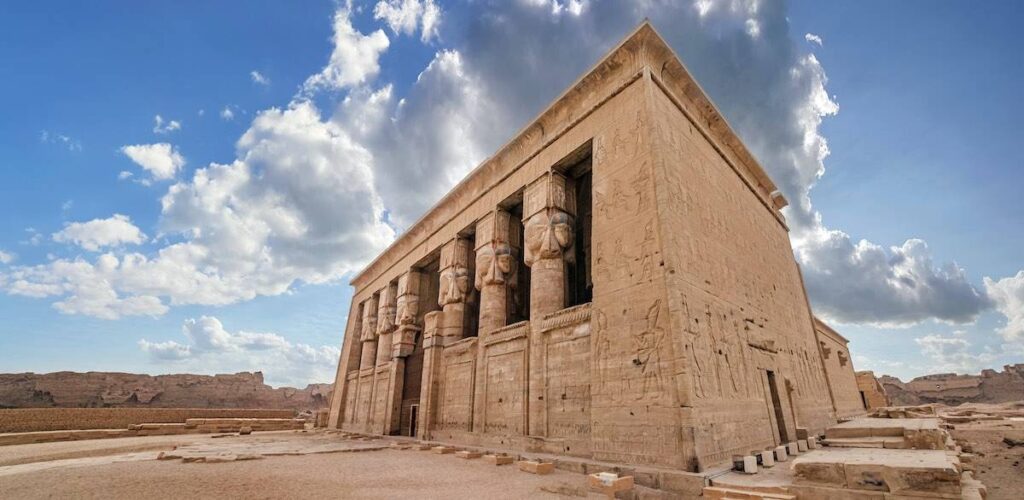
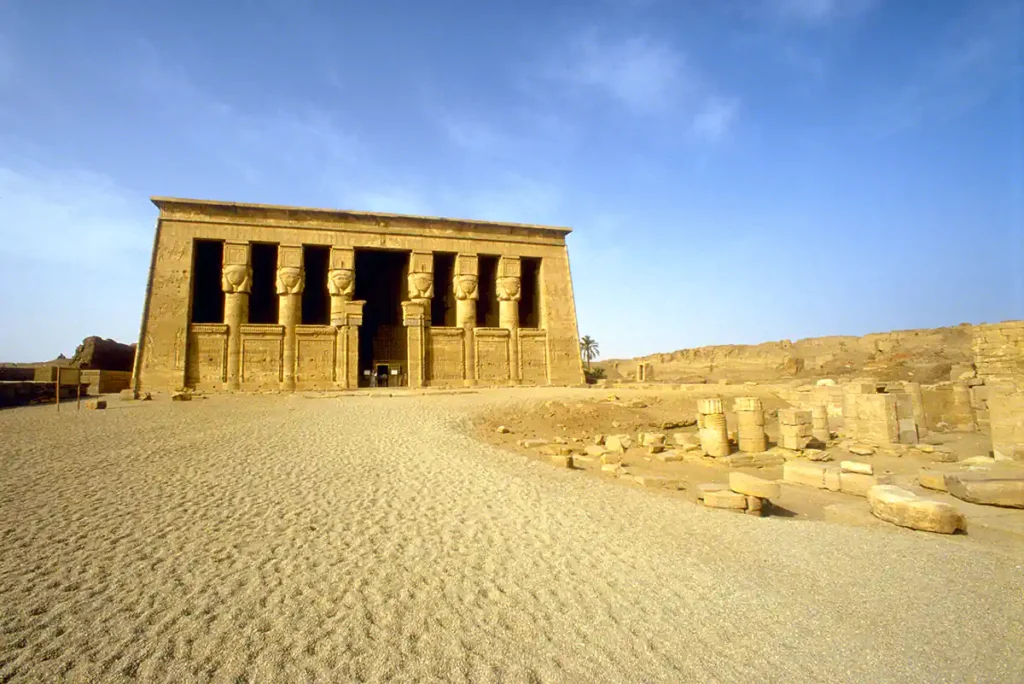
The Temple of Hathor is the most famous and impressive structure within the Dendera Temple Complex. Dedicated to Hathor, the goddess of love, beauty, music, motherhood, and fertility, this temple represents one of the finest examples of ancient Egyptian religious architecture. Its exceptional preservation, detailed decorations, and unique artistic features make it one of the most important historical attractions in Upper Egypt.

Hathor was one of the most popular goddesses in Ancient Egypt and was worshiped throughout the country. She was often represented as a woman wearing a crown with cow horns surrounding a sun disk, or as a sacred cow symbolizing motherhood and protection. Egyptians believed that Hathor brought happiness, healing, and prosperity to their lives.

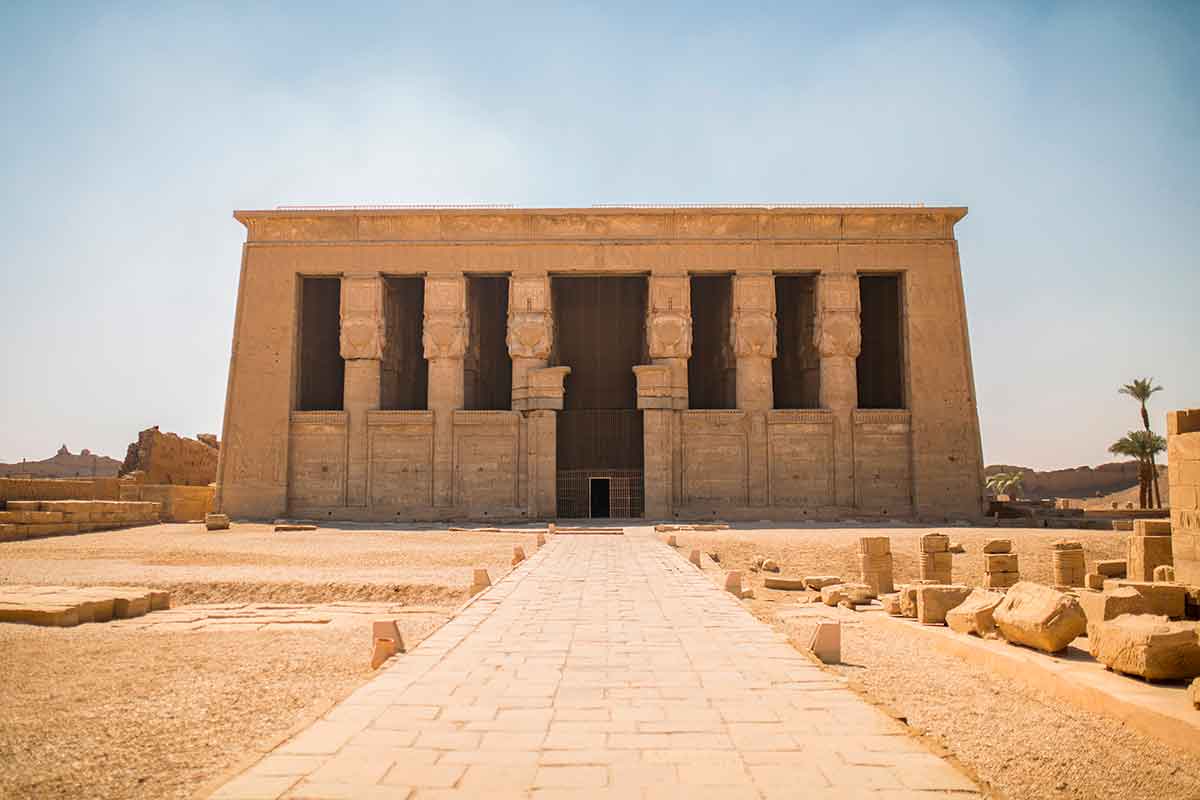
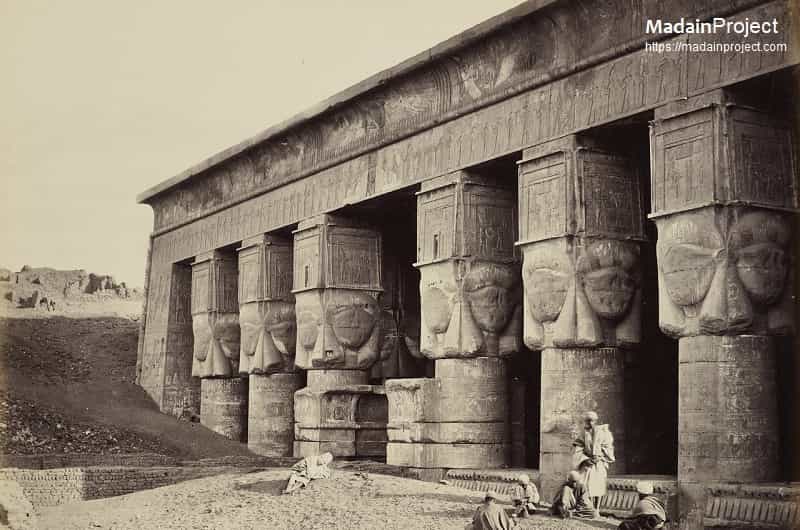
The Temple of Hathor at Dendera was designed as a place where priests performed rituals, celebrated festivals, and honored the goddess. The temple contains massive columns decorated with Hathor’s distinctive face, creating a unique architectural style not found in many other Egyptian temples. These columns are among the most recognizable features of the complex.

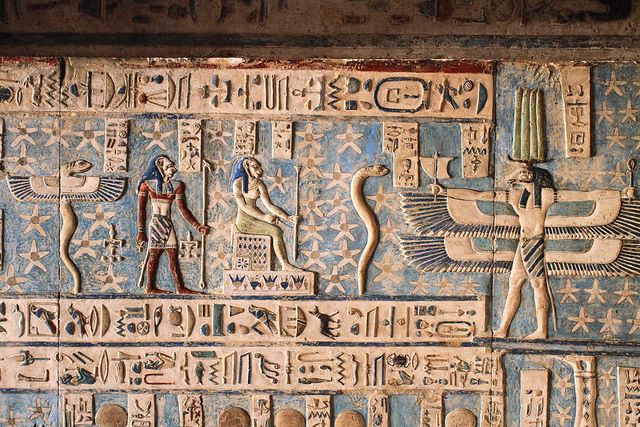
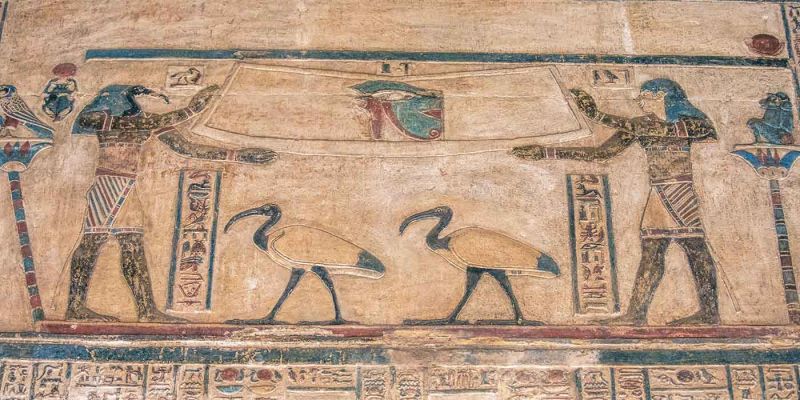
Inside the temple, visitors can admire beautifully preserved wall reliefs showing Pharaohs, gods, and religious ceremonies. The carvings provide important information about ancient Egyptian beliefs and the relationship between rulers and deities. Many scenes show kings making offerings to Hathor and other gods to maintain harmony between the human world and the divine realm.

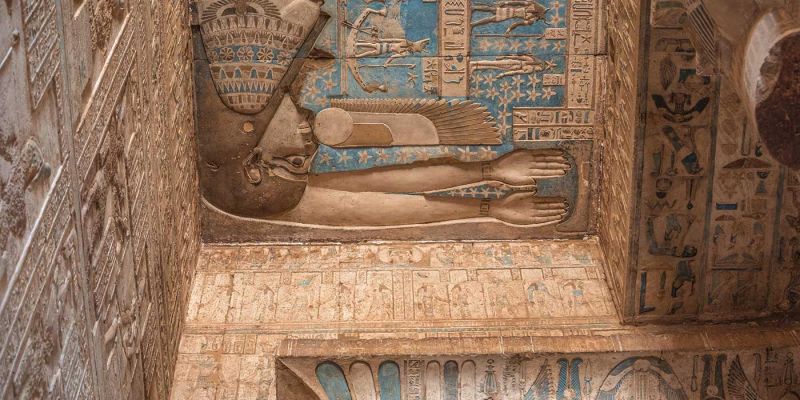
One of the most remarkable features of the Temple of Hathor is its astronomical decoration. The famous Zodiac of Dendera, originally located on the ceiling of a temple chapel, reflects the advanced astronomical knowledge of ancient Egyptians and later Greek influences.

The temple also includes sacred rooms, chapels, stairways, and underground crypts that reveal the complexity of ancient Egyptian religious practices. Unlike many other temples that suffered severe damage over time, the Temple of Hathor remains remarkably intact.

For travelers visiting Egypt, the Temple of Hathor offers an unforgettable journey into ancient Egyptian mythology, architecture, and spirituality, making Dendera one of the most fascinating destinations in the Nile Valley.
Dendera temple

3. Architecture and Design of the Dendera Temple Complex

The architecture of the Dendera Temple Complex represents the incredible skills of ancient Egyptian builders and artists. The complex combines traditional Egyptian temple design with influences from the Ptolemaic and Roman periods, creating a unique architectural masterpiece. Its impressive size, detailed decorations, and advanced construction techniques make it one of the best-preserved temple complexes in Egypt.

The main structure, the Temple of Hathor, follows the traditional Egyptian temple layout. Visitors enter through a large entrance leading to a spacious hypostyle hall filled with massive columns. These columns are decorated with images of Hathor and detailed inscriptions that reflect religious beliefs and royal traditions. The combination of architectural strength and artistic beauty demonstrates the importance of the temple as a sacred place.

The exterior walls of the temple are covered with detailed carvings showing Pharaohs and Roman emperors presenting offerings to Egyptian gods. These scenes represent the traditional belief that rulers were responsible for maintaining a connection between humanity and the divine world. The inscriptions also provide historians with valuable information about ancient Egyptian religious practices.

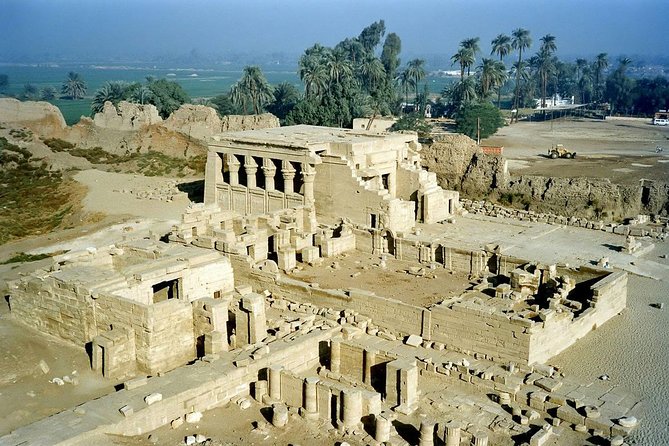
One of the most remarkable architectural features of Dendera is the temple roof. Unlike many ancient structures where upper areas have been destroyed, Dendera preserves its rooftop areas, allowing visitors to explore ancient stairways and chapels. From the roof, visitors can see the surrounding landscape and understand how temples were connected to their environment.

The complex also contains smaller temples, sacred lakes, mammisi buildings (birth houses), and additional religious structures. The mammisi was associated with the divine birth of Hathor’s son, Horus, and played an important role in religious celebrations.

The underground crypts of Dendera are another fascinating feature. These hidden chambers contain rare inscriptions and religious symbols that provide insights into ancient Egyptian beliefs and rituals.

The architecture of the Dendera Temple Complex demonstrates the creativity, knowledge, and devotion of ancient Egyptian builders. Every wall, column, and chamber tells a story about religion, astronomy, royal power, and the artistic achievements of one of history’s greatest civilizations.
4. Hathor Goddess: The Meaning and Importance of Worship at Dendera

The Dendera Temple Complex was built as one of the most important centers dedicated to Hathor, one of the most beloved and widely worshiped goddesses in Ancient Egypt. Understanding the role of Hathor helps visitors appreciate why the Temple of Hathor became such a significant religious destination throughout Egyptian history. Hathor represented many important aspects of life, including love, beauty, motherhood, music, joy, fertility, protection, and the afterlife.

In Ancient Egyptian mythology, Hathor was often described as a caring and protective goddess who brought happiness and prosperity to people. She was closely associated with feminine power, motherhood, and creation. Egyptians believed that Hathor protected families, supported childbirth, and provided comfort during difficult times. Her worship extended across Egypt, but Dendera became one of her most important sacred centers.

Hathor was also connected with the sky and the sun. Ancient Egyptians sometimes represented her as a sacred cow carrying the sun disk between her horns. This symbol reflected her connection with the heavens and her role as a divine mother who protected the sun god Ra. Some traditions identified Hathor as the mother, wife, or daughter of important Egyptian gods, showing her central position within Egyptian mythology.

The annual festivals held at Dendera were among the most important religious celebrations in the region. One famous ceremony involved the symbolic journey of Hathor from her temple at Dendera to the Temple of Horus at Edfu. This celebration represented the sacred relationship between Hathor and Horus and included music, rituals, and public gatherings.

The priests of Hathor performed daily ceremonies inside the temple, including offerings, prayers, and rituals designed to honor the goddess. The temple was not only a place of worship but also a center of learning, healing, and religious knowledge.

The importance of Hathor can still be seen throughout the Dendera Temple Complex. Her images appear on columns, walls, and inscriptions, showing her lasting influence in Ancient Egyptian culture. The temple remains one of the best places to understand the religious beliefs, traditions, and spiritual world of ancient Egyptians.

Temple of Hathor

5. The Zodiac of Dendera: Ancient Egyptian Astronomy and Secrets

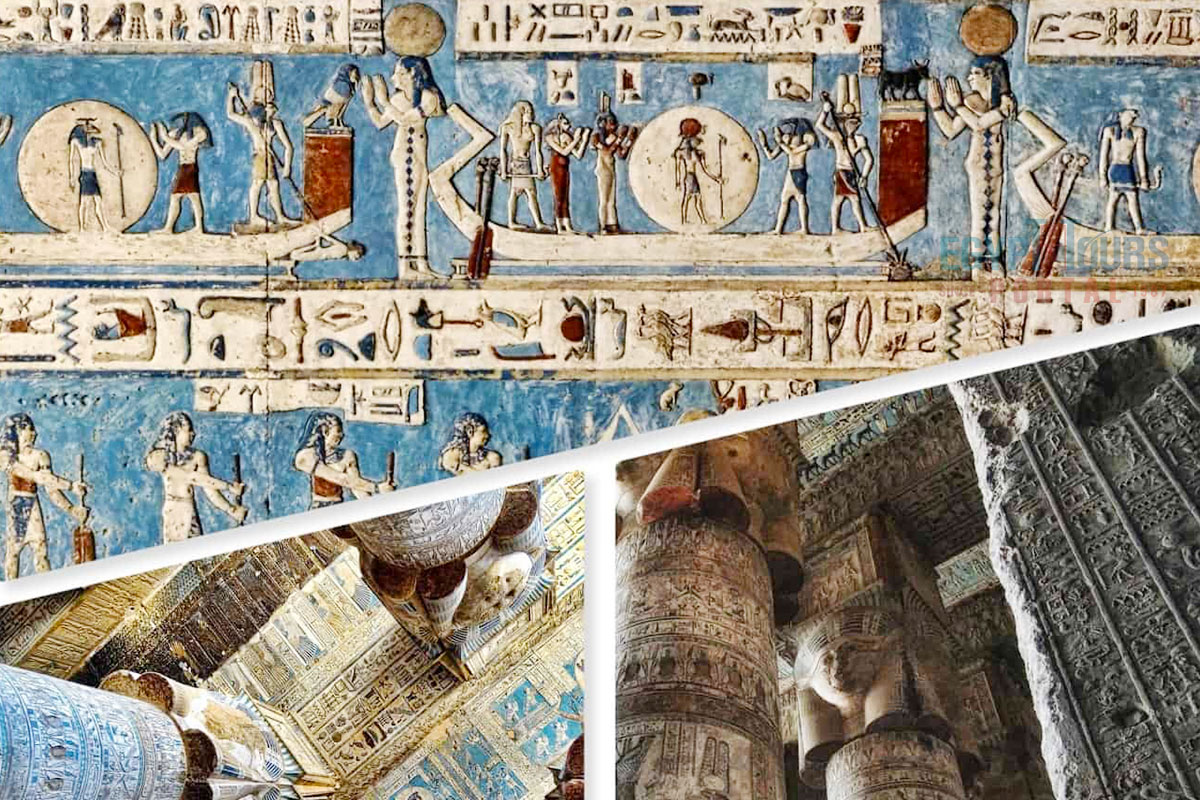
The Zodiac of Dendera is one of the most famous and fascinating features of the Dendera Temple Complex. This extraordinary astronomical ceiling demonstrates the advanced knowledge of ancient Egyptian and Greco-Roman astronomers and provides valuable insight into how Egyptians understood the universe, time, and the movement of celestial bodies.

Originally located on the ceiling of a chapel dedicated to Osiris within the Temple of Hathor, the Zodiac of Dendera is a circular astronomical map showing constellations, planets, and zodiac signs. Unlike traditional Egyptian astronomical representations, this design includes symbols associated with Greek and Babylonian astronomy, reflecting the cultural influences that existed in Egypt during the Ptolemaic period.

The Zodiac was created during the late period of Egyptian temple construction, around the first century BCE. It combines Egyptian religious concepts with classical astronomical ideas, showing how different cultures influenced each other in ancient times. The artwork includes representations of important constellations, including the twelve zodiac signs that are still recognized today.

Ancient Egyptians had a deep interest in astronomy because the movement of stars and planets was connected to agriculture, religious ceremonies, and measuring time. The Nile River flooding cycle depended on astronomical observations, especially the appearance of certain stars that helped predict the beginning of the agricultural season.

The ceiling of the Dendera Temple also reflects the Egyptian belief that the sky was a divine space connected to gods and cosmic order. The placement of celestial symbols inside a sacred temple shows the connection between astronomy and religion in Ancient Egyptian thought.

Today, the original Zodiac of Dendera is displayed in the Louvre Museum, while a replica remains at the temple in Egypt. Its removal in the nineteenth century created international interest in Egyptian archaeology and the preservation of ancient artifacts.

The Zodiac of Dendera continues to attract historians, astronomers, and visitors because it represents the combination of art, science, and spirituality in Ancient Egypt. It remains one of the most remarkable examples of ancient astronomical knowledge and a highlight of any visit to the Dendera Temple Complex.

Dendera temple

6. Reliefs, Inscriptions, and Artistic Treasures of Dendera Temple

The walls of the Dendera Temple Complex contain some of the finest examples of Ancient Egyptian art and religious inscriptions. The detailed reliefs and carvings preserved throughout the Temple of Hathor provide valuable information about Egyptian mythology, royal traditions, religious ceremonies, and daily life. These artistic treasures make Dendera one of the most important archaeological sites in Egypt.

Unlike many ancient temples where decorations have faded or disappeared, Dendera still preserves much of its original artwork. The temple walls display carefully carved scenes showing Pharaohs, gods, priests, and sacred rituals. These images were not simply decorative; they were created to communicate religious ideas and maintain the connection between the human world and the divine realm.

Many reliefs show Egyptian rulers presenting offerings to Hathor and other gods. These scenes represent the Pharaoh’s responsibility to honor the gods and maintain balance in the universe. The presence of royal images also demonstrated the ruler’s legitimacy and connection with ancient traditions.

The temple’s columns are among its most impressive artistic features. The famous Hathor-headed columns display the face of the goddess with her distinctive hairstyle and symbolic features. These columns combine architectural strength with religious meaning, creating one of the most recognizable designs in Egyptian temple architecture.

The inscriptions at Dendera include hieroglyphic texts describing religious ceremonies, divine stories, and the names of rulers who contributed to the temple. These writings provide historians with important evidence about the Ptolemaic and Roman periods of Egyptian history.

Another fascinating feature is the famous relief sometimes called the “Dendera Light,” which has attracted modern curiosity because of its unusual appearance. However, Egyptologists interpret it within the context of Egyptian mythology and religious symbolism rather than as a technological representation.

The artistic details of Dendera reveal the extraordinary skills of ancient Egyptian craftsmen. Every carving, inscription, and painting reflects their understanding of religion, symbolism, and artistic expression.

For visitors exploring Egypt’s historical sites, the reliefs of Dendera offer a rare opportunity to experience ancient Egyptian art in remarkable condition and discover the beliefs that shaped one of the world’s greatest civilizations.

Dendera temple

7. The Sacred Chambers and Hidden Crypts of Dendera Temple

One of the most fascinating features of the Dendera Temple Complex is its collection of sacred chambers and hidden crypts that reveal important details about Ancient Egyptian religious practices. Unlike many ancient temples where only the main halls remain accessible, Dendera preserves many of its original internal spaces, allowing visitors to discover the spiritual world of ancient Egyptian priests and worshippers.

The Temple of Hathor contains several small rooms, chapels, and secret areas that were used for religious ceremonies and the storage of sacred objects. These chambers were carefully designed according to ancient Egyptian beliefs about the connection between the physical world and the divine realm. Each room had a specific purpose related to worship, rituals, or the preparation of religious offerings.

The underground crypts of Dendera are among the most unique elements of the temple. Located beneath the floors and inside the walls, these hidden chambers were used by priests to store valuable religious items and sacred equipment. The crypts contain rare inscriptions and symbolic images that provide historians with important information about temple rituals and ancient Egyptian beliefs.

Some of the inscriptions found inside the crypts describe religious objects, divine ceremonies, and the relationship between Hathor and other Egyptian gods. These texts demonstrate the importance of secret knowledge within Egyptian temples, where priests carefully protected religious traditions and rituals.

The temple also contains chapels dedicated to different aspects of Egyptian worship. Some areas were associated with Osiris, the god of the afterlife, while others focused on Hathor and her divine family. These spaces reflect the complex nature of Ancient Egyptian religion, where different gods and beliefs were connected through ceremonies and mythology.

The rooftop areas of Dendera also contain important sacred structures. Priests used these spaces for astronomical observations and religious ceremonies connected to the movement of the sun, stars, and seasons. The famous Zodiac of Dendera was originally located in one of these upper areas.

Exploring the sacred chambers and hidden crypts of Dendera provides visitors with a deeper understanding of Ancient Egyptian spirituality. These preserved spaces reveal how temples functioned not only as places of worship but also as centers of knowledge, astronomy, and religious tradition.

8. Dendera Temple During the Greek and Roman Periods

The Dendera Temple Complex is especially important because it represents one of the best examples of Egyptian religious architecture during the Greek and Roman periods. Although Egypt was ruled by foreign dynasties during these eras, traditional Egyptian beliefs remained powerful, and rulers continued to build and support temples dedicated to ancient gods.

After Alexander the Great conquered Egypt in 332 BCE, the Ptolemaic dynasty came to power and ruled Egypt for nearly three centuries. The Ptolemaic kings adopted many Egyptian traditions and presented themselves as legitimate Pharaohs. They invested heavily in temple construction, and the Temple of Hathor at Dendera became one of their most important projects.

The construction of the current Temple of Hathor began during the reign of Ptolemaic rulers, although the site had been sacred for thousands of years before this period. The Ptolemies combined traditional Egyptian architectural styles with Greek artistic influences, creating a unique blend that can be seen throughout the temple.

When Egypt became part of the Roman Empire in 30 BCE, Roman emperors continued the tradition of supporting Egyptian temples. Several Roman rulers added their names and images to the walls of Dendera, showing themselves making offerings to Egyptian gods. This was a political strategy to gain acceptance among the Egyptian population and continue the ancient religious system.

The Roman additions at Dendera demonstrate how Egyptian religion remained influential even under foreign rule. Although Greek and Roman cultures introduced new ideas, the worship of Hathor and other Egyptian gods continued for centuries.

The temple’s artwork from these periods provides valuable historical information. The inscriptions reveal the names of rulers, religious ceremonies, and the continued importance of Egyptian traditions. Dendera became a place where different cultures met and influenced each other.

The Greek and Roman periods represent the final centuries of ancient Egyptian temple construction. The Dendera Temple Complex stands as a remarkable example of how Egyptian civilization adapted while preserving its unique religious identity.

Today, visitors can see this fascinating combination of Egyptian, Greek, and Roman influences throughout the temple, making Dendera one of the most historically significant sites in Upper Egypt.

Dendera temple

9. Dendera Temple Complex and Its Connection with Abydos and Luxor

The Dendera Temple Complex is an important part of the rich historical landscape of Upper Egypt and is often combined with visits to other major ancient sites, especially Abydos and Luxor. These locations together provide a deeper understanding of Ancient Egyptian religion, royal history, architecture, and the spiritual importance of the Nile Valley.

Dendera and Abydos share a strong religious connection. While Dendera was primarily dedicated to Hathor, Abydos was one of the most important centers of worship for Osiris, the god of the afterlife. Ancient Egyptians believed that Abydos was connected with the burial traditions of Osiris and became one of the most sacred pilgrimage destinations in Egypt.

Many religious traditions linked Hathor and Osiris together because Hathor was associated with protection, motherhood, and the afterlife. Visitors exploring both temples can discover how different Egyptian gods were connected through mythology and religious ceremonies.

Luxor, located farther south along the Nile River, represents another major center of Ancient Egyptian civilization. The city was known as Thebes in ancient times and served as the capital of Egypt during important periods, especially the New Kingdom. Luxor contains some of Egypt’s most famous monuments, including Karnak Temple, Luxor Temple, and the Valley of the Kings.

The connection between Dendera and Luxor is especially important because both areas reveal different aspects of Egyptian religious life. Dendera shows the later development of temple architecture and the worship of Hathor, while Luxor demonstrates the power of New Kingdom Pharaohs and their dedication to gods such as Amun.

Many Egypt tours combine Dendera with Abydos or Luxor because these destinations are located within the same region of Upper Egypt. A private Dendera and Abydos day trip allows travelers to explore two exceptional temples in one journey, while longer Egypt itineraries often include Dendera alongside Luxor and Aswan.

Visiting these sites together creates a complete picture of Ancient Egypt. Travelers can explore royal temples, sacred landscapes, and ancient traditions that shaped Egyptian civilization for thousands of years.

The Dendera Temple Complex is not only a single historical attraction but also an essential part of the wider network of ancient Egyptian sites that continue to reveal the greatness of the Nile Valley civilization.

Dendera temple

10. How to Visit Dendera Temple Complex: Location, Tours, and Travel Tips

The Dendera Temple Complex is one of the most rewarding historical sites to visit in Upper Egypt, offering travelers the opportunity to explore a beautifully preserved ancient Egyptian temple away from the larger crowds found at some famous attractions. Located near the modern city of Qena on the western bank of the Nile River, Dendera is approximately 60 kilometers north of Luxor and can be reached through organized Egypt tours, private cars, or guided day trips.

Most visitors choose to visit Dendera as part of a private Dendera and Abydos tour from Luxor, Hurghada, Makadi Bay, Soma Bay, El Gouna, or other Red Sea resorts. These tours usually include transportation with a professional Egyptologist guide who explains the history, mythology, and architecture of the temple. A knowledgeable guide helps travelers understand the meaning behind the detailed carvings, religious scenes, and astronomical decorations.

The best time to visit the Dendera Temple Complex is during the cooler months from October to April when temperatures in Upper Egypt are more comfortable for sightseeing. Early morning visits are recommended because the light is ideal for photography and the site is usually quieter.

Visitors should wear comfortable walking shoes because exploring the temple requires walking through large halls, courtyards, stairways, and outdoor areas. Bringing water, sunscreen, and a hat is also recommended, especially during warmer months.

The entrance area of Dendera provides access to the main Temple of Hathor as well as other important structures within the complex. Travelers should allow enough time to appreciate the details because the temple contains many hidden features, including the famous Zodiac ceiling, rooftop chapels, crypts, and beautifully decorated walls.

Photography is one of the highlights of visiting Dendera. The preserved colors and detailed reliefs provide excellent opportunities for capturing images of Ancient Egyptian art and architecture. However, visitors should always follow local regulations regarding photography inside certain areas.

A visit to the Dendera Temple Complex is an unforgettable experience for anyone interested in Egyptian history, archaeology, and ancient cultures. Combining Dendera with Abydos or Luxor creates a complete journey through the religious and architectural achievements of Ancient Egypt.


Dendera temple

11. The Importance of Dendera Temple in Modern Egypt Tourism

The Dendera Temple Complex plays an important role in modern Egypt tourism because it offers visitors a unique opportunity to experience one of the best-preserved examples of Ancient Egyptian religious architecture. While many travelers visit famous attractions such as the pyramids and the Valley of the Kings, Dendera provides a different experience with its detailed artwork, peaceful atmosphere, and exceptional preservation.

Unlike some ancient sites that have suffered major damage over thousands of years, the Temple of Hathor at Dendera still displays impressive columns, colorful ceilings, and detailed inscriptions. This preservation allows visitors to see Ancient Egyptian art almost as ancient worshippers would have experienced it. The quality of the carvings and the surviving colors make Dendera one of the most visually impressive temples in Egypt.

Dendera also contributes greatly to historical and archaeological research. The inscriptions found throughout the complex provide valuable information about Egyptian religion, astronomy, royal traditions, and the relationship between Egyptian and Greco-Roman cultures. Researchers continue to study the temple to better understand the final centuries of ancient Egyptian civilization.

For Egypt tourism, Dendera offers an excellent opportunity to explore beyond the traditional tourist routes. Travelers interested in ancient history often choose private tours that include Dendera and Abydos because these sites reveal important aspects of Egyptian spirituality and temple traditions.

The temple is also important for promoting cultural tourism in Upper Egypt. Visits to Dendera support local communities and encourage the preservation of archaeological treasures. By attracting travelers interested in history and heritage, the site contributes to protecting Egypt’s ancient monuments for future generations.

Many international visitors consider Dendera one of the hidden gems of Egypt because it combines history, art, mythology, and architecture in one extraordinary location. The temple provides a deeper understanding of Egyptian civilization beyond famous royal monuments.

Today, the Dendera Temple Complex represents the connection between ancient history and modern exploration. It allows travelers to walk through thousands of years of Egyptian culture and discover the beliefs, achievements, and artistic skills of the people who created one of the world’s greatest civilizations.

12. Why Dendera Temple Complex Is One of Egypt’s Greatest Ancient Sites

The Dendera Temple Complex remains one of the greatest ancient Egyptian sites because of its exceptional preservation, artistic beauty, religious importance, and historical value. While Egypt is famous for its pyramids and royal tombs, Dendera offers a different perspective by showing the spiritual and cultural world of Ancient Egyptian temple life.

The Temple of Hathor stands as the masterpiece of the complex. Its massive columns, detailed reliefs, astronomical ceiling, and sacred chambers demonstrate the extraordinary abilities of ancient Egyptian architects and craftsmen. Every part of the temple reflects careful planning and deep religious meaning.

One of the reasons Dendera is unique is the combination of different historical periods preserved within its walls. The site contains elements from ancient Egyptian traditions as well as influences from the Ptolemaic and Roman periods. This makes Dendera an important example of how Egyptian culture continued to develop while maintaining its identity.

The temple also provides valuable insights into Ancient Egyptian beliefs. Through its inscriptions and artwork, visitors can learn about the worship of Hathor, religious ceremonies, the importance of astronomy, and the connection between Pharaohs and the gods. These details create a deeper understanding of how Egyptians viewed life, death, and the universe.

Dendera’s location in Upper Egypt also makes it an important destination for travelers exploring the Nile Valley. Combined with nearby attractions such as Abydos, Luxor, and Aswan, it creates a complete journey through the history of Ancient Egypt.

For modern travelers, the Dendera Temple Complex offers more than a sightseeing experience. It provides a chance to connect with a civilization that shaped human history through its art, architecture, science, and spiritual traditions.

The beauty and importance of Dendera ensure that it remains one of Egypt’s most fascinating historical treasures. Its preserved walls continue to tell stories of gods, Pharaohs, priests, and ancient communities, making it an essential destination for anyone seeking to discover the wonders of Ancient Egypt.

Frequently Asked Questions About Dendera Temple Complex

The Dendera Temple Complex is located near the city of Qena in Upper Egypt, on the western bank of the Nile River. It is about 60 kilometers north of Luxor and is easily reached through guided tours and private transportation.

The main attraction of the complex is the Temple of Hathor, dedicated to Hathor, the ancient Egyptian goddess of love, beauty, motherhood, music, and fertility.

The Zodiac of Dendera is famous because it is a unique astronomical ceiling showing constellations and zodiac symbols. It reflects the advanced astronomical knowledge and cultural influences of ancient Egypt during the Ptolemaic period.

Yes, Dendera Temple can be visited on a day trip from Luxor, Hurghada, Makadi Bay, Soma Bay, El Gouna, and other destinations. Many travelers combine it with Abydos Temple for a complete historical experience.

Dendera Temple is important because it preserves valuable information about Ancient Egyptian religion, architecture, astronomy, and art. It is one of the best-preserved temples that shows the traditions and beliefs of ancient Egyptian civilization.