
Welcome to

Ancient Egypt Art in Daily Life

Art was an essential part of everyday life in Ancient Egypt, extending far beyond temples, pyramids, and royal monuments. From household objects and decorative furniture to clothing, jewelry, pottery, and wall paintings, artistic expression influenced nearly every aspect of Egyptian society. Ancient Egyptian art reflected religious beliefs, social status, cultural traditions, and daily activities, while also serving practical, symbolic, and decorative purposes. Through their artistic achievements, the Egyptians created a visual language that has endured for thousands of years and continues to captivate people around the world.

Ancient Egyptian artists produced a wide range of works using materials such as stone, wood, gold, silver, ivory, glass, and clay. Skilled craftsmen created beautifully decorated furniture, cosmetics containers, mirrors, pottery, textiles, and personal accessories that were used in homes and daily routines. Jewelry, in particular, was highly valued for both its beauty and symbolic meaning, often featuring protective symbols such as the Eye of Horus, scarabs, and representations of Egyptian gods and goddesses.

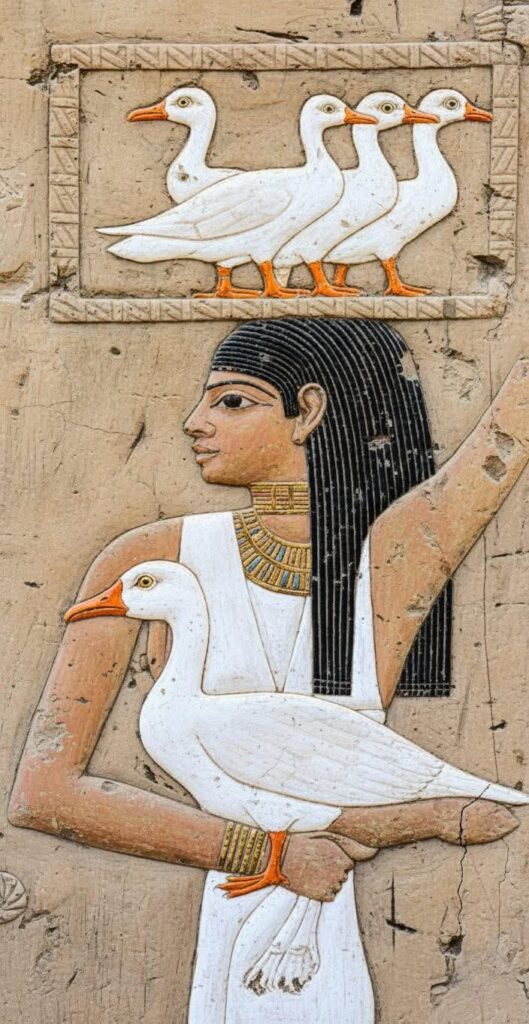
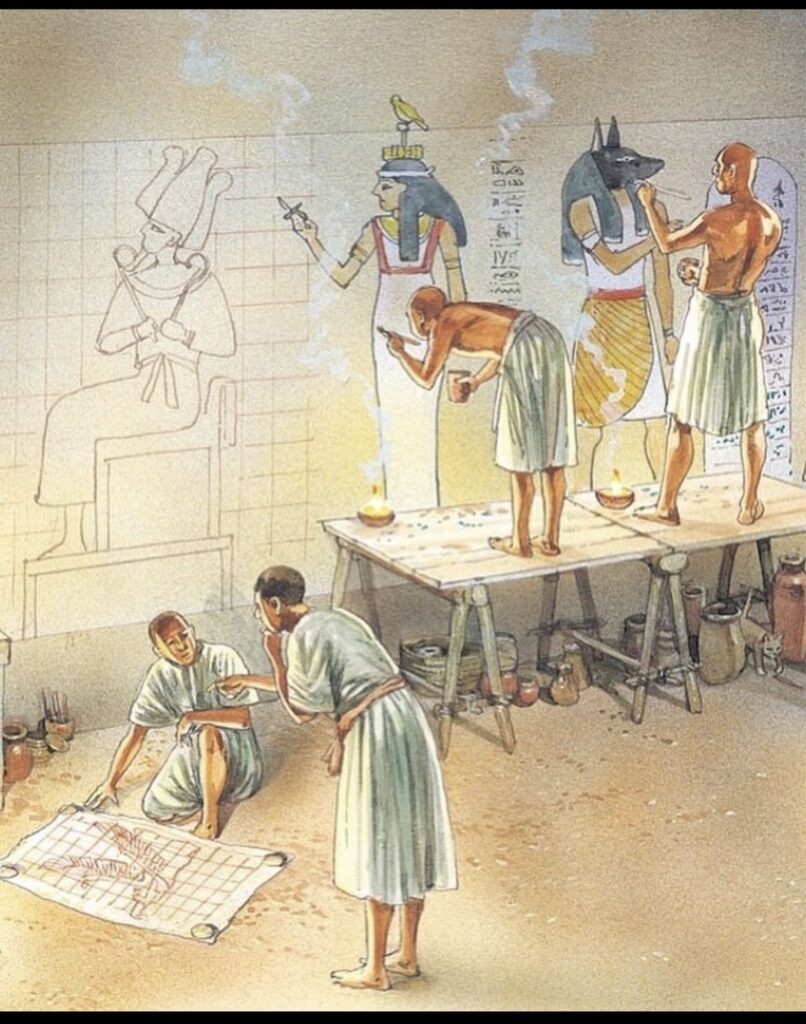
Art also played an important role in documenting daily life. Tomb paintings and reliefs depict scenes of farming, fishing, hunting, cooking, music, dance, trade, craftsmanship, and family activities, providing historians with valuable insights into how ordinary Egyptians lived and worked. These artworks not only served decorative purposes but were also believed to help ensure prosperity and continuity in the afterlife.

Religious beliefs strongly influenced artistic traditions throughout Egyptian society. Statues, amulets, household shrines, and symbolic decorations connected people to their gods and spiritual practices. Artistic styles followed established conventions that emphasized balance, order, and harmony, reflecting the broader Egyptian concept of Ma’at.

In this guide, we explore the role of art in Ancient Egyptian daily life, examining household objects, jewelry, pottery, furniture, clothing, decorative arts, tomb paintings, and the cultural significance of artistic expression. Discover how art shaped the everyday experiences of people living in one of the world’s most creative and influential civilizations.

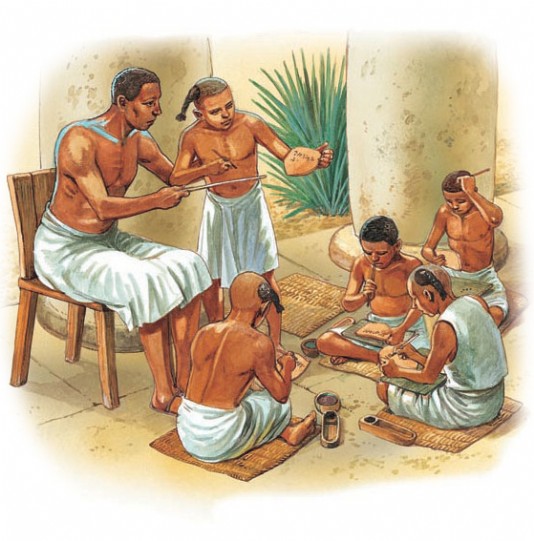
Ancient Egypt – Education System

1. Art in Ancient Egyptian Homes

Art was an important feature of Ancient Egyptian homes, although the amount and quality of decoration varied according to wealth and social status. Egyptian houses were primarily designed for practical living, but furniture, household objects, textiles, pottery, and decorative items could add beauty and personality to domestic spaces. Ancient Egyptian home decoration therefore provides an important insight into the relationship between art and everyday life.

Furniture was one of the most visible forms of artistic craftsmanship inside wealthy Egyptian homes. Skilled carpenters produced beds, chairs, stools, tables, chests, boxes, and storage containers. Some pieces were decorated with carved designs, painted surfaces, animal figures, floral patterns, or precious materials. Wealthy families could own highly decorated furniture, while ordinary households generally used simpler wooden objects.

Pottery was another important part of domestic life. Egyptian households required bowls, cups, jars, cooking vessels, and storage containers. Some pottery was plain and designed primarily for practical use, while other pieces included painted patterns, geometric designs, plants, animals, or human figures.

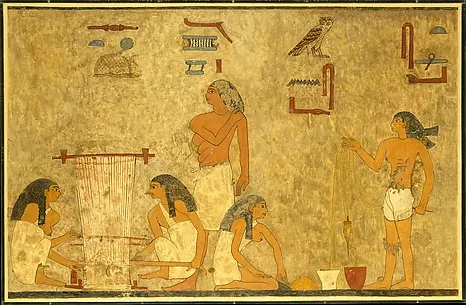
Textiles also contributed to the appearance of Egyptian interiors. Linen fabrics were used for clothing, curtains, bedding, and other household purposes. Wealthier families could use finer textiles, while ordinary households relied on simpler fabrics.

Small decorative objects were also found in homes. Amulets, figurines, cosmetic containers, mirrors, beads, and carved objects could have both practical and symbolic functions. Some household objects featured images of gods or protective symbols because Egyptians believed that supernatural forces could influence everyday life.

Household art was therefore not simply intended to make a room attractive. Objects could express social status, religious beliefs, family traditions, and personal identity. The craftsmanship found in furniture, pottery, textiles, and decorative objects demonstrates the importance of Ancient Egyptian art in domestic life.

Through archaeological discoveries and tomb representations, historians can reconstruct many aspects of Egyptian homes. These sources show that art was not restricted to monuments but was integrated into the ordinary objects that surrounded Egyptian families every day.
Ancient Egypt Education

2. Clothing, Jewelry, and Personal Appearance

Personal appearance was an important part of life in Ancient Egypt, and artistic craftsmanship played a major role in how Egyptians presented themselves. Clothing, jewelry, cosmetics, wigs, sandals, and other accessories were practical items but could also communicate wealth, social position, religious beliefs, and personal identity. Ancient Egyptian clothing and jewelry therefore provide an important example of how art became part of everyday life.

Linen was the most common material used for clothing. It was made from flax grown in the Nile Valley and could be produced in different qualities. Ordinary people generally wore relatively simple garments, while wealthy Egyptians could afford extremely fine linen clothing with pleats, decorative details, and elaborate accessories.

Jewelry was particularly important among wealthy Egyptians, although people from different social groups could wear some forms of jewelry. Necklaces, bracelets, rings, earrings, collars, and amulets were made from gold, silver, copper, faience, glass, and colored stones. Gold was highly valued because it was associated with permanence and divine qualities.

Amulets had an especially important role in Egyptian culture. Symbols such as the scarab, Eye of Horus, ankh, and images of gods were worn for protection and religious purposes. These objects demonstrate how Ancient Egyptian art and religion were closely connected.

Cosmetics were also part of personal appearance. Egyptians used substances to decorate and protect the eyes, face, and skin. Eye cosmetics were widely used and could have practical as well as aesthetic purposes. Perfumes and scented oils were also valued by wealthy Egyptians and were used during ordinary life and special occasions.

Wigs and hairstyles could communicate social status and fashion. Both men and women used different hairstyles and wigs during various periods of Egyptian history. Sandals, belts, and other accessories completed an individual’s appearance.

Personal decoration therefore combined practical needs with artistic expression. Clothing and accessories helped Egyptians communicate who they were and where they stood within society.

The surviving jewelry, clothing remains, cosmetics containers, and artistic representations provide valuable information about Ancient Egyptian fashion, beauty, personal adornment, social status, religious symbolism, and daily life.
 

Ancient Egypt Education

3. Pottery and Decorative Household Objects

Pottery was one of the most common forms of art and craftsmanship in Ancient Egyptian daily life. Nearly every household needed ceramic containers for storing water, grain, oil, wine, beer, and other food products. Egyptians also used pottery for cooking, serving meals, religious offerings, and funerary purposes. Because pottery was both practical and sometimes decorative, it provides an excellent example of how Ancient Egyptian art appeared in ordinary life.

Egyptian potters used clay obtained from the Nile Valley and surrounding regions. The clay was prepared and shaped by hand or with a potter’s wheel before being dried and fired. Skilled craftsmen could produce vessels in many different shapes and sizes according to their intended purpose.

Some household pottery was simple and undecorated because its main purpose was storage or cooking. Other vessels were carefully shaped and decorated with painted patterns, geometric designs, plants, birds, animals, and human figures. Decorative pottery could reflect artistic traditions that changed over different periods of Egyptian history.

Small ceramic objects were also used in homes. Bowls, cups, plates, cosmetic containers, lamps, figurines, and other objects could be decorated or shaped in distinctive styles. Some objects had religious or symbolic meanings and were kept for protection or ritual purposes.

Food and drink were central parts of Egyptian daily life, making pottery essential to household activities. Large jars stored grain and liquids, while smaller vessels were used for serving meals and beverages. Pottery could also be used to transport products between different communities.

Archaeologists frequently discover pottery at Egyptian settlements, tombs, temples, and archaeological sites. Because ceramic objects are relatively durable, they provide valuable evidence about ancient diets, trade, manufacturing techniques, household activities, and artistic traditions.

Pottery also demonstrates the connection between function and beauty in Egyptian culture. A vessel could be designed to perform a practical task while also displaying artistic decoration.

The importance of Ancient Egyptian pottery and household objects shows that art was not restricted to elite monuments. Ordinary objects used for cooking, storing food, drinking, and personal care could also reflect Egyptian craftsmanship, artistic traditions, cultural beliefs, and everyday experiences.
4. Furniture and Decorative Woodwork in Daily Life

Furniture was an important part of daily life in Ancient Egypt, particularly among wealthy families and members of the elite. Egyptian craftsmen transformed wood into beds, chairs, stools, tables, chests, boxes, headrests, and other household objects. Although furniture was designed for practical purposes, many pieces were also carefully decorated, demonstrating how Ancient Egyptian art and craftsmanship could be incorporated into everyday objects.

Beds were among the most important pieces of furniture. Egyptian beds were often raised above the floor and could have wooden frames decorated with carved or painted details. Wealthy individuals could own elaborate beds featuring animal-shaped legs, decorative patterns, or precious materials. Headrests were also widely used and were designed to support the head while sleeping.

Chairs and stools varied according to social status. Ordinary people could use simple stools, while wealthy Egyptians possessed larger chairs with backs, armrests, and decorative elements. Royal and elite furniture could include gold, ivory, ebony, colorful inlays, and detailed carvings.

Wooden chests were useful for storing clothing, jewelry, cosmetics, documents, and other valuable possessions. Craftsmen sometimes painted or decorated these storage containers with geometric patterns, flowers, animals, and religious symbols.

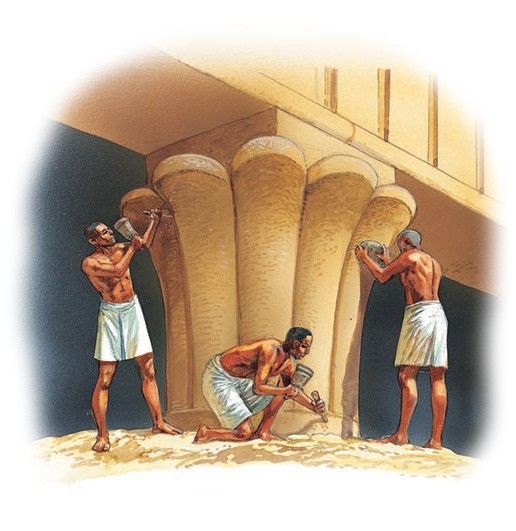
Egyptian furniture also demonstrates the importance of skilled woodworking. Carpenters used saws, chisels, drills, adzes, and other tools to shape and join wooden components. Imported timber was sometimes used for high-quality furniture because Egypt had limited supplies of large trees.

Decorative furniture could also communicate social status. The materials, size, craftsmanship, and decoration of an object could indicate the wealth and position of its owner. Furniture belonging to members of the royal family could be exceptionally elaborate.

Tomb paintings provide additional evidence about Egyptian furniture. Scenes show people sitting on chairs, sleeping on beds, using chests, and participating in domestic activities. Archaeologists have also discovered well-preserved furniture in several tombs, providing direct evidence of ancient Egyptian woodworking.

The combination of practicality and decoration makes furniture an important part of Ancient Egyptian daily art. Egyptian carpenters created objects that were useful in everyday life while also reflecting artistic traditions, religious symbolism, technological knowledge, and social hierarchy.

5. Music, Dance, and Artistic Entertainment

Music, dance, and entertainment were important parts of social life in Ancient Egypt, and artistic expression was closely connected with celebrations, religious ceremonies, family gatherings, and public events. Ancient Egyptians used musical instruments, singing, dancing, costumes, and performance to create entertainment and participate in religious and social activities. Ancient Egyptian music and dance therefore formed an important part of daily culture.

Musicians used several types of instruments, including harps, lyres, lutes, flutes, drums, tambourines, and sistrums. The sistrum was especially associated with religious worship and was often used in ceremonies dedicated to goddesses such as Hathor. Musical performances could take place in temples, royal courts, private homes, and celebrations.

Dancers also played an important role in entertainment. Tomb paintings frequently show groups of dancers performing at banquets and celebrations. Their movements could be energetic and carefully coordinated, suggesting that dancing was a developed performance tradition.

Banquets were important social occasions for wealthy Egyptians. Guests could enjoy food, drinks, music, dancing, perfume, flowers, and entertainment. Musicians and dancers helped create an atmosphere of celebration. Such scenes are frequently represented in Egyptian tomb art.

Music was not limited to entertainment. It had an important religious role. Priests and musicians performed during temple rituals, processions, festivals, and ceremonies. Religious music was believed to honor the gods and contribute to the proper performance of rituals.

Artistic entertainment also provided opportunities for professional performers. Musicians, singers, dancers, and entertainers could work for temples, royal institutions, or wealthy households. Their activities demonstrate that specialized artistic professions existed beyond painting and sculpture.

The representation of music and dance in tomb paintings is especially valuable because it provides information about instruments, clothing, performances, and social gatherings. These scenes help historians understand how Egyptians experienced entertainment.

Music, dance, and performance demonstrate that Ancient Egyptian art in daily life included not only physical objects but also artistic experiences. Through sound, movement, celebration, and religious performance, Egyptians incorporated art into social relationships, festivals, ceremonies, and ordinary cultural life.

6. Art, Cosmetics, and Beauty Practices

Beauty and personal care were important aspects of Ancient Egyptian daily life, and artistic craftsmanship contributed to many beauty-related objects and practices. Egyptians used cosmetics, perfumes, jewelry, wigs, mirrors, combs, containers, and other personal items. These objects were practical but were often beautifully designed, demonstrating the connection between Ancient Egyptian art, beauty, and personal appearance.

Eye cosmetics were particularly well known in Ancient Egypt. Egyptians commonly used dark eye preparations around the eyes, while other pigments could be used to add color. Cosmetics were stored in specially made containers, tubes, palettes, and jars. Some cosmetic containers were simple, while luxury examples were decorated with carvings, paintings, or precious materials.

Perfumes and scented oils were also valued. Egyptians used fragrant substances in personal grooming, religious rituals, and special occasions. Perfume containers could be made from stone, ceramic, glass, or other materials and were sometimes elaborately decorated.

Mirrors were another important personal object. Ancient Egyptian mirrors were usually made from polished copper or bronze, producing a reflective surface. Handles could be decorated with floral, animal, or symbolic designs. Wealthy individuals could own finely crafted mirrors that were both useful and decorative.

Combs, hair accessories, cosmetic spoons, and containers also demonstrate the role of craftsmanship in personal care. Some objects featured animal shapes, floral motifs, or religious symbols.

Wigs were widely used, particularly among wealthy Egyptians and during formal occasions. Hair styling and wigs allowed people to create carefully controlled appearances. Artistic representations show elaborate hairstyles and accessories used by men and women.

Beauty practices were also connected with social status. The quality of cosmetics, jewelry, perfumes, and personal objects could reflect a person’s wealth. Elite households had greater access to expensive materials and skilled craftsmen.

At the same time, some cosmetic practices had practical functions. Certain eye preparations may have helped protect the eyes from sunlight, dust, or irritation, while oils could help protect skin and hair in Egypt’s dry climate.

The artistic objects associated with cosmetics and beauty provide valuable evidence about Ancient Egyptian beauty standards, fashion, personal hygiene, jewelry, cosmetics, and daily life. They show that beauty was not separate from art; instead, personal appearance itself became an important form of artistic expression.

7. Art in Ancient Egyptian Religious Life

Religion was deeply connected with every aspect of Ancient Egyptian society, and art played a central role in religious practices. Egyptian temples, household objects, statues, amulets, paintings, jewelry, and ritual objects were often decorated with religious symbols and images of gods. Ancient Egyptian religious art was not simply created for beauty; Egyptians believed that images and objects could have spiritual power and help maintain communication between humans, gods, and the deceased.

Statues were among the most important religious artworks. Egyptian craftsmen created statues of gods, pharaohs, priests, and private individuals. Statues placed inside temples could represent divine beings or royal figures and were involved in religious rituals. Egyptians believed that a properly created image could serve as a physical representation through which a divine or spiritual presence could interact with the world.

Amulets were another common form of religious art. Small objects shaped like scarabs, the Eye of Horus, ankh symbols, animals, and gods were worn by living people or placed with the dead. These objects were believed to provide protection, health, strength, or assistance in the afterlife.

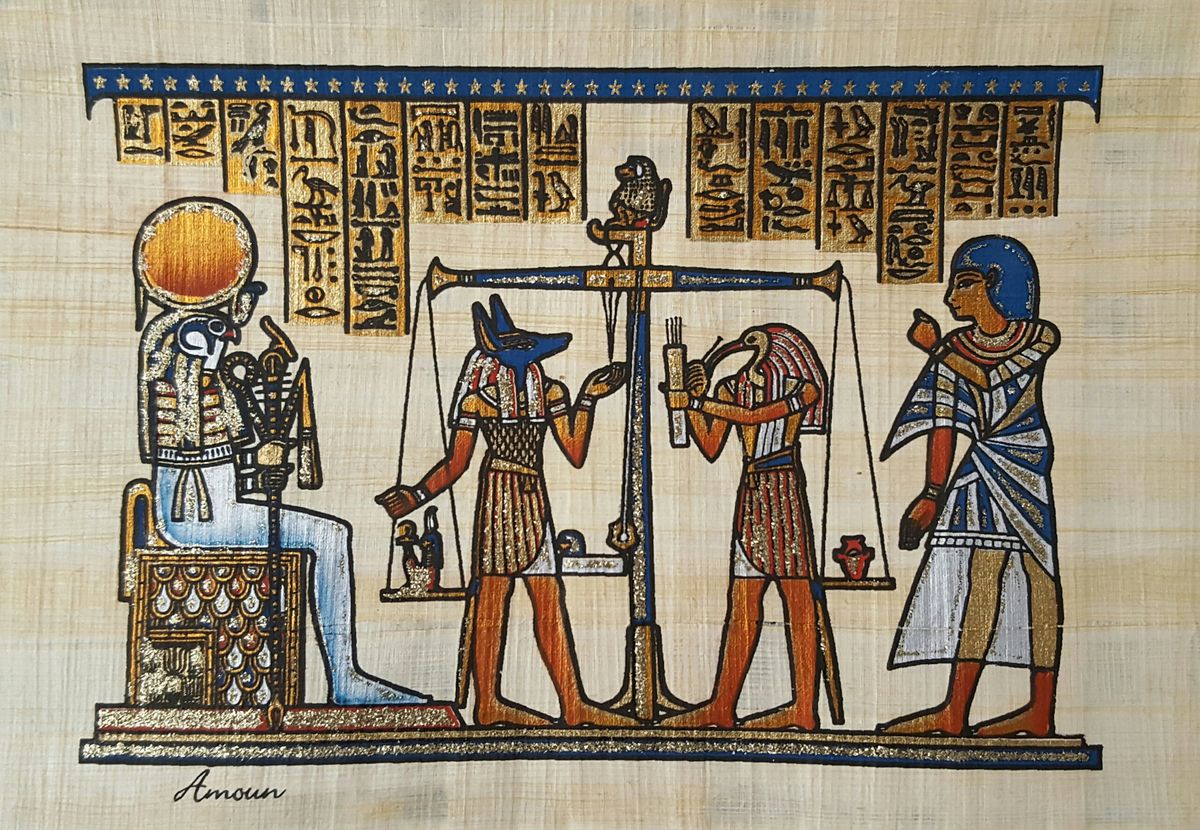
Temples were filled with artistic decoration. Walls, columns, ceilings, and doorways were covered with reliefs and hieroglyphic inscriptions depicting gods, pharaohs, religious ceremonies, offerings, battles, and mythological scenes. These images created a sacred environment and communicated important religious ideas.

Art was also central to funerary practices. Coffins, masks, canopic containers, tomb paintings, statues, and funerary objects were decorated with protective symbols and religious texts. Egyptians believed that these objects could help protect the deceased and support their journey into the afterlife.

Even ordinary households could contain religious objects. Families might keep small figurines, amulets, images of household gods, or other protective objects. This shows that Ancient Egyptian religion and art were not limited to temples.

Through religious art, Egyptians expressed their beliefs about gods, death, rebirth, protection, and cosmic order. Art therefore became a practical part of religious life rather than an independent activity.

The importance of religious art demonstrates how deeply artistic expression was integrated into Ancient Egyptian culture, daily life, spirituality, funerary traditions, and social practices.

8. Art in Ancient Egyptian Festivals and Celebrations

Festivals and celebrations provided important opportunities for artistic expression in Ancient Egyptian society. Religious festivals, royal ceremonies, weddings, banquets, processions, and community gatherings could involve music, dancing, colorful clothing, flowers, decorations, food, perfumes, and ceremonial objects. Ancient Egyptian festivals and celebrations therefore demonstrate how art could become part of shared social experiences.

Religious festivals were particularly important. Temples organized celebrations dedicated to different gods, and these events could include processions in which divine statues were carried from one location to another. Participants might wear special clothing, use musical instruments, carry offerings, and decorate spaces with flowers and other objects.

Music was a major feature of celebrations. Harps, drums, flutes, lutes, tambourines, and sistrums were used during performances. Singers and dancers could accompany religious ceremonies and social gatherings.

Banquets were another important setting for artistic expression. Wealthy Egyptians hosted elaborate meals where guests were surrounded by musicians, dancers, servants, flowers, perfumes, and decorated furniture. Tomb paintings frequently depict these gatherings and show details of clothing, hairstyles, jewelry, food, and entertainment.

Flowers were valued for both decorative and religious purposes. Lotus flowers, garlands, and other plants could be used to decorate people, rooms, furniture, and ceremonial spaces. Floral imagery was also common in Egyptian jewelry, furniture, pottery, and architecture.

Clothing and personal adornment became especially important during special events. People could wear their finest linen garments, jewelry, wigs, perfumes, and cosmetics. These details allowed celebrations to become occasions for displaying social position and personal style.

Royal celebrations were even more elaborate. Pharaohs used ceremonies, monuments, costumes, music, and religious symbolism to demonstrate their authority and relationship with the gods.

Artistic elements also helped create a shared cultural identity. Participants could recognize familiar symbols, religious images, musical traditions, and decorative patterns.

Through festivals and celebrations, Ancient Egyptian art in daily life became a social experience. Art was heard through music, seen in clothing and decoration, experienced through dance and ceremony, and expressed through objects and religious traditions. This made artistic culture an important part of Egyptian community life.

9. Art in Egyptian Work and Occupations

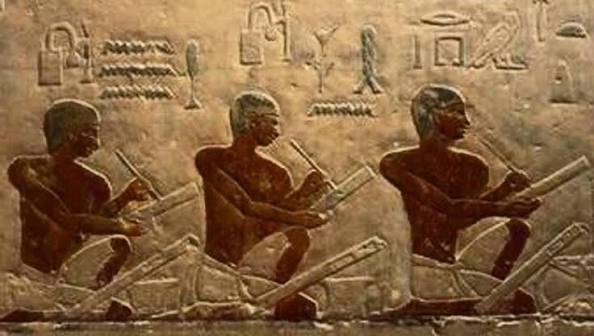
Art was closely connected with work and occupations in Ancient Egypt. Many professions required specialized tools, clothing, objects, and visual symbols that reflected the activities of workers. Tomb paintings and reliefs frequently depict farmers, fishermen, craftsmen, scribes, soldiers, musicians, servants, merchants, and other workers. These scenes provide valuable information about Ancient Egyptian occupations and daily life.

Farmers were among the largest groups in Egyptian society. Agricultural scenes show men plowing fields, planting seeds, harvesting grain, raising animals, and transporting crops. Although these images were often created for funerary purposes, they provide detailed representations of agricultural tools, clothing, farming techniques, and working conditions.

Craftsmen were frequently represented in workshops. Tomb and temple scenes show carpenters, potters, metalworkers, sculptors, painters, and textile workers performing specialized tasks. These images demonstrate that craftsmanship required organized workplaces and cooperation between different specialists.

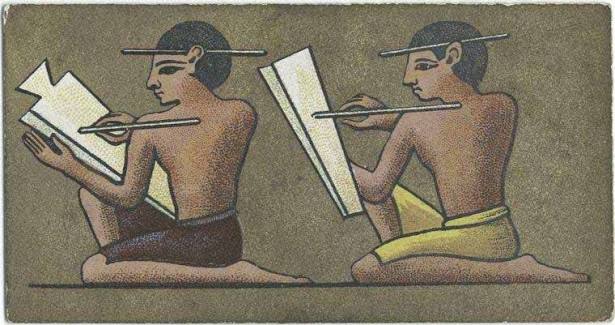
Scribes were also important members of Egyptian society. Artistic representations often show scribes sitting with writing equipment, including papyrus, reed brushes, and ink. Their images reflect the importance of literacy and administration.

Fishing and hunting scenes are another common theme. Egyptians used boats, nets, harpoons, bows, and other equipment to obtain food and resources from the Nile and surrounding environments. These activities were represented in both private tombs and royal monuments.

Soldiers were shown carrying weapons, shields, bows, and other military equipment. Their clothing and equipment provide evidence about Ancient Egyptian military organization.

Art was therefore a visual record of economic activity. It preserved information about tools, technologies, clothing, occupations, and working methods that might otherwise have disappeared.

At the same time, artistic representations of work had symbolic purposes. In tombs, images of agriculture, fishing, crafts, and food production were believed to help provide these activities for the deceased in the afterlife.

The relationship between art and work demonstrates that Ancient Egyptian art was deeply connected to everyday occupations. Through paintings and reliefs, Egyptians recorded both the practical activities that supported their society and the beliefs that gave those activities meaning.

10. Art in Ancient Egyptian Food and Dining

Food and dining were important parts of Ancient Egyptian daily life, and artistic craftsmanship appeared in many objects associated with preparing, storing, serving, and eating food. Ancient Egyptian food culture can be understood through pottery, wooden utensils, furniture, painted scenes, containers, and other household objects. These items demonstrate how practical necessities could also reflect Egyptian artistic traditions.

Pottery was essential for food storage and preparation. Egyptians used large jars to store grain, beer, wine, oil, and other products. Smaller bowls, plates, cups, and cooking vessels were used during meals. Some vessels were decorated with painted designs or carefully shaped forms, showing that practical objects could also have aesthetic qualities.

Wooden objects were also important. Craftsmen produced spoons, bowls, trays, tables, stools, and other household items. Wealthy Egyptians could own finely decorated dining furniture made from valuable wood and enhanced with painted or carved details.

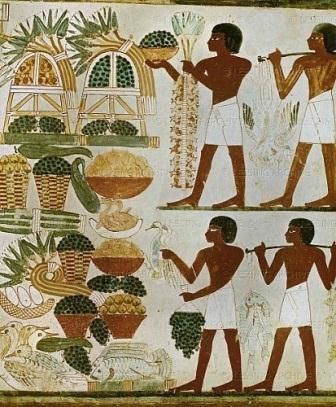
Tomb paintings provide detailed scenes of Egyptian banquets and food preparation. These scenes show servants carrying dishes, musicians entertaining guests, people drinking from vessels, and large quantities of food being presented. Bread, beer, fish, vegetables, fruits, meat, and other foods appear frequently in Egyptian artwork.

Flowers and perfumes could also be part of dining and entertainment. Guests at elite banquets might wear floral garlands or hold lotus flowers, while perfumed oils were used to enhance the atmosphere.

Food also had religious importance. Egyptians made offerings of bread, meat, fruit, beer, wine, and other foods to gods and deceased relatives. Offering tables and vessels were often decorated with religious symbols or inscriptions.

The artistic representation of food was particularly important in tombs. Egyptians believed that images of food and drink could help provide nourishment for the deceased in the afterlife. As a result, walls were covered with detailed scenes of agriculture, food production, cooking, and banquets.

Through these artistic representations and surviving objects, historians can learn about Ancient Egyptian cuisine, household life, pottery, furniture, food preparation, religious offerings, and social customs.

Art in food culture therefore combined practical function, social celebration, and religious belief. From a simple storage jar to an elaborate banquet scene, Egyptian artistic traditions were closely connected with the basic activities of eating and providing food.

Ancient Egypt Education

11. Art, Children, Families, and Social Life

Art also reflected family relationships and social activities in Ancient Egypt. Paintings, reliefs, statues, jewelry, furniture, toys, and household objects provide evidence about how Egyptians represented children, parents, relatives, and community life. Ancient Egyptian family life and art were closely connected, with artistic objects often expressing affection, social identity, protection, and religious beliefs.

Children appear in many Egyptian artistic scenes, particularly in tomb paintings and family representations. They may be shown accompanying their parents, playing, helping with household activities, or participating in religious and social events. These images provide useful information about childhood, clothing, hairstyles, and family relationships.

Toys and small objects were also part of children’s lives. Archaeologists have discovered dolls, figurines, balls, animal-shaped objects, and other items that may have been used for entertainment. Some were simple objects, while others demonstrate skilled craftsmanship.

Family members were frequently represented together in statues and tomb scenes. Husband-and-wife statues could show couples sitting or standing together, sometimes accompanied by children. These representations emphasized family relationships and social status.

Jewelry and amulets could also be associated with family protection. Parents might provide children with protective objects intended to guard against illness, danger, or supernatural forces.

Household furniture and decorative objects contributed to family life. Beds, stools, chests, pottery, mirrors, cosmetic containers, and textiles were all used within domestic spaces. Their design and quality could reflect the family’s economic position.

Art also helped preserve family identity after death. Tomb paintings and statues represented individuals with their relatives, occupations, possessions, and religious practices. These images were intended to maintain the deceased person’s identity and relationships in the afterlife.

Social gatherings were another important subject of Egyptian art. Banquets, festivals, music, dancing, hunting, fishing, and outdoor activities appear frequently in artistic representations.

The evidence shows that Ancient Egyptian art was not only about kings and gods. It also represented ordinary human relationships and activities. Through family scenes, toys, household objects, jewelry, and personal possessions, Egyptian art provides a valuable window into childhood, family life, social customs, and everyday experiences.

12. The Importance of Art in Ancient Egyptian Daily Life

Art was an essential part of daily life in Ancient Egypt because it connected practical activities with beauty, religion, social identity, and cultural traditions. Egyptian art appeared in homes, clothing, furniture, jewelry, pottery, cosmetics, religious objects, celebrations, workplaces, and funerary practices. It was not restricted to pyramids and temples; instead, artistic expression surrounded Egyptians throughout their lives.

Everyday objects demonstrate this clearly. A simple pottery vessel could be decorated with patterns, while a chair could feature carved designs. Jewelry could provide both beauty and religious protection, and clothing could communicate social status. Cosmetic containers, mirrors, furniture, and household objects could all be carefully crafted.

Religion gave art an especially important role. Images of gods, amulets, statues, temple decorations, and funerary objects were believed to possess protective or spiritual significance. Egyptians used art to communicate with the divine world and prepare for the afterlife.

Art also recorded everyday activities. Tomb paintings show agriculture, fishing, hunting, crafts, food preparation, music, dancing, family gatherings, and professional occupations. These scenes allow modern historians to understand aspects of Egyptian society that written records do not always describe.

Craftsmanship was another essential part of Egyptian artistic culture. Skilled workers transformed stone, wood, clay, metal, flax, leather, glass, and precious stones into useful and decorative objects. Their techniques were passed between generations and contributed to the remarkable continuity of Egyptian artistic traditions.

Social status was often expressed through art. Wealthy Egyptians could afford expensive jewelry, fine linen, decorated furniture, cosmetics, and luxury objects. Ordinary families generally used simpler products, although artistic elements could still be found in everyday possessions.

Art also brought people together through festivals, music, dance, religious ceremonies, banquets, and family celebrations. These activities transformed art from an object into a shared cultural experience.

Ultimately, Ancient Egypt art in daily life demonstrates that Egyptians did not separate beauty, usefulness, religion, and society in the way modern people sometimes do. Art was integrated into ordinary experiences and major ceremonies alike. From the smallest household object to the largest temple, Egyptian artistic traditions expressed the values, beliefs, technology, social structure, and creativity of one of history’s most remarkable civilizations.

Frequently Asked Questions

Art was part of many aspects of daily life in Ancient Egypt. Egyptians used artistic objects such as decorated pottery, furniture, jewelry, cosmetics containers, clothing, amulets, and household items. Art was also present in music, dance, festivals, religious ceremonies, and family activities. It combined practical functions with beauty, social identity, and religious symbolism.

Ancient Egyptians used many forms of art in everyday life, including pottery, jewelry, woodworking, textile decoration, painting, sculpture, cosmetics, metalwork, glassmaking, and faience. Artistic designs could be found on household furniture, storage containers, clothing accessories, mirrors, cosmetic objects, religious items, and personal ornaments.

Jewelry served decorative, social, and religious purposes. Egyptians wore necklaces, bracelets, rings, earrings, collars, and amulets. Jewelry could demonstrate wealth and social status, while amulets such as the scarab and Eye of Horus were believed to provide protection. Gold, precious stones, faience, glass, and other materials were commonly used by skilled Egyptian craftsmen.

Ancient Egyptian paintings and reliefs frequently depicted farming, fishing, hunting, cooking, food preparation, music, dancing, crafts, family gatherings, and celebrations. Many of these scenes appear in tombs and provide valuable information about Egyptian clothing, tools, occupations, food, entertainment, and social customs.

Art was important because it connected everyday life with religion, social identity, beauty, and cultural traditions. Egyptians used art to decorate homes, express wealth, honor gods, protect themselves through amulets, preserve memories, and prepare for the afterlife. Ancient Egyptian art therefore provides important evidence about the civilization’s beliefs, technology, customs, and daily life.