
1. The Origins of the Ancient Egyptian Calendar
The origins of the Ancient Egypt calendar system are closely connected with the Nile River and the agricultural cycle. Egyptian society depended on the predictable rhythm of flooding, planting, and harvesting.
Early Egyptians needed to recognize recurring natural events. The annual Nile inundation was one of the most important.
By observing the river, the sun, moon, and stars, Egyptians gradually developed methods for organizing the passage of time.
The earliest Egyptian systems of timekeeping were probably based partly on lunar observations and natural seasonal events.
As Egyptian civilization became more centralized, a more standardized calendar became increasingly important.
Government officials needed to organize taxes, agricultural activities, labor, religious ceremonies, and administrative records.
The development of a civil calendar provided a common framework for these activities.
Egyptians eventually established a year of 365 days. This was a remarkable achievement because it provided a relatively simple and consistent system for organizing long periods of time.
The calendar was divided into 12 months, each containing 30 days.
At the end of the 12 months, Egyptians added five extra days to bring the total to 365.
These additional days had special religious significance and were associated with the birthdays of several major gods.
The Egyptian calendar was not created through a single invention. It developed gradually through centuries of observation and administrative use.
Astronomy played an important role because Egyptians could observe recurring celestial events.
The annual appearance of Sirius was particularly valuable for tracking the agricultural year.
The calendar therefore emerged from the interaction between nature and human organization.
Egyptians transformed recurring environmental and astronomical patterns into a system that could regulate the activities of an entire civilization.
2. The 365-Day Egyptian Civil Calendar
The 365-day civil calendar was the central component of the Ancient Egypt calendar system. It consisted of 12 months, each containing exactly 30 days.
This created 360 regular days.
Egyptians then added five additional days at the end of the year, producing a total of 365 days.
The five extra days were called the epagomenal days. They were associated with the births of important deities in Egyptian mythology.
The traditional sequence connected these days with Osiris, Horus the Elder, Set, Isis, and Nephthys.
The structure of the calendar was simple and convenient for administration.
Each month had the same number of days, making calculations easier for scribes and officials.
The 12-month structure also allowed Egyptians to organize agricultural and religious activities efficiently.
However, the civil year had a major limitation. A true solar year is slightly longer than 365 days.
Because the Egyptian calendar did not originally include an additional leap day every four years, the calendar slowly shifted relative to the seasons.
Over many years, a particular calendar date could occur at different points in the agricultural cycle.
This gradual movement is known as the wandering year.
Despite this problem, the calendar remained in use for thousands of years because it was simple and administratively effective.
The fixed 365-day structure was particularly useful for government records, contracts, taxation, and official documents.
Egyptians could calculate dates without needing to constantly adjust the length of individual months.
The calendar demonstrates an important feature of Egyptian administration: simplicity could be highly valuable.
Even though the system was not perfectly synchronized with the solar year, it provided a stable framework for recording events.
The Egyptian 365-day calendar later influenced other calendar systems in the ancient world.
Its structure remains an important achievement in the history of timekeeping.
3. The Three Seasons of the Ancient Egyptian Year
The Egyptian year was divided into three major seasons, each consisting of four months. These seasons were closely connected with the Nile and agriculture.
The first season was Akhet, usually translated as the inundation. It was associated with the period when the Nile flooded agricultural land.
During Akhet, floodwater deposited fertile sediment across the fields.
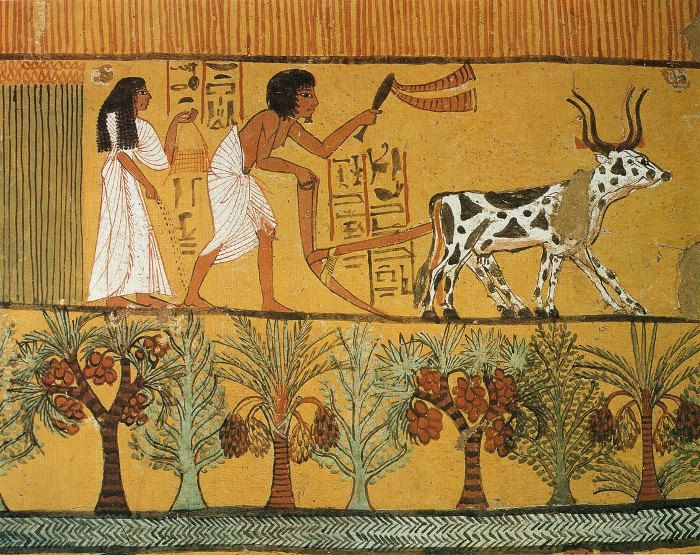
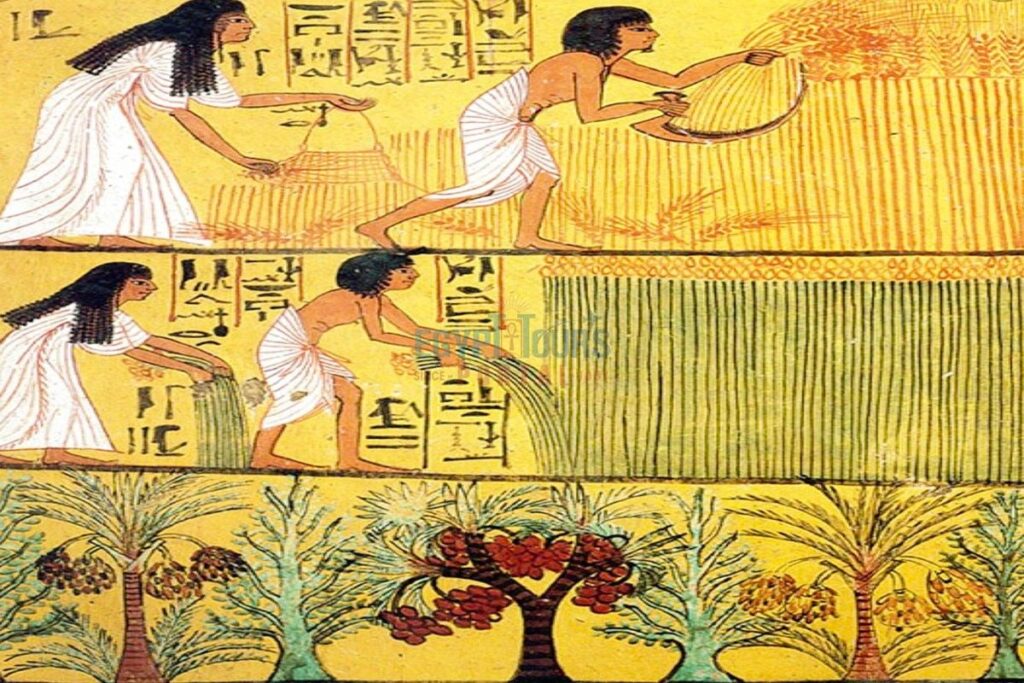
The second season was Peret, often associated with emergence or growth. As the floodwaters receded, farmers could plant crops in the fertile soil.
This was an important agricultural period because successful planting determined the future harvest.
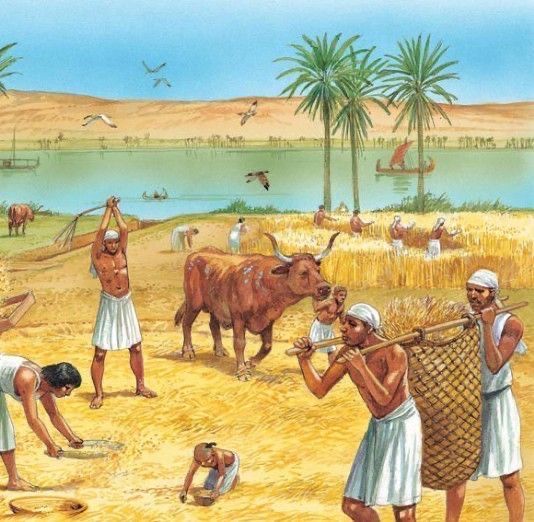
The third season was Shemu, generally associated with harvesting and the dry season.
Farmers gathered crops during this period and prepared food supplies for the coming year.
The three-season system demonstrates how closely Egyptian timekeeping was connected with agriculture.
Rather than viewing the year simply as an abstract measurement of days, Egyptians connected different periods with important environmental activities.
Each season contained four 30-day months.
The final five epagomenal days came after these 12 months.
The exact timing of the seasons could shift relative to the civil calendar because the 365-day year was slightly shorter than the solar year.
Nevertheless, the traditional names preserved the fundamental agricultural structure of Egyptian society.
The Nile was therefore at the heart of Egyptian timekeeping.
The calendar helped farmers and officials understand the expected sequence of flooding, cultivation, and harvesting.
Religious ceremonies were also associated with different times of the year.
The three-season system remained an important feature of Egyptian civilization for thousands of years.
It provides modern researchers with valuable insight into how Egyptians understood the relationship between nature, agriculture, and the passage of time.