
Welcome to

Ancient Egypt Economy Structure

The Ancient Egypt economy was one of the most successful and well-organized economic systems of the ancient world. Built upon the fertile lands of the Nile River, the Egyptian economy relied on agriculture, trade, taxation, craftsmanship, mining, and state administration to support a powerful civilization that endured for more than three thousand years. The abundance of natural resources and the efficient management of economic activities allowed Ancient Egypt to finance monumental construction projects, maintain a strong government, support religious institutions, and establish itself as a major power in the ancient world.

Agriculture formed the foundation of the Ancient Egyptian economy. The annual flooding of the Nile deposited rich silt across the farmlands, enabling farmers to cultivate crops such as wheat, barley, flax, vegetables, fruits, and legumes. Agricultural production provided food for the population and generated surpluses that could be stored, traded, or collected as taxes. Bread and beer, produced from grain, became essential commodities within Egyptian society and played a significant role in economic exchange.

Trade was another major pillar of the Egyptian economic structure. Domestic commerce connected cities and villages along the Nile, while international trade routes linked Egypt to Nubia, the Levant, the Sinai Peninsula, the Mediterranean world, and the Land of Punt. Egyptian merchants exchanged grain, papyrus, linen, gold, glassware, and crafted goods for valuable imports such as timber, incense, spices, ivory, copper, and precious stones. These trade networks increased wealth and strengthened Egypt’s regional influence.

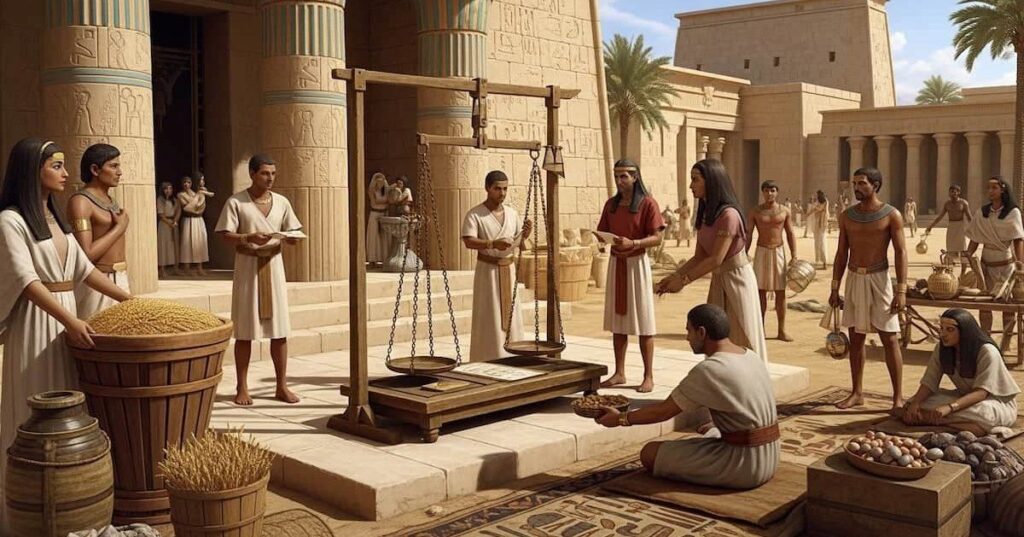
The government played a central role in managing the economy. Pharaohs, royal officials, and temple administrators oversaw agricultural production, tax collection, labor organization, and the distribution of resources. Taxes were often collected in the form of grain, livestock, manufactured goods, or labor rather than coinage, as Ancient Egypt operated largely without a standardized monetary system for much of its history. Detailed records maintained by scribes helped ensure the efficient administration of economic activities.

Craftsmanship, mining, quarrying, and construction also contributed significantly to economic growth. Skilled artisans produced jewelry, pottery, textiles, furniture, statues, and luxury goods, while miners extracted gold, copper, turquoise, and precious stones from deserts and mining regions. These industries supported both domestic needs and international trade.

In this guide, we explore the Ancient Egypt economy structure, including agriculture, taxation, trade, labor systems, mining, craftsmanship, government administration, and the economic foundations that enabled Ancient Egypt to become one of the most prosperous and enduring civilizations in human history.

1. Agriculture as the Foundation of the Ancient Egyptian Economy

Agriculture was the most important element of the Ancient Egypt economy structure and provided the foundation for all other economic activities. The Nile River transformed Egypt from a desert environment into a productive agricultural region capable of supporting a large population. Farming provided food, raw materials, employment, and resources needed for the development of Egyptian civilization.

The annual Nile flood was central to agricultural success. Each year, the river deposited rich soil across the floodplain, creating fertile farmland. Egyptian farmers used this natural cycle to grow essential crops such as wheat, barley, flax, vegetables, and fruits.

Wheat was one of the most important agricultural products because it was used to produce bread, the main food source for Egyptians. Barley was used to make beer, another important part of the Egyptian diet. Flax was cultivated for producing linen, which became one of Egypt’s most famous products.

Farmers used advanced agricultural techniques for their time. They developed irrigation systems, canals, and water management methods to distribute Nile water effectively. Tools such as wooden plows, sickles, and hoes helped increase farming productivity.

Agricultural production supported the entire economy. Farmers provided food for workers, soldiers, priests, officials, and the royal family. Surplus crops were stored in government granaries and used during periods of poor harvests.

The government closely supervised agriculture. Officials measured farmland, recorded harvests, and collected taxes from farmers. Scribes maintained detailed records of agricultural production, ensuring that resources were properly managed.

Animal farming was also connected with agriculture. Farmers raised cattle, sheep, goats, and poultry, which provided food, materials, and labor. Animals helped plow fields and transport agricultural goods.

Agriculture also supported Egypt’s trade system. Surplus grain and agricultural products were exchanged for foreign resources such as timber, metals, and luxury items.

The importance of farming in Ancient Egypt shows that the civilization’s success was built on the relationship between humans and the Nile River. Agriculture created economic stability and allowed Egypt to develop its culture, government, and impressive monuments.
2. Government Control and Economic Administration in Ancient Egypt

The government administration of the Ancient Egyptian economy was highly organized and played a major role in maintaining economic stability. Unlike modern economies based mainly on private businesses, many important economic activities in Ancient Egypt were managed or supervised by the state, temples, and royal institutions.

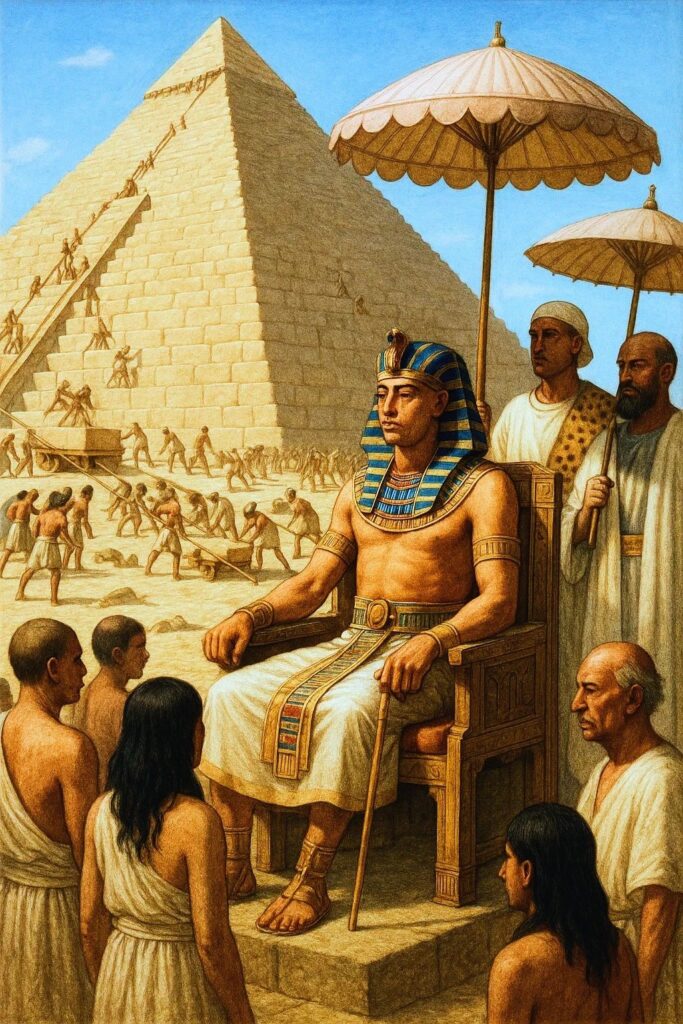
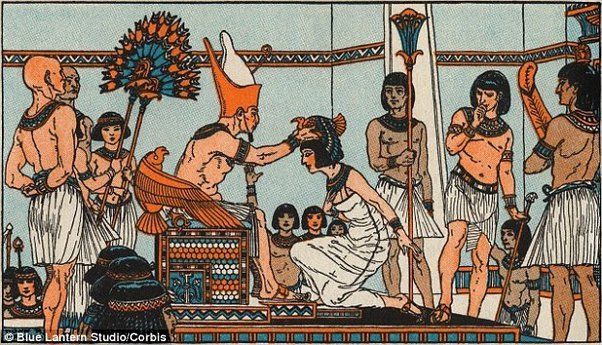
The Pharaoh was considered the highest authority over Egypt’s resources. As both a political and religious leader, the Pharaoh controlled land, natural resources, and major economic projects. The government organized agricultural production, trade expeditions, construction projects, and resource distribution.

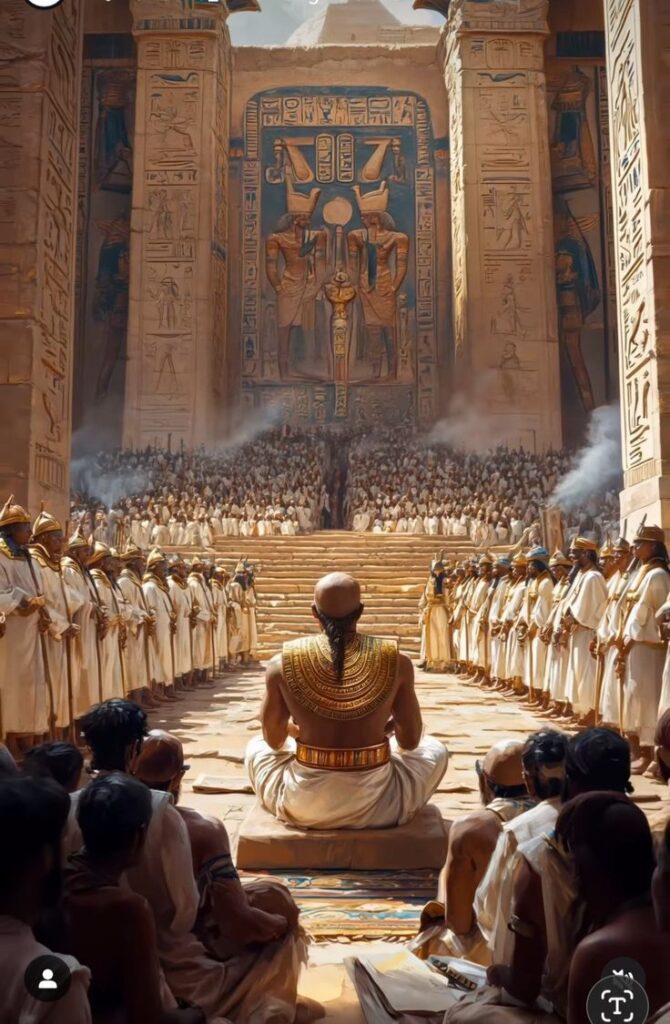
A large administrative system supported economic management. Officials were responsible for supervising different areas of the economy, including agriculture, taxation, storage, trade, and labor. Scribes were especially important because they recorded economic information using hieroglyphs and administrative documents.

Tax collection was a major part of government control. Farmers usually paid taxes with agricultural products such as grain, livestock, and other goods. Officials measured fields and estimated harvests to determine the amount of tax required.

The government maintained large storage facilities called granaries. These buildings stored grain collected from farmers and protected Egypt from food shortages during difficult years. Stored resources were also distributed to workers, soldiers, and officials.

Large construction projects demonstrated the power of Egyptian economic organization. Building pyramids, temples, and royal monuments required thousands of workers, large amounts of materials, and careful planning. The government organized labor, transportation, and supplies needed for these projects.

Temples also had significant economic power. Many temples owned farmland, workshops, livestock, and storage facilities. They produced goods that supported religious activities and provided resources for temple communities.

The Egyptian administration also controlled important trade activities. Officials organized foreign expeditions, managed ports, protected trade routes, and recorded imported and exported goods.

The organized management of the economy allowed Ancient Egypt to maintain stability for thousands of years. The combination of strong leadership, administrative skills, and careful resource control created one of the most successful economic systems of the ancient world.
3. Labor System and Workforce in Ancient Egypt Economy

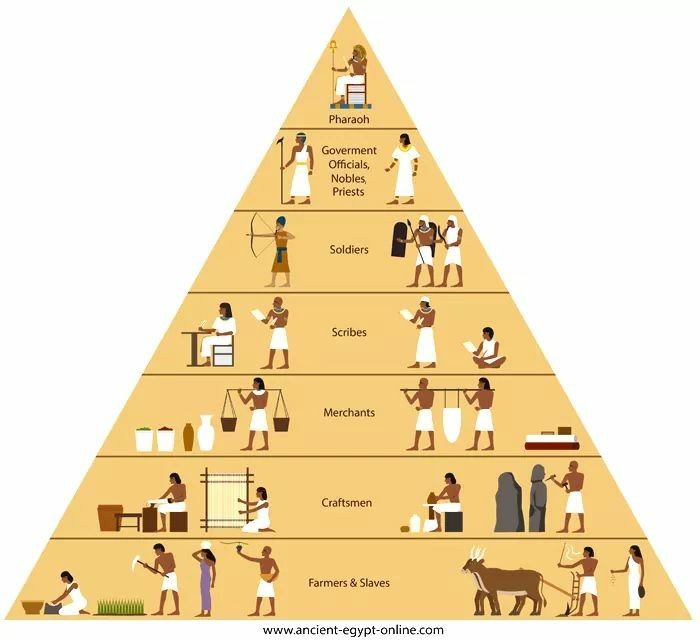
The Ancient Egyptian labor system was a crucial part of the economy, providing the workforce needed for agriculture, construction, manufacturing, trade, and government activities. The Egyptian economy depended on the cooperation of different social groups, each contributing specific skills and services that supported the development of civilization.

Farmers represented the largest part of the workforce. They cultivated land along the Nile, produced food, raised animals, and supplied agricultural products that supported the entire population. Their work was especially important because agriculture provided the foundation of the Egyptian economy.

Craftsmen were another important economic group. Skilled workers produced pottery, jewelry, furniture, tools, weapons, statues, and textiles. Egyptian craftsmen were highly respected for their advanced techniques and artistic abilities.

Builders and construction workers played a major role in creating Egypt’s famous monuments. Large projects such as temples and pyramids required thousands of workers, including stone cutters, transport workers, engineers, and supervisors.

During the Nile flood season, when farming activities were limited, many farmers participated in government projects. They worked on construction, irrigation systems, and public works. This seasonal labor system helped the government use available workers effectively.

Soldiers also contributed to the economy by protecting borders, trade routes, and valuable resources. Military campaigns sometimes brought wealth and resources into Egypt through tribute and conquest.

Merchants and sailors supported economic exchange by transporting goods within Egypt and to foreign lands. They connected producers with markets and helped expand Egyptian trade networks.

Workers were usually compensated with goods rather than money. Payments often included grain, bread, beer, clothing, and other necessities. This system reflected the agricultural nature of the Egyptian economy.

Scribes and officials managed labor organization. They recorded workers, distributed supplies, and supervised projects. Their administrative skills allowed large numbers of people to work together efficiently.

The Ancient Egyptian labor system demonstrates the complexity of the economy. Every group, from farmers to craftsmen and officials, contributed to the success of civilization.
4. Ancient Egyptian Trade and Commercial Activities

Trade was a major component of the Ancient Egypt economy structure, connecting Egypt with neighboring regions and providing access to resources that were unavailable locally. Although agriculture formed the foundation of the economy, trade expanded Egypt’s wealth, supported industries, and strengthened diplomatic relationships with foreign civilizations.

Ancient Egypt developed a sophisticated trade network that included internal trade along the Nile River and international trade with regions such as Nubia, Punt, the Levant, and Mediterranean civilizations. These connections allowed Egyptians to exchange their agricultural products and manufactured goods for valuable resources.

The Nile River was the main transportation route for Egyptian commerce. Boats carried grain, livestock, stone, pottery, textiles, and other goods between villages, cities, temples, and ports. Because the river connected Upper and Lower Egypt, it created an efficient economic network throughout the kingdom.

Egypt exported many valuable products. Grain was one of the most important exports because the fertile Nile Valley produced large agricultural surpluses. Other Egyptian exports included papyrus, linen textiles, gold, pottery, jewelry, perfumes, and crafted goods.

Egypt imported many resources needed for construction and industry. Cedar wood from the Levant was essential for shipbuilding, furniture, and royal projects. Incense from Punt was used in temples and religious ceremonies. Metals, precious stones, ivory, and exotic materials were also imported.

Merchants played an important role in commercial activities. They transported goods, negotiated exchanges, and connected producers with consumers. Some merchants operated locally, while others participated in long-distance trade expeditions organized by the government.

Trade was often based on exchange rather than coins. Egyptians used systems of measurement to determine the value of goods. Grain, metals, and other valuable products could be exchanged according to their estimated worth.

Temples and royal institutions were major participants in trade. They controlled large agricultural estates, workshops, and storage facilities. The goods they produced and collected contributed significantly to economic activity.

The government supervised important trade operations. Officials managed ports, protected trade routes, organized foreign expeditions, and recorded commercial transactions. Scribes documented the movement of goods and ensured proper administration.

Trade contributed to Egypt’s political strength and cultural development. Through commercial relationships, Egyptians gained foreign materials, technologies, and ideas that influenced art, architecture, and society.

The importance of trade in Ancient Egypt shows that the civilization was connected to the wider ancient world. Its commercial activities helped create a powerful and prosperous economy that lasted for thousands of years.

5. Taxation System and Wealth Distribution in Ancient Egypt

The Ancient Egyptian taxation system was a central part of the economy and allowed the government to collect resources needed for administration, construction, military activities, and public projects. Since Egypt’s economy was mainly based on agriculture, taxes were usually collected in the form of goods rather than money.

Farmers were the main taxpayers because agriculture produced the majority of Egypt’s wealth. After harvests, government officials measured agricultural production and collected a portion of crops such as wheat, barley, vegetables, and flax. These resources were stored in government granaries and distributed when needed.

Scribes played an essential role in managing taxation. They recorded farmland sizes, estimated crop yields, documented payments, and maintained official records. Their work helped the government organize economic resources and control wealth distribution.

The amount of tax depended on several factors, including the size of the farmland, the quality of the harvest, and the success of the Nile flood. When the Nile provided abundant water and fertile soil, farmers could produce larger harvests and pay higher taxes.

Taxes were not limited to agricultural products. The government also collected goods from craftsmen, merchants, livestock owners, and mining activities. Valuable resources such as gold, stone, and manufactured products contributed to state wealth.

The collected resources supported many areas of Egyptian society. Grain and goods were used to pay workers, feed soldiers, support temples, and maintain government institutions. Large construction projects depended heavily on the efficient collection and distribution of resources.

Temples had their own economic systems and often received offerings, agricultural products, and labor contributions. Many temples owned farmland and workshops that generated wealth for religious activities and community support.

The taxation system also helped maintain social organization. Officials, scribes, and administrators managed resources, while workers and farmers contributed through labor and production.

Although taxation created obligations for ordinary Egyptians, it also supported important public services. The government used collected resources to maintain irrigation systems, protect borders, organize trade, and manage the kingdom.

The Ancient Egyptian taxation system demonstrates the advanced administrative abilities of Egyptian civilization. Through careful record keeping and organized wealth management, Egypt maintained a stable economy capable of supporting one of history’s most successful societies.

6. Industries, Crafts, and Manufacturing in Ancient Egypt

Industries and craftsmanship were important parts of the Ancient Egypt economic structure, providing employment, supporting trade, and creating products used throughout Egyptian society. While agriculture supplied the basic resources, skilled craftsmen transformed raw materials into valuable goods that contributed to the strength and wealth of the economy.

The textile industry was one of the most important industries in Ancient Egypt. Egyptians cultivated flax plants and used them to produce linen, a famous Egyptian product known for its quality and durability. Linen was used for clothing, household materials, religious purposes, and burial practices.

Pottery production was another essential industry. Egyptian potters created containers for storing food, water, oils, and other materials. Pottery was used by ordinary families as well as temples and government institutions.

Jewelry making was a highly developed Egyptian craft. Gold, precious stones, and colored materials were used to create necklaces, bracelets, rings, crowns, and religious objects. Egyptian jewelry demonstrated advanced artistic skills and was especially important among royalty and wealthy individuals.

Metalworking contributed significantly to the economy. Craftsmen produced tools, weapons, agricultural equipment, and decorative objects using copper, bronze, gold, and other metals. Mining activities provided the raw materials needed for these industries.

Woodworking was another important economic activity. Because Egypt lacked large forests, imported wood was valuable. Skilled carpenters created furniture, boats, doors, statues, and other wooden objects for homes, temples, and royal buildings.

Stone craftsmanship was essential for Egyptian architecture. Workers extracted and shaped limestone, granite, and sandstone to build temples, statues, and monuments. Stone workers played a major role in creating the famous structures that represent Ancient Egypt today.

Food processing industries also supported the economy. Egyptians produced bread, beer, oils, and preserved foods. These products were necessary for daily life and were also used as payment for workers.

Workshops were often connected to temples, royal palaces, and government institutions. These organizations controlled production, provided materials, and managed skilled workers.

Manufacturing also supported international trade. Egyptian crafts such as linen, jewelry, and artistic objects were exchanged with foreign regions, increasing Egypt’s wealth and influence.

The development of industries and crafts shows the diversity of the Ancient Egyptian economy. Through skilled labor, resource management, and artistic innovation, Egyptians created an economic system that supported both everyday life and remarkable cultural achievements.

7. The Role of Temples and Royal Estates in Ancient Egyptian Economy

Temples and royal estates played a major role in the Ancient Egypt economy structure, functioning not only as religious centers but also as powerful economic institutions. These organizations controlled large amounts of land, agricultural production, workshops, livestock, storage facilities, and labor forces. Their economic influence helped maintain the stability and prosperity of Egyptian society.

Temples were among the largest landowners in Ancient Egypt. Many temples received agricultural lands as gifts from Pharaohs, nobles, and wealthy individuals. These lands were cultivated by farmers who produced grain, vegetables, fruits, and other agricultural products. The resources generated from temple lands supported religious ceremonies, priests, workers, and temple maintenance.

The economic activities of temples extended beyond agriculture. Many temples operated workshops where craftsmen produced jewelry, statues, pottery, textiles, and religious objects. These workshops employed skilled workers and contributed to manufacturing and trade.

Temples also managed large livestock holdings. Cattle, sheep, goats, and birds were raised on temple estates to provide food for religious ceremonies and daily temple activities. Animal products were also important economic resources.

The storage systems of temples were highly organized. Large granaries and warehouses stored grain, oils, wine, textiles, and other valuable goods. Scribes recorded the movement of resources and ensured proper management of supplies.

Royal estates functioned in a similar way. The Pharaoh and royal family controlled extensive agricultural lands, workshops, and mining operations. These estates provided resources needed for the royal court, military campaigns, construction projects, and diplomatic activities.

Royal workshops produced luxury goods such as jewelry, furniture, weapons, and ceremonial objects. Skilled craftsmen working under royal supervision created items that demonstrated the power and wealth of the Pharaoh.

Both temples and royal estates depended on a large workforce. Farmers, craftsmen, laborers, administrators, and servants contributed to economic production. Scribes organized workers, recorded supplies, and managed administrative tasks.

These institutions also played a role in redistribution. Resources collected from farms and workshops were distributed to workers, officials, priests, and soldiers. This system helped maintain social and economic stability.

The influence of temples and royal estates shows that the Ancient Egyptian economy was not based only on individual production. Large institutions controlled significant resources and organized economic activities on a national scale.

The combination of religious authority, royal power, and economic management allowed Ancient Egypt to maintain one of the most complex economic systems of the ancient world.

8. Money, Barter System, and Economic Exchange in Ancient Egypt

The economic exchange system of Ancient Egypt was different from modern financial systems because money in the form of coins was not widely used during most periods of Egyptian history. Instead, Egyptians relied mainly on barter, measurement systems, and the exchange of goods to conduct economic activities.

The barter system was the foundation of everyday transactions. People exchanged goods and services based on their estimated value. Farmers could trade grain, vegetables, or livestock for tools, clothing, pottery, and other products made by craftsmen.

Although coins were not commonly used, Egyptians developed methods to measure value. Important units of measurement, such as the deben, were used to calculate the worth of goods, especially metals. The deben was not a coin but a weight measurement that helped standardize exchanges.

Grain was one of the most important economic resources in Ancient Egypt. Because agriculture was the foundation of the economy, grain often served as a form of payment. Workers, soldiers, and officials frequently received portions of grain, bread, and beer as compensation.

Workers involved in major construction projects were often paid with goods rather than money. Their wages included food supplies, clothing, and other necessities. This system allowed the government to support large numbers of workers without requiring a currency-based economy.

Precious metals such as gold, silver, and copper were also used to represent value. Wealthy individuals and institutions used these materials for trade, savings, and luxury production. However, they were usually measured by weight rather than used as coins.

Markets were important centers of exchange. Farmers, merchants, and craftsmen gathered to buy, sell, and trade goods. Local markets helped distribute products throughout villages and cities.

The government and temples played important roles in economic exchange. They collected taxes, stored resources, and redistributed goods to workers and communities.

The absence of widespread coin usage did not prevent economic development. Ancient Egyptians created an organized system based on production, measurement, storage, and exchange of resources.

The Egyptian economic exchange system demonstrates the adaptability and organization of the civilization. Through barter, measurement standards, and administrative control, Egyptians successfully managed a complex economy for thousands of years.

9. Mining, Natural Resources, and Their Economic Importance

Mining and natural resources were essential parts of the Ancient Egypt economy structure, providing valuable materials needed for construction, manufacturing, trade, and royal projects. Egypt’s deserts and mountains contained important resources such as gold, copper, precious stones, limestone, granite, and other minerals that contributed greatly to the strength of the Egyptian economy.

Gold was one of the most valuable resources in Ancient Egypt. The Eastern Desert and Nubian regions contained rich gold deposits that were mined extensively. Gold was used for royal jewelry, religious objects, statues, and diplomatic gifts. It became a symbol of wealth, power, and divine connection.

Copper was another important resource. Egyptians used copper to create tools, weapons, household objects, and agricultural equipment. Copper mining in regions such as Sinai supported technological development and improved craftsmanship.

Stone resources were crucial for Egyptian architecture. Limestone, sandstone, and granite were extracted from quarries and transported to construction sites. These materials were used to build temples, pyramids, statues, and monuments that continue to represent Egyptian civilization today.

Precious stones and decorative materials were also economically important. Egyptians used turquoise, carnelian, amethyst, and other stones to create jewelry and artistic objects. These materials were valued both locally and internationally.

Mining operations required careful organization. The government controlled many mining activities and sent expeditions to resource-rich areas. These expeditions included workers, soldiers, engineers, and officials who managed extraction and transportation.

Scribes recorded mining activities, including the number of workers, quantities of materials collected, and supplies needed for expeditions. This administrative system allowed the government to manage valuable resources efficiently.

Mining also encouraged trade development. Materials obtained from mines were used locally and exchanged with foreign regions. Gold, stones, and crafted products increased Egypt’s influence in international trade networks.

Workers involved in mining faced difficult conditions, especially in desert environments. They required food, water, shelter, and protection while working in remote areas.

The importance of natural resources demonstrates how Ancient Egyptians used their environment to strengthen their economy. Through organized mining, skilled craftsmanship, and effective resource management, Egypt developed a powerful economic system capable of supporting its civilization for thousands of years.

10. Agriculture, Trade, and Industry as the Three Pillars of Egyptian Economy

The Ancient Egypt economy structure was built on three main pillars: agriculture, trade, and industry. These three economic sectors worked together to create a stable and powerful system that supported the growth of Egyptian civilization for more than three thousand years. Each sector depended on the others, creating a balanced economy based on production, exchange, and skilled craftsmanship.

Agriculture: The Foundation of Economic Life

Agriculture was the most important pillar of the Egyptian economy because it provided food, raw materials, and employment for the majority of the population. The Nile River made farming possible by providing fertile soil and a reliable water source. Farmers cultivated wheat, barley, flax, vegetables, fruits, and other crops that supported daily life.

Agricultural production also supplied materials for other industries. Flax was used to create linen textiles, while grains were used to produce bread and beer. Farmers also raised cattle, sheep, goats, and poultry, adding animal products to the economy.

The government depended heavily on agriculture. Taxes were collected mainly from agricultural production, and stored grain helped support workers, soldiers, and officials.

Trade: Connecting Egypt with the Ancient World

Trade expanded the Egyptian economy beyond the Nile Valley. Through river routes, desert caravans, and sea voyages, Egyptians exchanged goods with Nubia, Punt, the Levant, and Mediterranean regions.

Egypt exported products such as grain, gold, papyrus, linen, and crafted goods. In return, it imported timber, metals, incense, precious stones, and luxury products. These resources supported construction, manufacturing, and royal projects.

Trade also encouraged cultural exchange and strengthened Egypt’s international relationships.

Industry: Skilled Production and Craftsmanship

Industries transformed raw materials into valuable products. Egyptian craftsmen were famous for their skills in jewelry making, pottery, woodworking, metalworking, stone carving, and textile production.

Workshops connected to temples, royal estates, and cities employed skilled workers who created goods for daily use, religious purposes, and foreign trade.

The relationship between agriculture, trade, and industry created a strong economic cycle. Agriculture provided resources, industries transformed them into products, and trade distributed goods throughout Egypt and beyond.

The success of this economic model allowed Egypt to build impressive monuments, support large populations, and maintain political power. The combination of farming, commerce, and craftsmanship made the Ancient Egyptian economy one of the most advanced economic systems of the ancient world.

11. Economic Challenges and Problems in Ancient Egypt

Although the Ancient Egyptian economy was highly successful, it faced several challenges that affected production, trade, and social stability. Environmental changes, political conflicts, resource limitations, and economic pressures sometimes created difficulties for Egyptian society.

One of the biggest challenges was dependence on the Nile River. The Egyptian economy relied heavily on the annual Nile flood to support agriculture. When floods were too low, farmers experienced poor harvests and food shortages. When floods were too high, farmland and settlements could be damaged.

Drought periods were especially dangerous because they reduced agricultural production. Since farming was the foundation of the economy, unsuccessful harvests affected food supplies, taxation, trade, and government resources.

Another challenge was maintaining large government projects. Building temples, pyramids, and royal monuments required enormous amounts of labor, materials, and resources. Organizing these projects required careful economic planning and strong administration.

Trade also faced difficulties. Long-distance trade routes through deserts and seas were dangerous and expensive. Merchants and expeditions needed protection from natural dangers, difficult environments, and potential conflicts with other groups.

Political instability could negatively affect economic activities. During periods of weak central government, such as some intermediate periods, control over resources and trade networks became more difficult. Local rulers sometimes competed for power, affecting economic organization.

Resource limitations were another challenge. Egypt lacked certain materials, especially timber, which required dependence on foreign trade. Maintaining good relationships with trading partners was important to ensure a steady supply of essential resources.

Social inequality also influenced the economy. Wealth and resources were concentrated among the Pharaoh, temples, officials, and wealthy landowners. Ordinary farmers and workers often depended on agricultural production and government systems for their livelihoods.

Taxation could also create pressure on farmers, especially during difficult years when harvests were poor. The government needed resources to function, but excessive demands could affect communities.

Despite these challenges, Ancient Egypt developed methods to overcome economic difficulties. Storage systems, administrative records, irrigation projects, and trade relationships helped maintain stability.

The ability to manage economic challenges demonstrates the strength and flexibility of the Ancient Egyptian economic system.

12. The Legacy of the Ancient Egyptian Economy Structure

The legacy of the Ancient Egyptian economy structure continues to demonstrate the remarkable organizational abilities of one of the world’s oldest civilizations. Through agriculture, trade, industry, taxation, and administration, Egyptians created an economic system that supported a powerful state and influenced later civilizations.

The agricultural system based on the Nile River remains one of the greatest examples of environmental adaptation in ancient history. Egyptians successfully used natural resources, irrigation methods, and farming knowledge to create a productive economy in a desert environment.

The administrative methods developed by Ancient Egypt also left an important legacy. Scribes created detailed records of agriculture, taxation, labor, and trade, providing one of the earliest examples of organized economic management.

Ancient Egyptian trade networks demonstrated the importance of international connections. By exchanging goods with Africa, Asia, and the Mediterranean world, Egypt became part of a wider ancient economic system.

The craftsmanship and industries of Ancient Egypt continue to influence the world today. Egyptian jewelry, textiles, pottery, furniture, and architectural techniques show the high level of skill achieved by ancient workers.

The role of government in managing resources also provides valuable historical lessons. The Egyptian state organized labor, controlled important resources, and developed systems for collecting and distributing goods.

Many aspects of Egyptian economic life influenced later societies. Agricultural organization, administrative practices, and trade methods became examples of how civilizations could manage resources effectively.

Modern archaeology continues to reveal information about the Ancient Egyptian economy through temples, tombs, inscriptions, tools, and preserved artifacts. These discoveries help historians understand how Egyptians produced, exchanged, and managed wealth.

The Ancient Egyptian economy was not based on one single activity. Its strength came from the cooperation between farmers, craftsmen, merchants, workers, officials, and rulers.

The success of this economic structure allowed Egypt to create magnificent monuments, develop a rich culture, and maintain one of the longest-lasting civilizations in human history.

Frequently Asked Questions

Agriculture was the foundation of the Ancient Egyptian economy. The Nile River allowed farmers to produce crops that supported the population and provided resources for trade and industry.


The main economic activities were agriculture, trade, craftsmanship, mining, animal farming, fishing, and construction.


Most Ancient Egyptians did not use coins for everyday transactions. They mainly used barter systems and measured the value of goods using standards such as the deben.


Trade provided Egypt with valuable foreign resources such as timber, metals, incense, and precious stones while allowing Egypt to export grain, gold, papyrus, and linen.

The Pharaoh, government officials, and temples controlled many economic activities. Scribes recorded resources, managed taxes, and organized economic administration.