
Welcome to

Ancient Egypt Innovation and Science

Ancient Egypt was one of the world’s earliest centers of innovation and scientific achievement, producing groundbreaking advancements that helped shape the development of human civilization. For more than three thousand years, the ancient Egyptians applied observation, experimentation, engineering, and practical knowledge to solve problems in agriculture, medicine, architecture, mathematics, astronomy, and technology. Their innovations not only supported the growth of one of history’s greatest civilizations but also influenced later cultures throughout the Mediterranean, Africa, and the Near East.

The scientific achievements of Ancient Egypt were closely connected to the needs of everyday life and the administration of a complex society. Egyptian engineers developed sophisticated construction techniques that enabled the creation of monumental structures such as the Great Pyramids of Giza, the Sphinx, Karnak Temple, Luxor Temple, and Abu Simbel. These projects required advanced knowledge of geometry, surveying, logistics, and architectural design, demonstrating an impressive understanding of engineering principles long before the modern era.

Ancient Egyptian medicine was among the most advanced in the ancient world. Physicians documented diseases, injuries, treatments, and surgical procedures in medical texts such as the Ebers Papyrus and the Edwin Smith Papyrus. Egyptian doctors treated wounds, set broken bones, performed minor surgeries, and developed herbal remedies using natural ingredients. Their contributions laid important foundations for the future development of healthcare and medical science.

Astronomy and mathematics also played vital roles in Egyptian innovation. By carefully observing the stars, planets, and seasonal cycles, Egyptian astronomers created one of the earliest solar calendars, helping regulate agriculture, religious festivals, and government administration. Mathematical knowledge was applied to land measurement, taxation, construction projects, and trade, contributing to the efficient management of the kingdom.

Technological innovations extended to agriculture, transportation, and manufacturing. Egyptians developed irrigation systems, water management techniques, papyrus production methods, shipbuilding technologies, metalworking skills, and sophisticated craftsmanship. These advancements improved productivity, facilitated trade, and supported economic growth throughout the civilization.

In this guide, we explore Ancient Egypt innovation and science, including engineering, medicine, astronomy, mathematics, technology, architecture, agriculture, and the remarkable discoveries that helped make Ancient Egypt one of the most advanced civilizations of the ancient world. Discover how Egyptian ingenuity continues to influence science, technology, and human achievement thousands of years later.

1. Ancient Egyptian Mathematics and Numerical Innovation

Mathematics was one of the most important areas of Ancient Egypt innovation and science. Egyptians developed practical mathematical methods that were essential for agriculture, construction, taxation, trade, and administration.

The Egyptian numerical system used symbols to represent different powers of ten. Scribes combined these symbols to record quantities and perform calculations.

Fractions were particularly important. Egyptians developed methods for working with fractions, although their notation differed considerably from modern mathematical notation.

Scribes used arithmetic to calculate quantities of grain, livestock, building materials, wages, and taxes.

Geometry was equally valuable. After the annual Nile flood, officials sometimes needed to measure agricultural fields and determine boundaries. Mathematical methods helped them calculate areas and organize taxation.

Construction projects required precise measurements. Architects and builders needed to calculate dimensions, slopes, volumes, and quantities of materials.

The Rhind Mathematical Papyrus is one of the best-known surviving sources of Egyptian mathematical knowledge. It contains numerous mathematical problems involving arithmetic, fractions, geometry, and practical calculations.

The Moscow Mathematical Papyrus provides additional evidence of Egyptian mathematical techniques, including problems involving geometry and volumes.

Egyptian mathematics was strongly practical. Rather than developing mathematics purely as an abstract discipline, scribes generally applied it to real administrative and engineering problems.

This practical approach was extremely effective for a society that depended on agriculture, construction, and centralized administration.

Mathematical knowledge was passed from experienced scribes to students through written exercises and repeated practice.

The ability to calculate accurately was highly valued because errors could affect taxes, supplies, land measurements, or construction projects.

Egyptian mathematics therefore provided an essential foundation for many other areas of civilization.

From surveying farmland to constructing monumental architecture, mathematical knowledge allowed Egyptians to solve problems that would otherwise have been extremely difficult.
2. Ancient Egyptian Medicine and Medical Innovation

Ancient Egyptian medicine represents one of the most impressive areas of Ancient Egypt innovation and science. Egyptian physicians developed extensive practical knowledge about injuries, diseases, medicines, and treatments.

Medical knowledge was recorded in papyri, allowing information to be preserved and transmitted between generations.

The Ebers Papyrus contains numerous medical remedies and descriptions of health conditions. It provides valuable evidence about Egyptian approaches to medicine.

The Edwin Smith Papyrus focuses heavily on injuries and trauma. Its organization of cases demonstrates a practical approach involving examination, diagnosis, prognosis, and treatment.

Egyptian physicians treated wounds using materials such as honey, oils, plant products, and other substances. Some treatments had practical antibacterial or protective properties, even though Egyptians did not understand modern microbiology.

Egyptians also had knowledge of bones, wounds, burns, and other physical injuries.

Medical practitioners could specialize in particular areas. Egyptian sources mention physicians associated with different parts of the body and particular types of treatment.

At the same time, Egyptian medicine was not completely separate from religion. Magical formulas, prayers, and religious practices could be used alongside physical treatments.

This combination reflects the Egyptian understanding of illness, which included both physical and supernatural explanations.

Egyptian knowledge of anatomy was also influenced by the practice of mummification, although the exact relationship between embalming and medical knowledge remains complex.

Hygiene was valued in Egyptian society. Cleanliness, bathing, diet, and personal care were considered important aspects of health.

Medical training was likely transmitted through experienced practitioners and specialized institutions.

Although Egyptian medicine cannot be considered modern scientific medicine, its emphasis on observation, written case descriptions, diagnosis, and treatment represents an important stage in the history of medical knowledge.

The surviving medical papyri provide remarkable evidence of how Egyptians attempted to understand and treat the human body.
3. Ancient Egyptian Astronomy and the Calendar

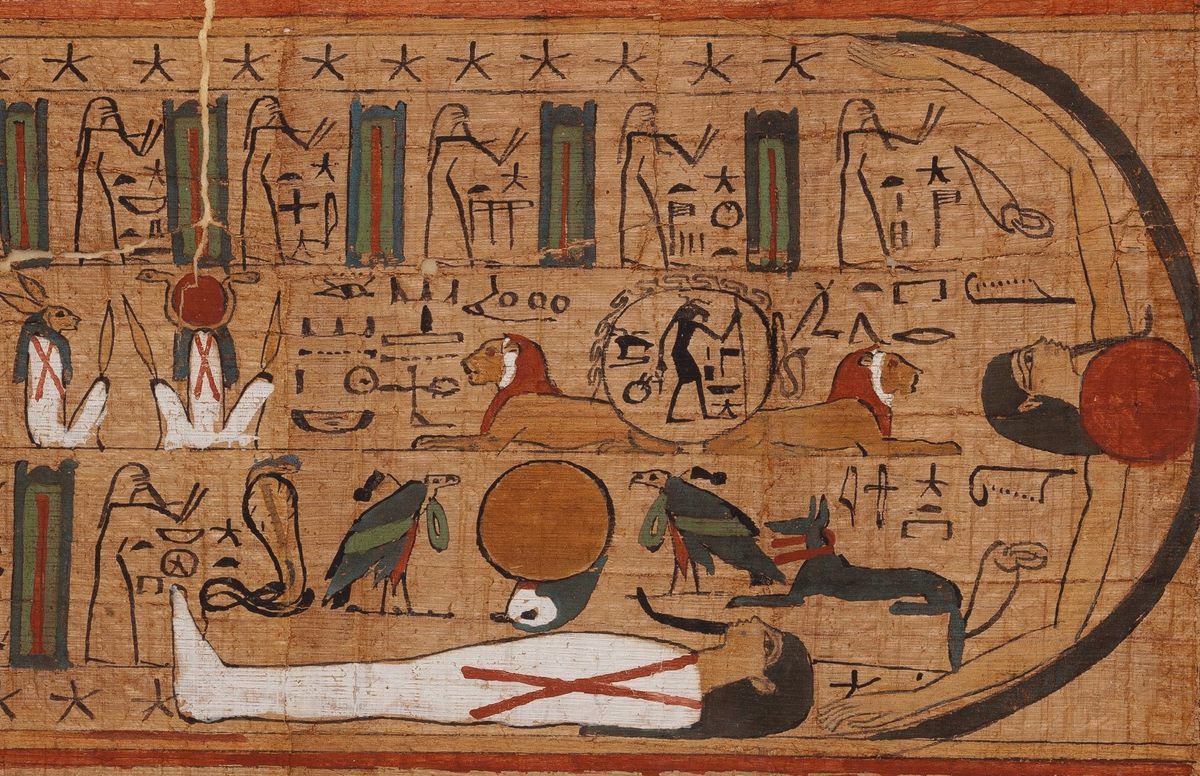
Astronomy was another important field of Ancient Egypt innovation and science. Egyptians carefully observed the sun, moon, and stars to organize time and understand seasonal changes.

The agricultural cycle depended heavily on the Nile flood. Egyptians therefore needed reliable methods for identifying seasons and planning farming activities.

Egyptians developed a calendar consisting of 365 days. The year was divided into three major agricultural seasons associated with the Nile and farming cycle.

The appearance of Sirius, known to Egyptians as Sopdet, was particularly important. Its heliacal rising was associated with the annual Nile flood and the beginning of a new agricultural cycle.

Egyptian priests and scholars observed the night sky and incorporated astronomical knowledge into religious and administrative traditions.

Stars were also important in Egyptian religious beliefs. Certain celestial bodies were associated with gods and the journey of the deceased through the afterlife.

Astronomical knowledge influenced temple architecture. Some Egyptian temples and structures were oriented according to celestial or solar patterns.

The movement of the sun was particularly important. Egyptians used observations of shadows and sunlight to understand time during the day.

Sundials and other timekeeping methods helped Egyptians divide the day into manageable periods.

Water clocks were also used to measure time, particularly during nighttime or when sunlight was unavailable.

Egyptian astronomical knowledge was therefore both practical and religious.

It helped administrators organize agricultural activities and religious festivals while also contributing to the symbolic design of temples and monuments.

Although Egyptian astronomy was different from modern astronomy, it involved systematic observation of celestial phenomena over long periods.

The ability to track predictable astronomical cycles demonstrates the impressive observational skills of Egyptian scholars.

Astronomy became another example of how Egyptians transformed repeated observations of nature into practical knowledge that supported agriculture, religion, and administration.
4. Ancient Egyptian Engineering and Construction

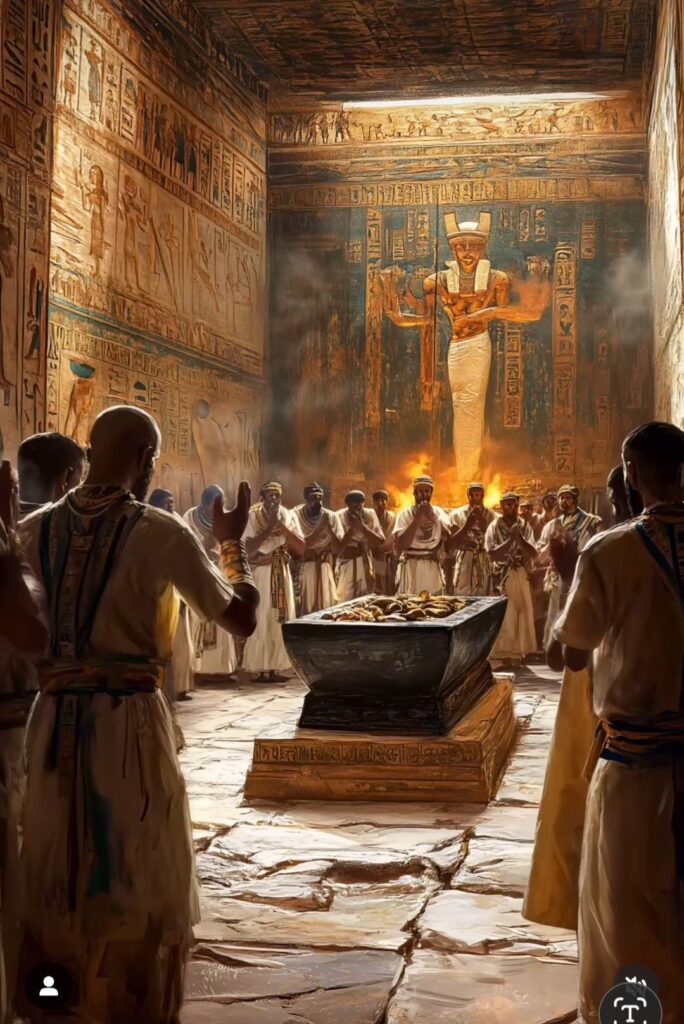
Engineering was one of the greatest achievements of Ancient Egypt innovation and science. Egyptians developed practical techniques that allowed them to construct pyramids, temples, tombs, obelisks, canals, roads, and other enormous structures.

Large construction projects required careful planning and organization. Architects and engineers had to calculate dimensions, determine angles, prepare foundations, transport materials, and coordinate thousands of workers.

The construction of the pyramids demonstrates the Egyptians’ ability to combine mathematics, surveying, quarrying, transportation, and workforce management.

Egyptian builders used simple but effective technologies such as levers, sledges, ropes, ramps, wooden rollers in some contexts, and specially designed boats to move heavy materials.

Stone was quarried from different regions of Egypt. Limestone, granite, sandstone, and other materials were transported over considerable distances.

The Nile was especially important for transportation. Large stones and construction materials could be moved by boat when river conditions permitted.

Surveying was another essential skill. Egyptian specialists used measuring tools and geometric principles to establish straight lines, right angles, and accurate dimensions.

The orientation of major monuments demonstrates impressive attention to direction and alignment. Builders were capable of creating structures with remarkably precise proportions.

Obelisks presented another major engineering challenge. These enormous single stones had to be quarried, transported, raised, and positioned vertically.

Temple construction required similar expertise. Massive columns, decorated walls, gateways, and courtyards were planned as interconnected architectural spaces.

Egyptian engineers also developed techniques for working with difficult terrain and preparing stable foundations.

Construction projects were supported by large administrative systems that organized workers, food, tools, materials, and transportation.

The success of these projects demonstrates that Egyptian engineering was not based on one secret invention. It depended on generations of accumulated practical knowledge.

The architectural achievements of Ancient Egypt remain among the clearest examples of how mathematics, organization, technology, and skilled labor could be combined to solve enormous engineering problems.

5. Agriculture, Irrigation, and Water Management Innovations

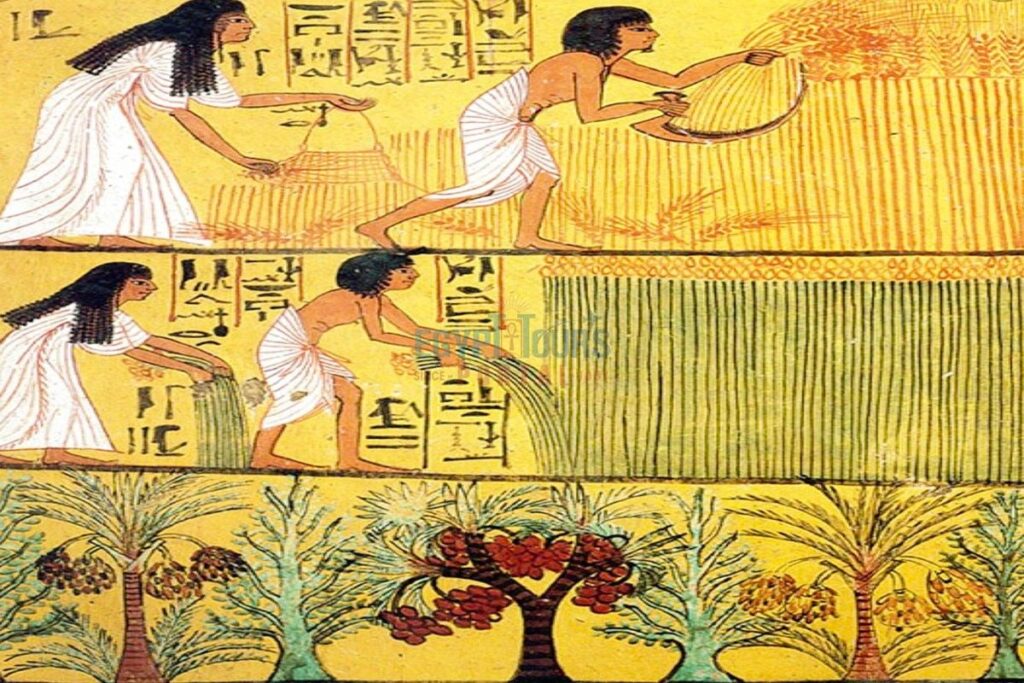
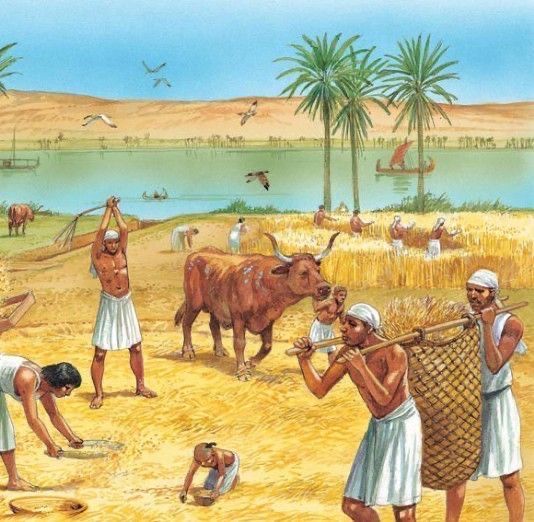
Agriculture was the foundation of Egyptian civilization, making water management and agricultural innovation central to Ancient Egypt innovation and science.

The Nile provided fertile soil, but Egyptians needed to manage its seasonal flooding carefully. Too little water could cause poor harvests, while excessive flooding could damage settlements and fields.

Egyptians developed irrigation techniques that allowed water to be distributed across agricultural land. Canals helped transport water and could extend the usefulness of the flood beyond naturally flooded areas.

Basin irrigation was particularly important. Farmers could use embankments to create controlled areas where floodwater remained for a period before being released or absorbed into the soil.

The Egyptians also built dikes and channels to control water movement.

The shaduf, introduced in Egypt during the second millennium BCE, became an important water-lifting device. It used a long pole with a counterweight to raise water from a lower level to higher ground.

Farmers could use such technology to irrigate fields and gardens.

Agricultural tools also evolved. Egyptians used wooden plows, hoes, sickles, and other implements suited to Nile Valley farming.

The agricultural calendar was closely connected with Egyptian astronomical observations. Farmers needed to know when flooding, planting, and harvesting were expected to occur.

Officials measured agricultural land and recorded crop production. These records helped the government calculate taxes and manage food supplies.

Grain storage was another important innovation. Egyptians constructed granaries and developed systems for collecting, storing, and distributing agricultural products.

Animal power was also used in farming, especially for plowing and transportation.

Agricultural knowledge was passed from parents to children and developed through generations of experience.

The success of Egyptian agriculture depended on the interaction of natural resources and human innovation.

By managing water, soil, crops, tools, and storage systems, Egyptians transformed the Nile Valley into one of the most productive agricultural regions of the ancient world.

6. Ancient Egyptian Writing, Papyrus, and Information Technology

Writing was one of the most transformative achievements of Ancient Egypt innovation and science. The development of writing allowed Egyptians to record information, communicate across distances, administer the kingdom, and preserve knowledge.

Egyptian writing developed several forms, including hieroglyphic writing, hieratic, and later demotic. Each served different purposes and contexts.

Hieroglyphs were commonly used on monuments, temples, tombs, and other important surfaces. Hieratic was a faster cursive form particularly useful for administrative and religious documents.

Papyrus provided Egyptians with a relatively lightweight writing material. Made from the papyrus plant, it could be processed into sheets suitable for writing.

Papyrus was valuable because it allowed large quantities of information to be recorded and transported.

Scribes used reed pens and ink to write administrative documents, letters, religious texts, medical information, mathematical calculations, and literary works.

Writing transformed Egyptian administration. Officials could record taxes, property, workers, supplies, legal agreements, and government orders.

It also allowed knowledge to survive beyond the lifetime of individual teachers.

Religious texts could be copied and preserved, while literary works could be transmitted between generations.

Writing was especially important for large organizations. A centralized kingdom could not efficiently manage resources across thousands of kilometers without systems of written communication and record keeping.

Scribes therefore became highly respected professionals.

Egyptians also used ostraca, pieces of pottery or limestone, for shorter texts, notes, sketches, and exercises. These inexpensive writing surfaces were useful for everyday work and education.

The development of writing can therefore be considered an information revolution in the ancient world.

It allowed Egyptian society to store, organize, retrieve, and communicate information on a scale that would have been impossible through oral traditions alone.

The survival of thousands of inscriptions and documents today is itself evidence of the enormous importance Egyptians placed on written knowledge.

7. Ancient Egyptian Inventions and Everyday Technology

Everyday technology was an important part of Ancient Egypt innovation and science. Egyptians developed practical tools and techniques that made farming, construction, transportation, food preparation, clothing production, and personal care more efficient.

One important innovation was the shaduf, a counterweighted device used to lift water. It allowed farmers to move water from lower areas into irrigation channels and gardens.

Egyptians also developed improved agricultural tools, including plows, hoes, sickles, and systems for processing grain. These tools helped farmers increase productivity and manage large areas of cultivated land.

The wheel was known in Egypt, although it was not widely used for agricultural carts during the earliest periods. Wheeled technology became more important after the introduction of the horse-drawn chariot during the New Kingdom.

Egyptians developed various forms of furniture, including beds, chairs, stools, tables, and storage containers. Some surviving examples demonstrate sophisticated woodworking techniques.

Textile production also involved specialized technology. Egyptians used vertical and horizontal looms to produce linen fabrics from flax.

Cosmetics and personal-care products represented another area of technological knowledge. Egyptians produced oils, perfumes, eye cosmetics, and skin-care preparations using mineral and plant ingredients.

They also developed methods for preserving food, including drying, salting, and storing grain.

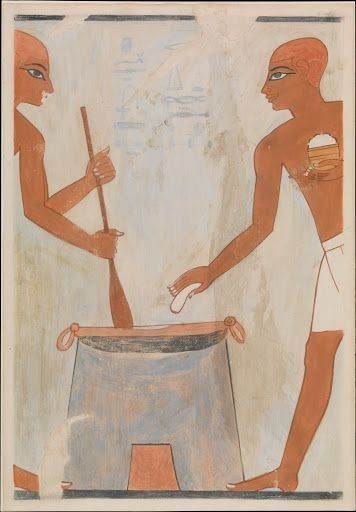
Baking and brewing required controlled processes and specialized equipment. Bread and beer were fundamental parts of the Egyptian diet.

Tools for cutting, drilling, polishing, and shaping stone and wood were essential to construction and craftsmanship.

Egyptians also used locks and keys to protect certain buildings and containers, demonstrating practical knowledge of mechanical security.

Many of these inventions were not spectacular machines. Instead, they were simple technologies developed and refined through repeated use.

This practical approach was one of the greatest strengths of Egyptian innovation.

By improving everyday tools and processes, Egyptians made agriculture, craftsmanship, household activities, and administration more efficient.

These technologies demonstrate that innovation in Ancient Egypt was not limited to pyramids and temples. It was also present in the ordinary objects and techniques that supported everyday life.

8. Ancient Egyptian Transportation and Boat Technology

Transportation technology was essential to Ancient Egypt innovation and science because the Nile connected communities, agricultural regions, cities, temples, and trading centers.

The Nile was Egypt’s main transportation route. Boats could carry people, animals, food, stone, timber, and other goods much more efficiently than land transport.

Egyptians became highly skilled boatbuilders. Early boats were constructed from bundles of papyrus, while later vessels were increasingly made from wood.

Wooden boats could be built in different sizes depending on their purpose. Small vessels were suitable for fishing and local transportation, while large ships could carry heavy cargo over long distances.

The Nile current allowed boats to travel southward, while prevailing winds often helped vessels travel northward under sail.

The development of the sail greatly improved transportation efficiency. Egyptian sailors could use wind power to travel against the river’s current when conditions were favorable.

Boats were also used during major construction projects. Heavy stone blocks could be transported by river from quarries to construction sites.

Large ceremonial and royal vessels were built for the pharaoh and religious purposes.

The discovery of the Khufu ship provides remarkable evidence of ancient Egyptian boatbuilding. The reconstructed vessel demonstrates sophisticated woodworking and construction techniques.

Egyptians also used donkeys and other animals for land transportation. Pack animals were particularly useful in desert regions where waterways were unavailable.

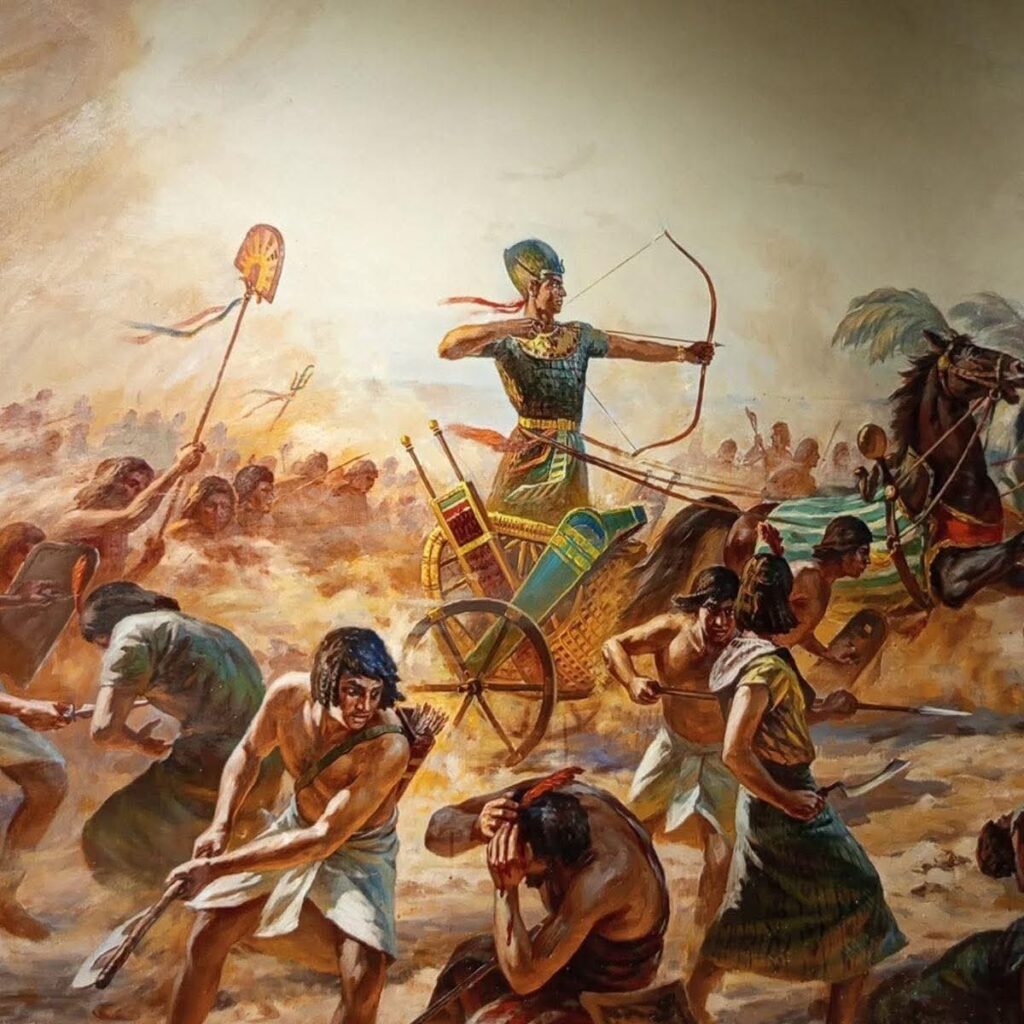
During the New Kingdom, horse-drawn chariots became important military transportation.

Roads and desert routes were also supported by wells and way stations, allowing travelers and military expeditions to cross difficult terrain.

Transportation was therefore closely connected with trade, agriculture, construction, warfare, and administration.

The ability to move people and materials efficiently helped Egypt maintain a centralized civilization across a long and narrow river valley.

Egyptian boat technology was especially important because the Nile was more than a source of water. It was a natural transportation network that shaped the development of Egyptian civilization.

9. Ancient Egyptian Chemistry, Materials, and Manufacturing

The production of materials and manufactured goods represents another important area of Ancient Egypt innovation and science. Egyptian craftsmen developed practical knowledge of minerals, metals, pigments, glass, ceramics, and other substances.

Egyptians worked with copper, bronze, gold, silver, and other metals. Metalworkers developed techniques for heating, casting, hammering, shaping, and decorating these materials.

Copper was particularly important for tools and weapons during earlier periods. Bronze became increasingly significant after Egyptians adopted technologies associated with bronze production.

Gold was abundant in parts of Egypt and Nubia and was highly valued for jewelry, religious objects, royal equipment, and funerary items.

Egyptian craftsmen also produced colored pigments for paintings and decoration. Mineral-based pigments could create red, yellow, blue, green, black, and white colors.

The famous Egyptian blue was an early synthetic pigment produced through a controlled combination of materials and heating.

Glass production also developed in Egypt, particularly during the New Kingdom. Craftsmen could create beads, vessels, decorative objects, and other items using colored glass.

Pottery was another major industry. Egyptian potters shaped clay into vessels for storing water, food, oils, and other products.

Textile production required knowledge of plant fibers, spinning, weaving, and dyeing. Linen made from flax became one of Egypt’s most important materials.

Perfume and cosmetic production involved combining oils, resins, flowers, minerals, and other substances.

Embalming also required extensive practical knowledge of materials and preservation techniques. Egyptians used oils, resins, natron, and other substances during mummification.

These processes demonstrate that Egyptian craftsmen understood how materials changed when heated, mixed, dried, or chemically treated, even though they did not possess modern chemistry.

Knowledge was largely practical and passed through professional traditions.

Manufacturing therefore depended on skilled workers who understood materials through years of experience.

Ancient Egyptian material technology demonstrates that scientific innovation can develop through observation and experimentation even without modern scientific theories or laboratory equipment.

10. Ancient Egyptian Architecture, Medicine, and Scientific Knowledge

Architecture and medicine demonstrate how different areas of Ancient Egypt innovation and science could work together. Egyptian specialists developed practical knowledge that allowed them to construct enormous monuments while also treating injuries and illnesses.

Architects relied on mathematics, surveying, geometry, materials science, and careful planning. The construction of pyramids, temples, tombs, and obelisks required thousands of workers and enormous quantities of stone.

Surveyors used measuring instruments to establish boundaries and align structures. Builders needed to create stable foundations and maintain accurate proportions throughout large construction projects.

Egyptian architectural knowledge was passed from experienced craftsmen and supervisors to younger workers. Practical experience was essential because many construction techniques could not be fully explained through written instructions.

Medicine developed in a similarly practical environment. Physicians observed symptoms, examined injuries, and applied treatments based on accumulated experience.

Medical papyri demonstrate that Egyptian healers recorded individual cases and organized treatments for different conditions.

Some treatments involved plant products, minerals, oils, honey, and animal-derived substances. Egyptian physicians also treated wounds, fractures, burns, and other injuries.

Surgical knowledge appears particularly clearly in the Edwin Smith Papyrus, which presents cases involving physical trauma and describes methods of examination and treatment.

Egyptian medical practitioners did not separate physical and spiritual explanations in the same way modern medicine does. Treatments could combine practical remedies with prayers or magical formulas.

Scientific knowledge was therefore closely connected with religion, professional traditions, and practical observation.

Astronomy, mathematics, medicine, architecture, and agriculture were not always treated as completely separate disciplines. Knowledge from one field could support another.

For example, mathematical skills helped both surveyors and administrators, while astronomical observations supported calendars and agricultural planning.

The success of Egyptian civilization depended on specialists who could apply knowledge to real-world problems.

The combination of observation, experimentation, practical training, and accumulated experience created a strong foundation for Egyptian scientific and technological development.

Although Ancient Egyptian science differed greatly from modern science, its surviving evidence demonstrates a sophisticated understanding of many practical problems.

11. Innovation in Agriculture, Food, and Daily Life

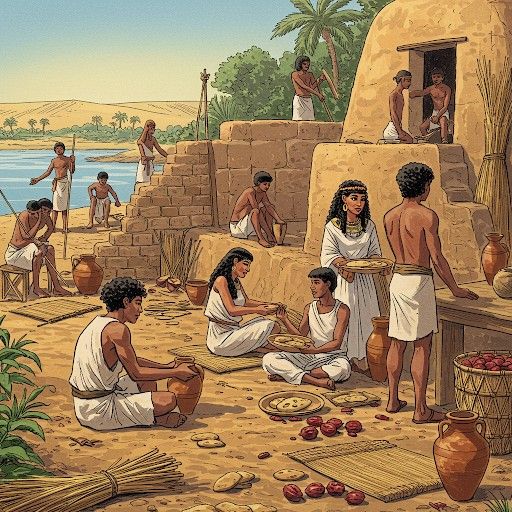
Some of the most important examples of Ancient Egypt innovation and science appeared in ordinary daily activities. Egyptians developed practical methods that improved farming, food production, storage, clothing, hygiene, and household life.

Agriculture depended on careful observation of the Nile. Farmers learned to organize planting and harvesting according to seasonal conditions and the availability of water.

Irrigation systems allowed water to be distributed across agricultural land. Tools such as the shaduf later made it easier to raise water to higher levels.

Food preservation was another important innovation. Egyptians dried fruits, vegetables, fish, and meat to extend their usefulness.

Salt and other preservation techniques helped prevent food from spoiling.

Grain was stored in large granaries. Effective storage was essential because grain was the foundation of bread and beer production and also served as an important form of wealth and taxation.

Egyptians developed sophisticated methods of breadmaking and brewing. Beer was produced from fermented grain and became an important part of everyday life.

Linen production was another major industry. Flax plants were processed into fibers and woven into lightweight fabrics suitable for Egypt’s hot climate.

Egyptians also developed extensive knowledge of cosmetics and personal hygiene. Oils and perfumes helped protect the skin from the dry environment, while eye cosmetics were widely used.

Soap-like cleansing materials and scented oils were also used in personal care.

Furniture technology produced practical and decorative objects such as beds, chairs, boxes, and chests.

Household pottery provided containers for water, grain, oils, and food.

Even lighting involved technological solutions. Egyptians used oil lamps and other forms of artificial lighting to illuminate indoor spaces.

These innovations may appear simple compared with monumental architecture, but they had an enormous effect on everyday life.

The history of technology is not only about spectacular inventions. It also involves thousands of small improvements that make food production, clothing, transportation, health, and household activities easier.

Ancient Egyptians demonstrated remarkable creativity in solving these practical challenges.

12. The Legacy of Ancient Egypt Innovation and Science

The legacy of Ancient Egypt innovation and science remains visible in archaeology, architecture, medicine, mathematics, agriculture, and technology.

Egyptian mathematicians developed practical methods for calculations, fractions, measurements, and geometry. These skills supported taxation, surveying, agriculture, and construction.

Egyptian physicians recorded medical observations and treatments in papyri, creating some of the world’s earliest surviving medical documents.

Astronomical observations helped Egyptians develop calendars and understand seasonal cycles.

Engineers and architects developed techniques that allowed enormous stone monuments to be planned and constructed with remarkable precision.

Agricultural innovations helped Egyptians manage the Nile flood and produce enough food to support a large population and complex institutions.

Boatbuilding and transportation technologies connected distant communities and allowed heavy materials to move along the Nile.

Craftsmen developed sophisticated methods for working with metals, glass, pigments, ceramics, textiles, and other materials.

Writing and papyrus created an information system that allowed knowledge to be recorded and transmitted over generations.

Many Egyptian innovations were not completely unique to Egypt, and some technologies were adopted or developed through contact with neighboring civilizations. Ancient innovation was often a process of exchange, adaptation, and improvement.

The importance of Egyptian achievements lies not only in individual inventions but also in the way Egyptians combined different types of knowledge.

Mathematics supported architecture. Astronomy supported calendars and agriculture. Writing preserved medicine and administration. Engineering supported irrigation and monumental construction.

This interconnected system of knowledge helped Egyptian civilization survive and adapt for thousands of years.

Today, researchers continue to study Egyptian artifacts, papyri, monuments, tools, and archaeological sites to understand how these technologies worked.

The legacy of Ancient Egypt innovation and science is therefore a testament to human curiosity, practical intelligence, observation, and creativity.

Frequently Asked Questions

Important achievements included mathematics, medicine, astronomy, engineering, surveying, agriculture, and materials technology.

Yes. Egyptians used arithmetic, fractions, geometry, measurements, and calculations for taxation, agriculture, construction, and administration.


Egyptian physicians recorded medical cases and treatments involving wounds, fractures, burns, diseases, and other conditions. Medical papyri provide evidence of organized medical knowledge.


The Nile created the need for irrigation, land surveying, agricultural planning, transportation, water management, and accurate calendars, encouraging the development of many practical technologies.

The pyramids, especially the Great Pyramid at Giza, are among the most famous examples. Their construction required sophisticated planning, surveying, transportation, mathematics, and workforce organization.