
Welcome to

Ancient Egypt Knowledge and Learning

Ancient Egypt was one of the world’s earliest centers of knowledge, education, and intellectual achievement. For more than three thousand years, the ancient Egyptians developed sophisticated systems of writing, mathematics, medicine, astronomy, engineering, and administration that helped sustain one of history’s most successful civilizations. Knowledge and learning played a vital role in Egyptian society, enabling the construction of monumental temples and pyramids, the management of a vast kingdom, and the preservation of cultural and religious traditions for future generations.

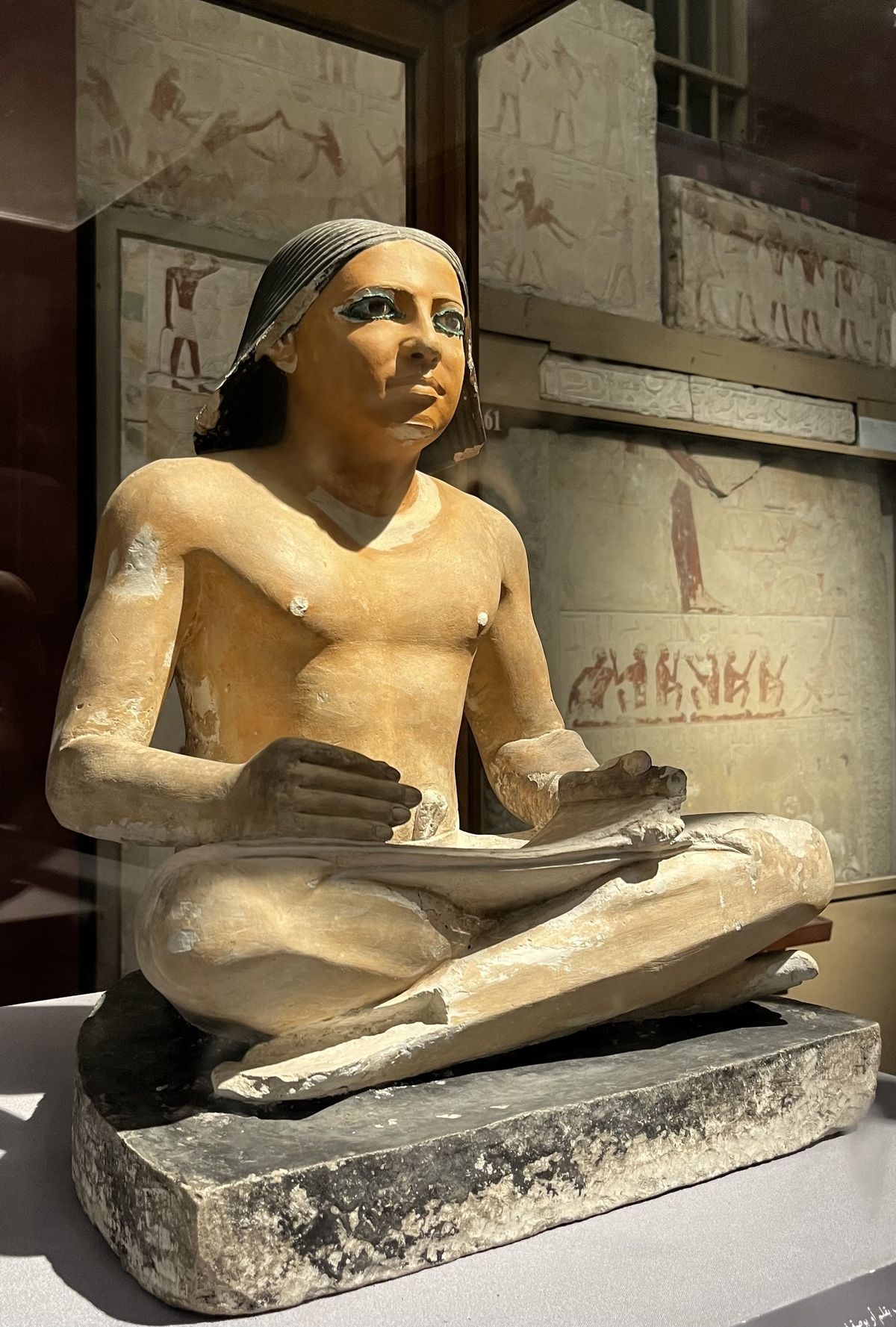
Education in Ancient Egypt was closely connected to the work of scribes, who were among the most respected members of society. Through specialized schools and training programs, students learned reading, writing, mathematics, record-keeping, and administrative skills. Mastery of hieroglyphics and hieratic script allowed scribes to document laws, religious texts, royal decrees, trade transactions, and historical events. Their work ensured that valuable knowledge was preserved on papyrus scrolls, temple walls, monuments, and tomb inscriptions.

Ancient Egyptian learning extended far beyond literacy. Egyptian scholars made important contributions to medicine, anatomy, surgery, astronomy, agriculture, engineering, and mathematics. Medical papyri such as the Ebers Papyrus and Edwin Smith Papyrus demonstrate advanced knowledge of diagnosis and treatment, while astronomical observations helped create calendars that regulated agriculture, religious festivals, and government activities. These achievements contributed to Egypt’s prosperity and influenced later civilizations throughout the Mediterranean world.

The pursuit of knowledge was also deeply connected to religion and wisdom. Gods such as Thoth, the deity of wisdom, writing, and learning, were revered as guardians of knowledge and intellectual achievement. Temples often served as centers of education, scholarship, and record preservation, helping maintain the cultural and scientific heritage of Ancient Egypt across generations.

In this guide, we explore the fascinating world of Ancient Egyptian knowledge and learning, examining education, scribes, writing systems, scientific discoveries, medical advancements, mathematics, astronomy, and the intellectual traditions that helped make Ancient Egypt one of the greatest civilizations in human history.

1. Ancient Egyptian Education and the Training of Scribes

Education in Ancient Egypt was closely connected with the needs of government, religion, administration, and professional life. One of the most important forms of education was the training of scribes, who were responsible for reading, writing, calculating, and maintaining the records needed to operate Egyptian society. Because writing was a specialized skill, scribes occupied an important position within the Egyptian social structure.

Young students who entered scribal education learned how to write Egyptian scripts and memorize important texts. Their training often involved copying passages repeatedly until they developed accuracy and fluency. Students also practiced mathematical problems and administrative exercises that prepared them for professional responsibilities.

The ability to read and write was particularly valuable because Egyptian government depended on written records. Scribes recorded agricultural production, taxes, land ownership, workers’ rations, legal agreements, trade transactions, and religious activities.

Papyrus was an important writing material, although students could also practice on pottery fragments known as ostraca, wooden boards, or other surfaces. These materials provide archaeologists with evidence of educational exercises and everyday writing.

Scribal education also included moral instruction. Wisdom texts taught students how to behave respectfully, control their speech, obey appropriate authority, and perform their responsibilities carefully. Education therefore combined practical skills with ideas about proper behavior.

Not everyone in Ancient Egypt received the same educational opportunities. Formal literacy was concentrated among particular social groups, especially scribes, priests, officials, and members of elite families. Most farmers and laborers did not require extensive formal schooling for their occupations.

Professional knowledge was also transmitted through apprenticeships. Craftsmen trained younger workers in skills such as stone carving, woodworking, pottery production, metalworking, jewelry making, and textile production.

Religious institutions provided another important environment for learning. Priests needed specialized knowledge of rituals, sacred texts, calendars, temple traditions, and religious ceremonies.

Education could therefore lead to different careers within Egyptian administration and society. A trained scribe might become a government official, accountant, administrator, priest, or other specialist.

The Egyptian educational system demonstrates that Ancient Egyptian learning was strongly connected with practical needs. Reading, writing, mathematics, professional training, and moral education helped prepare individuals to perform specific roles.

Through scribal schools, apprenticeships, temples, and professional institutions, Egyptians developed methods for transmitting knowledge across generations. This tradition of organized learning became an essential part of the Ancient Egyptian knowledge system and helped preserve Egyptian culture for thousands of years.
2. Ancient Egyptian Writing and the Preservation of Knowledge

The development of writing in Ancient Egypt was one of the most important foundations of Egyptian knowledge and learning. Writing allowed Egyptians to record information that could be preserved, copied, transported, and passed to future generations. Without written records, much of what is known about Egyptian civilization would have disappeared.

The most famous Egyptian writing system was hieroglyphic writing. Hieroglyphs consisted of symbols representing sounds, words, and ideas. They were commonly used on temples, tombs, monuments, statues, coffins, and other important objects.

For everyday administration, Egyptians developed more practical scripts. Hieratic was a simplified form of Egyptian writing that was widely used by scribes for administrative, religious, and literary documents. Later, Demotic became an important script for everyday and official purposes.

Writing was used for many different subjects. Government scribes recorded taxes, land, workers, agricultural production, and official decisions. Merchants and administrators recorded economic transactions, while priests preserved religious texts and rituals.

Egyptian scholars also used writing to preserve medical knowledge. Medical papyri contain descriptions of injuries, symptoms, treatments, medicines, and procedures.

Mathematical documents recorded calculations involving numbers, fractions, geometry, and practical problems. These texts demonstrate that Egyptian knowledge was not limited to religion or government.

Literature was another important part of written culture. Egyptians produced stories, hymns, poems, wisdom texts, autobiographical inscriptions, and religious compositions.

Papyrus played an important role in this tradition. It provided a relatively lightweight surface that could be written on and stored in rolls. Egyptians also wrote on stone, pottery fragments, wood, leather, and other materials.

Temples and administrative institutions helped preserve written traditions. Scribes could copy older texts, allowing knowledge to survive for generations.

The discovery of the Rosetta Stone was especially important for modern scholarship. Its multilingual inscription helped scholars decipher Egyptian hieroglyphs and gain access to thousands of previously unreadable texts.

Today, Egyptian inscriptions and papyri are among the most valuable sources for studying ancient history. They reveal information about government, religion, science, medicine, economics, education, literature, and daily life.

The legacy of Egyptian writing demonstrates the importance of knowledge preservation in Ancient Egypt. By recording information in written form, Egyptians created a lasting intellectual record that continues to educate historians and researchers more than three thousand years later.
3. Ancient Egyptian Mathematics and Practical Knowledge

Ancient Egyptian mathematics was an important part of Egyptian knowledge and learning. Egyptians developed practical mathematical techniques that were used in agriculture, construction, taxation, trade, administration, and land surveying. Their mathematical knowledge allowed them to solve everyday problems and organize large-scale projects.

The Nile played an important role in the development of Egyptian mathematics. The annual flood could alter agricultural boundaries, so officials needed to measure land and determine property areas. Surveyors used mathematical methods to calculate the size and shape of fields.

Mathematics was also essential for building pyramids, temples, tombs, and other monuments. Architects and builders needed to calculate distances, angles, dimensions, quantities of materials, and proportions.

Egyptians used a decimal numerical system. They had symbols representing different powers of ten and developed practical methods for performing calculations.

Fractions were particularly important. Egyptian scribes developed ways to represent and calculate with fractions, especially unit fractions. These techniques were used in administrative and mathematical problems.

The Rhind Mathematical Papyrus is one of the most important surviving sources for understanding Egyptian mathematics. It contains numerous problems involving arithmetic, fractions, geometry, proportions, and practical calculations.

Another important source is the Moscow Mathematical Papyrus, which contains mathematical problems related to geometry and volume.

Mathematics was also necessary for taxation. Government officials needed to calculate agricultural production, determine payments, distribute resources, and manage food storage.

Trade required accurate measurement as well. Goods such as grain, metals, textiles, and other commodities had to be measured and recorded.

Mathematical knowledge was passed through scribal education. Students practiced calculations and copied examples as part of their training.

Egyptian mathematics was primarily practical rather than theoretical. Its purpose was to solve real problems faced by administrators, builders, farmers, merchants, and government officials.

The knowledge demonstrated in Egyptian mathematical texts also shows the relationship between education and administration. A well-trained scribe could use mathematics to perform essential government and economic tasks.

Although Ancient Egyptian mathematical methods were different from modern mathematical systems, they represent a significant stage in the history of numerical reasoning.

The legacy of Ancient Egyptian mathematics can therefore be seen in the sophisticated organization of agriculture, construction, taxation, surveying, trade, and administration. It demonstrates how Egyptians transformed practical experience into organized knowledge that could be taught and preserved across generations.
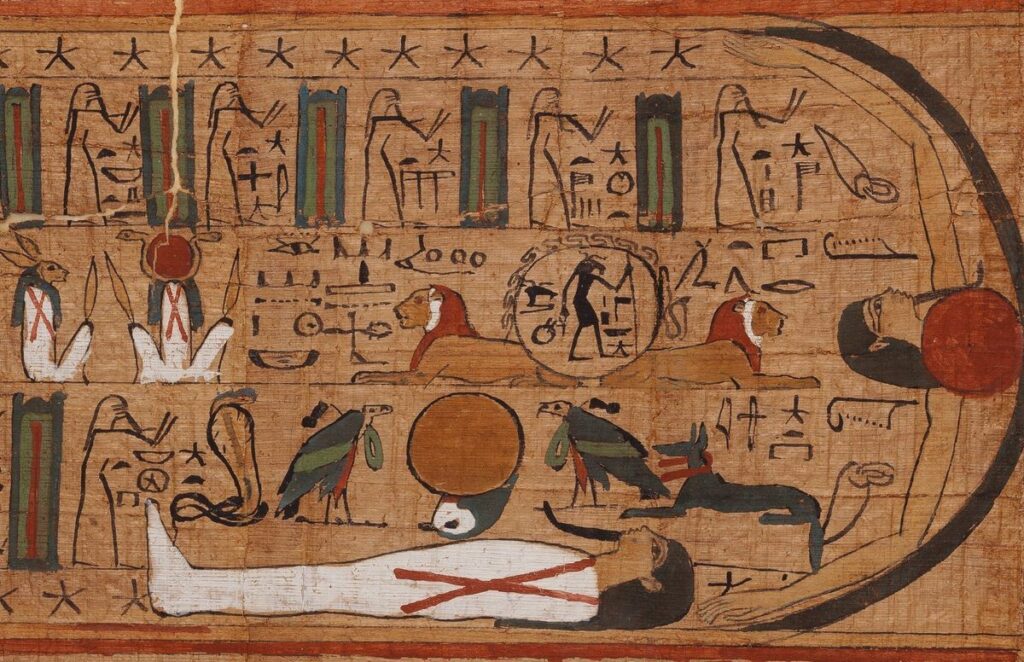
4. Ancient Egyptian Medical Knowledge and Healing

Ancient Egyptian medical knowledge was one of the most developed areas of learning in the ancient world. Egyptian healers combined practical observation, experience, medicines, and religious beliefs to treat illnesses and injuries. Medical knowledge was preserved in written documents, allowing treatments and observations to be transmitted from one generation to another.

Several Ancient Egyptian medical papyri have survived and provide valuable information about Egyptian healthcare. Among the most important are the Ebers Papyrus, the Edwin Smith Papyrus, the Kahun Medical Papyrus, and the London Medical Papyrus.

The Edwin Smith Papyrus is especially important for its descriptions of physical injuries. It presents cases involving wounds, fractures, and other trauma and often describes examination, diagnosis, and treatment. Its structured approach demonstrates the importance of observation in Egyptian medicine.

The Ebers Papyrus contains information about numerous medical conditions and remedies. Egyptian healers used substances derived from plants, minerals, and animals to prepare medicines.

Egyptians also had knowledge of surgery and wound treatment. Medical texts describe methods for cleaning wounds, applying dressings, treating burns, and managing certain injuries.

Mummification contributed indirectly to Egyptian anatomical knowledge. Embalmers worked with human bodies and developed practical familiarity with organs and physical structures, although Egyptian anatomical understanding did not correspond exactly to modern medical science.

Egyptian medicine combined practical treatment with religious practices. Healers could use prayers, spells, amulets, and ritual practices alongside physical remedies. Egyptians did not necessarily see these approaches as contradictory.

Medical knowledge was connected with professional education. Experienced healers could pass techniques to younger practitioners, while written medical texts provided reference material.

The Egyptian approach to medicine demonstrates the importance of observation and accumulated experience. Physicians recorded symptoms and treatments, allowing useful knowledge to be preserved.

Egyptian healthcare also included knowledge of hygiene, nutrition, and wound care. Cleanliness and appropriate treatment were important for preventing complications from injuries and illness.

Although many Egyptian explanations for disease were based on religious or supernatural ideas, their practical medical observations remain valuable to historians of medicine.

The legacy of Ancient Egyptian medicine is therefore an important part of the history of healthcare. Egyptian medical papyri demonstrate that ancient healers carefully observed injuries, developed treatments, recorded medical information, and trained future practitioners.

Through these traditions, Ancient Egypt contributed significantly to the history of medicine, surgery, pharmacology, anatomy, and medical knowledge preservation.

5. Ancient Egyptian Astronomy, Calendars, and Timekeeping

Astronomy and timekeeping were important areas of Ancient Egyptian knowledge. Egyptians carefully observed the sky and developed systems for measuring time, organizing religious ceremonies, and managing agricultural activities. Their astronomical observations were closely connected with the Nile, the seasons, and Egyptian religious traditions.

The annual cycle of the Nile flood was essential to agriculture, so Egyptians needed to understand seasonal changes. They developed calendars that helped organize agricultural, administrative, and religious activities.

One of the most important astronomical observations involved Sirius, known to the Egyptians as Sopdet. Its annual appearance before sunrise became associated with the beginning of the Nile’s flooding cycle.

Ancient Egyptians developed a 365-day civil calendar consisting of twelve months of thirty days each, followed by five additional days. This calendar was useful for administration and organizing the year.

Egyptian priests and astronomers also observed the movements of the sun, moon, and stars. The night sky played an important role in religious beliefs and funerary traditions.

Stars were used to help measure nighttime hours. Egyptian astronomers identified groups of stars known as decans, which could be used in systems of nighttime timekeeping.

Sundials and shadow clocks provided methods for measuring daytime hours. Water clocks were another important invention for measuring time, particularly during nighttime or when precise timing was required.

Astronomical knowledge also influenced architecture. Some Egyptian temples and monuments were carefully oriented according to solar or celestial considerations.

The study of the sky was connected with religion. The sun god Ra was one of the most important deities, and the daily journey of the sun across the sky became an important religious concept.

Astronomy was also useful for navigation and determining directions. Travelers and sailors could use knowledge of the landscape and sky to assist their journeys.

Egyptian calendars helped coordinate religious festivals, agricultural activities, taxation, and government administration. Accurate timekeeping was therefore an essential part of organized Egyptian society.

Although Ancient Egyptian astronomy was different from modern astronomy, Egyptian observations were systematic and valuable for their practical purposes.

The legacy of Ancient Egyptian astronomy and timekeeping demonstrates how observation of the natural world could be transformed into useful systems for agriculture, religion, administration, and daily life.

Through calendars, star observations, sundials, water clocks, and astronomical traditions, Egyptians developed a sophisticated understanding of time, seasons, and the celestial environment.

6. Ancient Egyptian Knowledge of Agriculture and the Natural World

Agriculture was the foundation of Ancient Egyptian civilization, and successful farming required extensive knowledge of the Nile, soil, seasons, plants, animals, and weather patterns. Egyptian farmers and administrators developed practical knowledge that allowed them to produce food and support one of the ancient world’s largest centralized societies.

The annual Nile flood was central to Egyptian agriculture. When the river overflowed, it deposited nutrient-rich sediment on surrounding fields. Farmers learned to organize planting and harvesting according to the changing agricultural cycle.

Egyptians divided their agricultural year into three major seasons: Akhet, the season of inundation; Peret, the growing season; and Shemu, the harvest season.

Farmers cultivated important crops such as wheat and barley. They also grew vegetables, fruits, flax, and other plants used for food, clothing, medicine, and industry.

Egyptians developed irrigation techniques to make better use of Nile water. Basins, canals, and other water-management systems helped distribute water to agricultural land.

Agricultural knowledge was not limited to farmers. Government officials needed detailed information about land, crops, harvests, and taxation. Scribes recorded agricultural production and helped manage grain storage.

Animal husbandry was another important part of Egyptian knowledge. Egyptians raised cattle, sheep, goats, pigs, donkeys, and poultry. Animals provided food, transportation, labor, leather, milk, and other resources.

Egyptians also developed extensive knowledge of plants. Plants were used for food, medicine, religious ceremonies, perfumes, textiles, and construction.

The natural environment influenced Egyptian religious beliefs as well. The annual renewal of the Nile and agricultural cycle were associated with ideas of fertility, life, death, and rebirth.

Egyptian artists recorded agricultural activities in tomb paintings. These scenes show people plowing fields, sowing seeds, harvesting grain, herding animals, and processing crops.

Agricultural knowledge was passed through experience and practical training. Children often learned farming skills from family members and communities rather than through formal schools.

The success of Egyptian agriculture supported the development of cities, temples, armies, crafts, and government institutions. Food surpluses allowed specialists such as scribes, priests, artisans, and administrators to devote themselves to other activities.

The legacy of Ancient Egyptian agricultural knowledge demonstrates how closely human society was connected with the natural environment. By understanding the Nile and organizing farming around its cycles, Egyptians created a stable food-producing system that supported their civilization for thousands of years.

This knowledge remains important for understanding Ancient Egyptian science, agriculture, environmental management, economy, and daily life.

7. Ancient Egyptian Knowledge of Architecture and Engineering

Architecture and engineering were among the most impressive areas of Ancient Egyptian knowledge. The construction of pyramids, temples, tombs, obelisks, canals, and other monumental structures required careful planning, mathematical calculations, skilled craftsmanship, transportation systems, and effective organization of labor.

The pyramids of Giza demonstrate the extraordinary ability of Egyptian builders to manage enormous construction projects. Building these monuments required quarrying large quantities of stone, transporting heavy blocks, preparing foundations, and positioning materials accurately.

Egyptian architects relied on measurement and surveying to establish dimensions and maintain proportions. Mathematical knowledge was therefore closely connected with architectural practice.

Stone was obtained from different parts of Egypt. Limestone was widely used in the construction of pyramids and temples, while granite from the Aswan region was used for columns, statues, sarcophagi, and obelisks.

Transporting stone required sophisticated logistical planning. Heavy blocks could be moved using sledges, boats, ropes, and teams of workers. The Nile provided an important transportation route between quarries and construction centers.

Egyptian engineers also developed methods for constructing large columns and monumental gateways. Temples such as Karnak, Luxor, and Abu Simbel demonstrate the ability to organize complex architectural spaces.

Obelisks required particularly advanced planning because they were carved from single blocks of stone and transported to their final locations. Their construction demonstrates the combination of quarrying, engineering, transportation, and skilled craftsmanship.

The Egyptians also constructed irrigation canals and water-management systems. These projects required knowledge of the landscape and the movement of water.

Tomb construction developed into a highly specialized field. Workers created underground chambers, corridors, shafts, and decorated rooms while carefully planning the location of each structure.

Knowledge was transmitted through experienced craftsmen and apprentices. Workers learned stone cutting, carving, painting, woodworking, and other skills through practical training.

Egyptian architecture also combined engineering with religious symbolism. The orientation and design of temples, pyramids, and tombs reflected religious beliefs and ideas about the afterlife.

The surviving monuments provide modern researchers with evidence of Egyptian knowledge that is not always preserved in written form. Archaeologists can study construction marks, tools, unfinished monuments, and workers’ settlements to understand ancient techniques.

The legacy of Ancient Egyptian engineering and architecture remains visible today. Pyramids, temples, and monuments continue to demonstrate the importance of mathematics, organization, craftsmanship, and practical knowledge in Egyptian civilization.

8. Ancient Egyptian Literature, Wisdom, and Intellectual Learning

Literature and wisdom teachings formed an important part of Ancient Egyptian knowledge and learning. Egyptians produced stories, poems, hymns, instructions, religious texts, autobiographical writings, and other literary works. These texts provide valuable evidence about Egyptian intellectual life, morality, education, and social values.

One important literary tradition was the wisdom literature, often presented as instructions from an experienced person to a younger individual. These texts provided advice about honesty, humility, self-control, family relationships, leadership, and professional behavior.

The Instruction of Ptahhotep is among the best-known examples. It contains teachings about appropriate conduct and the responsibilities of people within society.

Other works, such as the Instruction of Amenemope, discuss moral behavior, wealth, honesty, and relations with others. Such texts demonstrate the importance of ethical education in Egyptian culture.

Egyptian literature also included narrative stories. The Tale of Sinuhe is one of the most famous examples. It describes the experiences of an Egyptian official who leaves Egypt and eventually returns, providing insights into identity, loyalty, kingship, and Egyptian society.

Religious literature was another major category. Hymns and funerary texts explored the nature of the gods, creation, death, resurrection, and the afterlife.

Egyptian poets and scribes used written language to express religious devotion and praise rulers and deities. Temple inscriptions could combine literary language with religious and political messages.

Education and literature were closely connected. Students training as scribes copied literary texts as part of their education. This helped preserve older works and improve writing skills.

Literature also provided a way to communicate moral knowledge between generations. Parents, teachers, officials, and scribes could use teachings to explain appropriate behavior.

Egyptian texts reveal that intellectual learning was not limited to practical subjects such as mathematics and administration. Egyptians also explored questions about human behavior, leadership, justice, identity, death, and the meaning of life.

Many texts survived on papyrus, stone, pottery fragments, coffins, and temple walls. Their survival allows modern scholars to reconstruct aspects of Egyptian thought that cannot be learned from monuments alone.

The legacy of Ancient Egyptian literature and wisdom is therefore both cultural and intellectual. It preserved stories and ideas while also transmitting moral and social teachings.

Through these texts, modern readers can gain insight into how Egyptians understood human relationships, morality, religion, leadership, education, and the world around them.

9. Ancient Egyptian Knowledge Preservation Through Temples and Libraries

The preservation of knowledge in Ancient Egypt depended on many institutions, especially temples, scribal communities, administrative centers, and royal establishments. These institutions provided places where texts could be created, copied, stored, and studied.

Temples were among the most important centers of knowledge. They were religious institutions, but they also controlled large economic resources and employed priests, scribes, craftsmen, and administrators.

Priests required specialized knowledge of religious rituals, sacred texts, calendars, hymns, ceremonies, and temple traditions. This knowledge had to be carefully preserved and transmitted to new generations.

Scribes working in temples could copy religious texts and administrative documents. By reproducing older manuscripts, they helped preserve traditions over long periods.

Egyptians stored written information on papyrus, stone, wooden boards, pottery fragments, and other materials. Different materials were selected according to the purpose and importance of the document.

Some texts were intended to last for centuries. Religious inscriptions carved into stone walls were designed to preserve royal achievements, prayers, rituals, and religious beliefs.

Administrative records were often more temporary. Documents concerning wages, deliveries, taxation, and daily transactions could be written on papyrus or ostraca.

The ancient Egyptian concept of preserving knowledge was closely connected with the importance of writing. Written words could preserve information beyond the lifetime of the person who created them.

Scribes therefore held an important cultural responsibility. Their work ensured that information about religion, government, medicine, mathematics, literature, and administration could be passed to later generations.

Archaeological discoveries demonstrate that Egyptian knowledge was not stored in one single institution. Instead, information was distributed among temples, government offices, tombs, settlements, and private collections.

The House of Life, associated with some Egyptian temples, is often understood as an institution connected with scribal and intellectual activities. Such centers could be involved in copying and preserving religious and scholarly texts.

Knowledge was also preserved through apprenticeship. Craftsmen passed technical skills from experienced workers to younger generations, ensuring that specialized knowledge continued even when written records were unavailable.

Modern Egyptology depends heavily on this ancient tradition of preservation. Papyri, inscriptions, ostraca, and monumental texts provide researchers with information about Egyptian civilization that would otherwise have been lost.

The legacy of Ancient Egyptian knowledge preservation demonstrates the importance Egyptians placed on recording and transmitting information.

Through temples, scribes, educational traditions, written documents, and monuments, Egyptians created a powerful system for preserving their intellectual and cultural heritage across thousands of years.

Ancient Egypt Scribes Importance

10. Ancient Egyptian Knowledge of Religion, Philosophy, and Morality

Religion was one of the most important areas of Ancient Egyptian knowledge and learning. Egyptians developed complex ideas about creation, the gods, human responsibility, death, the afterlife, and the structure of the universe. These beliefs were taught, recorded, and preserved through temples, religious texts, monuments, and generations of priests and scribes.

Ancient Egyptian religion included many gods and goddesses, such as Ra, Osiris, Isis, Horus, Amun, Hathor, Anubis, and Thoth. Different regions had their own religious traditions, but Egyptian beliefs changed and developed over thousands of years.

The concept of Ma’at was central to Egyptian thought. It represented truth, justice, balance, harmony, and cosmic order. Egyptians believed that individuals and rulers had responsibilities to maintain Ma’at and prevent disorder.

Religious education was particularly important for priests. They needed to learn prayers, hymns, rituals, sacred texts, calendars, and temple procedures. Knowledge of religious traditions was passed from experienced priests to younger generations.

Egyptian philosophical thinking was closely connected with morality. Wisdom texts encouraged people to behave honestly, control anger, respect others, and avoid greed and injustice.

The relationship between morality and the afterlife was especially important. Egyptians believed that a person’s behavior during life could affect their fate after death.

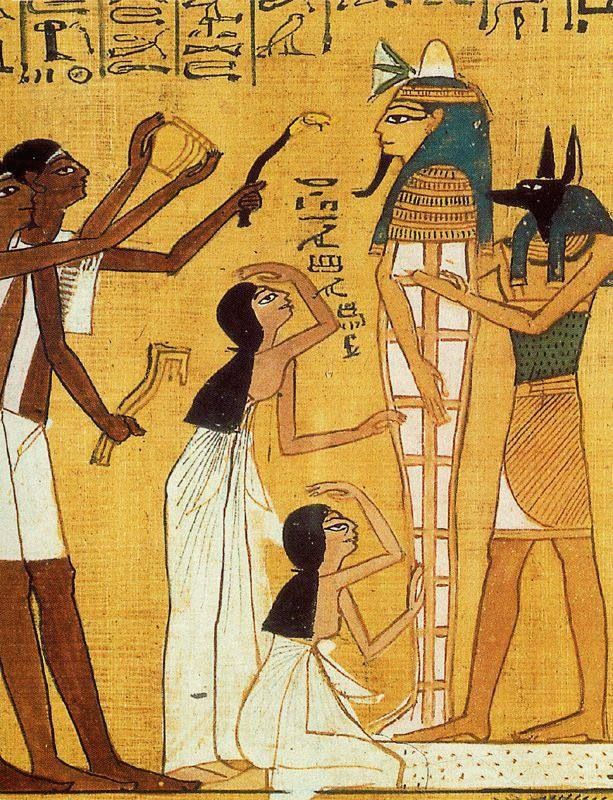
The Weighing of the Heart represented this belief. The heart of the deceased was compared with the feather of Ma’at, symbolizing truth and justice.

Egyptian creation traditions also represented attempts to understand the origins of the universe. Different religious centers developed different creation accounts involving gods such as Atum, Ptah, and Amun.

Religious knowledge influenced Egyptian architecture and art. Temples were designed as sacred spaces, while statues, reliefs, and paintings represented gods and religious stories.

Egyptian priests and scribes preserved religious knowledge through texts such as the Pyramid Texts, Coffin Texts, and Book of the Dead.

These writings provide valuable information about Egyptian concepts of the soul, death, resurrection, divine judgment, and the structure of the cosmos.

The legacy of Egyptian religious and moral learning extends beyond ancient history. Ideas about justice, balance, death, resurrection, divine judgment, and cosmic order continue to attract scholars and influence modern representations of Ancient Egypt.

Thus, Ancient Egyptian religious knowledge was not simply a collection of myths. It formed a broader intellectual system that helped Egyptians understand the universe, human behavior, morality, society, life, and death.

11. Ancient Egyptian Learning in Crafts, Professions, and Apprenticeships

Not all Ancient Egyptian knowledge was preserved in books or papyri. A large amount of practical knowledge was transmitted through apprenticeships and professional training. Craftsmen, builders, farmers, physicians, sailors, soldiers, and other specialists learned their skills through observation, practice, and instruction.

Craftsmanship was highly developed in Ancient Egypt. Skilled workers produced stone monuments, statues, pottery, jewelry, furniture, weapons, tools, textiles, and religious objects.

Young craftsmen generally learned from experienced workers. An apprentice could spend years observing techniques and practicing under the supervision of a skilled master.

Stoneworking required specialized knowledge. Workers needed to understand different types of stone, appropriate tools, carving techniques, surface preparation, and transportation methods.

Woodworkers learned how to select and prepare wood, construct furniture, create doors and boats, and decorate objects.

Metalworkers developed techniques for working with copper, bronze, gold, and other materials. Jewelry making required knowledge of shaping, polishing, engraving, and combining precious materials.

Potters learned how to prepare clay, shape vessels, control firing, and decorate finished products.

Textile production required knowledge of growing and processing flax, spinning fibers, weaving cloth, and creating different types of garments.

Painting and decoration required knowledge of pigments, surfaces, artistic conventions, and religious symbolism. Workers who decorated tombs and temples needed to follow established traditions carefully.

Professional knowledge was also important in shipbuilding and navigation. Boat builders needed to understand materials, construction methods, balance, and river conditions.

Farmers passed agricultural knowledge through families and communities. Children learned when to plant and harvest crops, how to manage animals, and how to use agricultural tools.

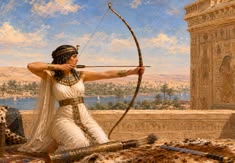
Military training also depended heavily on practical instruction. Soldiers learned weapons handling, archery, chariot operation, marching, and battlefield organization.

Medical practitioners developed their knowledge through experience and teaching. Written medical texts could supplement practical training.

This system of apprenticeship ensured that important technical knowledge survived even when it was not written down.

The legacy of Ancient Egyptian professional learning demonstrates that education existed in many forms. Formal scribal education represented only one part of Egyptian learning; practical knowledge was equally important for maintaining the economy and producing the civilization’s remarkable monuments.

Through apprenticeships, observation, repetition, and hands-on practice, Egyptians transmitted specialized skills from one generation to another.

This tradition helped preserve Egyptian craftsmanship and contributed to the extraordinary quality of Egyptian architecture, art, technology, agriculture, and manufacturing.

12. The Legacy of Ancient Egyptian Knowledge and Learning

The knowledge and learning of Ancient Egypt created one of the most impressive intellectual legacies of the ancient world. Egyptian achievements in writing, education, mathematics, medicine, astronomy, agriculture, architecture, religion, literature, and craftsmanship demonstrate how knowledge was developed and preserved across thousands of years.

The Egyptian system of scribal education created specialists capable of reading, writing, calculating, and managing complex administrative responsibilities. Scribes preserved important information in documents that continue to provide evidence about Egyptian society.

Writing allowed knowledge to survive beyond individual lifetimes. Hieroglyphic inscriptions, papyri, ostraca, and other documents recorded government activities, religious beliefs, medical treatments, mathematical problems, literature, and economic transactions.

Egyptian mathematical knowledge supported construction, land surveying, taxation, trade, and administration. Medical knowledge provided practical approaches to injuries, illnesses, medicines, and treatments.

Astronomical observations helped Egyptians develop calendars and systems of timekeeping. Agricultural knowledge allowed communities to organize their lives around the annual Nile cycle.

Architectural and engineering knowledge produced pyramids, temples, tombs, obelisks, canals, and other structures that remain important evidence of Egyptian technical ability.

Knowledge was not limited to written education. Apprenticeships allowed craftsmen, farmers, builders, physicians, and other specialists to transmit practical skills through generations.

Religion and moral education also formed an important part of Egyptian learning. Concepts such as Ma’at taught ideas about truth, justice, balance, responsibility, and proper behavior.

Egyptian literature preserved stories, hymns, wisdom teachings, and religious traditions. These works allow modern researchers to explore Egyptian ideas about human relationships, morality, leadership, and the afterlife.

The preservation of knowledge through temples, scribes, monuments, and professional traditions helped Egyptian culture remain remarkably continuous despite political changes and foreign influences.

Today, modern Egyptology depends heavily on the surviving Egyptian intellectual record. Archaeologists and historians study texts, monuments, tools, artwork, and settlements to reconstruct how Egyptians learned and applied knowledge.

The legacy of Ancient Egyptian learning is therefore not limited to individual discoveries. Its greatest achievement may have been the creation of a culture that valued recording, teaching, practicing, and preserving knowledge.

Ancient Egypt demonstrates that the development of civilization depended not only on natural resources and political power but also on the ability to learn from previous generations and transmit knowledge to the next.

For this reason, Ancient Egyptian knowledge and learning remain an essential part of the history of education, science, technology, literature, medicine, mathematics, and human civilization.

Frequently Asked Questions

Ancient Egyptians preserved knowledge through hieroglyphic inscriptions, papyrus documents, temple records, tombs, ostraca, and oral traditions. Scribes copied important texts so information could be passed from one generation to another.


Formal education was mainly available to scribes, priests, officials, and members of elite families. Most children learned practical skills from their families or through apprenticeships in farming, crafts, and other occupations.


Students, especially those training as scribes, learned reading, writing, mathematics, administration, and moral teachings. Specialized learners could also study religion, medicine, astronomy, and professional skills.


Egyptians developed important practical knowledge in medicine, mathematics, astronomy, agriculture, engineering, and timekeeping. They used this knowledge for treating injuries, measuring land, building monuments, organizing calendars, and managing agriculture.


Ancient Egyptian knowledge provides valuable information about one of the world’s longest-lasting civilizations. Papyri, inscriptions, monuments, tools, and archaeological discoveries allow modern researchers to study Egyptian science, education, medicine, religion, technology, and everyday life.