
1. Ancient Egypt and the Development of Writing
One of the greatest contributions of Ancient Egypt to civilization was the development and long-term use of writing. Egyptian writing allowed people to preserve religious beliefs, government records, economic transactions, scientific observations, literature, and historical information. The Egyptian writing system became one of the most important tools for preserving knowledge across thousands of years.
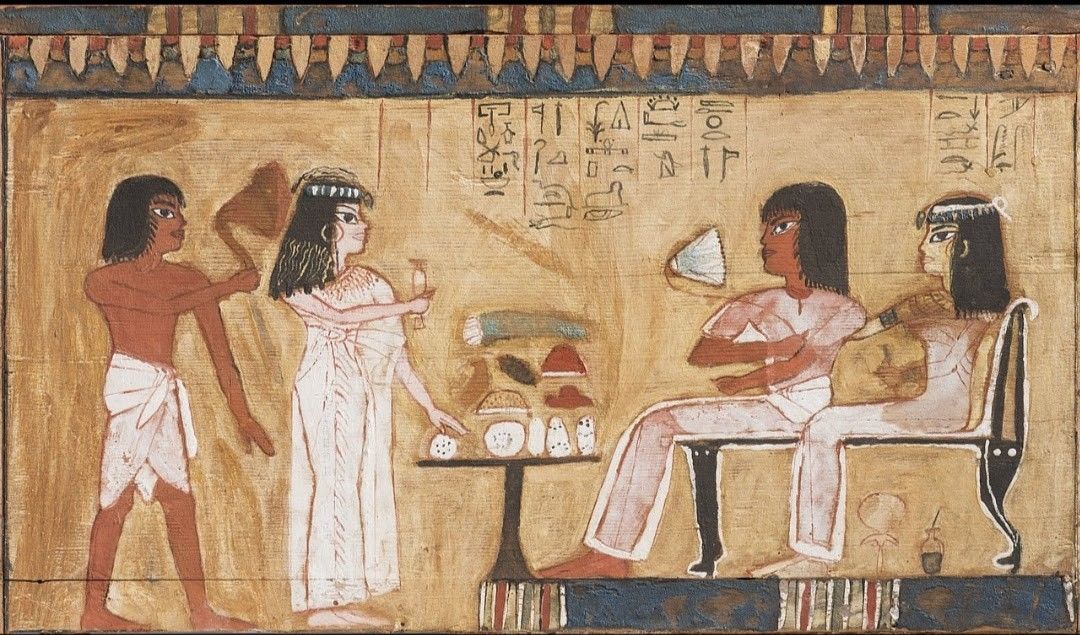
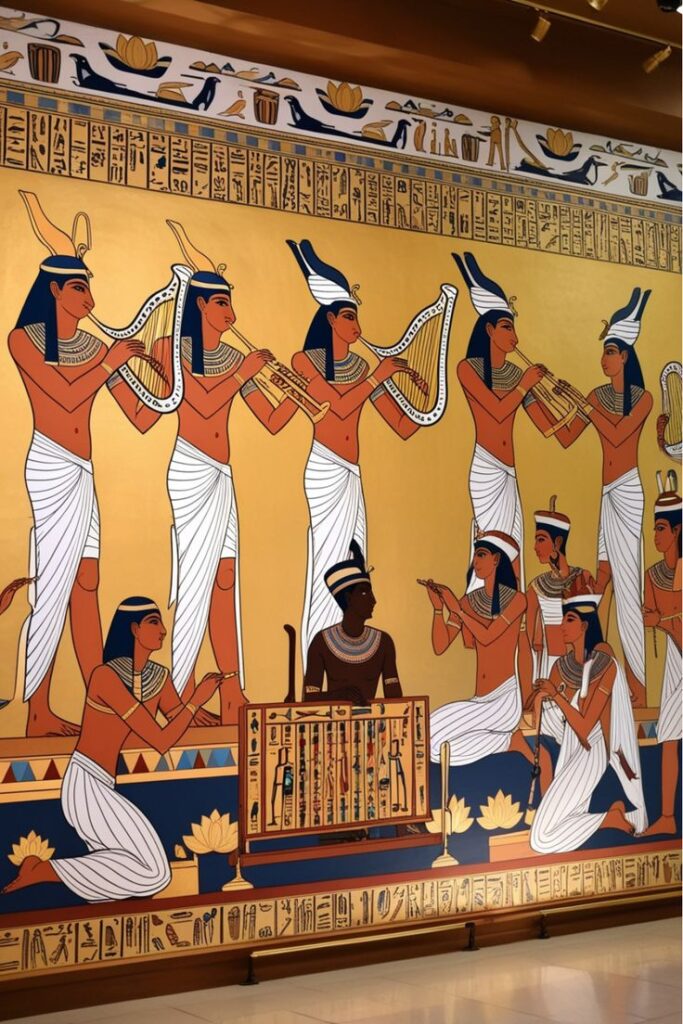
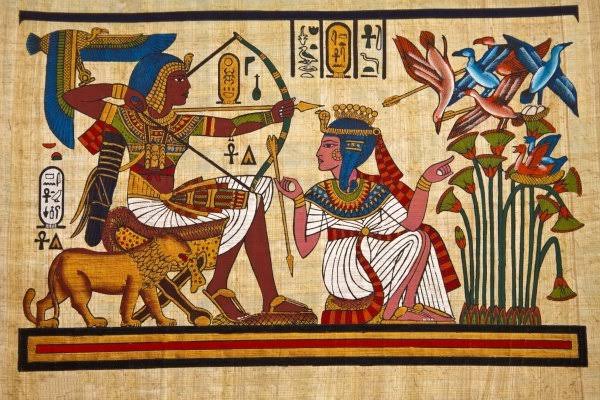
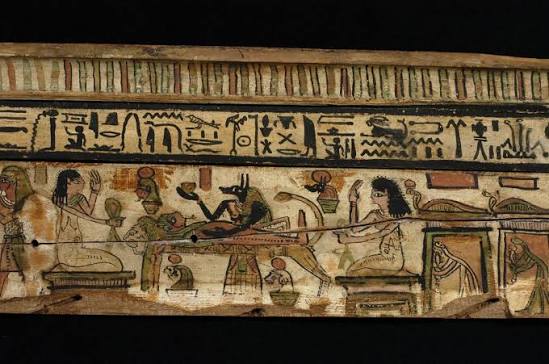
The best-known form was hieroglyphic writing, which used pictures and symbols to represent sounds, words, and concepts. Hieroglyphs appeared on temples, tombs, statues, monuments, coffins, and other objects. Their visual nature made them particularly suitable for religious and monumental inscriptions.
Egyptians also developed other forms of writing for practical purposes. Hieratic was a more simplified script commonly used by scribes for administrative, religious, and literary documents. Later, Demotic became widely used for everyday and administrative purposes.
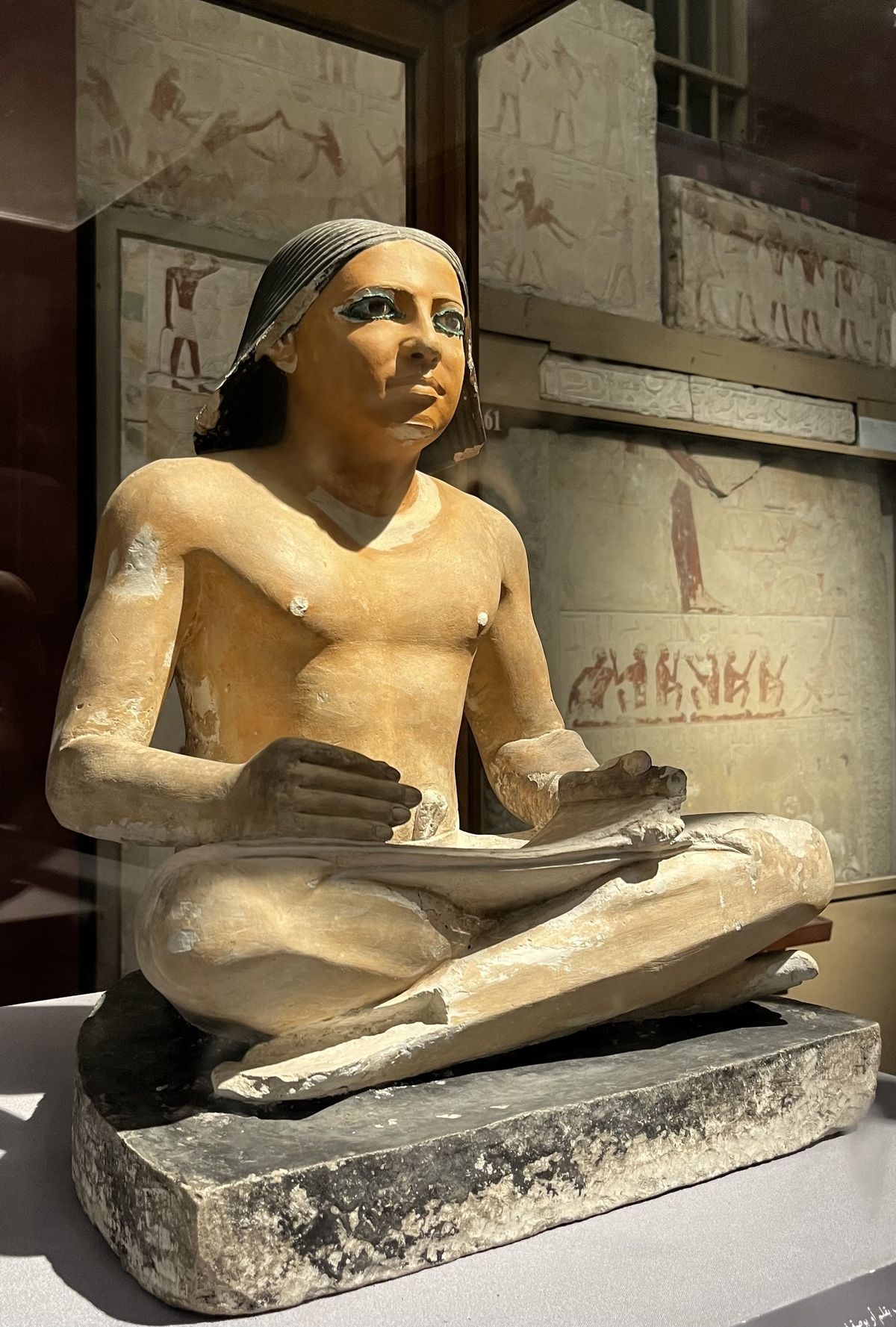
Writing was closely connected with the development of the scribal profession. Scribes received specialized education and learned how to read, write, calculate, and prepare official documents. They became essential to government administration and the preservation of knowledge.
Egyptian writing was recorded on many materials. Stone was used for permanent inscriptions, while papyrus provided a lighter writing material for documents and books. Egyptians also wrote on pottery fragments, wooden boards, leather, and other surfaces.
Written records covered a remarkably wide range of subjects. Administrative documents recorded taxes, land, workers, food supplies, and trade. Religious texts preserved prayers, hymns, rituals, and funerary beliefs. Medical papyri recorded treatments, while mathematical documents demonstrated methods of calculation.
Egyptian literature included stories, poems, hymns, wisdom teachings, and autobiographical texts. These works provide valuable evidence about Egyptian values, emotions, religion, and social relationships.
The discovery of the Rosetta Stone played a crucial role in modern understanding of Egyptian writing. Because the stone contained the same decree in multiple scripts, including Greek and Egyptian forms, it helped scholars decipher hieroglyphs.
Today, Egyptian writing remains one of the most important sources for understanding the ancient civilization.
The legacy of Ancient Egyptian writing is therefore much greater than a collection of symbols. It created a system through which information could be recorded, transmitted, and preserved, allowing modern generations to learn about Egyptian history, religion, government, science, literature, and daily life.
2. Ancient Egyptian Architecture and Engineering Legacy
The architectural achievements of Ancient Egypt represent one of the most visible parts of its civilization legacy. The pyramids, temples, tombs, obelisks, statues, and other monuments demonstrate the Egyptians’ ability to combine engineering, mathematics, planning, craftsmanship, religious symbolism, and organized labor.
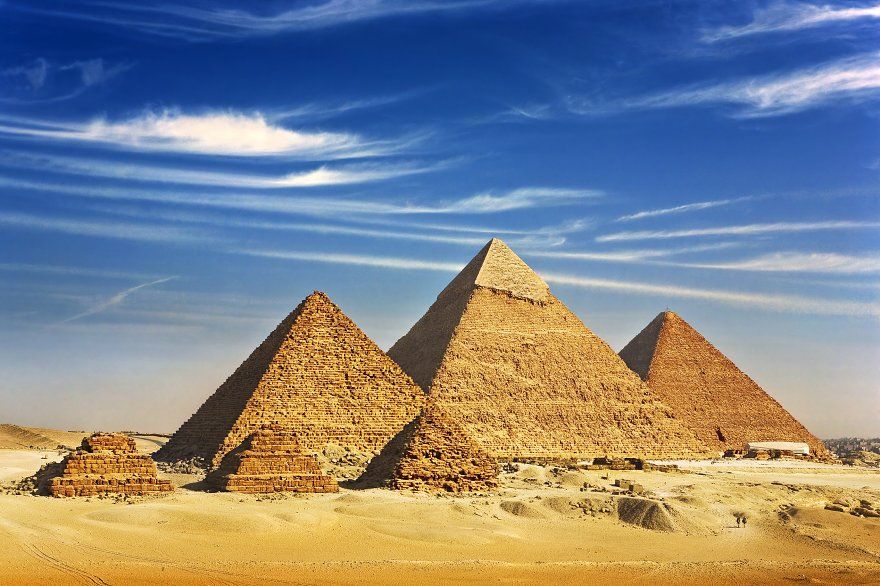
The pyramids of Giza are among the most famous examples. Their enormous size and precise construction demonstrate the ability of Egyptian builders to plan large-scale projects and coordinate thousands of workers, craftsmen, administrators, and suppliers.
The Great Pyramid of Khufu became one of the most famous monuments of the ancient world. Its construction required extensive knowledge of surveying, stoneworking, transportation, logistics, and architectural planning.
Egyptian temples also demonstrate sophisticated architectural design. Complexes such as Karnak, Luxor, Dendera, Edfu, and Abu Simbel included massive pylons, courtyards, columns, halls, sanctuaries, statues, and decorated walls.
Egyptian architects carefully incorporated religious symbolism into their structures. The orientation, layout, decoration, and placement of sacred spaces were often connected with religious beliefs and royal ideology.
Engineering knowledge was also necessary for quarrying and transporting stone. Egyptians extracted limestone, sandstone, granite, and other materials from distant quarries and transported them to construction sites.
The Nile River played an important role in this process. Heavy stone could be transported by boat, allowing materials from Upper Egypt and other regions to reach major construction centers.
Egyptian builders also developed practical methods for measuring and organizing construction. Surveying techniques were especially important for maintaining accurate proportions and establishing boundaries.
The architectural legacy of Egypt influenced later civilizations. Egyptian-style columns, obelisks, monumental gateways, and decorative elements were adopted or imitated in different parts of the ancient Mediterranean and in later periods.
Modern engineers and archaeologists continue to study Egyptian monuments to understand how they were designed and constructed. New discoveries and technologies provide additional information about ancient building techniques.
The legacy of Ancient Egyptian architecture and engineering is therefore both physical and intellectual. The monuments remain standing thousands of years later, while the knowledge demonstrated by their construction continues to inspire researchers.
Through pyramids, temples, tombs, and monumental structures, Ancient Egypt left one of the most enduring architectural legacies in world history.
3. Ancient Egypt and the Legacy of Medicine and Science
Ancient Egypt made important contributions to the history of medicine and scientific knowledge. Egyptian healers developed practical methods for treating injuries and illnesses, while scribes recorded medical observations and treatments on papyrus. These records provide valuable evidence of how ancient people understood the human body and disease.
Several important Ancient Egyptian medical papyri have survived. They contain descriptions of injuries, symptoms, treatments, medicines, and medical procedures. Among the best known are the Ebers Papyrus and the Edwin Smith Papyrus.
The Edwin Smith Papyrus is particularly important because it focuses heavily on injuries and provides systematic descriptions of wounds, examinations, diagnoses, and treatments. It demonstrates an approach that included careful observation of physical symptoms.
The Ebers Papyrus contains information about numerous medical conditions and remedies. Egyptian healers used ingredients derived from plants, minerals, and animal products in different treatments.
Egyptian medicine combined practical observation with religious and magical beliefs. Physicians and healers could use physical treatments alongside prayers, spells, and protective amulets.
Surgery was also known in Ancient Egypt. Medical texts describe the treatment of wounds, fractures, burns, and other injuries. Egyptian knowledge developed partly through experience treating accidents, warfare injuries, and other physical problems.
Egyptians also understood aspects of anatomy through mummification. Embalmers gained practical knowledge of the human body while preparing deceased individuals for burial.
Scientific knowledge extended beyond medicine. Egyptians developed mathematical techniques used for construction, taxation, land measurement, and administration.
Astronomy was also important. Egyptians observed celestial bodies and developed calendars that helped organize agricultural and religious activities.
The Egyptian calendar was closely connected with the annual Nile flood and agricultural cycles. Knowledge of the seasons allowed farmers and administrators to plan important activities.
Egyptian knowledge of geometry and measurement supported architecture and land administration. Mathematical documents demonstrate methods for calculating areas, volumes, fractions, and other quantities.
The legacy of Egyptian science should be understood within its historical context. Egyptian scholars did not practice modern science, but they developed extensive practical knowledge based on observation, experience, calculation, and accumulated traditions.
Today, these achievements contribute to the history of medicine, mathematics, astronomy, engineering, and scientific knowledge.
The lasting legacy of Ancient Egyptian science demonstrates how early civilizations developed sophisticated methods for understanding and managing the natural world.