
Welcome to

Ancient Egypt Military Life

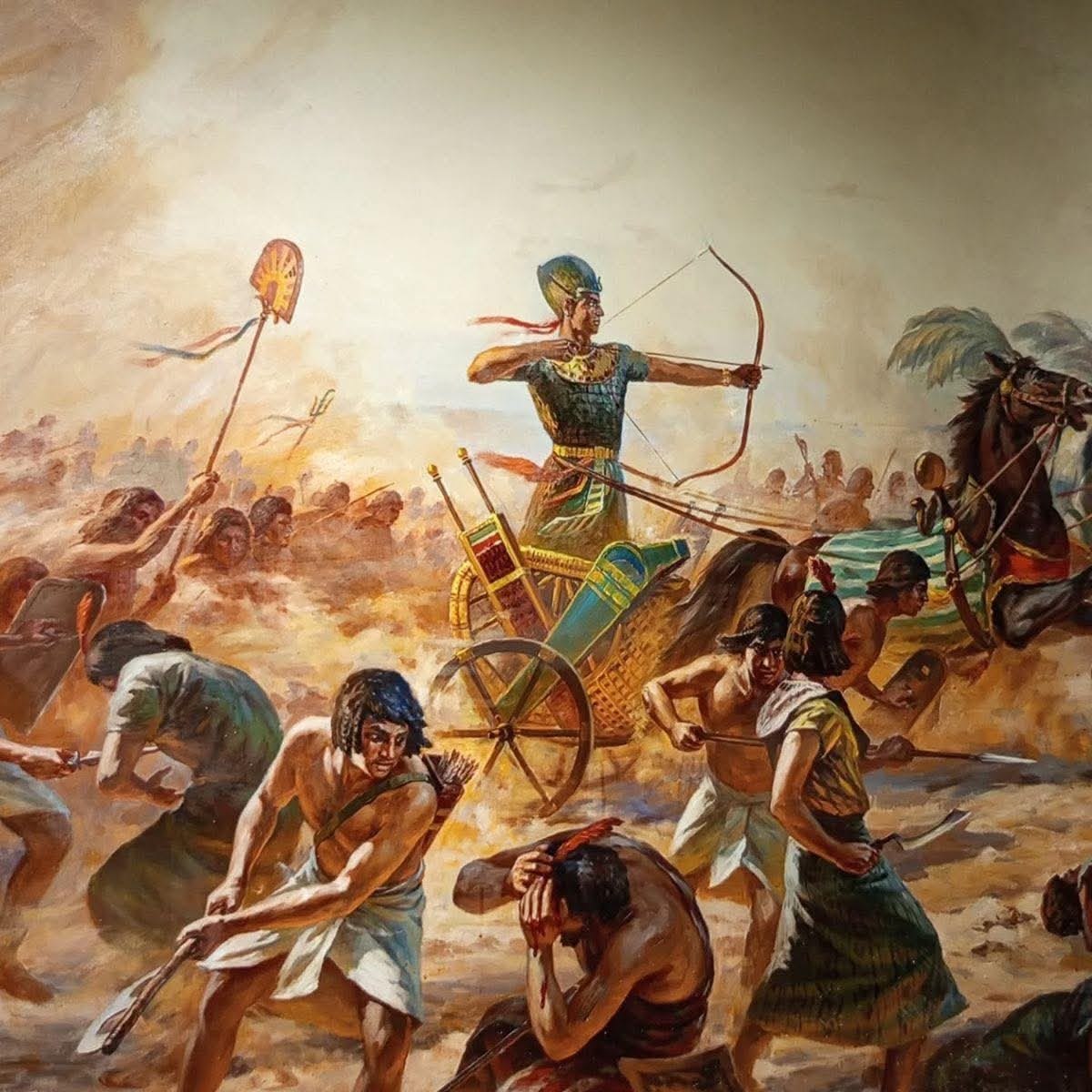
Military life was a crucial part of Ancient Egyptian civilization, helping protect the kingdom, expand its territories, secure trade routes, and maintain the power of the pharaoh. Throughout Egypt’s long history, especially during the New Kingdom, the military evolved into a highly organized and professional force composed of infantry, archers, charioteers, naval units, and elite soldiers. Ancient Egyptian armies played a vital role in defending the nation’s borders against foreign invasions while establishing Egypt as one of the most powerful empires of the ancient world.

The soldiers of Ancient Egypt came from different social backgrounds and underwent rigorous training to prepare for warfare. They learned skills such as archery, spear fighting, swordsmanship, shield defense, and military tactics. Physical fitness and discipline were essential, as soldiers often participated in long campaigns across deserts, mountains, and foreign territories. Successful military service could bring rewards, land grants, wealth, promotions, and social prestige, making army life an attractive opportunity for many Egyptians.

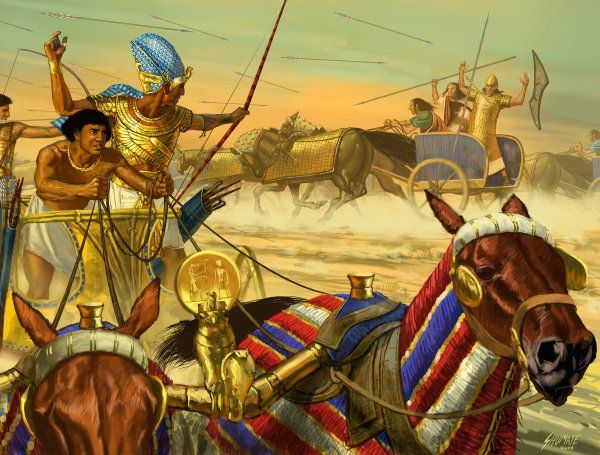
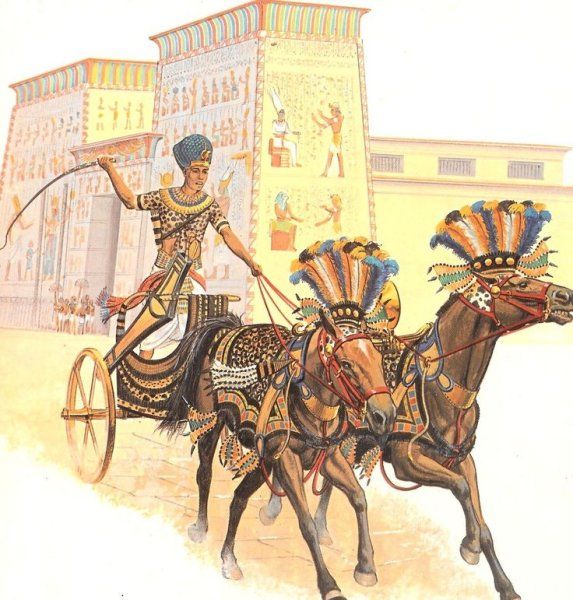
Ancient Egyptian weapons included bows and arrows, spears, battle axes, daggers, shields, and later the famous khopesh sword. During the New Kingdom, horses and chariots revolutionized Egyptian warfare, allowing armies to move quickly and strike enemies with greater effectiveness. Chariot units became symbols of military power and were often led personally by pharaohs during important battles.

Some of Egypt’s most famous military leaders were powerful pharaohs such as Ahmose I, Thutmose III, Seti I, Ramesses II, and Ramesses III. Their campaigns expanded Egyptian influence into Nubia, the Levant, and parts of the Near East. Notable battles such as the Battle of Kadesh demonstrated Egypt’s military strength and strategic capabilities. Military victories were frequently celebrated through temple inscriptions, monuments, and royal records that emphasized the pharaoh’s role as protector of Egypt.

In this guide, we explore Ancient Egypt military life, including soldier training, weapons, armor, chariots, military ranks, famous battles, military campaigns, and the daily experiences of Egyptian warriors. Discover how the army helped shape the history, security, and expansion of one of the greatest civilizations in human history.

1. The Origins of the Ancient Egyptian Military

The origins of Ancient Egypt military life can be traced back to the earliest periods of Egyptian civilization. Before Egypt became a unified kingdom, communities along the Nile sometimes competed over land, resources, and political influence.

After the unification of Upper and Lower Egypt, military organization became increasingly important for protecting the newly established kingdom. Early rulers needed forces capable of defending borders and maintaining royal authority.

During the Early Dynastic Period, armies were generally smaller than those of later periods. Soldiers could be called upon when the king needed to conduct a campaign or suppress a rebellion.

Military expeditions were particularly important in Nubia, where Egypt sought access to valuable resources such as gold, stone, and trade routes.

The army also protected Egypt’s northeastern frontier, where foreign groups could enter through the Sinai Peninsula and the eastern Mediterranean region.

As the Egyptian state became more centralized, the pharaoh gained greater control over military resources. Officials were responsible for recruiting soldiers, organizing supplies, and managing expeditions.

During the Old Kingdom, military campaigns were often connected with securing resources and controlling neighboring territories rather than creating a massive permanent army.

The First Intermediate Period demonstrated the dangers of political fragmentation. When central authority weakened, local rulers developed their own military forces.

The reunification of Egypt during the Middle Kingdom led to stronger military organization. Pharaohs constructed fortresses in strategic areas, particularly in Nubia, to protect the southern frontier.

By the New Kingdom, Egypt had developed a powerful professional military capable of conducting large-scale campaigns far beyond the country’s traditional borders.

The evolution of the military reflected the broader development of Egyptian government. As the kingdom became more powerful and ambitious, its army became increasingly organized, professional, and technologically advanced.
2. Egyptian Soldiers and Military Recruitment

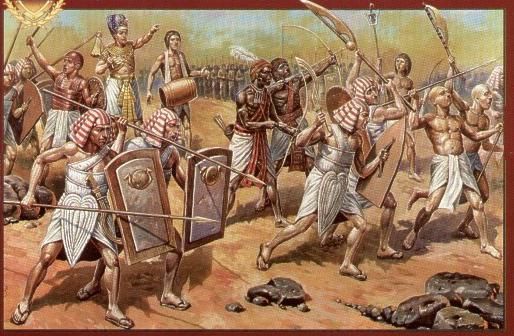
Soldiers were at the heart of Ancient Egypt military life. The Egyptian army included men from different social backgrounds who served the pharaoh and the state in a variety of roles.

Military recruitment changed over time. During some periods, local communities were expected to provide soldiers when campaigns were organized. Later, Egypt developed more permanent professional forces.

Many soldiers joined the army because military service provided opportunities for employment and advancement. Successful soldiers could receive rewards such as land, valuable goods, or promotions.

The army also included foreign soldiers. Nubians, Libyans, and other groups sometimes served alongside native Egyptians. Foreign troops could provide specialized military skills and strengthen royal forces.

Military units were often organized according to their equipment and responsibilities. Archers, infantry, chariot troops, and specialized units performed different roles during campaigns.

Young men who entered military service needed to learn discipline and basic combat skills. Training prepared them to use weapons effectively and follow commands during battles.

Experienced soldiers could rise through the ranks and become officers. Senior commanders were responsible for organizing troops, planning campaigns, and reporting to the pharaoh.

Military service could improve a person’s social position. Soldiers who demonstrated courage and loyalty might receive official recognition or material rewards.

The army also created strong relationships between soldiers and their commanders. Discipline was essential because successful military operations required coordinated action.

For ordinary soldiers, service could involve long periods away from their families. Campaigns into Nubia or the Levant could require difficult journeys through deserts and unfamiliar territory.

Despite these challenges, military service offered economic and social opportunities unavailable to some other workers.

The soldier therefore became an important figure in Egyptian society, particularly during periods of imperial expansion.
3. Military Training and Daily Duties

Training was an important part of Ancient Egypt military life. Soldiers needed physical strength, discipline, and familiarity with their weapons to perform effectively during campaigns.

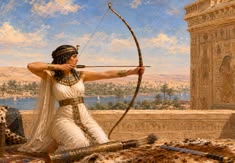
Archers practiced using bows and arrows because ranged attacks were an important part of Egyptian warfare. Soldiers also trained with spears, axes, shields, and later swords.

Physical conditioning helped soldiers endure long marches and difficult environmental conditions. Campaigns could involve crossing deserts, mountains, and foreign territories.

Discipline was equally important. Soldiers had to follow commands from officers and maintain organized formations during combat.

Daily military duties extended far beyond battlefield fighting. Soldiers guarded fortresses, monitored borders, protected important roads, and accompanied royal expeditions.

Some soldiers were assigned to protect temples, royal estates, or strategic locations along the Nile.

During peacetime, military personnel could participate in construction and logistical activities. Maintaining fortifications, transporting equipment, and preparing supplies were essential parts of military service.

Soldiers also had to maintain their weapons and equipment. Bows needed proper care, shields had to remain strong, and chariots required regular maintenance.

Officers supervised training and ensured that soldiers were prepared for possible campaigns.

The Egyptian army’s effectiveness depended heavily on organization. Units needed reliable supplies of food, water, weapons, and transportation.

Soldiers also learned how to operate as coordinated groups rather than fighting individually.

Elite troops, especially chariot warriors and specialized archers, received additional training to master their particular roles.

Military life could therefore be physically demanding even when Egypt was not at war.

The combination of training, discipline, guarding, logistics, and weapons maintenance created a professional military culture that became increasingly sophisticated during Egypt’s later periods.
4. Ancient Egyptian Weapons and Military Equipment

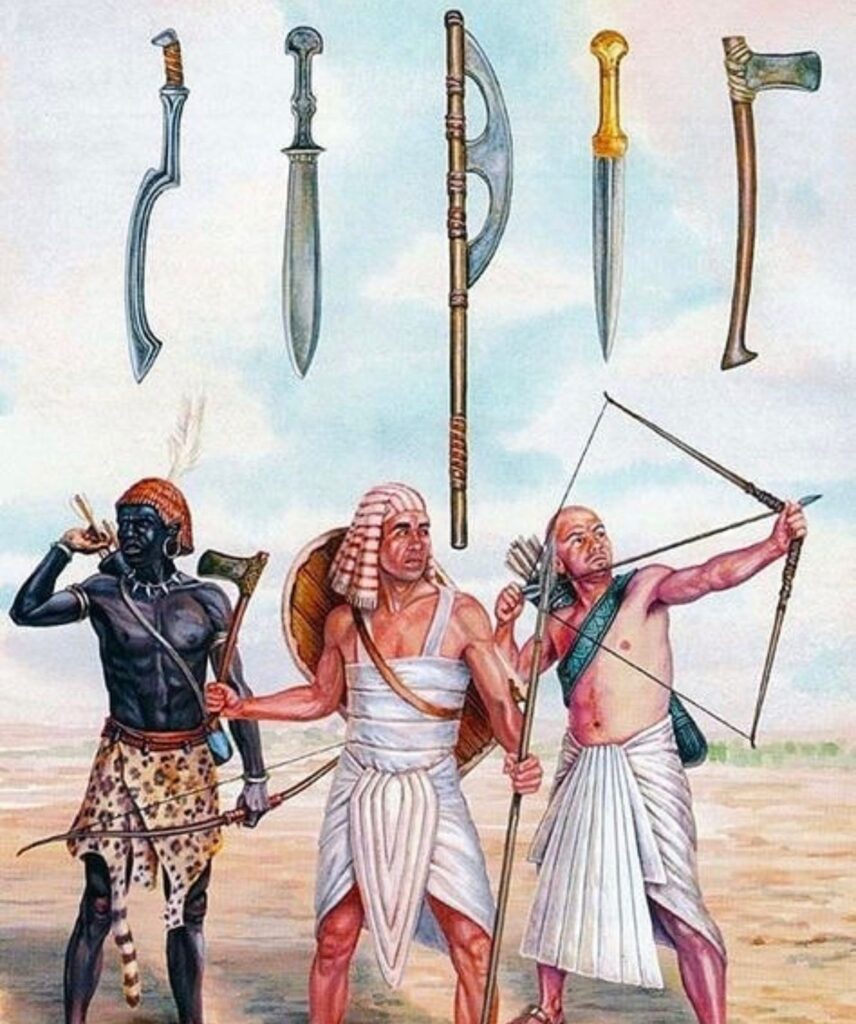
Weapons and protective equipment were essential to Ancient Egypt military life. Over thousands of years, Egyptian soldiers used increasingly sophisticated tools designed for close combat, ranged attacks, and battlefield protection.

The bow and arrow was one of the most important weapons in the Egyptian army. Archers could attack enemies from a distance before infantry forces moved into close combat. Egyptian bows developed over time, and composite bows became particularly important during the New Kingdom.

Spears were also widely used. Infantry soldiers could use them for both throwing and close combat. Spears were relatively practical weapons and could be produced in large numbers.

Axes served as effective close-combat weapons. Egyptian soldiers used different types of axes, with some designs capable of penetrating enemy shields and protective equipment.

The khopesh, a curved sword associated particularly with the New Kingdom, became one of the most recognizable Egyptian weapons. Its shape allowed soldiers to strike, hook, and cut opponents at close range.

Shields were essential defensive equipment. They were commonly made using wood covered with animal hide or other materials. Soldiers used shields to protect themselves from arrows, spears, and other weapons.

Helmets and body protection were also used, particularly by elite soldiers and chariot crews. However, not every infantry soldier necessarily possessed the same level of protective equipment.

Military standards and banners helped soldiers identify their units during battles. These symbols also reinforced loyalty to the pharaoh and the army.

Chariot units required specialized equipment, including lightweight wooden chariots, horses, bows, arrows, and spare supplies.

Weapons were carefully maintained before and during campaigns. A damaged bow or broken spear could become a serious problem in battle.

The variety of Egyptian weapons demonstrates how the army combined ranged attacks, defensive equipment, and close combat.

Military technology continued to evolve as Egypt encountered neighboring peoples and adopted new ideas.

5. Chariots and the Revolution in Egyptian Warfare

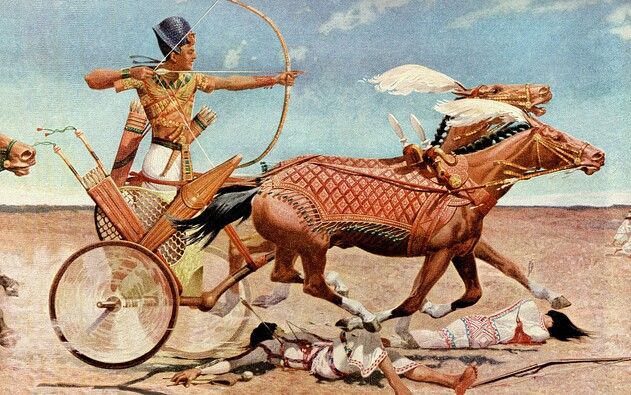
The introduction of the war chariot transformed Ancient Egypt military life, especially during the New Kingdom. Chariots gave Egyptian armies greater speed, mobility, and tactical flexibility.

Egyptians adopted the horse-drawn chariot after the Second Intermediate Period, when Egypt came into contact with the Hyksos and other foreign powers that used advanced military technologies.

The Egyptian chariot was relatively lightweight and designed for speed. It normally carried a driver and an archer, allowing the vehicle to move rapidly while the warrior fired arrows at enemy forces.

Chariot units became elite components of the Egyptian army. Skilled chariot warriors required extensive training because controlling horses, driving at speed, and accurately shooting a bow demanded considerable coordination.

The pharaoh himself was often portrayed in reliefs riding a chariot during military campaigns. These images emphasized royal strength, courage, and military leadership.

Chariots were particularly effective on open terrain. They could move quickly around enemy formations, attack from a distance, and withdraw before facing prolonged close combat.

The Battle of Kadesh, fought during the reign of Ramesses II, provides one of the best-known examples of Egyptian chariot warfare. Egyptian forces confronted the Hittite army in one of the major conflicts of the Late Bronze Age.

Egyptian chariots were not simply vehicles for transportation. They represented an advanced military system involving horses, specialized equipment, trained crews, and coordinated tactics.

Chariot horses were valuable military assets and required careful feeding and care. Special personnel were responsible for maintaining the animals and equipment.

Elite chariot units could provide social status and opportunities for advancement to successful warriors.

The rise of chariot warfare demonstrates how Egyptian military technology changed in response to foreign influences and new battlefield requirements.

By the New Kingdom, the chariot had become one of the defining symbols of Egyptian military power.

6. Military Ranks, Officers, and Army Organization

The Egyptian army developed a complex hierarchy that allowed large numbers of soldiers to operate effectively. Understanding its structure is essential to understanding Ancient Egypt military life.

At the highest level stood the pharaoh. As king, he was the supreme commander of the Egyptian military and was often expected to lead major campaigns personally, particularly during the New Kingdom.

Below the pharaoh were senior military commanders who supervised large formations and organized campaigns. These officers were responsible for planning operations, managing troops, and maintaining discipline.

The army was divided into organized units. Different formations could contain infantry, archers, chariot warriors, and other specialized troops.

Junior officers supervised smaller groups of soldiers and ensured that commands were carried out correctly.

Standard-bearers played an important role in military organization. Their banners helped soldiers identify units and maintain formation during the confusion of battle.

Chariot officers held prestigious positions because chariot warfare required specialized training and valuable equipment.

The Egyptian navy also had commanders responsible for ships and naval operations. Boats were important for transporting troops and supplies along the Nile and, in some periods, conducting military operations near the coast.

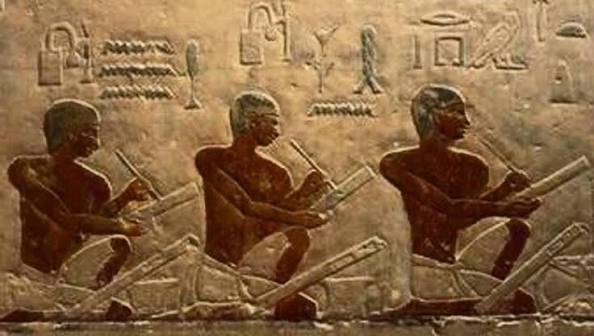
Scribes supported the military administration by recording soldiers, supplies, equipment, and campaign information.

Military logistics were essential. Armies required enormous quantities of food, water, weapons, horses, and transportation equipment.

Commanders therefore had responsibilities extending beyond battlefield tactics. They had to organize supply routes and ensure that troops could survive long campaigns.

Promotion could be based on experience, loyalty, courage, and military achievement. Successful commanders could receive rewards from the pharaoh.

The organized hierarchy allowed Egypt to coordinate large armies over long distances.

This structure helped transform the Egyptian military from a collection of warriors into an increasingly professional institution capable of defending and expanding the kingdom.

7. Egyptian Fortresses and Border Defense

Fortresses were an essential part of Ancient Egypt military life, particularly for protecting Egypt’s borders and controlling important routes. Because Egypt’s security depended heavily on its natural geography, military authorities established defensive positions in areas where foreign armies or raiders could enter the kingdom.

Nubia was one of the most important regions for Egyptian military defense. During the Middle Kingdom, Egyptian rulers constructed a network of fortresses along the Nile, especially in Lower Nubia. These strongholds helped control movement, protect trade routes, and demonstrate Egyptian authority.

The fortresses were strategically positioned near difficult stretches of the Nile and important transportation routes. Their walls, towers, gates, and storage facilities allowed soldiers to remain in the area for extended periods.

Fortresses were not only defensive structures. They also served as administrative and economic centers. Officials could monitor trade, collect resources, and regulate movement between Egypt and neighboring regions.

The eastern frontier was another important area for military defense. Routes through the Sinai Peninsula connected Egypt with the Levant and could provide access for foreign armies.

Egyptian rulers therefore maintained military positions and patrols to monitor these routes.

Fortifications also protected important cities, temples, harbors, and strategic locations along the Nile.

Soldiers stationed at remote fortresses often lived far from their families. Their responsibilities included guarding gates, watching surrounding territory, maintaining equipment, and reporting unusual activity.

Supply systems were essential because some frontier fortresses were located in isolated regions. Food, water, weapons, and other supplies had to be transported regularly.

The fortress system allowed Egypt to respond more quickly to threats and maintain control over distant territories.

These defensive installations demonstrate that Egyptian military strategy was not based entirely on large battles. Prevention, surveillance, border control, and permanent military presence were equally important.

8. Military Campaigns and Egyptian Expansion

Military campaigns played a major role in Ancient Egypt military life, especially during periods when Egyptian rulers sought to expand their territory or secure valuable resources.

Egyptian armies campaigned southward into Nubia, where gold, livestock, trade routes, and other resources made the region strategically important.

Campaigns were also conducted toward the northeast, particularly into the Levant. Egyptian rulers sought to control important trade routes and prevent rival powers from threatening Egypt’s borders.

The New Kingdom was the greatest period of Egyptian military expansion. Pharaohs such as Thutmose III led repeated campaigns into the Levant, extending Egyptian influence over a large area.

Thutmose III conducted numerous military expeditions and became one of Egypt’s most successful military rulers. His campaigns strengthened Egyptian control over important territories and trade routes.

Later rulers continued military activities. Seti I conducted campaigns in the Levant and Nubia, while Ramesses II famously fought the Hittites at the Battle of Kadesh.

Egyptian armies traveled considerable distances during these campaigns. Soldiers had to cross deserts, rivers, and unfamiliar territories while maintaining their supplies.

Military expeditions could bring wealth back to Egypt through tribute, captured resources, and control of trade networks.

Successful campaigns also increased the pharaoh’s prestige. Temple walls frequently depicted victorious kings defeating foreign enemies, reinforcing the image of the ruler as protector of Egypt.

However, military campaigns were expensive. The state had to provide food, weapons, transportation, horses, and other supplies for large numbers of soldiers.

Not every campaign ended in complete victory. Egyptian rulers sometimes negotiated treaties or established diplomatic relationships with former enemies.

The famous peace treaty between Ramesses II and the Hittite king after the Kadesh conflict demonstrates that diplomacy could eventually replace continued warfare.

Military expansion therefore involved not only fighting but also logistics, diplomacy, administration, and political strategy.

9. Daily Life of Soldiers During Military Service

Daily life was an important part of Ancient Egypt military life, and soldiers experienced routines that extended far beyond actual battles.

A soldier’s day could begin with physical training, weapons practice, equipment maintenance, or assigned guard duties. Discipline was essential because military units needed to remain prepared for sudden attacks.

Soldiers had to maintain their bows, arrows, spears, shields, and other equipment. Chariot crews also needed to care for horses and inspect their vehicles.

When stationed at a fortress, soldiers could spend long periods monitoring the surrounding area. Guarding gates, watching the river, and patrolling nearby routes were important responsibilities.

During military campaigns, daily life became much more difficult. Soldiers had to march long distances while carrying equipment and supplies.

Access to water was particularly important when armies crossed desert regions. Commanders had to plan routes carefully to prevent shortages.

Food supplies could include grain, bread, beer, vegetables, meat, and other provisions. Armies also needed animals and transport equipment to carry supplies.

Soldiers often lived in groups and developed strong bonds with their fellow troops. Cooperation was essential for survival during difficult campaigns.

Successful soldiers could receive rewards, promotions, or captured goods. Military service could therefore provide opportunities for social advancement.

However, service also carried significant risks. Soldiers could be wounded, killed, captured, or separated from their families for long periods.

Letters and administrative documents from Ancient Egypt provide evidence that soldiers maintained connections with their families while serving away from home.

Some soldiers eventually settled in foreign territories or received land as a reward for their service.

Military life was therefore a mixture of discipline, hardship, opportunity, and danger.

Understanding these everyday experiences helps reveal that the Egyptian army was made up of real people whose lives were shaped by both military responsibilities and the wider society they served.

weddings in ancient egypt

10. Egyptian Military Religion and the Role of the Pharaoh

Religion was deeply connected with Ancient Egypt military life. Egyptians believed that military success depended not only on weapons and strategy but also on divine support. The pharaoh was considered responsible for protecting Egypt and maintaining Ma’at, making warfare an important part of his royal duties.

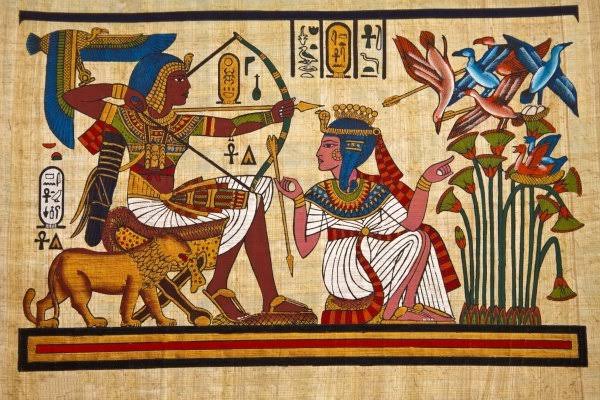
Egyptian kings were frequently portrayed as powerful warriors defeating foreign enemies. Temple reliefs showed pharaohs attacking enemies with bows, spears, or swords, emphasizing their strength and divine authority.

The gods were believed to support Egypt during military campaigns. Deities such as Amun, Montu, and Sekhmet were associated with power, warfare, protection, or royal authority.

Amun became especially important during the New Kingdom. Pharaohs sometimes attributed military victories to the god’s protection and guidance.

Before campaigns, religious rituals could be performed to seek divine favor. Priests and religious officials were important participants in the broader military culture of the kingdom.

The pharaoh’s role as military leader was both political and religious. By defeating enemies, the king demonstrated that he was protecting Egypt from chaos and restoring order.

Military victories were recorded on temple walls and monuments. These inscriptions often presented the pharaoh as a heroic figure who defeated foreign enemies with divine assistance.

The religious interpretation of warfare also helped strengthen loyalty to the king. Soldiers were not simply fighting for territory; they were presented as defending the homeland and the divine order.

Egyptian military standards sometimes carried religious symbols or images associated with particular gods. These standards helped identify military units while also providing spiritual symbolism.

Religion therefore gave warfare a deeper meaning in Egyptian society.

The connection between military power and divine authority allowed Egyptian rulers to present successful campaigns as evidence that the gods supported their rule and that the pharaoh was fulfilling his sacred responsibility to protect the kingdom.

Ancient Egypt Education

11. Rewards, Social Status, and Life After Military Service

Military service could provide important opportunities for social advancement in Ancient Egypt. Successful soldiers were sometimes rewarded with wealth, honors, promotions, or land, making military careers attractive to ambitious individuals.

Courage in battle was highly valued. Soldiers who demonstrated exceptional bravery could receive awards from the pharaoh or senior commanders.

Military decorations and honors helped recognize individual achievements. Some soldiers were presented with valuable objects, jewelry, or other forms of royal recognition.

Promotion was another important reward. An ordinary soldier could potentially rise through the military hierarchy and eventually hold an administrative or command position.

Successful officers could become wealthy and influential members of Egyptian society. Military achievements could strengthen their relationship with the royal court.

Land was another valuable form of compensation. In some periods, soldiers received land or other economic benefits in recognition of their service.

These rewards helped create loyalty between soldiers and the pharaoh. Soldiers had a strong incentive to serve effectively because successful military careers could improve their family’s economic position.

Military service could also provide opportunities for foreign soldiers. Nubian and Libyan troops, for example, sometimes became integrated into Egyptian military organizations and could achieve positions of importance.

After completing military service, some veterans could return to civilian occupations or continue working for the state.

Military experience could be useful in administration, security, transportation, and other government positions.

A successful military career could therefore transform a person’s social status.

For the Egyptian state, rewarding soldiers was an effective way to maintain a loyal and motivated army.

The relationship between military service and social mobility demonstrates that Ancient Egypt military life was not only about warfare. It could also influence careers, wealth, family status, and a person’s place within Egyptian society.

12. The Legacy of Ancient Egypt Military Life

The legacy of Ancient Egypt military life can be seen in the archaeological remains, inscriptions, weapons, fortresses, and historical records that survive today.

Egypt developed sophisticated military organizations over thousands of years. Its armies defended borders, protected trade routes, expanded imperial territory, and maintained the authority of the pharaoh.

The New Kingdom represents the peak of Egyptian military power. During this period, Egypt developed professional forces, specialized chariot units, advanced weapons, and extensive frontier defenses.

Egyptian military technology also changed through contact with neighboring civilizations. The adoption of horses, chariots, and improved weapons demonstrates the ability of Egyptian armies to adapt to new military challenges.

Fortresses in Nubia provide important evidence of Egypt’s defensive strategy. Their remains reveal how soldiers lived and worked in remote frontier communities.

Military inscriptions and temple reliefs provide information about campaigns, battles, weapons, and royal ideology. Although these sources often celebrate Egyptian victories and must be interpreted carefully, they remain valuable historical evidence.

The Egyptian military also influenced the country’s economy and administration. Large campaigns required extensive systems for supplying food, weapons, animals, transportation, and manpower.

Military service created opportunities for social mobility and helped connect different regions and communities to the central government.

The Egyptian army’s long history demonstrates how military institutions evolved alongside political changes in the kingdom.

Today, the study of Ancient Egypt military life helps historians understand not only warfare but also Egyptian society, technology, religion, government, and international relations.

The military was an essential institution that helped Egypt survive periods of conflict and become one of the most influential civilizations of the ancient world.

Frequently Asked Questions

Soldiers trained with weapons, guarded fortresses, maintained equipment, protected borders, and participated in military campaigns. Life could be physically demanding and dangerous, particularly during long expeditions.

Common weapons included bows and arrows, spears, axes, shields, and swords such as the khopesh. Chariot warriors also used bows and specialized equipment.


Egypt developed increasingly professional and permanent military forces, particularly during the New Kingdom, when the country became a major regional power.


Yes. Successful soldiers could receive land, wealth, honors, promotions, and other rewards from the pharaoh or military authorities.


The military defended Egypt’s borders, protected trade routes, supported the authority of the pharaoh, secured resources, and helped Egypt expand its influence into neighboring regions.