
1. The Role of Music in Ancient Egyptian Society
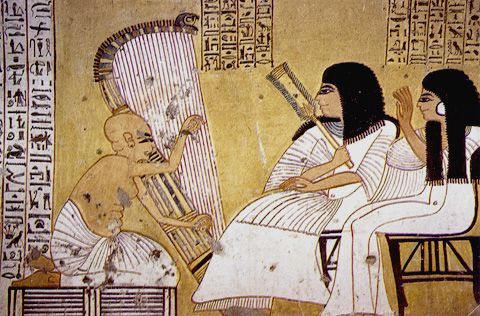
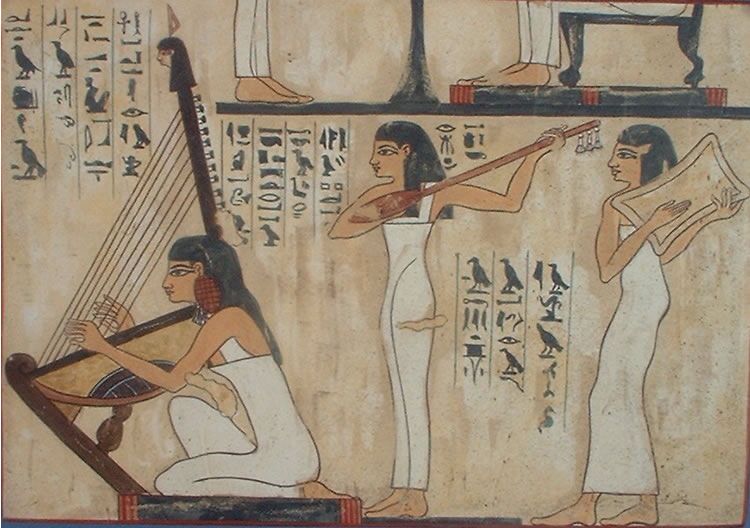
Music was an important part of Ancient Egyptian daily life and played a role in entertainment, religion, celebrations, ceremonies, and social gatherings. Egyptians considered music a powerful form of expression, and musicians could perform for gods, pharaohs, families, and communities. Evidence from tomb paintings, temple reliefs, sculptures, and archaeological discoveries shows that music was deeply integrated into Egyptian culture.
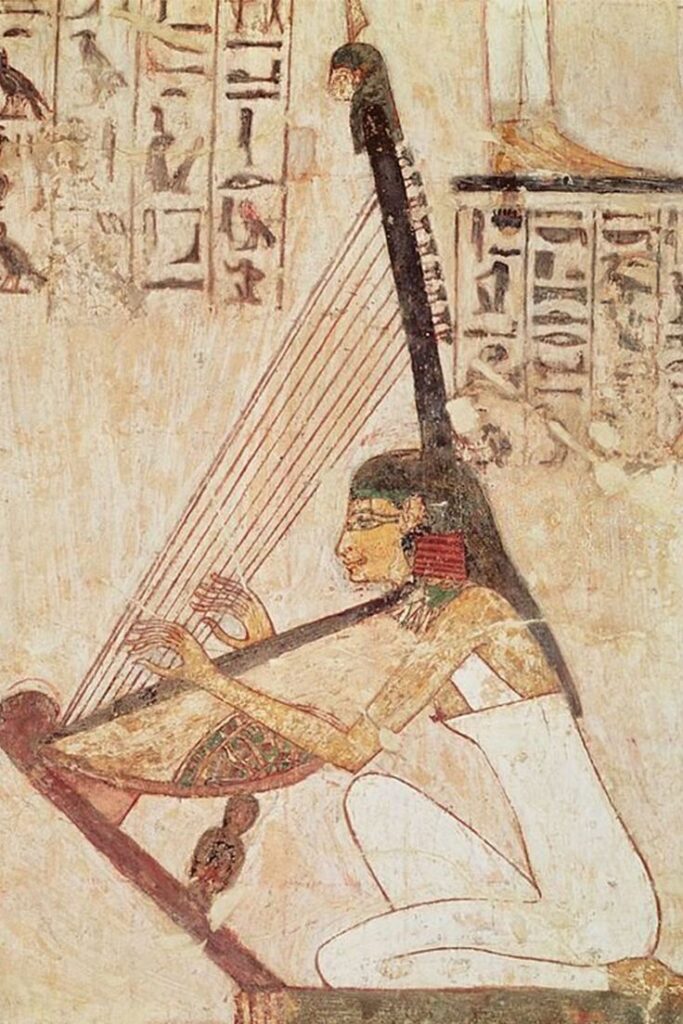
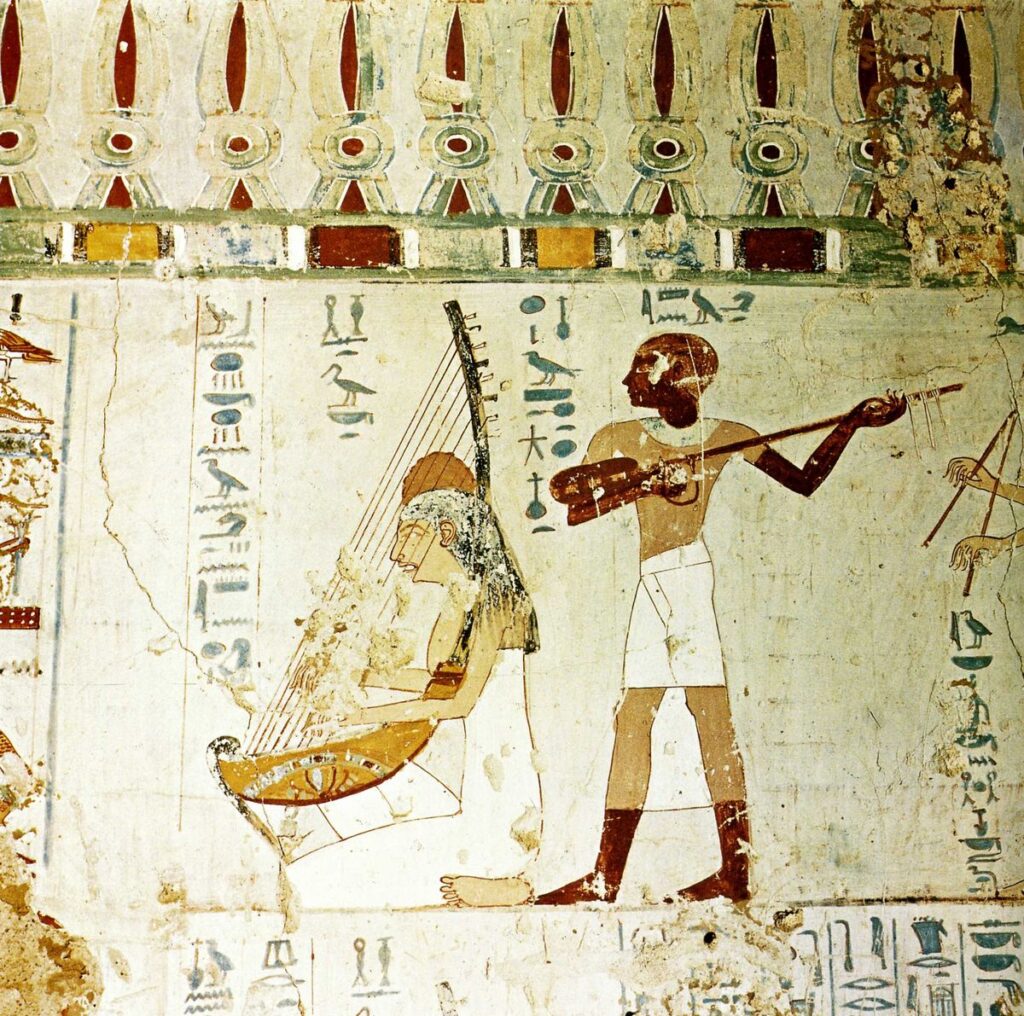
Ancient Egyptian musicians used many different instruments. Harps were among the most recognizable instruments and could vary greatly in size and design. Flutes and pipes produced melodic sounds, while drums and tambourines provided rhythm. Lutes and lyres were also used by musicians. The sistrum, a metal or wooden frame containing loose rods or disks, was especially associated with religious ceremonies and the worship of certain goddesses.
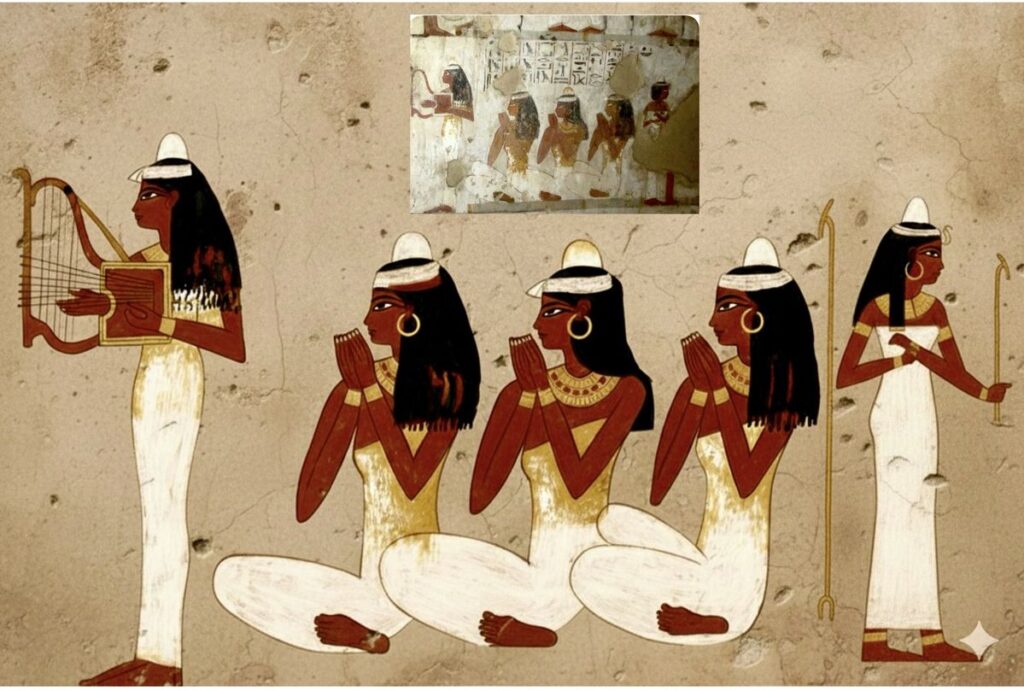
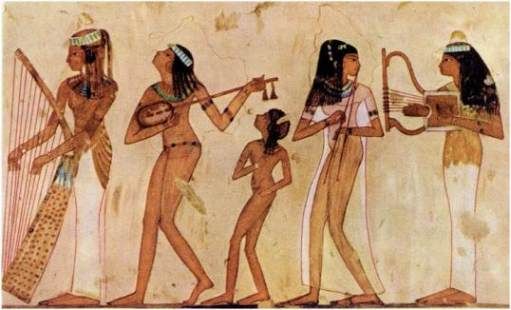
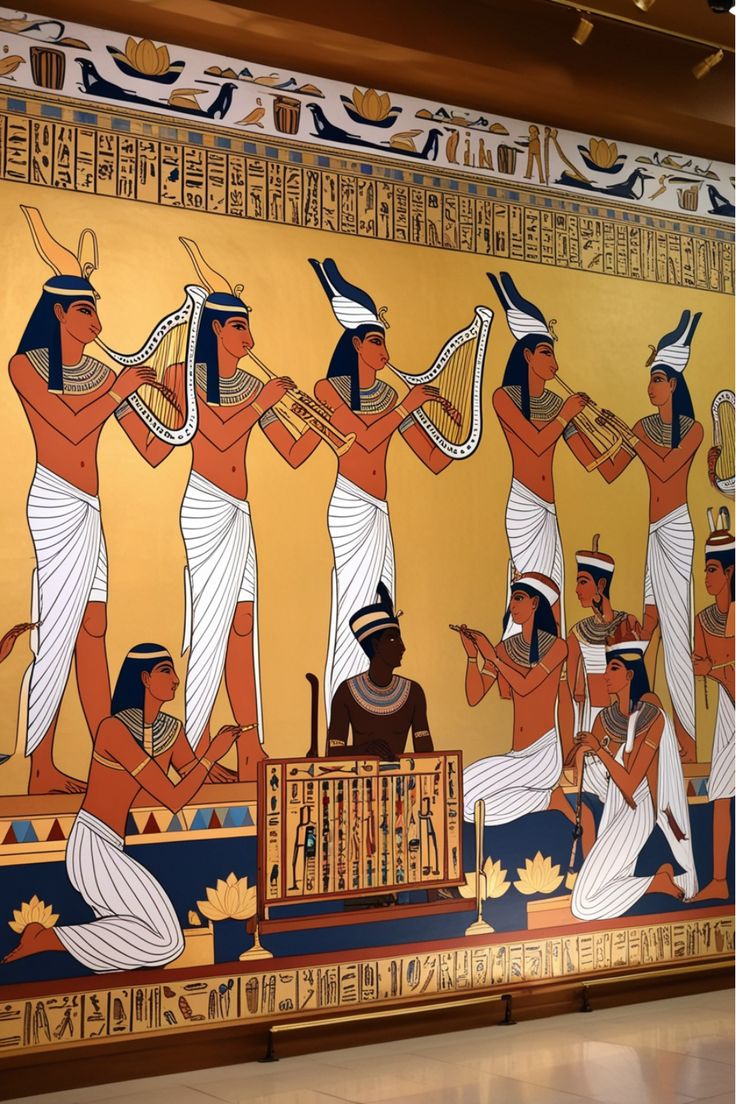
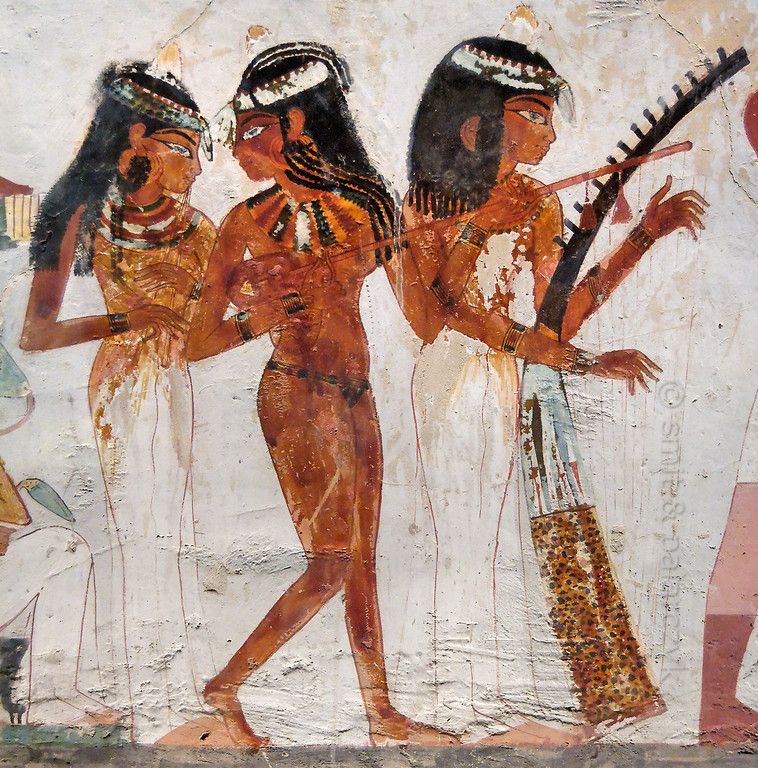
Music was often performed by groups rather than individual musicians. Tomb paintings show ensembles containing several instruments, sometimes accompanied by singers and dancers. Musicians could perform at private banquets, festivals, religious ceremonies, and royal events.
Professional musicians could hold specialized positions. Some worked for temples and participated in religious rituals, while others performed for wealthy households or royal courts. Female musicians and singers are also represented in Egyptian artwork, demonstrating that women participated actively in musical culture.
Music had a particularly important religious function. Priests and temple musicians used instruments during rituals honoring the gods. The sound of the sistrum, for example, was associated with religious worship and divine protection.
Music was also connected with emotional and social experiences. It accompanied celebrations, dancing, drinking, feasting, and other forms of entertainment. People could enjoy music during both private and public events.
The importance of Ancient Egyptian music demonstrates that sound and performance were essential components of Egyptian culture. Music brought people together, supported religious rituals, enhanced celebrations, and provided entertainment. Archaeological evidence allows historians to reconstruct aspects of this musical tradition and understand how Egyptians incorporated music into their everyday and ceremonial lives.
2. Ancient Egyptian Musical Instruments
Ancient Egyptian musicians used a wide range of instruments, each producing different sounds and serving different purposes. Archaeological discoveries and artistic representations provide valuable evidence about Ancient Egyptian musical instruments. Harps, flutes, lutes, lyres, drums, tambourines, clappers, and sistrums were among the instruments used in Egyptian music.
The harp was one of the most important instruments in Ancient Egypt. Egyptian harps came in several forms and sizes, from relatively small instruments to large ceremonial examples. Harpists are frequently shown performing at banquets and other social gatherings. Their music could accompany singers and dancers.
Flutes and pipes were also common. These wind instruments were made from materials such as wood, reeds, or other available substances. Their relatively simple construction allowed musicians to produce melodic sounds.
Lutes and lyres became increasingly important over time, particularly through cultural contacts with neighboring regions. These string instruments demonstrate that Egyptian music was influenced by interactions with other civilizations.
Percussion instruments were essential for maintaining rhythm. Drums, tambourines, clappers, and other instruments could accompany singers and dancers. Their sounds were particularly useful during festivals, processions, and energetic performances.
The sistrum was a distinctive Egyptian instrument associated with religion. It was especially connected with the goddess Hathor and other female deities. Shaking the sistrum produced a characteristic rattling sound and formed part of religious ceremonies.
Musicians could combine different instruments to create ensembles. Tomb paintings sometimes show several performers playing together while dancers perform nearby. These scenes suggest that Egyptian musicians understood rhythm, coordination, and organized performance.
The materials used to make instruments included wood, reeds, leather, metal, and animal products. Skilled craftsmen constructed and decorated many instruments, making them examples of Ancient Egyptian craftsmanship and art as well as musical technology.
Ancient musical instruments provide important information about Egyptian culture. Their shapes, construction methods, and artistic decoration reveal technological knowledge and cultural preferences.
Through these instruments, historians can better understand Ancient Egyptian music, entertainment, religious ceremonies, festivals, dancing, and social gatherings, showing how important musical performance was to life along the Nile.
3. Dancing in Ancient Egypt
Dancing was an important form of Ancient Egyptian entertainment and was closely connected with music, celebrations, religious ceremonies, and social gatherings. Egyptian artists frequently represented dancers in tomb paintings, temple reliefs, and other artworks. These scenes show that dancing was not simply an occasional activity but an established part of Egyptian cultural life.
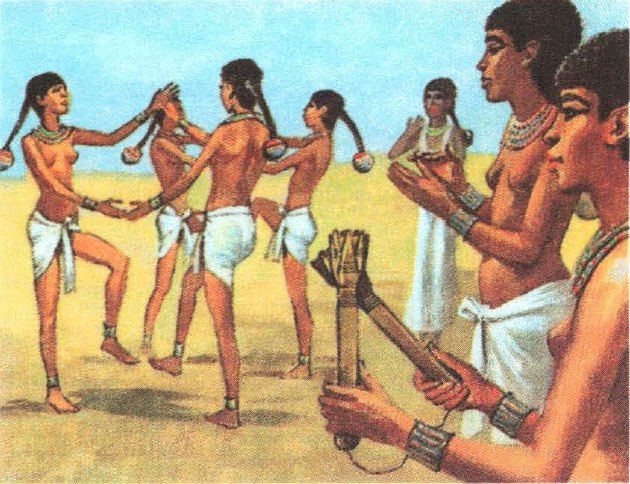
Ancient Egyptian dancers performed during banquets, festivals, religious ceremonies, and celebrations. Some performances appear to have been highly energetic, with dancers making expressive movements and using different positions of the arms and legs. Groups of dancers could perform together while musicians played harps, drums, flutes, and other instruments.
Women played an important role in Egyptian dance. Tomb paintings often show female dancers performing alongside female musicians. Their clothing, hairstyles, and movements provide valuable information about entertainment and social customs. Professional dancers may have performed for wealthy families, royal households, or temples.
Dance also had a strong religious dimension. Certain performances were connected with temple ceremonies and festivals dedicated to Egyptian gods and goddesses. Religious dancers could participate in processions and rituals designed to honor divine figures. Some dances may have represented ideas of fertility, renewal, celebration, or divine worship.
Banquets were another major setting for dancing. Wealthy Egyptians could organize large social gatherings where guests enjoyed food, drinks, music, perfumes, flowers, and performances. Dancers and musicians helped create an atmosphere of celebration and entertainment.
Dancing could also accompany funerary ceremonies. Some tomb scenes show dancers participating in events associated with the deceased. These performances may have had both emotional and religious significance.
Egyptian artists represented dancers using distinctive poses and movements. Because Egyptian art often followed established conventions, these images do not always provide a complete picture of actual performance, but they still reveal the importance of dance in society.
The combination of Ancient Egyptian music and dance created one of the most important forms of entertainment in the ancient world. Dancing allowed Egyptians to express joy, participate in religious traditions, entertain guests, and strengthen community relationships. Through surviving paintings and reliefs, modern historians can gain valuable insights into the role of dance in Ancient Egyptian daily life and culture.