
1. Ra – The Ancient Egyptian Sun God
Ra was one of the most important and influential gods in Ancient Egyptian religion. He was primarily associated with the sun, light, creation, and royal power. Egyptians believed that the sun was essential for life, so the daily movement of the sun across the sky became an important part of religious thought.
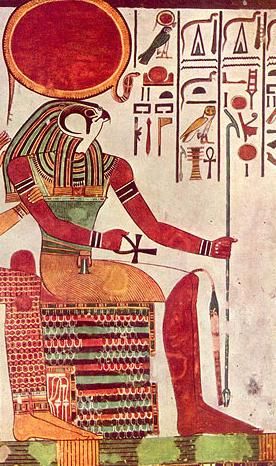
Ra was commonly represented as a man with a falcon’s head crowned with a solar disk surrounded by a protective cobra. The falcon connected him with the sky, while the solar disk represented the sun and its life-giving power.
According to some Egyptian creation traditions, Ra emerged from the primordial waters and helped bring the world into existence. Different Egyptian religious centers had different creation stories, so the exact role of Ra could vary depending on the period and location.
The daily journey of the sun was one of the most important myths associated with Ra. Egyptians believed that Ra traveled across the sky during the day in a solar boat. At night, he journeyed through the underworld before being reborn with the sunrise.
During this nightly journey, Ra was believed to encounter dangerous forces, particularly the serpent Apep, which represented chaos and disorder. Ra’s victory over Apep symbolized the daily triumph of order over chaos.
Ra was closely connected with Egyptian kingship. Pharaohs were often associated with the sun god and were expected to maintain order in the kingdom.
Over time, Ra became associated with other important deities. One of the most famous combinations was Amun-Ra, which united the powerful Theban god Amun with Ra.
Ra’s influence was especially strong during periods when solar religion became closely connected with royal authority. Temples and monuments were dedicated to solar worship, and solar imagery appeared throughout Egyptian art.
The sun also had an important role in Egyptian beliefs about death and rebirth. The daily cycle of sunrise and sunset provided a powerful symbol of renewal and eternal life.
Ra therefore represented more than the physical sun. He symbolized life, creation, kingship, renewal, and cosmic order.
The enduring importance of Ra demonstrates how Ancient Egyptians used natural phenomena to understand the universe and express their religious beliefs.
2. Osiris – The Ancient Egyptian God of the Afterlife
Osiris was one of the most important gods in Ancient Egyptian religion and was strongly associated with the afterlife, death, resurrection, and fertility. His mythology played a central role in Egyptian beliefs about death and the possibility of eternal life.
Osiris was traditionally described as the son of Geb, the earth god, and Nut, the sky goddess. He was the brother and husband of Isis and the brother of Seth and Nephthys.
According to the famous Osiris myth, Osiris became a ruler of Egypt and was associated with prosperity and civilization. His brother Seth, however, became jealous and eventually murdered him.
Isis searched for Osiris and worked to restore his body. Through her magical abilities and the assistance of other deities, Osiris was revived in the divine realm. He could not return permanently to earthly life, however, and instead became ruler of the underworld.
The story of Osiris became a powerful symbol of death and resurrection. Egyptians connected the cycle of death and renewal with the natural world, particularly agriculture and the annual renewal associated with the Nile.
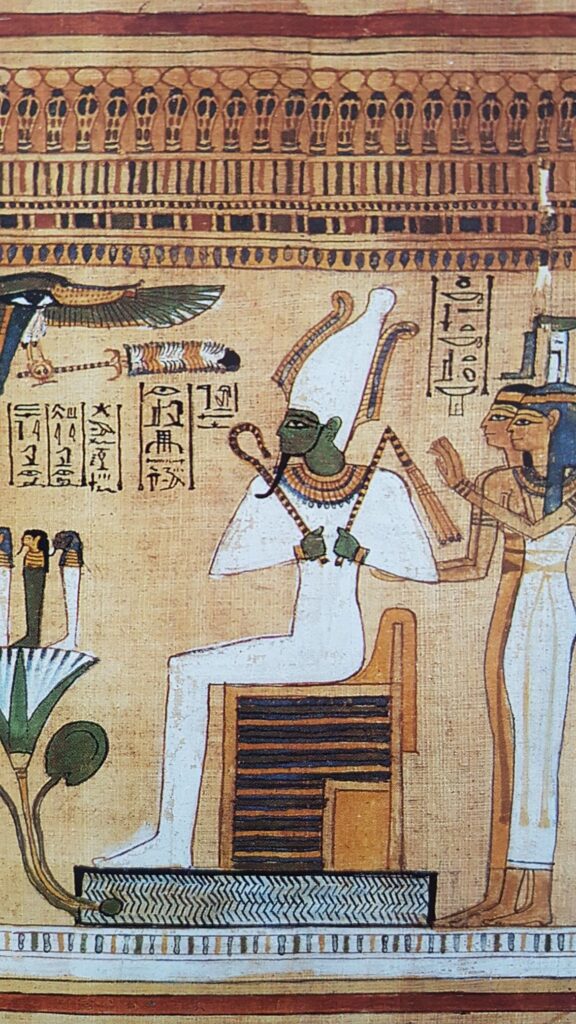
Osiris was often depicted as a mummified man wearing a crown and holding royal symbols such as the crook and flail. His green or dark coloration in some representations could symbolize fertility and regeneration.
Osiris became particularly important in funerary religion. Egyptians hoped to join Osiris in the afterlife after death.
The judgment of the dead was another important part of Osirian belief. The deceased appeared before divine judges, and the heart was weighed against the feather of Ma’at, representing truth and justice.
Osiris was also closely connected with Egyptian ideas about the continuation of life after death. Proper burial, mummification, funerary rituals, and offerings were believed to help the deceased achieve eternal existence.
The worship of Osiris became widespread throughout Egypt. Important centers of his cult included Abydos, which became one of the most important pilgrimage destinations in ancient Egypt.
Festivals honoring Osiris reenacted elements of his myth and celebrated themes of death, resurrection, fertility, and renewal.
Osiris’s influence extended beyond religion. His story shaped Egyptian funerary art, literature, temple rituals, and beliefs about human destiny.
The legacy of Osiris remains particularly important because his mythology provides one of the clearest examples of how Ancient Egyptians understood the relationship between death, resurrection, justice, and eternal life.
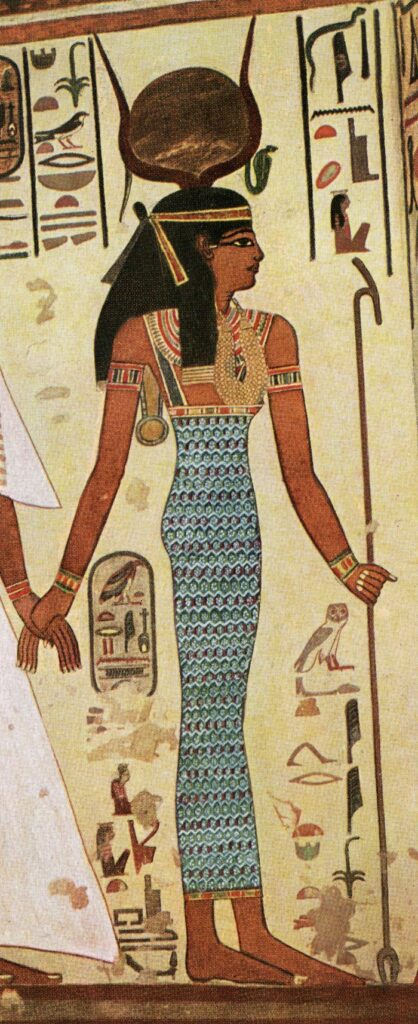
3. Isis – The Ancient Egyptian Goddess of Magic and Protection
Isis was one of the most important and widely worshipped goddesses in Ancient Egypt. She was associated with magic, motherhood, protection, healing, family, and royal power. Her influence eventually extended beyond Egypt, and her worship became known throughout the Mediterranean world.
Isis was the daughter of Geb and Nut and the sister and wife of Osiris. She was also the mother of Horus, one of the most important gods associated with Egyptian kingship.
The most famous story involving Isis is the Osiris myth. After Seth murdered Osiris and scattered his body, Isis searched for the pieces and helped restore him through her magical powers.
Her devotion to Osiris became an important symbol of loyalty and love. Isis was also presented as a protective mother who worked to protect her son Horus from danger.
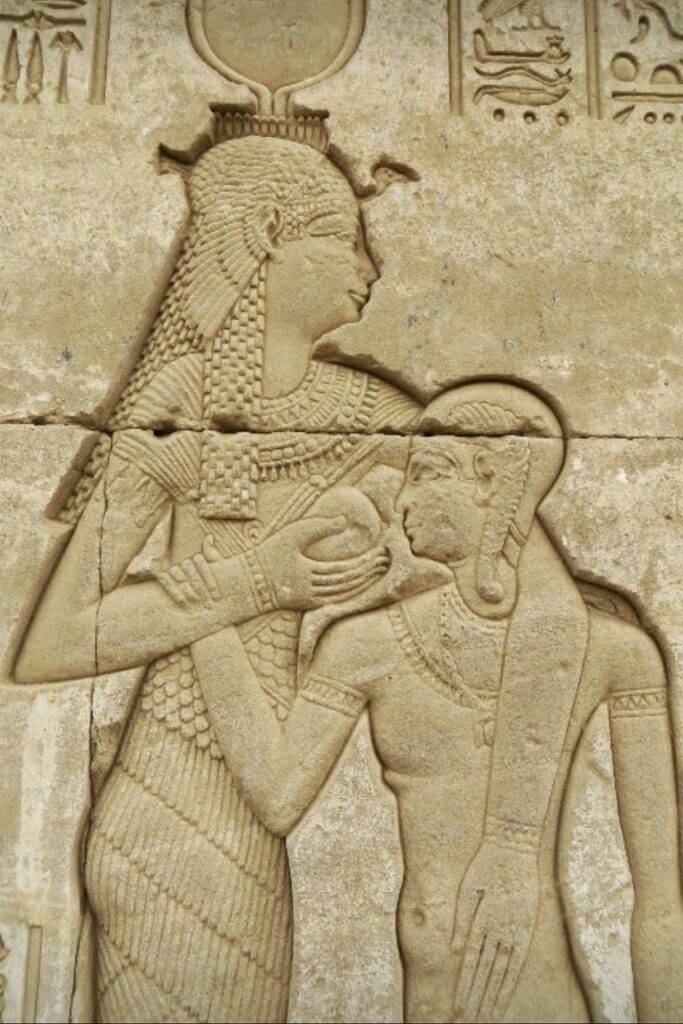
Isis was frequently depicted as a woman wearing a throne-shaped symbol on her head. In other representations, she appears with outstretched wings, symbolizing protection.
Her association with magic was particularly strong. Egyptians believed that Isis possessed powerful knowledge of magical words and rituals. She could use this knowledge to heal, protect, and overcome dangerous forces.
Isis was also associated with motherhood. Her relationship with Horus made her an important symbol of maternal protection and devotion.
The goddess became connected with healing. People could pray to Isis for protection from illness, danger, and other problems.
Isis was closely associated with Egyptian kingship through Horus. Because the pharaoh was connected with Horus, Isis could also be understood as a divine mother of the royal line.
Temples dedicated to Isis existed in different parts of Egypt. One of the most important surviving temples associated with her worship is the Temple of Isis at Philae, near Aswan.
The worship of Isis eventually spread outside Egypt, especially during the Hellenistic and Roman periods. Temples dedicated to her appeared in parts of the Mediterranean world.
Her popularity continued long after the height of Ancient Egyptian civilization, making her one of the most internationally influential Egyptian deities.
Isis represents the importance of magic, motherhood, healing, protection, loyalty, and family in Egyptian religious thought.
Her story also demonstrates how Egyptian gods could develop broader meanings over time and how Egyptian religious traditions influenced cultures beyond the Nile Valley.