
1. A Journey Through the World’s Most Modern Gateway to Antiquity
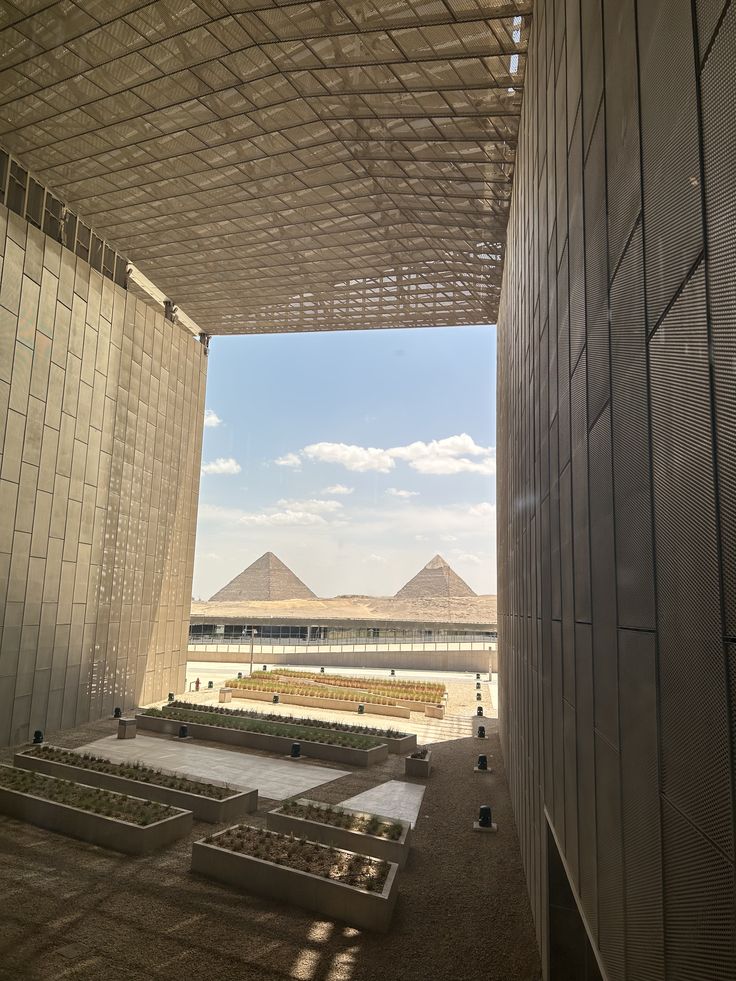
The Grand Egyptian Museum is one of Cairo’s most revolutionary and architecturally stunning destinations, offering travelers a transformative journey into the zenith of Egypt’s cultural heritage and pharaonic legacy. Conceived as a modern home for the nation’s most precious antiquities, this legendary complex has served as a beacon of pride, scientific research, and global tourism even before its full completion. Located just kilometers from the Pyramids of Giza, the museum is far more than a building—it is a monumental achievement where the desert landscape meets glass, steel, and stone in perfect harmony. For travelers seeking the ultimate historical experience in Egypt, the GEM provides one of the city’s most sophisticated and awe-inspiring adventures.
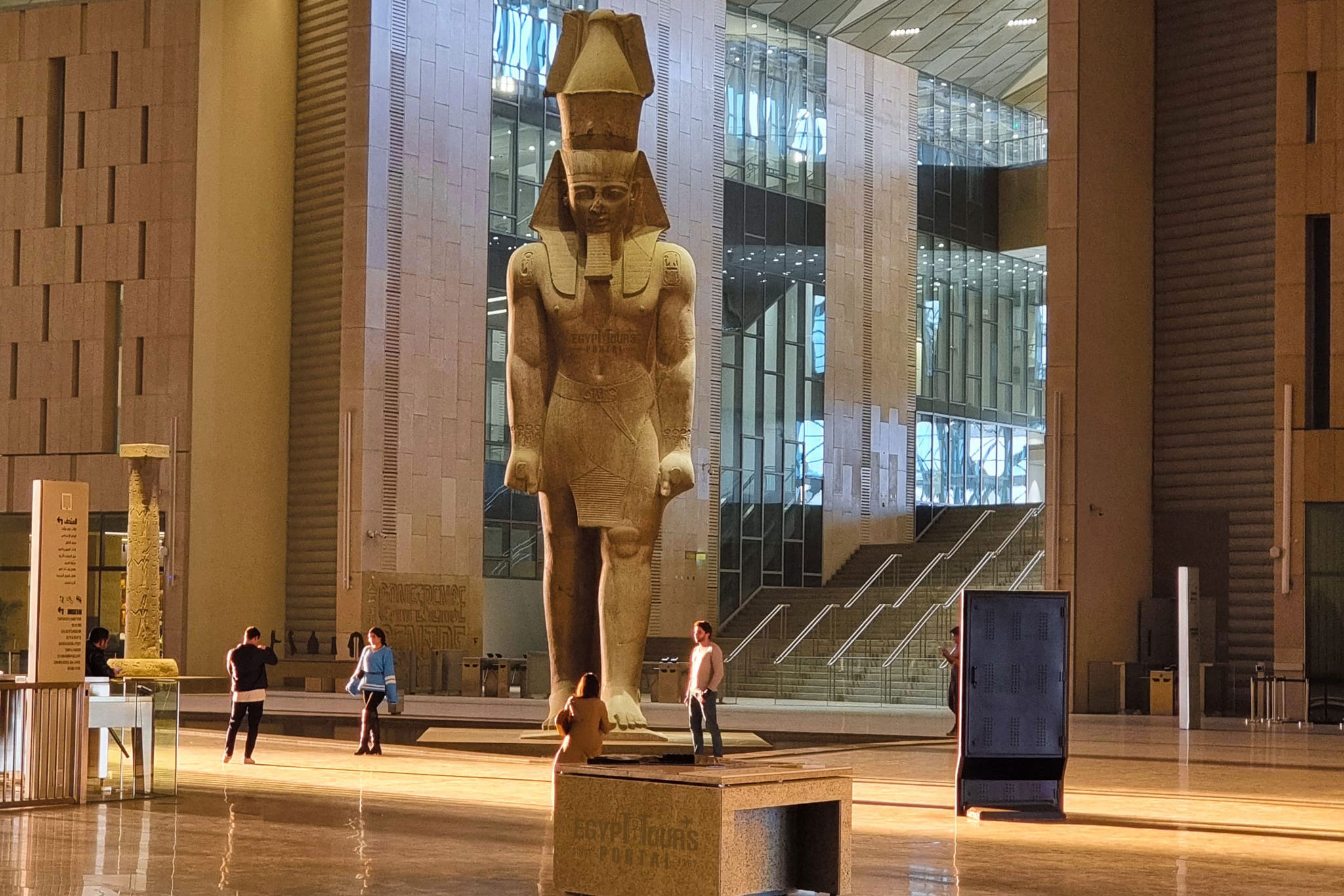
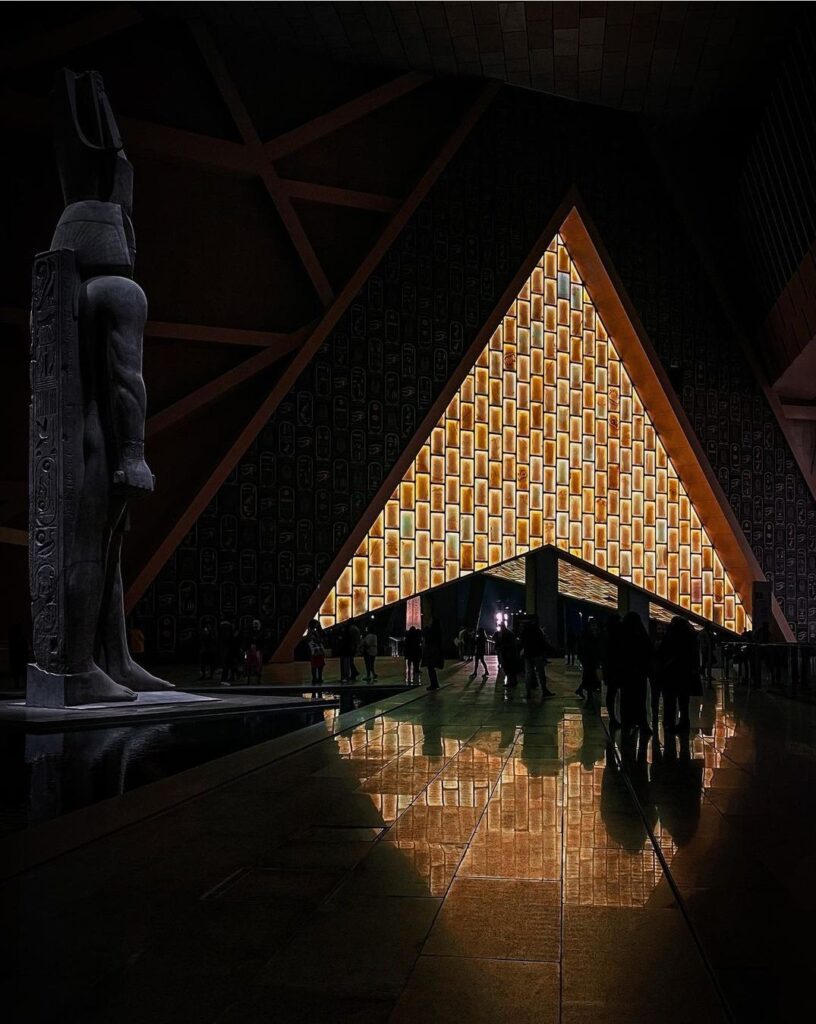
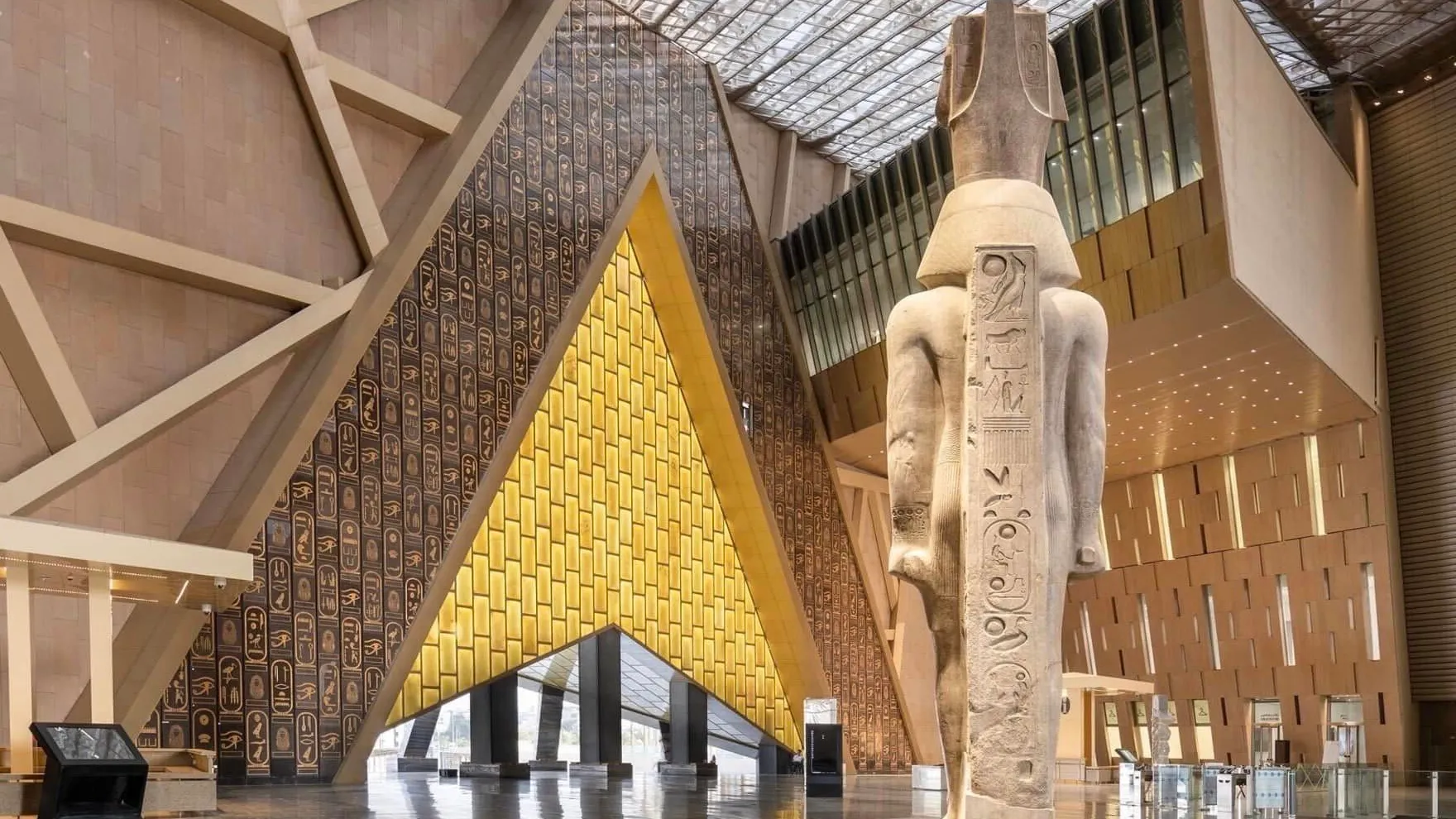
Walking through the GEM feels like stepping into a future where the majesty of the Old Kingdom is celebrated with contemporary grace. The museum’s vast, sun-drenched halls, dramatic geometric lines, and the iconic “folded” roof create a visual spectacle unlike any other museum on earth. Every corridor reveals a new perspective, from the massive Ramses II statue greeting guests in the atrium to the panoramic views of the pyramids visible through the Great Glass Wall. The scale of the architecture reflects the scale of the history it protects, making the very act of walking through the space deeply moving.
What makes the Grand Egyptian Museum truly extraordinary is its role as a cultural hub. Unlike traditional museums that can feel static, this legendary institution is designed as a living center for education, conservation, and celebration. It represents the forward-looking spirit of Egypt—a place where the grandeur of the past is preserved using the most advanced technology of the present. Whether you are passionate about engineering, Egyptology, or the sheer beauty of human endeavor, the GEM offers a profound introduction to the nation’s eternal soul and remains the most anticipated landmark to visit in modern Cairo.
2. Discovering the Golden Treasures of King Tutankhamun
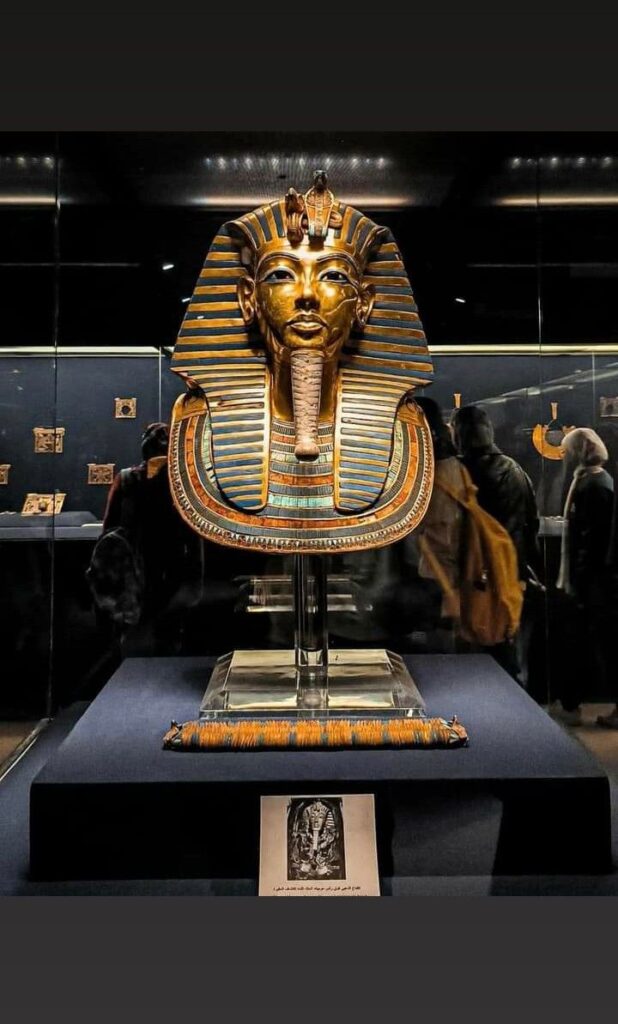
Exploring the dedicated galleries of King Tutankhamun within the Grand Egyptian Museum is one of the most prestigious and dazzling experiences visitors can enjoy, offering a level of intimacy with history that was previously impossible. This legendary collection is famous for being displayed in its entirety for the first time since its discovery in 1922, featuring over 5,000 artifacts that reflect the opulence, artistry, and religious devotion of the New Kingdom. From the moment you enter the darkened, climate-controlled halls, you are surrounded by golden masks, chariots, intricate jewelry, ornate thrones, and the everyday items that accompanied the Boy King into the afterlife. For travelers seeking the “gold standard” of Egyptian history, no other exhibition on earth matches the richness found here.
What makes this collection especially memorable is the narrative flow of the display. Each gallery is meticulously organized to tell the story of the king’s life, his sudden death, and the incredible journey of his tomb’s discovery by Howard Carter. Each display case reveals hidden details, from the delicate floral collars to the masterfully crafted daggers, giving visitors the opportunity to appreciate the skill of ancient artisans in high definition. Many of these items have been painstakingly restored by world-class conservators at the GEM’s own labs, ensuring that every piece of wood, gold, and textile looks as vibrant as it did three millennia ago.
The experience is also an educational marvel, as the museum uses interactive displays to explain the symbolism and craftsmanship behind the treasures. Beyond the sheer value of the gold, the collection allows travelers to engage directly with the personal side of Egyptian royalty, seeing the sandals he wore and the games he played. The Grand Egyptian Museum is not simply displaying wealth; it is providing a curated window into a specific, magical moment in time where art and eternity collided. It is a vibrant cultural journey where every artifact becomes a bridge to a long-lost royal world.
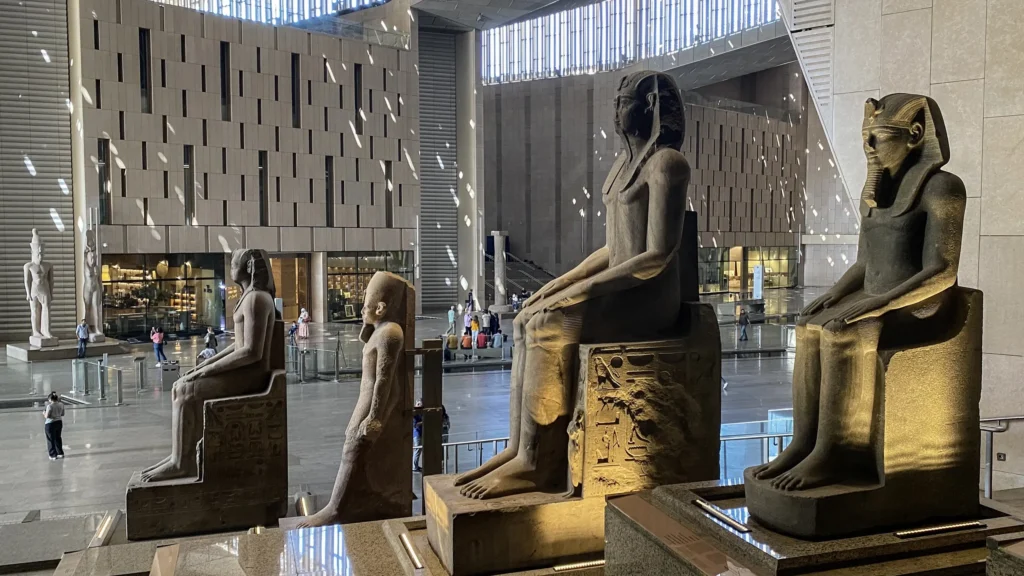
3. The Grand Staircase: A Royal Ascent Through Time
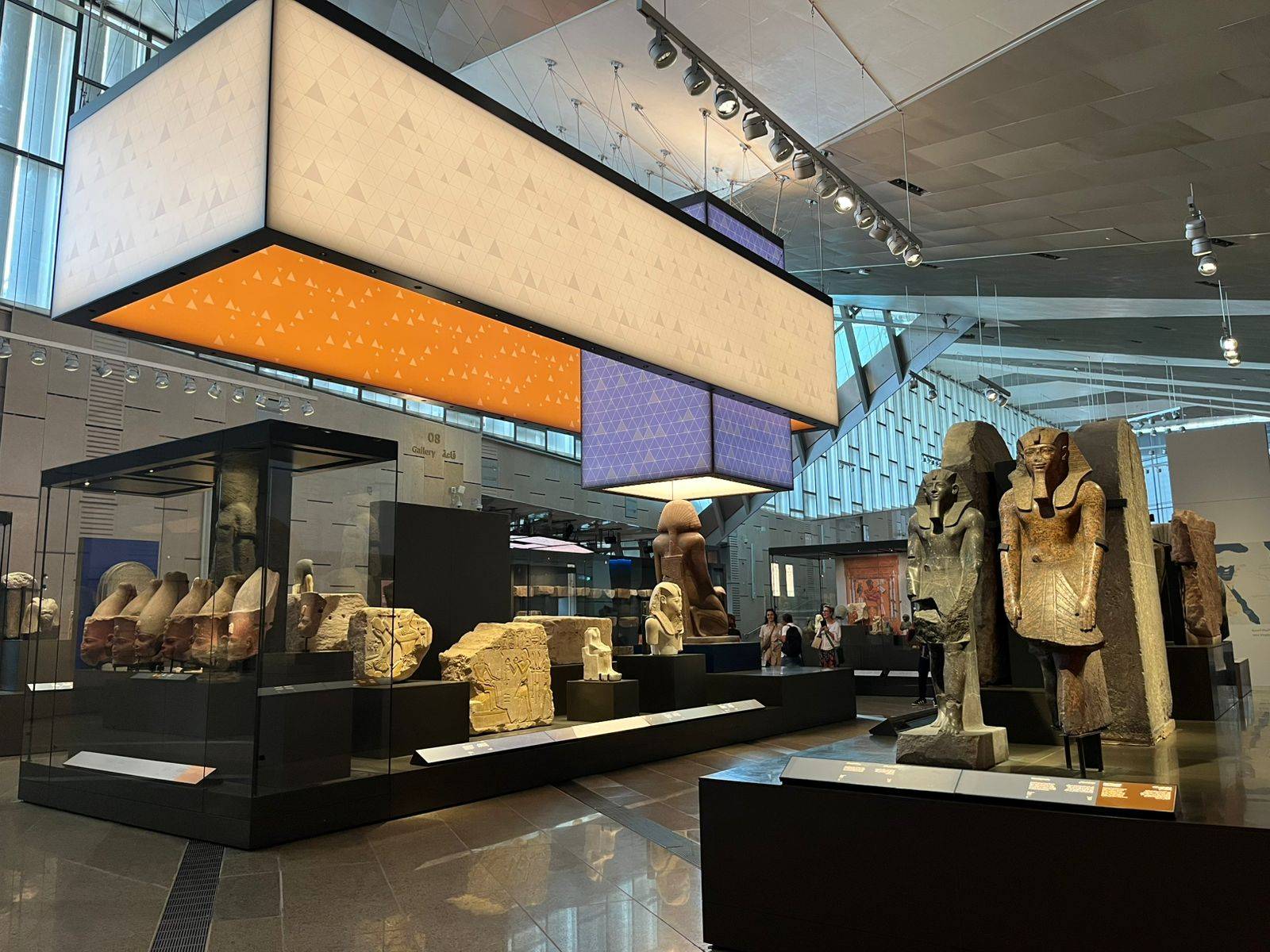
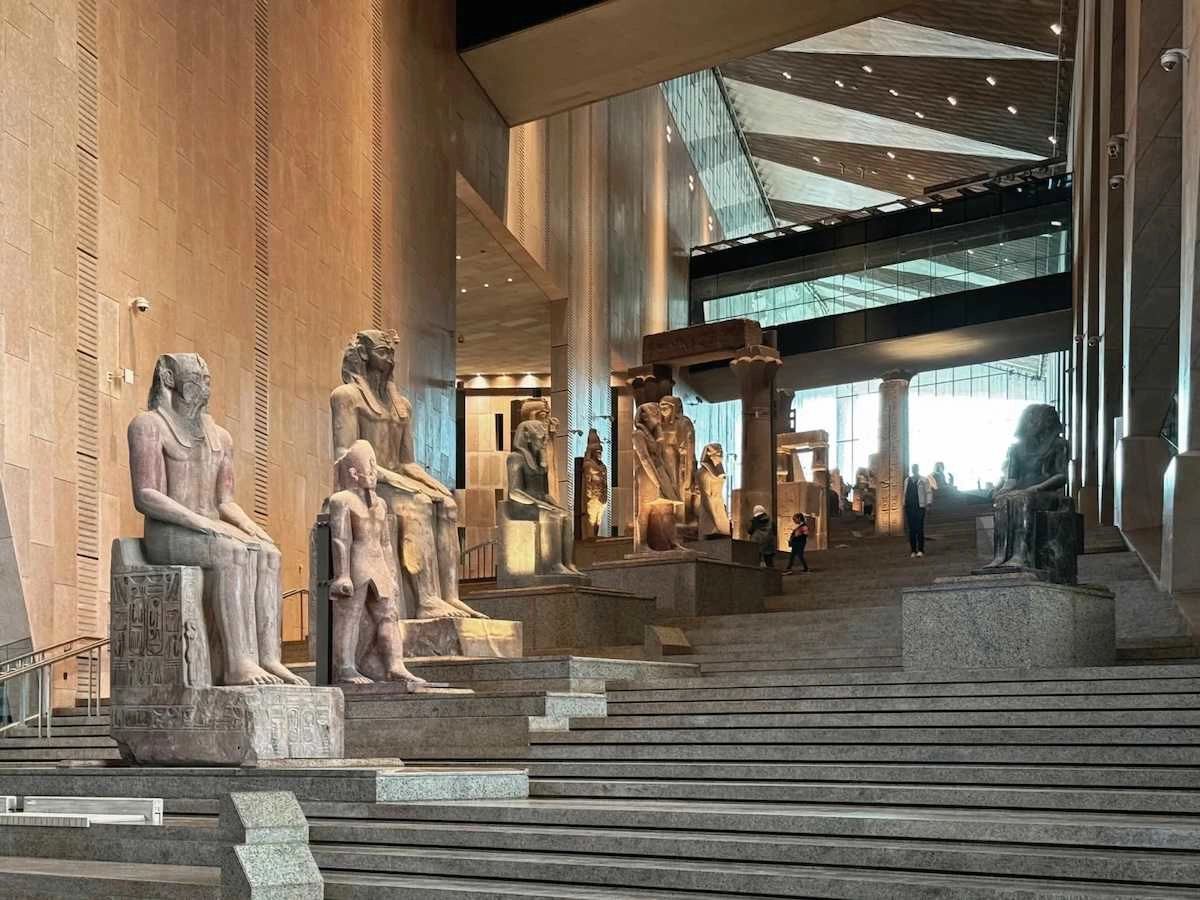
No visit to the Grand Egyptian Museum feels complete without ascending the legendary Grand Staircase, one of the museum’s most dramatic and photographable features. Nestled within the central heart of the building, this architectural marvel hosts a chronological procession of royal statues, sarcophagi, and architectural elements that have commanded respect for thousands of years. Established as a vertical timeline, the staircase is far more than a functional path—it is a symbolic rise through the ranks of Egyptian divinity and kingship. For travelers seeking a powerful visual summary of Egypt’s dynastic eras, this breathtaking ascent remains an essential highlight.
Stepping onto the staircase feels like entering a royal court of the gods. The massive basalt and granite figures, the glowing overhead lights, and the sheer height of the space create a captivating atmosphere that reflects the power of the Pharaohs. Unlike traditional horizontal galleries, the Grand Staircase offers an experience built around perspective and scale. Standing at the base and looking up at dozens of colossal figures allows visitors to absorb the evolution of Egyptian art and royal portraiture from a uniquely impressive vantage point.
Beyond its visual impact, the staircase holds a special place in the museum’s design, ending with a spectacular view of the Giza Pyramids through a massive floor-to-ceiling window. This physical connection between the artifacts inside and the monuments outside reinforces the GEM’s identity as the guardian of the plateau. Whether you stop to examine the muscular details of a statue or spend time simply admiring the alignment of the sun against the stone, the Grand Staircase offers one of the most iconic experiences in the GEM. It is not just a walkway—it is a spiritual and historical climb that honors the enduring legacy of Egypt’s greatest rulers.