
Overview of Pompey’s Pillar
Pompey’s Pillar is one of Alexandria’s most famous archaeological landmarks and one of the finest surviving monuments from Egypt’s Roman period. Standing proudly on a hill in the southwestern part of the city, the monument dominates the surrounding landscape and serves as a powerful reminder of Alexandria’s importance during the Roman Empire. Its impressive height, elegant design, and remarkable state of preservation make it one of the most visited historical sites in Egypt.
The monument consists of a single colossal column carved from red granite quarried in Aswan, a region renowned for producing some of the finest stone used in ancient Egyptian and Roman construction projects. Rising high above the ruins of the ancient Serapeum, the pillar remains an extraordinary example of Roman engineering and craftsmanship. Even after more than 1,700 years, it continues to inspire admiration among historians, archaeologists, and travelers alike.
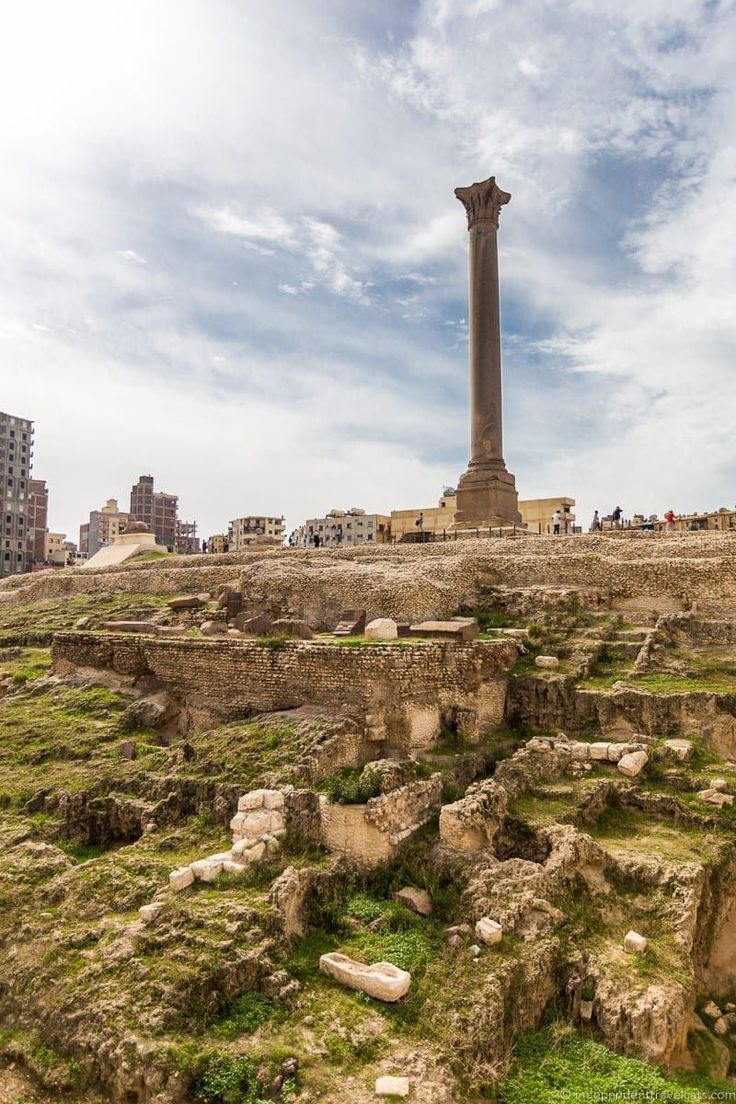
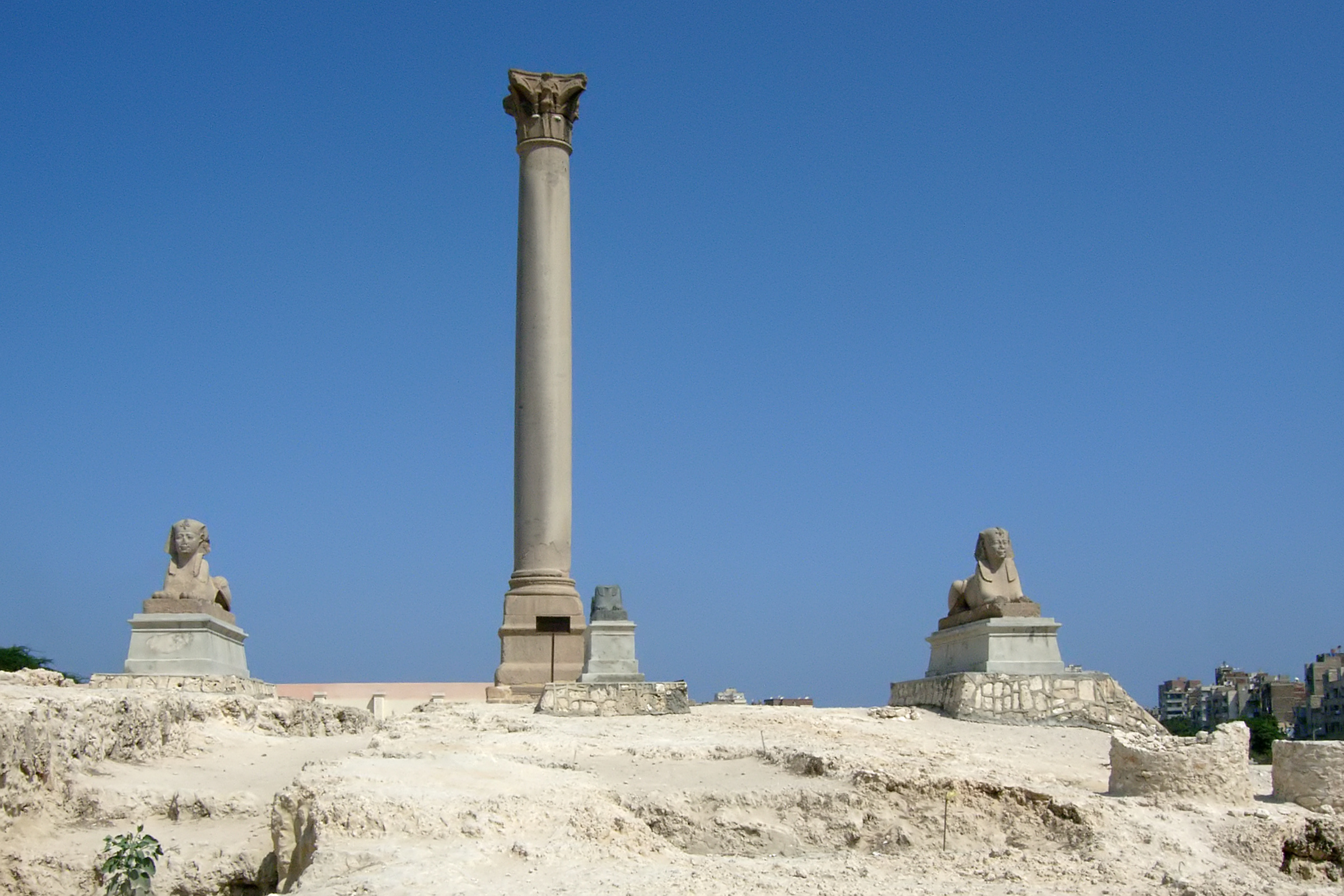
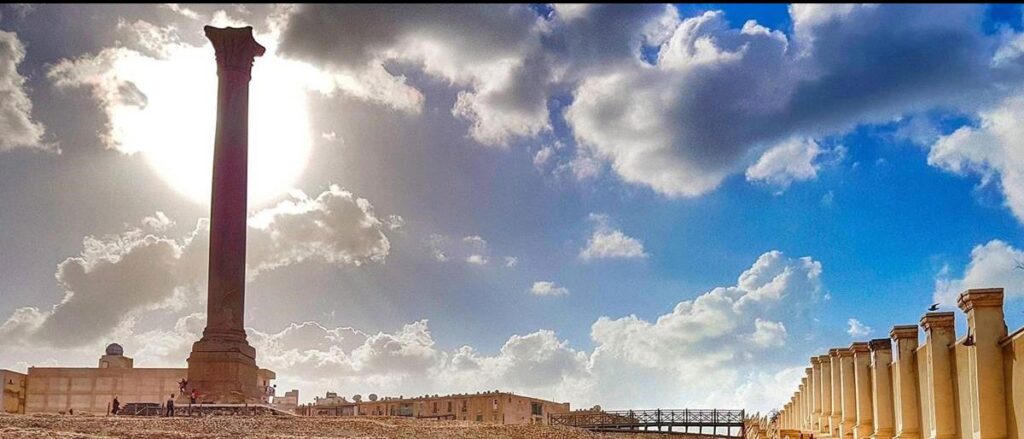
Visitors arriving at the site are often surprised by the sheer scale of the monument. The column towers above nearby ruins and can be seen from various parts of the surrounding area. Its commanding presence provides a striking visual contrast against Alexandria’s modern urban landscape, creating one of the city’s most memorable historical scenes.
Today, Pompey’s Pillar is regarded as an essential stop on any Alexandria sightseeing tour. It attracts travelers interested in Roman history, archaeology, architecture, and Egypt tourism. The monument also offers insight into a period of Egyptian history that is often overshadowed by the country’s pharaonic heritage. By visiting the pillar, travelers gain a deeper understanding of Alexandria’s role as one of the most influential cities of the ancient Mediterranean world.
History and Historical Significance
The history of Pompey’s Pillar begins during the reign of the Roman Emperor Diocletian in the late third century AD. Contrary to popular belief, the monument has no direct connection to Pompey the Great, the famous Roman general who was defeated by Julius Caesar and later assassinated in Egypt. The name “Pompey’s Pillar” originated centuries later due to a misunderstanding among medieval travelers and historians.
The column was erected around 297 AD to honor Emperor Diocletian after he successfully suppressed a rebellion in Alexandria. Following the conflict, the emperor introduced measures that helped stabilize the city and alleviate economic difficulties faced by its inhabitants. In gratitude, the people of Alexandria commissioned the monumental column as a tribute to his leadership and support.
The pillar originally formed part of the Serapeum, one of the most important religious complexes in ancient Alexandria. The Serapeum was dedicated to Serapis, a deity who combined aspects of Egyptian and Greek religious traditions. The temple served as a major center of worship and scholarship and was closely connected to the city’s intellectual and cultural life.
Although much of the Serapeum was destroyed over time, Pompey’s Pillar survived and became one of the most recognizable remnants of Roman Alexandria. Its survival is particularly significant because relatively few large Roman monuments remain standing in Egypt today. As a result, the column provides valuable evidence of the city’s importance during the Roman era.
Today, historians regard the monument as one of Alexandria’s most important archaeological landmarks. It offers visitors a tangible connection to a period when Egypt was an integral part of the Roman Empire and when Alexandria remained one of the world’s leading centers of commerce, culture, and learning.
Architecture and Unique Design Features
Pompey’s Pillar is celebrated not only for its historical significance but also for its extraordinary architectural achievement. Carved from a single piece of red Aswan granite, the monument is considered one of the largest monolithic columns ever constructed in the ancient world. Its impressive dimensions and exceptional craftsmanship demonstrate the remarkable engineering capabilities of Roman builders.
The column rises approximately 27 meters above the ground, including its base and capital. The shaft alone measures more than 20 meters in height and weighs hundreds of tons. Transporting and erecting such a massive stone structure required sophisticated planning, advanced engineering techniques, and a highly skilled workforce.
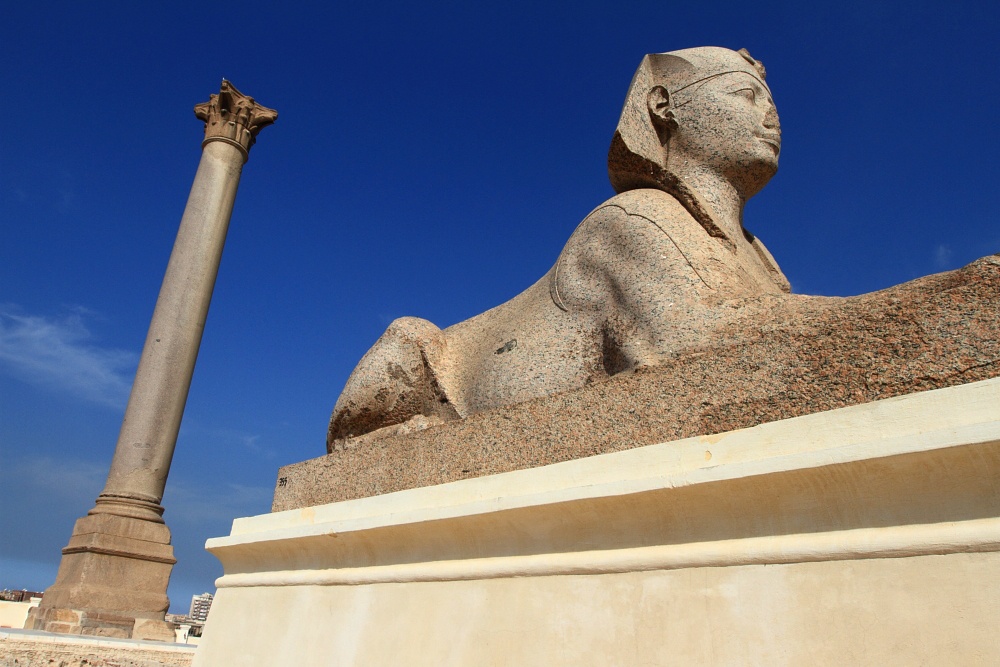
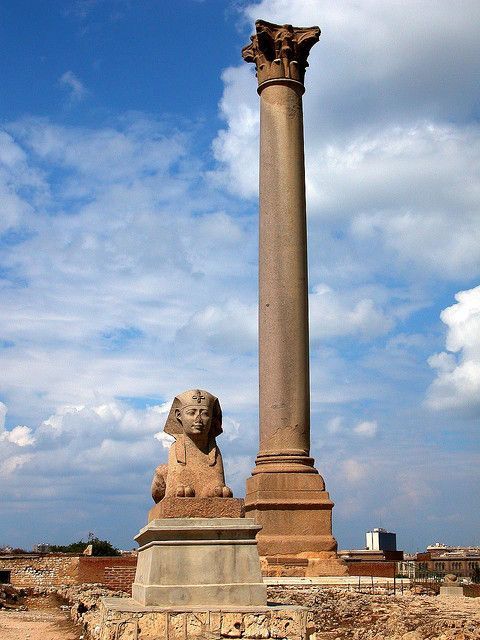
One of the most striking features of the monument is its elegant Corinthian capital. Decorated with intricate carvings inspired by acanthus leaves, the capital reflects the classical architectural traditions that flourished throughout the Roman Empire. The refined details provide a beautiful contrast to the immense scale of the column itself.
The pillar’s polished granite surface remains remarkably well preserved despite centuries of exposure to the elements. Its distinctive reddish color, derived from the granite quarries of Aswan, creates a visually striking appearance that distinguishes it from many other Roman monuments. The quality of the stone and the precision of its workmanship continue to impress visitors today.
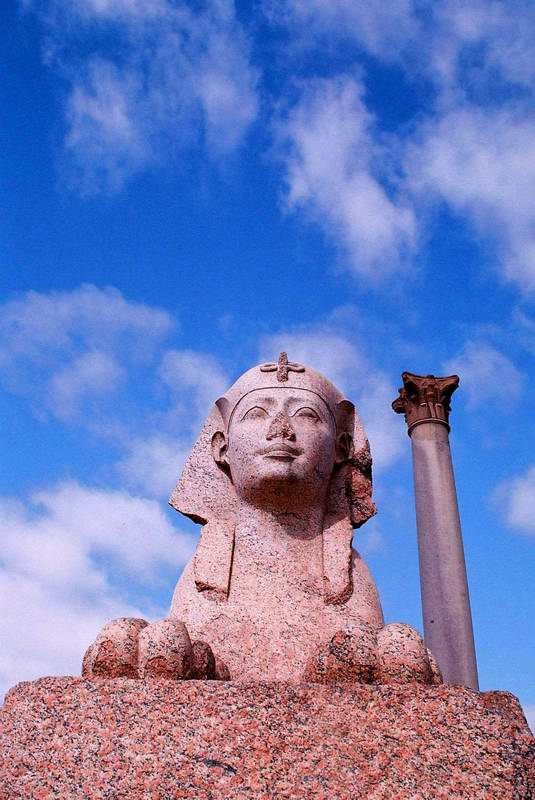
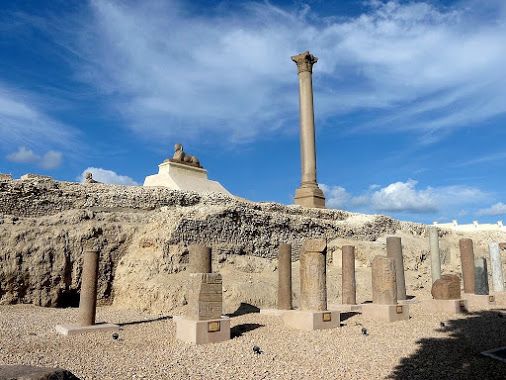
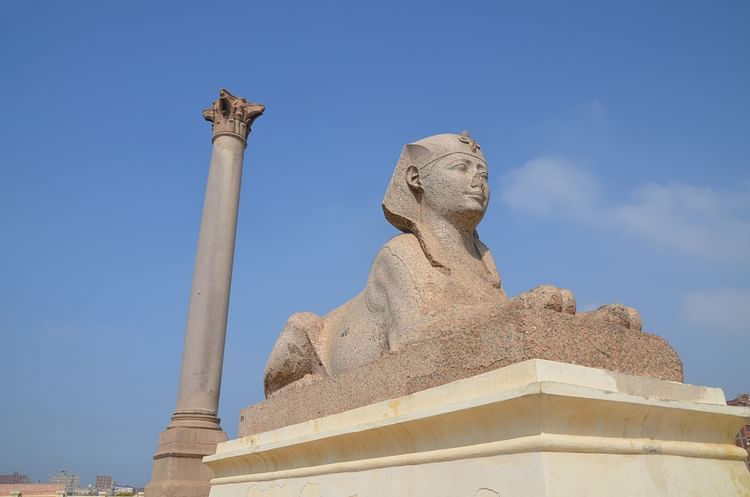
Surrounding the pillar are the remains of the ancient Serapeum complex, including foundations, scattered ruins, and underground structures that help visitors visualize the scale of the original sanctuary. Nearby sphinx statues add another layer of historical interest and highlight the blending of Egyptian and Greco-Roman traditions that characterized ancient Alexandria.
Together, these architectural features make Pompey’s Pillar one of the most remarkable Roman monuments in Egypt and a highlight of any Egypt travel guide focused on the country’s diverse historical heritage.