
Welcome to

The Egyptian Museum in Tahrir Square: The Neoclassical Citadel of Pharaonic Heritage

What makes the Egyptian Museum in Tahrir Square a completely unique highlight of any cultural travel itinerary is the legendary density of its layout, famously known as an “open-storehouse” museum experience. Unlike modern, minimalist exhibitions that space artifacts out under dramatic spotlights, Tahrir surrounds you with history from floor to ceiling. Walking through its double-height galleries feels less like a sterile gallery walk and more like stepping straight into a grand, romantic archaeological repository of the early 20th century. Here, spectacular, world-famous masterpieces like the slate triad statues of Menkaure and the incredibly lifelike, crystal-eyed statue of the Seated Scribe sit comfortably alongside row upon row of intricately carved wooden sarcophagi, papyrus scrolls, and daily personal items.

For professional travel writers, content creators, and independent explorers, this dense, historic aesthetic provides a spectacular backdrop for visual storytelling. The grand central atrium, illuminated by a majestic, natural iron-and-glass skylight, bathes the colossal Old Kingdom monuments below in soft, cinematic daylight that shifts beautifully throughout the afternoon. Furthermore, the museum’s legendary upper floor—which housed the treasures of Tutankhamun for nearly a century—remains a vibrant hub of pharaonic art and elite craftsmanship, displaying magnificent gilded coffins, the famous Yuya and Thuya collection, and centuries of royal history. It is a space where you can literally feel the weight of millions of human stories preserved in stone and gold. The Tahrir Museum stands not just as a collection of objects, but as a historic monument in its own right, offering a timeless, nostalgic journey that captures the raw romance of Egyptology’s golden age.

1. The Architectural Masterpiece of Marcel Dourgnon: A Neoclassical Palace for the Pharaohs

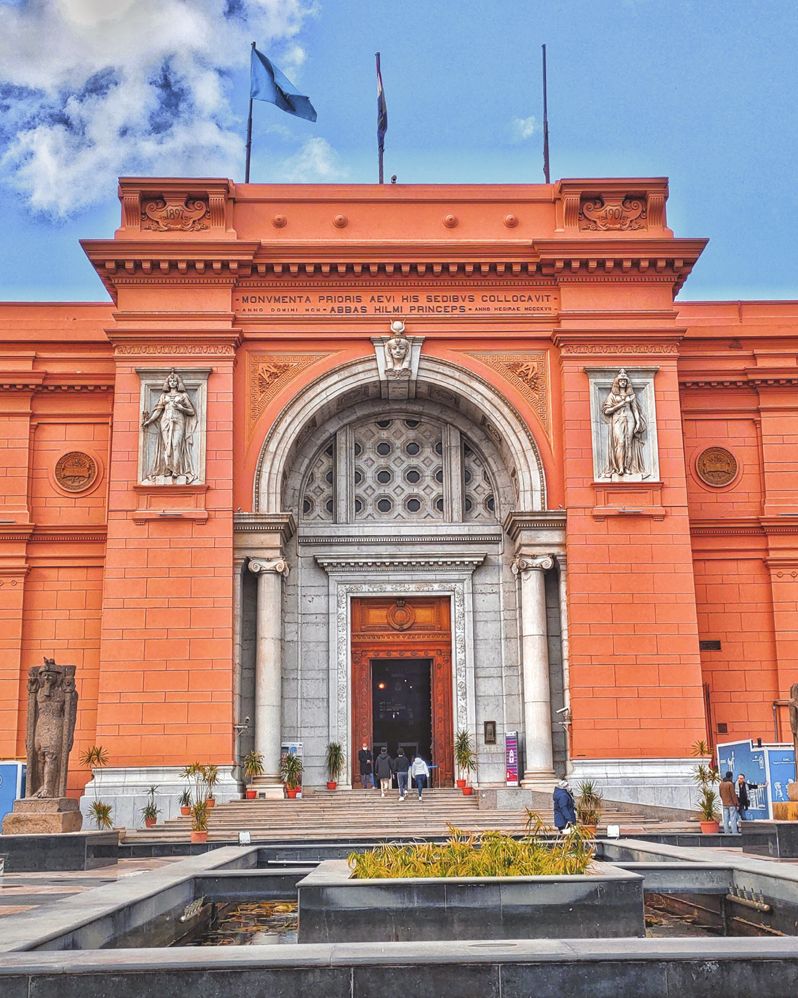
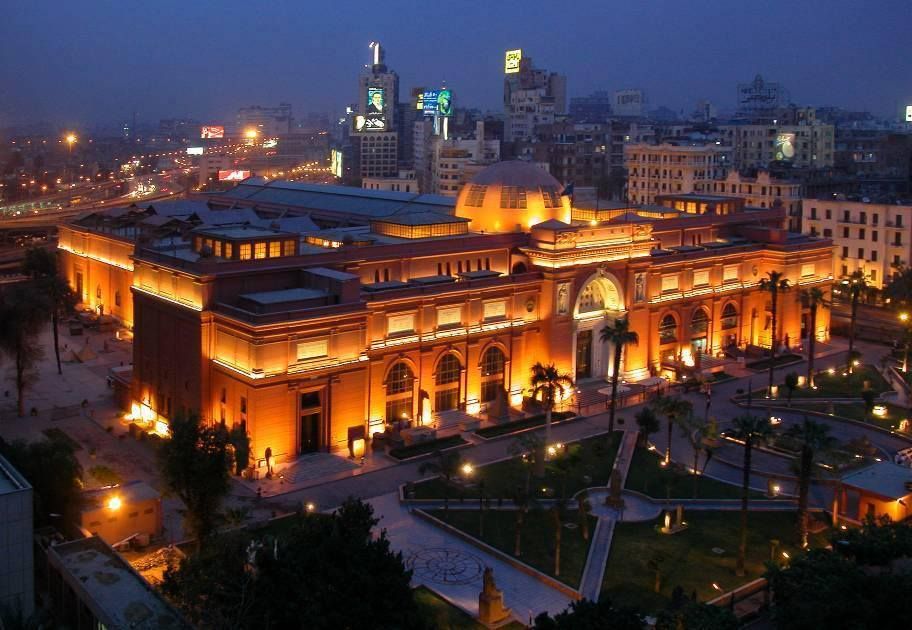
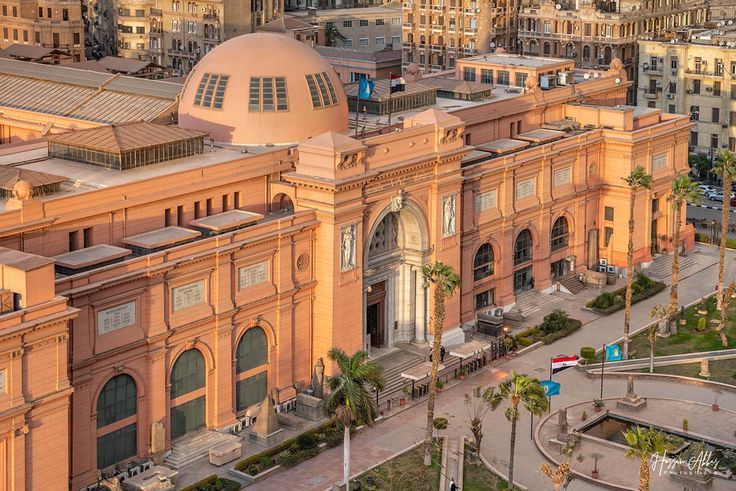
The physical structure of the Egyptian Museum in Tahrir Square is a historic monument in its own right, offering travel content creators, architecture enthusiasts, and cultural historians a captivating visual narrative. Designed by French architect Marcel Dourgnon after a prestigious international competition, the building opened its doors in 1902 as the world’s very first custom-built museum space dedicated entirely to a nation’s antiquities. Its distinctive, rose-pink neoclassical façade stands as a majestic landmark in downtown Cairo, bridging the gap between European architectural elegance and the monumental spirit of ancient Egypt.

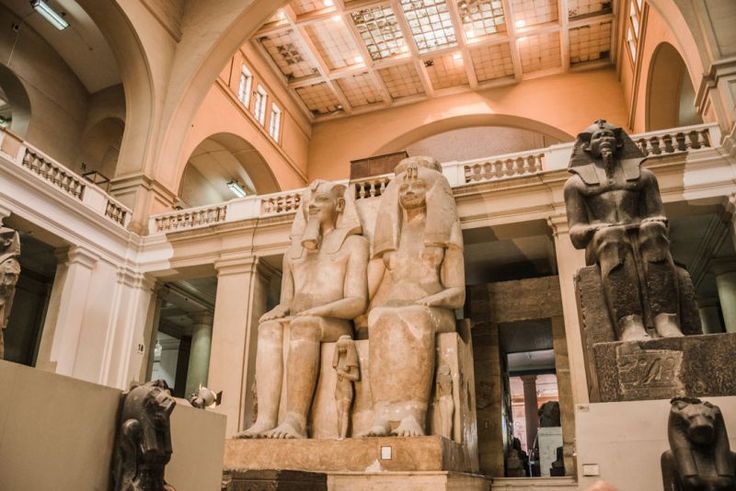
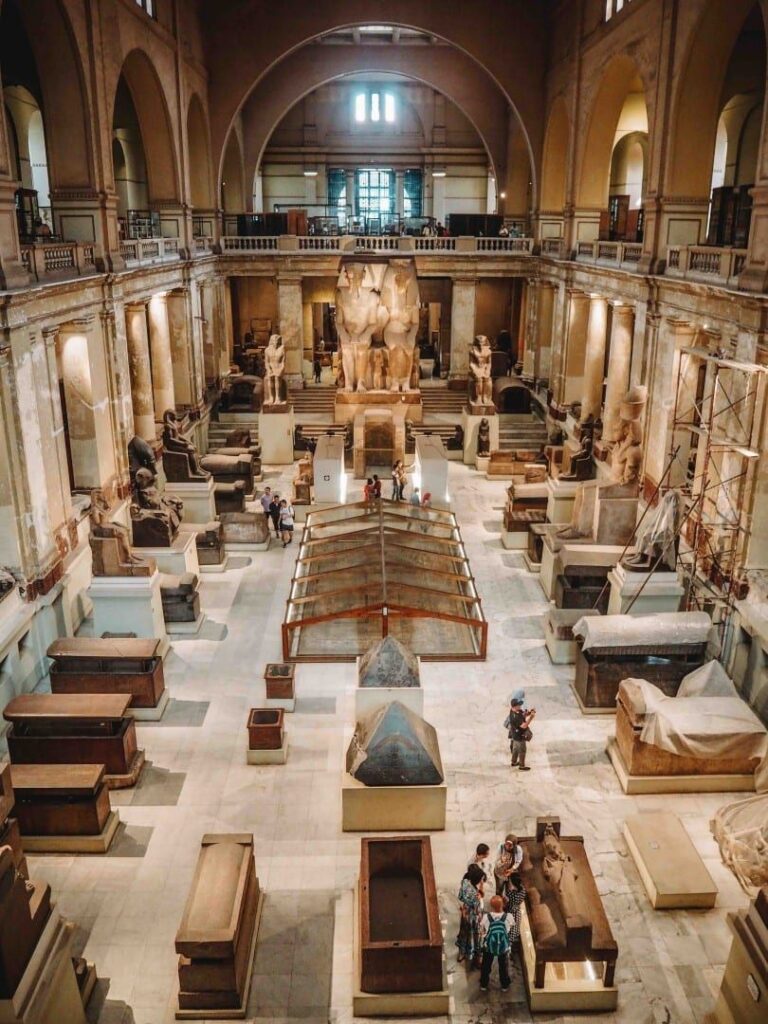
For digital storytellers and photographers, the interior layout provides a brilliant lesson in early 20th-century museum design. The heart of the building features a spectacular, double-height central atrium capped by a grand iron-and-glass skylight. This soaring ceiling allows natural, cinematic daylight to flood the ground floor galleries, bathing the colossal stone monuments below in soft, authentic light that shifts dramatically as the afternoon progresses. Walking through the museum’s heavy iron doors feels like stepping back into the golden age of discovery, where the architecture itself serves as a romantic frame for the treasures within.
2. The Ground Floor: A Chronological Walk Through the Epochs of Stone

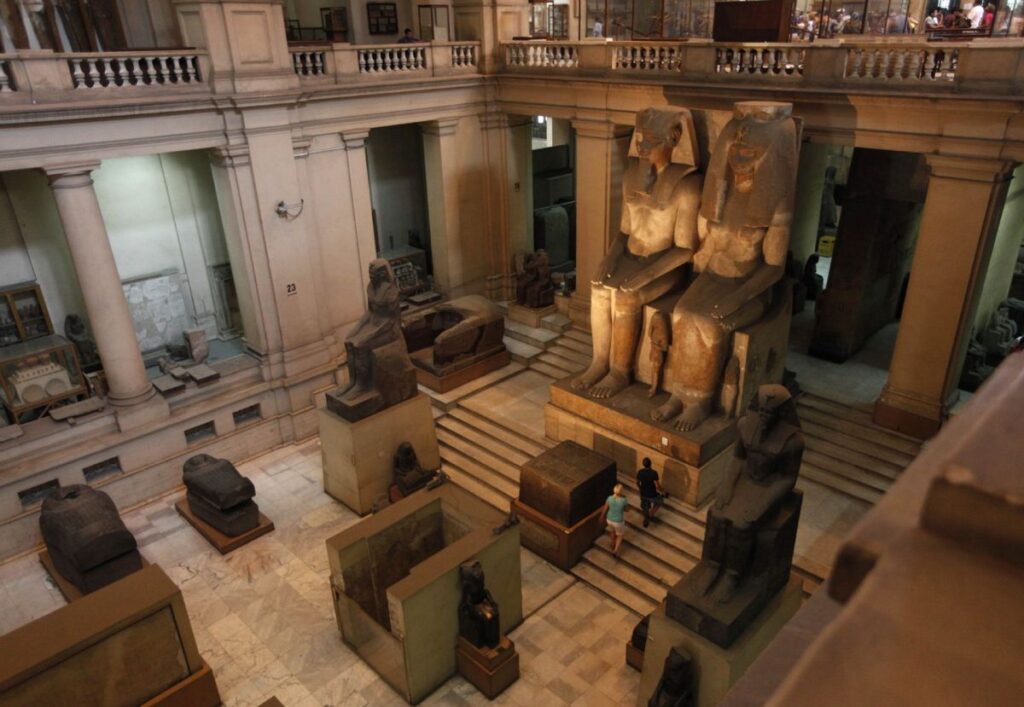
The ground floor of the Tahrir Museum offers independent travelers, analytical history buffs, and professional vloggers an unparalleled, highly structured journey through the grand timeline of pharaonic art. The galleries are meticulously organized in a clockwise chronological loop, allowing visitors to literally walk through the evolution of Egyptian sculpture across three distinct millennia. You begin your exploration with the robust, block-like geometric perfection of Old Kingdom masterpieces, transition into the expressive, emotionally complex portraits of the Middle Kingdom, and finish amidst the elegant, hyper-detailed colossal statuary of the New Kingdom.

As you navigate these high-ceilinged halls, you encounter some of the most celebrated and iconic masterpieces in the history of art. Among the absolute highlights are the stunning diorite statue of Pharaoh Khafre, depicting the pyramid builder protected by the wings of the falcon god Horus, and the legendary, incredibly lifelike limestone statues of Prince Rahotep and his wife Nofret, whose brilliant, inset quartz eyes seem to gaze directly across the centuries at modern onlookers. This dense arrangement of multi-ton granite, basalt, and limestone monuments creates a powerful, tactile experience that showcases the absolute mastery ancient Egyptian sculptors held over the toughest stones on earth.
3. The Upper Floor: An Atmospheric Treasury of Gold, Wood, and Papyrus

Climbing the grand, sweeping staircases to the museum’s upper floor transitions the visitor into an intimate, mesmerizing world dedicated to the delicate craftsmanship, elite funerary arts, and daily life of the ancient elite. While the ground floor celebrates monumental stone, the upper galleries focus on exquisite, fragile materials like gilded wood, painted cartonnage, fragile papyrus scrolls, and intricate jewelry. It is an extraordinary space that reveals the profound spiritual beliefs, complex burial rituals, and artistic sophistication of the dynastic court.

For digital content creators, this level provides an endless supply of fascinating cultural narratives. The galleries house the magnificent, globally acclaimed collection of Yuya and Thuya—the great-grandparents of King Tutankhamun—which features remarkably preserved gilded sarcophagi, intricate royal chariots, and beautifully crafted furniture that rival the finest treasures of the pharaohs. Additionally, the rooms dedicated to the Royal Cachette collections display row upon row of intricately painted wooden coffins found stacked together in hidden tombs. Walking through these long, atmospheric corridors offers an unforgettable, nostalgic look into the raw romance of early Egyptology, retaining an authentic charm that cannot be replicated in any modern, minimalist gallery setting.
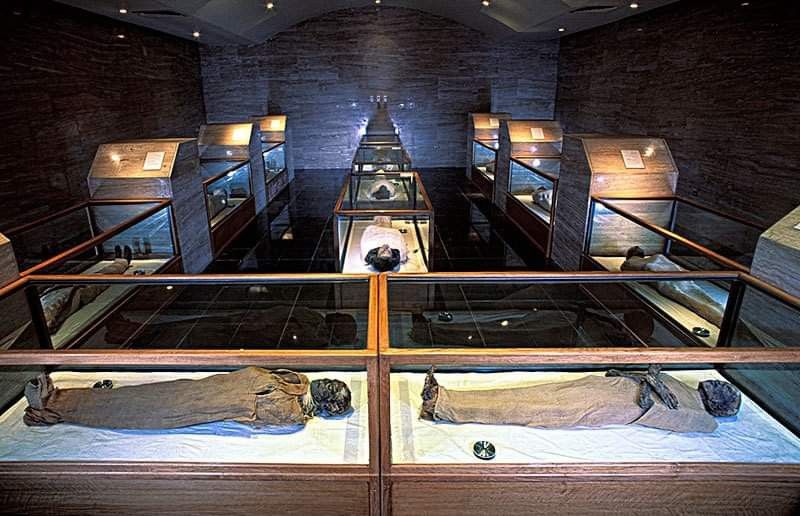
4. The Royal Masterpieces Restored: Tanis, Yuya, and Thuya Take Center Stage

The physical contents of the Tahrir Museum offer digital content creators, luxury travel operators, and cultural historians a dynamic narrative of renewal and artistic rediscovery. Following the grand relocation of the Tutankhamun collection and the royal mummies to newer mega-museums, the Egyptian Museum in Tahrir Square has successfully reinvented itself. Rather than losing its luster, the museum has utilized this breathing room to execute a magnificent, multi-million-dollar renovation, bringing thousands of long-hidden, master-level treasures out of the basement archives and into the freshly painted, beautifully lit galleries.

The absolute crown jewel of this modern curation is the breathtaking, newly expanded Tanis Collection. Often referred to by archaeologists as the “Tutankhamun of the Delta,” the silver sarcophagi, pristine gold burial masks, and exquisite lapis lazuli jewelry of the 21st-Dynasty Pharaohs Psusennes I and Amenemope offer an elite display of craftsmanship that rivals any find in human history. Because silver was exceptionally rare and highly valued over gold in ancient Egypt, showcasing these shimmering masterpieces provides travel writers with a high-value, exclusive narrative angle that instantly captivates discerning cultural travelers.

Alongside the silver pharaohs of Tanis, the upper floor now proudly highlights the complete, wonderfully intact burials of Yuya and Thuya—the great-grandparents of Tutankhamun. Visitors can capture clean, unobstructed views of their magnificent gilded coffins, remarkably preserved ancient beds, and an intact royal chariot. By focusing your media on these newly elevated exhibitions, you present a highly sophisticated, expert-level perspective on Cairo’s cultural scene, proving that the historic heart of Tahrir remains an essential, deeply rewarding pilgrimage for authentic Egyptology.

5. The Rosetta Stone Replica and the Narmer Palette: Decoding the Language of History

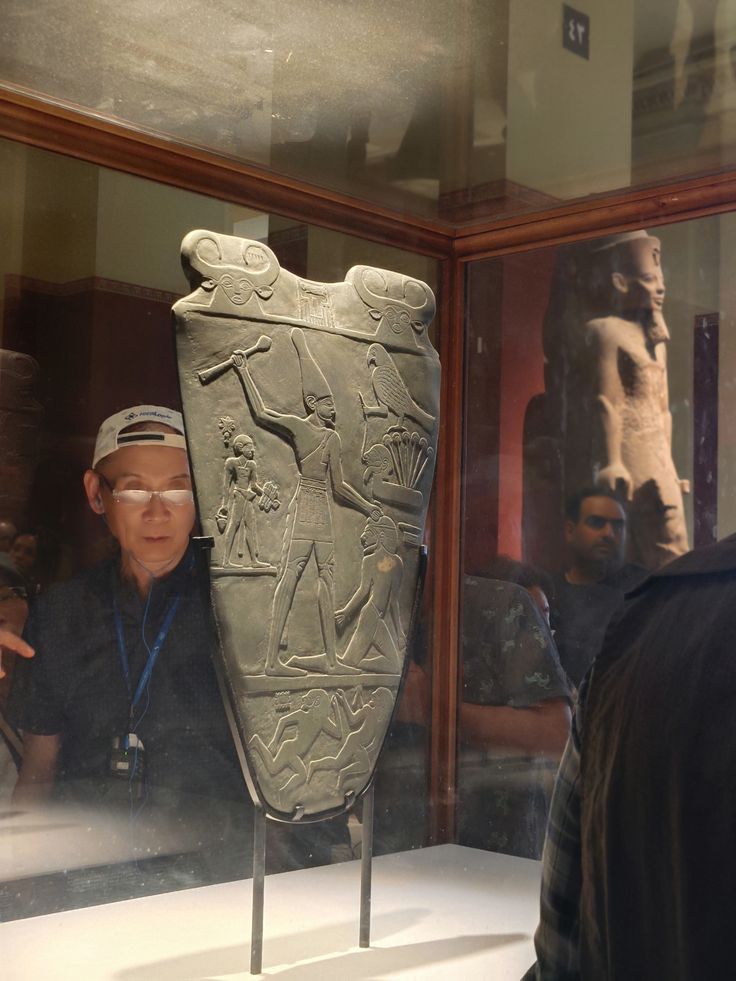
For analytical history buffs and digital content creators, the entry halls of the Tahrir Museum house the fundamental foundational pieces of written human history. Standing as the ultimate prologue to your museum tour is the legendary Narmer Palette. Carved from a single piece of dark green siltstone dating back to roughly 3100 BC, this priceless artifact serves as the world’s oldest historical document, visually narrating the brutal and triumphant unification of Upper and Lower Egypt under King Narmer.

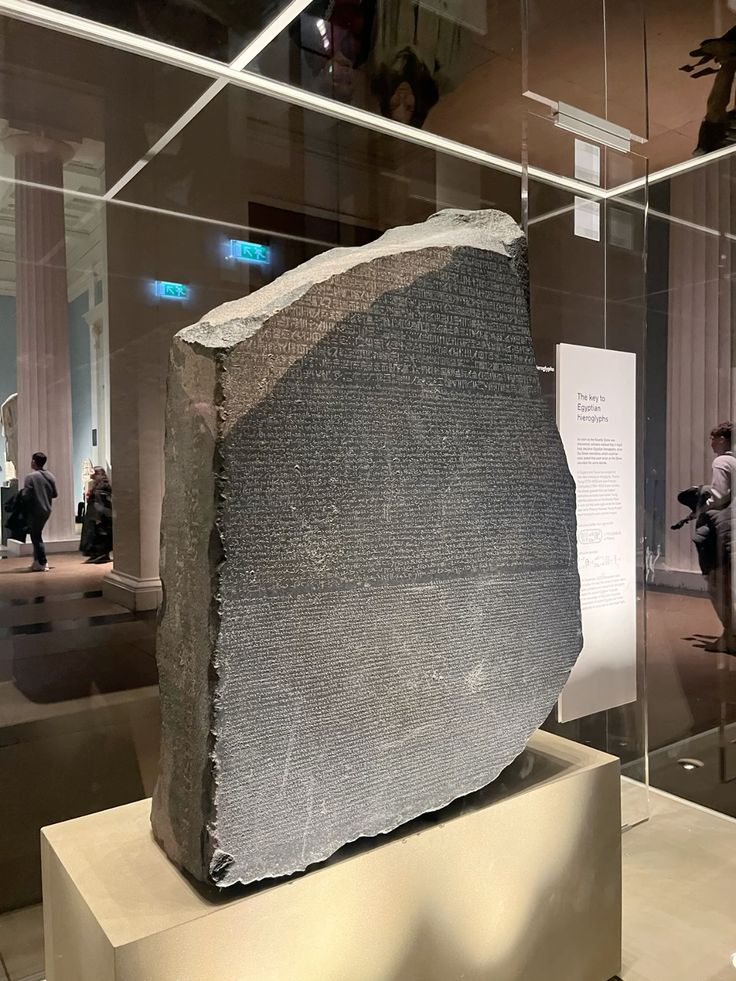
Just a short walk away, visitors can study a pristine, high-fidelity replica of the Rosetta Stone, the trilingual decree that served as the linguistic key for Jean-François Champollion to crack the Egyptian hieroglyphic code in 1822. Featuring the exact text written in Hieroglyphic, Demotic, and Ancient Greek, this display provides an incredible backdrop for educational content and travel vlogs. Highlighting these specific artifacts in your media allows you to ground your audience in the literal birth of Egyptology, showing how the very language written on the surrounding multi-ton statues was unlocked for the modern world.

6. The Animal Mummy Room: A Fascinating Window into Ancient Religious Devotion

Climbing up to the quiet, atmospheric corners of the second floor brings visitors face-to-face with one of the most culturally intriguing and slightly eerie exhibitions in Cairo: the dedicated Animal Mummy Room. While human mummification is well known, the ancient Egyptians also preserved millions of animals, birds, and reptiles as sacred votive offerings to the gods, beloved family pets, or eternal food supplies for the afterlife.

This specialized gallery displays an astonishing variety of beautifully wrapped mummies, including massive Nile crocodiles dedicated to the god Sobek, sacred ibises wrapped in intricate geometric linen patterns for Thoth, falcons for Horus, and cats for the goddess Bastet. For creative travel writers and independent documentary filmmakers, this room provides a spectacular, high-engagement subject that breaks away from standard statue descriptions. It offers a deeply intimate look into the everyday spiritual anxieties, environmental connections, and profound religious devotion of ordinary ancient Egyptians, captured through the perfectly preserved forms of the creatures they shared the Nile Valley with.

7. Beyond Tutankhamun: The Spirit of a Living Museum Reshaped

The opening of the Grand Egyptian Museum near the Giza Pyramids—which fully transferred the legendary Tutankhamun collection to its new halls—has unexpectedly given the Tahrir Museum its most exciting rebirth in over a century. For digital travel storytellers, cultural vloggers, and independent writers, this structural shift completely reframes how you pitch and document the site. Rather than treating Tahrir as a stepping stone to see the golden mask, your media can now focus on the true essence of the building: a pure, unadulterated masterclass in classical Egyptology and 19th-century atmospheric charm that modern, minimalist mega-museums simply cannot replicate.

This breathing room has allowed the Ministry of Tourism and Antiquities to strip away the dense, cluttered layout of the past and execute an elegant gallery restoration. By highlighting once-shadowed masterpieces like the breathtaking Tanis silver treasures and the complete Yuya and Thuya dynastic collections, the museum offers a beautifully balanced, uncrowded, and highly cinematic visitor flow. For professional content creators, this means you can now capture clean, expansive wide-angle frames of the double-height halls and iconic Old Kingdom monuments without battling massive tour groups, delivering an expert-level narrative that celebrates Tahrir not as a relic of the past, but as the enduring, nostalgic heart of Cairo’s living heritage.

8. The Global Renaissance: Tahrir’s New Era as a Masterclass in Art History

The shifting of Cairo’s archaeological landscape has ultimate cemented the Egyptian Museum in Tahrir Square as an essential, stand-alone pilgrimage for international travelers, cultural academics, and lifestyle content creators. For years, the overwhelming fame of the Tutankhamun collection inadvertently turned the rest of this 15,000-square-meter palace into a rushed waiting room. Today, with those treasures securely housed in their new dedicated pavilions, Tahrir has entered a brilliant global renaissance, transforming from a crowded tourist checkpoint into a highly sophisticated, elegantly curated sanctuary of pure pharaonic art history.

This new era allows the museum to showcase its structural and artistic identity with unparalleled clarity. Free from the chaotic footprints of massive tour rushes, the galleries now function as a serene, deeply educational timeline where visitors can silently appreciate the sheer genius of Old Kingdom engineering and the fluid elegance of New Kingdom aesthetics. For digital media strategists and travel writers, this creates an elite storytelling opportunity. You can now film and document world-class masterpieces—like the majestic diorite statue of Khafre or the vibrant, lifelike gaze of the Seated Scribe—in quiet, high-contrast settings that mirror the private gallery experiences of Europe and North America, proving that the historic heart of Tahrir remains the ultimate, soulful anchor of Egypt’s cultural legacy.

9. The Golden Hour of Cairo: Capturing Cinematic Heritage

For lifestyle vloggers, professional travel photographers, and digital media planners, the newly restored layout of the Tahrir Museum offers an unparalleled visual workspace. Because the building was masterfully engineered around a soaring central courtyard, the entire ground level serves as a dynamic canvas for natural light. As the sun moves across the downtown Cairo sky, the iron-and-glass skylights filter shifting beams of cinematic daylight directly onto the colossal granite and basalt pharaonic monuments below.

To capture high-impact, professional media, timing your visit around these lighting shifts is essential. The early morning hours provide a crisp, clean brightness that illuminates the intricate details of the Old Kingdom statues, while the late afternoon golden hour bathes the entire neoclassical atrium in a warm, nostalgic glow. Framing these massive, multi-ton sculptures against the soft, natural shadows of the historic galleries allows content creators to deliver an incredibly sophisticated aesthetic—one that highlights the deep, tactile textures of ancient craftsmanship in a way that modern fluorescent gallery lighting simply cannot match.

10. The Royal Court of Akhenaten: The Masterpieces of Amarna Art

One of the most profound benefits of the museum’s recent gallery reorganization is the brilliant elevation of the Amarna Period collection. Located on the ground floor, this dedicated space focuses entirely on the revolutionary reign of Pharaoh Akhenaten and his legendary queen, Nefertiti. When Akhenaten upended centuries of traditional Egyptian religion to worship the sun disc, Aten, he also completely upended the country’s artistic style, replacing rigid, idealized pharaonic forms with an organic, hyper-expressive, and strangely fluid realism.

For independent travel writers and cultural historians, this gallery provides an endless stream of fascinating, high-engagement narratives. Visitors can stand inches away from the towering, uniquely stylized colossal statues of Akhenaten, which feature elongated faces and soft, un-pharaonic proportions. The collection also displays beautifully intimate, hand-carved relief fragments showing the royal family playing with their daughters under the protective rays of the sun. Highlighting this dramatic stylistic rupture in your travel content adds an elite layer of art-historical intrigue, transforming a standard museum walkthrough into a deep dive into the ancient world’s most fascinating cultural revolution.

11. The Soul of Downtown Cairo: A Living Monument of Cultural Continuity

Beyond the priceless gold, stone, and papyrus preserved within its walls, the Tahrir Museum itself stands as an irreplaceable symbol of modern Egyptian identity and global cultural continuity. For nearly a century and a quarter, this majestic rose-pink palace has served as an immovable anchor for the bustling streets of downtown Cairo. It has quietly watched the city evolve around it, remaining a steadfast sanctuary of heritage amidst the rapidly shifting rhythms of the 21st-century metropolis.

For digital storytellers and travel strategists, conveying this sense of place is what truly elevates a piece of content from a simple travel guide to a compelling cultural narrative. Stepping out from the quiet, timeless halls of the museum straight into the vibrant, energetic pulse of Tahrir Square creates a breathtaking contrast between the deep past and the living present. By documenting the museum not just as a static repository for dead kings, but as a living, breathing landmark that continues to inspire and educate millions of modern visitors, you present a profoundly respectful and complete portrait of Egypt’s enduring global legacy.

12. The Unshakable Legacy: An Eternal Anchor in the Heart of Egyptology

As your journey through the grand neoclassical galleries of the Egyptian Museum in Tahrir Square comes to a close, you leave its historic iron doors with a profound sense of connection to the very birth of modern archaeology. This majestic, rose-pink fortress has spent well over a century serving as the cradle of global Egyptology. It has survived the passing of eras, hosted the world’s most legendary explorers, and gracefully evolved alongside the city of Cairo itself, all while keeping the unmatched soul of its historic collections entirely intact.

For professional content creators, cultural journalists, and passionate travelers alike, Tahrir remains an irreplaceable, living monument that simply cannot be replaced by modern, minimalist glass pavilions. It stands as a glorious bridge between the romantic discoveries of the 19th century and the digital storytelling of the 21st century—a place where the walls themselves tell a story of dedication, preservation, and national pride. As you capture your final cinematic frames or look back one last time at its iconic façade against the vibrant Cairo skyline, the Tahrir Museum remains etched in memory not just as a storehouse of ancient treasures, but as the timeless, beating heart of Egypt’s cultural heritage.

The Egyptian Museum in Tahrir Square : Frequently Asked Questions

The vast majority of the legendary Tutankhamun collection—including his iconic golden death mask, magnificent nested coffins, and royal chariots—has been transferred to the Grand Egyptian Museum (GEM) near the Giza Pyramids to serve as its centerpiece exhibition. However, the Tahrir Museum has beautifully utilized this space to execute a grand gallery renaissance, bringing thousands of master-level treasures out of its basement vaults. The absolute highlight of this new curation is the complete, breathtaking Tanis Royal Collection, featuring exquisite silver sarcophagi and gold burial masks that rival the finest craftsmanship of Tutankhamun.

Yes, photography is highly encouraged to capture the museum’s spectacular neoclassical architecture and daylight-filled galleries. Standard photography using your smartphone is completely free and permitted throughout the general exhibition spaces (without flash). However, if you are a professional content creator, vlogger, or landscape photographer intending to shoot with a DSLR, mirrorless, or professional video camera setup, you must purchase a dedicated camera ticket at the main entrance ticketing kiosk.

Yes, the Tahrir Museum is open daily from 9:00 AM to 5:00 PM, but it also offers a highly unique and atmospheric experience by extending its opening hours on Thursdays and Sundays every week until 7:00 PM.

For digital content creators, photographers, and independent travelers looking to capture pristine, cinematic wide shots without large tour groups, the absolute best time to visit is exactly at 9:00 AM when the doors first open. This allows you to experience the grand central atrium in near-silence, flooded with natural morning sunlight filtering through the glass ceiling. Alternatively, taking advantage of the extended evening hours provides a beautifully calm, nostalgic experience, allowing you to immerse yourself in the romance of early 20th-century archaeology right in the vibrant heart of downtown Cairo.

The famous royal mummies of Egypt’s greatest New Kingdom pharaohs (including Ramesses II and Queen Hatshepsut) were famously relocated to the National Museum of Egyptian Civilization (NMEC) during the historic Golden Parade. However, the Tahrir Museum still holds incredible mummified history. The upper floor features the fascinating and highly popular Animal Mummy Room, showcasing beautifully wrapped crocodiles, ibises, falcons, and cats dedicated to ancient deities, offering a deeply intimate look into everyday pharaonic religious devotion.

Because the recent reorganizations have cleared away the dense, cluttered layouts of the past, navigating the museum’s chronological flow is a much smoother experience. To comfortably appreciate both floors—walking from the monumental Old Kingdom sculptures on the ground level to the exquisite elite funerary arts of Yuya and Thuya upstairs—you should budget 2 to 3 hours. Arriving right when the museum opens at 9:00 AM is highly recommended to capture clean, unobstructed views of the grand central atrium before the midday city rhythms pick up.