
1. The Barter System in Ancient Egypt
The barter system in Ancient Egypt was the foundation of everyday economic exchange for thousands of years. Before the introduction of widespread coin usage, Egyptians exchanged goods and services directly based on their estimated value. This system allowed farmers, craftsmen, merchants, and workers to obtain the products they needed.
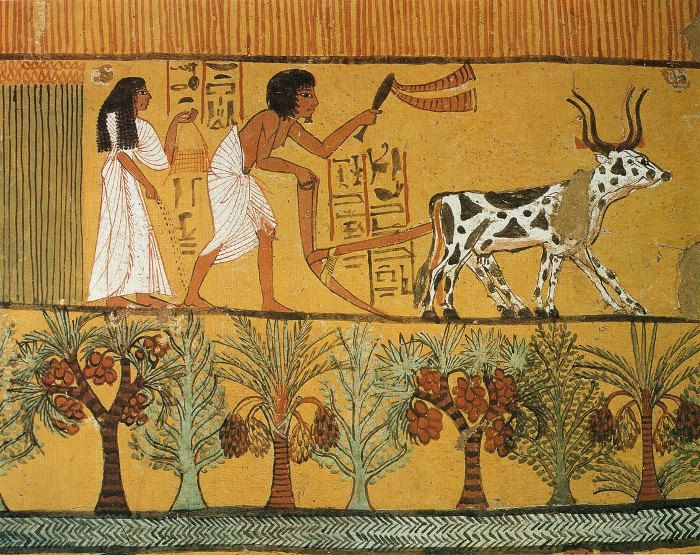
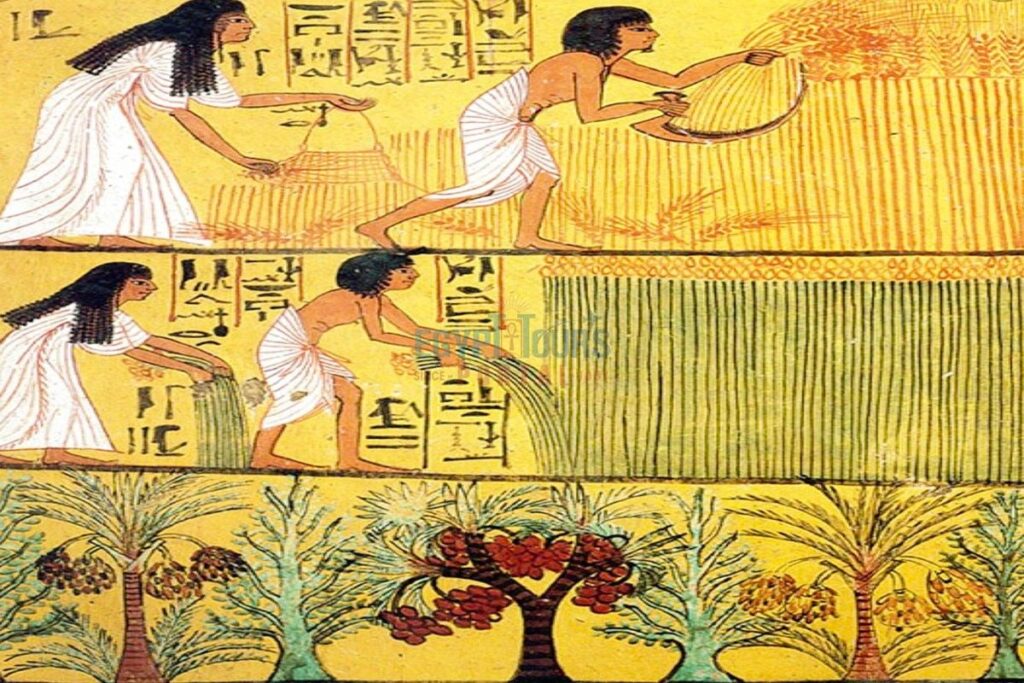
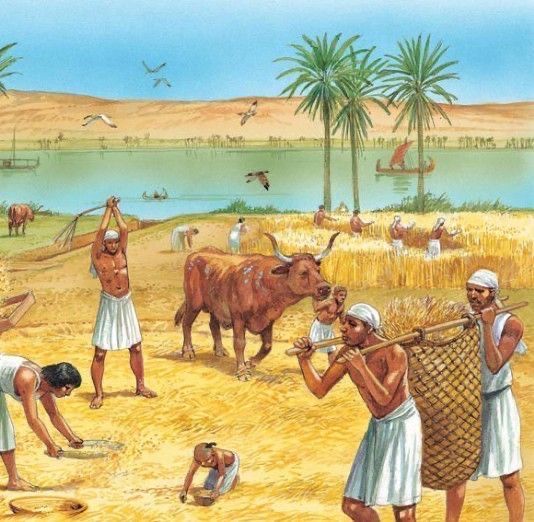
Agricultural products were among the most common items used in barter transactions. Because farming was central to Egyptian life, goods such as wheat, barley, vegetables, fruits, and livestock had significant economic value. Farmers could exchange their agricultural products for tools, clothing, pottery, and other necessities.
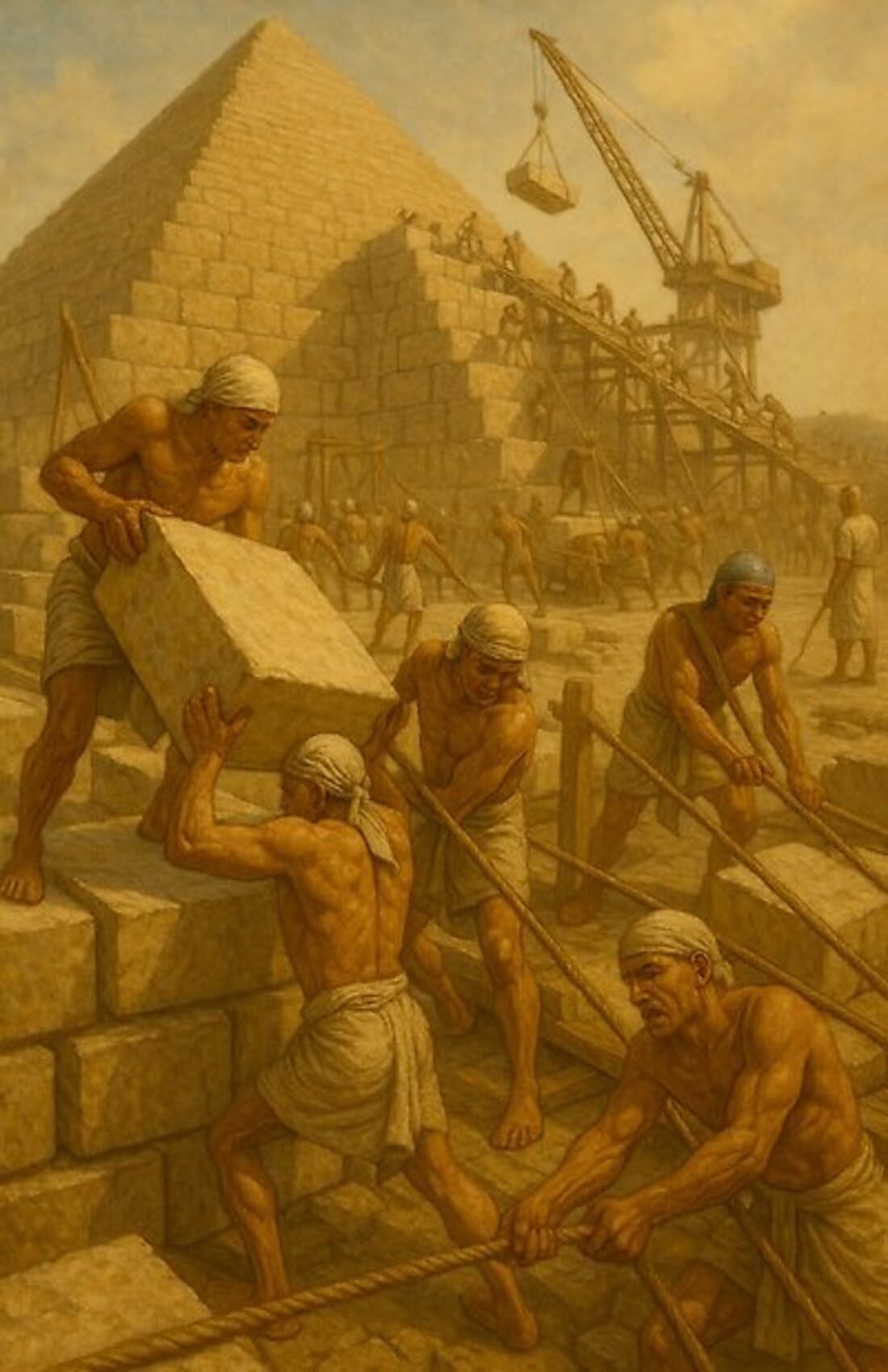
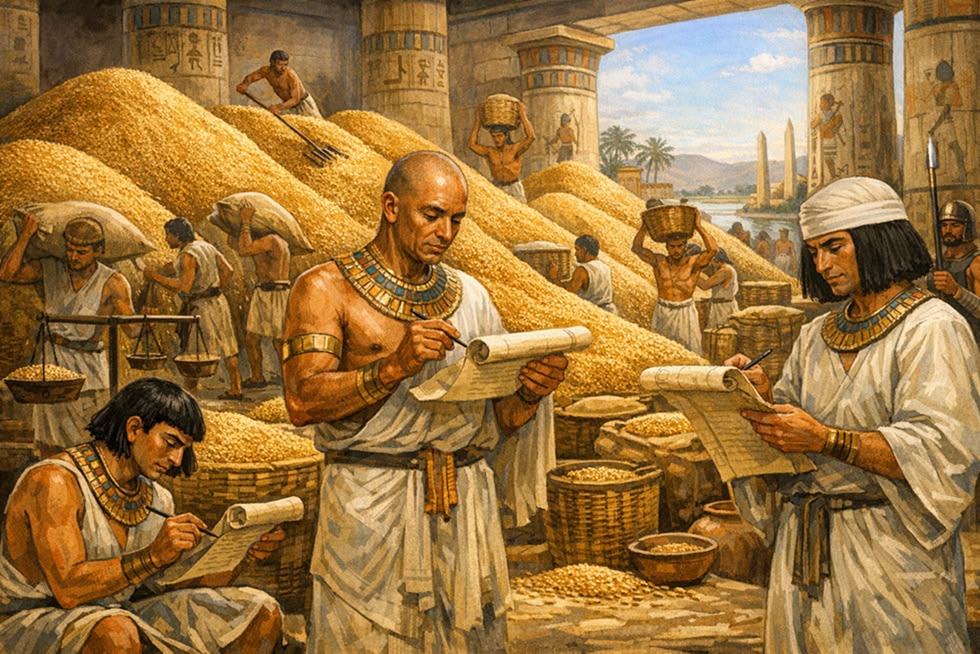
Grain was especially important in the Egyptian economy. Wheat and barley were not only food sources but also valuable resources used for payments and storage. Workers often received portions of grain as compensation for their labor, especially those involved in government projects.
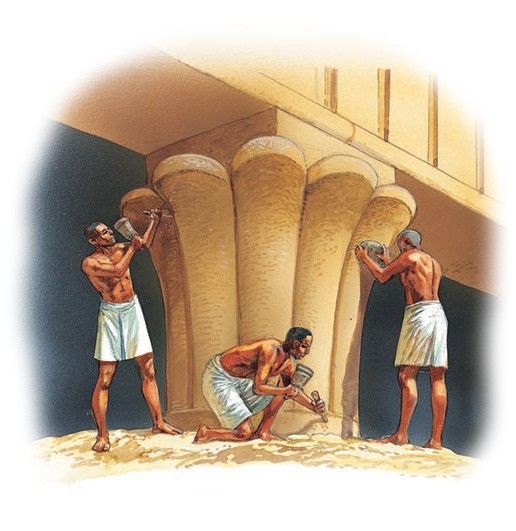
Craftsmen also participated in the barter system. A potter could exchange containers for food, while a carpenter could trade furniture or tools for agricultural products. Skilled workers produced valuable goods that could be exchanged within local markets and communities.
The barter system also existed in larger economic activities. Merchants involved in trade exchanged Egyptian products such as linen, papyrus, and grain for foreign resources including timber, incense, metals, and precious stones.
To make exchanges fair, Egyptians developed methods for measuring value. Although goods were exchanged directly, people used standardized weights and measurements to compare different products.
Temples and royal estates used organized barter systems as well. They collected agricultural products, livestock, and manufactured goods and redistributed them to workers, priests, and officials.
The barter system worked effectively because Egyptian society was based on production and resource management. People depended on each other’s skills and products, creating an interconnected economic network.
Although the barter system may seem simple compared with modern currency systems, it was highly practical for Ancient Egypt. It supported daily life, trade, taxation, and government administration for centuries.
2. The Deben: The Ancient Egyptian Unit of Value
The deben was one of the most important measurement systems in the Ancient Egyptian currency system. Although it was not a coin or physical form of money, the deben helped Egyptians calculate the value of goods and conduct economic transactions more efficiently.
The deben was originally a unit of weight used to measure valuable materials, especially metals such as copper, silver, and gold. By measuring metals according to weight, Egyptians could compare the value of different goods and establish fair exchanges.
For example, a certain amount of copper measured in deben could represent the value of tools, food, textiles, or other products. This system allowed merchants and officials to calculate prices without using coins.
The use of the deben was especially important in trade and taxation. Government officials and scribes used it to record the value of goods collected from merchants, farmers, and craftsmen. This helped maintain accurate economic records.
The deben system also supported the production of luxury goods. Goldsmiths, jewelers, and craftsmen used weight measurements when working with precious metals. The value of jewelry and decorative objects depended partly on the amount of valuable materials used.
Ancient Egyptian documents show that the deben was widely used in administrative records. Scribes recorded transactions, wages, and prices using standardized measurements, creating an organized economic system.
Different periods of Egyptian history saw changes in the value and use of the deben. However, the basic idea remained the same: measuring value through weight rather than using physical currency.
The deben demonstrates the advanced economic thinking of Ancient Egypt. Egyptians understood the importance of standardization and created a system that allowed complex transactions without coins.
This measurement system was a key element of Egyptian economic organization and helped support trade, taxation, labor payments, and resource management throughout ancient Egyptian history.
3. Precious Metals and Their Role in Ancient Egyptian Economy
Precious metals played an important role in the Ancient Egypt currency system and represented wealth, power, and economic value. Although Egyptians did not commonly use gold or silver coins, these metals were essential for measuring wealth, conducting valuable exchanges, creating luxury goods, and supporting trade activities.
Gold was the most famous precious metal in Ancient Egypt. The country possessed significant gold resources, especially in Nubia and the Eastern Desert. Egyptian rulers considered gold a symbol of divine power and used it extensively in royal jewelry, statues, temples, and burial objects.
Gold also played an economic role. Because it was rare, durable, and highly valued, it could be exchanged for goods and services. Officials and merchants measured gold by weight using systems such as the deben.
Silver was another valuable metal, although it was less common in Egypt than gold. During certain periods, silver was considered extremely precious and was used for jewelry, ceremonial objects, and economic transactions.
Copper had a more practical role in the economy. It was widely used for tools, weapons, agricultural equipment, and household items. Copper was also measured by weight and included in economic calculations.
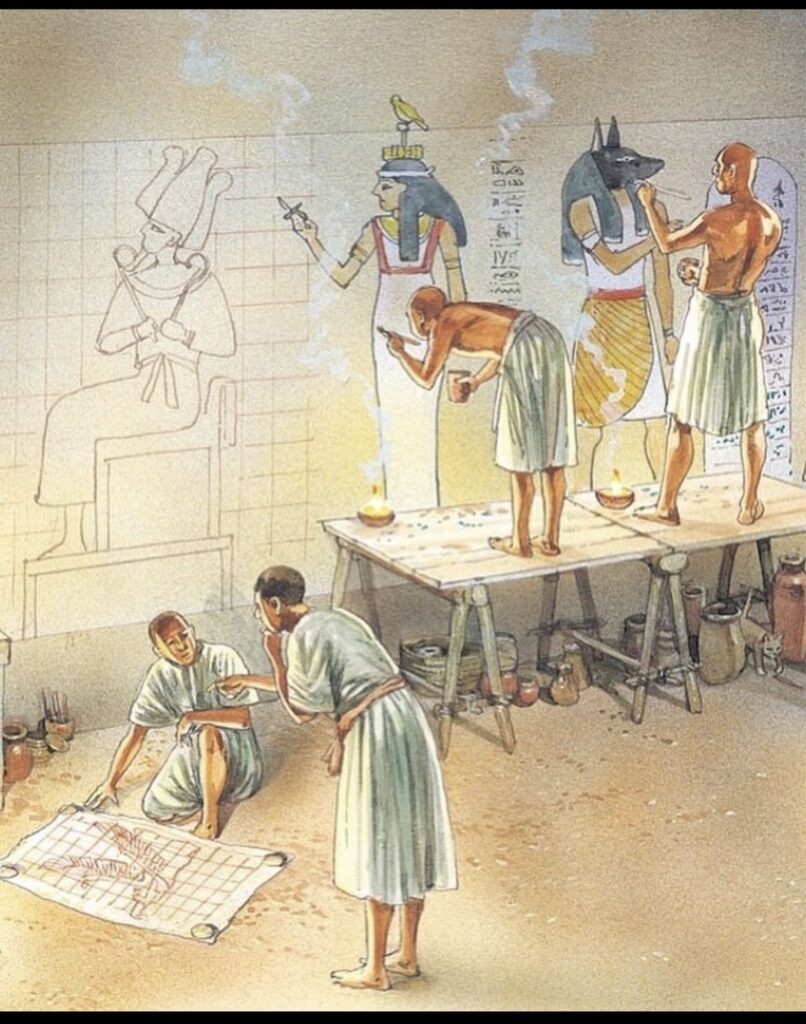
Precious metals supported Egyptian craftsmanship and industries. Skilled artisans used gold, silver, and copper to create jewelry, statues, religious objects, and decorative items. These products represented both artistic achievement and economic value.
Temples and royal estates controlled large amounts of precious metals. Gold collected from mines, foreign trade, and tribute payments was stored in royal and religious institutions.
Precious metals also strengthened Egypt’s international trade. Gold and crafted products were exchanged with foreign civilizations for resources such as timber, incense, and luxury goods.
The importance of precious metals in Ancient Egypt shows that wealth was measured through valuable resources rather than modern currency. Through careful management of gold, silver, and copper, Egyptians developed an effective economic system that supported their civilization.